Local government autonomy or new states: Which way for Nigeria?
By Lawal Dahiru Mamman
There are times when the stars seem to be aligning. All trouble appears to be disappearing, awaiting only what happens when those stars fall into line. But then, unexpectedly, things take a different turn, and the trouble assumes a different shape, sometimes with an additional burden. Such is the irony of Nigeria.
Governance was generally out of reach for the common man, especially those at the grassroots level who lacked the basic necessities required to live a decent life. To address this, there has been a clamour for local government autonomy. Successive governments have attempted to do so, but it was only the current administration that secured this victory in July 2024.
Since then, bureaucracies and political “manoeuvring have clogged up full implementation. Enforcement faced a delay in August when the federal and state governments negotiated a three-month moratorium, due to concerns about council workers’ salary payments and the need to conduct LG elections in certain states, alongside other pressing matters.
Just as progress seemed imminent, another hurdle emerged. The Central Bank of Nigeria (CBN) directed LGs to submit at least two years’ worth of audited financial reports as a prerequisite for receiving direct allocation. Key stakeholders, including the Association of Local Governments of Nigeria (ALGON), condemned the directive as perceived delay tactics.
While we are at it, the long-standing call for the creation of more states has resurfaced. In February, the House of Representatives’ Committee on Constitution Review threw a spanner in the works by proposing the creation of 31 additional states across Nigeria. If this comes to fruition, it would swell the number of states to 67, with some quipping that this would leave Nigeria with more states than “the Almighty United States”.
The proposed distribution of the new states is as follows: six to the North Central, four to the North-East, five to the North-West, five to the South-East, four to the South-South, and seven to the South-West.
The proposed new states are New Kaduna and Gujarat from Kaduna State, FCT State, Tiga and Ari from Kano, Kainji from Kebbi State, and Etiti, Orashi, Adada, and Orlu from the South-East.
Others are Okun, Okura, and Confluence states from Kogi; Benue Ala and Apa states from Benue; Amana state from Adamawa; Katagum from Bauchi state; Savannah state from Borno; and Muri State from Taraba.
Also included are Lagoon from Lagos, Ogun, Ijebu from Ogun State, as well as Oke Ogun/Ijesha from Oyo/Ogun/Osun States, Ogoja from Cross River State, Warri from Delta, Ori and Obolo from Rivers, Torumbe from Ondo, and Ibadan from Oyo State.
Some proponents interestingly argue that these new states possess abundant mineral and natural resources, which would be harnessed post-creation for the benefit of their people. One is forced to question the logic behind such reasoning and then wonder, are these not already entities within existing states, or would these new states be conjured out of thin air to perform this economic magic?
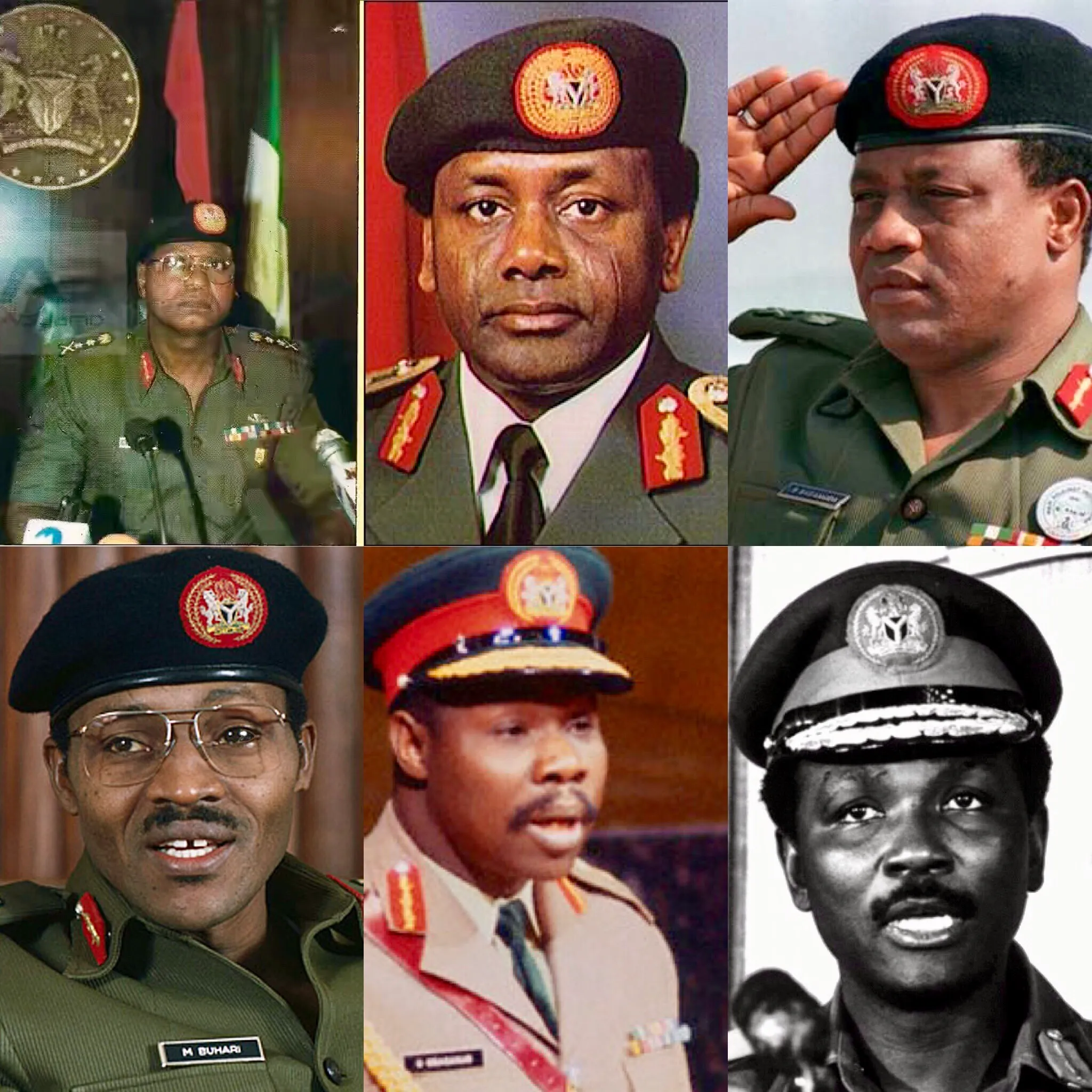
One would also need to educate Nigerians on a little bit of history and the processes required to achieve state creation in the country. The last time Nigeria created new states was in 1996, under the late General Sani Abacha. The only time a civilian government created a federating unit in the form of a state, rather than a local government area, was in 1963, and it was reportedly done without good faith.
The Northern People’s Congress (NPC) was the ruling party at the centre, and it was in alliance with the National Council of Nigeria and the Cameroons (NCNC), which was the ruling party in the Eastern Region. The ruling party in the Western Region was the Action Group (AG), while the opposition party was at the centre. There were other smaller parties, but only the NPC, NCNC, and AG were well-known. The alliance at the centre wanted to counter the growing influence of the Action Group, so a region was created from it.
That region was named the Midwest Region, which later became Bendel state (derived from Benin and Delta). Bendel later became the Edo and Delta states.
Since then, only military regimes have created states in Nigeria. The Gowon administration, on May 27, 1967, abolished the regional system and created 12 states – North-Western, North-Central, North-Eastern, Kano, Benue-Plateau, Kwara, Western, Lagos, Mid-Western, East-Central, South-Eastern, and Rivers States – as part of the strategies to weaken Col. Odumegwu Ojukwu and prevent the civil war.
Creation of states continued under subsequent military regimes. General Murtala Mohammed created an additional seven states (Bauchi, Benue, Borno, Imo, Niger, Ogun, and Ondo) in 1976, bringing the total to 19.
General Babangida created Akwa Ibom and Katsina states in 1987, and nine more states (Abia, Delta, Enugu, Jigawa, Kebbi, Kogi, Osun, Taraba, and Yobe) in 1991, bringing the total to 30. General Sani Abacha sealed it in 1996 by creating six more states – Bayelsa, Ebonyi, Ekiti, Gombe, Nasarawa, and Zamfara.
Conditions for state creation in a democratic setting are stringent and cumbersome, making it unlikely to happen. Military governments created states by decree, but in a democracy, it is a different ball game.
Before anyone advocates for the creation of a new state, they should study the provisions required to do so. Two-thirds of the National Assembly, as well as endorsements from State Houses of Assembly and Local Government Councils,must be achieved. This requirement makes it challenging to create new states in Nigeria.
In accordance with Section 8 of the Nigerian Constitution, any new state creation must be preceded by the approval of citizens from the area in question through a referendum conducted by the Independent National Electoral Commission (INEC). For the referendum to be successful, a two-thirds majority of the people in question must consent to the creation of the new state.
Then comes resubmission of proposals in line with the prescribed guidelines, which includes submitting hard copies and electronic copies of memoranda to the committee’s secretariat, among other things.
At a time we all advocate for a cut in governance costs, what would creating new states mean for the economy? What about the scarce resources consumed in holding meetings to contest whether or not to create new states? And what about the cost required to set up additional administrative units, the elections to be conducted, or the SUVs that would need to be purchased for 31 new brand governors and deputies, as well as principal officers in the House of Assembly?
The stars seem to be aligning in favour of local government autonomy, and hope is on the horizon for meaningful governance at the grassroots level, which will lead to national development. The movement towards state creation,therefore, appears to be an unnecessary and costly distraction.
Lawal Dahiru Mamman writes from Abuja and can be reached via: dahirulawal90@gmail.com.