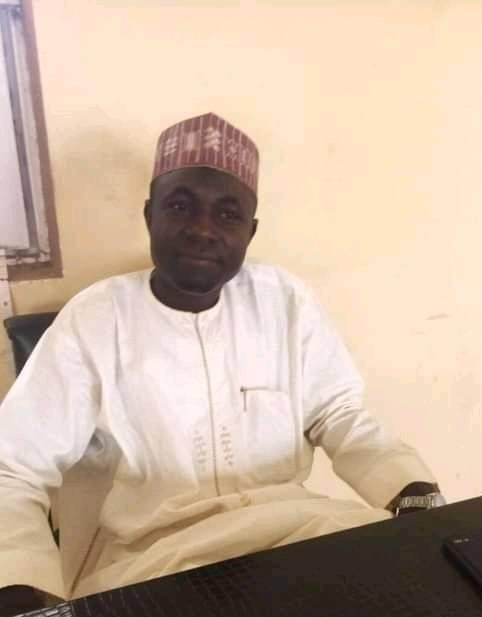
By Salisu Uba Kofar-Wambai
Though conflicts, for the most part, originate in the social world beyond the media, it is through the different media of journalism and circulation of news that many of them become publicly known and, often, pursued. Moreover, it is through many media lenses that the conflicts are variously defined, framed and visualized. Hence, media must always be socially responsible in its reportage not to stir up violence through its operations.
Journalism is a serious business in a multi-ethnic country like Nigeria, a country with over 400 ethnic groups, two major religious groups belonging to several sects, among other diversities. The media, especially the online newspapers, which serve as a watchdog and mirror of the society, cannot afford to be biased, lopsided and insensitive in the way they report such ethno-religious issues in the country.
Nigeria is a unique country on earth. You can hardly get a country that’s almost equally divided along two religious lines as Nigeria. Unfortunately, many studies conducted have shown the dirty hands of media in fanning the embers of hatred, animosity and conflicts they ought to have resolved among the followers of the two faiths.
The demonization of Fulani, the reportage of Sharia issues in the early 2000s, Boko Haram coverage, Niger Delta militancy reports, recent secessionists uprisings were all given oxygen by the media to survive, which seriously poses a threat to the unity and integration of the country.
However, irresponsible newspapers and so-called professionals working in the industry are to blame. The recent derogatory reportage of the unguarded utterances of the Afenifere, a Yoruba social-cultural organization, by Sahara Reporters is a textbook example of media complicity in causing violence in the country.
It looks like the Sahara Reporters had underrated and underestimated the profession’s ethics regarding such a sensitive and slippery issue. The editors haven’t done their onus professionally. Editing is a process of preparing language, images, or sound for presentation through correction, condensation, organization and other modifications. So, given the complex configuration of Nigerian society, an editor ought to be versatile and very knowledgeable of religious sensitivities. Newsroom desks must be given their cause to do their works. For instance, should the editor-in-chief be busy, the subeditors in the religious desk should handle it.
An editor is a gatekeeper who controls and sifts what will be disseminated to the enormous and varied readers, who have emanated from different social backgrounds, religious beliefs, and ethnic nuances. Therefore, an editor in a Nigerian newspaper ought to be someone with deep comparative religious knowledge who knows the sensitivities of every belief and faith.
In a heterogeneous society like Nigeria, an editor must be Mr Know-All to escape falling into a ditch and trap of such violence invocation.
He should be aware that If Christians can compare every dimwit, imbecile character with Jesus (PBUH), Muslims don’t do it this way. In Islam, Prophet Muhammad (SAW) is sacrosanct, inviolate. Thus, no one should compare the Prophet with any being, let alone Sunday Igboho, a run-away character the Nigerian government sees as a criminal and murderer.
I thought these so-called editors would take a lesson from what Isioma Daniel did, who tried to align Prophet Muhammad SAW with the dirty beauty pageants in the early 2000s. It turned out to be the worst professional blunder by Thisday newspapers. That single act that could be corrected by almighty editing led to gigantic violence that claimed more than 200 innocent souls in Kaduna.
I also wonder that Afenifere apologists have more Muslims than Christians in their membership; they ought to know this. Therefore, that’s why many were suspecting that what transpired was deliberately done to instigate war.
Sahara Reporters is the only newspaper that reported such an incident as such. Most media outfits have abandoned the reports for their editors knew the consequences. They look at the news items and the society at large.
No matter what, the professional interest must not be mortgaged to religious and ethnic ties. We must allow competence and expertise to overshadow those personal interests.
Salisu Uba Kofar-Wambai is a PhD student at the Department of Mass Communication, Bayero University, Kano. He can be reached via salisunews@gmail.com.