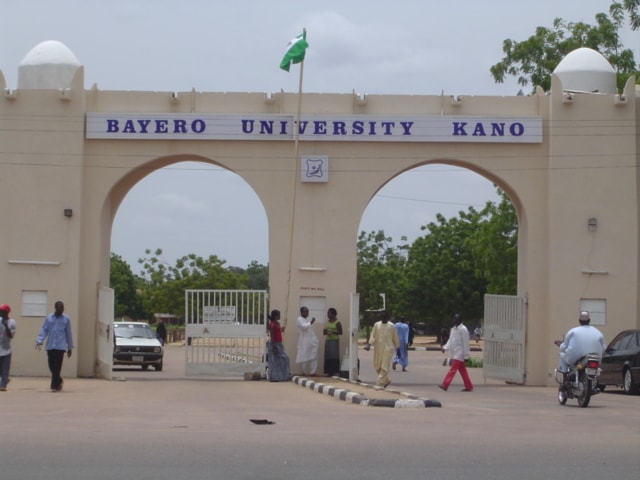
BUK

One of the kindest has gone: A tribute to Prof. Hafizu Miko Yakasai

Dr. Muhammad Sulaiman Abdullahi

Innalillahi wa inna ilaihi raji’un. May Allah have mercy on Professor Hafizu Miko Yakasai. He was such a wonderful man that he never held any grudges against anyone. 

I met Prof. Hafizu as far back as 2003/2004, and by 2007/2008, he had supervised my B.A. project on Hausa translation. While writing the project, Malam pushed me so hard that it later transformed my life for the better.

Malam was hardworking, friendly, calm and always gentle. You can even say that Malam was the nicest of them all. Malam was always smiling, and he spoke to us as if he were talking to his friends or even his bosses. Malam always looked down when he spoke to you. So kind and loving. We will genuinely miss his charming smile, especially when he wants to make a point or respond to an interesting topic.

To have known Malam was to have known a rare and gentle light in this world. The always smiling gentleman. Today, that light feels dimmed, the smiles have left us, and our hearts are heavy with a grief that words can scarcely hold. Yet, even in this time of mourning, we are compelled to celebrate the extraordinary person he was —a teacher, a mentor, and one of the kindest souls to have graced our lives at Bayero University, Kano.

Prof. Hafizu was a teacher in the truest sense of the word. His classrooms were not just a place of learning, but a sanctuary of encouragement and support. He didn’t just teach Semantics; he taught us how to think, how to wonder and how to believe in ourselves even when we doubted our own capabilities.

The professor saw potential in the quietest student and brilliance in the most struggling mind. His greatest lessons were not found only in the textbooks, but in his unwavering patience, smiles and profound belief that every one of us had something unique and valuable to offer the world.

When Malam became the President of Nigeria’s Institute of Translators and Interpreters, he called me and asked me to participate in a high-level process of evaluating new intakes. I felt as if Malam was elevating me to a position for which I wasn’t qualified, but Malam sat by my side while I put the records in order and smoothed out the process, and together, we made it a success.

Wallahi Malam was a very great gentleman to the core. A peace-loving fellow. A man of charisma and calibre. I never saw him become angry. Perhaps he has a unique way of swallowing all the anger and reveals only soothing smiles.

There was a time when Malam invited us to a project that he had obtained from his good friend, Barrister Dasin. It was a project of translation. We really enjoyed ourselves and have our pockets filled up.

One day, we sat at the Centre for Research in Nigerian Languages, Translation & Folklore. All of a sudden, Malam asked Muhammad, ‘How can we translate…’ He then mentioned a particular word. I was amazed that this was my teacher, who had taught me for years, now asking me for something. This is to show you how simple and easy-going Malam was.

Besides teaching us, Malam took us as his own children, always drawing us nearer. He never acted like a boss; he was a guide who walked beside us, and with us, not ahead of us. He offered counsel without judgment, wisdom without arrogance, and a listening ear that made even our most minor problems feel important. He shaped not only our intellect but our character, leading always by the quiet example of his own integrity, compassion, and grace.

And yet, what we will carry with us most indelibly, what is etched into our memory with the warmth of a permanent sun, is his utmost kindness and smile. That ever-present, genuine, and kind smile. It was a beacon of welcome in the morning, a signal of understanding during a difficult lesson, and a silent celebration of our successes. In a world that can often be too serious and too harsh, his smiles were a constant reminder that joy is a choice, and kindness is a language everyone understands. It was the purest reflection of his beautiful spirit.

Thank you for everything. Your syllabus for a life well-lived is complete, and you earned an A+ in humanity, wisdom, dedication and kindness. We will miss you more than words can say, but we will never forget your lessons and your magnificent smiles.

Malam was an HOD many years ago; he was a Dean, a Professor, and a pioneer Provost of the College of Arts, and he died in active service. He came and worked in the university even in the last days of his life. Above all, he was a very kind gentleman, a devout servant of Allah.

The best part of Malam’s life was that not many people knew he was an A-grade student and teacher of the Qur’an. Coincidentally, the last events he attended in his academic life were on the glorious Qur’an. The Centre organised the last for Qur’anic Studies under the leadership of Sheikh Prof. Ahmad Murtala. May the almighty Allah raise you among the Qur’anic reciters on the Day of Judgement, amen.

Prof. Hafizu has done his part and left. It is now time to reflect on his life and build on the good legacies he left. I extend my condolences to his family, friends, students, Bayero University, Kano, and the entire academic community.

May Allah forgive your shortcomings, Malam. May Allah make Jannatul Firdaus your final home. You have done wonderfully, Malam, with endless gratitude and love. Insha’Allah, you will continue to smile in Jannah, sir. Ameen!

Ban on commercial motorcycles at BUK sparks outcry from students, business owners

By Kabiru Abdullahi Muhammad

The recent decision by the management of Bayero University, Kano (BUK), that bans commercial motorcycle operators (okada riders) from operating within the university community has triggered widespread outcry from both students and business owners.

For decades, motorcycles have been a lifeline for transportation and commerce in the university environment.

But since the ban, traders in the popular Coke Village market say their businesses have suffered unprecedented losses.

Malam Tasiu Hamisu, a foodstuff dealer who has operated in Coke Village for over 30 years, described the impact as devastating.

“I have never experienced such a huge downfall in my business until now when the school management stopped the bike men from working,” he lamented.

There were about 400 motorcycle riders in the university, with roughly 100 operating daily. Many of them were among my most reliable customers.

“Some bought foodstuffs worth ₦3,000 every day, while others bought occasionally. Now that they are gone, my business has been seriously affected. The only time we used to lose customers was during school holidays, but this is worse,” he added.

He also noted that students who previously sent riders to purchase goods on their behalf no longer have that option.

Malam Aliyu Sulaiman Ibrahim, another trader who sells palm oil, groundnut oil, and other household essentials, echoed the same concern.

“This issue has really affected me, and I have lost a lot of customers,” he said.

Similarly, Malam Umar, who operates a café, narrated how the ban has disrupted his daily routine.

“Sometimes when fuel finishes in the middle of work, I used to send a bike man to quickly get petrol. But now I can’t, and students won’t wait for me to go myself because there are many other shops they can turn to. This affects me badly,” he explained.

Students Struggle with Transport

Students are also struggling with the issue. The management introduced on-campus tricycles (adaidaita sahu) as an alternative, but there are only five to six tricycles available to serve thousands of students.

Every morning, long queues form at the university gate, with many students forced to trek long distances to their faculties.

Zainab Lawan, a student from the Faculty of Agriculture, shared her frustration.

“I nearly missed a test because I was waiting for a tricycle. In the end, I had to trek all the way from the gate to my faculty. It is really stressful, especially when you are in a hurry to attend lectures,” she said.

Both students and business owners said that the ban has created more hardship than solutions.

As Malam Tasiu put it: “The university is not just about classrooms; it is also a community. We all depend on one another to survive.”

Kano under siege: Battling the menace of thuggery, phone snatching

By Suleiman Musa Yahaya Ikara

The scourge of thuggery and phone snatching in Kano State has escalated into a grave crisis, endangering students and residents alike.

Just weeks ago, a Bayero University, Kano (BUK) student fell victim during a routine trip to Dorayi.

The incident added to growing insecurity, leaving residents anxious about their safety and wellbeing, particularly in the metropolis.

The BUK community is still mourning the gruesome killing of a 300-level student, Umar Abdullahi Hafiz, by suspected phone snatchers near his off-campus residence in Dorayi.

His death underscores the brutality of the menace.From Danbare to Kofar Kabuga, Kofar Mata, Zoo Road, Sheka, Dorayi, Rijiyar Lemo, Kurna, and Gwagwarwa, violent attacks have become daily occurrences.

Street ambushes, stabbings, daylight robberies, and mobs armed with axes, stones, and knives have turned once-busy neighborhoods into zones of fear.

The perpetrators, commonly called fadan daba, have shaken public confidence in urban safety.

Media platforms are awash with disturbing videos and images capturing these attacks.

A source from Bayero University, kano said “The incident was so devastating and heartbreaking. As a girl from far away who chose to study in Kano, I ended up being robbed. It makes me feel discouraged.”

Confirming the university’s concern, Director of Public Affairs, Lamara Garba, said investigations and a manhunt were underway in collaboration with security agencies.

Similarly, the immediate past Vice-Chancellor, Prof. Sagir Adamu Abbas, condemned the killing and pledged to work closely with law enforcement to ensure justice.Despite these assurances, the violence persists.

Deep-rooted gang networks quickly replace arrested members, exposing the limits of enforcement alone.

Outrage across Kano has grown as the climate of insecurity signals that no one is truly safe.

The Law and the Crime

Legal experts remind citizens of their rights and the penalties awaiting offenders. Barrister Ibrahim Bako explained: “Section 43 of the Nigerian Constitution guarantees citizens the right to own property. Sections 286 and 287 of the Penal Code define theft and prescribe up to 10 years imprisonment for offenders.”

He added that phone snatchers could be charged with multiple offences, including theft, robbery, extortion, and criminal conspiracy

Root Causes: Drugs and Idleness

The NDLEA has linked the rise of thuggery and phone snatching to drug abuse among youths. In 2024, the Kano Command arrested over 1,345 suspects, seized 8.4 million kilograms of illicit substances, and secured 128 convictions.

Initiatives such as Operation Hana Maye continue to dismantle drug joints and rehabilitate addicts, but the challenge persists.

Searching for SolutionsGovernor Abba Kabir Yusuf has pledged decisive action against sponsors of youth gangs, alongside empowerment and job creation programs.

Yet, many argue that this is not enough. Community leaders stress the role of parents, traditional rulers, and residents in guiding young people away from crime.

Zayyana Abdullahi, a community leader stated that “Strengthening community policing, empowering neighborhood vigilantes, improving surveillance, and building trust between residents and law enforcement are critical for restoring safety.”

A Call for Collective ActionThe Kano Police Command, led by SP Abdullahi Haruna Kiyawa, acknowledges the worsening situation and has intensified operations.

Still, durable peace will require more than arrests, it demands holistic action.enforcing the law, tackling drug abuse, empowering youths with skills and jobs, and rebuilding community trust.

The coordinated efforts of government, law enforcement, religious bodies, and civil society must go hand in hand.

Kano’s battle against thuggery and phone snatching is not just a fight against crime,it is a fight for the soul of the city.

BUK student stabbed to death by phone snatchers in Kano

By Uzair Adam

A 300-level student of Bayero University, Kano (BUK), Umar Abdullahi Hafizi, has been confirmed dead after he was fatally stabbed by suspected phone snatchers at his residence in Dorayi Quarters, Gwale Local Government Area of Kano State.

The incident, which occurred around 11:00 p.m. on Wednesday, has sparked widespread grief within the university community, prompting an official response from the institution’s management.

In a statement signed by Lamara Garba, Director of Public Affairs, and released on Wednesday, the university described the loss as devastating.

“The Management of Bayero University, Kano (BUK) has expressed deep sadness over the tragic death of Umar Abdullahi Hafizi,” the statement said, adding that the student’s death was “a painful loss to the University community.”

While confirming that the killing happened outside the university premises, the statement reiterated the institution’s commitment to ensuring the safety and well-being of all students.

The Vice-Chancellor, Professor Sagir Adamu Abbas, speaking on behalf of the management, assured the university community that efforts are underway to bring the perpetrators to justice.

“BUK is working closely with security agencies to ensure that those responsible for this heinous act are apprehended and made to face the full wrath of the law,” he said.

As part of its immediate response, the university facilitated the transportation of the deceased’s body to his hometown in Zaria, Kaduna State, where he was buried according to Islamic rites.

The management also appealed for calm, urging students to be vigilant and the public to assist security operatives with any helpful information.

“The Management calls on students to remain calm and vigilant and urge members of the public to cooperate with security operatives by providing any useful information that could assist in the ongoing investigation,” the statement added.

BUK concluded the statement with prayers for the deceased, “Bayero University Kano prays for the repose of the soul of Umar Abdullahi Hafizi and for the Almighty to grant his family the fortitude to bear the irreparable loss.”

EFCC nabs 25 BUK students over alleged internet fraud

By Uzair Adam

The Economic and Financial Crimes Commission (EFCC) has arrested 25 individuals suspected of internet fraud in a sting operation in Kano.

According to a statement released in Abuja on Wednesday by the commission’s spokesperson, Dele Oyewale, the arrest took place on Monday opposite Bayero University Kano (BUK) New Site.

Oyewale revealed that the suspects were apprehended following actionable intelligence that linked them to various cybercrime activities.

“All suspects apprehended are confirmed to be undergraduate students of BUK,” he stated.

Items recovered during the operation include several mobile phones, laptops, internet routers, and a Honda Accord vehicle.

He added that the arrest followed weeks of surveillance and monitoring related to suspected involvement in internet fraud, identity theft, and financial scams.

Oyewale further said the suspects will be prosecuted once investigations are concluded.

NITDA commissions national cybersecurity centre at BUK to bolster digital security

By Uzair Adam

The National Information Technology Development Agency (NITDA) has commissioned a National Cybersecurity Centre at Bayero University, Kano (BUK), in a move to strengthen Nigeria’s cybersecurity capacity and digital resilience.

The commissioning ceremony, which took place on Tuesday, at the university’s New Campus, was performed on behalf of NITDA’s Director-General, Kashifu Inuwa Abdullahi, CCIE, by Dr. Jide Ajayi, Director of Zonal Coordination at the agency.

Speaking at the event, Dr. Ajayi described the centre as a strategic national asset that goes beyond infrastructure.

“It is the activation of a knowledge-driven platform designed to equip our nation with the tools, talent, and infrastructure required to safeguard our digital space,” he said.

He added that the project aligns with President Bola Ahmed Tinubu’s Renewed Hope Agenda and the Strategic Blueprint of the Honourable Minister of Communications, Innovation and Digital Economy, Dr. Bosun Tijani.

The newly commissioned facility is expected to support cybersecurity education, research, capacity building, and innovation.

Dr. Ajayi noted that cybersecurity has become an indispensable pillar for building trust in the digital economy, especially in an era of increasing cyber threats and vulnerabilities.

He announced that NITDA, in collaboration with the Office of the National Security Adviser (ONSA), will co-host the first National Cybersecurity Conference from July 9 to 10, 2025, in Abuja.

The event will bring together global experts, policymakers, and innovators to chart the future of AI-powered cybersecurity in Nigeria.

In his vote of thanks, the Vice-Chancellor of Bayero University, Professor Sagir Adamu Abbas, FMAN, expressed deep appreciation to NITDA and the Ministry of Communications for their commitment to technological advancement and education.

“This centre is a symbol of foresight and commitment. It will significantly improve the quality of teaching, research, and practical training in cybersecurity at our university,” he said.

Professor Abbas added that BUK already runs undergraduate and postgraduate programmes in cybersecurity and is prepared to launch a PhD programme soon, noting that the centre will enhance the university’s role as a national hub for cybersecurity excellence.

He also reaffirmed BUK’s readiness to collaborate with NITDA and the ministry in training, research, and policy development, stressing the university’s strategic position in Nigeria’s digital transformation journey.

The establishment of the National Cybersecurity Centre at BUK marks a major step in fortifying Nigeria’s digital ecosystem and promoting inclusive, region-based digital empowerment.

BUK gets full NUC accreditation for 53 programmes

By Uzair Adam

Bayero University, Kano (BUK), has announced a major academic milestone as all 53 academic programmes presented for the National Universities Commission (NUC) accreditation in October/November 2024 received full or accredited status.

The Daily Reality reports that the development was disclosed in a statement signed by Haruna Aliyu, Registrar of the University, on May 8, 2025.

According to the statement, the successful accreditation covers both undergraduate and postgraduate programmes across multiple faculties, including Administration, Agriculture, Allied Health Sciences, Arts, Computing, Education, Engineering, Medicine, Pharmacy, Science, and Social Sciences.

Describing the outcome as a “resounding testimony of quality,” the university said the results affirm its commitment to academic excellence, faculty development, curriculum advancement, and infrastructure improvement.

Among the notable programmes that secured full or accredited status are Medicine and Surgery, Pharmacy, Civil Engineering, Arabic Studies, Environmental Health Science, Accounting, Taxation, and various postgraduate degrees in Business and Public Administration.

The accreditation, valid for five years, ensures that enrolled students are receiving education aligned with NUC-approved standards.

It also validates the acceptability of their certificates for employment, further studies, and participation in the National Youth Service Corps (NYSC).

BUK’s management expressed gratitude to the NUC for its thorough evaluation and acknowledged the efforts of Deans, Heads of Departments, staff, and students for their collective role in achieving the feat.

The statement concluded by inviting stakeholders, prospective students, and the wider academic community to join in celebrating the success and to support the university’s ongoing mission of excellence in teaching, research, and community service.

BUK unveils on-campus tricycle service  

By Anas Abbas

Bayero University, Kano (BUK) has officially launched an on-campus tricycle service at its New Campus. 

The initiative, inaugurated by Vice-Chancellor Professor Sagir Adamu Abbas, aims to provide a safer and more convenient mode of transportation for students and staff navigating the university’s expansive grounds.

During the launch event, which was attended by key university officials, including the Registrar Haruna Aliyu, Deputy Vice-Chancellor (Academics) Professor Haruna Musa, University Librarian Dr. Kabiru Dahiru Abbas, Head of Public Affairs Lamara Garba, and Professor Yakubu Magaji Azare, Professor Abbas highlighted the university’s commitment to prioritizing student welfare.

“This initiative is part of our broader effort to enhance security and convenience for our students,” Professor Abbas stated.

“We are committed to making our campuses not only academically stimulating but also comfortable and safe for everyone.” He added

He assured the university community that the tricycle service would be operated under strict monitoring and evaluation, with trained drivers adhering to best practices from 7 AM to 9 PM daily.

The introduction of the tricycle service follows a February 2025 ban on motorcycles on campus due to rising security concerns. 

The new tricycles are expected to offer a structured and secure alternative for students, facilitating seamless movement across the campus while upholding BUK’s reputation for safety and order.

Bayero University appoints Nura Garba as head of digital media unit

By Uzair Adam 

Bayero University, Kano (BUK) has approved the creation of new units within its Public Affairs Directorate and appointed Nura Garba as the Head of the Digital Media Unit. 

The decision, endorsed by the Vice-Chancellor, Professor Sagir Adamu Abbas, is part of efforts to enhance the university’s communication strategies and digital engagement.  

Nura Garba, formerly of the Information and Publication Unit, will lead the newly established Digital Media Unit, which will focus on utilizing digital platforms to promote BUK’s brand.

The unit will also engage with online audiences and provide timely updates on university activities.  

In a similar development, Muhammad Salisu Rabiu, previously with the Protocol Unit, has been appointed as the Head of the Publicity and Outreach Unit. 

His role will involve promoting the university’s achievements, programs, and services to various stakeholders, including the media and alumni.  

The appointments were confirmed in letters dated March 12, 2025, signed by the Registrar, Dr. Haruna Aliyu, and have taken immediate effect.

Students’ loan: BUK leads as NELFUND disburses over N20 billion

By Uzair Adam

The Nigerian Education Loan Fund (NELFUND) has disbursed loans worth over N20.07 billion to 192,906 students across public tertiary institutions in Nigeria, according to an announcement on the organization’s X (formerly Twitter) account.

The latest disbursement, which reflects approvals made as of January 1, 2025, places Bayero University, Kano (BUK) at the top of the list, with 11,683 students set to receive a total of N1.3 billion.

The University of Maiduguri follows closely, where 12,198 students will share N1.27 billion. Other major beneficiaries include the University of Jos, with 6,988 students receiving N941 million, and the Federal University Dutsin-Ma, where 8,978 students are allocated N909 million.

At the University of Ibadan, 4,907 students will benefit from N746 million, while 5,451 students at the Federal University Dutse will receive N593 million.

Additionally, Usmanu Danfodiyo University, Sokoto, has 6,480 students who will share N578 million, and the University of Lagos will disburse N557 million to 3,685 students.

Smaller institutions also benefited, though to a lesser extent. For example, four students at Gombe State Polytechnic, Bajoga, are set to receive N122,000, and two students at Abia State Polytechnic will share N106,300.

Similarly, Nwafor Orizu College of Education, Nsugbe, has approved N214,116 for three students, while Kenule Benson Saro-Wiwa Polytechnic, Bori, will disburse N315,500 to seven students.

Other beneficiaries include Federal College of Education, Gidan Madi, where three students will receive N330,000, and Federal Polytechnic Ukana, Akwa Ibom, with 11 students sharing N518,500.

Federal Polytechnic Nekede, Imo State, has nine students allocated N368,400, while Alvan Ikoku Federal University of Education, Owerri, will distribute N528,500 among 12 students.

This disbursement is part of a broader initiative by NELFUND, which had earlier announced the allocation of N110 billion in student loans nationwide.

According to NELFUND’s Managing Director, Akintunde Sawyerr, these efforts are aimed at improving access to education for students in public institutions across the country.