Black Lives Matter

Trump limits flags on government buildings — no more LGBTQ or BLM flags

By Maryam Ahmad

The Trump administration has reportedly issued a directive restricting the display of flags on government buildings, embassies, and military bases worldwide. According to a report by the Washington Free Beacon, which obtained a copy of the document, the new policy permits only the U.S. flag and select military symbols to be flown.

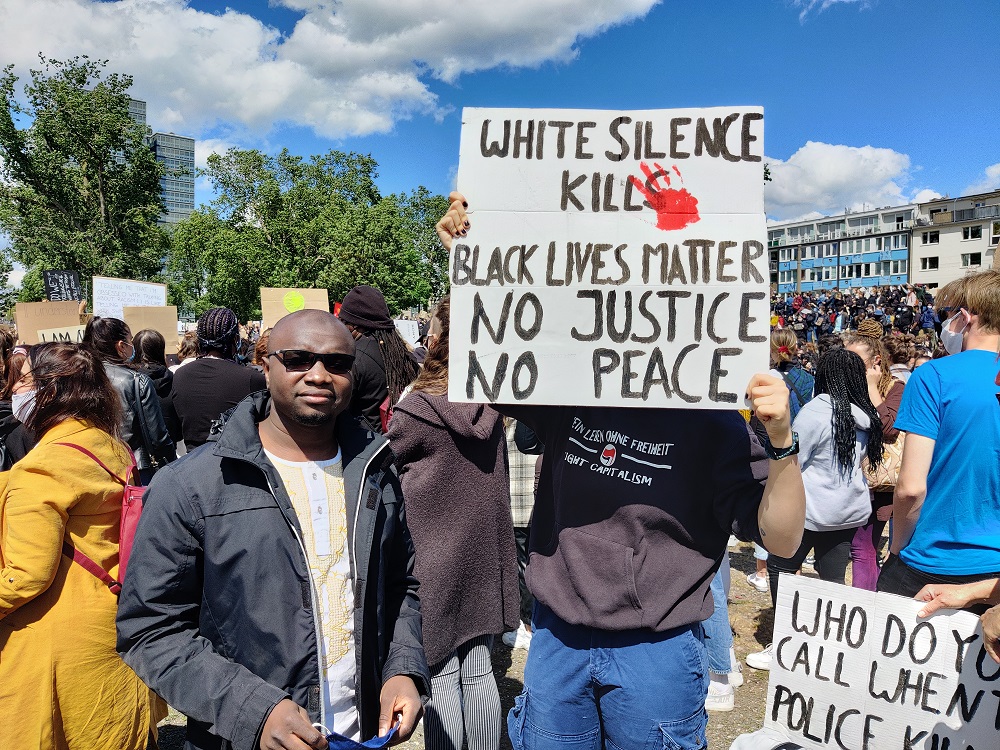
Although the directive does not explicitly mention specific flags, media outlets have interpreted the move as a ban on displaying symbols such as LGBT and Black Lives Matter (BLM) flags, which were frequently flown alongside the U.S. flag during the Biden administration.

This policy aligns with Trump’s broader cultural stance, including a previous decree recognising only two genders—male and female—in official U.S. government documents and policies.

The decision has sparked debate. Supporters praise the emphasis on national and military symbols, while critics view it as a step back in terms of inclusivity and representation.

The influence of social media on political discourse

By Tolulope Showande 

Social media has revolutionized political discourse, transforming how people engage with politics, share information, and influence change. Platforms like X (Twitter), Facebook, and Instagram have broken down barriers between citizens and leaders, offering a more immediate and interactive space for dialogue than ever before. However, this transformation is a double-edged sword, bringing opportunities and challenges to modern political communication.

On the positive side, social media has democratized information. It gives marginalized voices a platform to be heard and enables grassroots movements to gain momentum without the backing of traditional media outlets. 

Hashtags like #BlackLivesMatter and #EndSARS have brought global attention to issues of racial injustice and police brutality, mobilizing millions to take action. Social media also allows citizens to hold politicians accountable. Missteps or controversial statements can go viral within minutes, forcing leaders to address public concerns swiftly.

Yet, the characteristics that make social media powerful also make it dangerous. The speed and reach of these platforms have facilitated the spread of misinformation and fake news, which can polarize societies and undermine democratic processes. 

Algorithms designed to maximize engagement often amplify sensational and divisive content, creating echo chambers where users are exposed only to viewpoints that reinforce their beliefs. This has led to heightened political tribalism, replacing meaningful debate with hostility and extremism.

Furthermore, the lack of regulation around social media use in political campaigns has raised concerns about transparency and manipulation. From targeted ads to the misuse of personal data, these platforms have become tools for influencing elections, often in difficult-to-detect or counteract ways. The 2016 U.S. presidential election and the Brexit referendum are notable examples of how social media can be weaponized to shape public opinion.

Despite these challenges, the role of social media in politics cannot be dismissed. It has become integral to modern governance, activism, and public engagement. To maximize its benefits while mitigating its risks, there must be a collective effort to promote digital literacy, implement stricter regulations on political advertising, and hold tech companies accountable for their role in shaping public discourse.

Social media is a powerful tool, but society must ensure it is used responsibly. If used thoughtfully, these platforms have the potential to foster a more informed, connected, and active citizenry capable of addressing the complex challenges of our time.

Tolulope Showande sent from Bayero University, Kano, via tshowande@gmail.com.

Racism: Poland at it again

By Usama Abdullahi

I didn’t want to talk about this. But my mind is sick of it and wants me to spell it out. My piece centres on racism today. It’s something that most of us are barely familiar with. Yes, most of us, who haven’t travelled to the white world, know next to nothing about it. Some of us might not know that this ill-treatment against black people exists. While others, like me, do hear and read about it either on television or in newspapers. 

As a kid, I knew nothing about racism. Neither did I ever acknowledge its existence. It is because I was too young to understand what that meant. I used to think that the whites were superior humans that accord us, the blacks, some respect. But, contrary to my little kiddish thoughts about the whites, a vile or an irresponsible white man loathes this glowing dark skin. This blessed skin that wrestles all sorts of skin threats or irritation, someone from the other part of the world has aversions for it. 

This skin that withstands the sun’s heat, someone who’s driven by hatred for the faultless black men, considers it hell. I came across the word Ku Klux Klan at 12. At the time, I had Longman Dictionary with me. I would carry it wherever I go. So when I first took a glimpse at the then unfamiliar word, I paused for a while. Afterwards, I proceeded to read its meaning till the end. I couldn’t believe it at first. 

True. I couldn’t believe that there used to be a secret society during the 20th century which supported white supremacy in the Americas. This outlawed secret society fights the blacks and drives them out of the United States despite being legal citizens. I’m glad that this fraternal group is now defunct. But the problem is that racism is feathering again. It is fast dominating the white world. Some of them, the racists who have no respect for individual differences, honour its stay. They see nothing wrong when a black person gets badly treated because of his skin.

Sadly, we are entangled in a world that supports baseless animosities toward the people we share different views, faith or race with. The world we dwell in is a respecter of evil. We live to dine at the expense of our oppressed brothers from other parts of the universe. We see skin colour as a barrier to our unity and coexistence. Hence we look at each other with intense disgust. Unknowingly, this racism kills our hope to live a meaningful life.

Last year, we were hit by the tragic news of an African-American man who had his fate crushed in the hands of a cruel white policeman. The news filled up the media until it captured public attention. Concerned black folks, particularly the deceased’s bereaved family, went through hell as a result. As a result, many people took their outrages to the streets, protesting against racism with the hashtag, “Black lives matter”. And they were assured of drastic measures to prevent such by the American government.

Considering America’s quick intervention on the matter, we thought the issue of racism was laid to eternal rest, but it, like Lazarus, has been resurrected. We saw the uproar and slighting comments which trailed the media over the failure of Bukayo Saka, Marcus Rashford and Jadon Sancho to score during the penalty kick of the Euro 2020 final. We also saw the unusual treatment against Zouma over a minor offence on his cat, costing him millions of dollars. And, unfortunately, Poland is at it again.

It’s sad to watch how the blacks were denied entry into the train conveying people from the war-ravaged Ukraine to Poland. Despite the threats they face, the racial prejudice in these racist morons prevails and has got to the point of favouring the Ukrainians over Africans or blacks – as if they aren’t all humans in need of urgent aid. Racism is a disease that bites deep into our hearts. It is also a barricade that holds back our progress as humans. So, It’s high time we stopped promoting racial discrimination.

Usama Abdullahi wrote from Abuja, Nigeria. He can be reached via usamagayyi@gmail.com.

Kurt Zouma and the challenge of being a black footballer in Europe

By Aliyu Yakubu Yusuf

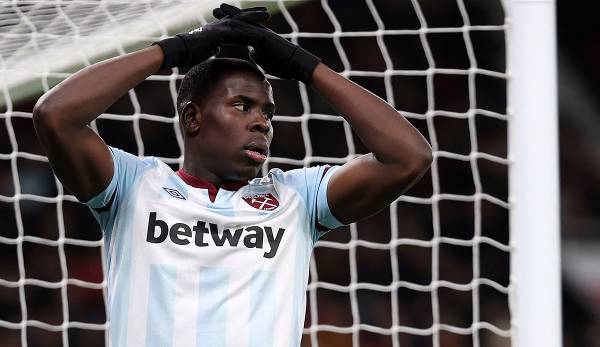
Unless you don’t follow European football, you might have seen a viral video of a man of black ancestry kicking and slapping a cat inside what appears to be an apartment. That man is a French, West Ham footballer, Kurt Zouma. Since that video came to public consciousness, Zouma has been in the eye of the storm. When writing this article, more than 250,000 people have signed a petition calling for Zouma’s prosecution on account of animal abuse. And if that were to happen, he may be facing up to a 4-year prison sentence.

Again, Adidas, the famous German multinational sportswear conglomerate, have terminated their contract with him. And to add insult to injury, his club has fined him his two weeks’ wages. Of course, what Zouma did is indefensible in its entirety. As vulnerable as they are, animals, too, need to be protected from our cruelty. However, I believe that the whole incidence is being blown out of proportion.

When I first read the news, I assumed it was just another mundane story that would naturally wane away in a matter of days. But seeing how the story was trending on all news platforms, I quickly visited YouTube to watch the video. My impression at the time was of Zouma being overly aggressive towards the animal. This is largely down to the sensational headlines across several media outlets. After viewing the video carefully, I observed that the player was not violent towards the pet cat. His kick was just a mild one, attempting to chase the animal away. But is this the first time the Western media maltreat Blacks? No.

In 2013, the then Liverpool striker, Luis Suarez, was accused of racially insulting former Manchester United captain Patrice Evra. Suarez unequivocally admitted to using the word ‘negro’ (a term with a racist undertone) to refer to Evra. At that time, no one launched any petitions against Suarez. On the contrary, his Liverpool teammates even donned a commemorative shirt to support him, alleging that his remarks against Evra were taken out of context. And coincidentally, Suarez was also an Adidas player. However, Adidas felt no need to terminate Suarez’s sponsorship deal. Instead, they sent him a toothless warning, asking him to watch his future behaviour.

Similarly, Eden Hazard once kicked a ball boy and was only fined a paltry £250,000 and never lost his sponsorship. Harry Maguire was convicted for human assault and bribery in Greece but received only a suspended prison sentence. He neither lost his Manchester United captaincy nor any of his sponsorship deals as a result. These incidents beg the question, ‘is animal abuse more serious in Europe than human rights abuse’? Have all these events transpired the way they did because Suarez, Hazard and Maguire are all white, while both Evra and Zouma are blacks?

From Samuel Eto’o, Emile Heskey and Peter Odemwingie to Daniel Alves, Franck Kessie, and Raheem Sterling, the list of Europe-based black players subjected to monkey chants is endless. Ironically, sometimes the racist abuses were done by supporters of the very clubs for whom the players ply their trade. However, no clubs were ever punished by points deduction or even a severe fine to make the mean-spirited fans behave appropriately. No arrests, no stadium bans for the culprit and nothing. Compare this to another event late last year involving West Ham fans who were filmed on a plane chanting anti-Semitic songs at a Jewish man as he was boarding the plane. That incident generated wide condemnation. All the fans involved were promptly arrested. West Ham issued a public statement that squarely condemns all the perpetrators. A similar incident happened to a Chelsea fan who posted anti-Semitic tweets directed at a Tottenham player. He, too, was promptly arrested and prosecuted.

I am happy about how fans on Twitter quickly pointed out the hypocrisy of Adidas. This is a corporation that specialises in producing shoes from animals’ hides. Which animal has ever granted anyone permission to kill it and use its hide to make shoes? Who draws a line between right and wrong as far as animals are concerned? And where are the animal rights agitators when riders use canes (made from animal skin) to whip animals during horse racing? Besides, who has ever sought approval from any animal before he rides on it?

Look, I am not out to defend Zouma. He undoubtedly made a mistake, and that is beyond doubt. I only want to point out the double standard that has trailed this incident. Black players in Europe are adjudged on a different set of criteria. When they are racially insulted, they expect to look the other way and not be overdramatic or create an unnecessary scene. They are always expected to exhibit good behavioural conduct or risk facing social stigma. The mantra of ‘what is good for the goose is good for the gander’ does not apply to footballers of the black race.

Aliyu is a lecturer at the Department of English and Literary Studies, Bayero University, Kano. He can be reached via aliyuyy@gmail.com.