Biafra

IPOB and the myth of the rising sun

By Tahir Ibrahim Tahir (Talban Bauchi)

We went on a trip a while ago to Jama’are local government in Bauchi state for the turbaning ceremony of my cousin as the Ubandoman Jama’are. Jama’are is a 2-hour journey from the Bauchi metropolis. On our way there, we ran into a pothole, and we got a twisted tyre. After our event, we proceeded to Azare, another local government in Bauchi, a 30 minutes drive from Jama’are, hoping that we would get a tyre to replace our damaged one. We were directed from one shop to the other, and each time we arrived at any of the shops, we met them all locked up. We got the puzzling explanation that one of the shop owners lost his father and that he and all his brothers had gone for the burial. They meant that Igbos owned all the shops, and they were the only ones that sold the size of tyres we were looking for. We had to manage the twisted tyre all the way back to Bauchi because Chinedu’s uncle had died, and nobody else sold proper tyres in Azare, a whole local government, deep in the North East!

At Emab plaza in Abuja, I dare not step in to buy even a memory card, and my ‘customer’ NG, who is Igbo, would jokingly hound me for not telling her that I was coming to buy a phone! She was a shop attendant to her brother, who is a friend of mine. He had opened new outlets, and she became the CEO of the Emab division. I dare not buy what she sells from elsewhere. I’m off the hook and free to spend my money at any other shop, only if she doesn’t have what I’m looking for. My relationship with my Igbo friend’s shop is not less than 15 years old!

There’s a car service place at Wuse 2, on the famous Adetokumbo Ademola Crescent in Abuja. They usually get your tyres checked, balanced and aligned, and all that car check routine. An Igbo guy, Pat, hangs around there; when you have to get a new tyre, Pat is there, ready to get you all the brands, from Korea to Japan, China, France — you name it, and he’s got it. So Pat is the go-to guy even when I’m far away in Bauchi, and I need to get the accurate market prices of tyres from different brands. This is a ‘customership’ that has spanned over 15 years as well!

So goes with the guy at the Barbing Salon. Chike is about the nicest hairdo guy I have ever known. Courteous, cheerful, hardworking and good at his job. For the entire corona lockdown year, I left my clipper with him. Finally, a good one year after, I hop into town, and there is my clipper, safe and sound. It was serviced and polished, looking even newer than I left it. Chike’s courtesy leaves you scraping through your pockets to get something for him, aside from the shop’s charges. From working in his Oga’s shop, he had moved to his own place, with a few of the other barbers he worked it.

Igbos own an estimated 60% of land, property and businesses in Abuja. There is no denying them being industrious, hardworking and very enterprising. They are all over the country, handling numerous firms and bossing most of the trade they engage in. That is why it is super difficult to understand the meaning, purpose and direction of the Indigenous People of Biafra (IPOB). Biafra is all over Nigeria, and it is just silly to try to corner it to a cranny as small as Niger State! If you alienate yourself from Nigeria and create your own country, do you expect to keep all the businesses all over Nigeria and get patronage from Nigerians? Isn’t this a money-wise, pound foolish idea? The whole concept of self-determination and the attendant superiority complex is eating up the UK now – albeit they may not accept it publicly. It is the same trap that awaits Biafra, should it see the light of day.

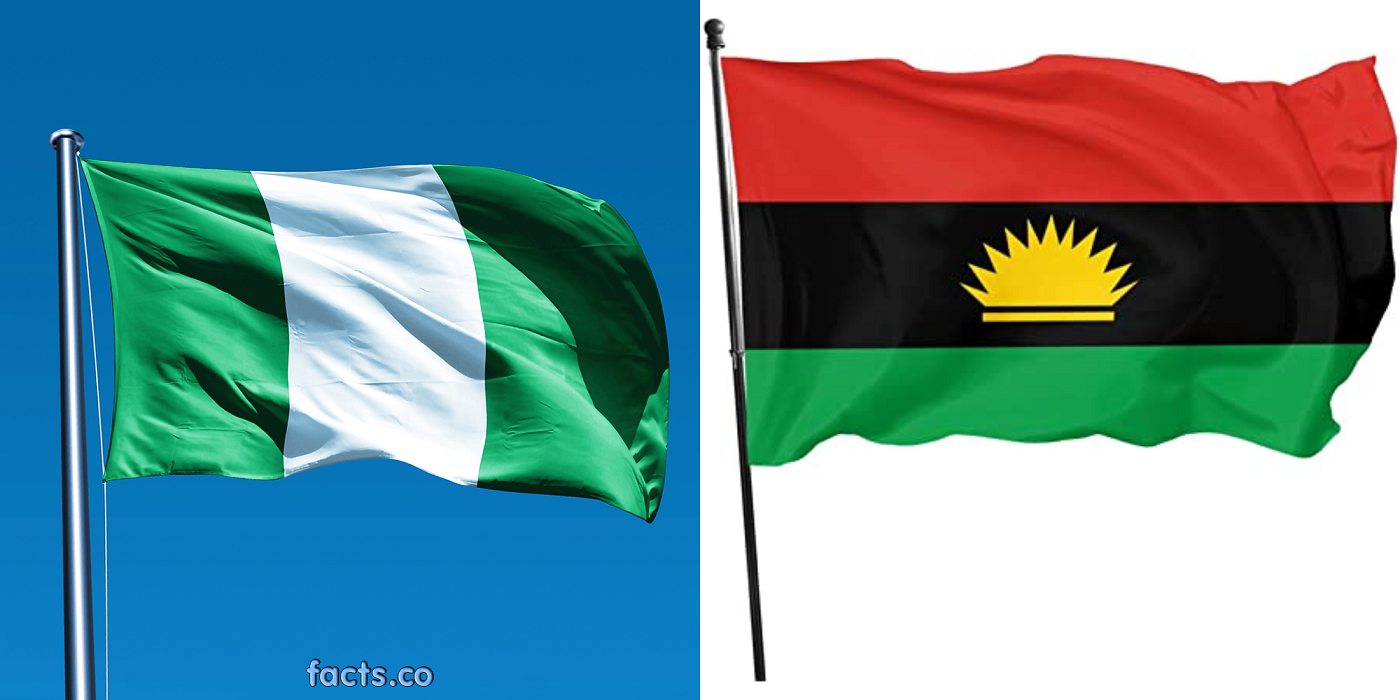
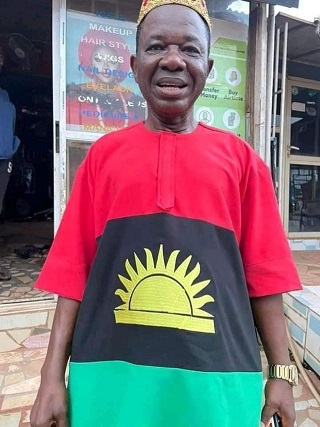
The Nigerian army recently rolled out Operation Still Water, an ember months programme, to maintain security during the festive period. It is a continuation of the previous operations such as Crocodile Smile, Python Dance, and so on. In the midst of it, popular actor Chiwetalu Agu was arrested at Upper Iweka Road, Onitsha, Anambra state, for inciting public members and soliciting support for IPOB. He was donning an IPOB attire when he was arrested. The army denied maltreating him, as was widely reported. A video surfaced later, which gave a snippet of what their interaction with him was like. He said that the Sun showing on his cloth was a rising Sun and that the colour combination was just coincidental and didn’t signify IPOB. He said he was educated enough to know where to go to and where not to go to. He squarely denied IPOB and said he had nothing to do with it. So many Igbos are coming out of their shells to deny IPOB and publicly give their activities a dressing down.
The Igbos we relate with every day are not the ones that IPOB represent, right? So the barbaric activities of the group need to be clamped down by the Igbos themselves. They must make it clear that the narrative of that movement is not theirs and is not in their own interest.

Joe Igbokwe’s house was razed in his hometown of Nnewi, Anambra state. Dr Chike Akunyili was killed in the Idemili North local government of Anambra state. A fire that seems to rage on from a distant neighbour’s residence clearly indicates that your own house is not insulated from the same kind of fire. A proverb in Hausa says, “If you see your neighbour’s beard in flames, you must hurry and rub your own with water.”

The tiny flame that started in Borno has spread like cancer to the entire North. South easterners should not allow this in their backyard. The earlier the Igbos rise against this so-called rising Sun, the better for us all. We have a risen Sun to be grateful for already. There is no need to go looking for more Sun. The heat would definitely be unbearable!

Tahir is Talban Bauchi can be contacted via talbanbauchi@yahoo.com.
If there was Biafra

By Ahmadu Shehu, PhD.

It is no longer debatable that Nigeria, despite its crippling challenges, may never disintegrate, at least geographically. Of course, the animosities, hatred and distrust between the ethnic and regional nationalities might worsen, but Nigeria’s elasticity is exemplary and uncommon. However, I still do not accept the convenient folktale deployed by politicians that our country’s unity is non-negotiable. By now, our experience as a nation should have liberated our minds to begin a conversation on any topic of national interest, no matter the controversy or emotional delicacy.

As we approach the 61st birthday of our beloved country, I find it imperative to discuss this controversial but important issue. From the outset, let me clarify that this article is not about the Igbo as an ethnic group or the southeast as a region. Given the rise in pro-Biafra sentiments and agitations at the moment, this article is only meant to provide an outsider view of some arguments espoused by the secessionists in their attempt to generate sympathy and popularity.

When you think of Nigeria’s disintegration, the first thing that comes to mind is Biafra – a defunct Igbo separatist nation in the country’s southeastern part. The attempt to curve this region from Nigeria in 1967 remains one of the most gruelling experiences of our country. A barely six-year-old nation was thrown into chaos by a set of greedy politicians and unscrupulous military officers who wanted power at the centre. Within those thirty months, millions of innocent citizens lost their lives, got injured or lost their possessions. In addition, Nigeria lost a large chunk of its national treasury meant to set the country on the right footing. The rest, as they say, is history.

Instead of learning from our past mistakes to avoid the recurrence of this destructive, reckless and unnecessary event, Nigerians of this generation seem to be oblivious of the necessary truth. As with most factual historical events in the Nigerian psyche, this painful experience, its true causes, and damning consequences are not well-known to the younger generations. The biased narratives in various country sections ensure that our population only hear the stories that suit their mindsets without alternative facts that would open their minds to self-criticism.

In the case of Biafra, most of the young Igbo folks have a pretty false image of their fate as a people if Biafra had happened. This skewed imagination is not unconnected with the biased, often imaginative stories these young Nigerians were told about their defunct “nation”. The Igbo popular culture and the intelligentsia depict a fictional image of Biafra as a dream-nation where the Igbos shall live in peace and prosperity devoid of challenges.

They imagine, albeit naively, that Biafra will be unlike Nigeria and that their lot would have been better than it is today. These unsuspecting chaps are led into believing a mirage of living in a nation flowing with honey and milk. They are also told that other ethnic and geopolitical sections of Nigeria are responsible for all their woes. They argue, albeit ignorantly, that if not for the North, the West, Hausa, Fulani, Yoruba, etc., theirs would have been a heaven on earth. These ignorant tales conclude that a united Nigeria does not help their course as a people.

Well, I think that these views are simplistic. I also believe that it is our responsibility to tell our brethren the truth that they need to hear. Firstly, the creation, proclamation of Biafra was not in the interest of the ordinary Igbo people. It was the last-ditch by Igbo politicians to hide their faces from problems they caused and ensure they stayed in power. Secondly, our brethren are mischievously told that the Igbo were so rich that the Igboland was the largest economic contributor to the federation. Unfortunately, the falsity of this assertion is not far-fetched, as the southeast was and is still the least contributor to the Nigerian GDP. Moreover, during the attempted secession, Nigeria’s GDP was mainly from the agricultural sector, predominantly from the North.

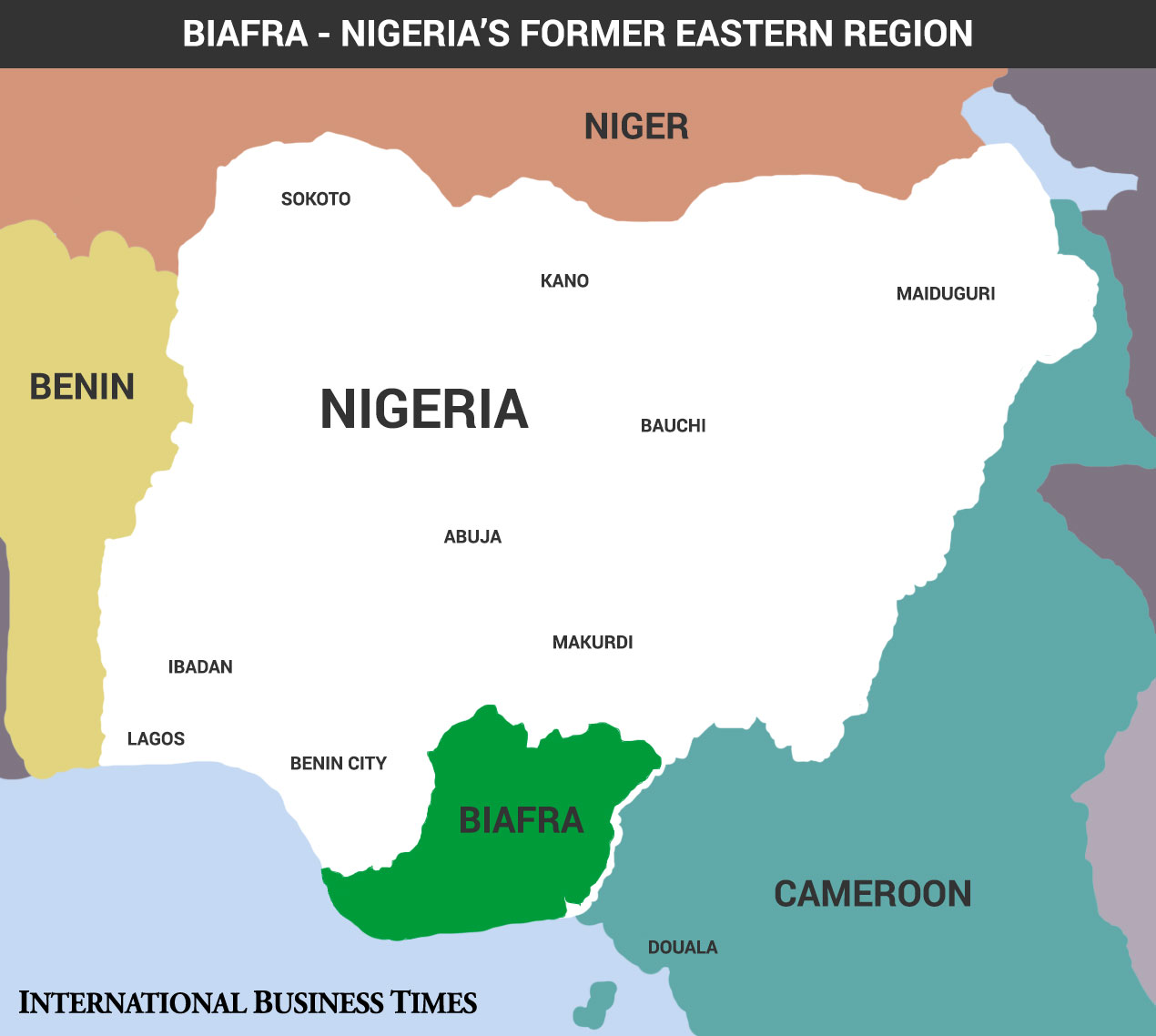
Thirdly, it seems that many people are misled into believing that Biafra would be an oil-rich country even though none of the Southeastern states is truly oil-producing. The Niger Delta, Nigeria’s oil pot, was not and will never be part of Biafra.

Fourthly, young Igbo people tend to believe that the southeast was Nigeria’s cash-cow at independence. The bitter truth is that even in the ’60s, the perceived strong Igbo economy depended entirely on other regions. This scenario is worse today as there are probably more Igbo people and Igbo businesses in other parts of the country than in Igboland. Worse still, the Igboland is closed and unfriendly to Nigerians, making external investments impossible.

The most supposedly intelligent argument advanced by the secessionists hinges on the current centralized federal system. They claim that the centre is too powerful and that Igbo states are marginalized. This is an argument of convenience, at best. Nigerians are not oblivious that the current unitary system was the handwork of Igbo politicians who saw a unitary arrangement as the answer to their political agenda. Today, the tides have turned, and these very people are calling for the system they abolished. Restructuring this country – whatever that means – might be a good idea, but only after a genuine debate that will ensure we do not return to the same vicious circle.

People with secessionist tendencies have used the challenges in northern Nigeria as reasons for disintegration. However, Biafra will by no means be a safer or better place. Currently, some of the most terrible crimes bedevilling this country are not unconnected with the southeast. From drugs to internet fraud, armed robbery and kidnapping to arms smuggling, if not worse, the southeast is not holier than other parts of this country.

Another commonplace argument is that the industrious nature of the Igbo people is enough evidence that Biafra will be a great country. But this argument, too, has failed to account for the fact that the wealthiest and most successful Igbo people and their businesses owe their success significantly to Nigeria and not Igboland. The Igbo people are traders, and the economic success of trading lies in the customer market, not the number of sellers. What do the Igbo people actually produce or sell that does not rely on the larger Nigerian population?

On the one hand, there is nothing that the southeast offers that cannot be produced or sold by other Nigerians. But, on the other hand, everything from food to livestock, energy, and the market for everything sold depend on the other regions. The southeast is asking to leave under this situation is the most absurd strategic blunder of the century.

Similarly, Igbo politicians and administrators have not distinguished themselves from the rotten Nigerian public servants. We do not see a difference between southeastern institutions or southeasterners in Nigerian public offices and their counterparts in other regions or ethnic groups. The same crop of people will lead Biafra. So, nobody should be enthusiastic.

Therefore, it is evident from the preceding that the viability of Biafra as an independent state is not assured. For one, it will be a landlocked, forty-one thousand kilometres square piece of land, which is just a half of Niger state and less than the size of Kaduna state. Worse still, it will be circled on all four corners by its biggest adversary, the Nigerian state. Secondly, it will depend on its biggest adversary for nearly everything except air, including waterways, food, and labour. Third, it would be one of the most overpopulated countries vis-à-vis its landmass and population.

The bitter truth is that these ecological, geographical, demographic and economic factors do not support the presupposition that the Igboland is better off as a separate entity than it is within the Nigerian federation. Therefore, it is safe to conclude that even if Biafra was to happen on a platter of gold, it is not going to be the rose garden these populists have configured our brothers to believe. Thus, we should all look before we leap!


Dr Ahmadu Shehu is a nomad cum herdsman, an Assistant Professor at the American University of Nigeria, Yola, and is passionate about the Nigerian project. You can reach him at ahmadsheehu@yahoo.com.

October 1: IPOB declares sit-at-home, urges removal of Nigerian flags in region

By Muhammad Sabiu

The Indigenous People of Biafra (IPOB), a proscribed secessionist organisation agitating for the breakaway of Nigeria’s southeast, has declared that the 1st of October would be a sit-at-home day.


The group has also ordered all Nigerian flags in the region to be removed.


The proscribed organisation, in a statement by its spokesman on Saturday, Emma Powerful, stressed that it had commenced its “no Nigerian flag in Southeast” campaign.


“IPOB has declared 1st of October 2021 total shutdown in Biafra land as a sign of our rejection of the evil construct called Nigeria and there shall be no movement in Biafra land on this day.


“Also, IPOB has declared from today 25th September 2021 that all Nigerian flag mounted anywhere in Biafra land must be brought down, Banks exceptional, IPOB leadership will communicate to Banks directly and give them reason they must peacefully bring down Nigeria flag in their banking premises before we do it ourselves in our own way.


“Every body must strictly adhere to this directives from IPOB leadership, we want to let the world know you that Biafraland is not Nigeria and shall not be. Don’t say I don’t know, a word is enough for the wise,” the statement reads.


Recall that IPOB leader, Nnamdi Kanu, is currently awaiting trial on charges relating to treason, illegal possession of firearms.


He was in recent months reportedly arrested in Kenya and later repatriated to Nigeria after spending years in the United Kingdom as what could be described as an “asylum seeker.”

Dear Nigeria: Don’t fall prey to the false promises of war

Like the mid-1960s, the early 2020s has been heated and filled with war rhetoric. This rhetoric has been well oiled by claims of nepotism, corruption and everything that has been proverbial fertilisers for conflict in post-independence Africa. From Freetown to Kinshasa, the story has always been the same. And intriguingly, the results have also been similar. Deaths and more deaths, reconciliation, then business as usual. Hardly any lessons learnt!

Let’s retake this: the science of war in Africa is essentially a story of frustration, then misinformation, then delusion, then deception, then destruction, then reconciliation and finally rehabilitation. But, except maybe for places like Rwanda, the root causes never get addressed, the warlords never die, the corrupt politicians/soldiers mostly come back wealthier and more confident to assume the mantle of leadership. And the masses who fought and killed one another are further plunged into disillusion and poverty.  

Why then does this story keep repeating itself if data tells us that the investment always ends in red and that the returns are always intertwined with regrets? Here are a few observations, supported by both learning and experience:

Violence is a Political Statement

The old saying that where gentility fails, brutality prevails holds true today as it did in Nigeria’s 1960s, Liberia and Sierra Leone’s 1980s, and Rwanda’s 1990s. Politicians have basically two tools: debate and violence. In climes where one ceases to be effective, the other is automatically activated. And because both do not really take much from politicians by way of casualties, both have been greatly valued assets in their political estates. To change this, the citizens must be enlightened enough to see beyond the rhetoric. And usually, this mass education has to be ultimately championed by concerned and more enlightened citizens outside the political class.

The War Mongers Mostly Have a Contingency Plan

Suppose the chances of death for both leaders and masses in a civil conflict are equal. In that case, the apparent possibility is that wars will hardly be fought, and misinformation will get as little funding as possible. Unfortunately, the truth is that leaders usually have collaborators outside the borders of their countries and these collaborators typically stop at nothing to rescue their friends when things get worse. So, with this in mind, leaders at both ends of the divide beguile their cannon fodders to get the job done while they await the desired if ominous outcomes.

War Promises Freedom and other “Sweet” Things

History is replete with people taking the path of violence and war to regain their freedom. And beyond freedom, war promises access to places, bodies, resources and positions that were otherwise inaccessible. In a strange turn of things, Foday Sankoh of Sierra Leone rose to a position almost as powerful as the President after his rebellion that led to the loss of reportedly 50,000 lives, including hundreds of Nigerian and other ECOMOG/UN Peacekeeping forces.  He committed the crimes, then, for the sake of peace, got rewarded with laurels! Who is going to bring back all those lives, especially those of his loyal foot soldiers? Most of these people willingly took arms because they dreamt of enjoying what only Sankoh could enjoy, while their ultimate lot was destruction. War promises a lot of prosperity, ironically, but delivers a lot of destruction in reality.

The Crux of the Matter: it’s Difficult to Find a Suitable Alternative to War

Not that people want to lose routine or the calm of home. Not that they like to see the hacked body parts of loved ones or wade through the blood of a beheaded or gunned down neighbour in search of safety, not that they like to be refugees and be treated as slaves in strange lands, just that in the heat of the burning issues, with the accusations and counter-accusations and the mutual acrimony that ensues, it’s “difficult” to find a suitable alternative. Or better put, the other options have been abused and exhausted. Elections and coup d’état are the usual alternatives to war in our postcolonial political dispensation, but the two have hardly ever provided the desired outcomes. Therefore, it is safe to say the fault is not in our enemies; the fault, rather, lies in us. People are willing to change evil until they become beneficiaries of such evils. And how quickly do their fans often forget this fact!

In the final analysis, people plan for wars, heat the polity, sponsor misinformation, make promises of victory, but then war is so creative that it hardly subjects itself to anybody’s plans. And when the gruesome scenes of death and destruction start being plastered all over the media, and mercenaries and warlords start gaining unfettered access to national resources and the treasury, when hunger subdues the strongest amongst us and ruins the future that is so dear to us, when ammunitions are in short supply, and the enemy forces are about to be in total control, that’s usually when it becomes clear that it is not really the war we wanted, but the promises it offered from a distance. Too late!

AF Sesay is a writer based in Lagos. He can be reached via amarasesay.amir@gmail.com.

Mr President, please, let them go!

By Muhammad Tsaure

The Biafra saga is no longer South East or South-South issue; instead, it has culminated into something more devastating and absolute hatred to Buhari in particular and Northern Nigeria in general.  I garnered series of experiences primarily based on the discussion I held with a significant number of people from the southeastern region. I learned from them that they mainly think the North doesn’t want them to leave the union because the proportionate percentage of the country’s GDP comes from their region. Thus, if they secede, the North will be left bankrupt and nowhere to turn to.

Unknown to many of those people, this thought is nothing short of ignorance about the exact nature of Northern Nigeria. The North is endowed with whatever a country needs to survive, prosper and develop. We are not parasites, as they claim. But, if they want to go, please, let them go in peace. Nigeria doesn’t necessarily need Igbos to survive.

The North has come of age now; we can fend for ourselves and don’t need any region to live and survive as a country. Whoever wants to go, let them go. The North has treated Igbo people with dignity, love and leniency. The entire Biafra States are not up to Kaduna State in terms of population as well as geography.

In 2015 I was at the Niger-Delta University (NDU) at Wilberforce Island for a conference organised by the Literary Society of Nigeria. After presenting my research paper entitled “Diaspora Literature: A Protest Literature or Romanticism?” We went along with other colleagues to Yenagoa (the capital city of Bayelsa State) to explore or otherwise become a group of tourists. But, to my amazement, the entire Bayelsa State is not up to Bichi local government area in Kano or Funtua local government of Katsina State. Yet, they have three Senators; representing Bayelsa Central, Bayelsa West and Bayelsa East and five Members House of Representatives, and one minister of State on Petroleum.

The conference lasted for six days, and I visited the entire eight (8) local government areas of Bayelsa State. You hardly believe whether or not people are living in some of these local governments. Houses scattered, each community has its language or dialect.

The same week I came back home, I went to Bichi local government of Kano state to verify my assumption or guess. On reaching there, the conclusion I had to make was that Bichi local government is far larger in terms of population, buildings, and whatever one could think of than Bayelsa State. And nobody in the North ever complains about that.

Muhammad Tsaure is the Principal of Government Secondary School, Tsaure. He can be reached via 76muhammadtsaure@gmail.com.

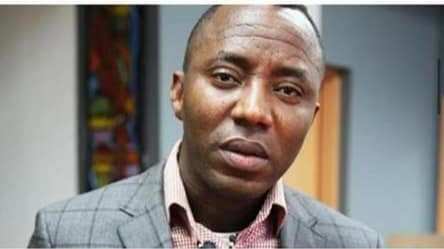
JUST IN: Police arrest Sowore at venue of Nnamdi Kanu’s trial

The Publisher of Sahara Reporters, Omoleye Sowore, has been arrested by officers of the Nigerian Police Force (NPF) in Abuja.

The incident happened at the Federal High Court, Abuja, the venue of the trial of the leader of the proscribed Indigenous People of Biafra (IPOB), Nnamdi Kanu.

Sowore confirmed the incident on his Twitter handle that he was “Just arrested by @PoliceNG at the Federal High Court in Abuja!”