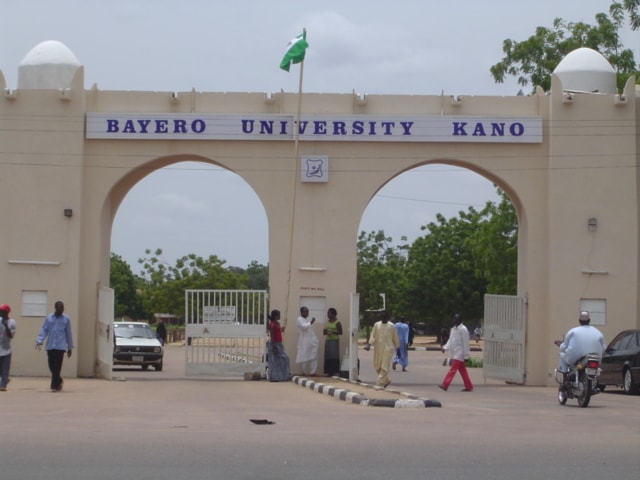
Bayero University Kano

Society of Nigerian Broadcasters collaborates with Faculty of Communication on investigative journalism

By Anas Abbas

Faculty of Communication of Bayero University, Kano and the Society of Nigerian Broadcasters organized a two-day round table meeting on investigative and data-driven journalism challenges.

The roundtable, held on Monday, focused on challenges of investigative and data-driven journalism and was themed ” Round table meeting on issues and challenges of investigative and data-driven journalism in the broadcast sector in North West Nigeria.”

The event, organized in collaboration with the Society of Nigerian Broadcasting, took place at the CBN Centre of Excellence at Bayero University, Kano.

Professor Umaru Pate, a communications expert and seasoned scholar, presented a paper titled “The Imperative of Investigative and Data-Driven Journalism in North West Nigeria.” 

As the keynote speaker, Pate thoroughly explained that “investigative journalism contributes to freedom of information.” 

Pate noted that some companies might pull their advertisements if the media content conflicts with their interests. 

He highlighted the pressing issue of inadequate funding for research within media organisations.

Pate noted that many outlets often overlook the necessity of investing in thorough research, emphasizing that producing quality news requires financial commitment. “To deliver high-quality journalism, organizations must be willing to allocate resources toward research,” he stated.

He addressed another significant challenge faced by investigative journalism, which is “the threats to journalists’ safety,” which underscores the need for greater support and protection for those committed to uncovering important stories.

Corruption Allegation: An open letter to BUK VC

Dear Prof. Sagir Adamu Abbas, 

Although I doubt you could access this letter, I consider it necessary after two failed attempts to obtain relevant information from the office of the registrar of Bayero University, Kano (BUK).

After following this issue for over six months, expecting the school to do the needful, I am disappointed that this great institution continues to give the public room to question its integrity, especially when such involves deceiving a newly established institution by inflating figures and withholding surplus money belonging to students.

It has been alleged that the management of BUK inflated the figures of students’ school fees in the data shared with the National Education Loan Fund (NELFund). As a result, students applying for loans to pay their registration fees met higher amounts already pre-entered on their dashboards and submitted their applications since there was no option of altering the figures. Consequently, NELFund sent the pre-entered amounts to BUK to cover the students’ registration fees and expects each applicant to repay the same after graduation.

I know a student who needed N95,500 to pay his registration fees, but when he wanted to borrow from NELFund, he met N110,000 on his application dashboard. He submitted it like that, and his application was approved in June 2024. However, owing to pressure from BUK, he sought money and paid his registration fees, believing in the school to do the needful once it received money from NELFund.

Fast-forward to January 2025. The school refunded him N95,500 (the exact amount he paid as registration fees) without explaining the N14,500 surplus it received from NELFund. 

Another student who needed N101,500 was forced to borrow N105,000 from NELFund, with BUK keeping the extra N3,500. 

In addition to contacting these two students, I have read dozens of posts and comments by BUK students on social media (concerning this issue) between August 2024 and now, with no single student mentioning having information about their missing money. However, some students are afraid of victimisation, hence warning their mates to be careful with their expressions regarding the issue.

Sir, each of these poor students is expected to repay the exact amount BUK received on their behalf. As a consequence, it is absolutely wrong for the school management to keep the money.

I must mention that the BUK’s singular act of providing wrong data to NELFund could jeopardise the chances of a lot of other potential beneficiaries because the Fund could distrust other institutions henceforth.

I considered this letter necessary after taking some steps, notable of which are as follows:

On June 30, 2024, NELFund responded to my questions via X (formerly Twitter) as follows:

“All institutional fees on the portal were provided by the institution who (sic) themselves are autonomous under the law and not by NELFUND. Should you have any questions regarding your institution fees, kindly contact the competent authorities of your institution.

“According to the Establishment Act, NELFUND reserves the right to determine the interest payable on every loan. In this case, NELFUND have (sic) determined that the interest rate is zero.”

Also, on January 16, 2025, I emailed the registrar of BUK to seek clarification regarding the missing funds belonging to students. Fortunately, I received the following response about an hour later.

“Good morning Ishaka, 

Thank you for your email. I will review the issue you’ve raised and respond accordingly. 

Kind regards

Haruna Aliyu 

Registrar”

Nonetheless, after waiting for six days without receiving any feedback, I sent a reminder. However, at the time of writing this letter, I have still not received any relevant information.

An institution like BUK is supposed to be the epitome of accountability and transparency, so I humbly request that you consider doing the following as soon as possible.

Consider sending the surplus money to the rightful owners—the affected students. 

After that, explain the reasons for the wrong figures and the delay in disbursing the surplus to them.

Lastly, explain to NELFund why the school sent the wrong figures to represent the value of students’ school fees.

It is worth stressing that all of the above actions are necessary damage control strategies, so each should be carried out and openly communicated. In addition to helping BUK improve its public image, these strategies could help the authorities of the institution to avoid probable consequences of their unethical and illegal actions.

Yours sincerely,

Ishaka Mohammed

BUK alumni celebrate lecturer for achieving PhD milestone

By Uzair Adam

The 2022 graduates of the Mass Communication Department, Bayero University Kano (BUK), have celebrated their former level coordinator, Dr. Ummi Muhammad Hassan, in recognition of her recent PhD achievement.

The event, held on Tuesday at BUK’s new site, was attended by family members, alumni, and lecturers from the Faculty of Communication and related departments.

It featured a cake-cutting ceremony, an award presentation to Dr. Ummi, and speeches from invited guests.

Dr. Ummi’s PhD research focuses on the Challenges and Perceptions of Muslim Hausa Female Rap Artists in Kano and Kaduna States.

Speaking at the event, the students said the celebration was a way to honor Dr. Ummi as their “academic mother” and acknowledge her dedication to their success.

“We wanted to express our gratitude to Dr. Ummi for all she did for us during our time at BUK,” said Umar Isa Dandago, one of the event organizers.

He added, “She treated us as family, and this celebration is our way of giving back.”

In her response, Dr. Ummi expressed heartfelt appreciation. “When one of my students, Uzair Adam, informed me about this, I was speechless.

“I consider my students as my second family, and seeing them organize this for me melts my heart,” she said.

The Head of the Mass Communication Department, Dr. Gambo Nababa, lauded the students for their thoughtfulness.

He also encouraged Dr. Ummi to continue her academic journey and expressed optimism about her attaining the rank of professor soon.

Dr. Ummi’s husband, Dr. Musa Labaran, who also serves as the department’s examination officer, shared his pride and gratitude.

He noted that the gesture reflected Dr. Ummi’s devotion to her students.

Other notable attendees included the Head of the Information and Media Studies Department, Dr. Nura Ibrahim, as well as Dr. Hadiza J. Ibrahim, Dr. Ibrahim Siraj, and Dr. Muhammad Danja.

They described Dr. Ummi as a remarkable academic who has left an indelible mark on her students.

The celebration underscored the enduring bond between Dr. Ummi and her students and highlighted her contributions as an educator and mentor.

Former BUK staff raises concerns about transcript delays

By Muhammad Sabiu

Dr. Muhsin Ibrahim, a former Bayero University, Kano (BUK) staff member, has expressed deep concern over the challenges students and alums face in obtaining academic transcripts from BUK.

In a recent commentary on Facebook, Dr Ibrahim highlighted the plight of many former students who have missed out on opportunities due to delays in processing transcripts. “This is sad and embarrassing, especially as the problem is completely avoidable in this day and age,” he wrote, noting that the issue is prevalent in many public universities across Nigeria.

Dr. Ibrahim shared a personal experience, revealing his inability to assist a former student in obtaining her transcript despite his connections within the university. He described the situation as unfortunate and urged those responsible for transcript processing to act with empathy and diligence.

He also called on the university’s management to address the problem decisively, suggesting that any staff found guilty of causing unnecessary delays should face appropriate disciplinary actions. “Think about what a delay means to these people. Don’t ruin their chances at a scholarship or a job. Be empathetic. Fear God,” he appealed.

Dr. Ibrahim’s remarks resonate with affected students and alumni, who have long sought reforms to streamline administrative processes. This underscores the need for transparency and efficiency in accessing critical academic documents.

Prof. Mustapha Muhammad retires after nearly 50 years at Bayero University

By Muhsin Ibrahim

Professor Mustapha Muhammad, a long-standing figure in the Department of English and Literary Studies at Bayero University, Kano, officially retired after an impressive 47 years of service. His disengagement marks the end of a significant chapter in the university’s history.

Known for his dedication to teaching, research, and mentoring, Professor Muhammad leaves behind a legacy that has shaped the minds of countless students and educators. His farewell on January 5 was not only a personal milestone but also a moment of reflection for the department that has greatly benefited from his wealth of knowledge and experience.

Colleagues express concerns about the impact of his retirement on the department. Malam Maikudi Zukogi noted that while Professor Muhammad’s departure was anticipated, it highlights the challenges ahead, especially following the recent retirements of two other long-serving faculty members – Profs. Isma’ila Tsiga and Sa’id Babura Ahmad. Zukogi stated, “His absence creates a significant vacuum that will be difficult to fill.”

As Professor Muhammad embarks on this new phase of his life, colleagues and students alike have extended their well wishes, expressing hopes for good health and a smooth transition into retirement. The university community acknowledges his invaluable contributions and looks ahead to sustaining the foundation he helped establish.

The silent struggle: Tackling students’ mental health

By Khadijat Ogido 

Maintaining good health is essential for students every day. Well-being is a holistic journey that integrates physical, mental, and emotional health. Mental health is a cornerstone of well-being, though many students overlook it.

Mental health problems can affect a student’s energy level, concentration, dependability, cognitive ability, and optimism, which hinder their performance. Students consider symptoms like anxiety, depression, eating disorders, psychotics, and mood swings as everyday experiences which often lead to mental illness.

According to mental health research conducted by the National Alliance on Mental Illness (NAMI), one in four students has a diagnosable mental illness. “A lot of pressure from parents, stress from exams, the pressure of getting good grades in university. These aspects destroy the inner peace of students”.

In a world where stress and fast-paced demands are commonplace, prioritising self-care and balanced living can significantly impact health and happiness. However, the case is often different for most students. 

The stress of pursuing academic excellence sometimes leads to neglect of health. To pass their exams, most students stay up late, reading for more than 16 hours a day, and some do not properly care for their diet, which has resulted in mental, physical, and psychological problems.

Mental health is vital at every stage of life, from childhood to adolescence and adulthood. There are several causes of mental health illness in students, such as depression, anxiety disorders, personality disorders, obsessive-compulsive disorder, panic disorder, etc. Most students on campus experience some of these problems but always downplay them as usual.

Amina Abubakar, a 300L architectural student at Bayero University Kano (BUK), narrated her experience of how school activities have challenged and affected her mentally. She said, “Being a student is difficult because I must attend lectures, do tests, assignments, and presentations. Most of the time, I have a serious headache if I return from school. The headache lasts for more than two days, and I won’t be able to eat or sleep.”

Similarly, Maryam Jibrin, a student in the economics department, lamented about the price of being a student. She said, “Being a student, trying to get good grades, maintaining social relationships and trying to cope with the current hardship is on another level because it’s affecting most students in many ways. At times, students feel depressed and stressed out. Some students will even lock themself inside and don’t want to talk to anybody, and when u ask them what is wrong with them, they will say they are fine”.

Consequently, mental health issues among students have a significant effect on their academic performance. Social relationships, behavioural issues, physical health, lack of concentration, insomnia (difficulty sleeping), and other problems might affect students physically, mentally, and psychologically. 

Matt Haig, an English author and journalist, said, “Mental health problems don’t define who you are; they are something we experience. You walk in the rain and feel the rain, but you are not the rain.” Therefore, students who experience any symptoms of mental issues should not panic. They should always seek advice and help or talk to someone, not keep things to themselves.

In conclusion, since students must overcome academic stress to pass, the university authority should help create an environment that will enable students to study by building a counselling hall for students to go to when they feel depressed. Also, family and friends should not leave their loved ones alone without checking up on them, which might make them feel alienated. 

Students should engage in activities that bring them joy and relaxation, eat on time, take a break, give themselves time to rest, exercise, and be healthy. Health is wealth. Don’t hesitate to seek support when you need it. Your mental health matters, and seeking help is a sign of strength, not weakness.

Khadijat Ogido wrote via ogidokhadijat82@gmail.com.

Celebrating Excellence: Prof. Muhammad Sani Umar Rijiyar Lemo’s well-deserved promotion

By Muhammad Ibrahim

Muhammad Sani Umar Rijiyar Lemo’s recent promotion to professor at Bayero University, Kano (BUK), is a moment of pride not only for the institution but also for the broader academic and Islamic scholarly communities in Nigeria. This achievement is a testament to his unwavering dedication, intellectual rigour, and remarkable contributions to education, scholarship, and the Muslim community.

Prof. Rijiyar Lemo is a scholar of exceptional depth and influence, particularly in the fields of Islamic studies, particularly Hadith and the Qur’an. Over the years, he has distinguished himself through insightful research and community engagement. His ability to bridge the gap between traditional Islamic knowledge and contemporary educational practices has earned him admiration from colleagues and students.

His excellence extends way beyond academia. In recognition of his contributions to education, religious scholarship, and national development, Prof. Rijiyar Lemo was conferred with a prestigious national honour, the Officer of the Order of the Niger (OON), by former Nigerian President Muhammadu Buhari. This honour highlights his role as an academic and as a figure of influence and positive change in the wider Nigerian society.

Prof. Rijiyar Lemo’s contributions to the Muslim community are equally remarkable. He has been a prominent voice in promoting peaceful coexistence, understanding, and moral reawakening among Muslims.

As a preacher, he has delivered lectures across Nigeria and beyond, addressing contemporary issues facing the Muslim ummah. His emphasis on theology, education and ethical leadership has left a lasting impact on communities outside the university.

This promotion is also significant because it underscores BUK’s commitment to recognising and rewarding academic excellence. In an era where other pursuits sometimes overshadow the value of the scholarship, such acknowledgement serves as a beacon of hope for aspiring academics and students, reminding them that hard work and integrity do not go unnoticed.

Moreover, Prof. Rijiyar Lemo’s rise to this esteemed position inspires younger generations, particularly those from his home state of Kano. It demonstrates that one can attain great heights while making meaningful contributions to society with perseverance, dedication, and a genuine passion for learning.

Professor Muhammad Sani Umar Rijiyar Lemo is set to impact his field, mentor future scholars, and advance knowledge at Bayero University. His promotion symbolises personal achievement and a celebration of academic excellence for all.

May Allah continue to guide and protect Malam for us, amin.

Muhammad Ibrahim wrote from Kano, Nigeria.

Prof. Suwaiba Sa’id Ahmad: Tribute to the Iron Lady

By Adamu Isah Babura

I want to congratulate Professor Suwaiba Sa’id Ahmad on her promotion to the exalted rank of Professor by the Governing Council of Bayero University, Kano.

Prof. Suwaiba is a pioneer. After 20 years in academia, she became the first female professor from Babura, Jigawa State. She progressed from Graduate Assistant to Professor, holding leadership roles like Head of the Science and Technical Education department and Director of the Gender Studies unit.

Her expertise extends beyond the university. She served as the Provost of Jigawa State College of Education. Currently, she holds the esteemed position of Minister of State for Education, Federal Republic of Nigeria, leveraging her vast experience to shape the country’s education landscape.

Prof. Suwaiba, the current Nigerian Minister of State for Education, is an exemplary academic and a shining star in the field of science education. Her unwavering dedication, unrelenting passion, and uncompromising commitment to excellence have left an indelible mark on the lives of countless students, colleagues, and the academic community at large.

As a renowned scholar, Professor’s contributions to her field of Science Education have been groundbreaking, insightful, and profoundly impactful. Her research has not only advanced our understanding of critical issues in the education sector but has also informed policies, practices, and innovation.

Prof. Suwaiba, a gifted teacher and mentor, inspires generations of students to pursue excellence and cultivate a love for learning. Her rare ability to connect with, listen to, and guide students nurtures their growth and earns her deep admiration and gratitude from all who learn from her.

Throughout her illustrious career at Bayero University, Kano, and outside, Professor Suwaiba has demonstrated remarkable leadership. She collaborates with colleagues, institutions, and communities to advance the cause of education, promote social justice, and foster a culture of inclusivity, equity, and excellence.

As we celebrate Prof. Suwaiba’s achievements at this incredible milestone, we honour her remarkable accomplishments,character, values, and unwavering commitment to making a positive difference in education. She is a true treasure, a beacon of hope, and an inspiration.

Adamu Isah Babura wrote from Bayero University, Kano, via adamubabura@gmail.com.

Leadership and reputation management crucial in challenging times – Expert

By Anwar Usman

Prof. Mustapha Nasir Malam, a senior lecturer in the Department of Mass Communication at Bayero University, Kano, spoke about the importance of leadership and reputation management, especially during challenging periods.

He explained this during a quarterly professional development lecture organised by the Nigerian Institute of Public Relations, Kano State Chapter.

He explained how quality leadership plays a significant role in shaping an organisation and society. He noted that “good leadership enables a leader to build a good reputation and earns the respect of his subordinates”.

Malam described the qualities of a leader as self-confident, innovative, and having any other attributes that may give the leader an added advantage.

He further asserts that reputation management is crucial and takes a long time to build, citing some countries that excel in it. He also used the #EndBadGovernance, the SAMOA deal agreement, and the recent controversy between the Nigerian junta and Nigeria to highlight how these incidents negatively affected Nigeria’s reputation.

Dr Sule Y. Sule, a program discussant and lecturer in the Department of Mass Communication at Bayero University, has explained how improper reputation management strategies have affected the Nigerian government’s reputation and will take a long time to fix.

He called on the government to strengthen its communication capabilities by employing strategic communication strategies to maintain the country’s reputation and image.

Various lecturers from the Department of Mass Communication, the national spokesperson of the Nigeria Customs Service, public relations practitioners, the publisher of PR Nigeria, students, and media personalities attended.

My journey in student politics at Bayero University, Kano

By Bilal Muhammad Bello (BMB)

From a young age, I have been deeply fascinated by politics and dreamed of actively participating in it one day. Growing up in Kano State, I listened to political programs on local FM stations and national media, which nurtured my passion and understanding of the political landscape. This enthusiasm carried over into my academic journey at Bayero University, Kano (BUK), where I discovered opportunities to channel my political ambitions.

Upon gaining admission to BUK, even before lectures commenced, I visited the Students’ Union Government (SUG) Secretariat with a friend in his second year. At that time, the SUG President, fondly known as Third Man, led a vibrant administration. Observing the activities at the Secretariat left a lasting impression on me. I resolved that, despite the challenges ahead, I would one day participate in student politics.

However, during my first and second years, the school management suspended SUG elections and replaced the union with a caretaker committee (CTC). To stay involved, I joined my local government students’ association and other student unions, which allowed me to gain valuable experience and insights.

In 2023, during my third year, the school management reinstated SUG elections, and I seized the opportunity to run for the position of SUG Departmental Senator. Around the same time, my department, the Mass Communication Students Association (MACOSA), was preparing for elections. Since the position of Departmental Senator was part of the SUG elections, MACOSA executives decided to conduct a primary election to streamline the process. The winner of the primary would automatically secure an SUG election form.

I was one of three candidates vying for the position, determined to represent my department in the Students’ Representative Assembly (SRA). Financial challenges posed significant hurdles, but I remained optimistic. My campaign strategy focused on building genuine relationships with students across all levels. From my first year, I had shared resources like past question papers, handouts, and PDFs with my name attached, ensuring I was remembered. Additionally, I provided timely updates about school affairs and assisted newcomers in settling into university life. These efforts resonated with students and garnered their support.

The campaign period was intense. While my opponents distributed campaign materials such as hand fans and handouts, which I couldn’t afford, I relied on the unwavering support of my friends and team members. A close friend, Sa’ad Abubakar, even purchased my election form. My campaign team, including Hajara Abdullahi, Benjamin Jacobson, Umar Farouq, Junaidu Shehu, Abubakar Sadeeq Yahaya, Raheela Usman Buhamas, Sani Labaran and Abdulrauf Abdulrazak Rugu Rugu, worked tirelessly to mobilise voters.

The night before the election, we conducted a face-to-face campaign, visiting hostels such as Sa’adu Zungur (Blocks A, B, and C), Yar’Adua Block, El-Kanemi, Dantata, Dangote, and Ramat. We engaged students directly, explaining our vision and soliciting their support. Influential friends like Al-amin Musa Muhammad, Musa Rabiu and the current MACOSA President, Abbas Ynbs,  played pivotal roles in reaching key student areas with contribution of Fateemah Dabo, Anas Abbas, Alhassan Alhassan Gidan Kara, Khadijah MakkahSanda, Anwar Usman, Abdullahi Mohammed Abubakar, Uzair Adam Imam, Sadi Sada, Yusuf Aminu Yusuf and Adamu Muhammad Dan Hajiya.

The election results were a testament to the power of grassroots engagement and genuine relationships. I emerged victorious, securing the automatic ticket to represent my department in the 24th SRA. I initiated projects that strengthened our department’s presence in the university’s political landscape during my tenure.

Encouraged by this success, I later contested for the position of Faculty Senator and won unopposed, representing the Faculty of Communication in the 25th SRA. This journey was made possible through the unwavering support of friends like Abubakar Ibrahim Shehu, the President of the Department of Information and Media Studies, and the contributions of Distinguished Senator Abdullahi Yunusa Alkah of Law and distinguished Senator Ahmad Mijinyawa of Computing.

Reflecting on my journey, I attribute my success in student politics to a genuine commitment to helping others and fostering meaningful relationships by prioritising the needs of my peers, sharing knowledge, and maintaining mutual respect.

This experience has fulfilled my dream of participating in politics and equipped me with valuable lessons in leadership, collaboration, and perseverance—qualities I intend to carry forward into broader political endeavours.

Bilal Muhammad Bello (BMB) is a Senator Representing the Faculty of Communication 25th Student Representative Assembly SRA-SUG-BUK.