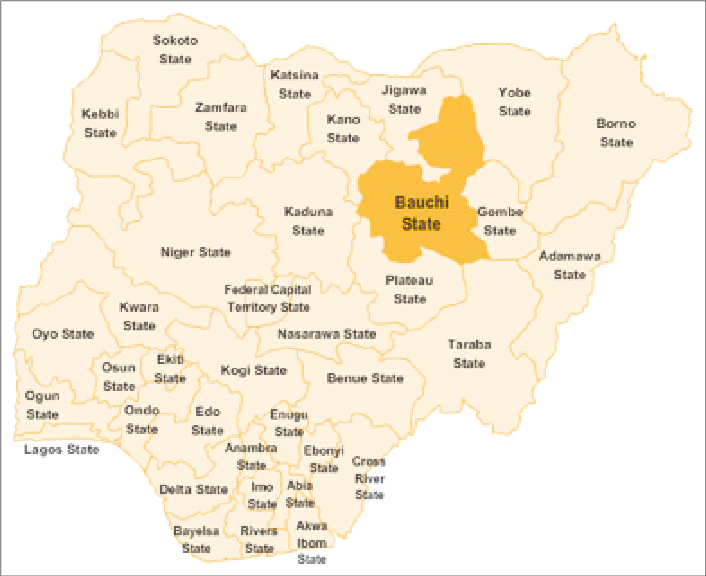
Bauchi State

Governor Bala hosts pre-departure reception for 50 Bauchi State students awarded scholarships to China

By Abdullahi Mukhtar Algasgaini

Governor Bala Mohammed of Bauchi State, alongside his wife, Haj. Dr. Aisha Bala Mohammed (Kauran Bauchi), yesterday hosted a farewell reception for 50 indigenous students awarded full scholarships to pursue various academic programmes in China.

The students, who are scheduled to depart Nigeria soon, visited the Governor to express their profound gratitude for the sponsorship opportunity and to seek his blessings before their journey.

Governor Mohammed warmly congratulated the scholars and charged them to be law-abiding ambassadors throughout their stay.

He urged them to remain focused on their primary academic objectives, reminding them that they represent not only their parents but also the entire Bauchi State and Nigeria as a whole.

In her remarks, the First Lady, Haj. Dr. Aisha Bala Mohammed, assured the students that the Governor and the State Government are immensely proud to sponsor their education.

She encouraged them to be studious and dedicated, stating that their success would be a source of pride for the state and a justification of the government’s investment in their future.

The scholarship scheme is a key initiative of the Bauchi State Government aimed at building human capital by providing world-class education to its indigenes.

Tribute to my father

By Sulaiman Maijama’a

My elder brother’s call – Bello, requesting that I show up at our family house on Sunday morning, August 10th, 2025 – is the most difficult phone call I have ever answered in my life. Immediately, I overheard crying in chorus from the background; I knew what it meant and told my wife that the inevitable we have all been waiting for is here: Baba is no more.

Our father, Alhaji Maijama’a Iliyasu, first fell sick on August 5th, 2023, but later recovered and was taken to go about his business by us (his children). His illness resurfaced on November 24th, 2024; he was bedridden for some weeks at ATBUTH, later discharged and has remained home since then. Seeing his body was not recuperating, yet he was discharged from the hospital, we understood the doctors’ body language and got to a point where we believed that it was terminal. Consequently, whenever I received a phone call from any of my siblings, I picked up with a nervous disposition, fearing what they had to tell me.

On the fateful day, I went home. I found the dead body of our dear father surrounded by my brothers and sisters, uttering “Inna Lillahi Wa Inna Ilaihi Raji’un,” submitting to the will of Allah and crying profusely. I felt that my imagination of how it feels when one loses a father failed me, as I never thought the magnitude of the pain and sense of despair it creates is to that extent. The feeling defies expression. But the crowd of sympathisers trooping to the house and visitors making speeches of eulogy and testimonies of the person our father was were what consoled us the most.

Testimonies of people on earth about the good reputation of a deceased can be a means of his entry into Jannah, as reported in an authentic Hadith, where our beloved Prophet says, “…the believers are the witnesses of Allah on the earth…” That is why it is Islamically encouraged to amplify the virtues of a dead person, but judgment belongs to the Merciful.

An old man who came to sympathise with us stated and emphasised our father’s respect for his parents and elders. The man said he was a living witness that when our father was in active business in Central Market before he relocated his mother to our house, he used to go and check on her three times every single day: in the morning before he went to the market, in the afternoon after Zuhr prayer, and in the evening when he closed. I’m not surprised because my mother always tells me that, in the years he had lived with his mother Innah, his goodness for her could fill the earth.

I personally did not grow up seeing his mother, but I mistook his elder sister for his mother because of the respect he had for her. Even his granddaughters, named after his mother, and his daughters-in-law bearing the name were called “Innah” or “Mamana” and enjoyed special treatment from him.

His closest childhood friend, Alhaji Sule Sarkin Kasuwa, told us that one day in the 1980s, Innah directed our father to go to Kaduna and apprehend a relative who ran away and refused to return home. There was no intelligence report of the man’s whereabouts, no telephone to call, and the man was of no fixed location. However, Baba, out of obedience to his late mother, requested Alhaji Sule to escort him to Kaduna, and they searched all over but could not find him. Our father became deeply concerned that his mother would not be comfortable, but Alhaji Sule assured him that God knows he had complied.

I grew up seeing my father as a very disciplined man with a strict daily schedule. After the dawn prayer, he recited his Warsh copy of the Glorious Qur’an until around 8 a.m., took breakfast, and went shopping in Central Market. Returned home around 6 p.m., went to Bauchi Central Mosque to pray Magrib and waited for Isha, returned home, ate dinner, and listened to the radio before he slept. His philosophy on the education of his children is “Qur’an first.” All of his eighteen children were never enrolled in a Western school until we learned to read the Qur’an alphabetically and possessed reasonable proficiency in reciting the Qur’an when we were around seven years old. I can still see in my mind’s eye the day I was enrolled in primary school in 2004, when I was 8 years old, meeting Malama Safiya and Mrs. Roda as my first primary female teachers.

By Allah, I cannot remember a day that passed without him reciting his Warsh copy of the Qur’an. I never saw him sitting by the roadside, talking ill of others. As strict as his schedule was, he ensured that his children followed suit, never allowing us to enjoy leisure time since childhood. We would be woken up at dawn, sent to “Makarantar Allo“, and returned around 7 a.m. We would then be sent to primary school, returned in the afternoon, and sent to Ismiyya until around Magrib. By the time we finished primary school, we would be sent to learn different skills, and that is why we realised the realities of life early and were relieved of many responsibilities.

Our father exemplified a firm belief in the power of the Qur’an and Dua. Whenever he or any of his children had something profound to pursue, he would sit on his mat, spread out in a slight angle in his room, and spend hours reciting and praying for us. Any act of goodness we did, he prayed for us, all the goodness of this world and the hereafter, until you got tired of answering “ameen”. Until he fell sick, when any of his daughters was about to deliver in her matrimonial home, he would personally inscribe Qur’an verses and send them to wash and consume the water. Regardless of our age, if he gave any of us a certain Qur’an verse or dua as a “lakani” and then asked us to recite it back the next time, and we failed, we would be scolded accordingly. I still have small papers containing his inscriptions.

Now that the crowd of sympathisers has dispersed, my recollection of his prayerful and caring nature sparks a sense of nostalgia in my subconscious mind. I remember that whenever I was late at work, Baba would call to ask why, and whenever I was on the road at night, he would call several times to check on my safety and would never retire to bed until I was home. We will forever miss this. Standing on truthfulness and imposing strict rules on his family were some of the qualities Allah blessed him with. In the house, none of us could dare tell lies on phone calls in his presence, gossip, or insult. If you talked ill of others, he would ask, “Can you say the same if the other person were here?” His family setting was highly regimented and fully localised.

Our father departed this world without owing anybody a Kobo on earth. To us, it is no surprise because we know his philosophy of living within one’s means and never taking credit, no matter how little. When he fell sick, he sent someone to the market to buy him something. When I told the man of his illness, he said, “Allah sarki, baban nan da ba ya cin bashi.” No matter how close to him you were or how many years he spent buying from you, he would never agree to take credit for a single penny. A certain government official once approached him with a form for a loan scheme the government had designed to disburse funds to support businesses. Still, Baba rejected it, saying he preferred to live and die well without a burden. When the news reached us, we tried our best to convince him, telling him, “Irin bashin gwamnati ne da su ke yafewa,” but he insisted on his stance.

Indeed, Allah fulfilled his wish: he lived well, built a solid foundation of discipline for his family, mentored his children to understand life early, stood for righteousness, and, in fervent service to his Creator, eschewed taking any burden of his fellow human beings. Baba passed away peacefully, leaving us full of nostalgia. May Allah be merciful to our beloved father, forgive his shortcomings, shower illumination into his grave, accept his good deeds, and admit him into Jannatul-Firdaus. I’m grateful to all the people who prayed for him, visited us, sent a text message, or called to sympathise with us. I acknowledge and thank you gratefully, once again.

Sulaiman Maijama’a

Manager, Admin & Commercials

Eagle Radio Bauchi.

Dr. Bala Maijama’a Wunti and the world of kindness

By Usman Abdullahi Koli, ANIPR

There are people whose presence on earth answers questions, silences chaos, and reassures broken spirits that goodness has not lost its place in the journey of humanity. When you meet such a soul, you don’t need persuasion or praise to understand them. Their essence speaks gently but powerfully. Their actions speak more than introductions. And their humility becomes the loudest testimony. Dr. Bala Maijama’a Wunti is one such rare man.

He is not defined by his position. He is defined by his posture toward people, toward purpose, and toward the possibilities that are in building others. He carries influence with a gentleness that disarms pride. He wields intellect with a clarity that speaks in results, not rhetoric. His kindness does not seek the spotlight, yet it lights up lives. In Dr. Wunti, leadership is not a claim; it is an effect. You don’t need to be told he leads; you feel it by what surrounds him: hope, truth, trust.

Dr. Wunti is a thinker. But not one who sits in silence while people suffer. He listens, he observes, and he acts. His success in the energy sector is known by experts across continents, but even more admirable is how he has remained deeply connected to the people beneath the statistics—those whose lives don’t appear in data sheets but whose realities matter the most. He balances global intellect with local empathy, and he does so effortlessly.

Every act of his kindness is not random. It is intentional. It is driven by a deep understanding of pain and a personal conviction that no one should be left behind when it is possible to lift. Many men do charity. Few men carry kindness as a responsibility. Fewer still see it as an identity. For Dr. Wunti, it is not about doing good to impress. It is about being good enough to make a difference that leaves no noise but creates echoes of gratitude.

What sets him apart is not only what he does but how he does it. He makes room for others without shrinking himself. He uplifts without needing to be worshipped. He speaks with such calm confidence that even disagreement becomes a space of learning. There is discipline in his humility, and there is wisdom in his silence. He doesn’t interrupt with his greatness; he simply lets it shine in how he walks into a room, how he listens to the ordinary, and how he never forgets those without titles.

Dr. Bala Maijama’a Wunti is a builder of people, not just systems. He is a man who understands that progress is not only about projects but also about peace. He knows that development is not truly development if it does not carry the human soul along. That is why his style is not loud. It is thoughtful. That is why his touch remains long after he has moved on. People do not only remember what he did; they remember how he made them feel—seen, respected, and valued.

It is no surprise that across regions, communities, institutions, and families, his name is spoken not with awe but with affection. And there is his secret—he earns respect by restoring dignity. He doesn’t walk in front to be praised. He walks beside, so no one is left behind. He does not pretend to know it all, but what he knows, he applies with uncommon honesty.

There is something deeply graceful about a man who does not chase validation yet earns admiration by simply being himself. In a time when too many seek recognition before action, Dr. Wunti has quietly made his life a gift to others. His kindness is not weakness. It is strength in its purest form. A strength that builds rather than breaks. A strength that gives, even when no one is looking.

This world, with all its weight, still finds light in people like Dr. Bala Maijama’a Wunti. He reminds us that being accomplished is good, but being compassionate is better. That having knowledge is necessary, but using it to serve others is noble. That being known is nice, but being remembered for goodness is divine.

As one reflects on his journey, it becomes clear that such a man deserves not just recognition but appreciation, not just applause but prayers. He doesn’t wear his impact as decoration. He lets others wear it as hope. And in doing so, he has built something bigger than status. He has built trust.

May the road ahead for Dr. Wunti remain wide, purposeful, and peaceful. May his type multiply in a world that desperately needs the fragrance of men whose hearts still beat for others. And may his story inspire many more to lead not by command but by compassion.

Because in this world of fleeting moments and forgotten promises, one truth remains: kindness will never go out of relevance. And for that, the name Bala Maijama’a Wunti will always echo where sincerity is treasured.

Usman Abdullahi Koli wrote via mernoukoli@gmail.com.

Police investigate death of NYSC member in Bauchi lodge

By Sabiu Abdullahi

The Bauchi State Police Command has begun probing the sudden death of a serving National Youth Service Corps (NYSC) member in Dambam Local Government Area of the state.

The deceased, identified as 28-year-old Nwokedi Chukwuebuka, was reportedly found unconscious in the early hours of Sunday in an apartment provided for corps members in the community.

The accommodation was arranged by his colleagues and the Corps Liaison Officer (CLO).

Police Public Relations Officer in the state, Ahmed Waziri, confirmed the incident during a telephone interview on Monday.

He said the Commissioner of Police had ordered a preliminary investigation into the matter.

“The command received a complaint of sudden and natural death on August 10, 2025, at about 9:20am.

“The Dambam LGA Corps Liaison Officer came to the Dambam Divisional Police Headquarters and reported that on the same date at about 8:30am, all corps members who were Christians serving in the LGA were preparing for Sunday church services when they noticed that Nwokedi Chukwuebuka, with state code number BA/25A/2069, did not wake up,” Waziri stated.

According to him, “The CLO went to wake him up but discovered that he was not breathing. He reported the matter to the police station. The CP, Sani Aliu, directed the DPO to visit the scene.

“The corps member was taken to the hospital, where a medical doctor certified him dead, as enshrined in international best practices. The body was later deposited at the Federal Medical Centre, Azare, mortuary.”

Waziri further noted that the CP had instructed a thorough preliminary investigation, which is still in progress.

A similar case occurred in Adamawa State in 2023 when a corps member named Samuel reportedly slumped and died while watching a football match between Nigeria’s Super Eagles and South Africa’s Bafana Bafana.

Bauchi’s unique politics and its swinging character

By Zayyad I. Muhammad 

Bauchi is one of the few states, perhaps the only one, in northern Nigeria that has consistently upheld a politics rooted in independence. The people of Bauchi are known for their distinct political culture: no candidate, political party, or ideology can be imposed on them. Incumbency holds little sway, and public or political office holders often fail to win elections.

From the days of the Northern Elements Progressive Union (NEPU) in the First Republic, to the politics of the Second Republic, and even the cult-like support for Muhammadu Buhari in more recent times, Bauchi has carved out a political identity that is both unique and enduring.

A review of Bauchi’s electoral history, particularly in gubernatorial contests, reveals a striking pattern of political independence that many analysts regard as unmatched in Nigeria. 

For instance:

In 1979, they elected Tatari Ali as Governor under the National Party of Nigeria (NPN) against their kinsman within the North East, in the person of Alhaji Ibrahim Waziri of the GNPP.

In 1992, they elected Alhaji Dahiru Mohammed Deba as Governor, alongside Alh Ibrahim Tofa of NRC, against the popular candidature of MKO Abiola 

Somehow in 1999, after a rerun election, PDP managed to win, and Adamu Mu’azu got elected as Governor, but later lost the bid to win senatorial elections after serving for 8 years as Governor. 

In 2007, Mal. Isa Yuguda won as Governor under ANPP against the incumbent PDP when Yar’Adua was president. 

In 2011, the state aligned with the opposition APC to produce Mohammed Abdullahi Abubakar as Governor, but lost his re-election bid despite being the sitting governor to the Present Governor Bala Mohammed of the PDP.

This pattern speaks volumes:

Abuja or any ‘interest’ cannot and has never dictated the governor’s emergence in Bauchi state. Imposing candidates rarely work. Incumbency does not guarantee re-election. High-profile public and political office holders have little impact. Governors have lost re-election, senatorial bids, and attempts to anoint successors in several Cases. The swinging nature of Bauchi politics is one of its most intriguing features

Equally remarkable is the background of those elected. Since 1999, Bauchi governors have consistently emerged from modest or unexpected circumstances- ‘Zero level, so to speak. Governors Adamu Mu’azu, Isa Yuguda, Mohammed Abubakar, and the present Bala Mohammed all came from zero disposition, meaning they did not hold a position or office for at least two years during the election period. This trend illustrates the state’s openness to merit and its resistance to political imposition.

Looking ahead to the 2027 elections, it appears to be the state with the highest number of contestants so far. 

1. Mohammed Auwal Jatau – the current Deputy Governor of Bauchi State

2. Muhammad Ali Pate – the current Minister of Health

3. Dr. Nura Manu Soro – Ex-Finance Commissioner and President Tinubu campaign Coordinator. 

4. Ambassador Yusuf Tuggar, current minister of foreign affairs. 

5. ⁠Senator Shehu Buba, a serving senator from the APC 

6. ⁠Alhaji Bala Wunti, former MD of NAPIMS

7. ⁠RTD Air Marshal Sadiq, former APC gubernatorial candidate 

8. ⁠Senator Halliru Jika, former senator 

9. ⁠Dr. MUSA Babayo, former chairman of TETFUND 

10. ⁠Senator Dahuwa Kaila, a serving senator, among numerous others. 

With such a lineup and Bauchi’s long history of voter independence, the 2027 elections promise to be as competitive and unpredictable as ever.

Bauchi’s politics remain firmly anchored in progressive and populist traditions. Candidates without a clear vision or strong grassroots connection are regularly rejected at the polls, and 2027 is likely to uphold that tradition.

Only time will tell.

Zayyad I. Muhammad writes from Abuja via zaymohd@yahoo.com.

Bauchi governor launches ₦7.8 billion upgrade of state assembly complex

By Sabiu Abdullahi

Bauchi State Governor, Bala Mohammed, has inaugurated the renovation and modernization of the State House of Assembly complex, a project estimated at ₦7.8 billion.

The governor performed the flag-off ceremony on Tuesday, describing the development as part of his administration’s pledge to foster a functional atmosphere for the three arms of government.

“The renovation, remodeling and upgrading of the complex we are witnessing today is a case of equal and just treatment for all the three arms of government which constitute a tripod upon which the government rests,” he said.

Mohammed highlighted the importance of improving the complex to meet the standards expected of such a key institution in governance.

“This project has been awarded at the cost of N7.8 billion for which 50 per cent of the money has already been approved and paid to the contractor and it has a 12 months completion period.

“Indeed, the mutual understanding and respect between the executive and the legislative arms of government has become responsible for the seamless delivery of the dividend of democracy during our time,” he added.

Speaking at the event, Speaker of the Bauchi State House of Assembly, Abubakar Suleiman, recalled that the assembly complex was constructed during the First Republic, in the tenure of the late Governor Abubakar Tatari-Ali.

Since then, he said, only a single minor renovation took place in 2011.

He said the structure had been the core of legislative work in the state for decades and was long due for comprehensive restoration.

“On behalf of all members of the Bauchi state house of assembly, management staff, and all other workers, I express our sincere gratitude to the governor for his visionary leadership and commitment to the development of not only the legislative infrastructure but the entire infrastructure in the state.

“This renovation signifies not only a physical upgrade but also a renewed dedication to transparency, efficiency and service delivery to our constituents.

“The project will modernise our facilities, enhance our working environment and enable us to better fulfill our constitutional responsibilities and service delivery to our constituents,” he said.

The Speaker also encouraged lawmakers, staff, and residents of Bauchi to see the initiative as a collective investment in governance, democracy, and the state’s future.

Also speaking, Commissioner for Housing and Environment, Danlami Kaule, said his ministry, which is in charge of supervising the work, would ensure the contractor maintains the expected quality and delivers the project on schedule.

Wunti Al-Khair Foundation: A quiet revolution of kindness

By Usman Abdullahi Koli, ANIPR

It often begins in silence, the kind of silence that follows suffering, that surrounds forgotten people and places. Then, one day, someone listens. Someone hears the unheard cries and decides to act. Not for praise. Not for politics. Just for people. That is how the Wunti Al-Khair Foundation was born out of quiet empathy and bold conviction.

Founded by the respected and remarkably selfless Dr. Bala Maijama’a Wunti, this foundation has grown into a strong pillar of light for those trapped in the shadows of neglect. It doesn’t announce itself with noise, but rather with impact. It doesn’t parade power, but wields compassion with quiet strength. In every village it touches, in every child it lifts, the foundation tells a story of care that is both personal and profound.

At the heart of Wunti Al-Khair is a simple but powerful philosophy: people matter. Whether it’s a sick mother, a child without a school, a youth without skills, or a traditional gasping for breath—everyone counts. The foundation has built its work on four timeless pillars: health, education, skills, culture, and community services. These aren’t just categories; they are the lifeblood of any thriving society. And Wunti Al-Khair doesn’t just serve these areas; instead, it brings them to life.

In healthcare, the foundation reaches places others overlook. It breathes life into under-equipped rural clinics, supports emergency services, organises medical outreaches, and ensures that the poorest families are not left behind. Where once fear and despair prevailed, now there is relief—and a renewed will to live. For many, a hospital bill is the difference between hope and helplessness. But through Wunti Al-Khair, that burden is lifted with dignity.

In education, the foundation does more than hand out books, renovate classrooms, or award scholarships. It opens the doors of destiny. Imagine a young girl from a forgotten hamlet stepping into school for the first time, her eyes wide with dreams, her hands clutching a schoolbag gifted by strangers who saw her worth. That’s the kind of miracle Wunti Al-Khair delivers—not one-time donations, but long-term transformation.

Skills development follows naturally. Because education alone can inspire, but skills empower. The foundation trains women, nurtures local entrepreneurs, supports artisans, and helps young people turn their talents into trades. It doesn’t just teach people to fish; it gives them a pond, a rod, and the confidence to cast their lines.

Then there is the culture: the soul of a people. Now, as globalisation tries to wash away local identity, Wunti Al-Khair holds firm. It celebrates heritage, promotes traditional art, supports festivals, and reminds communities that their past is not a relic but a treasure. By honouring culture, it strengthens pride, and through pride, it nurtures progress.

Governments often fall short in fulfilling their responsibility to provide basic amenities for the populace. The Wunti Al-Khair Foundation has stepped in to fill the gap with endless commitment. The foundation restores hope in underserved communities by implementing impactful, grassroots initiatives. Among its most notable contributions are the drilling of solar-powered boreholes in rural areas, ensuring access to clean and sustainable water sources. It also extends compassion to the less privileged and vulnerable by providing permanent and temporary shelter solutions.

But a foundation, no matter how noble, is only as strong as the man behind it. And in Dr. Bala Wunti, we see not a benefactor from above, but a father beside us. His generosity is quiet, his heart open, and his actions resolute. Those who know him describe a man who listens before speaking, gives without being asked, and navigates life with humility and purpose. His leadership is not defined by status, but by service.

Dr. Bala’s life is a lesson. From humble beginnings to impactful influence, he has never lost sight of the human face of hardship. He gives not because he has to, but because he cannot not give. For him, lifting one person is worth more than a thousand compliments. He believes that the true measure of wealth is not in what you own, but in the number of lives you’ve made better.

Wunti Al-Khair Foundation is not just an organisation; it’s a movement of mercy. It is a reminder that in a world often clouded by selfishness, there are still hearts that beat solely for others. You won’t always see its name in headlines, but you’ll find it in the eyes of a healthy mother, in the smile of a child clutching a scholarship letter, in the hands of a youth finding his worth and becoming independent, and in the praises of others whose lives have been touched.

This is a revolution led by kindness. One community at a time. One human being at a time.

Usman Abdullahi Koli wrote via mernoukoli@gmail.com.

NFSS commends Bauchi operatives, urges integration for improved security

By Uzair Adam 

The Nigerian Forest Security Service (NFSS) has called on state governments to integrate its command structures into existing security frameworks to strengthen the fight against crime across the country.

The call was made as the Deputy Commander-General (Intelligence), Dr. John Metchie, praised NFSS operatives in Bauchi for their bravery and dedication in curbing criminal activities in the state. 

He also appealed to Nigerians to refrain from stereotyping the Fulani community as inherently violent, pointing out that many of the security challenges are caused by foreign herders entering through Nigeria’s porous borders.

Also speaking, the Assistant Commander-General (Operations), Umar Aliu, revealed that the government has remained supportive of the service by consistently paying salaries to over 800 personnel. 

He added that there is an insurance policy in place, providing N5 million to the families of operatives who lose their lives in the line of duty.

Aliu further disclosed that the state governor has approved the recruitment of 2,000 new operatives and provided vehicles, motorcycles, and allowances to bolster their operations.

The government needs to repair the damaged Kano-Maiduguri Road

By Tajuddeen Ahmad Tijjani

Last year, the Kano-Maiduguri Road suffered severe damage from flooding. The disaster caused immense hardship for ordinary citizens, displaced several communities along the route, and inflicted economic losses in hundreds of millions of naira. It also disrupted access to Maiduguri from key states such as Abuja, Kano, Jigawa, and Yobe, effectively cutting off the northeast from the rest of the country.

It will be recalled that on 15th August 2024, a Federal Government delegation led by the Honourable Minister of Works, Engr. David Umahi and the Governor of Bauchi State visited the affected site. They assessed the extent of the damage and promised urgent intervention, recognising the road’s economic significance not just for the northeast, but for the country as a whole. Unfortunately, to the dismay of the affected communities, no tangible action has been taken since that visit, only temporary fixes that have had little to no impact.

Residents are now growing concerned that if urgent intervention is not undertaken before the rains intensify, the road could suffer even more extensive damage than last year. This poses a serious threat to lives and property, as was previously experienced.

The rehabilitation of the Kano-Maiduguri Road is not merely about filling potholes or patching the surface – it is a vital aspect of regional and national development. The benefits of well-maintained roads are immense: improved safety and reduced accidents, enhanced economic activities, better quality of life, strengthened social integration, and even environmental advantages.

Beyond the infrastructural failure, there are concerns about the federal government’s perceived neglect of certain regions. This is especially disheartening considering that this region gave the current administration some of its highest votes. 

As an optimist and a believer in equitable governance, I hold firmly that all six geopolitical zones of Nigeria deserve equal attention and investment. Every part of this country matters. Mr. President must lead with sincerity of purpose and see all Nigerians as his constituency.

It is worth noting that during his visit, the Minister of Works acknowledged this imbalance, stating: “Let me make it clear that the shortfall in road distribution was not the doing of President Tinubu, nor mine. However, the President is addressing it. That is why the fourth legacy project has been initiated, stretching from Akwanga to Jos to Bauchi State. We are pleased that work is progressing significantly on major portions of the road in Bauchi State.”

The Minister further pledged that the President is determined to provide adequate funding for legacy projects through various intervention mechanisms. We hope that the government will act swiftly and treat this as a matter of national urgency by repairing the damaged sections of the Kano-Maiduguri Road, particularly within the Jama’are and Azare-Potiskum axes.

As an engineer, the Minister of Works should set a precedent prioritising action over rhetoric. When entrusted with responsibility, those in positions of power must demonstrate competence and a genuine commitment to service.

This is a humble but firm appeal to the federal government to urgently address the long-standing issue of the Kano-Maiduguri Road, which has been in disrepair since last year’s devastating floods.

Tajuddeen Ahmad Tijjani writes from Azare, Bauchi State.

EFCC confiscates luxury items, arrests 21 for cyber crimes in Bauchi

By Anwar Usman

The Economic and Financial Crimes Commission (EFCC) has arrested 21 suspected internet fraudsters in Bauchi State.

The operation was conducted by the commission’s Gombe Zonal Directorate on Saturday, March 15, 2025, following acredible report on the suspects’ alleged involvement in cybercrime.

According to a statement from the EFCC on its X handle, the suspects were arrested on Monday in the Kaure New Government Reservation Area and Awala, Maiduguri Road, in Bauchi.

During the operation, several luxury vehicles were recovered, including a BMW car and a Toyota Camry, among others.

The EFCC reiterated that the suspects would be prosecuted when investigations are completed. 

“Items recovered from them at the point of arrest include one BMW and Toyota Camry cars, three PlayStation 5, 30 expensive phones, one flat-screen television set, six Point of Sale, POS, machines, four iPads, and five laptops,” the statement further revealed.