ASUU strike

ASUU strike: Socio-economic theories and everything in-between

By Sagiru Mati, PhD 

I’m an academic and, therefore, a member of the adamant trade union known as the Academic Staff Union of Universities (ASUU), which has been on strike since 14th February. However, I’m not writing to judge who is right or wrong, as both the Federal Government (FG) and ASUU have their share of the blame. Caveat: this write-up does not represent the position of ASUU; all opinions are mine.

To understand the genesis and dynamics of the contention, it is crucial to see the issues through the lens of the theories proposed by Emile Durkheim’s consensus theory, Karl Marx’s socialism and Adam Smith’s concepts of rivalry and excludability, which form the basis of modern capitalism. I will briefly explain these concepts in light of the ASUU-FG imbroglio.

Durkheim asserts that humans, as political animals, are innately egoistic, and only the “collective consciousness” – in the form of social facts such as values, norms and beliefs – controls the egoism and ensures the stability of the society. He developed the consensus theory, which studies society holistically rather than individualistically. Durkheim believed that social reality should be found in the collective consciousness, not individual consciousness. The whole is greater than the sum of its parts.

The societal equilibrium is attained through consensus by the parts based on social facts: language, norms, customs, values and so on. The society itself metamorphoses from a simple society that correlates with mechanical solidarity, where individuals are brothers’ keepers, to a complex society that corresponds with organic solidarity, where individualism prevails.

Nigeria is currently in a transition from a simple to a complex society. Hence, unlike a few years ago, it is now easy to distinguish the children of the poor from those of the rich, even if they come from the same family or neighbourhood. Gone are those days when one man in a family provided for his family’s needs and that of his close relatives. The main argument of the consensus theory is that societies don’t always have to resort to raising their contradictions to crisis and then resolving them through conflict.

Socialism advocates the total ownership and control of economic entities by the authority rather than private individuals, with the main motive of maximising citizens’ welfare. Karl Marx, as its proponent, grouped the individuals into Proletariat and Bourgeoisie. The former is the working class, while the latter controls the means of production. The ASUU’s members and students are the epitome of the Proletariat and subscribe to socialism as they fight to improve their service conditions and university funding and reject the idea of transferring the burden of tuition fees on students.

Capitalism is the direct opposite of socialism and promotes private ownership of the means of production, with the sole aim of maximising profits. Adam Smith, as a proponent, explained what goods and services private individuals and authorities should own based on two concepts: rivalry in consumption and excludability.

Rivalry in consumption implies prevention or reduction in the ability of simultaneous consumption of goods and services. Excludability refers to the extent to which non-payers can be restricted from consuming goods or services. If goods or services are rivalrous and excludable, like university education, they should be owned by private individuals. On the other hand, the state should own the national defence, which is, to a great extent, non-rivalrous and non-excludable. The FG, which subscribes to capitalism, has been privatising and commercialising public economic entities since the introduction of the Structural Adjustment Program (SAP) in 1986.

The capitalistic FG utilises three tools to manipulate the Proletariat: starve them, don’t educate them and divide them. The FG has been starving ASUU’s members as it has been withholding their salaries since March in the name of the no-work-no-pay policy. Barriers to education have been created by not funding universities adequately. Hence admission seekers may meet all requirements but may not get admitted due to the admission limit imposed by the FG. The FG is trying to divide ASUU by considering registering a splinter union known as the Congress of University Academics.

The FG has recorded little success regarding the first and second tools. However, ASUU has fallen into the FG’S trap, as evident by the recent ASUU Chairman’s no-pay-no-work utterances, which hint at venting their frustrations on students and calling some universities quacks, thereby emboldening the line between the State and Federal universities. Obviously, the FG has divided the Proletariat into State Universities and Federal Universities, and into ASUU and students, even though most students have supported ASUU.

Given the foregoing, we can discern that the ASUU-FG face-off is nothing but the clash between socialism and capitalism in a society transitioning from Durkheimic mechanical solidarity to an organic one. Therefore, ASUU needs to change its modus operandi so that its efforts to liberate the Proletariat shouldn’t be hurtful to themselves. The ASUU Chairman needs to be cautious of his utterances. He should understand that both states-owned universities and students share the same economic class with ASUU: Proletariat.

A recent proposal by the National Parent-Teacher Association of Nigeria (NAPTAN) to offer ten thousand Naira (10,000.00), and subsequent rejection of the offer by ASUU, indicates that the two bodies are not working together. ASUU alone cannot win this “battle”; it will be a good idea if it involves the NAPTAN. The duo may develop better wisdom and influence to make things happen, as two good heads are better than one.

The FG should fund universities adequately as Nigeria is too unripe for privatisation or commercialisation of university education, which deserves public finance as it is a merit good. The FG should pay the ASUU’s withheld salaries on the condition that the universities run three semesters a year until they compensate students for the striking period.

Sagiru Mati, BSc (BUK, Nigeria), MSc, PhD (NEU, North Cyprus), wrote from the Department of Economics, Yusuf Maitama Sule University Kano, Nigeria. He can be reached via sagirumati@yahoo.com.

Education Minister turns against us after his appointment – ASUU 

By Uzair Adam Imam 

The Academic Staff Union of Universities (ASUU) said the Education Minister, Adamu Adamu, suddenly turned against the union the moment he was appointed a minister.

The union said the education minister supported ASUU’s agitations, including their industrial actions, before he was appointed to this position.

Prof Lawan Abubakar, ASUU Zonal Coordinator, Bauchi Zone, disclosed this on Friday at the University of Jos, Plateau State.

Abubakar decried the way Adamu has been misleading other ministers and the public about the union’s action.

He also called on Nigerians to hold Adamu and the Federal Government responsible for the incessant strike.

The Chairman quoted Adamu to have said in 2013, “This nation owes a debt of gratitude to ASUU, and the strike should not be called off until the government accepts to do and does what is required.

“So, instead of hectoring ASUU to call off the strike, the nation should be praying for more of its kind in other sectors of the economy.”

The professor went on to say Adamu had also said that whatever he wrote on ASUU, he had totally believed in it, even now that he is a minister.

He said, “You may recall that when asked to make his comments on ASUU’s submission to President Buhari on Tuesday, the 9th of January, 2020, Adamu Adamu said he totally agreed with what ASUU presented, upon which note President Buhari handed him ASUU’s document and directed him to come up with a proposal for an amicable solution.

“For the same Adamu Adamu to now lead his colleagues, the other ministers, to misrepresent facts and mislead the good people of Nigeria against ASUU is rather unfortunate. 

“It is the highest level of unpatriotic disservice a minister would do to his nation, particularly in a sector like education which is the backbone of the development of any country.

“If this is the way to end the ASUU strike, ASUU-Bauchi Zone is taking exception to it and assuring Adamu Adamu that he is wrong; he has rather succeeded in undermining the future of Nigerian youths and Nigeria. If it would take him six (6) months to only come up with this deceit as a solution to the strike, we then have the right to ask whether he really was serious with education or stage-managing it.

“It has now come to bear that the minister had all along been deceiving everybody since 2017, as far as ASUU’s agitations in the tenure of this government are concerned.

“We want the general public to know that the Federal Government through Adamu Adamu did NOT approach ASUU with any reasonable and acceptable solutions to the issues in the contention that led to the current strike,” he stated.

KASU berates ASUU President over utterances

By Sumayyah Auwal Ishaq

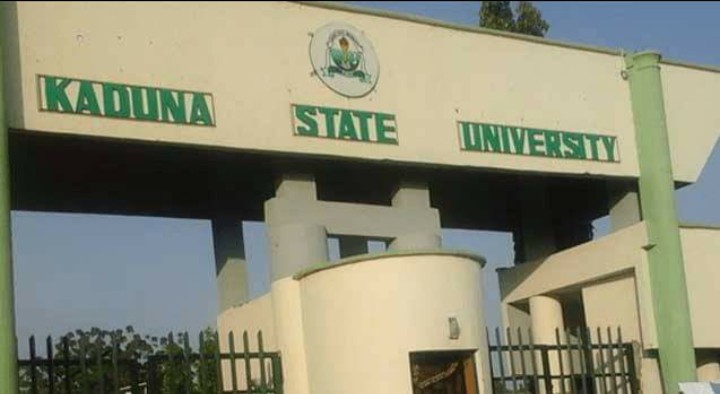
The management of the Kaduna State University ( KASU) on Friday condemned a statement attributed to the National President of the Academic Staff Union of Universities (ASUU), Professor Emmanuel Osodeke, who has described state-owned universities as quacks.

The university’s Public Relations Officer, Mr Adamu Nuhu Bargo, in a statement on Friday, said, “ASUU, represented by the unguarded vituperations of its chosen President, is not actually struggling for a better educational system in Nigeria but for personal and irresponsible aggrandisement”. 

Mr Bargo further said that “for the benefit of hindsight, KASU is a new generation University and the second most-sought State-Owned University as well as the fastest growing in Nigeria”.

“The general public may wish to note as follows:

1. KASU is recognised by NUC as a standard University.

2. KASU has some of the best brains that are competing favourably with their counterparts around the globe. The world’s No 4 best polymer chemist is in KASU.

3. Lecturers in KASU have attracted grants both locally and internationally and are highly rated.

4. KASU graduates are rated among the best in the world and enjoy scholarships from different parts of the country and the globe.

5. KASU has members in ASUU, and it is unfortunate if the ASUU President is saying that they are quacks while enjoying monthly check-off fees from their salaries. Does this not give a good reason for every reasonable academic staff in the University to pull off from the Union for this labelling and stereotyping?”

Unlike students and ASUU, what will the Nigerian government lose?

By Abba Muhammad Tawfiq

Instead of a strike, I suggest the Academic Staff Union of Universities (ASUU) should honestly scheme other ways to fight back against the unfair treatment of its members.

Fighting the government with a strike is like a futile attempt to break a mighty rock with an egg. As a group of intellectuals, the only key to the locks of unceasing demands of ASUU is to think out of the box and remain level-headed. But instead of thinking logically to arrive at a substantial outcome that can help ease our education and its entire elites,  the thick curtain of fury guiding the sole objectives of ASUU always obstruct the proper view of the political gladiators!

Like other governments, blessed and lucky is ASUU indeed to have its veteran members in the APC government, ranging from the vice president and the chief of staff to the president to other key figures nesting in the national and presidential offices. With them, I believe that ASUU has the ball rolling in their court. But, of course, nothing can hinder the prosperity of their goal-oriented behaviours.

The strike and on takes us nowhere but to a town of academic Sodom where we, the students, live in the terror of academic denial and our lecturers in the brutality of salary denial! In addition, ASUU’s constant fighting of a superior force like the stolid Nigerian government over its worthy right never had, in the past, and will never in the present, be a forthright approach for a substantial outcome.

Therefore, I wish ASUU  could politely liaise with our Professors at the tiptop of governmental offices to reach a peacefully assuring panacea that can save them and us from turmoil besieging us all together.

Abba Muhammad Tawfiq, a 500L Medical Rehabilitation student at the University of Maiduguri, wrote from Yola.

Misconception about ASUU

By Sulaiman Maijama’a

If not because of the dogged determination and great perseverance of the Academic Staff Union of Universities (ASUU) in defence of education in Nigeria over the years, public universities in the country would have since been in a dilapidated condition with poor infrastructure, poor remuneration of staff.

Moreover, the universities would have been stocked with unqualified teachers, just like what is happening to our public primary and secondary schools or perhaps worse than that. Those who misconceive ASUU, for its struggles, as being selfish know nothing about what education takes to be efficient.

It is common knowledge that people who had the luxury of attending private primary and secondary schools in Nigeria earn more prestige than those who attended public ones. This is so because the quality of education in public schools at the basic level has since been diminished. But the reverse is the case at the university level; products of public universities in Nigeria can show a trick or two to their counterparts who are produced by private institutions. This is to the credit of the ASUU.

The Union, despite the meagre resources it receives and the poor funding the universities suffer, is able to produce professionals who are rising and shining in respective disciplines globally. Notwithstanding this feat, the union has been pushed over the years to go into industrial action at the detriment of students and the action by the ASUU is always greeted with criticisms from the public domain.

As a university student, the fact that our academic pursuit is being elongated owing to strikes is paining, and so, I agree wholeheartedly that strikes embarked upon by the ASUU almost annually are not the best solution and not the best way to put pressure on the government to meet its demands but, to crucify the union for its doggedness is not fair at all. If we ever dug deep to understand how much education costs in the countries across the globe and compared it to the demands of the striking ASUU members that are yet to be met for over a decade, for which they have always protested, we would discover that education in Nigeria is as worthless as a waste dump.

According to the United Nations Educational, Scientific and Cultural Organisation (UNESCO) recommendation, for any nation that wants to adequately meet the demands of education, 15 to 20 per cent of its annual budget should be earmarked for the sector. Unfortunately, Nigeria’s budget for education has always fallen below the recommended benchmark.

Despite the daunting tasks and the challenges that are posing threat to the sector and the need for additional funding, President Buhari’s 2021 budget share for education is the lowest in ten (10) years. Out of N13.08 trillion budgeted for the year, only N742.5 billion, which is equivalent to 5.6 per cent, was allocated to education, which is the lowest allocation since 2011. This is about half of what President Jonathan earmarked for education in the 2015 budget.

In 2011, President Goodluck Jonathan allocated 9.3 per cent of the total budget to education. It was further increased to 9.86 per cent in the 2012 budget; elevated to 10.1 per cent of the total 2013 budget. It was 10.5 per cent in the 2014 budget, and the same President Jonathan earmarked 10.7 per cent of the 2015 budget, which happened to be the highest in the last decade.

However, when President Muhammadu Buhari came on board, in his first budget in 2016, the education share was cut short drastically to 7.9 per cent of the total budget, and in 2017, it was reduced to 7.4 per cent of the total budget; in 2018 it was 7.04 per cent, while 7.05 per cent of the 2019 budget was allocated to the sector and in 2020 it was 6.7 per cent, and 5.6 and 7.9 in 2021 and 2022 respectively.

While former President Jonathan had every year increased the budget share for education throughout his stay as president from 9.3 per cent in 2011 to the highest 10.7 in 2015, President Buhari has been drastically reducing the budget from 7.9 in 2016 to the lowest 5.6 in the 2021 budget.

In any case, the Buhari/APC-led administration’s lackadaisical approach toward education is indisputably disastrous to the lofty dreams of young Nigerians to attain global recognition academically. How could a serious government that values education give only 5 per cent of its annual budget to the most sensitive sector like education? This is beside the series of outstanding memoranda of understanding the government signed with the ASUU in 2009, 2013 and 2017, as well as the Memorandum of Action (MoA) of 2019 and 2020, but yet to be implemented. How on earth could you expect the ASUU not to be aggrieved?

And now, the Minister of Education is further fuelling the disagreement by telling the ASUU members that their six months denied salaries during which they were on strike would not be paid, making reference to the “no work, no pay policy”. I don’t know the provision of law on this, but my concern is, how can you come to meet with a union of intellectuals like ASUU and dare to tell them that this is the final government’s offer and that there is no need for negotiation; it is either they accept or reject it? This is highly ridiculous.

In my view, education is a treasure. Whatever huge amount of money is invested in it, it will definitely pay off eventually. A member of the Senate Chamber, whether or not they raise a motion, whether or not they contribute to a debate, earn a whopping thirty 30 million or thereabout monthly. This is minus all other illegal earnings which are obtained through leakages and corruption. In comparison to academics, a professor who spends his life sacrificing his time and pleasure doing research to contribute to knowledge does not earn a mere five hundred thousand a month, with all the inflation.

I don’t want to dwell much on making comparisons with the fortune allocated to the National Assembly. But, if such an amount of Naira notes which is beyond imagination, would be given to the National Assembly, why can’t the Federal Government meet all the demands of the ASUU to proffer a lasting solution to this lingering strike that is jeopardizing the future of the Nigerian youth, wreaking havoc on the economy and threatening the fabric of our social structure?

It is evident during the EndSARS protest in 2020, when students were on strike, that the strike was a contributing factor that fueled the agitation, which later turned tragic. Had it been the youth who were mostly the ones at the forefront of the demonstration who were on campuses, busy coping with their academic activities, the move would not have been accepted to such an extent, and therefore, the government would have easily controlled it.

As the saying goes, “an idle mind is a devil’s workshop”. Now, the 2023 forthcoming elections are fast approaching, and the youth are bored doing nothing and, therefore, can indulge in anything that comes their way. Who knows what could possibly be the next trend if the youth remain idle?

The Federal Government must understand and appreciate the value and power of education, respect all agreements reached with the ASUU and invest more resources in the sector in order to save the future of young Nigerians. This is because, without education, man is like an animal.

The ASUU, on the other hand, needs to understand that strike is nothing but a calamity to education. They should adopt amicable and diplomatic ways of engaging the government. “When two elephants fight, grasses suffer the most”.

Maijama’a is a student at the Faculty of Communication, Bayero University, kano. He can be reached via sulaimanmaija@gmail.com.

In defence of ASUU strike (I)

By Nura Jibo

During my university days in one of Nigeria’s best and leading universities, I was a victim of the Academic Staff Union of Universities (ASUU) strike. As a result, we were stricken academically and made to stay at home for an entire year.

The ASUU-Federal Government face-off continued to linger. We were affected by another two-year strike at different times. Then I wrote a full page in the Daily Trust opinion column of 2 May 2003 titled, “ASUU/FGN Face-Off: Point Blank”.

I don’t really blame ASUU for all the strike actions. Because I know even then, the moribund status of the Nigerian education system had reached its comatose stage. We were given lectures in two of the biggest lecture theatres at my university. And the mammoth student crowd was so overwhelming that one had to sit on the floor to listen to lectures. There was a lack of seats and spaces to patch on and receive lessons. That was nineteen (19) years ago!

Now I don’t want to be lengthy today. Anybody that wants to know the solutions I proffered then could search Google or take time to read my book chapter on Nigeria. It is there on Amazon

To cut the story short, I listened to the haggard-looking and frustrated ASUU President with a sympathetic mind. I saw how Seun of Channels Television tried to balance his reporting with Festus Keyamo’s verbal diarrhoea.

First, anybody watching Keyamo’s take on ASUU knows he is lying! He sounded a pathological one, for that matter. But I don’t blame him because that’s what some Nigerian politicians do to make ends meet! However, as a lawyer and former human rights activist, Keyamo ought to have been careful by minding his language as a custodian of justice.

I am happy the ASUU President debunked and dismissed Keyamo as one of those ‘chop-chop’ guys that rants on government, but after having a lucrative position, they eat and dine from it. And their so-called activism ends there!

Second, Adamu Adamu’s Nigeria’s Federal Ministry of Education is one of the most corrupt ministries in the world. A verifiable proof and evidence of this is vivid when one wants attestation of their academic documents. The entire people in charge of attestation of university documents are all fantastically corrupt. They charge and collect kick-backs from left, right, back, front and centre! And they would tell you there is no actual price for attestation of one’s academic documents.

Very recently, a very shocking incident happened. Someone was kept aside, probably a former staff of the Ministry, that specialises in being a money liaison negotiator between one of the women directors that work in that attestation section in the Ministry and anybody that comes for attestation of documents. That guy (name withheld for now but will be released in my subsequent analysis) is extraordinarily corrupt and charges a considerable amount of money in the name attestation!

I wanted to expose these ills and terrible ineptitudes to Adamu Adamu by intending to painstakingly go and meet him personally at his office the way we used to meet at late Dr Mamud’s Tukur house in Kaduna at Raba Road. But I decided not to because he may ask his secretaries not to usher me in. The rest of this story is a menu for another day. Now let’s come back to ASUU Strike.

As it is, Adamu Adamu has lost respect and the so-called radical reformer he thinks he was. Because for him to preside over an education ministry that is the biggest in Africa and allow corruptible ministerial staff to keep reigning and painting a terrible image of Nigeria in the name of attestation of documents shows a lack of concern and total negligence of holding public office on Adamu’s part!

Therefore, little wonder when he ignores ASUU’s demands because during his struggle days to make both ends meet, he was an ardent ASUU supporter. But now, he has joined the bandwagon of Keyamo’s “Kiya Kiya” in the name of public service!

Third, I respect my university teachers very well. They earn my respect any day. Because despite all odds, they made me who I am educationally (academically), politically, socially, realistically, genuinely, “temeritically”, hopefully, audaciously, respectfully, fearlessly, confrontationally, and above all analytically and scientifically savvy.

Ditto Adamu Adamu and the Keyamo’s of this world!

They were well trained and educated by those university lecturers that they betray today in the name of public office.

To be continued!

Nura Jibo is a Lifetime Member of the West African Research Association (WARA), African Studies Centre, Boston University, United States. He can be reached via jibonura@yahoo.com.

One condition stops FG and ASUU from reaching agreement 

By Uzair Adam Imam 

The Minister of Education, Malam Adamu Adamu, said the Federal Government has sorted out issues with the Academic Staff Union of Universities (ASUU), adding that the ‘no-work-no-pay’ policy is the only condition delaying the truce.

The minister said this Thursday at the 47th session of the State House Briefing organised by the Presidential Communications Team in Abuja.

According to him, four of five unions in the tertiary institutions across the country had agreed to call off strike within the next week.

Regarding compensating students for time wasted from the six-month strike, the minister said ASUU  should be held responsible for that.

The minister stated, “the affected students should ‘take ASUU to court’ to get compensated for the time wasted.”

ASUU strike continues as meeting with FG ends in deadlock

By MMuhammad Sabiu

The Federal Government and the Academic Staff Union of Universities (ASUU) meeting on Tuesday came to an end once more without a resolution.This indicates that the six-month-old lecturers’ strike at public universities will continue.

The Professor Nimi Briggs Committee and the striking academics met on Tuesday at the National University Commission in Abuja in the hope of breaking the deadlock.

Members of the Briggs renegotiation committee did not present any new offers to the table, according to a top member of ASUU who requested anonymity.

Instead, the committee begged the professors to cease their strike, the ASUU source claimed, assuring them that their issues would be addressed in the 2023 budget.

The discussion, which began at noon, reportedly lasted for about three hours without producing a resolution.

FG/ASUU to resume negotiations as strike enters seventh month

By Muhammad Sabiu

The Academic Staff Union of Universities (ASUU) will resume talks today, over their protracted strike, with representatives of the Federal Government.

The meeting, according to the organization’s president, Professor Emmanuel Osodeke, is meant to discuss on one of the seven topics that ASUU is protesting about and “That’s the issue of renegotiation,” Osodeke said.

The chairman stated this in a Channels Television’s Politics Today yesterday Monday.

It is about “the renegotiation of the 2009 agreement. It’s not just about wages. It has to do with the system. The structure, the autonomy and other issues and how to fund universities.

“The government has reduced it to just salaries alone. But if they had looked at the whole agreement and implemented it, we would not be talking about funding.” Osodeke added

It can be recalled that on February 14, ASUU shut down public universities citing as their reason the Federal Government inability to respect prior agreements that both sides had made in their previous face-offs.

The issues of contention include funding for the revitalization of public institutions, earned academic allowances, the University Transparency Accountability Solution, promotion backlogs, among other grievances.

The forgotten victims of ASUU strikes

By Dikko Muhammad, PhD

I read the justifiable frustration of many people affected by ASUU strikes, most of them undergraduates with a few months to graduate but were stalled by the strike. Some have already missed the chance to attend law school this year. This is quite unfortunate. It is a waste that saddens every sensible person.

However, there are other victims of the strike who are mainly forgotten. Many people talk as if the strike does not harm ASUU members. They say that ASUU members will get their withheld salaries back at the end of the strike. That’s largely true. But there are other implications for many of these members.

First, the younger ones in the profession — Graduate Assistants and Assistant Lecturers, their progress is truncated by strikes. These are people enrolled in our universities for their master’s and PhDs, respectively. A few of them get the chance to study abroad. Majority study at home. Every strike means an indefinite pause to their studies, careers, promotions etc.

Before you say that the strike is their choice, please understand how ASUU goes to strike: each chapter (or university) will hold a meeting to decide whether to embark on strike or not. Every member present has one vote, whether a Professor or Graduate Assistant. A simple majority carries the day. That means a Graduate Assistant may vote against the strike, but those in favour could win by a single vote. At the national level, the results from the chapters are collated and studied. If there are 100 chapters, the decision of a simple majority will be the final verdict. So if 51 universities vote for the strike against 49, that’s the end.

These strikes inevitably affect the professional development of every academic staff. Some couldn’t start and/or finish masters and PhDs on time. That delay will manifest up to their retirement. Strike halts promotion exercises of many universities. People who aspire to be professors in their forties might be delayed into their fifties despite their conferences, publications, etc.

Thus, the strike is not as viable an action as many people seem to think. The lecturer you insult for being an ASUU member might have voted against the strike from the beginning. They might have been equally affected by the strike in terms of studies or promotion.

And these are people who don’t even talk about their predicament. Instead, they simply suffer in silence.

Dikko Muhammad wrote from Umaru Musa Yar’adua University, Katsina. He can be reached via dikko.muhammad@umyu.edu.ng.