ASUU strike

When universities go on strike, who really suffers, and who is to blame?

By Lawan Bukar Maigana 

In Nigeria, university strikes have become an all-too-familiar story, a recurring wound that never seems to heal. Each time ASUU announces an industrial action, lectures stop, campuses grow silent, and dreams are placed on hold. Politicians continue with their schedules, lecturers retreat to side jobs, but the students —the very heart of the education system —are left stranded. They lose time, motivation, and opportunities that they can never fully recover. Yet, as the cycle repeats, one cannot help but ask: who truly bears the weight of these strikes, and who should take responsibility for the damage they cause?

For decades, the Academic Staff Union of Universities (ASUU) has justified its strikes as a means of pressuring the government to honour agreements on better funding, fair wages, and improved infrastructure. These demands are valid. Anyone who has walked through the corridors of a public university in Nigeria would agree that poor facilities, overcrowded lecture halls, and unpaid salaries reflect a deep neglect of education by successive governments.

But while the union’s grievances are understandable, the methods have become controversial. The government, on the other hand, often accuses ASUU of holding the system hostage. It argues that the union’s insistence on strikes as the only bargaining tool cripples progress and punishes innocent students who have no hand in the dispute. In the end, both parties trade blame while the students, the most powerless group in the equation, pay the ultimate price.

A four-year course can easily stretch to six or seven years because of strike interruptions. Many students find their enthusiasm fading over time. Some lose focus entirely and drop out of school. For those who persevere, the delay spills into their plans. By the time they graduate, they are already approaching 28, 29, or even 30, before the one-year NYSC service.

The real tragedy becomes apparent when they start searching for jobs. Most government and private organisations in Nigeria set an age limit of 26 to 30 for entry-level positions. By the time many graduates are done with university and service, they have crossed the threshold. Their only crime is being caught in a system that values bureaucracy over merit and punishes them for something beyond their control.

This is why it is not just an academic crisis; it is an economic one. Each prolonged strike increases youth unemployment and deepens poverty. Parents who struggled to pay tuition watch their investments stagnate, and the nation loses years of productivity from its young minds. How can a country move forward when its brightest are trapped in uncertainty?

Yet, every time negotiations collapse, the conversation focuses on who blinked first, ASUU or the government, not on who bleeds most from the outcome. It is as though the welfare of students matters less than the politics of power and payment. That is the heart of the problem.

Let us be honest. Both parties are culpable. The government’s insensitivity and failure to prioritise education are unacceptable. Budgetary allocations to education consistently fall below UNESCO’s recommended 26 per cent. Lecturers, too, must reflect on whether indefinite strikes remain the most effective way to demand change. It is one thing to fight for rights; it is another to destroy the bridge that connects those rights to the future.

If universities had better funding, research grants, and prompt salaries, ASUU would have no reason to down tools. But if the union continues to rely solely on strikes without exploring alternative forms of advocacy, such as strategic legal action, citizen engagement, or performance-based protests, then students will remain collateral damage in every industrial action.

The solution lies in sincerity from both sides. Government officials must stop making empty promises and start implementing lasting reforms. ASUU must adopt modern negotiation strategies that prioritise students’ interests first. The students themselves must also rise, through constructive activism, to demand accountability from all sides.

Education is not a privilege; it is a right. Every time it is disrupted, a generation loses part of its potential. The government and ASUU must remember that time is not renewable. Every month lost to a strike is a wound that never fully heals for a student.

Some will argue that strikes have brought partial victories such as improved salaries, better agreements, and occasional funding. But these victories often come at too great a cost. Students spend longer years on campus, graduate later, and face tighter job markets. Many lose scholarships or opportunities abroad because their transcripts are delayed or their academic calendars are unpredictable.

A society that allows this cycle to persist undervalues its youth. The damage is not immediately visible, but it later manifests in the frustration of jobless graduates, the rise of social vices, and the erosion of hope. When young people start believing that hard work no longer pays, the nation begins to decay silently.

The truth is simple: when universities are on strike, everyone loses, but students lose the most. They lose time, morale, and faith. And no compensation can restore that lost time.

Until the day Nigeria treats education as a national emergency, not a political bargaining chip, these strikes will continue, and the nation will keep producing delayed graduates and disappointed dreams.

The next time a strike is declared, we should ask not just who is right or wrong, but who is hurting most. Because in the end, it is not the lecturers or the politicians who suffer, it is the students whose futures hang in the balance.

Lawan Bukar Maigana is a media consultant, humanitarian, storyteller, and inspiring diplomat. He can be reached via email at lawanbukarmaigana@gmail.com.

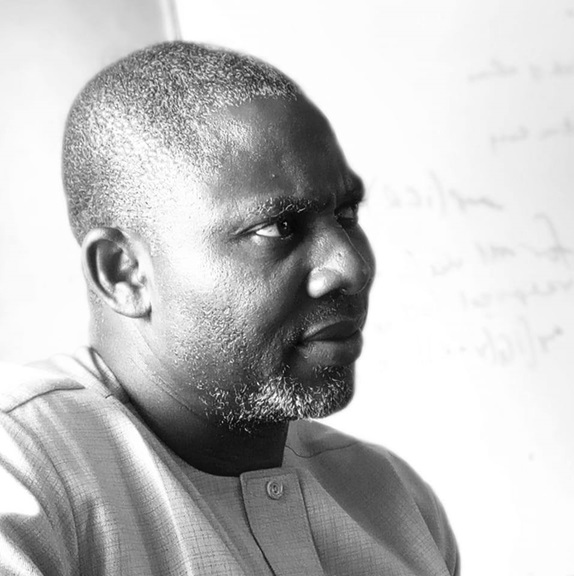
Tribute to Malam Mu’azu Muhammad Yusif

By Ibrahim Lawal Ahmed

On September 9th, 2023, friends, colleagues and students of Malam Mu’azu Muhammad Yusif, more popularly called M.M. Yusif, gathered to honour and celebrate his long academic service at the Centre for Information Technology and Development (CITAD), Kano, by remembering the old days and reflecting on the transformation the academia has been going through in Nigeria. Malam M.M. Yusif recently retired from the Department of Political Science, Bayero University, Kano, and the occasion was a kind of send-off party.

It was indeed a robust discussion that involved personalities such as Mal. Ibrahim Mu’azzam, Dr. Y.Z. Ya’u, Dr. Nasir Fagge, Prof. Ibrahim Bello-Kano (IBK), among others. As expected, the debate spiralled from eulogising the celebrant to discussion on the character of students and teachers in the universities in Nigeria, the current system of running the university, the struggles of and in the Academic Staff Union of Universities (ASUU), and the neoliberal world order and its effects in Nigeria, particularly on the universities. 

In short, the discussion is a dialectical cross-examination of factors within the university and how their interrelationship is influencing the university education in Nigeria; the relationship between the university and the society (town and gown relationship); and the relationship between the university and the state. The relationship between the university and the state is at the centre of the ASUU issue.

University has been the life of Malam, and as one of the longest-serving chairmen of ASUU, BUK Chapter, ASUU is a union very close to Malam. Therefore, I can imagine his feelings as he witnesses and reflects on the last two battles between ASUU and the government (2020 and 2022) that almost destroyed the public universities in Nigeria. The fundamental issue of ASUU-FGN conflict, in my view, is not the non-payment of allowances but the reductionist approach to governance by the government, which entails decreasing concern for the institutions that provide welfare to the people and total neglect of the idea of ‘public good.’ The result is the systematic collapse of the social contract (and compact) and rising political cleavages, a pre-bendel form of primitive accumulation and rentierism (or sycophancy) which results in the concentration of wealth in the hands of a few. 

Consequently, as the rich get richer and the poor get poorer in Nigeria, commodity fetishism becomes the defining feature of the social relations in Nigeria. In other words, money is now the moral compass in Nigeria. The needs and wants of the average Nigerian are reduced to his stomach – you have to eat for you to think, for when you speak to a hungry man, he answers you with his stomach – as such, ASUU is faced with an enormous challenge of mobilising the society to back its course on its battles with the state. 

Moreover, people are tired of the classical tactics of strikes always taken by ASUU, which, in the last two years, have hurt the university education system more than they have salvaged it. Thus, one key takeaway from the gathering is that ASUU needs to reinvent itself. While remaining steadfast to its goals that are of public interest, it has to change tactics.

Similarly, government at all levels has to pay more attention to the educational sector. To improve education, efforts should focus more on qualitative development rather than the current quantitative development, which prioritises establishing tertiary institutions in remote areas primarily due to trivial political reasons. This is not right. Situating schools and tertiary institutions has to take comprehensive cognisance of the environment. The questions such as how the town will support the gown at its embryonic stage and how the gown will support the city at maturity have to be asked. Answering these kinds of questions requires a comprehensive analysis of the infrastructure (both hard and soft), human and physical factors in the environment where the school or tertiary institution is to be situated. The late Sir Ahmadu Bello set a notable example in establishing Ahmadu Bello University in Zaria. He could have stayed in Sokoto or Maiduguri. However, considering several factors, Zaria is strategically better suited to host the university. Such was a good leader who has vision that transcends personal and primordial interest.

Indeed, the issue of education in Nigeria cannot be left to the government alone. It is a social issue; therefore, it requires an All-of-Society-Approach – from parents, to community leaders, traditional rulers, commercial and industrial enterprises, all have to be involved, especially regarding financing the education. The policy of student loans will not work because the socioeconomic condition of Nigeria is not prosperous enough to favour such a policy. In fact, in some advanced countries, the policy is problematic and an obstacle to social mobility, thereby facing harsh criticisms. The students need grants, not loans. And the wealthy Nigerians have to be philanthropic towards our educational institutions, especially the tertiary institutions. There is no more rewarding investment than investment in education,though it takes time to ripen. There is no better way to empower the youth in Nigeria than through education. The proper education enhances the ability of citizens to think. And unless one can think and understand the complexity of the present world, one can not address one’s personal problems, let alone those of society.

The courses taught by Malam M.M. Yusif aim to help students understand this complex world by interrogating the institutions that hold it up. To teach such courses requires a special personality. Therefore, as his recent student, the gathering was an opportunity for me to know more about my teacher. I listened attentively as his friends and colleagues kept mentioning his academic contribution to social issues that include gender studies, labour studies, and military studies, among many. But one standing quality and lasting legacy of Malam is mentorship. Malam put a lot of his energy into guiding his students. 

He utilised his resources to acquire high-quality materials and provide practical work for his students. He is a teacher who loves questioning and never penalises you for your inability to answer a question. For him, the most important thing is for the students to attempt to answer the question brilliantly. He always has time for his students. 

One day, I visited his office to discuss some concepts I didn’t understand. After explaining the concepts to him, I complained, “Sir, I am confused.” He responded, “Do not worry, Ibrahim. This means you are learning.” It was on that day that I learnt that learning is full of confusion. If you are finding learning easy, then you are probably not learning anything new.

It will take time to fill the gap that Malam M.M. Yusif is leaving in the academia, particularly in the Department of Political Science at Bayero University. I am glad and proud that he has had an accomplished academic career. We, his students, cherish the memory and are thankful for the way he has taught and mentored us. May it please Allah that Malam has a peaceful and happy retired life.

Prof. Amoka slams SAN over “Unpopular Opinion” on Nigerian professors

By Muhammad Abubakar 

Professor Abdelghaffar Amoka of the Department of Physics at Ahmadu Bello University, Zaria, has responded strongly to what he calls a “misinformed and politically biased” opinion by Sunusi Musa, SAN, regarding the state of Nigerian academia.

In a lengthy rejoinder titled “The Impoverished Nigerian Professors and the ‘Unpopular Opinion’ of a Misinformed SAN,” Prof. Amoka criticised Musa for attributing the poverty of Nigerian professors to their alleged lack of productivity and large family sizes. 

Amoka argued that the true cause lies in the systemic neglect and chronic underfunding of the Nigerian education sector, particularly university staff salaries and research funding.

He noted that academic salaries have remained stagnant since 2009, with professors now earning the equivalent of less than $400 per month, a sharp drop from over $3,000 in 2009. He described the situation as a “crime against humanity,” accusing the political class of starving intellectuals while enriching themselves.

Amoka debunked the claim that Nigerian academics are unproductive, citing the international recognition they receive and their contributions to research and student success abroad. 

He further pointed out the lack of sufficient research funding, comparing Nigeria’s meagre investments to the billions spent annually by countries like the US, UK, China, and even smaller nations such as Norway and Malaysia.

The professor further criticised the SAN for bringing personal life choices—such as marriage and family size—into a discussion about national policy failure. He emphasised that productivity in academia depends on conducive working conditions and appropriate incentives.

Amoka ended the piece by urging fellow academics to prioritise their well-being, pursue legitimate side hustles if necessary, and continue doing their best to sustain a struggling system. He warned that the continued devaluation of education poses a threat to the country’s future.

“We are starving the thinkers and feeding those who can’t think. What sort of system are we expecting to create?” he asked.

Nigerian Professor Salary: The re-ignited debate

By Prof. Abdelghaffar Amoka

A Hausa interview by a professor from ABU, lamenting academics’ poor pay, is trending and has re-ignited the debate on the salaries of Nigerian academics on social media. The discussion is championed by my brothers from the region, which is considered by the country as educationally less developed. I didn’t know what to say that I hadn’t said before. It will be like repeating myself.

Professors in Nigeria are now blamed for their financial status. They are expected to stop lamenting and get a side hustle to augment their salaries. A professor whose salary was ₦450,000 in 2009, when the exchange rate was ₦140 per dollar, is blamed for his economic state in 2025, with a salary of about ₦500,000, when the exchange rate is ₦1,600 per dollar. 

Some people are referring to professors abroad as if some of us have not had the experience. A number of us have studied and worked there, and we know how their university system works. I got two grants in the UK during my PhD. They said a professor earns more abroad from their research grants. The primary beneficiaries of research grants are postgraduate students and postdoctoral researchers. Professors are not paid from their grants.

Grants have a budget, and personnel costs are not included. They are paid to the university account and managed by the university. The university pays professors to encourage them to think critically and attract grants for the institution. A university lecturer around the world is paid enough to give him the comfort to think and do his job as it should. Any extra cash from stuff like consultancy is for additional comfort. 

The Executive Secretary of TETfund, Sunny Echono, in July 2024, said: “On salary to lecturer, I feel ashamed because I have the privilege to represent Nigeria at a global conference where former presidents and prime ministers were in attendance. I was asked if it was true that a professor, after 20 years, still earns less than $1,000 a month. I couldn’t answer that question; I only said that we are doing something about it.” I think we should be proud of the salaries of our professors and boldly tell anyone around the world their actual salaries. 

Before you, in your narrow-minded state, blame professors for their financial status, ask yourself why the Nigerian government will pay the same professors about two thousand dollars per month under the Technical Aid Corp (TAC) to go help teach in universities in some African countries? The same professors who are given approximately $ 2,000 to teach in Ugandan universities under TAC are receiving an equivalent of $ 320 per month at home.

You know what? Everyone is right—those for and against. The argument won’t change anything, and it will likely end within a day or two. The new reality is that younger academics have learned from the impact of senior colleagues’ commitment to the academic job. The commitment you considered as “our stupidity”. The younger academics are planning for themselves.

A colleague, after the 8-month strike and the withholding of our 8-month salaries, said the university does not deserve his full-time commitment. That he is going to give the university the time it deserves and use a large chunk of his time for a side hustle to pay his bills, I thought, was unreasonable. I later realised I was the unreasonable one. And he is not doing badly from the side hustle. 

Around this time last year, I was passing and met some of my students in the class without the lecturer. In my usual chat with the students, I asked whose lecture it was. I decided to call a younger colleague, as students were waiting for his class in case he forgot. He picked up the call and said he had forgotten he had a class, but that he was on his farm planting, and that he would see them next week. He was at the farm during work hours and forgot he had a class because the farming hustle is paying the bills. He is actually doing quite well with his side hustle. 

Farming during work hours becomes more important. I reflected on that for several days. There are several examples of young academics who won’t be seen on campus, except when they have a lecture or are on campus for something they consider essential. 

People sometimes question why a whole professor would accept being an adviser or assistant to a political office holder. A trip with the political officeholder boss could get him his one-year gross salary as a professor. Since it’s his fault that he is poor, why shouldn’t he accept such an offer or even lobby for it?

As a consequence of defeat, we have accepted one awkward thing as a part of us. Because we can’t do anything about our tormentors and needed someone to blame, we blamed ourselves, the victims. It’s our fault that we’ve been on the same salary for 16 years, from 2009 to date. It’s our fault that successive governments refused to renegotiate the 2009 agreed salary with ASUU. It is our fault that the government of President Tinubu has kept Yayale Ahmed’s 2009 Renegotiation Committee report since November 2024 without speaking about it. They are still studying it, possibly till May 2027 or beyond. 

Universities are designed to attract the best minds from around the world. Universities, including those in Africa, such as those in Ethiopia, Uganda, Kenya, and Chad, are attracting the best brains. At the same time, we justify the poor pay for academics and still blame them for their inability to compete with their colleagues in the UK, the US, and Iran. We’ll continue to breed our best brains for these countries. 

Meanwhile, as we take all the blame for our economic status as professors, younger academics are devising ways to survive. They don’t want to he like their senior colleagues who bury themselves in their books thinking they are serving the country. They are given more time for their side hustle to pay the bills, and leave the students hanging. They’ll attend to them when we can. The system will bear the consequences of neglect, and our survival plans will be affected.

From a reality check, you can’t think when you are hungry. So, what are your expectations when your thinkers are hungry and you are unfortunately justifying it? We may be on a journey of illusion if you expect a man to look for food to eat and think for you. The future will tell who gains and who loses.

Best wishes to all of us! 

©Amoka

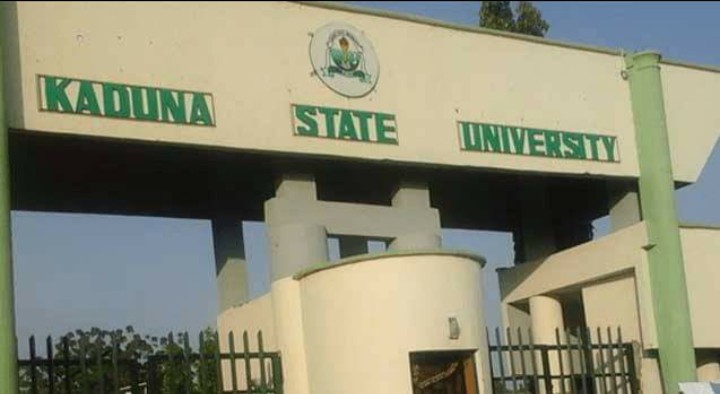
ASUU-KASU embarks on total, indefinite strike

By Anas Abbas

The Academic Staff Union of Universities, Kaduna State University (ASUU-KASU), has officially commenced an industrial action today, marking the beginning of a total, comprehensive, and indefinite strike.

In a statement released by the Publicity Committee of ASUU-KASU, the union outlined a series of actions that must be observed during the strike. These include the suspension of all Senate, Faculty, and Department meetings, as well as the cessation of project supervision and both physical and online lectures.

Additionally, the Students Industrial Work Experience Scheme (SIWES) will not be subject to project defences, field studies, or supervision. 

The union has also prohibited online meetings and mandated that no Continuous Assessment (C.A.) or examination scripts be marked. The processing and submission of results are also on hold, alongside any standing committee meetings.

ASUU-KASU has urged all members to adhere strictly to these directives. The union emphasised that any non-compliance or attempts to infringe upon the strike actions should be reported immediately to the Strike Monitoring Committee (SMC) at the ASUU-KASU Secretariat on the Main Campus.

FG releases ₦50bn to university unions, reaffirms commitment to education

By Muhammad Abubakar

The Federal Government has released ₦50 billion to academic and non-academic staff unions of federal universities, fulfilling a promise made by President Bola Ahmed Tinubu as part of efforts to enhance the welfare of university personnel and strengthen Nigeria’s education sector.

Announcing the development, the Honourable Minister of Education, Dr. Maruf Olatunji Alausa, described the disbursement as a strategic move to reaffirm the President’s commitment to transitioning Nigeria into a knowledge-driven economy. He emphasised that the release goes beyond a financial transaction, calling it a bold investment in human capital and youth development.

“This intervention is a reaffirmation of our President’s belief in the capacity of Nigerian youth and the invaluable role played by academic and non-academic staff in nurturing them,” Alausa stated.

In a message conveyed through the ministry, President Tinubu reiterated that ensuring uninterrupted academic activity in Nigerian universities is a core priority of his administration. “Keeping our children in school is not negotiable,” he declared, expressing optimism that strikes in higher institutions would soon be permanently resolved.

The Education Minister also acknowledged the cooperation of university unions, noting that Nigeria is currently experiencing one of the longest periods of academic stability in recent years.

The release of the funds is seen as a significant milestone in the President’s Renewed Hope Agenda and a step toward positioning Nigeria’s education system as a benchmark for excellence on the continent.

ASUU-KASU declares indefinite strike over unpaid salaries, allowances

By Maryam Ahmad

The Kaduna State University (KASU) chapter of the Academic Staff Union of Universities (ASUU) has declared a total, comprehensive, and indefinite strike starting today.

In a statement signed by Dr. Peter Adamu, chairman of ASUU-KASU, and Dr. Peter M. Waziri, secretary, the union announced that the decision was approved by the National Executive Council (NEC) following a resolution by the branch congress.

The strike is in response to several unresolved issues, including the non-payment of withheld salaries from 2017 to 2022, earned academic allowances dating back to 2016, promotion arrears, and supervision allowances for the Student Industrial Work Experience Scheme (SIWES). 

Other grievances include the non-remittance of pension funds from 2009 to 2019, lack of group life assurance for deceased members, and the failure to implement a 25% and 35% wage award.

ASUU-KASU also demands the restoration of university autonomy and has rejected promises from the Kaduna State Government, citing a lack of substance, specific details, and clear timelines for settling outstanding entitlements.

The strike action is expected to disrupt academic activities indefinitely until the demands are met.

One rotation, one strike

By Hussein Adoto Bello 

In the first rotation of my clinical training at a federal government university teaching hospital in North Central Nigeria, resident doctors went on strike to protest the kidnapping of their colleague in Kaduna. The government threatened “no work, no pay.” Students lost a week of clinical training. The victim wasn’t released until weeks later. 

When I reached the second rotation, I was greeted midway with a warning strike by consultants protesting the non-payment of their arrears. Classes came to a halt, and we, the students, had to hustle for an extension. 

Now, in the third rotation, the Medical and Dental Consultants Association of Nigeria (MDCAN) has declared another strike. Students will once again be the victims, but life will continue.

Medical students may be called the next generation of residents and consultants, but when push comes to shove, we are the first to be thrown under the bus. And then patients. Classes stop. Clinics and theatres become skeletal, attending only to critically ill patients and emergencies. 

For students, the situation becomes a matter of finding X, where X is the number of days, weeks, or months the “warning” strikes will go before they are suspended or transform into indefinite strains.

What can we do? Unlike Mour Ndiaye in The Beggars’ Strike, the people who put students in this limiting position don’t need us to survive. We don’t pull enough academic or professional weight to influence their advancements as doctors, consultants, and professors. They can resume whenever and however. 

Government officials know they can keep students at home for nearly a year without hurting their chances at the polls. The students may even fight tooth and nail for them. 

The never-seen-but-felt hands of the hospital and the university management don’t need student crutches to do as they please. Their appointment is not premised on how long students spend in school or patients’ satisfaction. Students and patients are all left to gnash their teeth in the Academic and Clinical Waiting Area while the royal rumble rages. 

It’s not easy, therefore, to try playing Nguirane Sarr. The clever blind beggar realised that beggars have services they can withhold in light of their harassment, which made a difference in The Beggars’ Strike

What do students have? Twitter/X hashtags and a lot of God abegs! Boycotting classes, clinics, and theatre may not help; it will only transform an acute case into a chronic one. 

Students in Algeria went on strike to demand more residency openings and accreditation of their diplomas. It’s been weeks, and the issue has yet to be resolved. 

Moroccan students revolted against the shortening of their programmes from seven years to six by declaring a strike in January. December is less than two weeks away.

Meanwhile, medical students here rarely face such massive blows at once. We adjust to the worsening learning difficulties until we graduate, leaving the next generation of students to endure the crucible. Resilience, after all, is an undeclared objective of medical training. 

We are not equally affected, either. A clinical student has a different worry than those still struggling with anatomy and biochemistry in preclinical classes. A strike by ASUU lecturers may not be felt in the clinics. Students in private schools are largely immune to what happens to their colleagues in government universities, and so on. 

For now, one can only hope—rather than expect—that the country establishes independent arbitration bodies for resolving labour issues promptly without sacrificing hapless students and patients at the altar. 

Such a body should include representatives from labour unions, the government, students, and neutral mediators to ensure impartial decisions are swiftly implemented. It should also be able to hold the government, employers, and labour unions accountable so that everyone can act with greater responsibility and not with the callous indifference that has come to characterise labour disputes in Nigeria. 

Besides, labour unions and student bodies should organise themselves into a powerful lobby force that can successfully push for policies that serve their interests instead of waiting to use strikes to protect them. 

More importantly, striking workers and the government should give students and patients an alternative to manage while they bicker. They should host virtual classes if they can’t come for physical ones. They should host clinics or virtual consultations if they can’t go for ward rounds and theatre sessions. 

Thankfully for students, the ṣégé (difficulty) of strikes comes in aliquots, so we build tolerance until the situation rankles less and resistance becomes pointless. We only have to survive in brooding silence until we can escape the system with our scars or embrace it—like Ramatoulayé in So Long a Letter.

Hussein Adoto writes via bellohussein210@gmail.com.

BREAKING: ASUU embarks on two-week warning strike

By Uzair Adam Imam 

The Academic Staff Union of Universities (ASUU) at Yusuf Maitama Sule University has embarked on a two-week warning strike, citing the Kano State government’s failure to address its longstanding demands.

According to the union, despite numerous engagements and submissions to the state government, there has been no commitment to resolving the issues affecting the university and its members’ welfare, leaving the union with no choice but to declare a warning strike.

This decision was announced in a joint statement by ASUU branch Chairman Dr. Mansur Said and Secretary Dr. Yusuf Ahmed Gwarzo on Wednesday.

The union stated that the strike became necessary after interventions by various stakeholders, including government officials and ASUU’s Kano Zone and National delegation, but it yielded no tangible results.

“The branch resolved to embark on a two-week warning strike, effective immediately, during its congress on May 29, 2024,” the statement read.

The union’s demands include the reinstatement and reconstitution of the University Governing Council, which was dissolved over a year ago, payment of outstanding Earned Academic Allowance totalling ₦178,705,735.91, and payment of salary arrears resulting from the 2019 minimum wage adjustment, among others.

Neo-liberalism and Cotonou degree alternative

By Dr Kabiru Danladi Lawanti

The whole Cotonou degree is criminal and all those involved need to be fished out and punished. Some people might see us as harsh or maybe insensitive for saying this. 

There are things we cannot say in public, but one needs not to be prophet of doom to predict that Nigeria cannot withstand this onslaught and will eventually crash. 

Our desperate quest for certification through whatever means led us to this situation. Parents are desperate to have their kids in the university, some even underage (we saw 15, 16 and 17 year olds being pushed to universities), whose mental capacity is too elementary to grasp or cope with challenges of university education.

The crises in higher education and the adoption of neo-liberal policies that have no place in a developing country like ours also contributed to this confusion. Consequences of commodification of knowledge is enormous in a country with no strong institutions to checkmate excesses and greed of capitalists. The results is the proliferation of degree mills all over.

Adoption of neo-liberal policies means cutting funding for public services like education, health and sanitation. Nigerian public universities suffer from these policies. Funding was cut, citing many reasons. The results is restrictions in admissions. When you have many applying to enter university and the slots are few, universities have to admit based on quota. Therefore, few can be admitted.

Parents, in their desperate efforts to get their children into universities, started sending their kids to some African countries for bachelor’s degrees – Uganda, Benin Togo, Ghana, Sudan, Niger Republic, etc. 

Another reason is the dichotomy between degree and HND. Many people affected by stagnation in their places of work because of HND opted for a way to have a degree that can help them get promoted. Many went for the Cotonou degree. Since it is acceptable by MDAs or they made it acceptable, most of them started trooping to these mushroom universities to obtain these degrees to get promoted.

Then we have people who can’t cope with rigorous nature of our public university system. I know a lot who not only failed exams, but are withdrawn from diploma programmes, but appear after 6 months with a degree from these degre milling centres. Others could not pass UTME therefore unqualified to enter public universities. Cotonou degree provide an alternative.

The last, in my opinion, are those running from ASUU strike. Many parents justify purchasing the Cotonou degree because of the unending industrial disputes in the public universities.

I don’t want to talk about the “motor park gang” led by former minister of education Adamu Adamu and his National Universities Commission (NUC) executive secretary, who bastardised the university system for only God knows why. They have killed what remained of our public university system.

Lastly, some of our private universities are not any different from the “Cotonou universities”.

President Bola Tinubu needs to do a lot more to rescue the situation. I like how the Minister of Education, Prof. Tahir Mamman, handles the situation. But sincerely, the students of these dubious universities, their agents, officials from Federal Ministry of Education, NUC and the other places need to be rounded up, arrested and punished according to our laws.

Kabiru Danladi Lawanti, PhD, wrote from the Department of Mass Communication, ABU Zaria, via kblondon2003@yahoo.com.