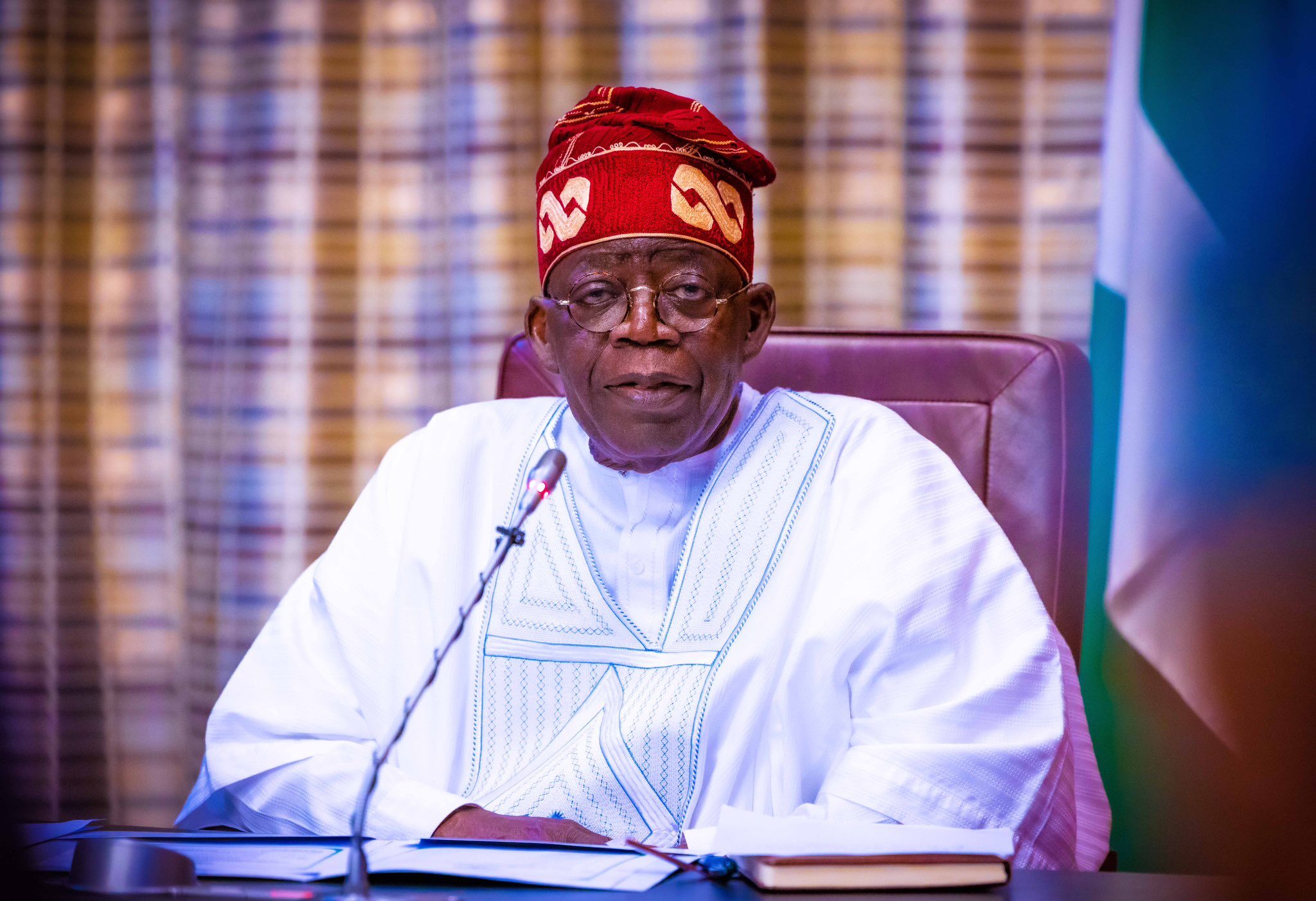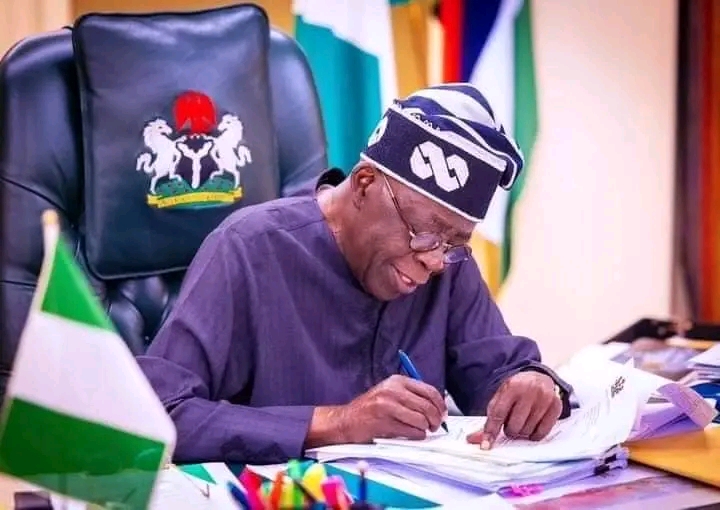
Asiwaju Bola Ahmed Tinubu

BREAKING: FG, labour reach agreement on minimum wage

By Uzair Adam Imam

The Federal Government and the organised labour have reached an agreement on the minimum wage, ending the strike action that started on June 3, 2024.

The agreement was signed on Monday night after a meeting that started at 5:00 pm and ended at 11:00 pm.

Although the details of the agreement are not yet public, the Secretary to the Government of the Federation, George Akume, confirmed that the government is committed to paying a minimum wage higher than N60,000.

He also assured that no worker would be victimized for participating in the strike.

The national tripartite committee on minimum wage will meet daily for the next week to finalize the details of the agreement.

The labour leaders and government officials expressed optimism that the agreement would bring an end to the strike and restore normalcy to the country.

The strike, which started on June 3, had paralyzed economic activities in the country, with many businesses forced to shut down.

The agreement is seen as a positive development, and many are hoping that it would bring an end to the strike and restore normalcy to the country.

Dear FG, why has there not been Udoji since 1974?

By Bilyamin Abdulmumin

To commemorate Workers’ Day on May 1st, FG announced the long-awaited salary increase from 25% to 35 %. However, hours later, the NLC president, Joe Ajaero, kicked against the increase and instead stuck to the 615,000 they proposed as minimum wage.

Although this total figure looks astronomical, it suddenly looks normal, putting the breakdown that Ajaero gave into perspective, especially with the current high inflation. At least that amount should reflect the salary of anyone receiving 100k or more before Tinubu came to power. In other words, the breakdown might be exaggerated to the bottom-line salary earners but not the middle ones.

When several pundits shared their analysis on National Assembly wages, the Ajaero recommendation suddenly became realistic again. The National Assembly’s daily take-home is more than the recommended minimum monthly take-home. So, the argument is that if NA daily wages are so high, the minimum monthly salary asked by NLC should not be too much. This is quite plausible.

But from the interview Abdulaziz Abdulaziz gave, it could be discerned that the highest minimum wage the government is ready to pay is double the current minimum. Abdulaziz first clarified that the current salary increase is temporary, pending when the tripartite committee under the former head of service concluded their assignment. However, as a committee member, he said unlike the 25 to 35% increase, the minimum wage may go up to 50 to 60k. He also emphasised that the federal government is bidding for the highest among the three parties: federal, state, and private.

An argument accompanying the discussion of salary increases is the plight of non-governmental citizens. The argument is that if FG increases government workers’ salaries, what about the rest of the citizens? To buttress this point, government workers are said to be just about 10% of the total population. This argument appears to carry substance, but it is misleading by flipping the coin because the more money on the government workers, the more money on every one.

The people who should be rather pitied are the state and LG workers. Because some of these tiers of government still receive the 1999 salaries benchmark. A friend who works with the local government health sector summarises their predicament. He said a decade ago, when he married, a mudu of foreign rice was 450 naira, and they only used half of it. Now the mudu costs five times, and because their family has increased, they need the whole mudu, but the pathetic part is that the salary hasn’t only increased since, but several bogus deductions have eaten deep into it.

At this time when the FG and labour are arguing about high salary increases to meet public expectations due to high inflation, there is no better time to remind ourselves of the famous “Udoji award” than now.

As a fan of Dan Anache, I heard one of his songs mention “Udoji.” I understood that he was mocking someone, but I didn’t know what it meant, so I took it at face value and enjoyed the song. The lyrics read: “Kai baka soja, kai baka dan sanda, kattsaya jiran Udoji. To Udoji in dai sadaka ce muma araba abamu.” It wasn’t until I came across Mahmud Juga’s article titled “UPE, WAI and Udoji” that I realised what it meant. 

In the article, Jega concluded, “Why has there been no Adebo and no Udoji in this country since 1974? Any young person who does not know what that means should please ask the elders.” So, with the right name in hand, I did what everyone does when faced with a burning question—I turned to search engines.

The Middle East, the world’s oil bank, is known for conflicts and unrest, so anytime one arises, just like the current one is on the card, the global oil price experiences a meteorological rise. One of the most popular oil price rises occurred during the Arab-Israeli War and the Iranian revolution in the 1970s. This was when Nigeria had had an oil boom, and there appeared to be no idea what to do with excess money, so the Udoji Award was. 

Jerome Udoji chaired the committee focused on the effectiveness of public service. One of the committee’s recommendations was to increase the salary twofold, which was implemented by the military head of state, Yakubu Gowon. The salary increase was so popular that it became known after Udoji. Please, someone should tag the current chairman of the minimum wage committee, Bukar Goni Aji.

There is no oil boom now, but there is a subsidy removal boom. So, to paraphrase Jega, Please FG, why has there not been a Udoji Award since 1974?

The crisis of godfatherism 

By Bilyamin Abdulmumin

Since 2007, when the two-term tenure of Fourth Republic governors ended, one godfather crisis or another has occurred. The outgoing clung on to the anointing for several reasons: influence in godson administration, protection from their misgovernance, or, last and least for many godfathers, continuity (although it is the most important factor for good governance). 

The surprising succession crisis brewing recently involved Uba Sani and Nasir El-Rufai. It was unexpected because El-Rufai did not appear to be interfering with the Kaduna government. Unlike Wike, El-Rufai, known for reading and writing books, might have learned the lesson from previous cases, but Sani took the fight to his door. 

Uba Sani shook the table when, in a town hall meeting (apparently held to burst the bubble), he lamented the burden of loans he inherited and decried the lack of money not only for infrastructure development but also for threatening the state’s ability to meet its current expenditures.

That outburst was followed by mixed reactions. Some commentators point to hindsight, stating that it was their prophecy that came to pass. But for some, it was a big trouble for Uba Sani because, according to this category, he was given the green light to become a senator for one thing: to pave the way for getting the loan. So, this category sees Uba Sani as an accomplice rather than a victim. They unearthed his videos eulogising El-Rufai, which trended. 

The double trouble for Sani was that the effect of the loss was visible in Kaduna state, so wowing the public became an uphill task. However, the current dollar-to-naira exchange rate compared to when the loan was secured is rather unfortunate.

 One primary beneficiary of this situation is Shehu Sani. The former senator of Kaduna Central used the situation to settle scores. He took the case on social media, profiling himself vindicated. 

On the contrary, a Nigerian figure who will be taken aback by the looming political crisis in Kaduna state is his eminent Sanusi Lamido Sanusi. During the KADINVEST 7.0, SLM extols marvellous achievements in Lagos state thanks to the continuity. 

Bola Ahmed Tinubu laid the foundation for the modern Lagos state, which Fashola built upon. When Ambode came continued, but when he wanted to digress, it cost him his second term ticket (this can happen in Lagos, where a serving governor failed a primary election); the fruit of continuity is just bearing fruit in Lagos state under Babajide Sonwo-Olu. 

Uba Sani was shown nodding his head in belief during the SLS lecture. I told myself that Kaduna is lucky because if Uba Sani could only service the debt and continue with some uncompleted buildings, Kaduna would be great. 

El-Rufai remained quiet in the saga, unlike his disquieted son Bashir El-Rufai, who was a junior to Bello El-Rufai. Several commentators confuse Bashir with Bello- the current serving house Rep. The latter was cut between the devil and the deep blue sea, he recently gave an interview in which he eulogised Uba Sani as his mentor, mentioning how Sani paved the way for him, not his father. He even mentioned something philosophical: if anyone wants to go far, he can’t dare join issues with his master; someone aware of this philosophy must be tied down between supporting his father or his boss.

A theory explaining Sani’s outburst with El-Rufai was that the former was being cajoled by the presidency. With no love lost between El-Rufai and the presidency, he must part ways with his boss.  

Apart from the godfather himself, loyalties are a major factor fanning the flames of discord. The outgoing lieutenant’s influence will be hanging in the balance while the new government loyalties stampede to establish their loyalty to the new government. It becomes a struggle for survival. 

In the reactionary salvo that Kaduna state women leaders fire on Uba Sani, reading in-between the line, one could easily figure out self-serving because she decried how Sani has not been responding to her requests.

 The leaders involved in such a situation are in a delicate balance. They need deliberate effort to piece together the puzzle (provided that it is not too late); otherwise, the matter will blow out of proportion.

Bilyamin Abdulmumin wrote via bilal4riid13@gmail.com.

Nasir El-Rufai: The accidental public servant of many hues

By Lawan Bukar Maigana 

The sagacious former Governor of Kaduna State, Malam Nasir El-Rufai, is once again in the news with his usual controversial stance on government policies and decisions. 

Last week, after granting journalists an interview about his presentation at a capacity-building training for Borno’s top government officials in Maiduguri, he became the hot story on every national daily, both online and offline. 

According to him, the Nigerian government has reconsidered returning fuel subsidies, mentioning that President Tinubu’s administration secretly pays billions of Naira for fuel subsidies.

As a journalist specialising in fact-checking, I needed to investigate his claim because there were no credibility elements in his statements. I quickly ran a keyword search, and the result revealed that the Minister of State for Petroleum Resources (Oil), Heineken Lokpobiri, has refuted the claim and described it as ‘wrong.’

The trouble with El-Rufai started when the Senate withheld his confirmation over security checks during the ministerial screening in August 2023, even though he is a seasoned politician who used to be a minister. 

Since then, he left Nigeria to go abroad, failing to attend his son’s wedding ceremony, Bello Nasir El-Rufai. After his return from abroad, he was seen visiting strong politicians from the opposition party, which was said to be a political plot against the 2027 presidential elections. 

This was justified by his son, Bello El-Rufai, in a podcast interview with Seun of Channels Television, where he mentioned that his father and the President have never been on good terms, citing exchanges of unfriendly remarks in the past.

It is human nature to leave when discomforted or offended; therefore, Malam has the right to not only leave the All Progressive Congress (APC) but also form a new party, let alone merge with cult-like parties like the Labour Party (LP). 

El-Rufai is an outspoken politician whose relevance has passed because he couldn’t deliver his state to the APC, indicating he is now politically weak. It’s clear that politics transcends outspokenness. 

Another trouble facing El-Rufai now is with his successor, Governor Uba Sani. At a town hall meeting, he said that he inherited a huge debt burden of $587m, N85bn, and 115 contractual liabilities from the immediate past administration of Nasir El-Rufai, complaining that the huge debt has eaten deep into the state’s federal allocation. 

This has necessitated the formation of a committee by the Kaduna State House Assembly to probe El-Rufai’s administration, even though he has always proudly challenged the people of Kaduna to uncover any financial wrongdoing by him.

Allegedly, Bello El-Rufai, who proudly identifies himself as a replica and a clone copy of his father in politics, has thrown the public into scepticism regarding his father’s integrity. He was said to have sent insulting words and threats to the Speaker of Kaduna State Assembly, Hon. Yusuf Liman, since the establishment of the committee to probe his father’s administration that drowned Kaduna in debts, amounting to billions of Naira.

If I were El-Rufai’s son, Bello, I would appreciate the Kaduna State Government’s efforts to uphold justice and accountability in the state. I would privately intervene respectfully, if necessary, without being jittery about the outcome of the investigation.

Lawan Bukar Maigana writes from Maiduguri and can be reached via lawanbukarmaigana@gmail.com.

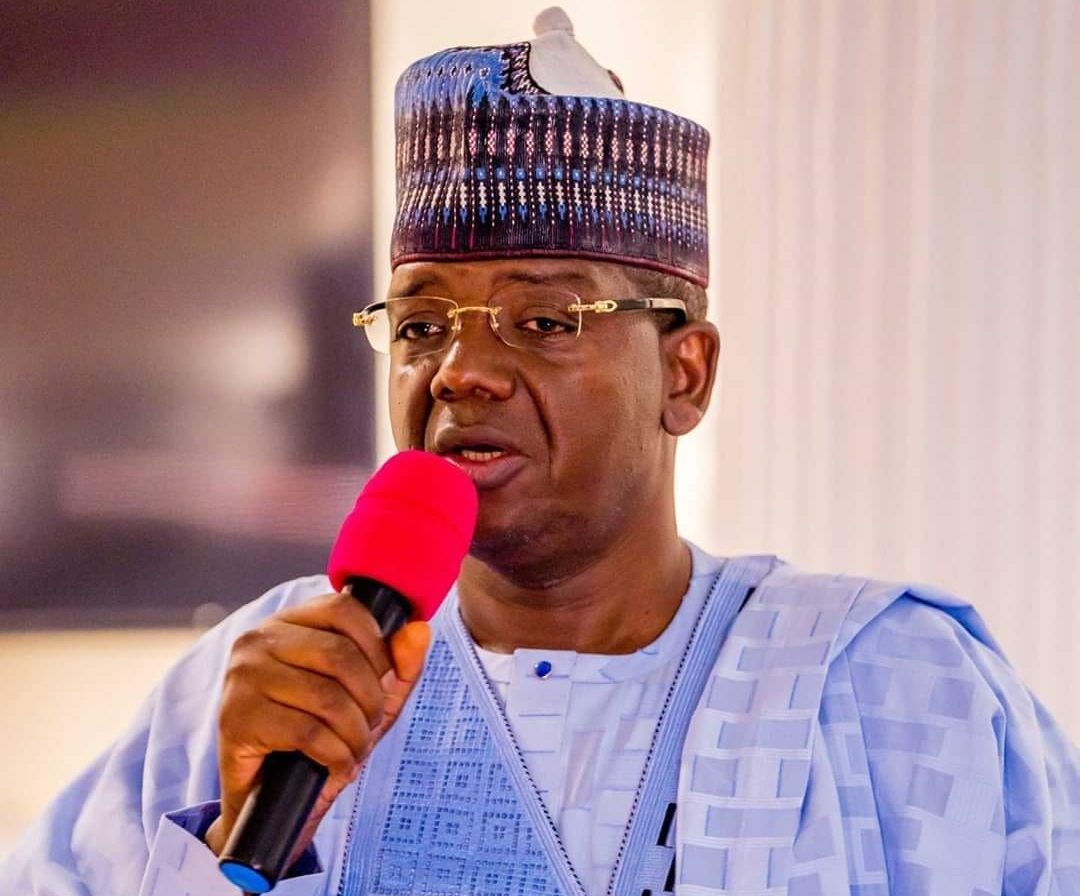
Matawalle lambasts Northern Elders Forum over comments on Tinubu’s administration

By Uzair Adam Imam

Minister of State for Defence, Bello Mohammed Matawalle, has strongly condemned the Northern Elders Forum (NEF), labeling the group as a divisive force in Northern politics that fails to represent the region’s true interests.

In response to recent comments by NEF spokesperson Abdul-Azeez Suleiman expressing regret over the North’s alleged support for President Bola Tinubu, Matawalle dismissed the NEF’s stance as shortsighted and detrimental to political harmony.

Matawalle asserted that the NEF’s threats against President Tinubu were “reprehensible and naive,” accusing the group of attempting to wield undue influence for their own political gain.

He criticized the NEF for undermining the democratic process and exacerbating disunity among Nigerians.

Furthermore, Matawalle contended that the NEF’s attempts to delegitimize Tinubu’s electoral victory in 2027 were baseless and lacking in merit.

He emphasized the need for constructive dialogue and cooperation to address the challenges facing Northern Nigeria, rather than engaging in divisive rhetoric.

Matawalle urged the NEF to refrain from actions that undermine the unity and progress of the nation, emphasizing the importance of fostering inclusive political discourse for the benefit of all Nigerians.

Salary increase or stronger Naira: My appeal to the President

By Sani Bello Hamza

Mr. President, before I delve into my concerns, it is indeed important to lay a proper foundation. As an aspiring lawyer and an opinion leader in my own capacity, I am not unaware of the challenges and intricacies of leadership. The stress, strain, and challenges are sometimes daunting and discouraging.

However, Mr. President, even your enemies and those from the opposition party can not doubt your capacity to lead and your unique style of leadership. Your ability to lead and manage successful politicians, industry men and academics leaves us in awe and surprise.

Your ability to understand and provide lasting solutions to national issues ought to be given careful consideration and serve as an exercise for students at various levels. Your unique style of leadership is indeed worthy of emulation and study. The Asiwaju school of thought!

Dear President Bola Ahmed Tinubu, It has been a year since Nigerians qued in mass to support you and the renewed hope agenda. They voted for you and supported your candidacy. Nigerians, from every nook and cranny of the country, shun the nay-sayers and triumph to support you and the APC to make sure you make it to the Villa. It has now become history and forms a special part of the Asiwaju school of thought! 

Mr. President, sir, Before you declared your intention to run for president in early 2022, Nigerians were lost in search of a trusted and reliable leader, a qualified politician capable of steering them to the promised land. The APC seems to be falling after eight years of sheer disappointing tenure, and the PDP was not an option to be considered, given its 16-year tenure.

The resurgence and emergence of the renewed hope agenda and the “emilokan” slogan gave Nigerians a sigh of relief and hope that the table would turn around. That is, it’s time to reap what they sow and enjoy the fruit of their labour and hard work. 

Mr. President, I wish I could write this letter and deliver it directly to your mail or doorstep. Sadly, it’s not possible. I still wish I could be featured on national television to address you and beg you for one thing, yes, just one thing, Mr. President. 

If I were given the opportunity to meet you, the president, in a one-on-one conversation, I wouldn’t talk much. I promise to make the conversation short, brief, and succinct. Who will give me this golden opportunity? 

Anyway, the popular Hausa adage; “guntun gatarin ka ya fi sari ka bani” meaning your short axe is better than cut and give me” is what kept resounding in my skull. I will use the little I have to achieve what I don’t have. I will send this letter out, hoping that one day it’ll reach you, Mr. President. In a one-on-one meeting with the president, I will tell him to put aside anything that has to do with salary increases for the working class and concentrate on bringing back to life the already dead Naira. A stronger Naira is the only option.

Okay, back to the subject matter: Nigeria is indeed a blessed country with abundant natural resources (Minerals and Humans). Yet, our economy keeps dilapidating day in and day out. It always seems that yesterday was better than today, last month was better than the current month, and we wish to be taken back to the previous administrations. 

Why is this happening? What is the problem with Nigeria?

I was tempted to share a post on my Facebook timeline from March 2015 (nine years ago) in which the writer lamented how the prices of commodities skyrocketed during the fasting period. The only price that caught my attention was the price of spaghetti, which rose from 60 – 70 naira. Man! How much are you buying spaghetti now? They’ll say the dollar has risen.

Mr. President, back then, in 2014, the exchange rate of dollar to naira was 60-70 per dollar. The minimum wage then was 18,000 naira, which is enough for an average Nigerian to buy a bag of rice and other commodities to sustain himself throughout the month.

Fast forward to 2024, 10 years later, the Naira hit an all-time record of 1900 to a dollar, and the minimum wage has graciously increased from 18,000 to 30,000. The 30k will not be enough for the average Nigerian to buy half a bag of rice, not to talk of other daily life struggles.

Mr. President, I strongly believe a salary increase will only increase the amount of money in circulation, thereby making inflation the front seat of our economic discourse. They say more money, more problems. 

Mr President, sir, a good road network connecting rural to urban areas spiced up with increased exports will benefit the country more than an increased salary for less than five per cent of the country’s population. 

Dear President Bola Ahmed Tinubu, I equally believe the renowned economists in your midst understand the intricacies of our economy and where it’s heading to. With your continuous support, dedication and unwavering commitment to the progress of our nation, Nigerians will one day smile and say Alhamdulillah!

Sani Bello Hamza is a Law Student at Ahmadu Bello University Zaria. He writes from Zaria and can be reached via sanibellohamza@gmail.com.


El-Rufai gears up for legal, political battle against Tinubu

By Uzair Adam Imam

The former governor of Kaduna State, Mallam Nasir El-Rufai, is bracing himself for a multifaceted showdown with President Bola Tinubu, poised to unfold in both courtrooms and the court of public opinion.

El-Rufai’s legal offensive is aimed at vindicating himself from allegations of being a security risk, which have tarnished his reputation and dashed his ministerial aspirations.

Despite his instrumental support in Tinubu’s rise to power, El-Rufai was abruptly dropped during Senate ministerial screenings, citing purported security clearance failures.

This stunning turn of events has spurred El-Rufai to action, with plans underway to challenge the accusations in court. Sources close to him have affirmed his resolve to clear his name and restore his integrity, leveraging his extensive international connections and legal resources.

Simultaneously, El-Rufai is mobilizing politically to challenge Tinubu’s influence in the court of public opinion, setting the stage for a potentially contentious lead-up to the 2027 elections.

While his exact role in the upcoming political landscape remains uncertain, El-Rufai’s strategic maneuvering against Tinubu underscores a rift that has emerged despite their past collaboration.

El-Rufai’s journey from a key ally to a formidable opponent of Tinubu reflects a complex dynamic within Nigerian politics, where alliances can shift rapidly, driven by personal ambitions and ideological differences.

As the battle lines are drawn, the nation watches with bated breath to see how this clash of titans will reshape the political landscape in the years to come.

President Tinubu orders customs to return seized food items

By Uzair Adam Imam

On orders from President Bola Tinubu, the Nigeria Customs Service (NCS) will return seized food items to their rightful owners, on the condition that the items must be sold in Nigerian markets.

NCS Comptroller Adewale Adeniyi made this announcement yesterday in Katsina during meetings with residents of border communities at the Kongolam and Mai’Adua border posts.

The Customs chief mentioned that President Tinubu had made a decision to use his authority, not based on legal guidelines, “but rather reflecting the deep sense of generosity he holds toward Nigeria.”

Adeniyi said: “In doing so, he has directed that those food items that were going out of the country that have been seized in various border areas should be returned to the owners on the condition that those goods would be sold in the Nigerian markets.

“So, we will be monitoring you to know if there is a violation of this. Those food items will be returned, and it is a directive that we will pass them back into the Nigerian markets,” Adeniyi said.