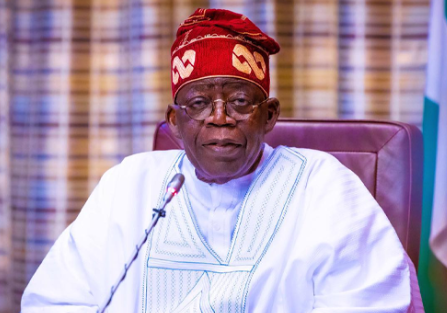
Asiwaju Bola Ahmed Tinubu

Shakeup looms at NNPC as Tinubu moves to appoint new leadership

By Abdullahi Mukhtar Algasgaini

President Bola Ahmed Tinubu is reportedly making significant changes at the helm of the Nigerian National Petroleum Company Limited (NNPCL). Plans are underway to replace the current Group Chief Executive Officer, Mele Kyari, with Bayo Ojulari, a former Managing Director of Shell Nigeria Exploration and Production Company (SNEPCo).

In addition to this change, Ahmadu Musa Kida, a seasoned oil and gas professional and former Deputy Managing Director of Total Oil, is set to take over as the new Chairman of the NNPC Board. This move will see Chief Pius Akinyelure, who has been in the position since 2023, stepping down.

According to reports, Kyari will remain in office until March 1, after which Roland Ewubare, who had previously resigned amid reports of disagreements with Kyari, will assume the role of Group Chief Operating Officer.

Ojulari, who has vast experience in the oil and gas sector, has held leadership positions across Nigeria, Europe, and the Middle East. He led SNEPCo from 2015 to 2021. Kida, on the other hand, brings decades of expertise. He has worked with Total Nigeria since 1985, including serving as Deputy Managing Director for Deep Water Services and holding various board positions within the company.

The leadership overhaul is expected to bring new direction to NNPCL, with both Ojulari and Kida seen as experienced hands in the industry.

Naja’atu Muhammad refuses to apologise amid Ribadu’s defamation claims

By Hadiza Abdulkadir

National Security Adviser (NSA) Malam Nuhu Ribadu has issued a formal demand for a public apology and retraction from Naja’atu Muhammad, a renowned activist and former director of the All Progressives Congress (APC) Presidential Campaign Council, following allegations she made in a viral TikTok video.

In the video, Muhammad asserted that during Ribadu’s tenure as chairman of the Economic and Financial Crimes Commission (EFCC), he accused President Bola Ahmed Tinubu, Senators George Akume, and Orji Uzor Kalu of being among the most corrupt governors in Nigeria 

Ribadu, through his legal representatives, described the allegations as “false, malicious, and highly defamatory.” He insists that the accusations are an attempt to damage his reputation and discredit him in his role as the NSA. Therefore, hehas demanded an immediate and public retraction of the statements and an apology.

“This is a clear case of character assassination. The allegations are not only baseless but also deeply injurious to my reputation,” Ribadu stated through his lawyers.

However, in a recent development, Naja’atu Muhammad has declared that she will neither apologise nor retract her statements. In a media interview, she maintained her claims and dismissed Ribadu’s demand, asserting that she has the right to express her views.

The dispute has stirred political circles, with analysts emphasizing responsible public discourse. Some warn against spreading unverified claims on social media, as they can lead to serious political and legal consequences repercussions. 

Political commentators have also noted that the unfolding situation underscores the increasing tensions within Nigeria’s political space. Many are watching closely to see whether Ribadu will take further legal action or escalate the situation further.

Tinubu dismisses Prof Aisha as VC of Uni Abuja, names an interim successor

By Uzair Adam 

President Bola Ahmed Tinubu has removed Aisha Maikudi as Vice Chancellor of the University of Abuja, now renamed Yakubu Gowon University.  

Her dismissal was announced just hours after she presided over the institution’s matriculation ceremony. 

Maikudi’s tenure had been marred by controversy, with some lecturers alleging she held the position illegally.  

In her place, Tinubu appointed Professor Lar Patricia Manko as Acting Vice Chancellor for a six-month term, with a directive that she would not be eligible to apply for the substantive position when it becomes available.  

Details later…

Revisiting the Barau-IBK responses to Kperogi’s critique of Emir Sanusi’s Lagos outburst

By Bashir Uba Ibrahim, Ph.D.

In my article “A Deconstructive Reading of Sunusi’s Remarks on Tinubu’s Economic Policies,” published by The Daily Reality on 19 January 2025, I noted that the Emir loses authority over his words when the media and the public interpret him as they wish. This provokes deconstructive readings of his remarks. The more his statements are rife with contradictions and aporia, the more they invite diverse interpretations. Prof. Kperogi presents one notable critique of the Emir’s outburst in Lagos.

Kperogi’s scathing deconstructive critique of Emir Sanusi’s Lagos outburst, “Emir Sanusi’s Quid Pro Quo for His Friends Turned Friends,” is simultaneously attracting national and international critical attention, indignation, and approval due to its epitomising use of language and skilful deployment of sarcastic symbolism to ridicule its target subject (Emir Sanusi).

The piece provokes sporadic responses and comments that seem to open a Pandora’s Box. Consequently, this write-up reviews notable responses and comments on Kperogi’s piece, primarily authored by Prof. Aliyu Barau and a remark by Prof. Ibrahim Bello-Kano (hereafter referred to as Barau-IBK comments). 

The piece revisits the epistemological challenges posed by such critique from the perspective of speculative criticism. Speculative criticism is a branch of theoretical criticism. As a philosophical approach to textual and non-textual studies, theoretical criticism focuses on the analysis and interpretation of spoken and written texts.

Prof. Barau, in a piece titled “Kperogi: A Captive of the Raw Emotions”, makes a scathing “scientific” deconstruction of Kperogi’s piece. In that article, he x-rays Kperogi’s write-up from scientific lenses. He argues that “Kperogi’s overloaded bags of insults towards Sanusi are unguided by science or descent knowledge”. Thus, Kperogi’s punch on Emir Sanusi should be predicated upon a scientific mode of inquiry by formulating research questions and hypotheses that would guide his critique as he succinctly puts that “writing on Sanusi Lagos outburst, I expect Kperogi to be deeply critical and analytical with scientific objectivity”. 

The above reference to systematic research questions and hypotheses provides an invariable allusion to Barau’s scientific method of criticism (critique). His astute exploitation of language, adeptly combined with an erudite excavation of symbolism (e.g., the Tower of Babel, Neo-Babel Tower, etc.), to register his caustic critique of Kperogi’s piece, remains a recurring feature in his write-up.

On the other hand, in his response to Barau’s deconstruction of Kperogi’s deconstruction of Sanusi titled “Science” or “Critique” in Reguting Malice, IBK refutes the scientific method of critique advanced by the latter. He contends that the best way to match Kperogi’s verbiage is through eclectic methods of criticism. Thus, his reason for deploying sizzling anger and vituperative language in his comment on the latter’s piece. 

Supporting this argument, Prof. IBK maintains that “only the concept of critique can meet head-on and devastate mere malicious criticism”. For that, he surmises that there is a problem with offering “a scientific critique of ideas” as Kperogi’s piece on Sanusi is “speculative ideas”. Thus, there cannot be a “scientific criticism”; science relies on facts, and there are no facts but only interpretations, as argued by IBK quoting Nietzsche. Since Kperogi’s article on Sanusi is a speculative idea, there cannot be a “scientific criticism”. 

Finally, IBK concedes that his comment is by no means a criticism of Barau’s magisterial write-up but rather his way of showing how a convergence of Philosophy, Social Theory, Psychoanalysis and Chaos Theory within analytical critique can or could be used to deconstruct any discourse. 

In conclusion, Barau’s write-up and the subsequent response by IBK are both deconstructions of the deconstructive critique of Kperogi’s earlier article on Emir Sanusi’s Lagos outburst. While the former advocates for a “scientific critique”, the latter espouses critical standpoints.

Dr Bashir Uba Ibrahim writes from the Department of English and Literary Studies, Sule Lamido University Kafin Hausa. He can also be reached via bashirubaibrahim@gmail.com.    

Response to Farooq A. Kperogi’s article on Emir Muhammadu Sanusi II

By Usman Abdullahi Koli

I read Professor Farooq A. Kperogi’s article “Emir Sanusi’s Quid Pro Quo for His Friends Turned Fiends” with keen interest. While it was well-written and rich in rhetorical flair, I believe it unfairly misrepresents the character and contributions of His Highness Emir Muhammadu Sanusi II and the broader context of his remarks. My intention here is not to disparage Mr. Kperogi or his intellectual depth but to offer a more nuanced perspective based on facts and a balanced understanding.

Sanusi’s commentary on economic reforms is not new, and it is not driven by self-interest, as the article implies. His economic positions, controversial as they may be, have always been rooted in his commitment to transparency, accountability, and fiscal prudence.

As governor of the Central Bank of Nigeria (CBN), Sanusi spearheaded reforms that stabilised the financial sector and exposed corruption, notably the mismanagement of funds in the petroleum industry. His leadership saved the Nigerian banking system during the 2009 global financial crisis. These efforts reflect a consistent commitment to economic pragmatism, not the “self-loving sadism” Mr. Kperogi ascribed to him.

At the Gani Fawehinmi Memorial Lecture, Emir Sanusi addressed Nigeria’s economic challenges within a historical framework, highlighting how years of poor management led to today’s difficulties. His statement about not defending the current government’s policies was not a quid pro quo demand but an expression of discontent over the failure of political leaders to reciprocate loyalty or act decisively for national progress.

Sanusi’s critique of governance has often transcended personal affiliations. For instance, he openly criticised the Goodluck Jonathan administration despite being part of the government apparatus, risking his career in the process. His comments in the lecture reflect this same principle: his loyalty is to ideas, not individuals.

The article unfairly caricatures Sanusi as an unrepentant neoliberal apologist indifferent to the suffering of the masses. While he has supported subsidy removal and exchange rate harmonisation, his positions are informed by Nigeria’s fiscal realities. Subsidy regimes, historically marred by corruption and inefficiency, drained trillions of naira from public coffers without addressing systemic energy sector challenges.

Critics often overlook the fact that subsidies disproportionately benefit the elite rather than the poor. Studies by organisations like the World Bank and Nigeria’s Budget Office have shown that wealthier Nigerians consume more fuel and thus benefit more from subsidies. Sanusi’s advocacy for subsidy removal aims to redirect these funds toward targeted interventions, such as healthcare, education, and infrastructure, which directly benefit the masses.

Contrary to the claim that Sanusi derives “delight from the misery of the masses,” he has consistently called for equitable resource allocation and the empowerment of marginalised communities. As emir, he launched initiatives to promote girl-child education, gender equity, and poverty alleviation in Kano State. His reforms in the Kano Emirate Council prioritised addressing social injustices that have long plagued Northern Nigeria.

For instance, his campaign against child marriage and his emphasis on the importance of education for girls drew both applause and backlash. These efforts single out his commitment to social progress and human dignity.

Mr Kperogi’s passionate critique of Sanusi’s remarks offers no clear alternative solutions to Nigeria’s economic woes. If we agree that Nigeria’s economy has suffered from decades of mismanagement, what is the path forward? Should we continue subsidising consumption at the expense of critical investments? Sanusi’s prescriptions, while debatable, are at least anchored in economic logic and long-term sustainability.

Nigeria’s challenges require a balanced, solutions-driven discourse. Reducing complex issues to personal attacks or dismissing individuals who have contributed significantly to national development is unproductive. Emir Sanusi’s positions are not beyond critique, but such critiques should engage with the substance of his arguments rather than resorting to ad hominem attacks or speculative interpretations of his motives.

Nigeria stands at a crossroads, and leadership—whether in government, traditional institutions, or civil society—must rise to the occasion. While Emir Muhammadu Sanusi II is not infallible, his track record of service, advocacy, and reform warrants a more balanced appraisal. Let us concentrate on fostering a Nigeria where ideas are debated with civility and respect, rather than transforming crucial national discussions into platforms for derision.

Usman Abdullahi Koli is a public relations expert, writer, and advocate for balanced public discourse. He can be reachedvia mernoukoli@gmail.com.

Presidency accuses El-Rufai of conspiring to overthrow Tinubu’s government

By Abdullahi Mukhtar Algasgaini

The Nigerian Presidency has criticized former Kaduna State Governor Nasir El-Rufai for his comments about democracy in the country.

The Daily Reality reported that El-Rufai, speaking at a national conference in Abuja on Monday to strengthen democracy in Nigeria, stated that the ruling All Progressives Congress (APC) party has failed to fulfill its promises to the people.

He said, “I no longer see the APC as a party. There has been no meeting of any party organs for two years—no meetings of the party leadership, no NEC, nothing. We don’t even know if it’s a one-man party or if there’s no structure at all.”

The former governor added that there was a significant gap between the party and the people, noting that the APC had deviated from its founding purpose and could no longer deliver on its promises to the public.

He further stated that the country’s problems result from the leadership of incompetent, lackadaisical individuals who hold power.

In response, Daniel Bwala, former Federal Capital Territory Minister and Special Adviser to President Bola Tinubu on Communications, accused El-Rufai of plotting to destabilize the government he helped establish.

On his X platform, Bwala queried whether El-Rufai would make such remarks if he were part of the current government and seated in the cabinet.

“Brother, if you were in the government and the cabinet, could you take this position and express such views? History has shown such behaviour in the past. Now you want to overthrow the government you helped establish,” Bwala said.

Student leaders reject Tinubu’s rice palliatives, demand focus on educational reform

By Abdullahi Mukhtar Algasgaini

Student union leaders from Obafemi Awolowo University (OAU) in Ile-Ife and Ahmadu Bello University (ABU) in Zaria strongly disapprove of President Bola Tinubu’s distribution of rice palliatives to student leaders across Nigerian tertiary institutions. They call for more substantive reforms in the education sector.

In separate statements, the Student Union Government (SUG) Presidents of both universities criticised the gesture, highlighting that the rice distribution fails to address the deeper challenges Nigerian students face, particularly tuition costs and poor university infrastructure.

Damilola Isaac, the SUG President at OAU, emphasised that he had not received any rice palliatives and made it clear that he would not accept them, even if offered. Isaac stressed that his administration focuses on advocating for systemic change in the education sector rather than accepting temporary handouts that do not address the root causes of student hardship. He called on the government to prioritise measures that would reduce tuition burdens, improve university infrastructure, and generally enhance the quality of education across the country.

“While the government may have good intentions, it is crucial that efforts are directed toward addressing the real issues in education,” Isaac said. “We are committed to fighting for the interests of students and ensuring accountability in the education sector.”

Similarly, Ibrahim Nazeer, the President of the Students’ Representative Council at ABU, voiced his rejection of the rice palliatives. Nazeer, through his media advisor Abdulrazak Shuaibu, said he would not accept the rice unless it were ensured that all students at ABU received their fair share. He urged the government to focus on creating an environment where students can afford necessities like food without relying on sporadic palliative distributions.

Instead of periodic rice handouts, Nazeer suggested that the government focus on long-term solutions that ensure students have access to basic necessities year-round.

While some student leaders, including Fahad Abdullahi, the SUG President of Abubakar Tafawa Balewa University (ATBU), confirmed receiving the palliatives, several other institutions, including Usmanu Danfodiyo University, Sokoto (UDUS), and Moshood Abiola Polytechnic (MAPOLY), reported being unaware of the distribution.

The rice palliative, which allocated two 25kg bags of rice to each SUG President, has been criticized for being limited to student leaders rather than the entire student body. Many students expressed concerns over the perceived unfairness of the selective distribution, noting that all students, not just those in leadership positions, are affected by the country’s economic challenges.

Anas Abdulrahman, a student from UDUS, questioned why only student leaders received the palliative. He stressed that all students should benefit from government initiatives, as they are all citizens of Nigeria. “We all voted for this government, and we should all be considered for such palliatives,” he remarked.

The rice distribution is part of the government’s repeated efforts to alleviate the economic hardship exacerbated by the removal of the petrol subsidy and the floating of the naira, leading to high inflation and food price increases. Despite these measures, inflation has reached 34.8%, with food inflation soaring to 38.94%, according to the National Bureau of Statistics (NBS).

Many students and citizens are questioning the effectiveness of distributing rice as a response to the economic crisis, with some suggesting that more meaningful policy changes are needed to address the underlying economic issues facing Nigerians.

As Nigeria grapples with economic instability, student leaders are calling for a shift in focus toward lasting educational reforms, improved infrastructure, and sustainable solutions to the challenges faced by students.

A deconstructive reading of Sunusi’s remarks on Tinubu’s economic policies 

By Bashir Uba Ibrahim, Ph.D.

Emir Muhammadu Sanusi II’s recent remarks about the harsh economic policies of President Bola Ahmed Tinubu’s government, made during the 21st Memorial Lecture for the late Gani Fawehinmi organised by the Nigerian Bar Association, NBA Ikeja Branch in Lagos, themed ‘Bretton Woods and the African Economies: Can Nigeria Survive Another Structural Adjustment Programme’, have sparked a diverse range of reactions across social media. 

As the chairman of the occasion, when giving a microphone to comment, he remarked, “I can give a few points here about what we are going through and how it was predictable and avoidable. But I am not going to do that because I have chosen not to speak on the economic reforms or to explain anything because if I explain it, it will help this government. But I do not want to help this government. They are my friends, but if they do not behave like friends, I will not behave like a friend”. 

 These remarks received and continuously attracted fierce critical rebuttals and approbations from the government and Emir Sunusi’s perceived critics. On the other hand, his apologists are overtly in a tactical defence of such remarks on the pretence that the Emir is a victim of misperception by the public and misinterpretation by the media as they usually used to quote him out of context. Even the Emir himself is reported by the Leadership newspaper lamenting that his remarks were taken out of context, reducing the broader message of his speech to a single paragraph. But Emir and his media warriors fail to understand that linguistically, by the time a person makes an utterance, he no longer has control over it. 

To borrow a popular Hausa adage which says magana zarar bunu, idan ta fita ba ta dawowa or what Jean-Paul Sartre called “every word has its consequences” or in what Roland Barthes, the prominent French Structuralist and Post-structuralist literary theorist and critic called in his widely celebrated magnum opus “the death of the author is the rise of the reader”. Similarly, Barthes argues that “once the author is removed, the claim to decipher a text becomes quite futile. To give a text an author is to impose a limit on that text, to furnish it with a final signified”. And the text here refers to both spoken discourse (phonocentrism) and written (logocentrism). The former is the spoken remarks by the Emir, while the latter is its interpretations or deconstructive reading(s). Thus, the latter supplements the former in what Derrida called “doubling critique”.

Meanwhile, concerning the above remarks by the Emir, the media houses have done what part of their job, i.e., deconstructive or interpretive journalism. Thus, by the time the Emir loses authority or control over his utterances, it is when the media and the general public have the right to interpret him the way they like. Thus, it forms the crux of their deconstructive readings of Emir Sunusi’s remarks. Therefore, the more remarks are enmeshed with aporia and entangled in contradiction, dislocation and disunity of words or, to borrow Jacques Derrida’s words, “play”, “decentering”, or “rupture” like the one made by Emir Sunusi, the more it attracts deconstructive readings or interpretation from various standpoints.    

For instance, Emir’s remarks, as widely reported by the media, sound contradictory if not antipodal or antithesis. Given his unflinching and uncompromising stand as an unrepentant neo-liberalist who always supports the removal of fuel subsidy and currency liberalisation, floating of the naira against the dollar, which ultimately leads to the devaluation of the former, how can you say the situation the Nigerian government find itself is “avoidable” while you are among those who advise the government to implement such policies for reforming the shrinking economy. As the popular social media influencer Aliyu Dahiru Aliyu (Sufi) argues, “…For years, Sanusi has been a vocal advocate of neo-liberal economic policies, including subsidy removal and currency liberalisation–policies now adopted by Tinubu’s administration. These were once touted by people like Sanusi as the perfect remedies for our economic woes, yet their implementation, according to his recent expression, hasn’t delivered the promised relief. So, what fresh ideas Sanusi hides that he can offer if the FG has been friendly towards him apart from the familiar intellectual manoeuvres?”. 

Finally, as opined by the father of modern linguistics, the popular Swiss linguist Ferdinand de Saussure, that language be spoken as the one used by the Emir or written, i.e., the one used by his deconstructive readers is a system of signs; that the sign (word) is the basic unit of meaning, and that the sign comprises a signifier (form) and signified (mental representation or meaning). Therefore, the signifiers uttered by Emir Sunusi carry variants of signifieds in what Derrida called “transcendental signified”, which are beyond the control of their owner (the Emir) and thus warrant such myriad deconstructive reading(s).

Bashir Uba Ibrahim, PhD, wrote from the Department of English and Literary Studies, Sule Lamido University, Kafin Hausa. He can be reached at bashirubaibrahim@gmail.com.

Sanusi questions Tinubu’s economic policies, vows to withhold advice

By Anwar Usman

The Emir of Kano, Malam Muhammadu Sanusi II, has made it clear that he will not use his expertise to address Nigeria’s economic challenges simply because he is unwilling to assist the Tinubu administration.

As a certified economist and former CBN governor, Sanusi made this assertion while speaking at the 21st anniversary of Fawehinmiism with the 2025 Gani Fawehinmi Annual Lecture held today at the Lagos Airport Hotel in Ikeja, Lagos state.

He stated that “explaining the economic crisis would simply provide solutions to the lingering economic problems and pave the way for the proliferation of Nigeria’s economy.” 

While speaking, the Emir emphasised that despite being a good friend to the government, he would not offer any solutions that could help the administration achieve its goals. 

He criticised the Tinubu administration, stating they lacked credible and competent people who could explain the persistence of economic constraints on Nigerians.

He reiterated, “I’m not going to discuss any of the problems, let alone provide an insight to navigate this challenging period”.

Instead of offering solutions, Sanusi shifted the responsibility to the administration, saying, “It’s up to them to explain to Nigerians why their policies keep failing. He attributed the current economic woes to decades of unnecessary economic reforms.”

Shocked by ISWAP attack, Tinubu calls for enhanced military measures

By Abdullahi Mukhtar Algasgaini

President Bola Tinubu expressed his condolences to the soldiers who lost their lives in an attack on a military base in Sabon Gida, Damboa, Borno State.

Members of the ISWAP (Islamic State West Africa Province) group launched the attack at dawn on Saturday, using heavy military vehicles and motorcycles. The attack targeted the military base in Sabon Gari, located in Damboa Local Government Area, Borno State. They set the base on fire, including military vehicles, as confirmed by several military sources who requested anonymity due to restrictions on speaking about the matter.

Fighter jets dispatched from Maiduguri, located 100 kilometres (62 miles) away, retaliated against the attackers as they tried to flee.

In a statement released by the President’s spokesperson, Bayo Onanuga, Tinubu expressed deep sorrow for the loss of six brave soldiers who died in the terrorist attack on January 4th. The President has ordered a full investigation to determine the cause of the incident and ensure that it serves as a lesson to prevent future occurrences.

“The actions taken by the military demonstrate our strength and readiness to confront threats and eliminate them for the safety of our country. This operation highlights our commitment to fighting terrorism and banditry and working towards a peaceful and secure future for all Nigerians,” the President stated.

Tinubu further expressed his gratitude and sympathy to the soldiers and other security personnel on behalf of the grateful nation. “Your dedication and sacrifice will not be in vain. We stand with you 100% in this fight against these threats,” he affirmed.

The Chief of Army Staff also commended the military’s swift and decisive response, particularly the air support, which successfully struck many of the terrorists and destroyed their equipment as they attempted to escape.

According to Tinubu, the airstrike resulted in the killing of several terrorists and the destruction of their resources. The President urged the military to take further steps to launch direct assaults on bandits and terrorist camps.

He emphasized that special attention should be given to the North-Western region, where these criminal groups continue to pose a threat to the lives and property of innocent rural communities.

Tinubu also called on Nigerians and the media to support the military’s efforts to restore peace and security in the country.