Asiwaju Bola Ahmed Tinubu

House of Representatives approves tax reform bills, awaits Senate approval

By Abdullahi Mukhtar Algasgaini

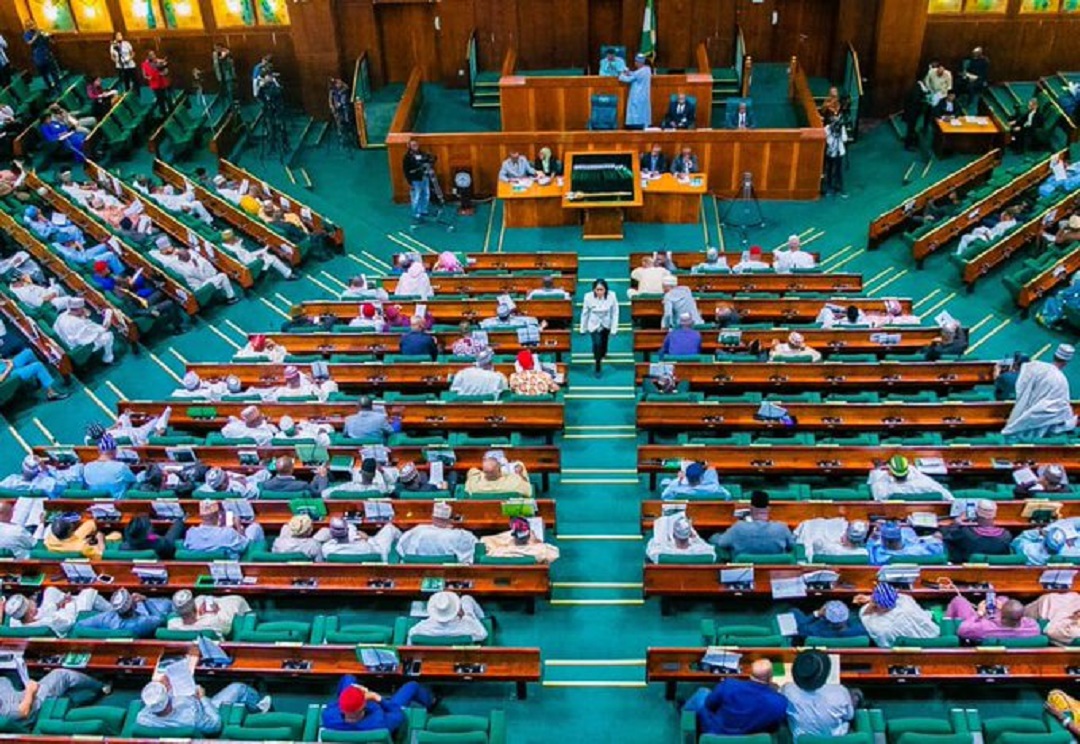
The House of Representatives has approved four crucial tax reform bills during its session on Thursday in Abuja. 

The bills, which are now awaiting Senate concurrence, include the Nigerian Tax Bill, the Tax Administration Bill, the Revenue Tax Board Bill, and the Nigerian Revenue Service Establishment Bill.

James Abiodun Faleke, Chairman of the House Committee on Finance, highlighted the thorough process that led to the bills’ adoption. Over 80 key stakeholders participated in public hearings, and an eight-day retreat was held to debate the clauses. 

Faleke expressed confidence that the tax reforms would result in widely accepted laws and thanked lawmakers and House leadership for their support.

“We cannot continue using outdated tax laws that no longer meet our business, survival, and revenue needs,” Faleke emphasized, referring to the existing tax laws, some of which date back to 1959.

Deputy Committee Chairman Saidu Abdullahi praised Speaker Tajudeen Abbas for fostering consensus among stakeholders and ensuring that input from all geopolitical zones was considered. 

He added that the recommendations reflect the contributions of various groups and that the final version resulted from extensive consultation.

Ikeagwuonu Ugochinyere, an opposition member, also lauded the reform process, highlighting its transparency and the adjustments made to reflect public interests better. He assured the reforms would expand the tax base, enhance revenue collection, and protect small businesses.

Benson Babajimi, a lawmaker from Lagos, noted that all concerns from various stakeholders, including issues like inheritance tax and VAT, were carefully addressed during the legislative process.

With the House’s approval now secured, the tax reform bills await the Senate’s concurrence.

President Tinubu appoints new ambassadors after 18-month diplomatic hiatus

By Hadiza Abdulkadir

President Bola Ahmed Tinubu has approved the appointment of new ambassadors to represent Nigeria in its foreign missions. This ends an 18-month diplomatic vacuum that began after all ambassadors were recalled in September 2023.

The recall, which impacted both career and non-career ambassadors, was due to funding constraints and a wider restructuring of Nigeria’s diplomatic engagements. However, sources within the presidency confirm that the financial issues have now been resolved, clearing the path for new appointments.

The selection process for the new envoys is already underway, with security agencies conducting background checks on nominees before their formal announcement and confirmation. The move is expected to restore Nigeria’s diplomatic presence globally and strengthen bilateral relations with key partners.

Nigeria currently operates over 100 embassies and high commissions worldwide, and the prolonged absence of ambassadors has raised concerns about the country’s foreign policy direction. Despite these challenges, President Tinubu’s administration has prioritized economic recovery, allocating N302.4 billion ($198.3 million) in the 2025 budget for Nigeria’s foreign missions.

During meetings with foreign leaders, President Tinubu assured that vacancies would be filled soon, recognizing the need for a strong diplomatic corps to advance Nigeria’s global interests. The new appointments are expected to refresh Nigeria’s foreign policy and enhance its influence internationally.

Observers note that the new ambassadors will foster economic partnerships, attract foreign investments, and promoteNigeria’s image abroad. With their deployment approaching, stakeholders are watching how the diplomatic team navigates the global landscape to advance Nigeria’s interests.

‘Nasir El-Rufai’ game has commenced

By Zayyad I. Muhammad

The 2027 game will not only be interesting but will also mark a significant turning point in Nigeria’s political landscape. The voting patterns and intricate scheming that shaped the 2023 elections will not be replicated in their exact form, yet their influence will still be felt. While the key political figures who played major roles in 2023 will remain central to the unfolding drama, they will adopt new strategies, shift alliances, and engage in different forms of political maneuvering.

The battle for power will be defined by strong political platforms, influential players, a formidable war chest, scientifically crafted strategies, and carefully calculated negotiations. The presidential race, in particular, will be a high-stakes contest, shaped by a mix of ambition, ideological shifts, and pragmatic political decisions.

An incumbent seeking a second term will be a bulldozer—with an enormous war chest, a solid structure, and the full weight of state power behind them. President Bola Ahmed Tinubu will fight tooth and nail to secure reelection, as mostly, any first term president will do so. However, the APC stronghold – the North, is gradually slipping from the party’s grasp. In fact, 75% of President Tinubu’s second-term resources and energy will be expended in the North—making it a crucial battleground for his team. If the Tinubus have played their card very well, the North would have been firmly in the arms.

The North will be the main battleground, while the Southwest will find itself in a dilemma—torn between supporting their own and upholding their deep-rooted tradition of rewarding excellence. The Southeast will watch from the sidelines with arms akimbo but will ultimately follow their hearts, while the South-South may take a more indifferent stance, adopting a “let’s just move” attitude.

The recent resignation of Nasir El-Rufai from the All Progressives Congress (APC) and his defection to the Social Democratic Party (SDP) is just one of many major developments that will reshape the political terrain in the coming months and 2027 approaches. El-Rufa’i’s early defection serves as a catalyst for the unfolding political drama. The Tinubu team is fortunate to have this early warning, giving them ample time to strategize. Meanwhile, the opposition will be on the offensive, while the APC will be forced into a defensive position.

For the opposition, the biggest challenge will be balancing the interests of four key groups: the Atiku camp, the Kwankwaso camp, the Peter Obi camp, and the El-Rufai/Buhari former ministers’ camp. They must navigate these competing interests carefully if they hope to strike the winning formula.

As political camps solidify and realign, new alliances will emerge, while old ones will fracture under the weight of conflicting interests. The electorate, too, will evolve—demanding more from their leaders and scrutinizing candidates beyond party affiliations.

Ultimately, the 2027 game will be a masterclass in political strategy and power dynamics—one that students of politics, analysts, and observers alike will find fascinating to study for years to come.

Zayyad I. Muhammad writes from Abuja, zaymohd@yahoo.com, 08036070980

Tinubu renames Federal University of Education Kano after Yusuf Maitama Sule

By Hadiza Abdulkadir

In a significant move to honour a distinguished Nigerian statesman, President Bola Tinubu has officially renamed the Federal University of Education in Kano (formerly Federal College of Education) to Yusuf Maitama Sule Federal University of Education. This decision, announced on March 10, 2025, pays tribute to the late Alhaji Sule, who played a vital role in Nigeria’s socio-political landscape throughout his life.

Alhaji Sule, who lived from 1929 to 2017, was renowned for his extensive contributions to the nation. He served as Nigeria’s Permanent Representative to the United Nations in New York and was Chairman of the UN Special Committee Against Apartheid. 

The political journey of Alhaji Sule, also known as Dan Masanin Kano, included roles as Chief Whip of the Federal House of Representatives from 1954 to 1959, Leader of Nigeria’s Delegation to the Conference of Independent States in 1960, the First Federal Commissioner of Public Complaints in 1976, and Minister of Mines and Power.

In his statement, President Tinubu emphasized the importance of commemorating Ambassador Sule’s legacy, stating that it would inspire younger generations to embody values such as integrity, patriotism, character, and nationalism.

The Federal University of Education, Kano, which is one of seven specialized universities of education established by the Federal Government, will continue to play a crucial role in the training of teachers, further strengthening Nigeria’s education sector. 

This renaming reflects a commitment to recognizing leaders who have made impactful contributions to the nation’s development, setting a precedent for future generations.

Nasir El-Rufai dumps APC, joins SDP

By Anas Abbas

Nasir Ahmad El-Rufai, the former governor of Kaduna State, has officially announced his resignation from the All Progressives Congress (APC) and his decision to join the Social Democratic Party (SDP).

In a resignation letter submitted to his local ward in Kaduna State on Monday, El-Rufai cited irreconcilable differences with the ruling party’s leadership and expressed disappointment with the APC’s recent direction.

“I have served the APC diligently and have contributed significantly to its viability as a political platform,” he stated. “However, recent developments have revealed a concerning disregard for democratic principles and progressive values that I hold dear.

”As a founding member of the APC, El-Rufai played a pivotal role in securing electoral victories for the party in 2015, 2019, and 2023.

Reflecting on his tenure as governor, he emphasized his administration’s commitment to human development, education, healthcare, infrastructure, job creation, and investment.

He explained that his departure from the APC was motivated by growing concerns regarding governance and internal party dynamics.

“At this juncture in my political journey, I must seek a different political platform that aligns with the progressive values I cherish,” he remarked.

Upon joining the SDP, El-Rufai expressed his gratitude to mentors, colleagues, and supporters, reaffirming his dedication to advancing democratic principles.

“As a member of the SDP, I am committed to building a unified democratic front to challenge the APC in the upcoming elections,” he concluded.

Nuhu Ribadu for President 2031?

By Zayyad I. Muhammad

The Nigerian political landscape is never short of intrigue, speculation, and high-stakes maneuvering. The latest storm centers around Mallam Nuhu Ribadu, Nigeria’s National Security Adviser (NSA), and allegations made by his ‘former’ ally and friend, Mallam Nasir El-Rufai, the former governor of Kaduna State.

El-Rufai has accused Ribadu of secretly positioning himself for a presidential bid in 2031, alleging that he is working to eliminate key northern politicians before the elections. In an Arise TV interview, El-Rufai said:

“Somebody wants to destroy my reputation. Why? Nuhu Ribadu wants to be president in 2031. He has to eliminate every northerner that he thinks is on the radar.”

These allegations have sparked intense debate, given Ribadu’s current position as the NSA, one of the most powerful offices in the country. The role demands absolute loyalty to the sitting president, and any sign of personal political ambition would be politically dangerous.

However, Ribadu has vehemently denied the claims, dismissing any suggestion that he is planning a presidential run in 2031. In his response, he stated:

“For the avoidance of doubt, I want to put it on record that I have never discussed running for president in 2031 with anybody.”

Currently, President Bola Ahmed Tinubu is in the second year of his first term and is widely anticipated to run for reelection in 2027. If he wins, his administration would extend until 2031. Considering this timeline, it seems premature for anyone in Tinubu’s inner circle—particularly someone in such a sensitive position as the NSA—to be planning a presidential bid so early.

To be fair to Ribadu, every seasoned political observer knows he is too intelligent and experienced to make such a politically reckless move. Launching a presidential campaign while still serving in a crucial role would create unnecessary distractions, fuel rivalries, and generate deep animosities within the government. It would also call his loyalty to Tinubu into question.

So why is Ribadu being linked to 2031?

First, his close relationship with President Tinubu has earned him the title of Tinubu’s golden boy (Dan Fulani). His reputation as a disciplined, intelligent,  experienced, and competent leader makes him a natural contender in any discussion about potential successors. Any rising political figure will inevitably attract speculation in a political climate where future ambitions are often carefully managed behind closed doors but widely discussed publicly by everyday people.

Second, the political class understands that succession planning is always at play, even when not publicly acknowledged. While Ribadu may not currently campaign for the presidency, political opportunities can arise unexpectedly. Nigerian politicians are known for their ability to seize the moment when the circumstances align, even if it was not originally in their plans.

Politics is unpredictable, and today’s denials can quickly become tomorrow’s declarations. Whether or not Nuhu Ribadu harbors presidential ambitions, the reality is that he possesses the qualities of a strong contender—experience, credibility, and proximity to power. If the opportunity presented itself, would he take it?

Only time will tell. But one thing is sure: The road to 2031 has already begun, and the political maneuvering will only intensify in the coming years.

Zayyad I. Muhammad writes from Abuja via zaymohd@yahoo.com.

Tinubu appoints Jega as adviser on livestock reforms

By Hadiza Abdulkadir

President Bola Tinubu has appointed former INEC chairman, Professor Attahiru Jega, as his adviser and coordinator forthe Presidential Livestock Reforms. This was announced by Special Adviser Bayo Onanuga. 

Jega was the INEC chairman from 2010 to 2015 and previously co-chaired the Presidential Livestock Committee alongside Tinubu.

In July, Tinubu established a new Ministry of Livestock Development to address the farmers-herders crisis, based on the recommendations of the National Livestock Reforms Committee. 

Jega, 68, is also a member of the International Elections Advisory Council and chairs the Governing Council of Sa’adatu Rimi University of Education in Kano State. 

Jega’s appointment aims to support ongoing livestock reforms in Nigeria.

Tinubu appoints Shamsedeen Ogunjimi as Accountant General

By Hassana Abdullahi

President Bola Ahmed Tinubu has appointed Shamsedeen Babatunde Ogunjimi as the new Accountant General of the Federation, effective March 7, 2025. He will take over from Oluwatoyin Madein, who is set to retire on the same date.

Ogunjimi, 57, has over thirty years of experience in financial management. He holds a Bachelor’s degree in Accountancy from the University of Nigeria, Nsukka, and a Master’s in Accounting and Finance from the University of Lagos. 

Ogunjimi is also a fellow of the Institute of Chartered Accountants of Nigeria and the Chartered Institute of Taxation of Nigeria.

Before his appointment, Ogunjimi served as Director of Finance and Accounts at the Ministry of Finance and later as Director of Funds in the Office of the Accountant General of the Federation. He was appointed Acting Accountant General in December 2024.

President Tinubu expressed confidence in Ogunjimi’s ability to uphold professionalism and transparency in managing Nigeria’s public finances.

President Tinubu appoints Brigadier-General Nafiu Olakunle as NYSC Director-General

By Abdullahi Mukhtar Algasgaini

Brigadier-General Nafiu Olakunle, a distinguished artillery officer from Ileogbo in the Aiyedire Local Government Area, Osun State, has been appointed the new Director-General of the National Youth Service Corps (NYSC).

This prestigious appointment has brought pride to the people of Ileogbo, Iwoland, and Osun State and marks a significant milestone in the nation’s progress. 

Brigadier-General Olakunle is recognized for his unwavering commitment to national service, exemplary leadership, and dedication to the country’s development.

With his appointment, many expect Brigadier-General Olakunle to drive positive changes within the NYSC and reinforce its vital role in uniting and empowering Nigeria’s youth. 

His leadership is anticipated to enhance the NYSC program’s contribution to fostering national unity and progress.

This achievement represents not only a personal triumph for Brigadier-General Olakunle but also a significant moment for the Osun State community.

The fractured compass: El-Rufai, Ribadu, and the quest for Nigeria’s “North Star”

By Ibraheem A. Waziri

I am a son of Northern Nigeria, born into the 5th generational cohort—those of us ushered into life between 1968 and 1983, as the civil war’s echoes faded. From here, I’ve watched two giants of the 4th cohort, Nasir El-Rufai and Nuhu Ribadu, shape my homeland’s fate. They’ve lifted it at times, fractured it at others. To me, they’re more than names—they’re lodestars. Their brilliance has guided my hopes and, too often, left them drifting. 

El-Rufai has fueled my writing since 2013; his ideas have been a steady muse. Ribadu entered my life that same year, stepping into my Zaria home during my wedding week celebration, his vision setting my spirit ablaze. Now, in February 2025, their legacies show a compass split—its needle quivering between rival trails. For the North, for Nigeria, their reunion isn’t a wish. It’s a lifeline.

My tie to El-Rufai is ink, not intimacy. We met once, briefly, after he claimed Kaduna’s governorship in 2015—a moment too quick for him to recall. His ideas, though, I’ve known deeply. His 2015 election plans for Kaduna stunned me—clear, ambitious, a reformer’s blueprint. I dissected them as a commentator, later mapping his neoconservative path in my 2019 reflections. 

El-Rufa’i’s nine-page manifesto promised education, security, and infrastructure. He mostly delivered. I saw justice in his 2015 demolition of illegally grabbed lands at Alhudahuda College—even as friends grieved homes I’d known, now dust. El-Rufai is the architect and the systems man. A neoconservative who bets order can revive a stumbling North.

Ribadu came with a handshake and a dream. In my wedding week, through Abdulaziz Abdulaziz and Gimba Kakanda, he arrived at my Zaria doorstep, joining the celebration and seeking my support. Over tea and warmth, he sketched a Nigeria free of corruption’s grip. With my friend Dr. Waziri Garba Dahiru (now a professor), we told him how Dr. Aliyu Tilde’s pre-2011 presidential elections essay about him won us—and many Northerners—to his side over Muhammadu Buhari, the people’s hero then. His EFCC days had already made him a legend—a crusader chasing the mighty with a fire that echoed the North’s heart. He left my home with admiration, hoping that his progressive flame could guide us.

As a commentator, I’ve watched him and El-Rufai since—two men who once moved in harmony under President Olusegun Obasanjo. El-Rufai restored Abuja’s master plan with a surveyor’s eye. Ribadu hunted corrupt titans. Together, they danced a tandem of renewal. Both of the 4th cohort, born amid the civil war’s shadow, inherited a Nigeria of strife and potential. But ambition and ideals broke them apart. By 2011, Ribadu’s Action Congress of Nigeria presidential run clashed with El-Rufai’s loyalty to Buhari’s Congress for Progressive Change. The North’s compass cracked—progressive zeal versus conservative steel. 

El-Rufai’s rise in Kaduna cemented his neoconservative crown. Ribadu’s drift to the PDP and 2015 Adamawa loss dimmed his star. Yet his 2023 ascent as Tinubu’s National Security Adviser reignited it—tackling banditry and Boko Haram with a seasoned hand, though not without stumbles. Now, I see their rift clearly. 

El-Rufai’s Kaduna triumphs in 2015 earned my praise then. Ribadu’s path has shifted over time. Their jabs—subtle or stark—echo a generational clash I explored in my 2023 piece on the 4th cohort overtaking the fading 3rd. El-Rufai’s 2023 attack on Buhari’s inner circle, claiming they sabotaged Tinubu, and Ribadu’s quiet rise in Abuja hint at distance—yet also hope they might align again.

Why does this split haunt me? Northern Nigeria, my home, is a paradox—brimming with promise, torn by poverty, insecurity, and neglect. Bandits mar its forests. Boko Haram stalks its northeast. Education lags despite a proud past. 

As I wrote in 2019, the North’s fate is Nigeria’s pulse; its 19 states beat with the nation’s life. El-Rufai and Ribadu, with their tested mettle, stand among its best shots—but only together. El-Rufai’s Kaduna model—retooling institutions, lifting schools—maps a revival. Ribadu’s anti-corruption past and NSA role could strangle chaos at its source. Alone, they falter. Ribadu’s moral blade needs El-Rufai’s structural frame.

Reconciliation demands humility—something both have shown in fleeting glimpses. Why now? Nigeria’s security bleeds worse in 2025—bandits bolder, insurgents entrenched—while Tinubu’s early presidency offers a window for bold moves. Their Obasanjo-era alliance proves they can align. Back then, they were reform’s twin engines under his steady hand. Obasanjo could call them to the table again, his voice a bridge. 

Tinubu, as Ribadu’s boss and one whom El-Rufai respects, could push them too, melding Ribadu’s security clout with El-Rufai’s administrative spine. Friends like Abdulaziz or Dr. Tilde might spark it, but these giants could seal it. A Northern summit could fuse their strengths: Ribadu choking chaos at its roots, El-Rufai rebuilding what’s left. Nationally, their pact could drive devolution—state police, fiscal federalism—easing the North’s woes and binding Nigeria’s seams.

I’m no bystander. El-Rufai’s policies reshaped the Kaduna streets I walk. Ribadu’s 2013 visit lingers in my home’s walls. Their rift cuts me because I’ve staked my words—hundreds since 2013—on their promise. The compass lies broken but not lost. El-Rufai, the builder; Ribadu, the purifier—two halves of a whole I’ve followed for a decade. Their reunion could heal the North’s scars, pointing it toward hope. 

For Nigeria, it’s a shot at a shared destiny. As a 5th cohort voice, I plead in 2025: Mend the rift, reforge the compass, and let El-Rufai and Ribadu rise as our North Star. The stakes are mine. The hour is now. Our future demands it.