If Mohammed Bouzizi were a Nigerian
By Emeka Blaise Okpera
What is today known as the “Arab Spring” started with the singular action of one man, Mohammed Bouzizi, the young Tunisian fruit seller who set himself ablaze as a result of constant harassment from the authorities. If anyone had told Mohammed Bouazizi that morning, before leaving his house for his daily activities, that his impulsive action would ignite a revolution that would sweep away long-term regimes not just in Tunisia, but also in Libya, Egypt, Algeria, and some other countries in the Middle East, perhaps he would have dismissed it with a smirk or snigger.
Fortunately and unfortunately, it happened, and no one saw it coming. Such is the nature of revolutions all over the world;they are not planned, but when they happen, no force can stop them until they achieve their desired results. Revolutions are offshoots of long-suppressed or bottled-up anger accumulated over time. It gets to a point where people can no longer take it.
For context, it is instructive to point out that Bouzizi’s self-immolation could not have ignited a revolution. His actions sparked widespread public anger because a vast majority of Tunisians were sick and tired of the regime of the then-ruling family, Ben Ali, who had been in power for over two decades.
When the people rose in unison, not even Tunisia’s entire military apparatus could stop them. This reminds me of an Igbo adage that says, ” When one man cooks for the public, the public will consume it, but when the public cooks for one man, he cannot consume it.” Would Mohammed Bouzizi’s singular action have ignited the same form of public outrage it did in Tunisia if it had happened in Nigeria?
The answer is no! Many factors can be attributed to this. Firstly, Nigerians are largely divided along ethno-religious lines. This is one of the greatest advantages that political office holders enjoy in Nigeria, and they have learnt to put it to good effect. There is often a sense of communal ownership that compels particular sections of the country to protect their own.
To the average Nigerian, political leadership is seen from the perspective of turn-by-turn. More often than not, a typical Nigerian has the notion that occupants of political office are in a position to serve the turn of their people. Therefore, they often form a mob to defend him to the last! To such people, it doesn’t matter if a political office holder is living up to the demands of his office. There is a school of thought that believes Nigerians love their oppressors as long as he is one of them!
What this means is that Nigerians would first have considered the religious or ethnic background of a Mohammed Bouazizi to determine their reaction. Politicians would have reacted swiftly by giving it an ethnic or religious coloration. Tunisians were able to unite against the despotic regime of Zine El Abidine Ben Ali because every Tunisian sees himself as a Tunisian.
None cared about the ethnicity or religion of Mohammed Bouazizi. In contrast, Nigerians prioritise their ethnic nationality above all else. Instead of public outrage, Nigerians would have analyzed the situation that led to his actions while exonerating the government. In fact, any protest would have faced a counter-protest against it. This illustrates how unusually complex Nigerians are. A nation where the people are divided against themselves cannot stand up to any form of oppression.
Secondly, Nigerians are malleable. The average Nigerian can easily adapt to any situation, no matter how difficult. To say that Nigerians are resilient to the point of docility would be putting it mildly. When pushed to the wall, a Nigerian doesn’t fight back but easily finds a way to break the wall to negotiate an exit.
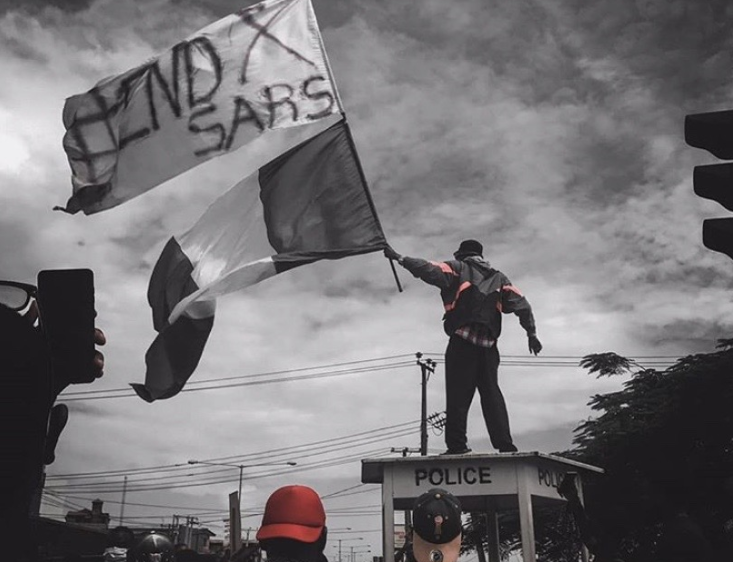
In the past and even recently, we have seen cases of Nigerians jumping into the Lagos lagoon due to economic hardships,yet this has never sparked any public outrage. Not many have fully recovered from the tragic incident of the shootings at the tollgate during the #EndSARS protest. We have experienced many Mohammed Bouazizis whose deaths have merely become fodder for content creators.
Naturally, Nigerians often don’t take matters of value seriously. It’s typical for the average Nigerian to dwell on issues that have no meaningful impact on their lives while neglecting real-life challenges. Essentially, in Nigeria, it would be unthinkable for an individual’s act of self-immolation to provoke national outrage because such an act would be seen as extraordinary rather than mundane. The outcome of the #EndSARS protest still comes to mind.
Another factor that can be alluded to is ignorance. Nigerians are mostly unaware of their rights as citizens. There is a willful ignorance among Nigerians that enables those in government to get away with anything. This ignorance is present not only among those without formal education but also among highly educated individuals! This lack of awareness is another political capital that political office holders exploit to the disadvantage of citizens. In Nigeria, there is a prevailing belief that the people cannot fight the government and win. This belief is purely borne out of ignorance because the reverse is true – no government can fight the people and win!
Those who don’t learn from history always repeat it. While it is true that a revolution cannot happen in Nigeria due to some of the factors mentioned above, it is important to note that political office holders should learn from history. Nicolae Ceausescu was the strongman of Romania. He had a monstrous reign from 1967 to 1989, and he thought he had it all covered until there was a spark and the people spoke. His story is a clear testament to the fact that the power in the people is far greater than the people in power.
What is most important is that Nigeria doesn’t reach the point where violent change becomes justifiable. After all, Tunisians were docile and malleable for 23 years before a Mohammed Bouazizi happened. Political office holders must tread with caution and realize that power is transient.
Political leadership should be for the common good, not for personal gain. No individual should be carried away by the complacency of office. The people should remain the central focus of governance. As such, leaders must act responsibly at all times. It serves everyone’s interest for both the government and the governed to be on the same path. This is because the task of building a nation is a collective responsibility.
Blaise Emeka Okpara, a Student of International Institute of Journalism writes from Abuja and can be contacted on: emyokparaoo1@gmail.com.