APC

Patience Jonathan rules out return to Aso Rock, pledges support for Remi Tinubu

By Maryam Ahmad

Former First Lady Dame Patience Jonathan has ruled out any intention of returning to Aso Rock Villa. She affirms her support for the incumbent First Lady, Senator Oluremi Tinubu, ahead of the 2027 general elections.

Speaking at a public event over the weekend, Dame Patience expressed her commitment to working closely with Senator Tinubu to promote unity and women’s political participation. 

Mrs Jonathan noted that her focus is on national development and supporting the current administration’s efforts, rather than seeking a return to political power.

“I have no interest in returning to Aso Rock,” she said. “I am fully behind our First Lady, Senator Remi Tinubu, and I will campaign alongside her come 2027.”

Analysts see this move as a significant show of solidarity between two of Nigeria’s most prominent political women and a potential boost for the ruling party’s female outreach ahead of the polls.

Buhari loyalists reaffirm support for Tinubu, pledge to remain in APC

By Uzair Adam 

Amid speculations of discontent within the ruling All Progressives Congress (APC), key loyalists of former President Muhammadu Buhari have reaffirmed their support for President Bola Tinubu and pledged to remain in the party.

The group, operating under the Forum of the defunct Congress for Progressive Change (CPC), made the declaration in Abuja on Thursday, countering reports that some Buhari allies were planning to exit the APC.

Those present at the meeting included Katsina State Governor Dikko Radda, Niger State Governor Umar Bago’s representative, former Nasarawa State Governor Senator Tanko Al-Makura, former Katsina State Governor Aminu Bello Masari, and Chairman of the National Drug Law Enforcement Agency (NDLEA), Gen. Buba Marwa (retd).

Other notable figures in attendance were former Voice of Nigeria Director General Osita Okechukwu, former presidential aide Okoi Obono Obla, former APC National Secretary Waziri Bulama, ex-lawmaker Farouk Adamu, a representative of Speaker Tajudeen Abbas, and Foreign Affairs Minister Maitama Tuggar.

The forum emphasised that although individuals are free to pursue personal political interests, they should not do so under the guise of representing former CPC members.

Responding to whether the bloc would support Tinubu beyond the current administration, Hon. Farouk Adamu expressed confidence, saying, “We are with Tinubu just like our leader (Buhari), and it is our hope that Tinubu continues to remain our leader.”

Dangwani, Prof Farouk dump PDP, lead major defection to APC in Kano

By Uzair Adam

Dr. Yunusa Adamu Dangwani, former Chief of Staff to ex-Governor Rabi’u Musa Kwankwaso and current Chairman of the Governing Council of the University of Maiduguri, has officially defected from the Peoples Democratic Party (PDP) to the All Progressives Congress (APC) alongside his supporters from various local government areas of Kano State.

The defection took place on Sunday in Kano, where many top APC stalwarts gathered to welcome the former PDP chieftain and his political allies into the ruling party.

The Daily Reality reports that the event was described by attendees as a major boost to APC’s strength in the state ahead of the 2027 general elections.

Dangwani, who has previously held several strategic positions including Commissioner for Water Resources, board member of the Aminu Kano Teaching Hospital, and representative of the Northwest on the National Borders Commission, described his return to APC as a homecoming.

“APC is our home. We just went out and have now returned, knowing there is no place like home,” Dangwani said, adding that his defection was driven by deep reflection and the realization that the PDP was gradually collapsing.

“I have seen what the APC-led government under President Bola Ahmed Tinubu has done in the areas of security, economy, and social welfare.

“PDP, on the other hand, is going down the drain. No sensible person will remain in a cracked house and wait for it to collapse on him,” he stated.

He emphasized that his decision was also influenced by persistent calls from his political associates who believe in APC’s developmental programs.

“Everything has its time. This is the right time for us to leave PDP for APC and contribute to the progress of Nigeria and Kano State,” he added.

Though Dangwani was a governorship aspirant under the PDP in the last election, he clarified that he currently has no personal political ambition in the APC.

“My ambition is for APC to do well for the good of Nigeria. Wherever I find myself, I will contribute. I leave everything to God,” he said.

On the political climate in Kano, Dangwani expressed confidence that APC is on track to reclaim the state from the ruling New Nigeria People’s Party (NNPP), citing recent defections of NNPP lawmakers, including Senator Kawu Sumaila and House members Kabiru Alhassan Rurum and Abdullahi Sani Rogo.

He also criticized the NNPP government for what he described as missteps that would cost them future elections.

“People remember the demolition exercises, the chaos in the traditional institution, and even the existence of two emirs at the same time — something never witnessed before in the history of Kano or any northern state. These will surely make people vote them out,” he said.

Dangwani urged Kano residents to assess the performance of the APC and compare it with the NNPP’s governance. “The difference is clear. The people of Kano will speak through the ballot in the next election,” he concluded.

In his remarks, Kano APC Chairman Abdullahi Abbas welcomed the defectors and described Dangwani as a political heavyweight whose presence would strengthen the party.

“You came at the right time. No one will look down on you. We value hard work, not laziness,” Abbas said, calling on the new members to register with the party in their respective localities.

Professor Umar Farouk Jibril, a long-time associate of Dangwani and former Kano State Commissioner of Information also reaffirmed their commitment to the APC, stating that both he and Dangwani were founding members and are known for their integrity and hard work.

“Our track record speaks for itself. Even with political differences, we never abuse or defame others. That’s not what politics is about,” he said.

Coalition, 2027 power play and the need for unity 

By Isyaka Laminu Badamasi

In the move to ouster Bola Ahmed Tinubu’s administration and the All Progressive Congress (APC) from the mantle of leadership in 2027, the need for unity among our political leaders can not be overemphasised.

The recent visit by Atiku Abubakar and other top politicians to former president Muhammadu Buhari for the post-Sallah, cast serious doubts in the minds of Nigerians who are yet to recover from the shocks of the former president’s betrayal of 2015 – 2023. The Wazirin Adamawa clearly stated that the visit has nothing to do with the proposed merger.

Be that as it may, Atiku as the prominent opposition leader should also be very careful with the crop of politicians is aligning with to achieve this objective, as some of those seen in his entourage during the visit are people with questionable backgrounds, whose their reigns in power left an indelible mark of anger and uncertainty in the minds of their people, they are heartless with no sense of sympathy to the people, they are not different with Tinubu.

As the Hausa saying goes, one need not select water in an attempt to squelch a fire, but in some situations, there is a need for that, as some waters may be more harmful than the fire. The selection of who to join hands with towards emancipating this country from the hands of incessant geezers is of the utmost importance. Sending President Tinubu out of the villa in 2027 is non-negotiable and shouldn’t be handled with kid gloves.

As it stands today, Nigerians yearn for someone who is ready to implement policies and programs that will make their lives very easy and promising, someone who will bring an end to the wanton killings all over the country caused by one insecurity or another, someone who is ready to ensure that Nigeria remains one and united. 

For this, the need for the political leaders to unite and make necessary adjustments to face the heartless APC administration head om is very paramount,  any move that can not guarantee the aspirations of common man in the streets can not move to an inch, and, it will be for the advantage of Bola Tinubu and his APC to remain in power beyond 2027.

To those power drunk, who are making a mockery of the movement, should be reminded that the pre-2015 merger that brought APC to power is still workable. APC and Tinubu should get prepared.

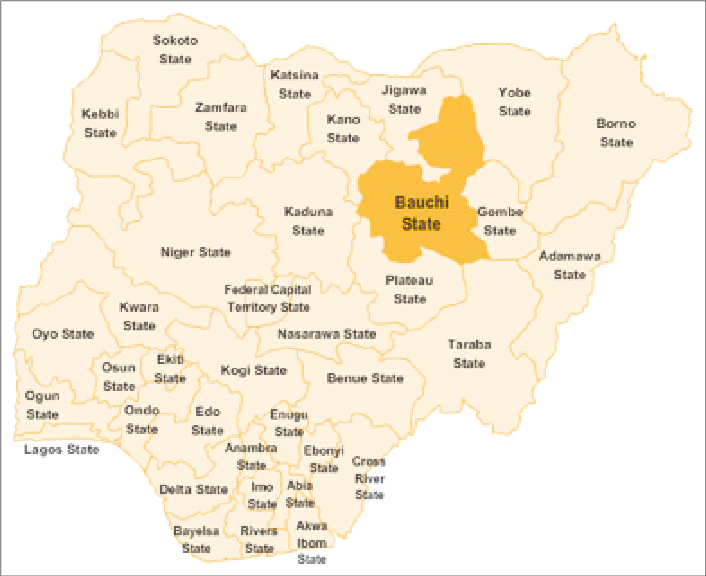
Isyaka Laminu Badamasi,  a public affairs commentator and advocate for sustainable development,  writes from Bauchi. 

Delta gov. Oborevwori switches to APC from PDP

By Abdullahi Mukhtar Algasgaini

In a major political shake-up, Delta State Governor Sheriff Oborevwori has officially defected from the Peoples Democratic Party (PDP) to the All Progressives Congress (APC).

The announcement was made by Senator James Manager during a press briefing attended by key PDP figures, including former Governor Ifeanyi Okowa, who was the vice-presidential candidate in the 2023 elections.

Also present were Delta State House of Assembly Speaker Emomotimi Guor and other party leaders.

Manager stated that the governor’s move was in the best interest of Delta State’s development.

He confirmed that the entire PDP structure in the state has now merged with the APC.

A formal declaration is expected on Monday, cementing Delta’s transition to an APC-controlled state.

NNPP dismisses claims of Kwankwaso’s planned defection to APC

By Uzair Adam 

The New Nigeria People’s Party (NNPP) in Kano State has dismissed rumours suggesting that its 2023 presidential candidate, Senator Rabiu Musa Kwankwaso, is planning to defect to the All Progressives Congress (APC).

The state party chairman, Hashimu Dungurawa, made this known while reacting to growing speculation surrounding Kwankwaso’s alleged defection.

Dungurawa stressed that neither Kwankwaso nor the NNPP had any intention of joining the APC, which he described as a party that has failed Nigerians.

“Definitely, we (NNPP) don’t have that interest or intention. We see them (APC) as enemies of democracy. Look at where they’ve led the country today. People are only waiting for the day of the election to teach them a lesson,” Dungurawa stated.

He further noted the steady decline in the APC’s electoral support, saying, “In 2015, they had almost 20 million votes. In 2019, they got 16 million, and in 2023, it dropped to 8 million votes.”

This comes after the Chairman of the APC in Kano State, Abdullahi Abbas, welcomed the idea of Kwankwaso joining the APC but stated that it would be under certain conditions.

APC, PDP, and the rest: A three-way battle for 2027

By Zayyad I. Muhammad

As politicking for the 2027 elections gradually gains momentum, both new and familiar scenarios will inevitably emerge. Nigeria’s political landscape is dynamic and often shaped by geopolitical factors, and 2027 will be no exception.

The truth is, despite its internal wranglings and historical baggage, any coalition that does not have the PDP as its central pillar is unlikely to achieve the kind of national spread required to win a presidential election in Nigeria. The PDP, with its extensive grassroots network and long-standing presence across all six geopolitical zones, remains the only opposition party with a truly nationwide structure, even if its influence has somewhat waned in recent years.

Peter Obi and Rabiu Musa Kwankwaso, notable third-force figures from the 2023 elections, lack enthusiasm for any clearly defined coalition. Obi appears ready to pursue the presidency again, but the conditions that fueled his surprising 2023 performance- particularly the support from urban youth and disenchanted Christian voters— have significantly waned. This support was initially driven by fear over Tinubu’s Muslim-Muslim ticket, which caused concerns among Christians. Today, that fear has faded, and ironically, the Muslim-Muslim arrangement includes more Christian participation in government than anticipated.

Kwankwaso, on the other hand, appears to have adopted a more pragmatic, localised approach- ‘ state capture. Kwankwaso’s posture suggests a strategy of quiet autonomy: “I have Kano; let me control it. I won’t interfere with you, and don’t interfere with me.” This ‘state capture’ mentality may give him relevance at the regional level but severely limits his national appeal.

President Tinubu, meanwhile, has carelessly  or perhaps inadvertently squandered the political capital that the APC enjoyed in the North from 2015 to 2023. During that period, the APC could count on overwhelming support from northern voters , often to the extent that votes from a single state could nearly cancel out those from entire geopolitical zones elsewhere. That dominance was largely tied to a geopolitical strongholds strategy . Tinubu’s failure to maintain and galvanize this strategy will eat up the APC’s traditional votes in the North, which are very key for the APC’s return to a second term.

Furthermore, Tinubu has, whether knowingly or not, revitalised the dormant CPC bloc — a faction of the APC that once represented the ideological and political base of Buhari’s loyalists. Now, with the central leadership perceived as disconnected from northern interests, the CPC bloc sees an opportunity to reassert itself. In regions like the Northwest, particularly, this could lead to a realignment of loyalties, with Tinubu’s influence weakening in favor of those viewed as more authentically representing northern interests. 

Nepotism is nepotism. While Buhari’s nepotism was largely regional and driven by northern priorities, Tinubu’s appears more ethnic and focused on Lagos, which could prove politically costly if not urgently recalibrated. That said, Tinubu still has time and political tools to course-correct before 2027, if he chooses to use them wisely.

The current coalition promoters, however, appear to be relying on an outdated strategy. The 2015-style bandwagon movement, built around the idea of ‘change,’ is unlikely to resonate with voters in 2027. Buhari’s eight-year presidency has left a mixed legacy, with many citizens feeling disillusioned by the unmet expectations. The old formula simply won’t work again.

In 2027, two key elements will determine electoral success, not only at the center but also in the states: substantial resources, both financial and structural , and science. The days when charisma and rhetoric alone could deliver victory are over. Any political group serious about winning must adopt a data-driven strategy. This entails conducting thorough research into voter behavior, turnout patterns, demographic shifts, and regional voting strengths. 

It also requires understanding the psychology of the electorate, particularly among young voters, who now constitute a decisive segment. Apolitical political scientists, data analysts, and behavioural experts will play a more vital role than ever before. Without this approach, even the best-funded campaign could fall flat.

Finally, it is important to accept that the coalition model of 2015 and the voting behavior of 2023 are not likely to repeat themselves. Nigeria’s political terrain has evolved, so to speak . As of today , although tomorrow is uncertain, the three major blocs heading into the 2027 elections appear to be Tinubu’s APC, the PDP, and the rest . It is shaping up to be a near-zero-sum game. 

Zayyad I. Muhammad writes from Abuja via zaymohd@yahoo.com.

Atiku-led coalition talks are bound to fail – Ganduje

By Uzair Adam

National Chairman of the All Progressives Congress (APC), Abdullahi Ganduje, has described the ongoing discussions among key opposition leaders on forming a coalition ahead of the 2027 general elections as a failed mission in the making.

He made this known on Friday during a press briefing after leading members of the APC National Working Committee (NWC) on a Sallah visit to former President Muhammadu Buhari at his residence in Kaduna State.

Earlier that day, former Vice President Atiku Abubakar also visited Buhari, accompanied by former Kaduna State Governor Nasir El-Rufai, former Sokoto Governor Aminu Tambuwal, former Minister of Communications Isa Pantami, and ex-governors Gabriel Suswam (Benue), Jibrilla Bindow (Adamawa), and Achike Udenwa (Imo).

Atiku confirmed efforts were underway to establish a formidable opposition bloc but clarified that the visit to Buhari was unrelated to those plans.

When asked about the wave of consultations among opposition figures, particularly Atiku, Ganduje expressed confidence in the ruling party’s dominance and dismissed the alliance as unworkable.

“We are not worried at all. This is just history trying to repeat itself. They went on a joint venture, which will not work because from what we have seen, there are just some particles that cannot come together.

“It is a game, and we will not reveal our technicalities on how to handle it, but we assure you, we are equal to the task,” he said.

Ganduje boasted of the APC’s control of 21 states and described the party as “still the strongest in West Africa.”

He noted that the APC remains focused on not just retaining power, but also expanding its reach ahead of the 2027 elections.

“We are eyeing other states that will come into our fold. Either the governors themselves will come, or we go for election and defeat them to increase our tally. We are comfortable, but we are not resting. We shall continue,” he stated.

From Baba “Go Slow” to Baba “Going Very Fast” 

By Bilyamin Abdulmumin, PhD

Buhari was largely viewed as reluctant, whereas Tinubu engaged in tit-for-tat responses. Tinubu has demonstrated decisiveness on many occasions. For instance, when there was a public outcry over his Kano ministerial nominee, Maryam Shettima, he swiftly replaced her with Dr. Mariya Mahmoud, who enjoyed greater public approval. Buhari likely would have retained Shettima.

A few months after the ministers assumed office, the Minister of Humanitarian Affairs, a ministry infamous for waywardness—was caught in multiple scandals. In a swift response to public outrage, Tinubu suspended Betta Edu, and from all likelihood, she has gone for good.

No situation highlights the difference between Tinubu and Buhari more than the ongoing political crisis in Rivers State involving Governor Fubara and his former benefactor, Nyesom Wike. While Buhari would have turned a deaf ear to the situation, Tinubu reacted decisively. Those who once criticised Buhari for his passive leadership should now give a standing ovation to Tinubu’s stern control and decisiveness.

Nevertheless, Tinubu’s speech during the emergency declaration was notably one-sided. He sided with his FCT Minister, Nyesom Wike, heaping blame on Fubara for demolishing national assembly structures and failing to address pipeline bombings—while completely ignoring Wike’s role in the crisis. These reinforced accusations of federal government highhandedness in Nigeria’s most populous states.

Some argue that the federal government is involved in the debacles affecting Rivers, Lagos, and Kano due to its fear of losing these key states to the opposition. However, as the APC states, the allegations of internal conflicts in the Lagos government do not hold up. Since the state is governed by the ruling party, it seems to be just another political facade from the federal government.

A major issue for Tinubu’s camp is their position on Fubara and Uba Sani. If they oppose Fubara, they should also oppose Uba Sani. You cannot support Wike in Rivers while opposing El-Rufai in Kaduna. The two scenarios bear a striking resemblance.

Reflecting on how Nigerians criticized Buhari for lacking swiftness and displaying full control as the Commander-in-Chief of the Armed Forces of Nigeria, it is fair to say that Tinubu has now met that expectation.

Bilyamin Abdulmumin, PhD wrote via bilal4riid13@gmail.com.

Rivers State: The dangers of political betrayal and unconstitutional interventions

By Zayyad I. Muhammad

I strongly disapprove of Governor Siminalayi Fubara’s betrayal of his political godfather. Fubara entered the political arena without established structures, financial resources, or widespread recognition; he was relatively unknown. 

Former Governor Nyesom Wike provided him with the platform, support, and influence that ultimately led to his rise as governor. Yet, despite this, Fubara has turned against the very person who paved the way for his political ascent. 

Both sides should share the blame for not shifting grounds. The declaration of a state of emergency in Rivers State came at a critical time to address rising insecurity and unrest that threatened to spiral out of control. Left unchecked, the situation could have led to a resurgence of militancy and severely disrupted oil exploration activities, which are vital to both the state and national economy. 

Beyond the economic implications, the deteriorating security situation also risks derailing governance and has somehow ‘assisted’ Governor Fubara in escaping impeachment. President Tinubu may justify his decision—he has access to security intelligence and reports that the general public does not.

However, although addressing security concerns is essential, suspending an elected governor and members of the state assembly is not only unconstitutional but also sets a dangerous precedent for Nigeria’s democracy. This issue goes beyond the 2027 elections; it strikes at the heart of democratic governance and the principle of electoral legitimacy. 

Our democracy has matured to a point where a sitting governor can be removed only through due process, as outlined in Section 188 of the 1999 Constitution of the Federal Republic of Nigeria (as amended). If we are not careful, one day—God forbid—a president or his allies could create chaos in a state simply to justify declaring a state of emergency and unseating an elected governor for political gain. Such actions would undermine democracy and erode public trust in the electoral process. They pose a danger to our future. 

The Rivers state or any political conflicts should be resolved within the framework of the law, not through forceful interventions that threaten democratic stability.

The key actors in Rivers State must set aside their personal and political grievances to prioritize reconciliation. Prolonged instability is unacceptable, as it harms the people, governance, and economic progress. A peaceful resolution is the only path forward.

An elected Governor’s mandate is sacrosanct and must be respected. He is the top citizen in the subnational.

 Zayyad I. Muhammad writes from Abuja via zaymohd@yahoo.com.