APC

Muslim-Muslim ticket in APC: North, ethno-religious manipulations and the way forward

By Abdulhaleem Ishaq Ringim

It is the realization that Nigeria’s presidency cannot be won by the sole or combined agencies of personal fame, resources or regional influence that informed the ideation of a merger of political parties that eventually birthed the APC. 

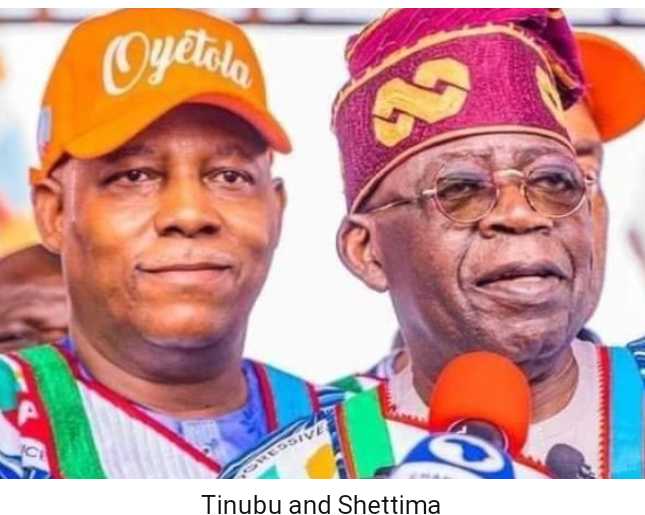
And the essence of this merger, as it were, was the pursuit of a formidable confluence between Nigeria’s most politically active blocs – northern and south-western regional voting blocs. This resulted in the officiation of an alliance through the instrumentality of a transnational political platform capable of displacing the political hegemony of the PDP. And the central representative figures of the two voting blocs were unarguably Muhammadu Buhari and Bola Ahmed Tinubu. 

Evidently, the merger would not have been successful without the uncompromising commitment and consensus of these central figures. Lack of such a consensus was the sole reason why attempts at the merger failed in 2011. And the eventual consensus was what translated into a successful merger that ousted PDP in 2015. One could say both of them are indispensable for as far as the merger is concerned. 

In both instances, the dynamics of running mate selection constituted a major challenge; one that stalled the entire merger process in 2011 and almost jeopardized the efforts again in 2015 if not for last minute compromises. And for the purpose of this article, our referential premise would be the events that characterized the selection of a running mate for Buhari in 2015. 

The resumption of merger talks was principally premised on the assurances of improved mutual understanding and primacy of deliberation and mutual agreement on all issues before implementation. Resultantly, the issue of VP selection was agreeably deferred to the ACN side of the merger. And being the leader of the ACN and a southerner, Bola Tinubu was the first point of call. 

However, such a supposition was put to test by the concern of certain stakeholders largely from the non-ACN merging parties over the feasibility of flying a Muslim-Muslim ticket to victory against the PDP. And based on this singularity of a justification defined strictly on the bases of religious [in]compatibility questions, Tinubu was dropped for Osinbajo whose credentialed affiliation to the leadership of Nigeria’s Christian establishment was seen as a suitable match to Buhari’s perceived religious fanaticism. 

7 years later, the same political platform faces same dilemma. Tinubu, the initial choice of Buhari’s running mate in 2015 and flag-bearer of the APC for 2023 presidential elections is faced with the daunting task of choosing a running mate. The dynamics that defined his emergence was largely characterized by ethnic considerations and the process of choosing his running mate seems to be greatly saturated by the influence of the overbearing conflict of ethno-religious interests. 

Ironically, the hypocritical ultimacy of political convenience as against principle has never been this blatant. Scores of politicians who vehemently opposed the idea of a Muslim-Muslim ticket in 2015 are seen today to be championing the cause. Even more perplexing is the dismissal by some of these supporters of issues of religious affiliation(of the running mate) as irrelevant. This group’s advocacy centers around the supposed primacy of merit and capacity to deliver without deference to ethno-religious considerations. The contradiction here is that same group agitated for a Tinubu presidency in fulfillment of a zoning agreement strictly based on an ethno-regional arrangement. 

As the elite slug it out, they keep deliberately torrenting the conflict down to the level of the masses whose minds have over time fallen victim of manipulative conditioning by the elite. As a result, the Christian establishment and followership, especially in the North demand uncompromisingly that the VP be picked amongst their brethren. While the Northern Muslim establishment and followership in the usual feeling of mutual insecurity and distrust have threatened to actively oppose a ticket with a Northern Christian as VP. 

It sadly almost seems as though whoever clinches the VP slot officially and institutionally enhances the presence and validity of the religion he belongs to. But is that accurate? How is a peasant Muslim farmer going to be better off with a Muslim as VP? And how’s the Christian peasant farmer in the opposite situation? What of security? Buhari is president yet the North suffer from insecurity the most. What of Justice? 

This conflict is largely an in-house Northern conflict. And we’ve consistently been falling victim to these manipulative tendencies because we’ve failed to understand certain political and social realities. But the most important among such realities is the glaring yet often forgotten fact that the allegiance of almost every elite in Nigeria is more to the power superstructure than it is to religion.

“This game of masks!”, as Yusufu Bala Usman, of blessed memory, described it only adopts religion as a manipulative enabler and agency for continued relevance within the power cycle. That is all! Religion should not be a manipulative tool. And it is high time we understand that it is never about religion but about power and the spoils that accompany its acquisition. The Muslim community should also be able to distinguish between manipulation and genuine allegiance to religious interest. 

In his seminal work ‘Leadership and Governance in Nigeria: The Relevance of Values’ whose content is drilled in philosophical and ethical theorization of Sokoto Caliphate’s breed of leadership and public policy with an exposition of the imperative of pillaring contemporary political and social value systems on the pristine belief systems and culture of our people; Mahmud Tukur, of blessed memory, explained that affiliation and allegiance to the Islamic belief system and values formed the foundational basis of community identity during the caliphal era. He puts “working hard in co-operation with fellow members to achieve the higher values of society or service in the interest of the community’s raison d’etre” as the archetypal basis of communal belonging. 

Muhammadu Sanusi II in his review of Tukur’s work deduced Islam – as a corpus of teachings(and values) rather than of actions of persons – to be the definitive basis for identity of the Northern Muslims. To quote his deconstruction of this principle, “… the fact that a “northerner” or a “Muslim” or a “Fulani” is the subject of a political issue is not sufficient to make that issue a “northern”, “Islamic” or “Fulani” one. The bottom line is how consistent is the issue at stake with the teachings of Islam as incorporated in the value-systems underlying the caliphate. In effect, every other identity is subsumed under our Islamic identity, and the Islamic values are the ones worthy of defending. These are not to be sacrificed in the name of “nationalism” or “northern politics” or even “Muslims”.

I find these delineations very instructive for it exposes religious manipulative systems and presents us with the philosophical framework for subjecting our political actions as Northern Muslims to intellectual scrutiny. It provides the basis for validation(or not) and examination of the consistency of our collective actions with the pristine Islamic value-systems. In the context of this article, it affords us the opportunity of examining the consistency of our agitation for VP slot(supposedly in the interest of religion) to our foundational Islamic values; is having a Northern Muslim Vice President fundamentally an Islamic interest? And are the Muslim northerners considered for the slot worthy of supporting strictly based on Islamic affiliations and considerations? Will fielding them in anyway lead to achieving the higher values of the Islamic community? 

These are the fundamental questions that require our dispassionate attention. By answering them, we’d be able to realize whether or not we are yet again falling for religious manipulative machinations. It will also reveal to us those social and political realities of ours that render us susceptible to this manipulative tendencies. However, one thing is clear, that the divarication and fragmentation of the formerly United North (into Muslim and Christian North) is our greatest source of susceptibility to manipulation and even marginalization. Even as the Union was not devoid of internal skirmishes, we were presentable as a United, influential front externally. This dichotomization only weakens our influence and negotiating position of advantage. 

Our collective problems as the North do not respect such bifurcations same way the results of incompetence of both Muslim and Christian political leaders of Northern extraction do not too. And good and ethical leadership are not exclusive preserves of any of the two religions. In fact, there’s a strong convergence of both religions on issues of political values, leadership ethics and principles of good governance. Insecurity; poverty; economic underdevelopment; inefficient educational and healthcare systems; infrastructural inadequacies; etc are our collective challenges and our collective resolve should be of getting competent leaders to reverse the situation. Ours should be geared towards sustaining and consolidating the unmatched northern political negotiating base and influence and leverage that to ensure we force the leadership to stick to their side of the social contract. 

To these manipulative elites, religion is only but an agency for the sustenance of relevance and power for self-aggrandizement. We must rise above such manipulative machinations and focus on building a formidable consensus capable of enforcing on the leadership a Northern agenda for development regardless of who becomes VP. 

Abdulhaleem Ishaq Ringim is a political/public affairs analyst, he writes from Zaria and can be reached via haleemabdul1999@gmail.com.

2023: Beyond unrealistic optimism

By Hassan Ahmad Usman

To begin, I would like my readers to understand that, unlike games, there is no “cheat code” for good governance. Governance is practical, with little room for derailing if the desired outcome must be achieved. If there is anything that President Buhari-led’s administration taught us, it is to shun unrealistic optimism.  There is nothing wrong with setting standards for our leaders or being optimistic about the prospects of their leadership.  

At the inauguration of Buhari in 2015, one would believe by now that he is rounding off his eight years stay, our four refineries would be functional, the epileptic power supply would be a thing of the past, security tackled, and so many things accomplished. 

Notwithstanding, people overlook many landmark achievements by his administration. Why? Unrealistic optimism. They are not the standards we set for him from the on set. In a year, we’ll have a new president, new administration and new policy makers. In between, we’ll have an election that will bring a new government.

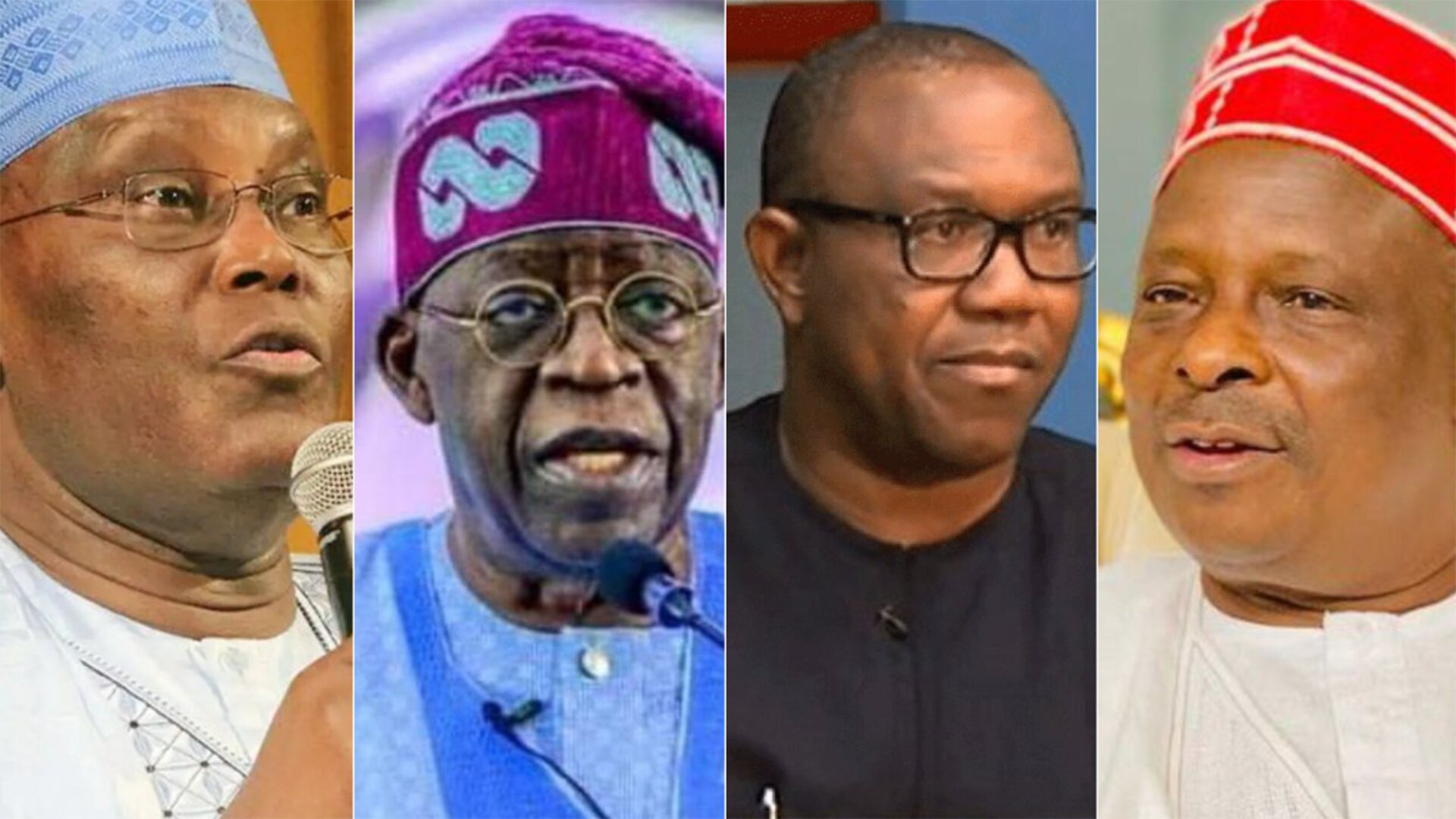
The leading candidates so far are former vice president Atiku Abukar of the People’s Democratic Party (PDP),  former Lagos state governor Bola Tinubu of All progressives Congress (APC) and former Anambra state governor Peter Obi of the Labour party (LP). These candidates are enjoying a large support base. 

My candid advice to the “Batists”, “Atikulateds”, and the “OBIdients” is to learn from the travails the Buharists went through in his defence. They marketed Buhari to the extent that we thought only miracles would better his performance in office, and failure was an impossibility in our imaginations.  We again gave him another chance despite his dissatisfaction with his first term because the Saraki/Dogara-led National Assembly was a block to his reform agendas. They also told us that the 2016 economic recession was a catastrophe due to the then-ever-falling oil prices. With these excuses, whether acceptable or not, we should understand that there won’t be a smooth ride for any president in a developing economy like ours.

So, I remind those supporters to moderate their optimism and understand and study what development is all about in modern civilization. It is not as easy as we thought. It would be best if you weren’t in defence of your candidate throughout his stay in office.  

Nigeria had her chance to turn things around when the oil price was at its highest. Unfortunately, indecisions and a lack of foresight from the leaders made it impossible. We are now living to bear the brunts of the indecisions of our past leaders. 

To Nigerians, we should understand that good governance that translates into sustainable growth and development cannot be achieved through “quick-fix” solutions. It’ll take longer than expected time for it to manifest. We’ve read and heard of the turnaround of countries like China and the United Arab Emirates but never paid attention to the processes they passed through before making it to the big stage. If development is what we all crave, we must all make sacrifices that come with it and know that we may not be the immediate beneficiaries of our own strides. 

Hassan Ahmad Usman writes from Lafia, Nasarawa State, Nigeria.  He can be reached via basree177@gmail.com.

2023: Tension rocks APC over Tinubu’s ‘missing’ school certificates 

By Uzair Adam Imam

Tension rocks the All Progressives Congress (APC) as the party’s presidential candidate, Ahmed Bola Tinubu, allegedly obtained no primary and secondary school certificates. 

However, Tinubu insisted that he had two degrees from two American universities. Yet, he stated that the certificates were stolen by unknown soldiers during the military junta of the 1990s.

The Daily Reality gathered that the information was in an affidavit submitted by Tinubu to the INEC office as part of his eligibility filings for the 2023 presidential elections.

The documents released Friday by the electoral body showed that Tinubu completely left the columns for his primary and secondary schools unmarked.

Additionally, the latest claims by Tinubu in his submission to INEC reportedly contradicted the previous submissions of 1999 and 2003 when contested as a governorship candidate in Lagos state.

It was gathered that Tinubu allegedly claimed in 1999 and 2003 that he attended primary and secondary schools.

He indicated that he attended St. Paul Children’s Home School, Ibadan, between 1958 and 1964 and secondary school at the Government College, Ibadan, between 1965 and 1968.

Tinubu’s Emergence: A demonstration of political mentorship and lesson to Northern leaders

By Adamu Abubakar Kumo

Mentorship has been the way through which a more experienced, more skilled and usually more elderly person passes his experience, expertise, knowledge etc. to the younger ones. From education to politics, business to occupation, mentorship is instrumental to the continuance of the flow of wisdom from one generation to another.

The history of Nigeria’s founding fathers is undoubtedly that of heroes and legends who wrote their names in gold in the books of history. But, looking at today’s Nigeria, one would be right to say that the wisdom of those great men has not been successfully passed down to today’s generation.

Among the six geo-political regions of the country, South-West has distinguished itself. The region seems to uphold the principles of mentorship. From Sir Herbert Macaulay, Chief Obafemi Awolowo, Chief Samuel Akintola, Aare M.K.O. Abiola and now Asiwaju Bola Tinubu, Yoruba leaders have been producing leaders who subsequently would take over from them. They deliberately ‘build’ people; they sow the seeds and look after them until they grow into large formidable and strong iroko trees that can hardly be trampled or tempered with by just lilliputians if I were to borrow Shattima’s word.

The successful emergence of Asiwaju Ahmed Bola Tinubu is a testimony of the presence of mentors and the continuance of political mentorship in Yoruba land.

Asiwaju, for the past two decades, has been working, influencing the appointment of some of his mentees in strategic government positions, politically supporting his allies and subordinates to attain power and building political bridges and structures across the country. The man waited patiently until when it is time, the time for the Jagaban to reap the fruits of his labour, the time when Amaechi has support from within; the time when Lawan seems to have the blessings of some party juggernauts, the time when some northerners feel that only a Northerner can defeat the opposition’s candidate. At this precious time, Bola Ahmed ‘summoned’ his mentees across the length and breadth of the country and alas, they answered! They come in their thousands with all the vigour and support the Jagaban needs.

Despite the eloquence of Prof. Yemi Osinbajo, the grammar of Ayade, the bluntness of Yahaya Bello, the doggedness of Rotimi Amaechi and the ‘appeal for sympathy’ of the aspirants from the South East, Bola emerged victorious, defeating them hands down.

This ‘political war’ fought and won by the  Southwesterner may compel one to ask, where are the Asiwajus of other regions? Can somebody from North-East, North-West or North-Central brag about having the capacity to do something similar to what this septuagenarian did?

The likes of Sirs Sardauna and Balewa don’t exist anymore in the North. Moreover, nobody is following the footsteps of Hassan Usman Katsina, Sir Kasim Ibrahim, Malam Aminu Kano and many other patriots – the mentorship thread is broken. Though North has been boasting of having great and influential leaders, the problem remains that none is willing to ‘nurture’ his successor.

While Alhaji Atiku Abubakar was busy contesting to become the president right from 2007, Kwankwaso was busy fighting Ganduje and so on. On his part, Bola Tinubu was busy, making sure his candidates become governors in Ogun, Oyo, Lagos, etc. He was influencing ministerial nominations, making sure he appointed Vice President. He was equally working to bring Dimeji Bankole, Ahmed Lawan, Femi Gbajabiamila etc. In other words, Tinubu was busy ‘building’ people. Because he believes even if some choose to betray him, many others will not.

The lesson Asiwaju taught most of our leaders, especially from the North, is that, if you have a plan of twenty years, start mentoring people who will help you achieve it right from today. More importantly, look beyond your family and kinsmen when choosing your proteges.

Another point of note is that you will mentor a person who may rise to a position that you have never attained. This is normal. Don’t get upset when the person tried to rub shoulders with you. Instead, be focused, determined and strategic in your dealings.

Dear Northern leaders, make sure you mentor another person who may likely take over from you. Succession is natural, if you did not breed anybody, someone may grow on his own and come to fight and overtake you one day. Mentor your proteges today to have loyal mentees that will always be proud of you tomorrow.

Adamu Abubakar Kumo wrote via akumo89@gmail.com.

Man in connection to kidnap of politician’s mom arrested in Jigawa

By Muhammad Sabiu

A 65-year-old man named Ibrahim Suleiman of Tsigi Quarters in Kiyawa local Government has been detained by Jigawa State police in connection with the abduction of an elderly woman.

The arrest was confirmed by the command’s spokeswoman, DSP Lawan Shiisu Adam.

Ibrahim Suleiman, 65, of Tsigi Quarters, Kiyawa LG, was detained in connection with the kidnapping of Ibrahim Gaya’s mother.

Recall that there were reports that unidentified gunmen abducted the 70-year-old mother of governing All Progressives Congress (APC) candidate Tijjani Ibrahim Gaya for the Jigawa Central Senatorial District on Tuesday.

He stated that the suspect was apprehended after he was seen in one of the vehicles that the shooters used to torment their victims, adding that investigations into the incident were still ongoing.

Ruling APC loses 3 senators to PDP, NNPP

By Muhammadu Sabiu

Three All Progressives Congress (APC) senators have resigned from the ruling party.

Senators Ahmad Babba Kaita (Katsina North), Lawal Yahaya Gumau (Bauchi South), and Francis Alimikhena (Edo North) are the defecting lawmakers.

Gumau defected to the New Nigeria Peoples Party, while Babba Kaita and Alimikhena joined the opposition Peoples Democratic Party.

The Senate President, Ahmad Lawan, read three different letters in Tuesday’s plenary in which they announced their defections.

Senator Alimikhena’s decision to leave the APC was motivated by the “ongoing and complex crises that have plagued the APC,” particularly in his Senatorial District, “that has formed parallel executives that have weakened internal discipline, coherence, and commitment.”

Explaining the reason for his detection, Babba Kaita was quoted as saying, “As Senator representing Katsina North Senatorial District, I write to formally notify you of my resignation from the All Progressives Congress (APC), and registration declaration for the Peoples Democratic Party.

“My resignation from the APC was born out of the marginalisation of critical stakeholders by the State Government and Leadership of the Party in Katsina State, where small people like me do not have a chance.

“I have since been joyful and graciously accepted into the fold of the Peoples Democratic Party in Katsina State.”

APC beats PDP, SDP, others to win Ekiti governorship election

B Muhammad Sabiu

In the early hours of today (Sunday), the All Progressives Congress in Ekiti State emerged triumphant after the results of Saturday’s governorship election indicated that the party’s candidate, Mr Biodun Oyebanji, defeated the 15 other contestants that took part in the race.

Oyebanji, the state’s immediate past Secretary to the Government, won in 15 of the state’s 16 Local Government Areas after receiving 187,057 votes in the election.

His nearest rival, Mr Segun Oni of the Social Democratic Party, polled 82,211 votes, while Bisi Kolawole of the Peoples Democratic Party received 67,457 votes.

Kolawole won his LGA, Efon, with a total of 6,303 votes, beating the APC’s 4,012 votes and the SDP’s 339 votes.

However, Chief Segun Oni, the Social Democratic Party’s candidate, who voted in his home town of Ifaki-Ward Ekiti’s 2, Unit 6, accused the other parties of vote-buying in Ado Ekiti and Oye Ekiti.

He was reported to have said, “I have been told that selling and buying of votes are going on in Ado and Oye. This is not allowed by the law. I want security agents to move in and stop those doing that.”

Vote buying isn’t an unusual practice in the Nigerian political space since the rebirth of democracy in 1999 when former President Olusegun Obasanjo took over power.

Bauchi polytechnic suspends staff for supporting Tinubu on social media 

By Muhammad Sabiu

Raliya Kashim, a senior staff member of the Bauchi State-owned Abubakar Tatari Ali Polytechnic, has been suspended by the institution’s management for supporting All Progressive Congress (APC) presidential candidate Asiwaju Bola Tinubu.

Maimako Baraya, a spokesman for the polytechnic, signed the letter announcing the suspension.

The main opposition, the Peoples’s Democratic Party (PDP), is in charge of Bauchi State.

Kashim works as the polytechnic’s deputy general manager of consulting services.

She was aware of the state’s public service law prohibiting civil servants from participating in party politics, according to Mr Baraya’s letter.

Baraya was quoted to have said in the letter, “The employee recently posted videos containing campaign materials of the presidential and the governorship candidates of the All Progressives Congress (APC), which is a clear violation of the code of ethics for public servants.”

“We wish to assure the general public that there would be no sacred cow, and it will never be intimidated by the activities of political jobbers, fifth columnists and enemies of the state.”

If Nigerians are normal, APC will never be voted again

By Aliyu Nuhu

There is no way Nigerians will vote APC back to power if the country is a normal society with normal people. But the people voting our leaders are not the ones reading this write up. They are the people who vote with their stomach instead of their conscience. Stomach infrastructure is very much around and it is the reason why governors will be the deciding factor in who becomes the Nigeria’s president.

Here are APC failures and why Nigerians are not happy with it. But first let’s mention the areas the government made some progress.

This government built infrastructure. It is the best in Africa by regional standard. More are needed but within its two terms it completed Kaduna-Abuja railway and kept it running. It completed Itakpe-Aladja rail and it is operating. It built in record time Ibadan-Lagos railway and it is running. It has started Kano-Kaduna rail, Kano-Katsina-Maradi rails. It has almost completed second Niger bridge. It has almost completed Lagos-Ibadan express. It has gone far in building Kano-Kaduna-Abuja express. It has almost completed Kano-Maiduguri express. It has expanded and improved all the international airports to very high standards. Aminu Kano international airport, Nnamdi Azikwe international airport, Murtala Muhammed international airport, Portharcourt international airport and Enugu international airport. There are many roads that cannot be mentioned. In terms of infrastructure, APC has developed Nigeria.

Economic development is about infrastructure. That has been achieved to a modest standard. The next government will build on it. That is how societies develop.

However, the areas of failures are here but not according to their importance though.

1- Electricity: APC did not build power plants and did not build transmission infrastructure. The Siemens $2.3 bn power deal is still on paper. The government inherited 4000mw Electricity generation and today we have national grid collapse and abysmal 2000mw generation. Nigeria can never grow without electricity. Any claim of growing the economy is simply preposterous.

2- APC did not build refineries. The country is still shamelessly importing fuel. Petroleum products are the country’s biggest import and biggest waste of foreign earnings. Whatever the country gains in exporting crude oil is wasted in importing refined petroleum products in the most corrupt and dubious style. Nigeria will never grow by importing a commodity it has in abundance and has comparative advantage over 160 countries. Because Nigeria imports fuel the commodity is never enough nor available.

3- Insecurity: by any standard, Nigeria is among the most violent countries on Earth. The whole country is circled by terror so much that killing of 40 worshippers is quickly overshadowed by more violent events. Most of Nigeria’s roads are taken over by bandits. People no longer travel for normal living. A journey from Abuja to Kaduna is becoming a suicide mission.

4- Bad economy: the economic health indicators are level of poverty, inequality, corruption, hunger unemployment, inflation, interest rates, foreign exchange rate and volume of international trade. There is no space to take each of them but in a nutshell Nigeria is simply facing economic crisis.

5- Education: APC inherited university strikes and is bequeathing university strikes. Primary school enrollment is at its worst level with 12 million children roaming thr streets. Child education is the telescope used in looking at the future of a nation. If the children who will be around in the future are not getting education, then it is easy to know the kind of Nigerians in the next 20 years.

6- Health: the hospitals are still what they were before APC or even worse. No equipments, no trained personnel, no drugs and no electricity. Nigerians travel outside for medical treatment and those that have no money stay and die.

7- Corruption: this government is gradually overtaking PDP in official stealing. The little gain made in jailing few governors has been reversed by the departing president who made fight against corruption his cardinal goal.

These are just few areas critical to nation’s life that makes APC a terrible choice for Nigerians. But unfortunately and very sadly APC may still remain in power because of a weak opposition. If the small parties don’t merge and present a single candidate in PDP there is no way APC will not form the next government. Mark my words. No political party can take on APC alone.