APC

The political identity crisis in a “horse” race for power

By Abdulrahman M. Abu-Yaman 

The title race is between two horses and a little horse that needs milk and needs to learn how to jump. –  Jose Mourinho

When the controversial Jose Mourinho made this statement above, it was about football and the race to the Premier League title in 2014, but we never knew a time would come when it would be more suitable to fit into the Nigerian political context as it relates to the switch and frequent change of allegiance from one political party to another.

THE FIRST HORSE

The first horse, being the All Progressives Congress (APC), is the current defending champion in political power and the acclaimed favourite to retain the presidential title going into 2027, based on the power and influence that come with being an incumbent leader in Nigeria. Only once has it occurred since the fourth republic that an incumbent was defeated, and even that took what some have tagged as a miracle when President Jonathan made the famous call to the late former President Muhammadu Buhari (of blessed memory) and conceded. 

This horse has taken on different forms over the years and has been given various names by the political power brokers who have bet on it to win. Part of its defunct origin was the All Nigeria Peoples Party (ANPP), formed in 1998, a year before the fourth republic general elections. However, its popularity was quite limited to the northern part of Nigeria, not as pronounced in other regions of the country. Former President Muhammadu Buhari had contested twice and lost under the ANPP in 2003 and 2007, respectively.

Another major segment of its primordial origins emerged from the Action Congress of Nigeria (ACN), which was formed in 2006. It was formerly known as the Action Congress, which in turn was formed from the merger of its factions with minor political parties, including the Alliance for Democracy (AD), the Justice Party (JP), and the Advanced Congress of Democrats (ACD), among others.

Then came the Congress for Progressive Change (CPC), founded in 2009. It gained significant influence due to the impact of late Muhammadu Buhari and his millions of supporters in the northern part of Nigeria, who contested under the party’s platform in the 2011 elections. 

In 2013, the progressives and congresses in some major political parties with these words present in their acronym merged into one; the Action Congress of Nigeria, Congress for Progressive Change (CPC), a faction of the All Progressive Grand Alliance and finally, the All Nigeria Peoples Party (ANPP) to form the All Progressives Congress (APC) – the most formidable opposition group as a party in Nigeria since the return to democracy in 1999 to unseat any incumbent President in power.

THE SECOND HORSE(S)

The second horse(s) in the race are obviously divided and sharing that position based on recent trajectories and events that had left one of the horses deemed as second favourite to crumble and hanging on a thin thread; speaking of the Peoples’ Democratic Party (PDP), as long as it still has time to regroup and put its house in order, it cannot be ruled out of the race based on its political structure long established that cuts across all states in Nigeria.

The PDP was formed in 1998, in the twilight leading up to the 1999 general elections, by a group of political bigwigs who adopted Chief Olusegun Obasanjo, a former military head of state and a prisoner released from the dungeon after the end of the Abacha era. Obasanjo, coming from the south-west region of the country, was seen by many as the best candidate to step into what would have been Chief MKO Abiola’s rightful position as winner of the annulled June 12 elections if he had lived up to 1999 but for his sad and shocking demise in 1998.

The PDP won the 1999 election by a majority of votes and held a majority of seats in the National Assembly. In 2003, the party continued to dominate the political space in Nigeria, growing in influence and power, albeit under some questionable electioneering processes in 2003, 2007 and 2011, respectively, having spent sixteen years in power as the ruling party. During that period, it became the largest party not only in Nigeria but also on the African continent.

However, unfortunately for the PDP, their dream of achieving the milestone of twenty years in power was cut short in 2015 when the APC, a new, formidable force energised and regrouped, ran them out of control. 

Since then, the PDP has contested twice as an opposition party and lost to the APC in 2019 and 2023, but edged them out in 2015. The PDP has also had to lose some of its members who have decamped to the APC and has since struggled to remain as firm and relevant as it once was. The only reason it occupies the second spot as a favourite is its longevity, structural base, and the influence of some stakeholders behind the corridors of power, who are still salvaging what is left to stand firm.

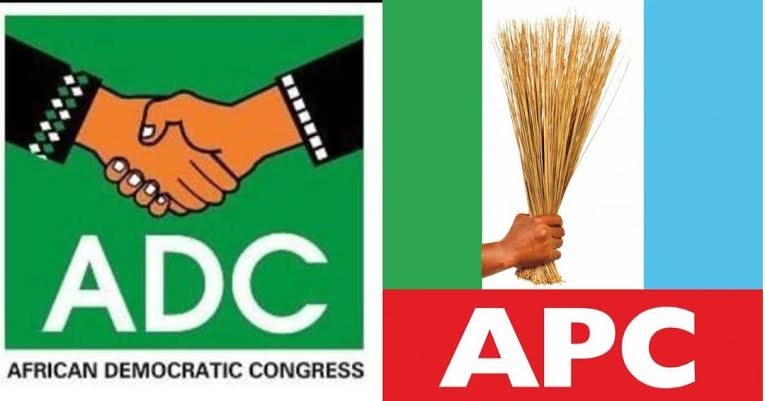
Moving away from the PDP, the other second favourite only came to fruition and gained traction a few months ago, orchestrated by one man, Mal. Nasir El-Rufai, who initiated the movement that led to the formation of a coalition that later evolved into the political party rebranded as the African Democratic Congress (ADC). The party had been in existence before its formation in 2005 as the Alliance for Democratic Change. 

The formation of the ADC elicited mixed reactions in the Nigerian political space. While some saw it as the long-awaited vibrant opposition to challenge the incumbent party in power, others viewed it as a selfish endeavour created by those who had been bruised and pushed out of the epicentre of power, seeking to make a comeback by any means necessary. This notion was proven to be more relevant when the ADC reached out to past or aggrieved members of the APC and PDP to form part of its board and core membership from the official flag-off. 

Nevertheless, it is still considered the second favourite in the race because if history is anything to go by, just as in the words of Jesse Jackson: 

“In politics, an organised minority is a political majority”

Just as in the case of the APC, which was formed two years short of the 2015 elections and later emerged as the winner, the regrouped ADC party and its influx of new members can’t be underestimated.  

Another reason the ADC could be frontrunners could be their ability to capitalise on the harsh economic realities in the country that have affected the masses and present the party as an alternative to better their welfare, just as the same members of the ADC did way back in 2015 when they were members of the APC, which they now want to substitute out of power. 

THE LITTLE HORSE IN THE RACE

The little horse that needs milk to learn how to jump is the Labour Party (LP). It was also driven and triggered to relevance in the 2023 general elections due to the influence of one man, specifically Peter Obi, who was spoken of as the party’s flag bearer. The LP not only defeated the APC in their own stronghold in Lagos but also defeated the ruling party in the Federal Capital Territory, Nigeria’s capital and centre of governance. It was unprecedented and sent a clear message that the LP did not just come to make up the numbers like some minority parties. 

But be that as it may, their numbers in Lagos and Abuja, coupled with the ones from the east and the Niger Delta region, were not enough to put them in second position in the race. This is why it needs to spread its wings to cover all political nooks and crannies in other regions, especially northern Nigeria, where it is yet to get a solid grip.

The recent involvement of Peter Obi with the ADC could lead to a compromise and weaken the party’s strength, as it revolves around him. One of the LP’s former spokesmen also lamented him for not doing enough as a leader and his inability to resolve the party’s internal crisis. He also raised concerns about his failure to build a strong party base to secure the mandate. 

Still, the only reason the LP is coming in third in the horse race is because of the unexpected stunt it pulled and its potential to do more if, and only if, it can capitalise on its momentum to leap ahead like other horses in the race.

THE EXODUS AND CONVENIENT SWITCH BETWEEN PARTIES 

Nigerian politics and politicians tend to switch sides to any political party that offers them a higher chance of winning. It occurred in 1999, when the PDP was formed and founded by members of various political parties. 

In 2003, as the PDP grew in strength and power, it received more members, and others had to decamp from their prior political platforms to join it. It was beginning to look like the only way to win an election was to join the party that was already winning. 

2007 and 2011 were no different as the PDP retained power in government. However, the only parties that managed to maintain some of their strongest and most popular members were the ANPP in 2003/2007, and the CPC in the 2011 general elections, when they fielded Muhammadu Buhari as their presidential candidate in the respective years.

In the buildup to the 2015 election, a massive exodus of politicians decamped from the ‘umbrella’ that had sheltered them in political office to the newly formed APC, which was gaining immense popularity, especially in the northern and western parts of Nigeria. The presidential flag bearer was a familiar figure who was contesting for the fourth and possibly his last attempt, having been persuaded to do so. The APC, like the PDP in the past, also welcomed all members from other parties, irrespective of their past reputation or allegations while in office. In the end, the party grew from being the strongest opposition to becoming the favourite to win the election, which they eventually did.

LOST OF POLITICAL IDEOLOGIES/IDENTITIES

When we start seeing political players decamping at will, it is time to question whether any of the political parties place a high premium on their criteria for membership in relation to their ideologies before accepting any candidate into their fold. Do politicians care any less if the party they join aligns with their manifestos and visionary blueprint for good governance and leadership?

It is beginning to look like a game of chess, with calculated moves aimed at checkmating the ultimate power in the political positions they crave. The only pawns in this game are the masses who have yet to figure out that changing their clothes to another has nothing to do with the real person behind those clothes. A stained reputation, especially in previous leadership positions, coupled with a proven track record of underperformance and incompetence, cannot be covered by new political platforms.

However, the interesting aspect of all this is the emergence of a solid opposition to keep the ruling parties on their toes. Previously, with the decline and crisis in the PDP, Nigeria was moving towards a single-party state due to the frequent switch of its members to joining the APC. It is well timed that the LED coalition, which has resolved to adopt the ADC as its political platform, includes big names like former Vice President Atiku Abubakar, who is also a former PDP presidential aspirant. Peter Obi, the Labour Party’s presidential candidate, has also been seen and involved in some of their meetings. And for the first time since the APC’s ascension to power, they seem concerned about the growing popularity of the ADC and the threat it may pose to their hold on power. Deja vu?

Conclusively, all the parties involved in the horse race have exhibited similar symptoms of identity and ideological crisis in their consistent switch of allegiance to suit their needs. The thin line between them is getting blurrier in their actions and adoptions. Everyone is welcome to any party at any time. No litmus test, exceptional integrity, or individual evaluation criteria needed. Once you are in, all sins are forgiven, and then you are baptised as a new member. 

The ADC is not only like the APC alphabetically, but also in the content of its members and its contextual existence. The primary concern here is whether some members of the ADC could potentially break away from the party in the future, particularly in the event of any unresolved disagreement or fallout within the party. Are we to brace ourselves for another hypothetical ‘ABC’ party if it comes to that? Time is the ultimate revealer. 

Kwankwaso denies defection rumours to APC

By Anwar Usman

Former presidential candidate and the national leader of the New Nigeria People’s Party (NNPP), Senator Rabiu Kwankwaso, has firmly denied claims that he submitted a letter of intent to join the ruling All Progressives Congress.

He made this statement in response to reports of his imminent defection to the APC.

This comes amidst rising political chatter early Friday morning, suggesting that the former Defence Minister had made formal overtures to the APC and had already begun talks with the party’s National Chairman behind closed doors.

In a statement personally signed and released through his media team on Friday, Kwankwaso refuted the claims, describing them as “online statements” lacking credibility or foundation.

The statement in part reads “we have been alerted to some online statements suggesting that we have submitted a letter of intent to join a political party in the country”.

“We would like to clarify that we have not made any such submission to any party. The public is therefore advised to stay informed of any further information regarding our matter through the established official channels”.

The speculation has triggered fresh speculation within political circles, especially as the 2027 general elections begin to cast long shadows across the country’s volatile political landscape.

Earlier on Friday, reports from political sources within the APC said that Senator Kwankwaso had allegedly sent a “discreet” letter to the party’s national secretariat indicating interest in joining the party.

The reports also hinted at ongoing discussions between Kwankwaso and the APC National Chairman, sparking a flurry of reactions across social media platforms and party caucuses.

With 2027 elections coming closer and the APC reportedly eyeing a broader northern consolidation, insiders believe both sides may be keeping lines of communication open — even if no formal letter has yet changed hands.

For now, Kwankwaso maintains that no move has been made — but in Nigerian politics, silence and denial are often the calm before a calculated storm.

APC plots Kano comeback for Tinubu in 2027

By Abdullahi Mukhtar Algasgaini

Ahead of the 2027 general elections, top figures of the All Progressives Congress (APC) in Kano State have declared their intention to reclaim the state from the New Nigeria Peoples Party (NNPP) and secure the re-election of President Bola Tinubu.

The pledge was made on Thursday in Abuja following a strategic meeting of party stakeholders.

The meeting was led by former APC national chairman Abdullahi Ganduje, Deputy Senate President Barau Jibrin, and House of Representatives member Abubakar Bichi.

Addressing journalists, Dr. Ganduje, a former governor of Kano, stated that the meeting was held to assess the party’s progress and affirm its unwavering support for President Tinubu.

He expressed confidence in the APC’s growing strength in the state, despite its loss in the 2023 polls.

“We have resolved that we will continue to work very hard to ensure that we succeed in the next gubernatorial election in Kano State,” Ganduje said.

He added that part of their strategy includes mobilizing supporters for the ongoing voter registration exercise.

Echoing this sentiment, Senator Barau Jibrin cited President Tinubu’s “giant strides” and developmental projects in Kano and the wider northern region as the reason for their solid backing.

He pledged that stakeholders would intensify efforts to publicize the administration’s achievements.

Similarly, Hon. Abubakar Bichi dismissed claims that Tinubu lacks support in the north, labeling such insinuations as “cheap politics.”

He affirmed that the APC in Kano is united and determined to deliver victory for the party in the 2027 elections.

Atiku slams Tinubu administration on insecurity

By Muhammad Abubakar

Former Vice President Atiku Abubakar has launched a sharp attack on President Bola Tinubu’s administration, accusing it of failing to secure the North-Central region of Nigeria. 

Abubakar’s statement claims that the government has abandoned the area, resulting in a “monumental failure” in protecting its citizens.

Abubakar highlighted a dramatic rise in violence, citing Kwara State’s new status as a hotspot for kidnappings and bandit attacks. He also noted continued bloodshed in Niger, Plateau, and Benue states, where thousands have been killed in just two years.

The former Vice President went on to accuse the ruling APC of using thugs to disrupt opposition meetings, with security forces allegedly failing to act.

He warned that violence “is a vicious circle” that will harm those who use it, and called on the Nigeria Police Force to remain neutral and fair, reminding them that taxpayers, not the APC, fund them.

Governor Nasir Idris’ mixed approach to governance

By Zayyad I. Muhammad 

Kebbi State is no stranger to complex and sophisticated politics. To govern this dynamic state requires more than charisma; it demands deep sociopolitical mastery and a pragmatic grasp of socioeconomic realities. Governor Comrade Dr. Nasir Idris, Kauran Gwandu, has emerged as a leader who embodies both politics and development, weaving them into a single, effective strategy that is rapidly reshaping Kebbi’s political landscape and developmental trajectory.

In a state once defined by fragmented interests and rivalries, Governor Nasir Idris has achieved what many thought impossible: unity. Today, all Kebbi senators, legislators, and major political stakeholders are firmly in the All Progressives Congress (APC). Former governors who once stood on different political lines now speak with one voice. Elections that once tested the party’s strength are now won seamlessly, reflecting a politics of representation, inclusiveness, and acceptability.

This new sense of belonging has left no major stakeholder uninvolved. As one political observer put it: “In Kebbi today, everyone that matters has a seat at the table of decision-making that transforms the lives of the common man.”

That is why analysts argue that the once-ambitious former Minister of Justice and Attorney General of the Federation, Abubakar Malami, may have lost political relevance, with 2027 looking like a closed road for him.

However, politics is only one aspect of Governor Nasir Idris’ multifaceted approach. On the other hand, there is a clear, tangible commitment to socioeconomic transformation that cuts across all 21 local government areas of Kebbi, both rural and urban.

The results in just 20 months are staggering. In education: 1,954 schools have either been built or renovated, with 336 new schools constructed and 1,618 renovated. Teachers now earn wages aligned with national benchmarks, with the state implementing the ₦70,000 minimum wage categories.

On infrastructure, the administration has embarked on massive projects, including the dualization of the Birnin Kebbi–Ambursa Road, the construction of the Birnin Kebbi Ultra-Modern Motor Park, the rehabilitation of Birnin Kebbi city roads and Yauri township roads, the Koko-Mahuta-Dabai Road linking seven LGAs in Kebbi South, bridge repairs on Bunza–Dakingari Road, and culverts along Birnin Kebbi–Makera Road.

Healthcare delivery has seen the renovation of Argungu General Hospital, the rehabilitation of health centres, and the expansion of medical facilities across the state. In public institutions, the government has overseen the construction of the State Ultra-Modern Secretariat in Gwadangaji, the remodelling and furnishing of the Government House, and the expansion of the Pilgrims Welfare Agency. Other key projects include the construction of a fuel dump at Sir Ahmadu Bello International Airport and the dualization of Argungu’s Old Bypass Road.

Governor Nasir Idris has also prioritised building strategic international partnerships. By engaging with donor agencies and development partners, Kebbi is not only attracting new funding but also becoming an integral part of global development conversations.

The “Nasir Idris formula” is clear: politics without rancour, governance without neglect, and development without bias. His administration has combined inclusiveness in politics with an aggressive rollout of life-changing projects, creating a blend of stability and growth.

In Kebbi today, the once-elusive dream of a government that unites political forces while delivering practical, people-centred development is now a reality. With this trajectory, Governor Nasir Idris has not just set the pace for his state; he is redefining what effective governance looks like in Northern Nigeria.

Zayyad I. Muhammad writes from Abuja via zaymohd@yahoo.com.

Between Senator Sumaila and Senator Kwankwaso

By Kamal  Alkasim

When Kawu Sumaila decamped from NNPP to APC, it showed that the issue isn’t about party loyalty but about choosing the best leader. Blind loyalty can hinder good governance in Nigerian politics. What matters most is effective representation, not party allegiance. Let’s prioritise good leadership over partisan loyalty and choose the best candidate for the benefit of Kano South.

When choosing between Rabiu Musa Kwankwaso, a prominent figure in Kano politics known for influencing political dynamics, and Kawu Sumaila, the decision leans towards Kawu due to his genuine service to the people of Kano South. Regardless of the political party Kawu affiliates with—whether APC, PDP, or ADC—his actions demonstrate a commitment to his constituents. 

People recognise Kawu’s efforts and intentions, making party affiliations secondary to his impact. Let’s prioritise choosing the best candidate based on their service and dedication, rather than party loyalty.”

Kwankwaso’s impact will be remembered. Let’s choose leaders based on merit, not loyalty to individuals. In politics, those who deliver tangible benefits to the people should be preferred over those who seek dominance. 

After 16 years of Kabiru Gaya’s tenure, which saw the Kano senatorial district abandoned for personal interests, it’s time for a change. Kawu Sumaila has emerged as a rescuer for our region, and let’s give him the support he deserves.

Let’s choose a leader who creates jobs, empowers youth, provides scholarships, and advocates for our interests in the Nigerian Senate. Prioritise your senatorial district’s needs and be vigilant. A leader who brings in multi-million dollar projects, generates employment opportunities for youth, and develops feeder roads in our communities deserves our support. 

Both Kwankwaso and Kawu Sumaila have legacies that will be remembered, but let’s focus on the one who delivers tangible benefits to our region.

Kamal Alkasim wrote via kamalalkasim17@gmail.com.

APC North-Central urges Tinubu to retain Shettima as VP

By Anwar Usman

The All Progressive Congress Forum North-Central has advised President Bola Tinubu to retain Vice President Kashim Shettima as his running mate for the 2027 presidential election.

The statement was made by the forum’s Chairman, Alhaji Saleh Zazzaga, in Abuja on Saturday.

In a recent appearance on Channels Television’s Politics Today, the Northern Ethnic Nationality Forum, led by Dominic Alancha, warned Tinubu against a repeat of the Muslim-Muslim ticket, noting that it cost the APC several northern states like Nasarawa, Plateau and the Federal Capital Territory in the 2023 presidential poll.

Alancha further warned that the APC would lose more ground in the North, particularly in the Middle Belt, if the party repeats the Muslim-Muslim ticket in the next presidential election.

However, according to the group, calls for the President to drop the Muslim-Muslim ticket in the next election are unnecessary, insisting that the combination worked for the APC in 2023.

Zazzaga explained that the choice of running mate was a political strategy aimed at ensuring victory for the party and should not be seen as an attempt to sideline any religious group.

He further argued that with key positions in government already occupied by prominent Christians from the Middle Belt, including the APC National Chairman, Prof. Nentawe Yilwatda, and the Secretary to the Government of the Federation, Senator George Akume, the region remains well represented.

 The statement in part read, “The Muslim-Muslim ticket will not affect President Bola Tinubu’s chances in the Middle Belt, which is part of the North-Central, and this is because of the key positions held by Middle Belt Christians in the APC government.

“We can guarantee that Tinubu will get 90 per cent of the votes from the North-Central. Tinubu’s achievements in office will guarantee his reelection, and as a result, there is no need to take the needless risk of changing a winning team.

“Those who are calling on President Bola Tinubu to change Vice President Kashim Shettima, basing their agitation on the Muslim-Muslim ticket, if you check, you will notice that in 2023, most of their communities voted for Peter Obi of the Labour Party.

“Now, if Peter Obi is to come out again in 2027, as expected, what is the guarantee that they will vote for Tinubu even if he drops Shettima and replaces him with a Christian? Does it mean that these people will now leave Peter Obi and vote for Tinubu?”

The Forum maintained that Tinubu’s performance in office would play a decisive role in determining his chances of re-election, adding that the President should focus on consolidating his achievements rather than altering the political structure that brought him victory in 2023.

 The statement concluded, “We advise Mr President not to change what worked in the last election. Maintaining the same team will further strengthen the chances of the APC in 2027″.

Jonathan’s PDP comeback: A Political revival or vote-splitting sabotage? 

By Salisu Uba KofarWambai 

The latest buzz in Nigeria’s political arena is nothing short of explosive: former President Dr. Goodluck Jonathan is reportedly set to return and contest under the platform of the Peoples Democratic Party (PDP). The revelation has sent shockwaves across the nation and beyond. But beneath the headlines, a critical question lingers — what is the real motive behind this sudden political twist?

Before the emergence of the African Democratic Congress (ADC) as a viable coalition platform for the opposition, Nigerians had grown increasingly frustrated with what they saw as a weakened opposition front. The PDP, once a vibrant counterforce, had been reduced to what critics call a “toothless bulldog,” accused of being manipulated by President Bola Tinubu through Nyesom Wike, a PDP member who openly works in favour of the ruling party and now holds a position in Tinubu’s government.

Wike’s influence, according to party insiders, has been anything but peaceful. His repeated interventions and internal disputes have reportedly destabilised the PDP, a strategy many believe cost the party dearly in the 2023 general elections. With the backing of the current administration, Wike has consistently won key legal battles, tightening his grip on the PDP’s power structure.

Recognising the deepening crisis, several PDP heavyweights, including the party’s last presidential candidate, Atiku Abubakar, abandoned the PDP ship, aligning under the ADC banner to form a credible opposition. This development was warmly received by many Nigerians disillusioned by the ruling APC’s economic policies, from the sharp devaluation of the naira to the painful removal of fuel subsidies, policies they say have deepened poverty nationwide.

Alarmed by the growing acceptance of the ADC among struggling Nigerians, the APC-led government appears to be dusting off an old playbook. Just as they allegedly did with the Kwankwasiyya movement in 2023, they now seem ready to field a high-profile figure to split the opposition vote. This time, the role is reportedly being handed to none other than Jonathan — a move seen by many as orchestrated to weaken the ADC’s momentum.

For political observers, the pattern is clear: divide the opposition, consolidate power, and keep the electorate distracted, all while avoiding a united front that could unseat the government in 2027. What stings for some Nigerians is the idea of Jonathan, once the principal, now accepting political direction from his former protégé.

Whether Jonathan’s alleged return is a personal decision or part of a calculated strategy by the ruling party remains to be seen. But one thing is sure: the stage is set for a high-stakes political drama, and Nigerians will be watching closely to see how and where this political gunshot will be fired.

APC denies claim Canadian court labeled it “terrorist group”

By Abdullahi Mukhtar Algasgaini

The All Progressives Congress (APC) has dismissed media reports claiming that a Canadian court declared the party a terrorist organization, describing the reports as “patently erroneous and misleading.”

In a press statement signed by its National Publicity Secretary, Felix Morka, the APC clarified that the ruling in question involved a case between Douglas Egharevba and Canada’s Minister of Public Safety and Emergency Preparedness, which centered on Egharevba’s immigration status.

The court had dismissed Egharevba’s application for judicial review, citing his membership in Nigeria’s Peoples Democratic Party (PDP) and its alleged involvement in subversive acts during elections.

The APC noted that the only mention of the party in the 16-page judgment was in reference to Egharevba’s false claim of being an APC member as far back as 2007—years before the party was officially formed in 2013.

Morka noted that the court explicitly avoided ruling on terrorism, stating: “Having found that the IAD’s analysis on subversion was reasonable, this is sufficient to dismiss the application for review. I will therefore refrain from analyzing the IAD’s findings on terrorism.”

The APC urged its members and the public to disregard the misleading reports, stressing that the court made no such declaration against the party.

“Such a decision would have been an unjustifiable overreach and a breach of due process, as the APC was not a party to the proceedings,” Morka added.

Ex-agric minister Audu Ogbeh dies at 78

By Uzair Adam

Former Minister of Agriculture and Rural Development, Chief Audu Ogbeh, has Saturday died at the age of 78.

In a statement issued the same day, the Ogbeh family said the elder statesman died peacefully.

“It is with deep sadness that we announce the passing of our beloved husband, father, and grandfather; Chief Audu Ogbeh. He passed away today at the fulfilled age of 78,” the family said.

They described him as a man of integrity, service, and dedication to the nation and his community, noting that his life left an enduring impact on many.

“We are comforted by the many lives he touched and the example he set,” the statement added.

The family said funeral arrangements will be announced later and expressed gratitude to friends, colleagues, and well-wishers for their prayers and support.

They also requested privacy during the mourning period.