Animals

Lessons to learn from the lives of cuckoos

By Garba Sidi

Various research studies have confirmed that there are 10,721 bird species in the world (Wikipedia, 2022; IUCN Red List of Threatened Species, 2022; IOC World Bird List, 2022). Although some species have become extinct due to various factors, new species continue to emerge.

As an avid reader, bird enthusiast, and forest lover, I am amazed by the beautiful colours of different bird species as they fly around their territory and eat nectar, insects, and small mammals in the forest. Observing them in their habitats allows us to appreciate the beauty of nature.

Among the 10,721 bird species, the Cuckoo comprises 140 species, all living in different habitats in various regions. The fascinating behaviour of Cuckoos, which captures the attention of bird enthusiasts and researchers, is their unique reproductive process. 

Unlike other birds, which lay and hatch their eggs in their nests, Cuckoos lay their eggs in other birds’ nests after careful observation and selection. They sometimes remove other birds’ eggs from the nest and replace them with their own. The host bird will then hatch the egg and feed the chick until it grows.

This remarkable strategy teaches us about the importance of community members. If not for other birds, the Cuckoo species would not survive. This highlights that people in our society have advantages we may not know will help us someday. For instance, just as Cuckoos rely on host birds for survival, we may find unexpected support from others in our community during challenging times.

Secondly, Cuckoos use the break time of other birds during hatching as an opportunity to exchange their eggs. They watch and observe bird movement, nest structure, and surroundings for many hours. Although their efforts may sometimes go in vain when host birds recognise and remove their eggs, Cuckoos continue their strategic process due to their belief in opportunism. This teaches us to seize opportunities and persevere, just like Cuckoos continue to evolve their species.

Furthermore, Cuckoos’ adaptability is remarkable. They have been observed laying eggs in the nests of over 100 different host species, from tiny warblers to large gulls. This adaptability is crucial to their survival, enabling them to thrive in diverse environments.

Thirdly, Cuckoos have adapted to various environments, from extreme heat to cold, by forcing themselves to adjust. Their ability to live in diverse habitats, such as grasslands, wetlands, forests, and urban areas, teaches us to cope with different situations through patience. For example, just as Cuckoos can thrive in scorching deserts and freezing tundras, we can learn to overcome challenges through resilience and determination.

Moreover, the Cuckoo’s unique reproductive strategy highlights the importance of cooperation and mutualism in nature. Different species can thrive and survive in a challenging world by working together and relying on each other. This is evident in how Cuckoos rely on host birds for survival and how they have developed unique strategies to ensure the survival of their species.

The Cuckoo’s adaptability and resilience offer valuable lessons for our own lives. As we face the challenges of climate change, economic uncertainty, and social upheaval, we can learn from the Cuckoo’s ability to adapt and thrive in diverse environments.

Furthermore, Cuckoo’s unique behaviour and strategies offer insights into the importance of creativity and innovation. We can overcome obstacles and achieve our goals by thinking outside the box and developing new solutions to challenges.

The Cuckoo’s remarkable ability to adapt to different environments and hosts is a testament to their resilience and ability to evolve. This ability to grow is crucial in today’s fast-changing world, where adaptability is critical to survival.

We can also learn valuable lessons about cooperation, mutualism, creativity, and innovation. By embracing the spirit of collaboration and mutualism, we can build more resilient and supportive communities.

As we face the challenges of our lives and our world, we can draw inspiration from the remarkable lives of Cuckoos. By embracing their spirit of adaptability, resilience, and creativity, we can build a more sustainable, compassionate, and vibrant world.

In conclusion, the life of Cuckoo offers valuable lessons about the importance of community, adaptability, and opportunism. Their unique reproductive strategies, adaptability to diverse environments, and persistence in the face of challenges provide insights we can apply to our lives.

By studying the behaviour of Cuckoos, we can gain a deeper appreciation for the natural world and our place within it. Their unique characteristics and behaviours inspire us to be more adaptable, resourceful, and compassionate.

The lessons from Cuckoos’ lives become even more relevant as we face the challenges of climate change, habitat destruction, and species extinction. By embracing their spirit of adaptability and resilience, we can work towards a more sustainable future for all.

In the end, the life of Cuckoo teaches us valuable lessons about the importance of community, adaptability, and opportunism. Their unique behaviour and strategies offer insights we can apply to our lives, from the importance of creativity and innovation to the value of resilience and determination.

Garba Sidi wrote via sidihadejia@gmail.com.
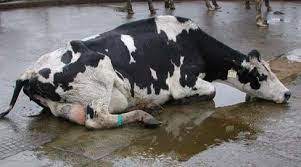
When humans turn animals: a cruel, evil treatment of animals at ‘Yanshanu abattoir, Jos

By AbduIlslam, Abdulsalam, Rukaiyah, & Rabiatu

This year, Sentient Media reveals that every 60 seconds, one animal suffers abuse. One afternoon, I counted 483 drops of blood on the ground and lost counting to empathy of, what blood is it? But what really transpired?

A wounded cow (with blood flowclose to the eye) was being paraded to the slaughtering ground which is about a mile and half (sometimes farther) from the livestock’s market of ‘Yanshanu in Jos. Added to the feeble state of this animal was respiratory mucosa effect, yet a reckless herder (sometimes a guy/boy) hit the cow with a goad on the eye wound because at some point, the cow didn’t move or moved slowly (its front legs were tied together) –immediately the cow fell to the ground due to the brutal and merciless hitting. This was repeated until the destination was reached. Such oppression is irrefutably done daily. This is simply because it is an animal! What a pity.

This scenario conforms to the argument of Peter Singer, author of Animal Liberation that “it would first be necessary to transform people’s attitude towards animal” Over 40 years ago, animal abuse was referred to as intentional act which causes pain to the animals. It sometimes brings too much suffering and even death. It comes in behaviors like beating, starving, choking etc., however, these maltreatments are rationalized in the ill and senseless feeling of ‘they’re animals’. But those acts beat conscience.

Yanshanu Livestock Market is a place where buying/selling of livestock are made daily. However due to its commercial string, most of the activities of dealers inflict severe suffering on the animals. Malam Suleiman Ahmad, Chairman Conflict Resolution ‘Yanshanu Market defended tucking livestock in a crevice space all in the name of transportation from villages to the market or from market to some destinations “we’re here for profits, [so] creating such fantasized comfort for animals will cost much [and] I know people don’t want meat costly.”

And on the issue of market herders inflicting unnecessary pain on the livestock while parading them out to eat or when marching them to the slaughtering ground, Malam Suleiman agreed that the herders sometimes overdo-it “let me be clear on something, due to unrest in our villages, they [Fulanis] protect their animals with several traditional methods and these sometimes remain even after sale – that’s why we use leather [plastic] to choke them when they refuse to stand up. However, we caution our boys on mishandling the animals as it is even un-Islamic and we put them in check with sanctions, but don’t forget, animals don’t understand you, to the good ones, it is the only language they understand, plus there are stubborn ones amongst them.”   

Admittedly, the African methods of animal husbandry values the goad, but the question here is, is it the most effective means of communication to animals? The answer is a capital No! This powerful oppression surely affects the health conditions of the livestock, so Malam Alkasim Ishaq, a vetinary outside the ‘Yanshanu Market condemned the recklessness reflecting that those keeping pets starve, let them stray and the cruel soul even beat, not to even mention some of the heartless dealers. He opined; “these people [dealers] are just here for business and time is money for them. Often, we vets around condemn their cruelty towards animals but you know our society [you become a black sheep for trying to better the system]. However, those hard beating and unreasonable tying affect the overall psyche and health of the animals.”

Whilst the vet expressing his concern, an individual who identified himself as member of Nigeria Livestock Association, Plateau State branch, lamented about his plight on unreasonable tying of animals and torture, because it stops the blood flow which explains the animals’ awkward behaviors sometimes.

It’s expected that such vast cruelty by humans should’ve been curbed by the government, but Malam Suleiman lamented that bad practices should’ve checked with government and Non-governmental organizations’ intervention. “We have written letters to the government but no response, so we can only do what is within our reach. In serious nations, they have abattiors and pay workers, no reckless beating and rush to make much money as we do.” He lamented.

However, going by the global animal husbandry, the vet and his friend pointed out that reforms need to start from the ordinary (not learned) members that made up of the animals’ bodies and organizations. And Mustapha Suleiman, a Vetinary Medicine student of Usman Danfodio University said; denial to understand the psychological condition of these guys [as he preferred to call animals] is what brought about abuses in our localities. He believed that if we pay good attention, we wouldn’t need to inflict pain on the animals with our traditional techniques.

But, it’s worrisome what the harshness of the herders on the animals is costing the host community – ‘Yanshanu. The livestock market is located in full residential area. Often, the maltreatment gets the animals wild – they end up going chaotic for about for over half an hour, smashing and aiming at everyone.

This discriminating treatment persists because humans fail to realize other living things’ response to stimuli – sometimes they’re feeble, they like, dislike; they feel hunger, anger, sick, even want to rest, but only when all these are understood. We should know that it is wrong to inflict suffering on other beings, even if not our own species. But attractive legislation on the subject matter is a priority.

AbduIlslam Kamaldeen Muhammad writes from Bayero University, Kano, together with

Abdulsalam Zikirullahi (SS3 Class) Alhaqq Comprehensive Private School Jos,

Rukaiyah Muhammad (SS2 Class) Alhaqq Comprehensive Private School Jos,Rabiatu Abubakar (SS2 Class) Alhaqq Comprehensive Private School Jos.