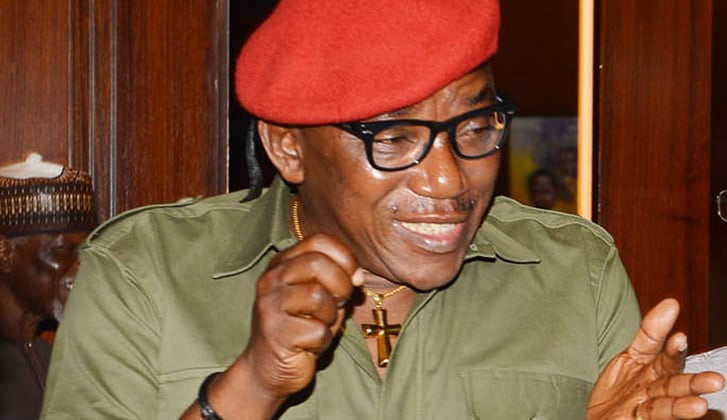
Amupitan

Vote buying won’t be tolerated during FCT polls — INEC chairman warns

By Sabiu Abdullahi

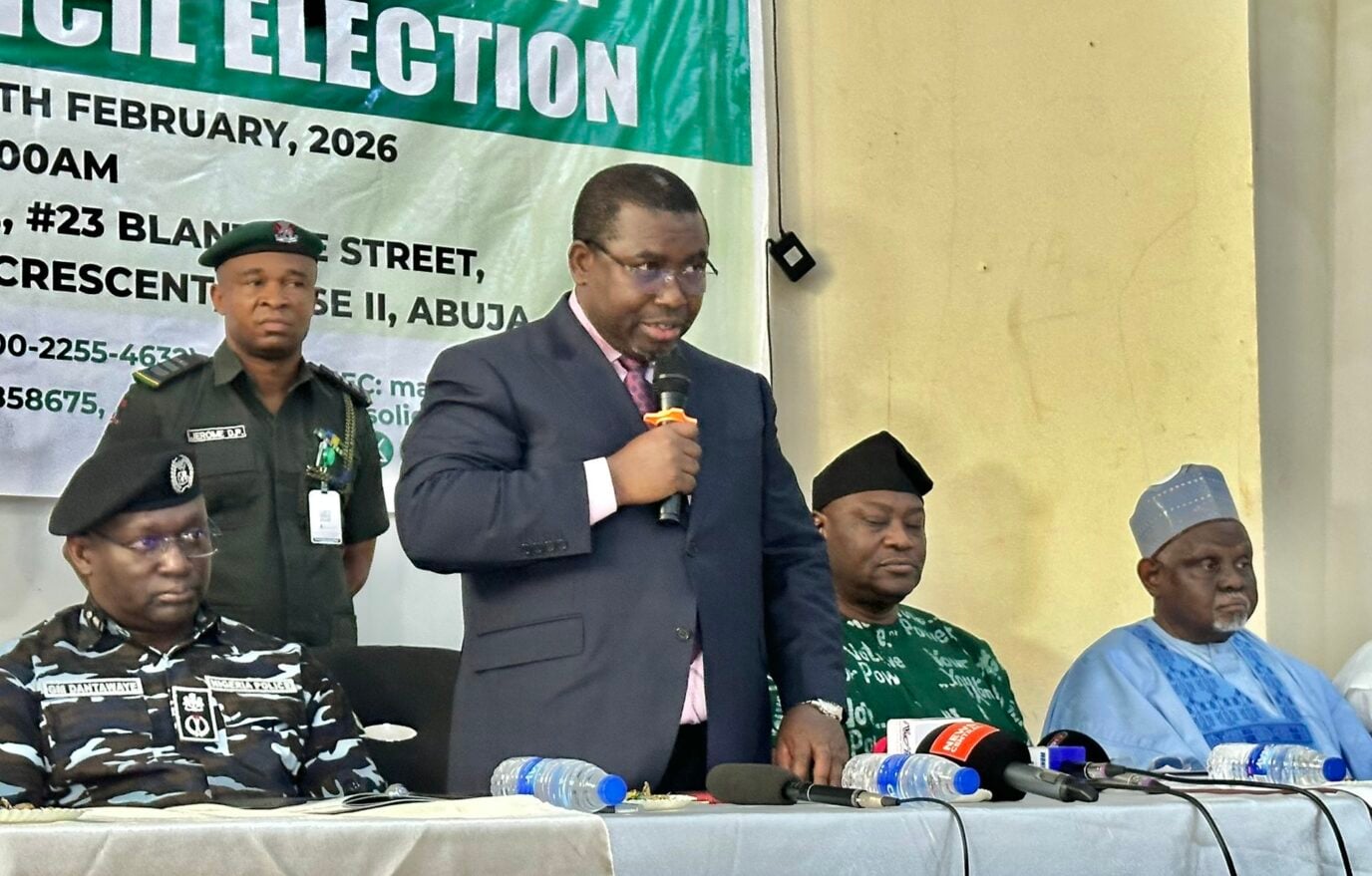
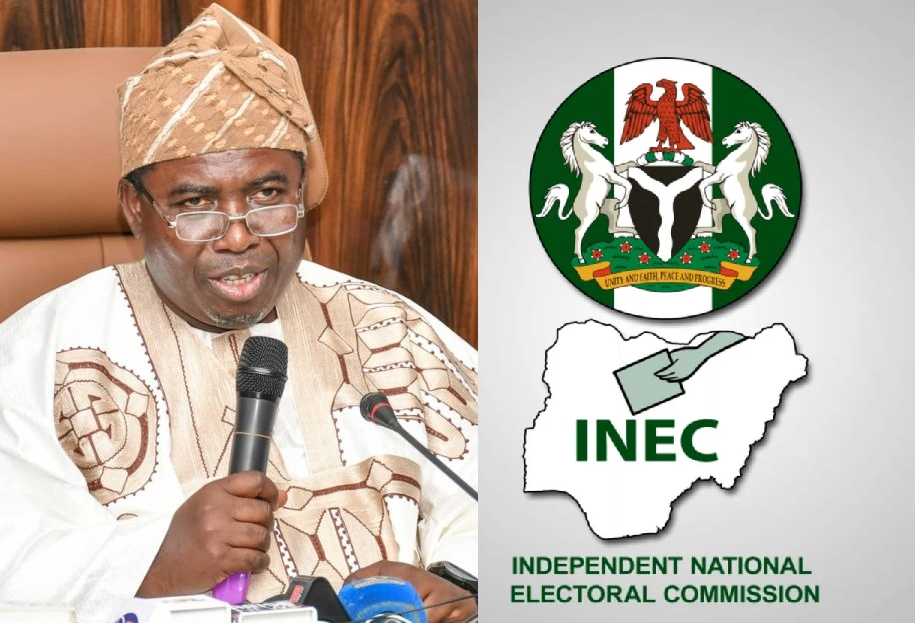
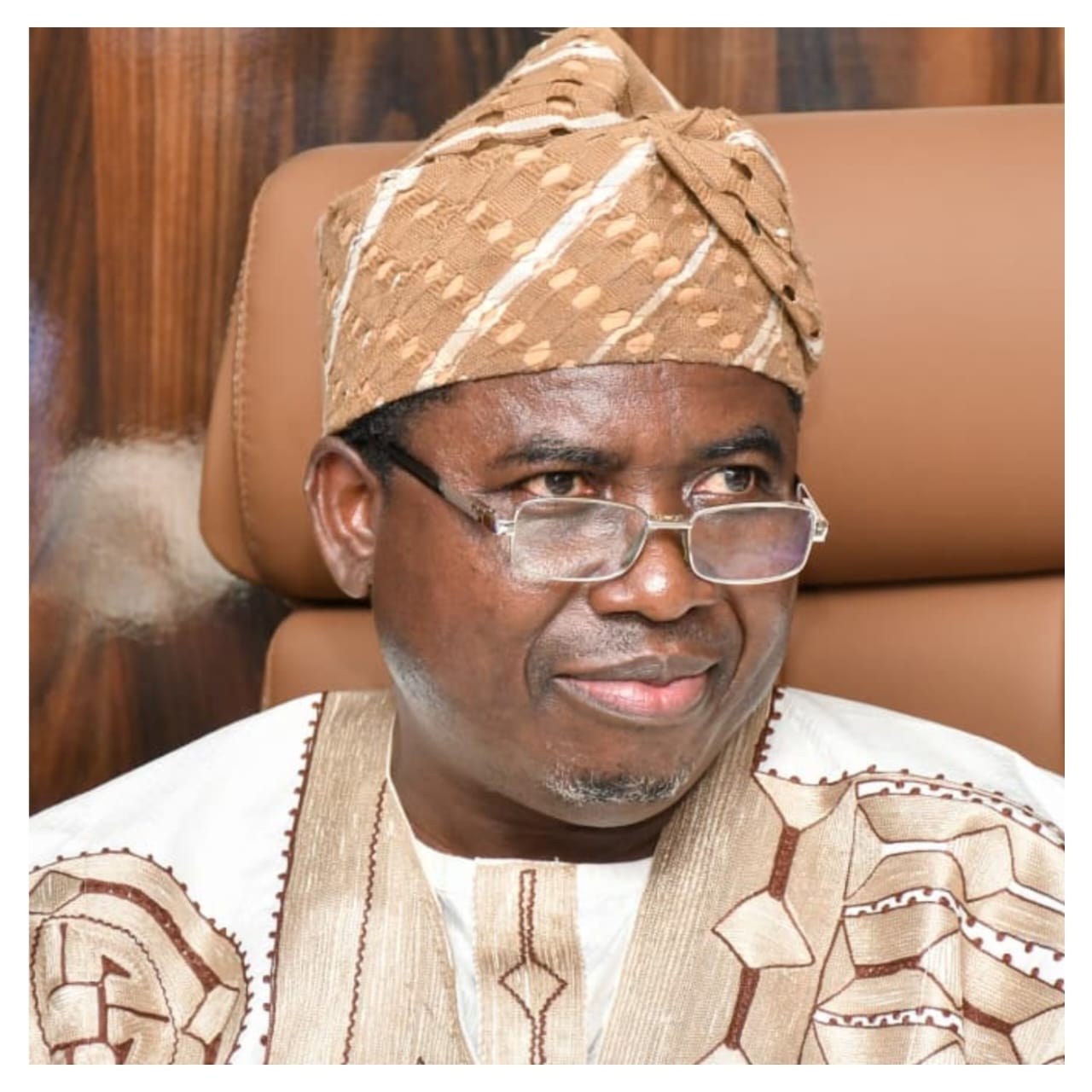
The Chairman of the Independent National Electoral Commission (INEC), Joash Amupitan, has issued a strong warning against vote buying ahead of the Federal Capital Territory (FCT) area council elections set for February 21.

He spoke on Wednesday in Abuja during a high-level stakeholders’ meeting convened to review the commission’s readiness for the exercise. He assured participants that INEC remains committed to delivering a peaceful, transparent, and credible election.

Amupitan disclosed that over 1.6 million registered voters are expected to take part in the polls. Voting will take place across 2,822 polling units. A total of 570 candidates will contest for 68 elective offices spread across the six area councils.

He explained that the Bimodal Voter Accreditation System (BVAS) will be used in all polling units. Election results will also be transmitted instantly to the INEC Result Viewing (IReV) portal to strengthen transparency.

The INEC chairman added that 89 observer groups have received accreditation to monitor the process. About 700 journalists will also cover the election. He said several security agencies will be deployed to maintain order.

He noted in particular that personnel from the Economic and Financial Crimes Commission (EFCC) and the Independent Corrupt Practices and other Related Offences Commission (ICPC) will be present to prevent vote trading and related offences.

“Any individual found buying or selling votes will be apprehended and dealt with in accordance with the law,” Amupitan said.

“Vote trading undermines the sanctity of the ballot and erodes public confidence in democratic institutions. It must not be tolerated.”

On logistics, Amupitan said 1,132 vehicles, 620 motorcycles, and 14 boats have been arranged for the movement of officials and election materials. He stressed that operational failures must not occur on election day.

He stated that polling units are scheduled to open at 8:30 am. This decision followed consultations with transport unions to ensure early delivery of materials.

The INEC chairman also reaffirmed the commission’s neutrality.

“INEC does not have a political party and does not have a preferred candidate. Our mandate is clear: to provide the enabling environment for residents of the Federal Capital Territory to freely choose their representatives,” he said.

Amupitan urged political parties, candidates, and supporters to maintain peace before and during the election. He also called on security agencies to act professionally and remain impartial throughout the process.

NNPP Kano calls on President Tinubu to fire INEC chairman over 2027 election date

By Sabiu Abdullahi

The Kano State chapter of the New Nigeria Peoples Party (NNPP) has asked President Bola Tinubu to remove the Chairman of the Independent National Electoral Commission (INEC) over the date fixed for the 2027 presidential election.

The party made its position known on Saturday through a statement issued by its Kano State Publicity Secretary, Ibrahim Karaye.

In the statement, the party said the presidential poll has been scheduled for 20 February 2027. It noted that the date falls within the Ramadan fasting period observed by Muslims.

The NNPP described the timing as unacceptable. It argued that the development could affect the turnout of Muslim voters across the country.

“This is a deliberate attempt to disenfranchise the majority Muslim population in the country,” the party stated.

The party also accused the INEC Chairman of displaying what it termed religious bias in the choice of the election date.

It therefore urged the President to take immediate action by removing the electoral body’s chairman. The party said such a step would promote fairness and rebuild trust in the electoral system.

“For any election to be accepted by the Muslim majority in the country, the President must replace him with a more credible Christian who will ensure justice and fairness for all,” the statement added.

University don warns against ‘anti-Islamic election dates’

By Sabiu Abdullahi

A Nigerian university lecturer, Mubarak Ibrahim Lawan, has raised concerns over the scheduling of the 2027 general elections in Nigeria, describing the dates as anti-Islamic and warning that they could spark religious conflict in the country.

In a Facebook post, Lawan criticized the decision to hold the gubernatorial election in the middle of Ramadan and the presidential election on the eve of Eid. He wrote:

“Let Mr. President know that the anti-Islamic election dates set by the Islamophobe, Amupitan, would surely ignite a religious war in the country. To every responsible Muslim, the sacrosanctity of Ramadan is inviolable and, inserting gubernatorial election in the middle of it and the presidential one on the eve of Eid is no different from desecrating the holiness of the month.”

Lawan argued that the timing of the elections could disenfranchise Muslim voters, who may prioritize religious observance over participating in the polls. He added:

“Similarly, this is a criminally insidious way of disenfranchising the Muslim Community as they would surely choose to stay on the holy course and neglect the worldly one, especially on the presidential election day, the eve of Eid. Therefore, we unequivocally disagree and uniformly ask for review of the undue dates.”

The lecturer also expressed concern over the apparent lack of response from northern political representatives, suggesting that the proposed schedule could advantage southern candidates. He stated:

“In the same vein, this dating is anti-northern blog. I wonder why no northern governor, senator or member of the house of representative is yet to attack the proposal. If they think that this dating has only an anti-Islamic agenda they are wrong. I believe, should the elections hold on the dates so far given, voter apathy would be remarkably seen everywhere in the North and that would be an advantage to the South. So, we do not agree!”

Lawan’s post reflects growing debate among civil society groups and political commentators about the potential impact of the election timetable on voter participation and national cohesion.

At the time of filing this report, neither the presidency nor the Independent National Electoral Commission (INEC) had responded to the concerns raised by Lawan.

INEC fixes February 20, 2027 for presidential election

By Sabiu Abdullahi

The Independent National Electoral Commission has scheduled February 20, 2027, for the conduct of the next Presidential and National Assembly elections across Nigeria.

Chairman of the commission, Prof. Joash Amupitan, announced the date during a news conference held in Abuja on Friday. He also disclosed that governorship and State Houses of Assembly elections will take place on March 6, 2027.

The release of the timetable comes at a time when discussions continue over the delayed passage of the amended Electoral Act, which is still before the National Assembly.

Earlier, on February 4, the commission indicated that it had concluded work on the election timetable and the schedule of activities, despite the uncertainty surrounding the amendment to the law.

INEC stated that it had already forwarded the timetable to lawmakers. It, however, warned that certain components of the schedule could experience adjustments. The commission said any change would depend on when the amended Electoral Act is eventually passed.

Further details on the electoral programme are expected to be made public in due course.

INEC seeks nearly N1tn for conducting 2027 general elections

The Independent National Electoral Commission has informed the National Assembly that it will require N873.78bn to conduct the 2027 general elections.

The commission also proposed N171bn as its budget for operations in the 2026 fiscal year.

INEC Chairman, Joash Amupitan, disclosed this during the presentation of the commission’s 2026 budget proposal and projected expenditure for the 2027 polls before the National Assembly Joint Committee on Electoral Matters in Abuja.

He explained that the N873.78bn estimate covers the full conduct of the 2027 general elections. He added that the N171bn request for 2026 would fund routine responsibilities. These include by-elections and off-season governorship polls.

The proposed election budget shows a sharp rise compared to the N313.4bn released by the Federal Government for the 2023 general elections.

Providing a breakdown of the projection, Amupitan said, “N379.75bn is for operational costs, N92.32bn for administrative costs, N209.21bn for technological costs, N154.91bn for election capital costs and N42.61bn for miscellaneous expenses.”

He noted that the estimate was prepared “in line with Section 3(3) of the Electoral Act 2022, which mandates the commission to prepare its election budget at least one year before the general election.”

On the 2026 proposal, the INEC chairman said the Ministry of Finance issued a budget envelope of N140bn. He, however, stated that “INEC is proposing a total expenditure of N171bn.”

According to him, the 2026 estimate includes N109bn for personnel costs, N18.7bn for overheads, N42.63bn for election-related activities and N1.4bn for capital projects.

Amupitan also revealed that the election budget did not accommodate a fresh request by the National Youth Service Corps seeking an upward review of allowances for corps members engaged as ad hoc election staff.

During the session, Senator Adams Oshiomhole argued that external bodies should not impose a budgeting template on INEC due to the sensitive nature of its mandate. He called for the removal of the envelope budgeting framework and urged lawmakers to support the commission’s financial request.

Similarly, a member of the House of Representatives, Billy Osawaru, advocated placing INEC’s funding on first-line charge in line with constitutional provisions. He said this would guarantee early release of funds for election planning.

The joint committee later approved a motion recommending the one-time release of the commission’s annual budget. It also pledged to review the NYSC’s request estimated at about N32bn to raise corps members’ election allowance to N125,000.

Chairman of the Senate Committee on INEC, Simon Lalong, assured that the National Assembly would collaborate closely with the electoral body to ensure successful conduct of the 2027 polls.

Also speaking, Chairman of the House Committee on Electoral Matters, Bayo Balogun, promised legislative backing but cautioned the commission against making commitments it might not fulfil.

“IReV was not even in the Electoral Act; it was only in INEC regulations. So, be careful how you make promises,” Balogun warned.

Sheikh Jingir says INEC chair Amupitan’s appointment stands rejected

By Sabiu Abdullahi

The National Chairman Council of Ulama of Jama’atu Izalatil Bid’ah Wa’ikamatis Sunnah (JIBWIS), Sheikh Sani Yahaya Jingir, has faulted the appointment of Professor Joash Ojo Amupitan as Chairman of the Independent National Electoral Commission, describing it as highly risky.

He said Nigerian Muslims have rejected the appointment because of the sensitive role of INEC as the nation’s electoral body.

Sheikh Jingir spoke at the end of a three-day 33rd annual national seminar organised by JIBWIS at Saddeqa Event Center in Jos.

Professor Amupitan has faced criticism over a legal brief he authored years ago. The document allegedly attempted to justify claims of Christian genocide in Nigeria. The Tinubu administration has repeatedly denied the allegation. However, the government has remained silent on calls demanding his removal.

According to the cleric, the INEC chairman had accused Muslims of carrying out genocide against Christians. He argued that such a person should not occupy a sensitive national office.

“Why is it that someone that had abused Sheikh Usman Danfodio and Muslims was appointed INEC chairman, “ Sheik Jingir asked.

He also questioned the silence of members of the National Assembly on the matter. He urged lawmakers to take action and ensure that a fair individual heads the electoral commission.

The Islamic scholar further stated that Muslims oppose the appointment of anyone he alleged had invited foreign intervention against Nigeria to lead a critical institution.

He said, “I disagree with the person that went aboard to call for an attack on Nigeria, and the government of Muslim-Muslim, take the risk of appointing him as the head of electoral umpire, it is an extremely a risk of the highest order.”

Calls mount for removal of INEC chairman as Bukarti raises bias allegations again

By Sabiu Abdullahi

A prominent public affairs analyst, Dr. Bulama Audu Bukarti, has called for the immediate removal of the newly appointed Chairman of the Independent National Electoral Commission (INEC), Professor Joash Ojo Amupitan.

Bukarti made the demand during a heated video conversation on “Fashin Baki,” a weekly Hausa political programme, where he expressed strong reservations about the chairman’s neutrality in electoral matters.

“We urgently call on President Tinubu to immediately remove the INEC Chairman, Professor Joash Ojo Amupitan,” Bukarti declared. “If the President refuses to act, Northern politicians should take note: this man will not deliver justice or fairness in elections involving you.”

During the discussion, Bukarti accused the INEC boss of harbouring bias in the conduct of elections, particularly in contests involving candidates from the North.

“Whenever a Hausa or Fulani candidate contests against a non-Hausa/Fulani opponent, he will not conduct free, fair, or credible polls—his public hatred for Hausa and Fulani people is evident and undeniable. In contrast, when a Northerner faces a non-Northerner, he won’t be fair to the Northerner. He has previously dismissed our region’s large population figures as fabricated lies and accused Northern military and police personnel of taking over the institutions to Islamized Nigeria.”

He stressed that concerns about the appointment would have been stronger if the swearing-in had not already taken place.

“Had he not already been sworn in as INEC Chairman, we would have demanded his appointment be blocked outright. Now that the process is complete, it is imperative to press the President: this individual is unfit to lead INEC, as he cannot guarantee impartial elections for Northerners or Muslims.”

Bukarti also responded to possible criticism regarding the motive behind his position. He rejected claims that the call for removal was driven by religious sentiment.

“Anyone claiming this call for his removal stems from religious prejudice is deceiving themselves. The core issue is not his faith, but his deep-seated disbelief in Nigeria’s unity and his passionate hatred toward Northern Muslims. He has accused Northern Muslims of invading and settling in Christian-majority North Central states like Benue and Plateau as ‘settlers,’ while alleging ongoing persecution of Christians in Benue, Plateau, and Taraba states.”

The remarks have since stirred debate across political circles, with observers awaiting reactions from the Presidency and the electoral body.

The video of the programme was made available online, with viewers directed to watch the full discussion in the comment section.

INEC cannot walk into 2027 with this crisis hanging over its Chairman

By Yakub Aliyu

Nigeria has entered dangerous territory. The country has appointed as Chairman of the Independent National Electoral Commission (INEC) a man whose most prominent public writing is an 80-page brief accusing whole communities of committing genocide. That document, published in 2020, framed national violence almost entirely through a Christian-victimhood narrative and presented sweeping, contested claims that many Nigerians find offensive, incomplete, or simply inaccurate.

Today, the author of that brief is the referee of our national elections. And yet, the political class, from the Presidency to the Senate to the parties, is maintaining a silence so absolute that it borders on negligence.

It is this silence, not the controversy itself, that is now the real danger.

The Integrity of Elections Is a National Security Issue
Every Nigerian knows elections in this country are not routine administrative events. They are national security operations involving millions of citizens, overstretched security agencies, and volatile political identities. The neutrality of INEC is therefore not optional. It is foundational.

When the person leading that institution has authored a highly divisive document, which is now weaponised against the country by some foreign powers, the question is no longer academic. It becomes a matter of national security.

If the chairman once wrote that a section of the country was engaged in “genocide,” how will those communities trust him? How will they interpret his decisions? How will they accept results in a tight contest? And what happens if the outcome of 2027 is close enough for suspicion to matter?

These are not theoretical questions. They are national security scenarios.

How Did This Appointment Pass Through Screening?
The more the issue is examined, the more troubling the answers become.

  1. The Executive Vetting Was Inadequate.
    It is difficult to believe that the Presidency did not know about the 2020 brief. It is publicly available and widely circulated among advocacy groups. If the government did not know, it raises questions about the quality of its due diligence. If it knew and ignored it, that is an even bigger problem.
  2. The Senate Screening Was Superficial
    A nomination of this magnitude requires hard questions about ideology, neutrality, and past publications. No such questions were asked. The Senate treated one of the most sensitive constitutional positions as a formality. This is a failure of oversight.
  3. Political Actors Fear Religious Backlash
    Many southern politicians do not want to appear to be “attacking a Christian advocate.” Many northern politicians do not want to inflame tensions by addressing a document they consider deeply inaccurate. And politicians on both sides fear being dragged into arguments that can harm their coalitions.

The easiest solution for them is silence.

  1. Some Actors Prefer a Weak INEC
    A chairman under suspicion is easier to pressure. A weakened INEC is more pliable. Some forces benefit from an institution whose credibility can be questioned but whose cooperation can be secured.

This is the cynical logic but it must be acknowledged.

Why the Silence Is Dangerous

The real risk is not that the chairman is personally biased. The risk is that millions of Nigerians may believe he is, especially when political temperature rises.

Nigeria’s democracy cannot run on suspicion. If a northern, Muslim candidate loses narrowly, the chairman’s own words from 2020 will be used immediately:
“How can the election be fair when the umpire once accused us of genocide?”

This single sentence is enough to delegitimise an election. In a fragile environment, it is also enough to trigger unrest.

Nation-states collapse not from the actions of one individual, but from the inability of institutions to command trust. INEC cannot afford this weakness. Nigeria cannot afford this gamble.

The Moral Issue Cannot Be Ignored
Beyond politics lies a moral question. Every section of Nigeria has suffered from violence. Christians in some regions have endured brutal attacks. Muslims in others have buried thousands. Any narrative that elevates one community’s pain while erasing another’s deepens division.

The brief published in 2020 was not balanced. It did not acknowledge the wide pattern of atrocities across faith and region. That lack of balance is precisely what raises concern today, not whether the author meant well or not.

Leadership of INEC must be above suspicion. It must be acceptable to all parts of the country. At present, that foundation has been shaken.

Why Is Everyone Silent?
The Presidency is silent because acknowledging the issue means admitting an error in judgment. The Senate is silent because speaking now exposes the weakness of its oversight. The political parties are silent because taking a position risks angering key religious blocs. Security agencies are silent because the moment they comment, the crisis appears larger.

But silence does not preserve stability. Silence delays conflict. Silence leaves the field open for extremists, propagandists, and opportunists.

Nigeria cannot enter 2027 with a question mark hanging over the referee.

What Needs to Happen

Three things are necessary.

  1. The INEC Chairman must address the Brief publicly. He does not need to renounce his past or apologise for advocacy, but he must clarify:
    —that INEC belongs to all Nigerians,
    —that all communities have suffered, and
    —that his role demands strict neutrality. Not making this clarification would mean he has lost the moral authority to remain in that office.
  2. The government must break the silence.
    Here, the Presidency must explain whether the brief was vetted, how it was evaluated, and why the appointment proceeded. Nigerians deserve transparency.
  3. Political leaders must safeguard the integrity of elections. If trust cannot be rebuilt, other constitutional options exist. The aim is not punishment but protection of national stability.

A Final Word

Nigeria stands at a crossroads. This issue will not disappear. It will resurface at the most dangerous moment: during the heat of the 2027 elections. The silence of today will become the crisis of tomorrow.

The country cannot sleepwalk into an avoidable disaster.

If INEC is weakened, Nigeria is weakened. If trust in the umpire collapses, no winner will have legitimacy. And if political leaders continue to pretend that this controversy is insignificant, the consequences will arrive at a cost far higher than the discomfort of speaking the truth today.

It is time to speak. It is time to act. And it is time to protect the Republic.