Amnesty International

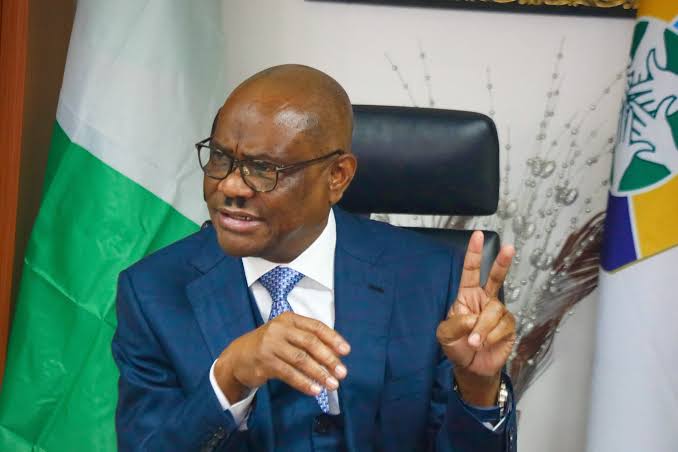
Amnesty International Slams Wike Over Threatening Remark Against Journalist On Live TV

By Sabiu Abdullahi

Amnesty International has criticised the Minister of the Federal Capital Territory (FCT), Nyesom Wike, over what it described as a dangerous outburst directed at a journalist during a live television appearance.

The condemnation followed comments Wike made during an Arise TV broadcast, where he reacted angrily to a line of questioning. During the exchange, he said: “If there’s anyway to broke (sic) the screen, I would have shot him…”

The minister’s remark targeted Channels TV presenter, Seun Okinbaloye, and has drawn strong reactions from rights groups and media advocates across the country.

The incident took place during a media chat in Abuja on April 3. Wike addressed ongoing political tensions. He spoke on concerns about a possible one-party system ahead of the 2027 general elections. His comments came in response to views earlier expressed by Okinbaloye on Politics Today, where opposition worries, including those linked to the African Democratic Congress (ADC), were discussed.

In a statement posted on its official X handle on Saturday, Amnesty International described the minister’s words as reckless and capable of encouraging violence against journalists.

“Apart from inciting violence, Wike’s remarks violated Nigeria’s broadcasting code that the Nigerian Broadcasting Commission (NBC) is supposed to be enforcing,” the organisation stated.

The group warned that such statements from a senior government official could create a climate where attacks on media professionals become more likely. It added that the comment risks portraying journalists as targets for simply carrying out their duties.

“This level of violent intent coming from a member of Nigeria’s federal cabinet is unlawful and unacceptable. Mr. Wike must withdraw his violent statement immediately and apologise,” the statement added.

The development has also renewed scrutiny of the Nigerian Broadcasting Commission. Critics have questioned why the regulator has not taken action, despite its record of sanctioning media organisations for perceived violations.

Wike’s time in office has been marked by several controversies. Observers say the latest incident signals growing tension between public officials and the media.

Amnesty International condemns deadly mosque attack in Kebbi

By Sabiu Abdullahi

Amnesty International Nigeria has strongly condemned the killing of worshippers following an attack on a mosque in Didinkowa village, Maiyama Local Government Area of Kebbi State.

Gunmen, believed to be members of the Lakurawa group, reportedly stormed the mosque on the evening of Wednesday, February 25, during a ‘tafsir’ session held after the Ramadan fast. The assault left at least five people dead and 19 others injured, some of them critically.

A witness recounted the scene after the attackers fled, saying, “there was pool of blood in the mosque after the attackers left.”

Reacting to the development, Amnesty International Nigeria expressed concern over the worsening security situation. The organisation said residents are now living in fear as attacks continue to threaten their safety.

The group criticised the Nigerian authorities for failing to address the persistent violence. It stated, “Consistently, the Nigerian authorities have failed to end these killings and protect people’s lives, property, liberty and physical integrity.”

Amnesty International Nigeria also referenced earlier assurances by Bola Ahmed Tinubu on ending insecurity, noting, “President Bola Tinubu claims he has repeatedly tasked security agencies to end the killing so that Nigerians can go to bed with their eyes closed, but clearly nothing has changed.”

Outrage as notorious bandit leader Babaro attends peace meeting in Katsina

By Muhammad Abubakar

Shock and outrage have trailed the appearance of a notorious militia leader, Babaro, at a government-backed peace dialogue in Faskari Local Government Area on Sunday. The bandit commander, long accused of mass killings and sexual violence, arrived at the meeting heavily armed and in a convoy, alongside his fighters.

Witnesses said Babaro and his gang openly flaunted their weapons, taunted residents, and bragged that “nothing will happen to them” despite years of terrorising communities across Katsina and neighbouring states.

Babaro is accused of carrying out some of the deadliest attacks in the region, including the massacre of more than 50 worshippers during morning prayers at Unguwar Mantau Mosque in August. Survivors say the bloodstains of that slaughter are still visible on the mosque’s walls and floor. He is also alleged to have raped women and girls in front of their families, and, together with fellow warlord Kachalla Isiya Akwashi Garwa, killed an unconfirmed number of people, particularly in the Faskari axis.

In Kankara, Malumfashi, and other parts of Katsina, his name has become synonymous with fear, mass abductions, and relentless bloodshed.

The decision to give Babaro and his fighters a seat at a peace meeting has left victims’ families devastated. Relatives of abducted persons, some of whom attended the dialogue, broke down in tears as they watched the same men who killed their loved ones sit at the negotiating table with impunity.

Amnesty International Nigeria sharply criticised the development, warning that privileging armed groups while silencing victims only deepens injustice.

“The mere notion that it is now acceptable for a group of people in Nigeria to carry arms that are solely used to kill people who are never armed is unbelievable,” said Isa Sanusi, spokesperson of Amnesty International Nigeria. “The assumption that those who are carrying sophisticated arms and decorate themselves with bullet magazines can accept peace or are ready to renounce violence is faulty. Nonsense.”

Sanusi questioned how bandits like Babaro continue to obtain weapons and logistical support while victims are left unprotected, marginalised, and ignored.

The Faskari meeting has reignited anger over the government’s controversial peace overtures to armed groups in the northwest, where thousands of people have been killed, abducted, and displaced in a decade-long wave of violence.

16 travelers burnt alive in Edo, Amnesty International demands probe

By Abdullahi Mukhtar Algasgaini

Amnesty International has called for an immediate and transparent investigation into the brutal lynching of at least 16 travelers in Uromi, Edo State.

The victims, who were hunters traveling from Rivers State to Kano to celebrate Eid with their families, were attacked by a vigilante group and armed youths on Tuesday.

According to reports, the victims’ vehicle was blocked, and they were dragged out one by one, beaten, tied to used tires, doused with petrol, and set ablaze.

Disturbing videos of the incident show the victims pleading for mercy while onlookers cheered as the attackers used axes, iron rods, and machetes.

Amnesty International condemned the killings, urging Nigerian authorities to go beyond mere condemnation and ensure the perpetrators are arrested and prosecuted.

The rights group noted that the failure to punish mob violence has emboldened vigilantes to take the law into their own hands.

This incident is part of a rising trend of highway attacks by vigilante groups in rural areas, often carried out with impunity.

Amnesty International stressed that the government must take decisive action to prevent such violence, equip secure justice for victims.

The Nigerian police have yet to issue a detailed statement on arrests or ongoing investigations.