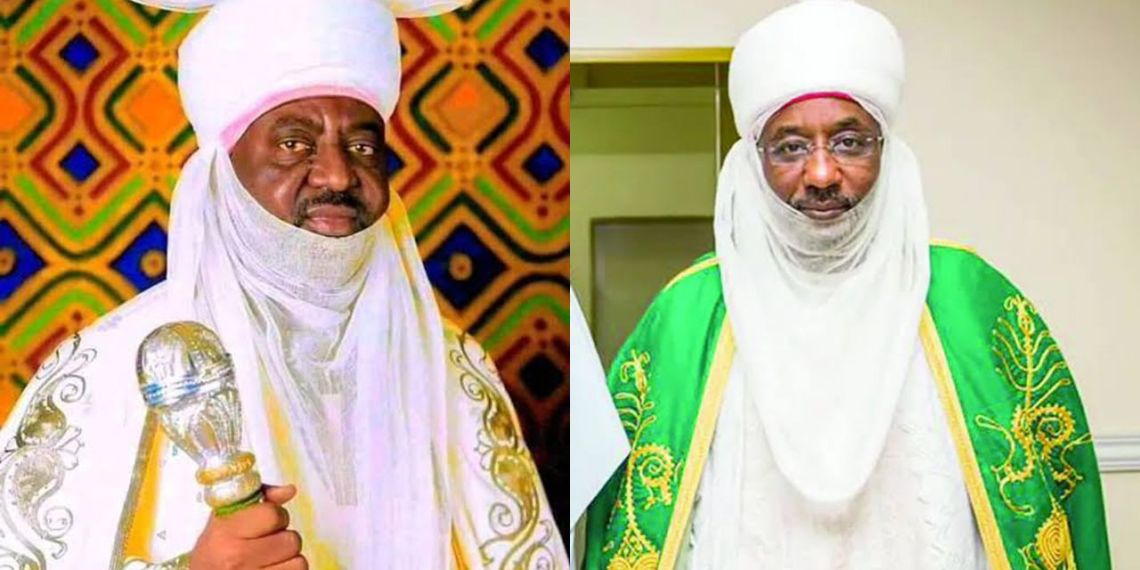
Dr Abdullahi Umar Ganduje

Kano govt sues Ganduje, sons over alleged N4.49bn fraud, moves to reclaim Dry Port shares

By Uzair Adam 

The Kano State Government has instituted a high-profile suit before the State High Court, seeking to recover its 20 per cent equity stake in Dala Inland Dry Port Limited and reclaim funds allegedly misappropriated to the tune of N4,492,387,013.76.

According to court documents, the defendants in the charge include the former Governor of Kano State, Dr. Abdullahi Umar Ganduje; his sons, Umar Abdullahi Umar and Muhammad Abdullahi Umar; former Special Adviser to the Governor, Abubakar Sahabo Bawuro; former Executive Secretary of the Nigerian Shippers Council, Hassan Bello; a legal practitioner, Adamu Aliyu Sanda; and Dala Inland Dry Port Limited.

The Daily Reality reports that the defendants are facing a ten-count charge bordering on criminal conspiracy, misappropriation of public funds, breach of trust, and conflict of interest.

The court record indicates that the suit was filed on October 13, 2025.

According to the charge sheet, the defendants allegedly conspired to fraudulently transfer 80 per cent of the shares in Dala Inland Dry Port Limited, including the state government’s 20 per cent equity, to private entities under the fictitious name “City Green Enterprise” in an attempt to conceal the company’s actual ownership.

The prosecution further alleged that the defendants diverted over N4.49 billion of Kano State funds to execute infrastructure projects such as a double carriageway, electricity supply, and perimeter fencing at the dry port for their personal and family benefit.

In addition, the defendants were accused of abuse of office and conflict of interest, allegedly using their official positions to manipulate public resources for private gain, contrary to financial and constitutional provisions.

The prosecution listed several key witnesses, including the lead investigating officer who uncovered the alleged fraudulent transactions, and an early stakeholder in the project who was reportedly sidelined during the equity transfer process.

The summary of evidence alleges that the defendants used sham entities and proxies to conceal ownership of the Dala Inland Dry Port shares, diverted public funds to family-owned firms and personal businesses, coerced the original project founders into relinquishing control, created false documents to mislead regulators, and facilitated the diversion of N750 million through Safari Textile Ltd (STL Enterprise).

The prosecution will also present evidence showing that the 4th defendant conducted a review confirming the Kano State Government’s 20 per cent stake in the dry port, in line with a policy document initiated under former President Olusegun Obasanjo.

It further alleged that the purported transfer of shares was executed without the consent of other board members, and that the former governor, Abdullahi Ganduje, acted unilaterally to facilitate the move.

Although no date has been fixed for the hearing, the matter has been assigned to Kano State High Court 2, presided over by Justice Yusuf Ubale.

Gov. Yusuf pays N5.6bn backlog to ex-councillors

By Muhammad Abubakar

Kano State Governor, Abba Kabir Yusuf, has disbursed N5.6 billion to 1,198 former councillors who served between 2018 and 2020 under the administration of ex-Governor Abdullahi Umar Ganduje.

The payment, which covers severance, gratuity, accommodation, and leave allowances, represents the second batch of liabilities inherited from the previous administration. In May, the governor released N1.8 billion to 903 councillors in the first phase of the settlement.

Speaking at the disbursement ceremony at Coronation Hall, Government House, Yusuf said his administration inherited a total of N15.6 billion in outstanding obligations to former councillors. He assured that the final tranche of N8.2 billion, covering 1,371 beneficiaries, would be cleared by the end of November.

“This is more than a financial settlement. It is about restoring dignity, fairness, and justice to those who sacrificed for grassroots governance,” the governor said.

The event was greeted with jubilation as beneficiaries, many of them members of the opposition APC, received instant payment alerts. Their leader commended Governor Yusuf for his fairness despite political differences, describing him as just and compassionate.

DG Protocol: Kano gov’t refutes N6.5bn diversion claim, accuses opposition of blackmail

By Uzair Adam

The Kano State Government has refuted reports alleging the diversion of N6.5 billion from the state treasury, dismissing them as “false narratives orchestrated by the opposition to tarnish the image of the administration.”

The rebuttal follows a report by Daily Nigerian on August 22, 2025, which claimed that the Director-General of the Government House Protocol Directorate, Alhaji Abdullahi Ibrahim Rogo, was linked to an alleged diversion of public funds already before the High Court.

In a statement issued on Monday, Sanusi Bature Dawakin Tofa, Director General of Media and Publicity at the Government House, maintained that all financial dealings of Ministries, Departments, and Agencies (MDAs) strictly adhere to budgetary guidelines and established financial regulations.

“Every cash outflow into MDAs is duly budgeted with clear codes in the state’s fiscal policy. No government official accesses public funds without a defined purpose,” Bature stated.

He noted that the Protocol Directorate is responsible for logistics, welfare, and official engagements of the governor and visiting dignitaries, explaining that about 95 per cent of its functions involve financial transactions conducted with government approval.

The statement stressed that Governor Abba Kabir Yusuf’s administration would not allow the integrity of its officials to be undermined by political propaganda.

“The Yusuf administration remains committed to financial prudence, transparency, accountability, and zero tolerance for corruption. We will not allow our aides’ reputations to be destroyed by deliberate blackmail from unpatriotic elements,” it said.

The government reaffirmed confidence in Rogo’s credibility, describing the allegations as unfounded. It added that all officials, including the Director-General of Protocol, are open to scrutiny by anti-graft agencies when required.

It further accused political opponents of sponsoring the allegations as part of a smear campaign ahead of the 2027 elections.

“These claims are nothing but fiction designed by desperate politicians relying on propaganda to remain relevant,” the statement noted.

The government also pointed to alleged financial mismanagement under former governor Abdullahi Umar Ganduje’s administration, citing withdrawals of over N20 billion between February and May 2023. It referenced the dollar-video scandal as evidence of what it called “eight years marred by corruption.”

While pledging transparency, the government warned it may pursue legal action against those spreading misinformation.

“No propaganda, fabricated claims, or media trials will derail our determination to serve the people with honesty and accountability,” the statement added.

It concluded by noting that it would not comment further on the matter since it is already before a competent court.

Amidst replacement push, Kashim Shettima stays focused on vice-presidential duties

By Lawan Bukar Maigana

Political drama recently unfolded in Gombe State as tensions escalated between the All Progressives Congress (APC) National Chairman, Dr. Abdullahi Ganduje, the APC National Vice Chairman (Northeast), Comrade Mustapha Salihu, Gombe State Governor Muhammadu Inuwa Yahaya, and Borno State Governor, Prof. Babagana Umara Zulum.  At the heart of the storm were whispers of a plot to replace Vice President Kashim Shettima. But in the eye of that storm stands Shettima himself; silent, composed, and unfazed.

There has been no speech, social media post, or press release. Shettima has not acknowledged the theatrics or addressed the speculations. There is no rebuttal, no outrage, just purposeful silence—a silence that suggests a man far more committed to duty than distractions.

While the speculations make the rounds in political circles, Vice President Shettima’s schedule remains unchanged. In January 2025, he represented Nigeria at the World Economic Forum in Davos, Switzerland. There, he engaged in high-level sessions on digital trade and investment and co-chaired discussions focused on humanitarian resilience, building international bridges while avoiding the noise of local politics.

He used the global platform to launch the Humanitarian and Resilience Investment Roadmap for Africa, advocating for deeper public-private partnerships across the continent. As always, his approach was less about rhetoric and more about results.

Back home in Maiduguri, Borno State, the Vice President continues to prioritise grassroots development. He commissioned the Expanded National MSME Clinic and Fashion Hub, a project expected to create over 48,000 jobs annually. He also distributed unconditional grants to entrepreneurs and pledged continued support through public-private partnerships to boost local businesses.

Shettima also inaugurated the National Asset Restoration Programme, reinforcing his long-standing commitment to post-insurgency reconstruction in the Northeast.

His record across sectors reflects structural impact. Over 300,000 businesses have been supported, and more than one million jobs have been generated under initiatives he directly oversees. These aren’t political promises; they’re measurable achievements.

At the national level, he chairs the National Council on MSMEs, advocating for innovation, job security, and stronger synergy between the public and private sectors, all under the framework of President Tinubu’s Renewed Hope Agenda.

As a champion of youth empowerment, Shettima spearheads human capital development efforts. He inaugurated the Nigeria Jubilee Programme Steering Committee, designed to train and equip thousands of graduates with marketable skills and workplace readiness.

He has also remained active in strengthening regional cooperation. At the 5th Lake Chad Basin Governors’ Forum in Maiduguri, he emphasised the importance of pairing military security with economic inclusion to secure lasting peace in the subregion.

In every assignment, Shettima has demonstrated sagacious loyalty, not only to his office and the President but also to the people he serves. Amid swirling conversations about his replacement, he has not lost focus. He has doubled down on leadership, service, and delivery.

His calculated silence is a strategy. He understands that emotional outbursts or political mudslinging could deepen divisions within the party. His restraint underscores a higher allegiance to duty, national stability, and unity.

The Vice President’s quiet determination sends a message: true leadership is about resolution, not reaction. In a political landscape often dominated by noise, Shettima has chosen the steady path of substance, letting results, not rumours, define his legacy.

Even as political storms gather, Shettima stays the course. His silence isn’t ignorance or weakness—it is discipline. And with his continued focus on economic development, job creation, and regional security, his work speaks louder than any rebuttal ever could.

Lawan Bukar Maigana is a journalist with PRNigeria and Economic Confidential, headquartered in Abuja. He can be reached via email: Lawanbukarmaigana@gmail.com.

Echoes of the past, choices of today: Will Kano’s throne withstand the test of time and wisdom?

By Usman Abdullahi Koli

The grandeur of Kano’s emirate is not merely an inheritance of a throne but the custodianship of a deep-rooted history, culture, and tradition that represents the very soul of African heritage. From the era of Bagauda to the reign of Ado Bayero, the emirate has stood as a symbol of resilience, dignity, and continuity. 

Today, as the emirship tussle continues, it presents a defining moment not just for those directly involved but for the entire Kano people, whose unity and stability rest upon the wisdom of their leaders. It is a moment that demands measured actions, guided by history and the sacrifices of great monarchs who prioritised the collective good over personal ambitions.

The Kano Emirate is no stranger to succession disputes; however, history has shown that wise leaders have navigated such crises with patience, foresight, and a commitment to preserving the integrity of the institution. From the reign of Emir Muhammadu Sanusi I to that of Ado Bayero, the emirate has undergone significant transitions- some peaceful, others contentious- but ultimately resolved with a sense of responsibility toward the larger interest of Kano.

Today, we see echoes of the past in the contest between Emir Muhammadu Sanusi II and Emir Aminu Ado Bayero. While the legal and political dimensions of the crisis continue to unfold, the moral weight on those involved is immense. The key question remains: Will the dignity, harmony, and prestige of Kano take precedence over personal interests, or will history remember this episode as a moment of avoidable discord?

History is replete with examples of monarchs who faced displacement yet responded with wisdom, ensuring that their thrones remained symbols of honour rather than sources of division. In 1936, King Edward VIII of Britain abdicated the throne out of personal conviction, avoiding a constitutional crisis. 

More recently, King Juan Carlos of Spain voluntarily stepped aside to preserve national unity and dignity. Within Africa, deposed monarchs have often demonstrated restraint, placing the peace of their people above personal grievances.

A particularly relevant example is Emir Muhammadu Sanusi II, who, despite the political implications of his removal in 2020, did not rally his supporters to contest the decision. Instead, he accepted his fate with remarkable composure, trusting in destiny and the historical cycle that governs leadership.

Governor Abba Kabir Yusuf is enormously responsible for ensuring that his administration’s actions do not fuel unnecessary tensions in Kano. While he holds constitutional authority over traditional institutions, wisdom dictates that such decisions be made with a far-reaching vision that safeguards Kano’s unity, stability, and the sanctity of its traditions. Political decisions should not be allowed to erode the revered position of the emirate.

To Emir Aminu Ado Bayero, this moment calls for deep introspection on the true essence of leadership. His revered father, Emir Ado Bayero, was an emblem of peace, patience, and sagacity. The respect he commanded was not merely because he sat on the throne but because of his ability to navigate crises with wisdom. Now, his son faces a historic test: will he allow personal ambition to override Kano’s peace, or will he embrace the noble path of sacrifice? The decisions he makes today will shape how history remembers him.

To Emir Muhammadu Sanusi II, his reinstatement is a return to power and an opportunity to lead with renewed wisdom and vision. His expectations are immense—not for vengeance or retribution, but for reconciliation and statesmanship. The people of Kano look up to him to use his vast experience, intellect, and leadership to heal divisions, restore trust, and solidify the emirate as a pillar of stability.

Kano is more than a city; it symbolises Africa’s resilience, culture, and civilization. The emirate embodies centuries of tradition that must not be tarnished by personal conflicts. The world is watching, and history is recording. The real question is not who occupies the throne today, but how that throne is preserved for generations to come.

It is crucial for external influences, particularly those in Abuja, to respect the Kano State Government’s decision. The constitution recognizes states as custodians of their emirates, and any interference from outside forces risks escalating tensions rather than resolving them. Political insinuators should avoid fueling discord and instead honour the autonomy of Kano’s leadership.

Now, the great tradition of the Sallah Durbar, which both factions claim to organise, must not become a battleground for supremacy. The grand procession, deeply embedded in Kano’s cultural and Islamic identity, is meant to unite, not divide. It should not be reduced to a contest of power. Both sides must recognize that personal ambitions should never overshadow the collective peace of Kano. True leadership is tested not in times of comfort, but in moments of crisis, and the world is watching to see whether wisdom or ego will prevail.

Great monarchs are remembered not for how fiercely they fought to retain power, but for how wisely they managed transitions, prioritized peace, and left behind legacies of honor. The lessons of Kano’s past emirs—from Bagauda to Ado Bayero—should serve as a guide for present leaders. These revered figures ruled with dignity, wisdom, and a profound sense of duty to their people.

Those who occupy the throne today must consider: Will they be remembered for upholding this legacy or for diminishing it?

May wisdom prevail over pride, and may Kano remain the fortress of culture, tradition, and unity it has always been.

Usman Abdullahi Koli wrote via mernoukoli@gmail.com.

If I were Ganduje: A call for reconciliation and statesmanship

By Samira Usman Adam

Politics is a game of interests, influence, and sometimes, survival. But above all, it is about leadership and leading people with wisdom, fairness, and strategic foresight. At this critical point in Dr. Abdullahi Umar Ganduje’s political career, one thing is clear: his ability to build more friends than enemies will define his legacy far beyond his tenure in office.

Just recently, Ganduje received a vote of confidence from the All Progressives Congress (APC) leadership, a significant gesture considering the turbulence surrounding his political journey. 

This is not just a lifeline; it is an opportunity he must seize to prove himself as more than just a money monger, as critics often describe him. If I were in his shoes, my approach would be simple: mend fences, consolidate power through unity, and rewrite my political narrative.

Power is Fleeting, but Influence Lasts

One of politicians’ biggest mistakes is believing that power alone is enough to sustain relevance. The reality, however, is that power is temporary, but influence, built through meaningful relationships, lasts far longer. 

Ganduje must realise that his current standing within the APC is not just about political loyalty but also about how he navigates relationships, particularly in Kano and at the national level.

If I were him, I would prioritise reconciling with those I have wronged, whether within the party, in Kano politics, or even in the opposition. Political grudges only create unnecessary enemies, and in a democracy, today’s enemy might be tomorrow’s ally. The greatest leaders recognise this and act accordingly.

Rewriting the Narrative: Beyond Money Politics

Ganduje’s name has been tarnished by allegations of corruption, with many reducing his political identity to financial controversies. Whether true or not, perception is powerful in politics. Now, with a renewed opportunity, he must take intentional steps to reshape how people perceive him.

If I were Ganduje, I would focus on key strategies:

 1. Promote issue-based politics: Shift away from financial influence and instead foster discussions on governance, policy, and party unity.

 2. Public Engagement and Transparency: Tackle concerns regarding governance and finances directly. The more open and accountable a leader seems, the more trust they can restore.

 3. Legacy Projects: Even beyond active governance, supporting meaningful initiatives in education, infrastructure, and youth empowerment can reshape how history remembers him.

Building Bridges for Political Survival

At this stage, every political move must be calculated with the future in mind. As a former governor, Ganduje still retains considerable influence in Kano politics, but influence without consolidation amounts to little. If I were in his position, I would engage in high-level bridge-building, both within the APC and beyond.

 • Reunite Factions Within APC Kano: The state remains politically divided, and without unity, APC’s strength in Kano could diminish.

 • Engage with Political Opponents: There is nothing undignified about reconciling with former rivals. In fact, it exemplifies true leadership.

 • Strengthen National Alliances: The political landscape is unpredictable, and having allies beyond Kano is crucial for long-term relevance.

Final Thoughts

The vote of confidence that Ganduje received is not merely a validation; it is an invitation to prove himself, to lead differently, and to transition from being perceived as a controversial figure to a respected statesman. 

If I were him, I would spend the next phase of my career doing exactly that: making more friends than enemies, consolidating my influence, and ensuring that my name, when written in history, is associated with strategy, leadership, and reconciliation rather than controversy.

This is the opportunity of a lifetime. Will he take it?

Samira Usman Adam wrote via sammyranoh@gmail.com.

Tinubu approves Ganduje, Gawuna, 43 others for federal board positions

By Uzair Adam

President Bola Tinubu has appointed new board Chairpersons and Chief Executive Officers for 42 federal organizations, alongside a secretary for the Civil Defence, Immigration, and Prisons Services Board.

The announcement was made on Thursday through a statement released by the president’s Special Adviser on Information and Strategy, Bayo Onanuga, confirming that the appointments take immediate effect.

According to the statement, Tinubu also named a new Managing Director for the Nigerian Railway Corporation and a Director-General for the National Board for Technology Incubation.

He directed all appointed board chairpersons to refrain from interfering with management operations, emphasizing that their roles are non-executive.

Below is the full list of the appointees and their respective organizations:

  1. National Youth Service Corps, Ministry of Youth Development
    Hillard Eta, Chairman (Cross River State)
  2. Nigerian Institute of International Affairs
    Prof. Bolaji Akinyemi, Chairman (Lagos State)
  3. Federal Airport Authority of Nigeria, Ministry of Aviation
    Abdullahi Ganduje, Chairman (Kano State)
  4. National Sugar Development Council
    Surajudeen Ajibola, Chairman (Osun State)
  5. Nigeria Bulk Electricity Trading Company
    Sulaiman Argungu, Chairman (Kebbi State)
  6. National Agency for Great Green Wall
    Senator Magnus Abe, Chairman (Rivers State)
  7. National Teachers Institute
    Festus Fuanter, Chairman (Plateau State)
  8. National Board for Technology Incubation (NBTI)
    Raji Kolawole, Director-General (Oyo State)
  9. Nigerian Institute of Educational Planning and Administration
    Victor Giadom, Chairman (Rivers State)
  10. Teachers Registration Council of Nigeria
    Mustapha Salihu, Chairman (Adamawa State)
  11. Industrial Training Fund
    Hamma Kumo, Chairman (Gombe State)
  12. Nigerian Institute of Science Laboratory Technology
    Donatus Nwankpa, Chairman (Abia State)
  13. Sheda Science and Technology Complex
    Senator Abubakar Maikafi, Chairman (Bauchi State)
  14. Federal Mortgage Bank of Nigeria
    Nasiru Gawuna, Chairman (Kano State)
  15. National Office for Technology Acquisition and Promotion
    Senator Tokunbo Afikuyomi, Chairman (Lagos)
  16. Nigerian Postal Service
    D.J. Kekemeke, Chairman (Ondo)
  17. National Inland Waterways Authority
    Musa Adar, Chairman (Sokoto)
  18. National Steel Council
    Prof. Abdulkarim Abubakar, Chairman (Nasarawa)
  19. National Environmental Standards and Regulations Enforcement Agency
    Garba Muhammad, Chairman (Kaduna)
  20. National Bio-Safety Management Agency
    Mu’azu Rijau, Chairman (Niger)
  21. Nigerian Building and Road Research Institute
    Durosimi Meseko, Chairman (Kogi)
  22. Federal Teaching Hospital, Gombe
    Zainab Ibrahim, Chairman (Taraba)
  23. Nigerian Railway Corporation
    Dr. Kayode Opeifa, Managing Director (Lagos)
  24. Federal Teaching Hospital, Ido-Ekiti
    Durotolu Bankole, Chairman (Ogun)
  25. Federal Medical Centre, Abeokuta
    Mr. Dayo Israel, Chairman (Lagos)
  26. Federal Medical Centre, Asaba
    Mary Alile Idele, Chairman (Edo)
  27. Federal Medical Centre, Lokoja
    Chidi Duru, Chairman (Anambra)
  28. Federal Medical Centre, Owerri
    Emma Eneukwu, Chairman (Enugu)
  29. Civil Defence, Immigration and Prisons Services Board
    Maj-Gen. Jubril Abdulmalik (retd.), Secretary (Kano)
  30. Federal Medical Centre, Umuahia
    Mr. Uguru Ofoke, Chairman (Ebonyi)
  31. Federal Medical Centre, Yenagoa
    Felix Morka, Chairman (Delta)
  32. Federal Medical Centre, Yola
    Bashir Gumel, Chairman (Jigawa)
  33. David Umahi Federal University Teaching Hospital, Ubuhu, Ebonyi State
    Dr. Ijeoma Arodiogbu, Chairman (Imo)
  34. National Oil Spill Detection and Response Agency
    Edward Omo-Erewa, Chairman (Edo)
  35. Nigerian Maritime Administration and Safety Agency (NIMASA)
    Yusuf Abubakar, Chairman (Kaduna)
  36. Nnamdi Azikiwe University Teaching Hospital, Nnewi, Anambra State
    Ali Dalori, Chairman (Borno)
  37. Ahmadu Bello University Teaching Hospital, Shika, Zaria, Kaduna State
    Lawal Liman, Chairman
  38. Federal Medical Centre Katsina
    Dr. Abubakar Maiha, Chairman
  39. Raw Materials Research and Development Council (RMRDC)
    Isa Achida, Chairman (Sokoto)
  40. Federal Medical Centre Birnin Kudu
    Dr. Mohammed Hassan, Chairman (Zamfara)
  41. National Building and Road Research Institute
    Yahuza Inuwa, Chairman (Nasarawa)
  42. Sokoto-Rima River Basin Development Authority
    Abubakar Wurno, Chairman (Sokoto)
  43. Aminu Kano Teaching Hospital
    Augustine Umahi, Chairman (Ebonyi)
  44. Federal Scholarship Board
    Babatunde Fakoyede, Chairman (Ekiti)
  45. Nigerian Social Insurance Trust Fund
    Shola Olofin, Chairman (Ekiti)

On the arrest of Dan Bello

By Zailani Bappa

The Sahara Reporters reports that the Kano All Progressive Congress (APC) has called for the arrest of Bello Galadanchi, popularly known as Dan Bello, “for inciting violence.” This comes after his smash video, released two days ago on his X handle.

On the special skit, he alleged an unwholesome practice by a former Commissioner for Local Government Affiars under the Governorship of Abdullahi Ganduje. He backed his claims with evidence, though.

Now, instead of going to court, the APC in the state has gone completely off balance (as the former Commissioner was its Deputy Governor-Candidate), forgot about the Nigerian Judicial System, and done the unthinkable. 

If I may ask, how can Dan Bello be arrested for this allegation, please? He does not live in Nigeria, where the APC rules; he lives and teaches English in China. Moreover, he is a United States Citizen, and the US is known to fiercely protect its citizens’ rights, lives, and property anywhere in the World.

If it is true that the APC is poised for a battle with this young man, someone should advise the Party to take it easy because this guy is equipped with everything it takes to do damage to its members and its Government, not only in Kano but beyond.

I say he is equipped because he has the required knowledge, intelligence, and journalistic acumen to dig; he has excellent film and skit facilities to make his messages appealing to anyone; and he has the protection he deserves to stay safe (especially if all his messages are true).

What is remarkable about Dan Bello so far is that, unlike most of our so-called investigative journalists in Nigeria, whose findings are often hijacked and promoted by equally corrupt politicians, he appears to be highly balanced in his presentations.

For those politicians who gloat over his recent searchlight on the Kano APC politician, they should be advised to keep off Dan Bello as their turn will surely come. 

May God protect the efforts of this young man and all his likes on social media.

The Kano throne dilemma

By Ibrahim El-mu’azzam 

Four years ago, we witnessed the removal of Mallam Muhammadu Sunusi II as the Emir of Kano and the splitting of the Kano emirate a few months earlier. As they say, what goes around comes around.

Since then, many people have prayed, predicted, and foreseen that the action would be reversed. Thanks to time and destiny, we are now witnessing the return of the Emirates to one and the reinstatement of Muhammadu Sunusi II to Gidan Rumfa and the throne of Dabo. People forget too soon; if not for that, this wouldn’t have made these trends and surprises.

Muhammadu Sanusi II was legally appointed as the 14th Emir of Kano by Gov. Rabi’u Kwankwaso in 2014, following the passing of Alhaji Ado Bayero, the 13th Emir of Kano. Although he initially faced the usual opposition from some people, his appointment was eventually accepted by all, including the family of his predecessor, the Emirate council, the people of Kano, and the global community.

After about six years, a personal-political misunderstanding arose between him and the then-government of Dr Abdullahi Ganduje. This personal-political interest had no adverse effect on the Emirate or the good people of Kano state. However, despite calls from respected individuals and institutions worldwide, as well as a court order, Ganduje, in a display of power, divided the ancient Kano kingdom into five different kingdoms and proceeded to dethrone Sunusi on groundless grounds.

Ganduje didn’t stop there. He took the former CBN governor, the 14th Emir of Kano, an Imam, and the chartered Economist to Loko and later to Awe villages in Nasarawa state, where there was reportedly no stable electricity and water supply. His actions were only halted by the intervention of Malam Nasiru El-Rufa’i, the then-governor of Kaduna state.

You see, I’m not a big fan of SLS. I disagree with some of his takes, but this is an apparent disrespect and damage not only to him but also to the Kano Emirate, the people of Kano, and the entire Kingdoms of Shehu Usmanu Ɗanfodiyo. It pained me more to divide the Kingdom into pieces than to even dethrone the King.

Alhaji Aminu Ado succeeded the central Kano Emirate and performed admirably. I admire his personal qualities, demeanour, lifestyle, and effective handling of the throne. I often tell people that Sarki Aminu Ado embodies more of the traditional King’s character than Sarki Sunusi II. But sad, Aminu Ado was alive and well when his father, Bayero, the 13th Emir, passed away, and Sunusi was appointed. Despite Aminu’s charisma, love of the people, and competence, Sarki Sunusi was chosen by the Almighty to ascend to the Kano throne.

Ever since the campaign of the current governor of Kano state, Engr. Abba Kabir Yusuf, there have been suggestions to reinstate Sunusi and restore the Kingdom to its previous state. I supported this idea, but I didn’t fully agree with the decision to remove the Kano Emir again. I wanted the Kingdoms to be returned, with Aminu continuing as the King. I hoped Sunusi would oversee and move forward, especially with the furtherance that occurred and continue to befall him, like the Khilafa of Tijjaniya and more. I strongly oppose the idea of our honourable Kings to be played like toys by democratically elected governments. I even think of how unaware people were when the law of dethroning a King was made like this.

Although I have some doubts, I wanted everything to be very amicable, especially since all the parties are descendants of Malam Ibrahim Dabo—the same family, living in the same house and sharing the same bloodline. However, Sunusi’s return and acceptance of the reinstatement should not be blamed.

Firstly, for Emir Sanusi, it’s a repetition of history. The same thing happened to the King whose name he bears, Muhammadu Sunusi I. So, to cleanse their lineage of misfortune and bad luck, he can take this as a starting point.

Secondly, he was the last occupant of the undivided Kano throne. It is suggested that the five created kingdoms should be dissolved. Sarki Aminu has not been sworn in for the undivided Kano kingdom. If he is the one to continue, there must be an elevation that extends the continuity of the process. With this, reinstating Sunusi is more legal and straightforward. 

Furthermore, if Aminu is to continue, it will likely be forever prohibited for Sarki Sunusi to visit his origin, the Gidan Dabo. This is a hardly bearable consequence with the opportunity at Sarki Sunusi’s disposal. More importantly, everything is believed to be done on baseless grounds.

We should be reminded that the ultimate desire of every heir to a throne is to be crowned. In addition, Sarki Sunusi’s got the government at hand, the similar power that dethroned him before. Therefore, I don’t view this action as wrongful but rather corrective. The criticisms of Sarki Aminu’s supporters are expected and accepted.

Dr. Ganduje, the prior architect of the dilemma, is currently in a position where he has to watch everything unfold. He is even facing challenges in his current role. Whether he initiated this with a positive or negative mind, it’s up to him to reap. The important lesson to remember is that power is transient. If you have it now, use it wisely; it may turn against you in the future.

In conclusion, it is very significant to call on the Sultan, the high-ranking Emirs, and other stakeholders to address the law that allows Governors to singlehandedly dethrone their Emirs. It doesn’t make sense at all. These Emirs were the foundation. They founded these communities and controlled them for centuries. Then why on earth should a borrowed phenomenon dominate the founding one? Why should an Emir be selected or dethroned without the consent, not even the approval, of the Sultan or his Emirate council? This is the major issue that needs to be addressed.

For Gidan Dabo. Sarki Sunusi, Sarki Aminu, and Sarki Nasiru, you all come from that house. It’s your base and heritage. Why would you allow the government or any external party to distort your peace and relationships?

Sarki Sunusi and Sarki Nasiru lived in the same room for over a decade. Sarki Sunusi’s first wife, Sadiya Ado Bayero, is a biological sister to Sarki Aminu and Sarki Nasiru. Sarki Ado Bayero was on good terms with Sarki Sunusi I. It’s your family. Why would you let an outsider tear you apart? Assume the government dethroned Sarki Sunusi II in the first place, and you all disagree with it; none of you accepted it. Can Ganduje give it to an outsider? “Sai bango ya tsage ƙadangare ke shiga” – “It’s when the wall cracks that a lizard gets a passage,” as Malam Bahaushe says. Please give this a concerned look.

I believe it’s high time for the Emirs and Kings of our respective Kingdoms in Nigeria to stand firm in upholding their dignity and that of their kingdoms. It’s hard to believe that an Emir needs the consent of his local government chairman for his outings and some of his activities. I understand the importance of the position of a local government chairman, but when compared to that of an Emir or a King, there’s a clear distinction. Let’s face reality, set aside selfishness and personal interests, and work together for the betterment of our lands.

A person’s power is his greatest enemy. He either uses it well, or it uses him well.

Sarki Muhammadu Sunusi II (the 14th and 16th Emir of Kano), may Allah protect and guide you. Sarki Aminu Ado, Sarki Nasiru Ado, and the others, may the Almighty accept the right you have done and overlook the wrong. May the blessings of the Almighty be upon all of you for eternity.

Ibrahim El-mu’azzam wrote via elmuazzammail@gmail.com.
Preserving our heritage: The dethronement saga in Kano State

By Fatihu Ibrahim

Sometimes, our directionless life in Nigeria amazes me. Although we were once ruled by British colonists, we adopted the American presidential system, which is not only costly but also ineffective for our country.

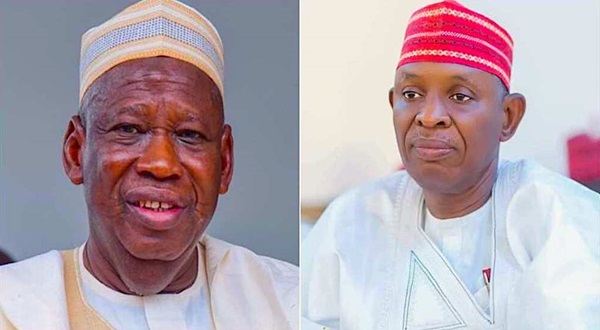
With a heavy heart, I reflect on the recent dethronement of the 15th Emir of Kano, His Royal Highness Alhaji Aminu Ado Bayero. This event marks yet another instance where the government of Kano State has seemingly exercised its power dictatorially. Aminu was dethroned for no reason other than his association with the Ganduje administration. There was no justification for this action other than political disagreements and personal enmity.

This is the second time this government has taken action that deeply affects me. The first was the demolition of business buildings at the Eid praying ground, which caused the loss of billions of Naira worth of properties. This act indiscriminately affected nearly everyone in the Kofar Wambai market, regardless of political affiliation.

Some might argue about Sanusi Lamido Sanusi’s dethronement, which I also believe was wrong. However, at least there were allegations against him, whether true or false. In Aminu’s case, there was no such basis. He has tried to stay out of the political drama, avoiding the turmoil.

One wrong cannot right another. The most troubling aspect of this saga is how quickly the House acted, from proposing the motion to passing the verdict, in stark contrast to the usual legislative process. I recall advocating for gender-based violence laws in Kano State, which took months, if not years, to pass. The double standard is glaring.

The House of Assembly should focus on pressing issues. Our children have performed poorly in the SSCE qualifying exams, and our education system is dire, especially in primary and secondary schools. While I commend the governor for declaring a state of emergency on education, more must be done. Our universities are burdened with a 600 million Naira debt. Yet, the administration is spending 2.7 billion Naira on exotic cars for assembly members, ignoring the plight of the masses who elected them.

Ironically, the member who proposed the dethronement motion has no significant achievements. Many people who share his political affiliation vote for him out of blind loyalty to the party. It’s time we recognise the importance of voting for suitable candidates, regardless of their political views.

Yesterday, it was Sanusi; today, it’s Aminu. Who knows what will happen tomorrow? This cycle of dethronement could continue, with each governor bringing in their emir. What will become of our traditional institutions? Kano is renowned as one of the best Emirates in West Africa, if not the world. If this continues, can we still boast of being the Kano we once were?

Conflicts between the government and the emirate are not new; they date back to the colonial era and span various regimes. The government should find a way to resolve differences with traditional institutions without resorting to dethronement, preserving our history.

Perhaps someday, a governor will return the emirship to the HABE, the original heirs to the throne. There are still descendants of Muhammadu Rumfa and Sarki Muhammad Alwali, the last Hausa king. This, however, is a story for another day. Before anyone questions my loyalty or faith, I am a proud descendant of one of Shehu Dan Fodio’s flag bearers, making me Fulani by genealogy from the Kuninkawa clan.

May Allah bless Kano and its people. May we continue to lead in the political sphere in the north and Nigeria at large.

God bless Nigeria.

Fatihu Ibrahim wrote via fisabbankudi123@gmail.com.