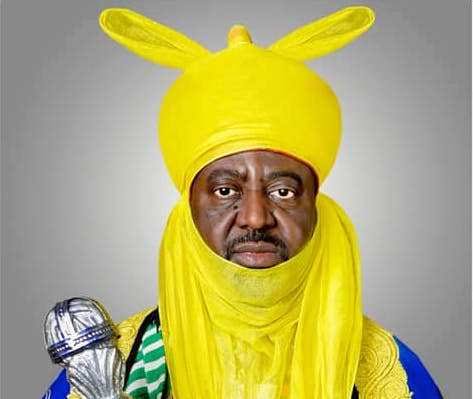
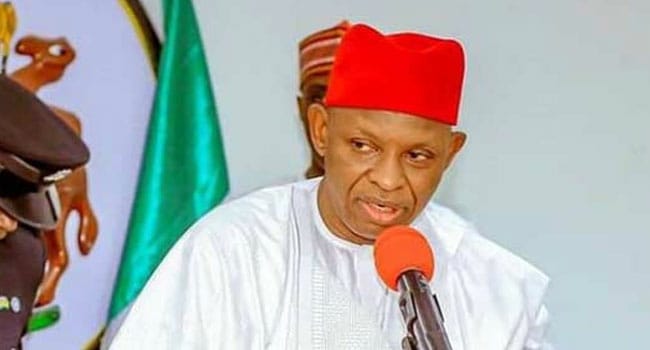
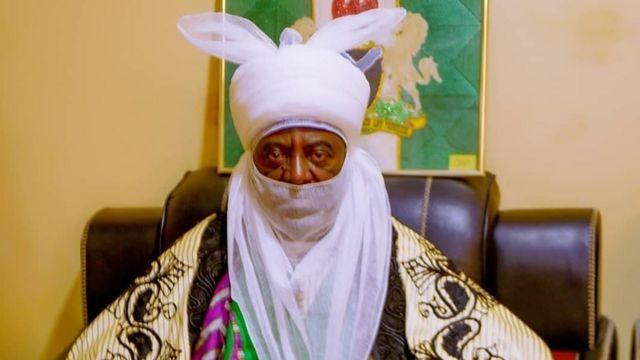
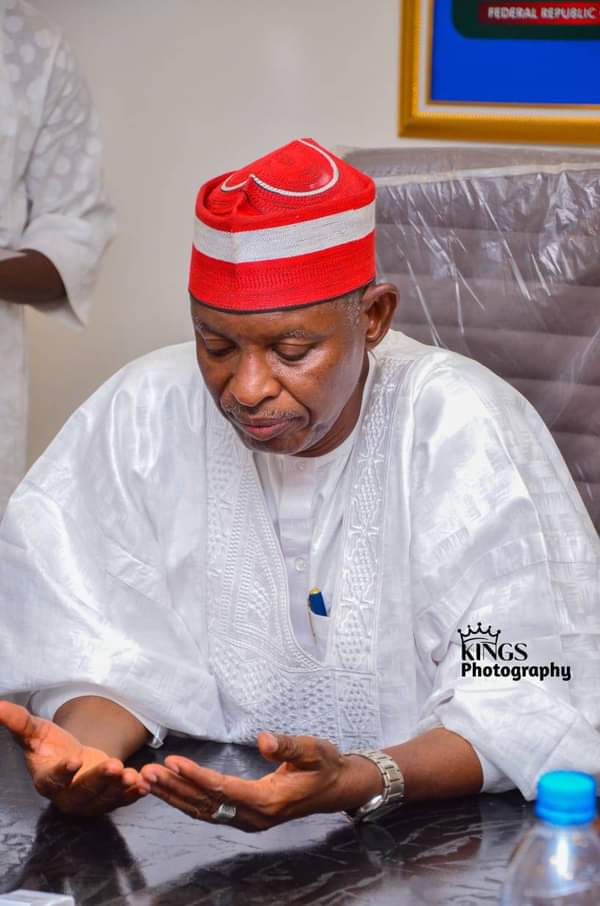
Abba Kabir Yusuf (Gida-Gida)

LGBTQ: An open letter to Kano State Governor, Abba Kabir Yusuf

Dear Government of Kano State, the Kano Emirate, Hisbah Board, and the Kano State Council of Ulamas

Peace be upon you,

An effort is being made to spread LGBTQ advocacy in Kano State in the name of human rights, seeking “freedom” and sustainable livelihoods for our daughters and helping orphans, the needy, and those with special needs.

This advocacy is being spread publicly without shame, disregarding your esteemed positions and influence in Kano State— in schools and neighbourhoods. Shockingly, even government officials were cornered in the name of dialogue or capacity building.

The organization behind this heinous act in our state is the Women Initiative for Sustainable Empowerment and Equality. They refer to themselves as “WISE.” From what we have seen on their platforms, they even have an independent office in Yankaba Kawaji, Bompai GRA, Kano.

In a statement we saw on the pages of this organization, we noted that they once organized a workshop for officials from Hisbah, KAROTA, NDLEA, and others!

If this organization has grown strong enough to gather these officials in one place under the guise of a workshop—regardless of the topic—we fear the influence they have already exerted in our state.

To verify all these, please check their Facebook page named “Wise.”

You might recall the recent uproar over the Samoa Agreement signed by the Federal Government, which is alleged to have come with strings attached, one of which is to allow advocates of LGBTQ, like WISE, to pursue their agenda freely.

This has sparked controversy in Nigeria over the past few days. We have seen how the scholars in Kano stood firm on their pulpits, as we expected, to vehemently condemn this attempt, should it prove true.

This controversy has further revealed that there are laws in our country that outright prohibit any attempt to propagate the agenda of LGBTQ. We have also found solace in the unity of Muslims and Christians in rejecting this thing we collectively see as immorality in our culture and religion.

With this, we call upon the Governor of Kano State, Alhaji Abba Kabir Yusuf, the Emir of Kano, Mallam Muhammadu Sanusi II, the Chairman of Hisbah, Mallam Aminu Daurawa, and the leadership of the Kano State Council of Ulamas, to ensure that this organization, WISE, packs up and leaves our dear state and that its activities are banned by any means possible.

The people of Kano State are your trust! And God will question you about this trust on the Day of Judgment!

We’ve done our part by letting you know about this issue. We have informed you if you were unaware of this organization or its activities.

Misbahu Hamza  

July 7, 2024

Kano declares Monday public holiday to mark new Islamic calendar

By Uzair Adam Imam 

Kano State Governor Abba Kabir Yusuf has declared Monday a public holiday to commemorate the beginning of the new Islamic calendar, 1446 AH. 

The governor urged citizens to reflect on the past year and engage in activities that benefit the community. He also promised that his administration would continue to empower citizens through policies and programs. 

Additionally, he called on Muslims to intensify prayers for peace and progress in the state.

This move comes after the Sultan declared Sunday the commencement of the Islamic New Year 1446 AH. 

Other states like Jigawa have also declared Monday a public holiday for the same reason.

A peep into Kano’s declaration of state of emergency on education

By Sani Surajo Abubakar

Some days ago, Kano Government House was agog with guests from within and outside the country, primarily stakeholders in the education sector who thronged the state to witness the historic declaration of a state of emergency on education by the state government under the stewardship of Governor Abba Kabir Yusuf.


The declaration was necessitated by an alarming proliferation of out-of-school children, with its figure currently at 989,234 for both genders. This situation threatens to rob the entire generation of their education rights and a brighter future.


Dilapidated school structures, lack of instructional materials, a severe shortage of qualified teachers, and inadequate teacher training programs coupled with the socio-economic challenges in basic and post-basic schools across the state made learning and teaching challenging, if not impossible.


Statistics at government disposal indicate that out of the 42516 total classrooms available, a mere 22% meet the basic standard of habitability as nearly four out of every five classrooms in Kano’s primary and secondary schools are marred by dilapidation and disrepair, rendering them unsuitable for the noble pursuit of knowledge.


At the secondary school level, less than 30% of classrooms can be deemed habitable, leaving significant students of such schools grappling with inadequate facilities that impede their intellectual growth and development.


Looking at the science and technical schools, the pathetic story is the same, with less than 20% of classes meeting the essential criteria for habitability, making it difficult to nurture the next generation of scientists, IT experts and engineers when the very environments in which they are meant to learn are ripe with inadequacies and deficiencies.


Passionate and committed to rescuing the education sector from total collapse, on Saturday, 8th of June, 2024, the Kano State Government declared a state of emergency on education to address the critical challenges facing the sector with a clarion call to all the stakeholders to unite and prioritize the revitalization of the education system for the overall benefit of the society.

The cardinal aim of declaring a state of emergency on education was encapsulated in the overall vision for the education delivery in the state as articulated in a statement viz:

Every school, a good school; every child, enrolled in school; every student, an engaged learner; every teacher, a caring educator; every parent, a supportive partner; and your government, a committed investor in human capital development.


The declaration, as envisaged, will enable the government to mobilize resources, implement urgent reforms, and focus on strategic interventions that will rebuild educational infrastructure, provide necessary materials, and reclaim schools from encroachment.  


To ensure effective revitalization of the education sector, restore its lost glory and take Kano State to greater heights educationally, eleven robust commitments are put in place that include;

In the 2024 fiscal year, Kano State has made an unprecedented budgetary allocation of 29.95% to education. This was made based on the fact that significant financial resource allocation will address underfunding problems bedevilling the sector.


Two, for the smooth operation of basic and post-basic schools, restoration has been made for the payment of upkeep and overhead funds for all secondary schools in the state.  The timely release of the funds will allow schools to maintain their infrastructure, procure essential teaching and learning materials, and aid in conducive teaching and learning processes.

Third, plans have been made to build an additional 300 state-of-the-art laboratories across 100 schools in the state. The provision of such needed facilities will go a long way in providing students with hands-on experience in scientific inquiry, fostering a culture of experimentation and discovery needed for their future and success in their chosen endeavours. The provision of laboratories is another 300 earmarked for overhauling 100 secondary schools.

Four boarding secondary schools that were hitherto closed by the immediate past administration are to be reopened and re-boarded within the next academic year. Such schools provide a supportive environment for students, particularly those from remote areas or economically disadvantaged backgrounds.


Five, to consolidate the drive to improve the education sector, approval has been granted for a comprehensive renovation of all primary and secondary schools in the nooks and crannies of the state in the subsequent two academic sessions. In this regard, the Community Re-orientation Committee (CRC), Kwankwasiyya, Lafiya Jari, and Kano Pro-PA will handle minor repairs, while the Ministry of Education, State Universal Basic Education Board (SUBEB) will shoulder all major repairs through competitive bidding.


Six, to achieve the commitment of clearing out of school children roaming the streets, 28,264 additional classrooms will be built across the state within the next three years to accommodate such children through the supervision of the Ministry of Education, SUBEB, and to be monitored by the Ministry of Project Monitoring.


Seven, to make pupils engage learners with utmost attention in their classrooms, arrangements are made to distribute free one-meal per pupil per day in all primary schools. The CRC, assiduously working as preparations, has hired cooks for the home-grown feeding program. This is in addition to the plan to re-introduce the distribution of free uniforms to all primary I pupils in all primary schools in the state.


Eight, to show a solid commitment to tackling teacher shortage and positively adjusting the students/teacher ratio, 5632 BESDA (Better Education Service Delivery for All) teachers were fully employed. Also, the governor has approved hiring an additional 10,000 teachers to go ahead with SUBEB to chart a training roaster for all teachers in the state government’s employment.


Nine arrangements are going on to commence the renovation of schools affected by fire outbreaks in the last eight years in Madobi, Gaya, Ajingi, Kiru, Dawakin Tofa, Kano Municipal, Gezawa, Kabo, Gwarzo, Dambatta and Bichi local governments respectively.

Similarly, in his second tenure, 44 schools for Islamic Studies and 44 Technical Colleges initiated by Senator Rabiu Musa Kwankwanso would be completed and put to use in earnest.

Ten, to boost the morale of teachers and prioritize their welfare for quality service delivery, approval has been granted for the disbursement of the sum of three hundred million naira as a revolving soft loan to primary school teachers in the state.


Eleven, as a government with a resolve to project Girl-Child-Education and reduce pressure on parents to transport their girls’ children to schools daily, 70 high-capacity buses are shuttling in the Kano metropolis for such purpose.


All the commitments stated above are in addition to other feats achieved that range from sponsoring 1001 first-class degree graduates for foreign post-graduate studies; settlement of registration fees for Kano indigenes studying in various higher institutions of learning across the nation; payment of NECO and NBAIS fess; renovation and upgrade of two bilingual academies of French and Chinese located at Kwankwaso town and Niamey, capital of Niger Republic to mention but a few.


With the above-stated commitments and concerted efforts of all the relevant stakeholders, one can optimistically conclude that Kano State has begun a journey of education transformations.

Sani is an Assistant Chief Information Officer at Government House, Kano

The Kano throne dilemma

By Ibrahim El-mu’azzam 

Four years ago, we witnessed the removal of Mallam Muhammadu Sunusi II as the Emir of Kano and the splitting of the Kano emirate a few months earlier. As they say, what goes around comes around.

Since then, many people have prayed, predicted, and foreseen that the action would be reversed. Thanks to time and destiny, we are now witnessing the return of the Emirates to one and the reinstatement of Muhammadu Sunusi II to Gidan Rumfa and the throne of Dabo. People forget too soon; if not for that, this wouldn’t have made these trends and surprises.

Muhammadu Sanusi II was legally appointed as the 14th Emir of Kano by Gov. Rabi’u Kwankwaso in 2014, following the passing of Alhaji Ado Bayero, the 13th Emir of Kano. Although he initially faced the usual opposition from some people, his appointment was eventually accepted by all, including the family of his predecessor, the Emirate council, the people of Kano, and the global community.

After about six years, a personal-political misunderstanding arose between him and the then-government of Dr Abdullahi Ganduje. This personal-political interest had no adverse effect on the Emirate or the good people of Kano state. However, despite calls from respected individuals and institutions worldwide, as well as a court order, Ganduje, in a display of power, divided the ancient Kano kingdom into five different kingdoms and proceeded to dethrone Sunusi on groundless grounds.

Ganduje didn’t stop there. He took the former CBN governor, the 14th Emir of Kano, an Imam, and the chartered Economist to Loko and later to Awe villages in Nasarawa state, where there was reportedly no stable electricity and water supply. His actions were only halted by the intervention of Malam Nasiru El-Rufa’i, the then-governor of Kaduna state.

You see, I’m not a big fan of SLS. I disagree with some of his takes, but this is an apparent disrespect and damage not only to him but also to the Kano Emirate, the people of Kano, and the entire Kingdoms of Shehu Usmanu Ɗanfodiyo. It pained me more to divide the Kingdom into pieces than to even dethrone the King.

Alhaji Aminu Ado succeeded the central Kano Emirate and performed admirably. I admire his personal qualities, demeanour, lifestyle, and effective handling of the throne. I often tell people that Sarki Aminu Ado embodies more of the traditional King’s character than Sarki Sunusi II. But sad, Aminu Ado was alive and well when his father, Bayero, the 13th Emir, passed away, and Sunusi was appointed. Despite Aminu’s charisma, love of the people, and competence, Sarki Sunusi was chosen by the Almighty to ascend to the Kano throne.

Ever since the campaign of the current governor of Kano state, Engr. Abba Kabir Yusuf, there have been suggestions to reinstate Sunusi and restore the Kingdom to its previous state. I supported this idea, but I didn’t fully agree with the decision to remove the Kano Emir again. I wanted the Kingdoms to be returned, with Aminu continuing as the King. I hoped Sunusi would oversee and move forward, especially with the furtherance that occurred and continue to befall him, like the Khilafa of Tijjaniya and more. I strongly oppose the idea of our honourable Kings to be played like toys by democratically elected governments. I even think of how unaware people were when the law of dethroning a King was made like this.

Although I have some doubts, I wanted everything to be very amicable, especially since all the parties are descendants of Malam Ibrahim Dabo—the same family, living in the same house and sharing the same bloodline. However, Sunusi’s return and acceptance of the reinstatement should not be blamed.

Firstly, for Emir Sanusi, it’s a repetition of history. The same thing happened to the King whose name he bears, Muhammadu Sunusi I. So, to cleanse their lineage of misfortune and bad luck, he can take this as a starting point.

Secondly, he was the last occupant of the undivided Kano throne. It is suggested that the five created kingdoms should be dissolved. Sarki Aminu has not been sworn in for the undivided Kano kingdom. If he is the one to continue, there must be an elevation that extends the continuity of the process. With this, reinstating Sunusi is more legal and straightforward. 

Furthermore, if Aminu is to continue, it will likely be forever prohibited for Sarki Sunusi to visit his origin, the Gidan Dabo. This is a hardly bearable consequence with the opportunity at Sarki Sunusi’s disposal. More importantly, everything is believed to be done on baseless grounds.

We should be reminded that the ultimate desire of every heir to a throne is to be crowned. In addition, Sarki Sunusi’s got the government at hand, the similar power that dethroned him before. Therefore, I don’t view this action as wrongful but rather corrective. The criticisms of Sarki Aminu’s supporters are expected and accepted.

Dr. Ganduje, the prior architect of the dilemma, is currently in a position where he has to watch everything unfold. He is even facing challenges in his current role. Whether he initiated this with a positive or negative mind, it’s up to him to reap. The important lesson to remember is that power is transient. If you have it now, use it wisely; it may turn against you in the future.

In conclusion, it is very significant to call on the Sultan, the high-ranking Emirs, and other stakeholders to address the law that allows Governors to singlehandedly dethrone their Emirs. It doesn’t make sense at all. These Emirs were the foundation. They founded these communities and controlled them for centuries. Then why on earth should a borrowed phenomenon dominate the founding one? Why should an Emir be selected or dethroned without the consent, not even the approval, of the Sultan or his Emirate council? This is the major issue that needs to be addressed.

For Gidan Dabo. Sarki Sunusi, Sarki Aminu, and Sarki Nasiru, you all come from that house. It’s your base and heritage. Why would you allow the government or any external party to distort your peace and relationships?

Sarki Sunusi and Sarki Nasiru lived in the same room for over a decade. Sarki Sunusi’s first wife, Sadiya Ado Bayero, is a biological sister to Sarki Aminu and Sarki Nasiru. Sarki Ado Bayero was on good terms with Sarki Sunusi I. It’s your family. Why would you let an outsider tear you apart? Assume the government dethroned Sarki Sunusi II in the first place, and you all disagree with it; none of you accepted it. Can Ganduje give it to an outsider? “Sai bango ya tsage ƙadangare ke shiga” – “It’s when the wall cracks that a lizard gets a passage,” as Malam Bahaushe says. Please give this a concerned look.

I believe it’s high time for the Emirs and Kings of our respective Kingdoms in Nigeria to stand firm in upholding their dignity and that of their kingdoms. It’s hard to believe that an Emir needs the consent of his local government chairman for his outings and some of his activities. I understand the importance of the position of a local government chairman, but when compared to that of an Emir or a King, there’s a clear distinction. Let’s face reality, set aside selfishness and personal interests, and work together for the betterment of our lands.

A person’s power is his greatest enemy. He either uses it well, or it uses him well.

Sarki Muhammadu Sunusi II (the 14th and 16th Emir of Kano), may Allah protect and guide you. Sarki Aminu Ado, Sarki Nasiru Ado, and the others, may the Almighty accept the right you have done and overlook the wrong. May the blessings of the Almighty be upon all of you for eternity.

Ibrahim El-mu’azzam wrote via elmuazzammail@gmail.com.

Court adjourns hearing on Kano emirship tussle

By Uzair Adam Imam

The Federal High Court sitting in Kano has adjourned the hearing regarding the removal of Kano Emir Aminu Ado Bayero to June 13, 2024.

The lawsuit, filed by Aminu Babba Dan’agundi, a title holder and senior counsellor in the Kano emirate, challenges the repeal of the 2019 Emirate Council Law by the Kano State House of Assembly.

Presided over by Justice Abdullahi M. Liman, the court has set the case for ruling on June 13, 2024. Aminu Babba Dan’agundi, represented by Barrister M. S. Waziri, argues that the repeal of the 2019 law unlawfully stripped both the Emirate Council and the plaintiff of their powers.

Counsel to the 1st and 4th respondents, Mahmoud Abubakar Magaji SAN, urged the court to decline jurisdiction to entertain the matter, citing that the law has gone through legislative processes and the order was made after the action was done.

Ibrahim Isah Wangida, counsel to the 2nd and 3rd respondents, aligned himself with Magaji’s submission, stating that the applicant’s rights were not breached as the 2024 law was repealed and accented to before the applicant filed the action.

Sunday Ekwe, counsel to the 5th and 6th respondents, stated that they did not file any issue on jurisdiction, as the duty of the police is to maintain peace and wait to carry out the court’s order.

The court requested written submissions from both sides and will review them before rendering a decision on June 13.The respondents in the suit include the Kano State Government, Kano State House of Assembly, Speaker of Kano State House of Assembly, Attorney General of Kano State, Kano Commissioner of Police, Inspector General of Police, NSCDC, and DSS.

This legal battle is part of a larger crisis revolving around the emirship in Kano, following the dethronement of Aminu Ado Bayero and the reinstatement of Muhammadu Sanusi II by the Kano State government, creating tensions in the ancient city.

Currently, both emirs are holding court from separate palaces, with Sanusi operating from the main emir’s palace and Bayero presiding from the Nasarawa GRA mini palace.

Reinstatement of Emir Muhammadu Sanusi II and the resurgence of thuggery in Kano

By Aliyu Dalhatu Adamu

Kano people are known as peace-loving, as inculcated by the longest-serving Emir of the kingdom, Alhaji Ado Bayero,who led for over 50 years. His charisma and love for his people made him unique among all African traditional rulers. 

Kano people were traumatised by His Highness Alhaji Ado Bayero’s demise in June 2014, and the loss remained irreplaceable until 2020 when His Highness Alhaji Aminu Ado Bayero became the Emir of Kano. His emergence renewed the hope of the Kano people because he exhibited the same characteristics as his father. This makes him earn the love that people have for his father, which no one has in Kano.

The recent development of the Emir and reinstatement of the deposed Emir Sunusi Lamido Sunusi have seriously disrupted peace and stability in the state. This has opened doors for hooligans and thugs to widen their operations in the state.

It is a known fact that hooliganism and thuggery threaten the security of lives and property in every society. Hence, leaders are saddled with the responsibility of maintaining law and order to prevent potential offenders from engaging in such acts. 

It is unfortunate to say that the current administration of Governor Abba Kabir Yusuf has begun to do the other way around, as hoodlums and thugs are allowed to take over the Kano palace in the name of protecting the selfish and politically motivated interest of his political godfather. This has become a serious threat to the peace and safety of people in Kano as the hoodlums are harassing and intimidating people at will within the vicinity of the Kano Emir’s palace, all in the name of imposing Sunusi on the throne, which is facing outright absolute rejection by the good people of Kano.

This unbecoming attitude is becoming an eye-opener for young children who are now growing to witness this evil as a condoned behaviour. This may contribute to making hooliganism a wider phenomenon, a useful symbol, and a social obsession in the future tradition of the Kano Emirate traditional system.

Since the reinstatement of Sunusi Lamido Sunusi to Gidan Dabo, the palace and areas such as Kofar Kudu, Kano Municipal, Gwale, Dala, and the surrounding areas become the headquarters of thugs. Even medical workers at Hasiya Bayero Paediatric Hospital were attacked on the 27th of May, 2024. The Nigerian Medical Association (NMA) issued a statement condemning the barbaric development. Many other people living in the neighbourhood are not spared either.

This situation arose when the city’s public spaces were “swarming” with thousands of newly armed groups mandated to “protect” and pay allegiance to Emir Sunusi. These groups were recruited by the Kano state government only to praise their political master at the detriment of public safety.

Indeed, Gov Yusuf’s incompetence, ineptness, and clueless leadership style are undoubtedly taking Kano back to square zero. The pickle of the Kano emirship brawl is a cessation of Kano peace and stability as a courtesy to Senator Rabi’u Musa Kwankwaso, former Governor of the state Kwankwaso, by Governor Yusuf and the former Emir Sunusi Lamido Sunusi, in a bid to drag Kano to the state of anarchy. 

Hooligans also came to represent the dangers inherent in loosening constraints on society. Even when hooligans victimised people far from their concerns, the increase in their numbers, the apparent pettiness of their motives, and the savagery of their actions within Gidan Dabo suggested that certain members of the lower classes were either very beastly or very angry and that the mechanisms of state’s control were no longer in place to checkmate this.

Now, what we ask is, does the state government prioritise praising its political godfather over protecting the blood of theKano people?

Ironically, hooliganism and thuggery that previous administrations fought have now been revived by the present administration as the number 2IC in the government triggered the infiltration and indoctrination of youth into hooliganism and thuggery.

On this note, we are calling on the federal government, security agencies, intelligence communities, Nigerian Bar Association (NBA),  northern traditional rulers, religious leaders and all other relevant authorities to intervene. They should also advise the Kano state government to obey the court order restraining them from reinstating the deposed Emir Sunusi Lamido Sunusi and dissolving the remaining four Emirates in the interest of the good people of Kano. This will bring an end to hooliganism, public disrespect, defiance, chaos, and violence that are capable of destabilising the peace and security of Kano State.

Aliyu Dalhatu Adamu wrote from the Federal University, Dutsinma, Katsina State, via

aliyudalhatuadamu@gmail.com.

Preserving our heritage: The dethronement saga in Kano State

By Fatihu Ibrahim

Sometimes, our directionless life in Nigeria amazes me. Although we were once ruled by British colonists, we adopted the American presidential system, which is not only costly but also ineffective for our country.

With a heavy heart, I reflect on the recent dethronement of the 15th Emir of Kano, His Royal Highness Alhaji Aminu Ado Bayero. This event marks yet another instance where the government of Kano State has seemingly exercised its power dictatorially. Aminu was dethroned for no reason other than his association with the Ganduje administration. There was no justification for this action other than political disagreements and personal enmity.

This is the second time this government has taken action that deeply affects me. The first was the demolition of business buildings at the Eid praying ground, which caused the loss of billions of Naira worth of properties. This act indiscriminately affected nearly everyone in the Kofar Wambai market, regardless of political affiliation.

Some might argue about Sanusi Lamido Sanusi’s dethronement, which I also believe was wrong. However, at least there were allegations against him, whether true or false. In Aminu’s case, there was no such basis. He has tried to stay out of the political drama, avoiding the turmoil.

One wrong cannot right another. The most troubling aspect of this saga is how quickly the House acted, from proposing the motion to passing the verdict, in stark contrast to the usual legislative process. I recall advocating for gender-based violence laws in Kano State, which took months, if not years, to pass. The double standard is glaring.

The House of Assembly should focus on pressing issues. Our children have performed poorly in the SSCE qualifying exams, and our education system is dire, especially in primary and secondary schools. While I commend the governor for declaring a state of emergency on education, more must be done. Our universities are burdened with a 600 million Naira debt. Yet, the administration is spending 2.7 billion Naira on exotic cars for assembly members, ignoring the plight of the masses who elected them.

Ironically, the member who proposed the dethronement motion has no significant achievements. Many people who share his political affiliation vote for him out of blind loyalty to the party. It’s time we recognise the importance of voting for suitable candidates, regardless of their political views.

Yesterday, it was Sanusi; today, it’s Aminu. Who knows what will happen tomorrow? This cycle of dethronement could continue, with each governor bringing in their emir. What will become of our traditional institutions? Kano is renowned as one of the best Emirates in West Africa, if not the world. If this continues, can we still boast of being the Kano we once were?

Conflicts between the government and the emirate are not new; they date back to the colonial era and span various regimes. The government should find a way to resolve differences with traditional institutions without resorting to dethronement, preserving our history.

Perhaps someday, a governor will return the emirship to the HABE, the original heirs to the throne. There are still descendants of Muhammadu Rumfa and Sarki Muhammad Alwali, the last Hausa king. This, however, is a story for another day. Before anyone questions my loyalty or faith, I am a proud descendant of one of Shehu Dan Fodio’s flag bearers, making me Fulani by genealogy from the Kuninkawa clan.

May Allah bless Kano and its people. May we continue to lead in the political sphere in the north and Nigeria at large.

God bless Nigeria.

Fatihu Ibrahim wrote via fisabbankudi123@gmail.com.

BREAKING: Dethroned Bayero occupies mini-palace in Nassarawa

By Uzair Adam Imam

Alhaji Aminu Ado Bayero, the dethroned Emir of Kano, has returned to the ancient town and taken up residence in a palace in Nassarawa, fueling confusion and tension.

His return came in the early hours of Saturday, when his aircraft landed at Aminu Kano International Airport at around 4:30 am.

Upon his arrival, Bayero was greeted by a large crowd of supporters, who chanted verses from the Holy Quran, including Surah Al-Fatihah: “It is You we worship and You we ask for help.”

His convoy then made its way through the city, eventually arriving at the mini-palace in Nassarawa, where he has taken up residence.

Meanwhile, Sanusi II has taken over the traditional Gidan Rumfa palace, which has been the seat of the Emir of Kano for centuries.

Both palaces are now under heavy security cover, as the situation remains tense and uncertain.

Return of Sunusi: The dilemma ahead

Mohammad Qaddam Sidq Isa (Daddy)                     

The return of Muhammadu Sunusi ll as Sarkin Kano is yet another manifestation of the influence of politics on the traditional Masarauta establishment, which, after all, has always been used and abused by politicians.

Since the British conquest of the Usman Dan Fodio Islamic sultanate in what subsequently became part of today’s northern Nigeria, the enthronement and dethronement of emirs (Sarakuna) have always been motivated by underlying political interests. 

Throughout the colonial era, the British would only enthrone aspiring princes deemed the most loyal to the British colonial establishment as leaders of their respective emirates. This practice enabled them to maintain their colonial grip through those proxy-Sarakuna. And since then, successive generations of military and civilian administrators have followed suit, enthroning and dethroning Sarakuna literally at will. 

The only shift in this regard is that, in the past, the influence of political leaders would mostly come to play only when a throne became vacant mainly due to the death of the Sarki, when the incumbent governor would influence the emergence of his successor, as it happened in 2014 in Kano that led to the enthronement of Sunusi. However, now that the trend is becoming systematic, it will indeed, if left unchecked, render the reins of Sarauta effectively tenured, subject to the tenure of the governor behind it. 

After all, just like his enthronement in 2014 by then-Governor Rabiu Musa Kwankwaso and his subsequent dethronement in 2020 by then-Governor Abdullahi Umar Ganduje, Sarki Sunusi’s return to the Kano throne remains politically motivated within the context of the power struggle in Kano politics between Kwankwaso and Ganduje, two provincial vindictive enemies hell-bent on finishing off each other.  

By the way, as a subservient Kwankwaso ‘boy’, Governor Abba Kabir Yusuf himself is a mere fighting tool in the hands of his godfather in the struggle. 

Interestingly, Kwankwaso has tactically put his vengeful mission against Sunusi on hold for now, pending finishing off Ganduje and his legacy. 

Sunusi incurred then-Governor Kwankwaso’s wrath as a then-Lagos-based bank executive when he kept dishing out disparaging criticisms against Kwankwaso and his government. For instance, in an article he titled “The Kwankwaso Phenomenon”, Sunusi described then Governor Kwankwaso as a “rural aristocrat” who “surrounds himself with provincials and places key posts in the hands of rural elite”. He also compared Kwankwaso’s government to “the classic comedy of the Village Headmaster in a village council”. 

Kwankwaso got mad at Sunusi and demanded his sacking by his then-employer, United Bank for Africa (UBA). He threatened to stop his government’s dealings with the bank in case of non-compliance. 

Anyway, now that Sunusi is back, it remains to be seen how it plays out between him and Governor Abba, considering Sunusi’s penchant for publicity stunts involving controversial utterances against government policies and wrongdoings. 

As much as Sunusi is excited about his return to the Kano throne, the development represents a tricky dilemma for him that also tests his supposed commitment to outspokenness against government wrongdoings. 

On the one hand, Governor Abba won’t tolerate his stunts in the name of outspokenness; no governor will, either. And unless he (Sunusi) has, this time around, decided to desist from his stunts to keep his throne, Governor Abba, under Kwankwaso’s influence, won’t hesitate to go to any extent, including dethronement, to deal with him. 

On the other hand, his distance from his stunts would undoubtedly mean the end of the reputation he has somehow earned as an outspoken critic of government wrongdoings.  

Mohammad wrote from Dubai and can be reached via mohammadsidq@gmail.com.

The return of Sanusi

By Aliyu Nuhu

I have read the amended Kano Emirates law, which was brief, concise and straight to the point, to achieve certain ends. It is a promise fulfilled by the new NNPP government. Engr. Rabiu Musa Kwankwaso had said time without number that if elected, the government would repeal the Dr Abdullahi Umar Ganduje-led Emirates laws.

If Governor Abba Kabir Yusuf signs the amendment into law (which is a certainty), it will remove the present emirs from their offices and return all the Ganduje creation of first-class emirs back to district heads (hakimai). The affected emirs are those of Gaya, Rano, Karaye and Bichi.

The new law gives the governor the power to either re-appoint them hakimai or remove them and search for new ones.

Until the coming of this new law, I thought that Muhammadu Sanusi II’s return was impossible, as it had no precedence in the history of the Kano emirate. But after talking to officials and people who know the workings of the government, it appears certain that Sanusi will return to his throne, in fact, soon enough to preside over the coming Eid-Kabir prayer. 

Nothing is certain yet, but nothing is impossible, thanks to political intrigues and the need for the new government to reverse Ganduje’s legacies. There is no love lost between Kwankwaso, Abba, and Ganduje.

For my own views, I support the amendment of the Emirates laws and the return of a strong Kano emirate, but I don’t support Sanusi’s return as emir of Kano. The current Emir of Kano, Aminu Ado Bayero, is doing well and is loved by the people. 

I don’t support Sanusi’s return. I know he has not learned a lesson and will still come back and meddle with Kano politics, attack Abba and his government, and continue shooting his mouth as if he is an ordinary person. People who sit on the Kano throne don’t talk too much. He must also not try, like his grandfather did to Sardauna, to outshine the Kano state governor.

In history, there was an incident where the then-Emir Muhammadu Sanusi shamed Sardauna in the Kano race course parade ground by attracting a standing ovation with the Sardauna seated. The premier of Northern Nigeria considered it an affront to himself as the Emir stole the spotlight by arriving in full splendour and pageantry, and the whole assemblage had to stand up for the Emir in traditional homage and honour. It was a percussion to the dethronement of Emir Sanusi of Kano.

The grandson Sanusi Lamido Sanusi has inherited those tendencies from his grandfather, and I daresay when it comes to attacking and criticizing the government, Kwankwaso/Abba don’t have the patience, and if you like to call it table manners of Ganduje. They will throw out Sanusi in a blink of an eye.

They said a leopard never changes its colours. But time will tell.

Until then.