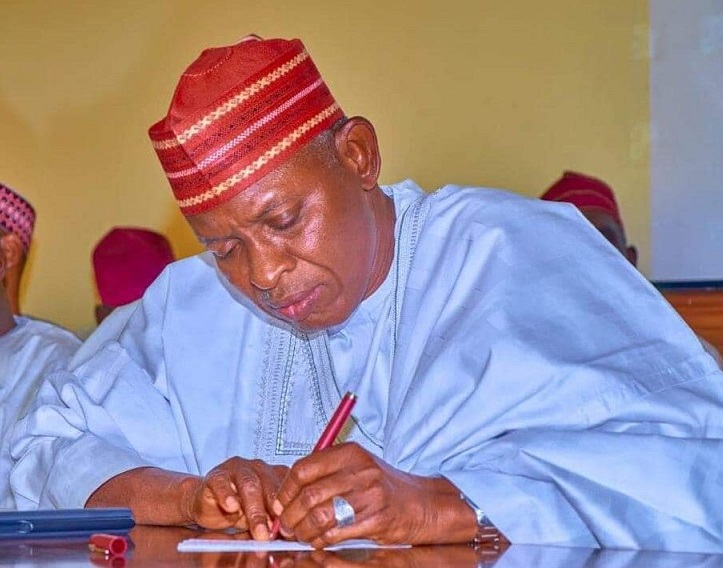
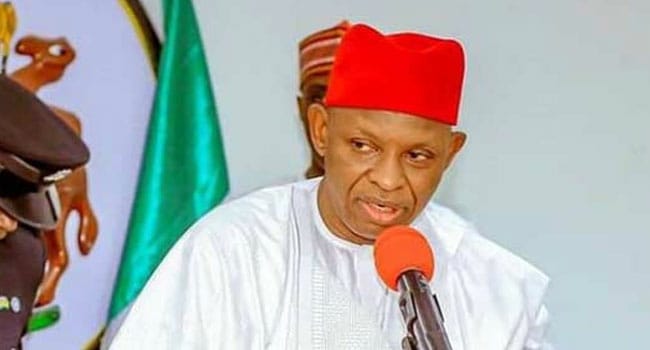
Abba Kabir Yusuf (Gida-Gida)

Governor Abba K. Yusuf’s admin under scrutiny: Mismanagement and controversies rock Kano

By Umar Sani

Governor Abba Kabir Yusuf’s tenure in Kano State has been marked by a series of controversies and challenges, with the most recent scandal surrounding the Ramadan feeding program shedding light on broader issues of governance, priorities, and accountability. As we delve into the intricacies of these matters, it becomes evident that there are systemic failures that need to be addressed urgently to restore public trust and ensure effective governance in Kano.

The Ramadan feeding program scandal serves as a microcosm of the larger issues plaguing Governor Yusuf’s administration. This program, which is meant to provide essential support to the less privileged during the holy month of Ramadan, has instead been tainted by allegations of corruption, mismanagement, and inhumane practices. Reports indicate that resources allocated for the program have been misappropriated, with food meant for the needy ending up in the hands of those who are already well-off. Furthermore, there have been disturbing revelations of substandard food being distributed, posing health risks to the recipients.

Such egregious mismanagement not only squanders public funds but also undermines the intended purpose of welfare programs, which is to alleviate poverty and provide a safety net for society’s most vulnerable members. It reflects a blatant disregard for the welfare of the people and a failure to uphold the principles of transparency and accountability in governance.

However, the issues plaguing Governor Yusuf’s administration extend beyond the mismanagement of specific programs. There are deeper underlying problems related to governance, priorities, and political dynamics that must be addressed comprehensively.

One key issue is the misplacement of priorities. Despite the pressing need for investment in critical sectors such as healthcare, education, and infrastructure, resources have been diverted towards superficial endeavours associated with Governor Yusuf’s political agenda. The phenomenon of Abba Gida Gida, characterized by flashy projects and grandiose gestures, has overshadowed genuine efforts to address the socio-economic challenges facing Kano State.

The emphasis on political symbolism over substantive governance reflects a fundamental disconnect between the government and the governed. Instead of focusing on initiatives that have a meaningful impact on people’s lives, Governor Yusuf has prioritized activities that serve his political interests and consolidate his power base. This shortsighted approach not only undermines the credibility of the government but also exacerbates the suffering of the ordinary citizens who bear the brunt of poor governance.

Moreover, Governor Yusuf’s close association with the Kwankwasiyya political movement has further complicated governance in Kano State. While political alliances are a common feature of Nigerian politics, the tight grip of Kwankwasiyya on the state’s affairs has stifled dissent and marginalized opposing voices. This monopolization of power has created a culture of impunity where accountability is sacrificed at the altar of political expediency.

The entrenchment of Kwankwasiyya in Kano’s political landscape has also fueled factionalism and polarization, undermining efforts to foster unity and inclusivity. Instead of governing for the collective good, Governor Yusuf has been preoccupied with consolidating his grip on power and silencing dissenting voices within his own party and the opposition.

Furthermore, the lack of effective checks and balances has enabled corruption and malfeasance to thrive unchecked. The absence of independent oversight mechanisms has emboldened corrupt officials to exploit public resources for personal gain, exacerbating the state’s economic woes and widening the gap between the rich and the poor.

To address these challenges and chart a path towards genuine reform, Governor Yusuf must demonstrate a commitment to transparency, accountability, and inclusivity in governance. This requires a paradigm shift away from political patronage and towards evidence-based policymaking that prioritizes the needs of the people above partisan interests.

In addition, there is a need for robust institutions and mechanisms to curb corruption and hold public officials accountable for their actions. This includes strengthening anti-corruption agencies, empowering civil society organizations, and promoting a culture of transparency and accountability across all levels of government.

Moreover, Governor Yusuf must prioritize investments in critical sectors such as healthcare, education, and infrastructure to improve the quality of life for all citizens. This requires prudent resource management and strategic planning to ensure that public funds are utilized efficiently and effectively to address the most pressing needs of the population.

Furthermore, Governor Yusuf should endeavour to build bridges across political divides and foster a spirit of inclusivity and cooperation in governance. This means reaching out to opposition parties, civil society groups, and other stakeholders to solicit their input and support in addressing the state’s challenges.

Ultimately, the road to meaningful reform in Kano State will require courage, vision, and a genuine commitment to the principles of democracy, good governance, and social justice. Governor Yusuf has a historic opportunity to leave a positive legacy by addressing the root causes of the state’s problems and charting a new course towards prosperity and progress for all its citizens. However, this will require bold leadership and a willingness to challenge the status quo in pursuit of a brighter future for Kano State.

Umar Sani wrote via umarhashidu1994@gmail.com.

Group lambasts Governor Yusuf for alleged cover-up amidst governance failures

By Uzair Adam Imam

A political movement based in Kano, Arewa Renaissance Front (ARF), has criticized Governor Abba Yusuf for levying what they term as unfounded accusations against Dr. Abdullahi Umar Ganduje, the National Chairman of the All Progressives Congress (APC).

ARF accused Yusuf of using unsubstantiated claims against the former governor as a shield to conceal his own failure in meeting the expectations of the people.

In a statement released by Aminu Gawama, the Secretary-General of ARF, the group alleged that Yusuf, along with his political mentor, former governor Rabiu Musa Kwankwaso, are engaged in a vendetta against Ganduje.

According to the statement, these allegations were merely propaganda orchestrated by state-owned entities to divert attention away from the glaring inefficiencies and lack of direction in Yusuf’s administration.

The statement further highlights the public’s growing frustration with Yusuf’s tenure, questioning his accomplishments despite the ample fiscal resources available to the state. ARF denounced the judicial commissions of inquiry initiated by Yusuf to probe Ganduje’s tenure, labeling them as biased and aimed solely at depleting state resources.

ARF also condemned Yusuf’s selective targeting of Ganduje’s administration while absolving Kwankwaso’s tenure from scrutiny, characterizing it as a futile attempt to mislead the populace.

Military can end Nigeria’s security crisis

By Uzair Adam Imam

Former Minister of Defence and National Leader of the New Nigeria People’s Party (NNPP), Sen. Musa Kwankwaso, has emphasized the capability of the military to effectively address the prevailing security challenges in Nigeria, provided with the requisite support.

Speaking to journalists after the NNPP National Executive Committee meeting in Abuja, Kwankwaso underscored the pivotal role of the Federal Government in addressing the security crisis while urging Nigerians to actively contribute by providing crucial information to security agencies.

Drawing from his extensive experience in security matters as a former Minister of Defence and Chief Security Officer of Kano State, Kwankwaso emphasized that the gravity of the situation necessitates the involvement of the Nigerian military.

He stressed that alternative security measures, such as state-led initiatives, fall short of addressing the magnitude of the crisis.

Highlighting the dire consequences of the security challenges, including disruptions to agricultural activities and rampant abduction of innocent civilians, Kwankwaso urged collective efforts towards restoring peace and security in the country.

Asserting his party’s readiness to tackle the nation’s problems, Kwankwaso positioned the NNPP as a beacon of hope for Nigerians disillusioned by the failures of the All Progressives Congress (APC) and the Peoples Democratic Party (PDP).

Echoing Kwankwaso’s sentiments, Kano State Governor Abba Yusuf urged unwavering dedication among party members, emphasizing the need for wholehearted commitment to the NNPP’s vision for a better Nigeria.

In search of a link between some Hisbah operations and Shari’a implementations

Isma’il Hashim Abubakar

A few weeks ago, the Kano State Hisbah Board stole the limelight when a brief misunderstanding erupted between the Kano State Governor, Abba Kabir Yusuf, and the Hisbah leadership. The Muslim public, represented by religious leaders and the elite, played a significant role in calming tensions and restoring peace in the issue, which everyone welcomed with sincere happiness and unique hope that the short altercation would result in the promotion and reinforcement of Hisbah. 

In the two articles I penned within the clusters of that misunderstanding, I stressed that Hisbah is virtually the only government institution that transcends abstract symbolism and remains the lively organ that operationally contributes to the implementation of the Shari’a project, which was once the highest ambition of the Nigerian Muslims. I emphasised that all Muslims should regard Hisbah as their delicate property that should not be, in the least, jeopardised by internal or external commissions, omissions or inactions of any individual, no matter how highly placed, let alone common people who can just be dealt with and cracked down by responsible leadership.

One of the top functions of Hisbah is to serve as a machinery that supports the process of Shari’a implementation by deterring people from committing crimes, apprehending suspects, and presenting them before Shari’a courts for proper investigation and ruling. Of course, at different stages, Hisbah commendably serves as a forum for reconciliation and solving social disputes, which at times pleases and satisfies opposing parties in a better way than courts do. Nonetheless, this is never an excuse for the institution if it operates so that its effort to intervene in matters and find solutions for them becomes counterproductive to the letter, spirit and goals of Shari’a, which the board was primarily established to protect. 

Although preserving dignity is a principle that characterises Hisbah’s operations, as a government force backed by law, the board is not expected to provide cover or leeway for criminals to evade the wrath of the law. Shari’a will cease to have its proper meaning if criminals assume they are not to be treated as culpable and should, in principle, be deterred from, cautioned against, or punished for flouting Islamic law. 

In light of how some Hisbah officials handle cases both at the headquarters and various branches in the 44 local governments, some categories of criminals now utilise Hisbah to get their crimes tacitly covered as they further pursue their fiendish goals by conniving with or approaching some elements within the board. They no longer fear legal penalties that their crimes could lead them to, but could even summon the courage to approach the board to confess their crimes and demand certain rights that may have followed the consequences of their crimes. 

To be clearer, by citing examples, in a recent report I watched, which was broadcast by Tozali Magazine Online TV, a Chinese master in a company in Kano impregnated the daughter of his driver. When this crime was unmasked, the people involved tried several ways to abort the six-month pregnancy. After failing to get rid of the mess since medical experts refused to conspire with the Chinese fellow and his illegitimate in-laws, the case was taken to Hisbah, who is said to have searched for a solution for them. 

The report has it that the Hisbah leadership has resolved that the Chinese man, who earlier sought to silence his poor driver through pecuniary consolation, should just now marry the girl despite her heavy pregnancy so that the matter would be put to rest. If this report is true, with all its attendant jurisprudential intricacies, similar to what has allegedly occurred repeatedly in several branches of the morality police, then the institution needs to review its operations. 

As a Shari’a implementation body, when a suspect admits committing a crime as felonious as this, which involves adultery and attempts at feticide, is the expected response from Hisbah to look for a solution or to make a comprehensive investigation and forward the case to Shari’a court for judgment? Is Hisbah not shielding adulterers and providing escape routes for suspects who attempted to commit a feticidal crime? The punishment for an adulterer is clear; to be stoned to death and 100 lashes for the girl who seems to be unmarried since her Chinese lover, according to the report, did not rape her or use any form of coercion to have carnal knowledge of her. How could all this be replaced by forcing these criminal parties into marriage? 

A knowledgeable person heads the Hisbah, and the wisdom behind resorting to marrying culprits of this nature is a motive to preserve human dignity, conceal wrongs committed and prevent an illegal child from being born from perpetual bullying and stigmatisation. But yet, is this enough reason to sacrifice divine injunctions and render them obsolete? From what we read in the Glorious Qur’an and interpreted by the Messenger (SAW) through his speeches and deeds, suspects could only be shielded if the matter is not taken to authority or the relevant legal agency has not got hold of the felons. Concerning a set of crimes and their penalties, Allah says:

“illa alladhīna tābū min qabli an taqdirū ‘alaihim fa’lamū anna Allaha Gafūrun Rahīm” (except those who repent before they fall into your power, then know that Allah is Most-Forgiving, Most-Merciful) [ Sūrat al-Mā’idah: 34].

In several instances, the Prophet (SAW) warned that once a matter was presented before his court, then Allah’s law would take precedence over all other concerns. However, the Prophet (SAW) took pity on an illegal child born by a woman from the al-Ghāmidī clan. As a result, he asked her to go and take care of her child when the woman returned after she successfully weaned the child. She insisted that she must be punished according to the divine law; the Prophet (SAW) did not look for any other solution but applied the law to her, which, interestingly, promoted her posthumous virtue and spiritual rank. Worthy of notice also, nothing was heard about the man responsible for her illegal birth, nor did the Prophet himself ask her to mention him, just as the child was also integrated into the society without inscribing a permanent taboo on his status. 

Of course, many will argue that the penalties above are practically infeasible, but yet rewarding the felons with marriage is also discouraging and counterproductive to the goals of Shari’a. A midway solution is at least to apply a warning penalty (ta’zīr) on the criminals by serving their sentences to spend years in jail, which will be done by the court.

The scenario of Ɗan Chana and his street in-laws represents one of the many cases that evince Hisbah’s indecision to fully side with the spirit and letter of Shari’a as fully enshrined in the state law and is still the main legal framework that ought to guide Shari’a implementation process. It is now common to see a girl carrying a small child and asking for the address of Hisbah to report a case of her love affair, which resulted in the birth of a bastard whose alleged father refuses to adopt, take care of, or just abandons. The girl will summon enough courage and temerity to shamelessly divulge her secret affair just because she is confident she won’t be served with proper Shari’a law. Her aim for approaching Hisbah is not to repent and make amends but rather to wheedle her way into favour and capitalise on the institution’s power to extort money from her accomplice, who may have even denied being responsible for the unwanted birth. 

Even if Hisbah won’t pursue the case to the court, which it should, it should at least explain to girls like this that pregnancy and birth are enough evidence to prove a woman guilty of adultery or fornication, unlike in men’s cases, which primarily demands eyewitnesses or personal confessions. After all, illicit relationships do not have a sanctity similar to marriage, which has a Shari’a cover. As such, failure by a partner in illicit relationships to fulfil certain duties should not be equated with marital disputes between spouses. If a whore pretends that she is innocent and goes on to claim damages or demand a right, then what makes her different from a legitimate housewife or a divorcee? 

In the same manner, men accused of raping innocent girls are sometimes relieved from their burden through local arrangements with victims’ families such that in the long run, money will be the prime solver of the dispute, and suspects get away once they make commitments to take care of certain clamours about their victims.

The disconnect between some operations of Hisbah, which is portending a gloomy future for the institution, shall be one of the priorities of the governing council of the board, but also the head of government, who now does not have any doubt about the institution’s significance and dearness to the Muslim public. As we are in an era of normalisation of strange and weird mores and practices, Hisbah should be highly cautious and extra-careful not to be an agent through which barbaric, savage and amoral attitudes will be mainstreamed. 

Lovers who lack fear of God or a woman who falls so low to trade with her dignity in exchange for cash will continue to be emboldened to make a claim when any of them feels cheated in an illegal deal. No matter how rich or influential a man is, he shouldn’t be given a cover to get away with his crime just for pledging to take care of his rape victims. The application of appropriate legal sanctions is the only solution and guarantee for the safety of all parties, including the Hisbah and its leadership.

Isma’il writes from Rabat and is reachable via ismailiiit18@gmail.com.

Kano students suffer as government fails to pay off their tuition fees

By Muhammed Sodangi

Let me begin with the famous saying of the South African anti-apartheid revolutionary leader, Nelson Mandela, who said, “It is through education that the daughter of a peasant can become a doctor, that the son of a mine worker can become the head of the mine, that a child of farm workers can become the president of a great nation. It is what we make out of what we have, not what we are given, that separates one person from another.”

On August 23, 2023, the Executive Governor of Kano State, Engr. Abba Kabir Yusuf, approved the payment of ₦700 million to 7,000 Kano indigenous students at Bayero University, Kano.

This commendable gesture has put smiles on the faces of a great number of students who were utterly struggling for the survival of their academic pursuits at the time.

Under your stewardship, Your Excellency, approximately 550 indigent students from Kano State were sponsored to travel overseas for a master’s scholarship program.

Thus, it is a clear testimony that the education sector has been prioritized by investing heavily in the future leaders of our state.

However, students studying at various universities outside the state risk deferment or withdrawal for not settling their tuition fees as promised by the Kano State government.

On March 2, 2024, the Kano governor held a meeting with the “Joint Consultative Forum of Kano Universities Students” to address the lingering issue regarding the payment of their tuition fees.

A few days later, a screening team from the scholarship board was dispatched to various universities, but no progress has been recorded yet.

Your Excellency, many students have missed tests and are on the brink of missing exams. We are thus calling on your intervention as soon as possible.

Thank you.

Nepotism in Nigerian politics: A tale of two governors

By Umar Sani

In the intricate tapestry of Nigerian politics, nepotism is often woven deep into the fabric of governance. Recent events surrounding Engr. Abba Kabir Yusuf, popularly known as “Abba Gida Gida,” and Dr Abdullahi Umar Ganduje illuminate a troubling pattern of favouritism and cronyism that continues to plague the nation’s political landscape.

In a move reminiscent of his predecessor, Abba Kabir Yusuf has nominated Mustapha Kwankwaso, the son of his godfather Engr. Rabiu Kwankwaso, for a commissioner position. This decision raises eyebrows, echoing past criticisms of Ganduje’s administration, where appointments seemed to prioritise personal connections over merit.

Such actions underscore a disturbing reality: the entrenched culture of nepotism in Nigerian politics, where loyalty to political dynasties often outweighs competence and merit. While the faces may change, the playbook remains eerily similar, perpetuating a cycle of patronage that undermines the principles of accountability and good governance.

The parallels between Abba Kabir Yusuf and Abdullahi Umar Ganduje serve as a sobering reminder of the challenges facing Nigeria’s democracy. Despite differing affiliations, both governors have succumbed to the temptation of nepotism, prioritising the interests of elites and families over the welfare of the broader populace.

This nepotistic trend erodes public trust in the political system and exacerbates social and economic inequalities. When positions of power are monopolised by a select few, talented individuals from marginalised communities are denied opportunities for advancement, further entrenching the status quo of privilege and exclusion.

As the nation navigates its democratic journey, it is imperative to confront and address the scourge of nepotism head-on. Transparent and merit-based governance systems must be championed, where appointments are made based on qualifications rather than personal relationships.

Moreover, robust mechanisms for accountability and oversight are essential to ensure public officials are held accountable for their actions. Civil society organisations, independent media, and vigilant citizens play a crucial role in exposing and challenging instances of nepotism and corruption, fostering a culture of transparency and accountability in governance.

Ultimately, the fate of Nigerian politics rests in the hands of its citizens. By demanding accountability, transparency, and a commitment to the common good, Nigerians can pave the way for a brighter and more equitable future, free from the shackles of nepotism that have privileged few.

Umar Sani Adamu (Kawun Baba) wrote via umarhashidu1994@gmail.com.

Gandu’s “Sakona” is a definition of humility and morality in the Kwankwasiyya movement

By Salihi Adamu Takai

Contemporary political singers are known for the satirical content of most of their songs. Political songs are very descriptive of invective barbs, innuendos, and allusions. They are primarily meant to satirise opponents. Rarara’s invective style in his music can be the worst political song depicting invective barbs nowadays.

Tijjani Gandu is an exceptional political singer who uses minimal invective barbs. His songs are mostly for a one-sided party or his godfathers. Gandu is known for the centralised theme of his songs. He mostly only focuses on the party and the esteemed quality of his beloved and favourite politician.

“Abba Gida Gida” was the first song in 2019 to elevate Gandu’s reputation as a talented political singer. The song was accepted and spread to every nook and cranny. It was very stylish with its theme of mobilising for the then PDP gubernatorial flag bearer in Kano State (Engr. Abba Kabir Yusuf). The candidate was challenged for not being famous. So, Gandu released the song “Abba Gida Gida”, which made the candidate very well-known.

Gandu is always ready to challenge any chaos in Kano politics to protect the governor’s dignity. It has been known for the whole week that Kano State Governor Abba was criticised for his open statement against the inappropriate action of the Kano Hisba. The statement was misconstrued. The people’s opinions were very different. Some supported the Governor’s statement, and some opposed it.

Amid the chaos, Tijjani Gandu released a song recently titled “Saƙona,” my message. In the song, the singer, Gandu, sends sympathetic messages that make thousands of people weep while listening to the music. The song has some words of mercy and humility. The saying “Abba ya san girman malamai, shi ya sa ya ɗau Hisbah ya ba ta kullalle” means Abba respects Islamic clerics, so he appointed the most deserving person to head the Hisbah.

The singer tried to maintain his dignity of not being an abuser – he doesn’t abuse anyone in the song – he only calls the attention of the entire public to discard any misconceptions from any political opponents of the Hisba saga.

Kano water scarcity: How long is Governor Abba’s ‘State of Emergency’?

By Misbahu El-Hamza

Kano State makes headlines almost every year, and coincidentally, during Ramadan, for water scarcity. The frequent headlines are often attributed to electricity system failures, which disrupt water pumping or equipment faults at water treatment plants, exacerbating the situation.

About ten months ago, upon taking office, Kano State Governor Alhaji Abba Kabir Yusuf declared a State of Emergency to address water scarcity across the state, urging for patience and maximum cooperation from residents. Although I haven’t seen or reviewed the governor’s plan during this emergency, I recall that resolving Kano’s water issues was one of his campaign promises.

I remember when the governor inspected the Challawa Water Treatment Plant in May 2023 and expressed dissatisfaction with its condition. At the time, only two of the six pumping machines were functioning.

Following that, the governor gave the Kano State Water Board a one-week ultimatum to submit its demands to end the state’s water shortage. The public breathed a sigh of relief. Personally, I had hoped that we’d finally overcome this hardship.

Unfortunately, for nearly a year now, the situation has been prevalent not only in urban areas but even worse in rural communities. We are not only seeing those trending headlines of water scarcity in Kano; we’re experiencing the brunt of it.

Recently, the price of a 25-litre jerrican of borehole water in Kano surged by ₦50 to ₦150. Someone told me that he bought one at ₦200 around Kurmi market. In areas like Hotoro, Nassarawa LGA, where I reside near Kumbotso LGA housing the Challawa water plant, prices rose from ₦40 to ₦70 or higher. The Chalawa water plant is believed to have the capacity to supply the whole of Kano with water. Still, we rely heavily on individual boreholes for water, with little to no infrastructure connecting us to the water plant.

While I reside in a suburb and can afford to buy a jerrican of what seems to be clean water, in the rural areas where I often visit for work, the situation is dire. Many communities lack access to clean water sources, with broken or dried-up boreholes and wells being common. Residents, including young children, often resort to fetching water from stagnant ponds shared with cows, donkeys, camels, and even dogs. This water is what they use for all daily activities, posing serious health risks.

It’s evident that both state and local governments have neglected these communities, offering little to no solutions for their water woes. Where you see boreholes or wells in these communities, they are either constructed by individual donors or (charity) organizations, and a handful are constructed by politicians.

Governor Alhaji Abba Kabir Yusuf must be aware of the current water crisis in both rural and urban Kano. However, the pressing question remains: how long will his State of Emergency address the suffering caused by the persistent water scarcity or total lack of it across the state?

Three days ago, I heard a jingle apologizing for the water scarcity in the Kano metropolitan area, blaming the repair works at Challawa and Tamburawa treatment plants. It’s said to have been sponsored by the Kano State Water Board. To me, the jingle suggests the governor partly fulfilled his pledge; now, it’s the board’s turn to restore the water supply—or at least that’s my assumption. 

I know this isn’t the first time the board has apologized. In 2022, the then-managing director of the board was quoted as apologizing to Kano residents for failing to supply water during Ramadan. At that time, 25 litres of borehole water cost between ₦30 and ₦100.

I remain hopeful that before his remaining three years expire, Alhaji Abba Kabir Yusuf will emerge as Kano’s hero by addressing the water scarcity issue and providing relief to the growing population, including those in rural areas.

As the governor continues to address our water problem within this emergency period, I hope the demands the water board submitted to him as requested include: establishing new plants and reservoirs or enhancing existing ones, extending mainline pipes to suburbs and rural areas, ensuring independent power supply for the plants, and securing permanent employment for existing and additional staff. If the board manages its expenses independently, perhaps shifting them to the state payroll would also improve efficiency. 

With reliable service and an effective system in place, the board and the state government should be rest assured that Kano people will be more willing to pay for water, and the board does not need to depend heavily on its revenue from the industries it diverts our little water to.

Misbahu wrote from Kano via misbahulhamza@gmail.com.

Hikima fails to meet demands: My prophecies about his partisanship happened

Yakubu Nasiru Khalid

In March 2023, I wrote an open letter to Barrister Abba Hikima titled “Should a social fighter be a partisan?” The Daily Reality published the letter in the same month. In it, I declared the influence of politics and suggested partisanship in politics. All that I prophesied would happen to him is happening now. One cannot eat two corns at the same time. 

On this day, 10th March 2024, I came across several posts by Hikima that revealed his hidden connections with a governor, Abba Kabir Yusuf (AKY). These posts, which criticised AKY’s government for mismanagement and unfulfilled campaign promises, were rife with political cultism, a trait often associated with the members of the Kwankwasiyya sect.

As I studied him, he always thought he was right and did not make an excuse for fault or blunder. This is quite the wrong line of thinking, as he prefixed the title “Esq” in front of his name to address these issues in such a way. 

Hikima’s attempt to expose the weaknesses of AKY aims to get fame and widespread admiration from the opposing parties, but this will be in vain. As he considers himself a public saviour, this is outright wrong for him, and it’s too early to do so. Read, listen, make an excuse, advise and take action; these are what should be done for a well-sounding veteran social worker or fighter.

“Any momentary triumph you think you have gained through argument is a Pyrrhic victory: The resentment and ill will you stir up is stronger and lasts longer than any momentary change of opinion. It is much more powerful to get others to agree with you through your actions, without saying”~law 9

Most people who are happy about Hikima’s criticism writings are either members of opposing parties or those called “absolute blind loyalists” because they swallow everything without asking a question. What happened to Abba Hikima and AKY is almost identical to what happened to Sheikh Aminu Daurawa and AKY. 

Many believed Daurawa was wrong, but the way Abba made corrections was unreasonable and impolite. People are not making a fair judgement. Resolving a conflict encourages one to insist on objective criteria, not personal interest. How many times did Abba meet the governor privately for these issues? 

Lastly, I suggest he work smartly and silently within either a line of partisanship or as a social fighter. He can only do one at a time. A man who constantly complains is not the right person. Be a problem solver, not a complainer. 

Yakubu Nasiru Khalid wrote via yakubunasirukhalid@gmail.com

Shaykh Aminu Daurawa, Gov. Abba K. Yusuf and the triumph of Hisbah in Kano

By Isma’il Hashim Abubakar, PhD

In my previous article, which predated and possibly heralded the public announcement of the voluntary and, of course, short-lived resignation of Shaykh Aminu Daurawa from his post as the Commandant-General of the Hisbah Board, I challenged what many people alleged to be a political romance between the Kano State Government and Murja Kunya, a rising TikToker who achieved notoriety through her lecherous utterances, unblushing gyrations, and licentious dances that not only defy moral codes but also corrupt the norms and values of Muslim society in northern Nigeria.

In that write-up, described by some as extremely blunt and overly radical, I chronicled a brief history of Hisbah and marshaled the unequal clout the morality police institution used to wield during previous Hisbah commandants and the immense sacrifices each of them made, which ultimately reinforced Hisbah and made it the most enduring and impactful religious bureaucracy established by the government since the return of Shari’ah at the turn of the century. I juxtaposed the achievements of Hisbah during previous leaderships against the commitment of the current command under Daurawa and concluded that the cleric was changing the course of how things used to be before his ascendancy as the Board’s head.

This view gains legitimacy through some of the Shaykh’s public confessions that, unlike during his predecessors’, he has modified and limited the ground operations of Hisbah such that he commands his guards to avoid storming and chasing elites, powerful figures, and places owned by influential personalities, while restricting their raids and arrests to the poor and weak masses who have no one to intervene and secure their release. This, to me, sounds counterproductive and explains why Murja Kunya nearly defeated Hisbah after she was arrested and jailed while awaiting trial, before her mysterious escape from prison.

To be candid and honest, Daurawa’s arrest of Murja was a courageous and commendable move, although certainly itself an act of defiance of a theory he formulated, which showed that he perhaps underrated Murja, and that was why he thought she belonged to the class of powerless masses, the supposed target of Hisbah’s wrath.

Meanwhile, the sudden announcement of Daurawa’s voluntary resignation after Governor Abba Kabir Yusuf’s public speech, which Daurawa and thousands of listeners received with dismay and interpreted as an authoritative demoralization of Hisbah, was ironically, based on the development that followed the resignation, a blessing in disguise. This awakened not only stakeholders but also remote audiences to the essentialness of the existence and backing of institutions like Hisbah. Having earlier decried Daurawa’s “soft” approach and selective application of his mandate, his resignation should be welcomed by me and those who have reservations about his policies.

However, like many pro-Hisbah fellows, I ironically found his sudden resignation shocking, albeit trying to live by the dictates of my admonition in my previous essay, thanks to the circumstances through which he almost vacated his seat. I spent the whole day after listening to the short clip of the scholar announcing his resignation, contacting and discussing with friends, and deliberating on who might be the right candidate to succeed Daurawa. Some of the names I heard allegedly being peddled and imposed on the conscience of Governor Abba sincerely scared me a lot.

One of those candidates is even a crony and closest representative of an infamous scholar who almost ignited a war in Kano due to his poisonous and blasphemous preachings before he was finally convicted by the court and is now still languishing in jail. It suddenly dawned on me, as it did to thousands of the audience, that Daurawa’s resignation would hardly lead to the reform of Hisbah we crave and the brave and intrepid posture and outlook that we aspire for the head of Hisbah to wear and maintain. In fact, whoever would have succeeded Daurawa would merely do the bidding of the Governor and avoid unleashing Hisbah’s wrath on people connected with the Governor’s political victory, even if they are as worthless as Murja Kunya.

It was this similar feeling and the fear of the decline of Hisbah’s influence that virtually alerted concerned Muslims to wade into the matter and, at different levels, embarked on calls and campaigns to have an understanding between the Governor and his cleric appointee to recant the resignation and to have a rethink on the position and function of Hisbah amidst growing disappointment at how immorality is holding sway in cyberspace and social media domains within the region. The mission for reconciliation sponsored, led, and facilitated by the Coalition of Ulama in Kano, besides the calls for Governor Abba to make peace with the Hisbah boss that stormed different quarters from various constituencies, has been very fruitful.

Sincere happiness and celebration for the triumph of Hisbah are now the stuff that spectators have to feast on these days, with pre- and post-reconciliation group photographs of the Governor, Daurawa, and the peacekeeping team flooding social media from all angles. Daurawa himself expressed happiness that the worries and reservations he earlier nurtured, which likely but also partly justify his diplomatic approach, will now be a thing of the past since there is a renewed commitment from the government to support, empower, and stand with Hisbah.

Daurawa’s recent efforts to synergize the function of Hisbah, mobilize, and secure more support for Hisbah from various groups and levels of people, as expressed in his public address and illustrated by his recent visits to important arms of government, including the Grand Khadis, are chiefly commendable moves.

The gaps created by Murja’s illegal escape from prison, which will hopefully now be checkmated, and the subsequent resignation of Daurawa all evince the previous lack of a commensurate and strong network that Hisbah ought to have had, which would have made its work easier. With the Sultan of Sokoto, the highest Muslim royal figure in Nigeria; top business moguls; prominent Islamic clerics across different sectarian divides; senior government officials; technocrats; academics and intellectuals; as well as the overwhelming majority of concerned Muslims within northern Nigeria all backing Hisbah and pledging unanimous allegiance to its commandant, the Board now has adequate authority to tackle and contain immorality on a larger scale and without, in the slightest sense, any class discrimination.

There is no better time than now to expand the scope of Hisbah and extend its activities to other Muslim states within the region. Sheikh Daurawa will be a very good asset, particularly as he reviews some of his previous approaches, to spearhead an advocacy movement to institute a unified Northwestern Hisbah command or zonal network, officially and legislatively endorsed by state governments in order to effectively counter the rising challenge of immorality that is spread largely on social media platforms.

The approachability, broadmindedness, and openheartedness that informed Governor Abba Kabir’s swift acceptance and accommodation of criticism and correction have restored some hope to the public of having a governor who would combine the leadership qualities of decisiveness, intrepidity, hard work, foresight, wisdom, and clemency at one time—the principal behavioral dispositions, part of which define Engineer Rabiu Musa Kwankwaso and his longtime political counterpart, Malam Ibrahim Shekarau. These are expected to come into play in Abba’s expected commitment toward and prioritization of Hisbah activities, particularly by reforming the administrative aspects of the Board, by first appointing a formidable governing council peopled with members who will be devoted to their job ahead of considering it a political favor through which to get material gratification. The best pool to draw on will be the same peacekeeping team that ensured the reconciliation between the Governor and Hisbah commandant.

Previous senior Hisbah officers as well will be of great importance as part of the governing council. An upward review of the monthly allowance from ten thousand Naira for Hisbah guards, such that it triples their current take-home pay, will be a visible indication that the Governor is now in full support of Hisbah. The Governor will be wiser if he takes singular caution by distancing himself from the pseudo-cleric he appointed as a religious adviser. The opportunist appointee, who is rubbishing Hisbah’s mission by advising his boss to reward Murja Kunya and integrate her into his cabinet, seems to be on a mission to drag the Governor into an unnecessary but suicidal fight with the religious constituency. With elements like this in the corridors of power, the sudden triumph of Hisbah will remain incomplete unless Murja Kunya faces the severe wrath of the law.

Isma’il writes from Rabat, the Kingdom of Morocco and can be reached via ismailiiit18@gmail.com.