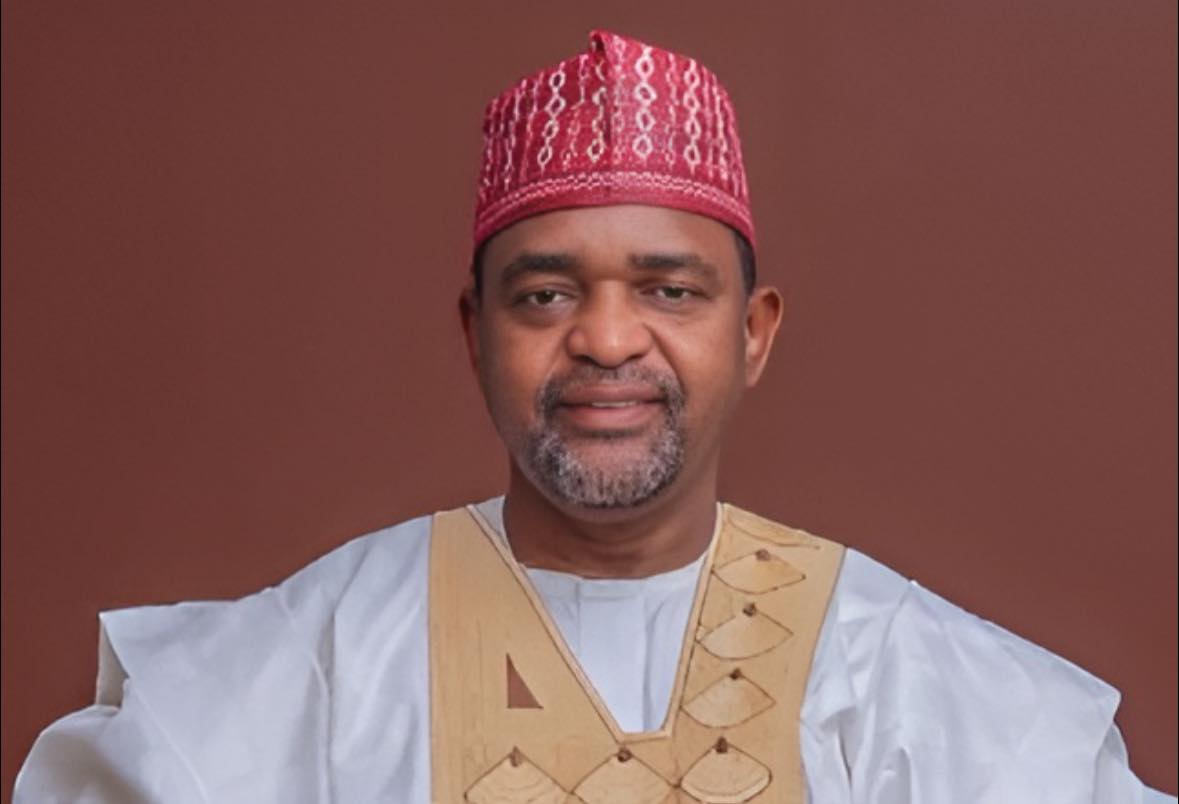
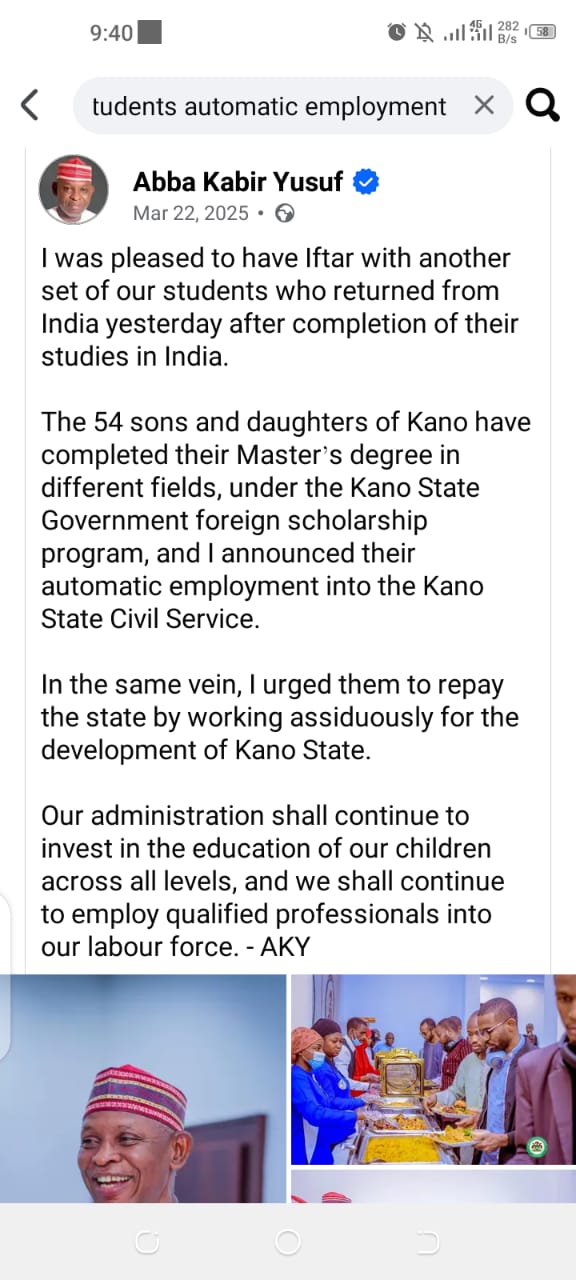
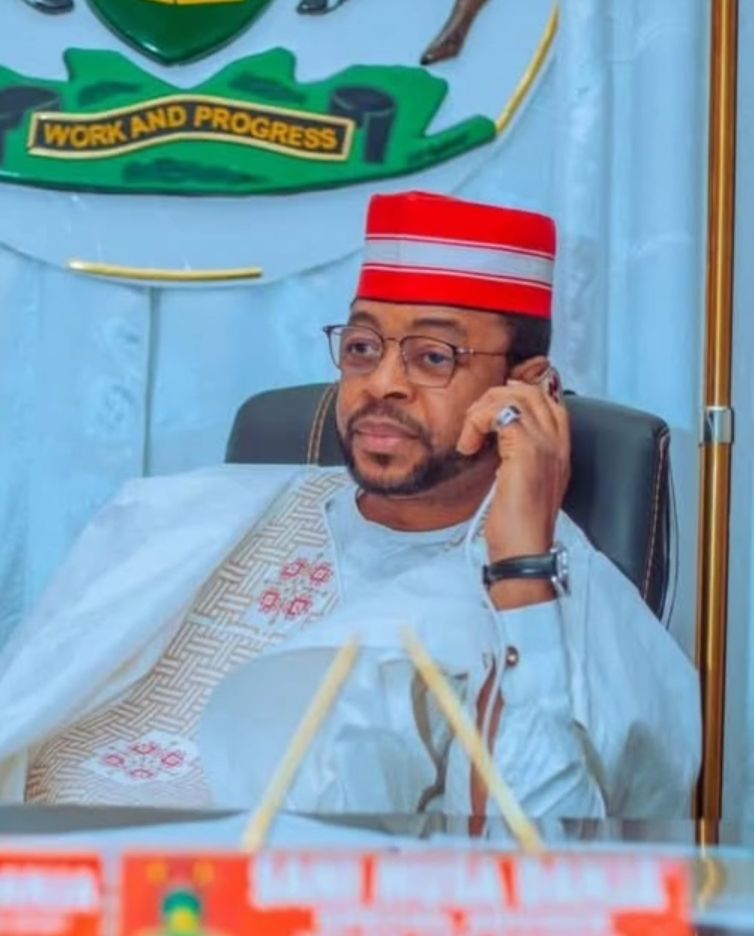
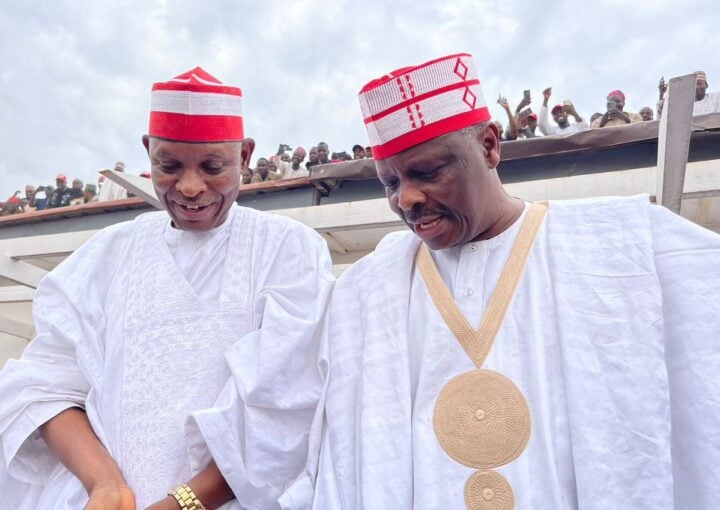
Abba Kabir Yusuf (Gida-Gida)

Abba Yusuf, Kwankwaso and the politics of mandate

By Abdulhamid Abdullahi Aliyu

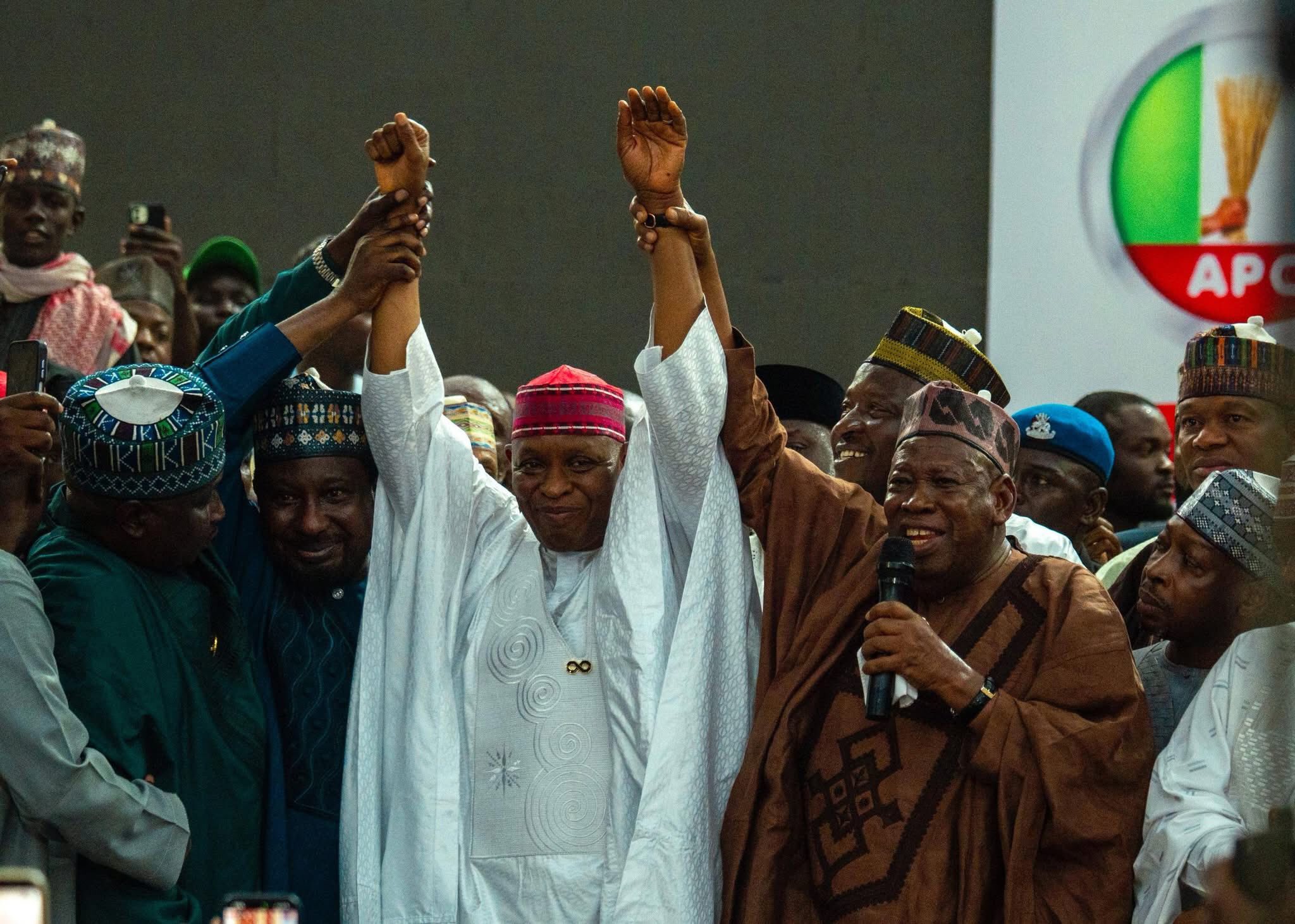
In Kano today, politics is no longer whispered in corridors; it is argued loudly in markets, mosques and on social media timelines. Since Governor Abba Kabir Yusuf’s reported decision to part ways with the NNPP, the city has become a theatre of competing loyalties, sharp sarcasm and deeper constitutional questions. Supporters have reduced complex political choices into street labels—Abba’s camp being teased as ’yan a ci dadi lafiya, while the Kwankwasiyya faithful wear wuya ba ta kisa as a badge of honour. Beneath the banter, however, lies a serious national issue: who truly owns a political mandate?

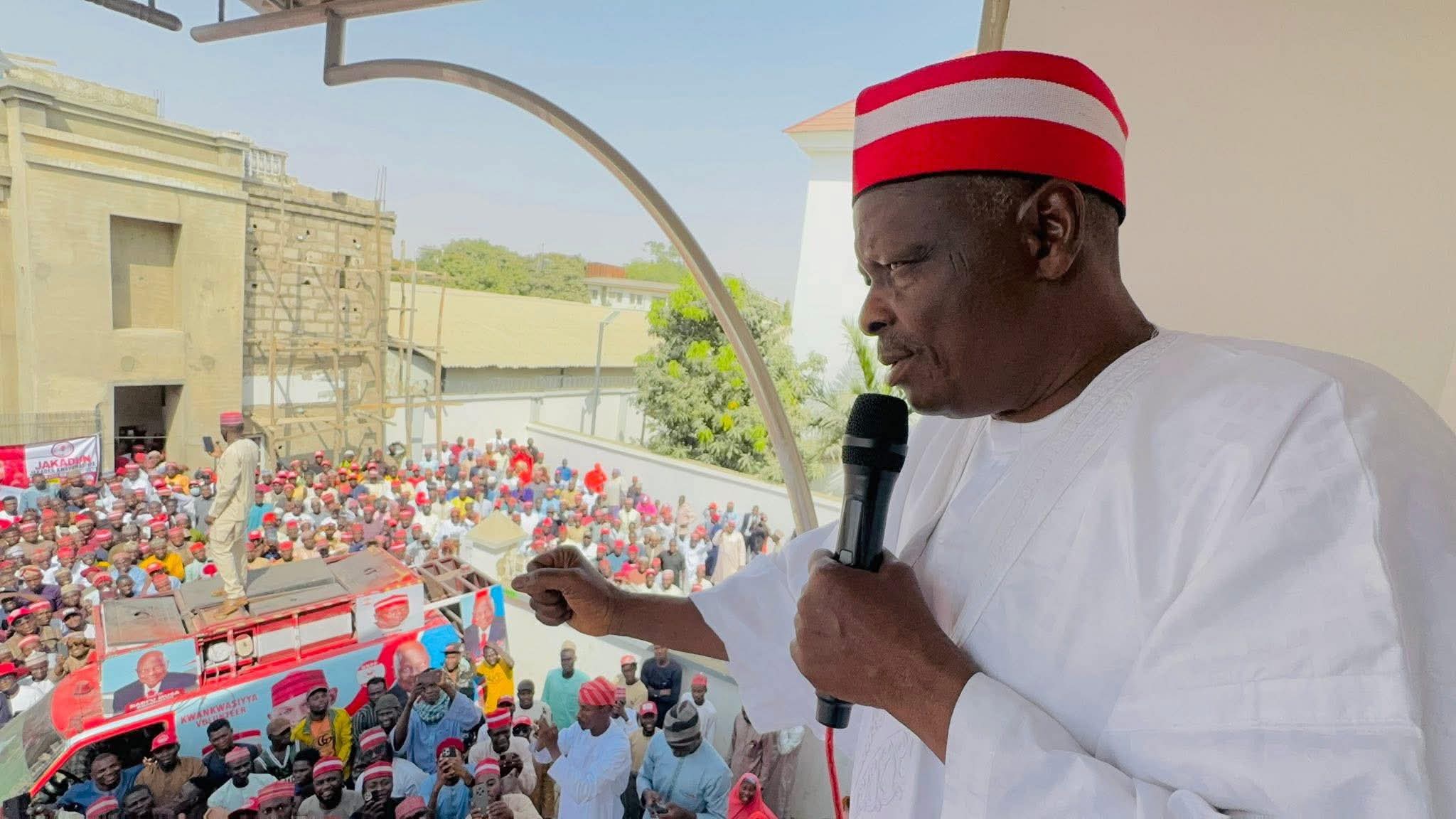
Governor Abba Yusuf did not emerge from a vacuum. His ascent to the Kano Government House was inseparable from the Kwankwasiyya political machinery, a movement painstakingly built by Senator Rabiu Musa Kwankwaso over two decades. From red caps to ideological messaging, the movement transcended party platforms and became a political identity. In the 2023 elections, many voters did not merely vote for a party; they voted for Kwankwasiyya as a symbol of continuity, defiance and populist appeal.

Yet, Abba Yusuf is no ceremonial beneficiary. He contested, won, survived legal battles and now governs with all the constitutional powers vested in an elected governor. His mandate, in law, is personal. Once sworn in, no political godfather—however influential—can legally issue directives from outside the Government House. This is where the tension lies: the clash between moral ownership of political capital and constitutional authority of office.

Those derisively tagged ’yan aci dadi lafiya by opponents argue that governance is about pragmatism, access to power and delivering dividends to the people. From their perspective, a sitting governor must build alliances beyond sentiment, protect his administration and ensure stability. Politics, they insist, is not a monastic vow of hardship but a strategic exercise in survival and results.

On the other side stand the wuya bata ƙi sa faithful—Kwankwasiyya loyalists who believe political struggle must be endured to preserve ideology. To them, Abba Yusuf’s move is not strategy but betrayal. They see it as an attempt to reap the fruits of a movement while discarding its architect. In their view, suffering with the movement, even outside power, is preferable to comfort without loyalty.

This divide exposes a recurring Nigerian dilemma: the uneasy relationship between political movements and the individuals they propel into office. From Awolowo’s disciples to Aregbesola’s rupture with Tinubu, Nigerian politics is littered with fallouts between founders and beneficiaries. Kano’s current drama is simply the latest chapter.

Kwankwaso’s influence in Kano politics is undeniable. Beyond elections, he represents a moral compass for millions who see him as a symbol of resistance against elite dominance. His supporters’ anger is therefore not merely partisan; it is emotional and ideological. To them, Abba Yusuf’s political identity was inseparable from Kwankwaso’s shadow.

However, governance demands autonomy. A governor who appears perpetually tethered to an external authority risks administrative paralysis and legitimacy questions. Abba Yusuf’s defenders argue that Kano cannot be governed from outside its constitutional structures. They insist that the electorate voted not just for Kwankwaso’s endorsement but for Abba Yusuf’s promise to lead.

The real casualty in this contest, unfortunately, risks being governance itself. When political energy is consumed by loyalty tests and factional supremacy, policy focus suffers. Kano’s challenges—urban congestion, youth unemployment, educational deficits, and security concerns—require a governor fully immersed in administration, not in constant political firefighting.

There is also the electoral implication. While Kwankwasiyya remains a formidable grassroots force, incumbency is a powerful weapon. State resources, visibility, and administrative control can quickly reshape political narratives. The assumption that loyalty automatically translates into electoral dominance may underestimate the pragmatism of Nigerian voters, especially when power dynamics shift.

Yet, Abba Yusuf’s path is equally fraught. Detaching from a movement that delivered his victory carries political costs. Kano’s electorate is emotionally invested, and symbols matter. If his administration fails to convincingly outperform expectations, the narrative of ingratitude could harden into electoral punishment.

Ultimately, this is not just a Kano story; it is a Nigerian one. It forces a national reflection on whether mandates belong to parties, movements, godfathers or the individuals elected by the people. The Constitution is clear, but politics rarely is.

Perhaps the wisest outcome lies not in triumph or humiliation but in recalibration. Political movements must learn to institutionalise beyond personalities, while elected officials must acknowledge the moral debts that brought them to power. Neither absolute loyalty nor total independence offers a sustainable path.

As the dust settles, the sarcasm of ’yan a ci dadi lafiya and wuya ba ta kisa may fade, but the questions will linger. In Nigeria’s democracy, mandate is both a legal instrument and a moral contract. Kano’s unfolding drama reminds us that ignoring either side of that equation comes at a cost—sometimes higher than any political suffering.

Abdulhamid Abdullahi Aliyu is a journalist and syndicate writer based in Abuja

On ‘Makiyan Kano’ slogan

By Umar Sani Adamu (Kawun Baba)

The defection of Kano State Governor Abba Kabir Yusuf from the New Nigeria Peoples Party, NNPP, to the All Progressives Congress, APC, has exposed more than a political shift. It has laid bare the fragility of slogans elevated above reason and the contradictions within Kano’s dominant political movement.

For years, the phrase “Mayiyan Kano” was used by followers of Senator Rabiu Musa Kwankwaso whenever events did not go their way. It served as a blanket response to court rulings, electoral outcomes, and opposing views. What began as a casual expression gradually hardened into a political shield used to dismiss criticism rather than engage it.

Ironically, Governor Yusuf was once celebrated as the ultimate proof of loyalty to the Kwankwasiyya structure. A report by The Daily Reality during the early phase of his administration went to remarkable lengths to present him as a devoted disciple of his mentor and political godfather. His actions, his rhetoric, and even his body language were framed as evidence of unquestionable allegiance. At the time, loyalty was portrayed as a virtue, and Yusuf was held up as its finest example.

That narrative has now collapsed under the weight of political reality. Following his defection, the same voices that once applauded his loyalty have rushed to brand him disloyal. The sudden moral outrage is striking not because politicians change camps but because of the selective memory at play. If loyalty were absolute, then it should have been defined beyond convenience. If it were conditional, then honesty demands admitting that politics is transactional, not sentimental.

The revival of Makiyan Kano, that’s “The enemy of Kano” or “One who works against the interests of Kano”. In this context reveals its emptiness. Rather than interrogate why a sitting governor would abandon the platform that brought him to power, some loyalists have retreated to slogans. It is easier to chant than to reflect. Easier to accuse than to accept that political authority ultimately rests with individuals, not movements.

What this moment exposes is a deeper problem within Kano politics: the attempt to freeze loyalty in time while ignoring changing realities. Governance is not sustained by personal allegiance to a mentor but by navigating power structures, resources, and national relevance. To pretend otherwise is to confuse political romance with political responsibility.

Supporters of the governor argue that his decision was informed by pragmatism and the pursuit of Kano’s broader interests. Whether one agrees or not, it is a position that deserves debate, not dismissal. Slogans do not govern states. Decisions do.

Makiyan Kano has returned to public discourse, but its meaning has shifted. It no longer signals confidence. It now sounds like frustration. In the end, movements that rely on chants instead of ideas often struggle when reality refuses to cooperate. Kano politics appears to be learning that lesson the hard way.

Umar Sani Adamu (Kawun Baba) wrote via umarhashidu1994@gmail.com.

Governor Yusuf replaces Galadima as Kano Poly governing council chair

By Hadiza Abdulkadir

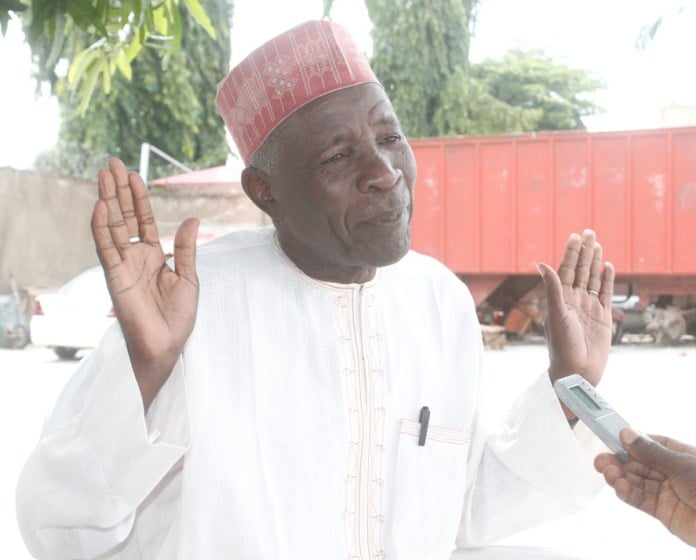
The Abba Kabir Yusuf has relieved Engr. Buba Galadima of his position as Chairman of the Governing Council of Kano State Polytechnic.

The decision was announced in a statement issued on Saturday by the Governor’s spokesperson, Sunusi Bature Dawakin Tofa.

In his place, the Governor approved the appointment of the Aliyu Ibrahim Abdulkadir, Emir of Gaya, as the new Chairman of the institution’s Governing Council.

According to the statement, the removal followed a restructuring process aimed at aligning the Polytechnic with the administration’s Kano First Agenda and ongoing reforms to enhance institutional performance. Although members of the Governing Council are expected to serve a three-year tenure, Galadima’s appointment was terminated before its expiration as part of the reform measures.

Governor Yusuf expressed appreciation to Galadima for his contributions during his tenure and urged the new Chairman to deploy his experience and leadership in repositioning the Polytechnic for improved academic and administrative excellence.

Kwankwaso and the cost of fighting godsons 

By  Ibrahiym A. El-Caleel

Senator Rabiu Musa Kwankwaso should be competing on the national stage with contemporaries such as Senator Bola Tinubu, Alhaji Atiku Abubakar, and other Class of 1999 political actors. By pedigree, experience, and longevity, Kwankwaso has clearly outgrown Kano politics, and he does not need to prove it again in 2027. However, he appears stuck in state-level politics. 

Kwankwaso is at odds with the two successive Kano governors after him, both of whom are his protégés: Dr Abdullahi Ganduje and the incumbent, Engr Abba Kabir Yusuf. He says they have “betrayed” him. There was a show of electoral force at his residence in Kano this afternoon. A large number of people trooped into his Miller Road residence in what he later called a “solidarity visit”.  

These developments indicate that Senator Kwankwaso is once again positioning himself for state-level dominance rather than advancing a national ambition in 2027. Ideally, Kwankwaso should defeat Governor Abba through a candidate he anoints for #KanoDecides2027. But a deeper question remains: should the 2027 ambition of a politician of Kwankwaso’s stature be focused on unseating a “betraying” godson at the state level, when Kwankwaso’s contemporaries have either honourably retired from politics or are positioning themselves for the presidency? 

Who exactly would Kwankwaso replace Abba with, and what assurance does he have that a newly installed godson would not eventually “betray” him, just as Ganduje and Abba did? At this point, there is little reason to believe the outcome would be different. The current godsons around him are likely to use his influence to rise and then assert their independence once in office. There is no clear indication that they would be more submissive than their two elder political siblings, Ganduje and Abba. How do you keep doing the same thing repeatedly while expecting a different result? 

There is also a genuine political risk. What if Abba Yusuf, like Ganduje before him, survives the onslaught and secures a second term? This is not an endorsement of electoral malpractice, but a recognition of Nigeria’s political realities. Kano’s 2019 gubernatorial election demonstrated how powerful interests can intervene decisively; Dr Ganduje ultimately retained office despite glaring indications that he lost at the polls.

If a similar outcome were to occur in 2027 and Governor Yusuf were to proceed to a second tenure, would that not constitute a second public humiliation for the godfather? What explanation would suffice then? That yet another protégé has matured enough to build political alliances strong enough to neutralise Kwankwaso’s influence? At that point, the narrative shifts decisively: from betrayed mentor to diminishing power broker.

On the other hand, if Senator Kwankwaso succeeds in unseating Governor Yusuf and installing another loyalist, what exactly would he be celebrating at the end of the day? That Kwankwasiyya has simply replaced Kwankwasiyya? That a godfather has prevailed over his own godson? Such victories may satisfy the logic of control, but they do little to expand political influence, strengthen institutions, or advance democratic culture. At best, they amount to an internal power rotation within the same political family, offering no clear gain to the broader society.

Ultimately, this debate goes beyond personalities. Do we really need a political model anchored on godfathers, covenants, and lifelong loyalty to patrons? Has Buhari’s repeated endorsement of anointed candidates meaningfully improved governance or political culture in the North? Has Tinubu’s entrenched godfatherism in the South West translated into measurable social or institutional progress? Until we seriously examine the long-term costs of political baptism, loyalty tests, and patronage politics, it remains difficult to argue that godfatherism is the most viable model for a modern democratic society.

 Ibrahiym A. El-Caleel wrote via caleel2009@gmail.com.

Groups call on Kwankwaso to join ADC

By Ibrahim Yunusa

Amid tensions in the Kwankwasiyya movement and Kano NNPP, fueled by speculation that Governor Abba Kabir Yusuf might defect to APC, the ADC Youth Mandate, with ADC Waziran Waziri, urged Senator Rabi’u Musa Kwankwaso to join other national stakeholders under ADC to help rescue Nigeria from worsening socio-economic and security crises under the APC-led government.

The coalition pointed to worsening economic hardship, insecurity, and governance failures, expressing fears over the ruling party’s push toward a one-party state. They emphasised the need for a united front of progressive leaders to offer Nigerians a credible and people-oriented alternative.

Speaking on behalf of both groups, Engr. Ammar Hamisu Dandago, the Coordinator of ADC Youth Mandate, stressed the political value of Kwankwaso’s experience and mass grassroots appeal. He expressed confidence that Kwankwaso, in collaboration with other prominent figures like Atiku Abubakar, Peter Obi, Rotimi Amaechi, and Nasir El-Rufai, could form a formidable force capable of unseating President Bola Tinubu.

The statement concluded with a renewed commitment to youth mobilisation, national unity, and support for genuine efforts to provide competent leadership and restore hope across the country.

Kano earmarks ₦9.8bn for road, flood control, and infrastructure projects

By Hadiza Abdulkadir

The Kano State Government has approved ₦9,854,326,460.92 for various road construction, renovation, and flood control projects aimed at enhancing infrastructure and easing transportation across the state.

The approvals were part of the resolutions reached during the 33rd Kano State Executive Council meeting presided over by Governor Abba Kabir Yusuf on Saturday, November 1, 2025.

In a statement issued by the Commissioner for Information and Internal Affairs, Comrade Ibrahim Abdullahi Waiya, the projects will be executed under the Ministry of Works and Infrastructure.

Key allocations include ₦2.63 billion for the construction of Dambatta–Gwarabjawa Road in Dambatta Local Government and ₦2.47 billion for the supply and installation of 4-way intersection traffic lights across major roads in Kano State.

Other major projects approved are ₦388.5 million for flood control works at Baban Gwari Roundabout along Katsina Road, ₦810.8 million for the installation of road studs within Kano metropolis, and ₦277.4 million for renovation and construction works at Audu Bako Secretariat (Phase II).

Additionally, ₦339.6 million was approved for the installation of solar-powered streetlights at Kwankwasiyya City, while ₦135.3 million will fund the installation of all-in-one solar streetlights at Ado Bayero Square, New Road, Sabon Gari, and surrounding areas.

The Commissioner said the projects underscore the Yusuf administration’s resolve to modernize Kano’s infrastructure and ensure sustainable urban development.

“These approvals are part of the government’s broad commitment to improving road networks, promoting safety, and mitigating flood risks across the State,” Waiya added.

Kano State Council approves ₦4.9bn for education projects

By Hadiza Abdulkadir

The Kano State Executive Council has approved ₦4,931,962,184.11 for key projects aimed at revitalizing the education sector across the state. The approvals, made during the Council’s 33rd meeting chaired by Governor Abba Kabir Yusuf on Saturday, November 1, 2025, cover initiatives under both the Ministry of Education and the Ministry for Higher Education.

According to a statement signed by the Commissioner for Information and Internal Affairs, Comrade Ibrahim Abdullahi Waiya, the funds will be used to settle outstanding liabilities, enhance infrastructure, and improve learning facilities at all levels.

Among the major allocations is ₦1.49 billion for settling debts owed to boarding school feeding suppliers and ₦2.54 billion for the renovation of Government Technical College, Ungogo (Phase II). The Council also approved ₦270.9 million for the completion and furnishing of the E-Library at the Kano State College of Education and Preliminary Studies (KASCEPS), and ₦400 million for the procurement of office furniture and fittings at Northwest University, Kano.

Other approved expenditures include ₦308.9 million to clear liabilities owed to the National Board for Arabic and Islamic Studies (NBAIS), ₦139 million for instructional materials production by Kano Printing Press, and ₦140.7 million for accreditation exercises at Kano State Polytechnic.

The approvals, the statement noted, reflect Governor Yusuf’s commitment to revamping the education system through enhanced infrastructure, accountability, and effective resource utilization.

“These interventions demonstrate the administration’s dedication to ensuring quality education and conducive learning environments for students across Kano State,” Waiya said.

Guinea-Bissau honours Kano governor with highest medal

By Maryam Ahmad

President Umaro Sissoco Embaló of Guinea-Bissau has honoured Kano State Governor, Alhaji Abba Kabir Yusuf, with the Gold Medal of the Republic, his country’s highest national award, for promoting education and African unity.

The medal was presented on behalf of President Embaló by Guinea-Bissau’s Minister of Defence, Mr. Donisio Cabi, at a ceremony held at the Kano Government House.

Mr. Cabi praised Governor Yusuf for offering fifty scholarships to students from Guinea-Bissau, describing the gesture as visionary and consistent with the Kwankwasiyya ideals of empowerment and justice.

Governor Yusuf thanked President Embaló and reaffirmed his commitment to fostering education and African solidarity for peace and progress.

Insecurity, abandonment cripple Zangon Gabas Primary School

Muhammad Isah Zng

Special Primary School in Zangon Gabas, Ungogo Local Government Area of Kano State, is struggling with insecurity and abandoned, burnt classrooms, leaving pupils and teachers in a difficult learning environment.

A resident and Islamic teacher, Abdullahi Ahmed, voiced concern that the school has been neglected by the government, leaving it vulnerable to vandalism and deterioration. He stated that youths often break onto the premises after lessons to play football, which frequently results in damage to school property and theft of valuable items.

“The major problem is insecurity. Youths come into the premises, deface classrooms, and steal items. If nothing is done, this school may one day become history,” Ahmed said.

Besides security breaches, classrooms that were burned several years ago remain unrepaired and unused, further reducing available learning space. Ahmed, who also uses the classrooms for Islamic lessons, disclosed that the headmaster had hired a security guard and was paying him from personal funds to protect the remaining facilities.

Community members are urging the Kano State Government to urgently repair the classrooms that were burned and to ensure security to protect the school. Education stakeholders warn that if no action is taken, the worsening conditions could jeopardise the future of pupils in Zangon Gabas. 

Kano govt sues Ganduje, sons over alleged N4.49bn fraud, moves to reclaim Dry Port shares

By Uzair Adam 

The Kano State Government has instituted a high-profile suit before the State High Court, seeking to recover its 20 per cent equity stake in Dala Inland Dry Port Limited and reclaim funds allegedly misappropriated to the tune of N4,492,387,013.76.

According to court documents, the defendants in the charge include the former Governor of Kano State, Dr. Abdullahi Umar Ganduje; his sons, Umar Abdullahi Umar and Muhammad Abdullahi Umar; former Special Adviser to the Governor, Abubakar Sahabo Bawuro; former Executive Secretary of the Nigerian Shippers Council, Hassan Bello; a legal practitioner, Adamu Aliyu Sanda; and Dala Inland Dry Port Limited.

The Daily Reality reports that the defendants are facing a ten-count charge bordering on criminal conspiracy, misappropriation of public funds, breach of trust, and conflict of interest.

The court record indicates that the suit was filed on October 13, 2025.

According to the charge sheet, the defendants allegedly conspired to fraudulently transfer 80 per cent of the shares in Dala Inland Dry Port Limited, including the state government’s 20 per cent equity, to private entities under the fictitious name “City Green Enterprise” in an attempt to conceal the company’s actual ownership.

The prosecution further alleged that the defendants diverted over N4.49 billion of Kano State funds to execute infrastructure projects such as a double carriageway, electricity supply, and perimeter fencing at the dry port for their personal and family benefit.

In addition, the defendants were accused of abuse of office and conflict of interest, allegedly using their official positions to manipulate public resources for private gain, contrary to financial and constitutional provisions.

The prosecution listed several key witnesses, including the lead investigating officer who uncovered the alleged fraudulent transactions, and an early stakeholder in the project who was reportedly sidelined during the equity transfer process.

The summary of evidence alleges that the defendants used sham entities and proxies to conceal ownership of the Dala Inland Dry Port shares, diverted public funds to family-owned firms and personal businesses, coerced the original project founders into relinquishing control, created false documents to mislead regulators, and facilitated the diversion of N750 million through Safari Textile Ltd (STL Enterprise).

The prosecution will also present evidence showing that the 4th defendant conducted a review confirming the Kano State Government’s 20 per cent stake in the dry port, in line with a policy document initiated under former President Olusegun Obasanjo.

It further alleged that the purported transfer of shares was executed without the consent of other board members, and that the former governor, Abdullahi Ganduje, acted unilaterally to facilitate the move.

Although no date has been fixed for the hearing, the matter has been assigned to Kano State High Court 2, presided over by Justice Yusuf Ubale.