2023 Elections

Kawu Sumaila: The ghost of Malam Aminu Kano

By Umar Ahmad Rufai

As we all know, politicians in Kano have been claiming they are followers of the late Malam Aminu Kano to achieve their political interests. We all know and remember him as a leader of the masses, a reformist, educationist and revolutionist. Mallam had built the most substantial legacies. When he was minister, he joined protests against the federal government in Nigeria.

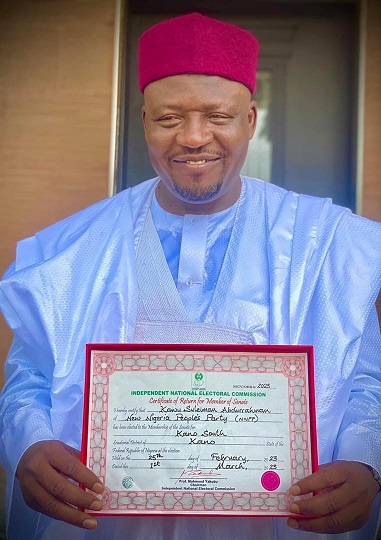
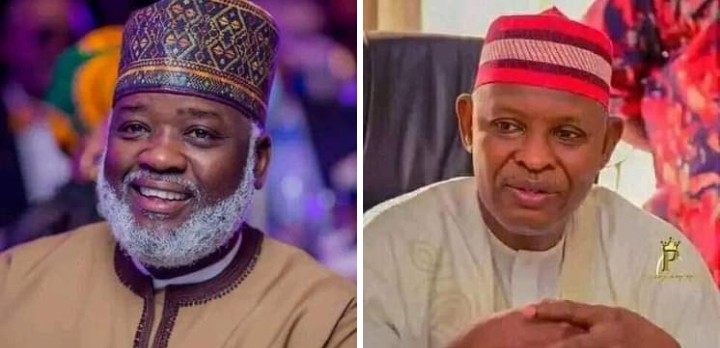
Honourable Kawu Sumaila is Malam’s ghost. As a strong opposition leader after resigning from his position as senior special assistant to the president on national assembly matters,  Kawu defeated the incumbent senator that spent sixteen years in the seat last week.

He is ready to represent the good people of southern Kano. He contrasted and won the election three times. He represented Takai/Sumaila for 12 years in the Green Chamber.

Kawu’s action is louder than his voice. He knows the problems of his senatorial district. That’s why he aspired for the seat in 2019 and lost in a questionable primary election. He is ready to speak about his senatorial district, Kano state and northern Nigeria.

Kawu supports the less privileged within and outside his constituency. He founded Al-Istiqama University, the first private university in southern Kano.

Umar Ahmad Rufai wrote from Kano via umarahmadrufaijr@gmail.com. He is a student at Aminu Kano College of Education in Kano.

2023: Governor Fintiri’s politics of deceit and the presidential election in Adamawa

By Auwal Modire

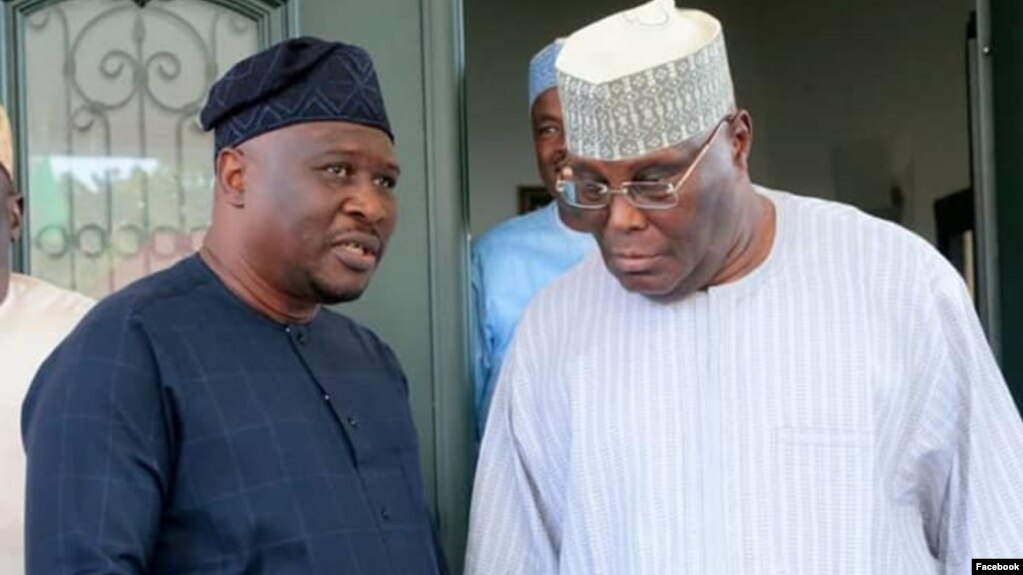
The Presidential elections have come to pass, and the outcome of the results will continue to be a watershed in the political terrain and a new definition of “Loyalty “ in Adamawa PDP politics. Atiku Abubakar of the People’s Democratic, PDP, got 417,611 votes, Bola Ahmed Tinubu of the APC got 182,881, Peter Obi of the Labour Party (LP) secured 105,648 votes, while Rabiu Musa Kwankwaso of the New Nigeria Peoples Party (NNPP) got 8,006 votes

The performance of the Labour Party in the state though not surprising because of the open secret fraternity of the incumbent Governor with the Labour Party for some time. 

It is now obvious that the allegations against the Governor of Adamawa state for anti-party activities have come to pass. Many prominent people of Adamawa State last month alleged and warned that Governor Rt. Hon.  Ahmadu Umaru Fintiri had pitched his camp with the Labour Party’s Presidential candidate and crisscrossed the state campaigning for him in line with the arrangements of the G5 PDP Governors. It’s an open secret that he remained a member of the group covertly. The outcome of Saturday‘s Presidential election is a clear testimony to that effect. 

The theatrics of the  Governor’s pretentious loyalty and deception could only go that far, and today the die is cast, and the truth cannot be suppressed.

 Atiku Abubakar though not unaware of Fintiri’s intrigues, according to sources, decided to ignore all the clear and overwhelming evidence shown to him in that regard and deluded himself in a suspension of belief, hoping that Governor Fintiri would continue to be loyal and supportive.

The Waziri Adamawa rightly or wrongly is said to be scared of the consequences of confronting the Governor in order not to jeopardise his political fortunes since all politics are local, and will need the governor on his side to succeed in this rather elusive Presidency, having attempted severally without success and believing this could be his last opportunity. 

 In February, when the Labour Party candidate, Peter Obi, visited Adamawa State for his campaign, he ignored the protocol of usual courtesies on the Paramount Ruler, the Lamido of Adamawa Emirate and Chairman of the Adamawa state Traditional Rulers Council but headed straight to Numan Federation to pay homage/Respect to Hamma Bachama of Numan Federation, which was a serious breach of protocol and a slight on the Lamido. It’s also on record that he was there to fraternise with the predominantly Christian community in the zone. 

Obi’s action was attributed to Fintiri’s advice and in active collaboration of CAN leadership. This strategy is today consequential to Labour’s Political gains in that part of the State. Obi defeated Atiku in Numan LGA and secured substantial votes in the other areas in the zone. 

The outcome of the elections results in Madagali, the Governor’s support base where the Labour Party won at the Governor’s polling unit, is, without doubt, a collusion in cohort with the Governor.

The ADC Gubernatorial Candidate, Malam Muhammadu Usman Shuwa, after officially endorsing the PDP presidential candidate, His Excellency Alhaji Atiku Abubakar and promising to work for him in the state, relocated to his home town Madagali 6 days before the election. He made serious contact and strategies to ensure Alhaji Atiku Abubakar’s victory and delivered his polling unit and even his ward for Atiku.

If Fintiri had Atiku’s interest, he could have ensured he delivered not only his unit or Madagali but the entire Northern Zone for Atiku, being his domain and as an incumbent Governor of Atiku’s Party, but behold, the outcome isn’t what we expected.

They say in war, political war inclusive, all is fair, and politics is like the contributions in “Adashe”. In other words, it’s turn-by-turn. Everyone will take his share, albeit at the tail end  

Waziri Adamawa is well-schooled in political treachery and well-acquainted with its muddy terrain. Therefore needs not be incited into realigning his priorities and strategies. He surely feels where it pinches.

In stating the obvious, we can only wish Waziri Adamawa well in his future endeavours

Auwal Modire wrote from Yola, Adamawa state. He can be reached via modiree@aol.com.

Democratic failure and increased voters’ apathy in Nigeria

By Zaharaddeen Muhammed

It is a general psychological belief that individuals tend to keep repeating things that benefit them and help reduce their suffering. In politics, too, citizens believe that the essence of participating in the political life of their country is to maximise their benefits through attaining improved living conditions, say, for example, security of lives and properties, food, a better health care system, more employment opportunities, stable electricity and so on.

You don’t need statistical data to conclude that, since 1999, when Nigeria returned to a democratic system, the sufferings of Nigerians coming out to vote for a better life increased. As such, many citizens choose not to exercise their franchise as it does not benefit their lives.

Abraham Lincoln’s definition of Democracy as a government of the people by the people and for the people seems irrelevant in Nigeria because some of the leaders who served political offices in the past were suspected to be products of statistical inflation during elections, not by choice of the majority. Thus, they are not by the people; our leaders are considered to serve themselves rather than the general populace. That is why they strive to get into power by hook or crook.

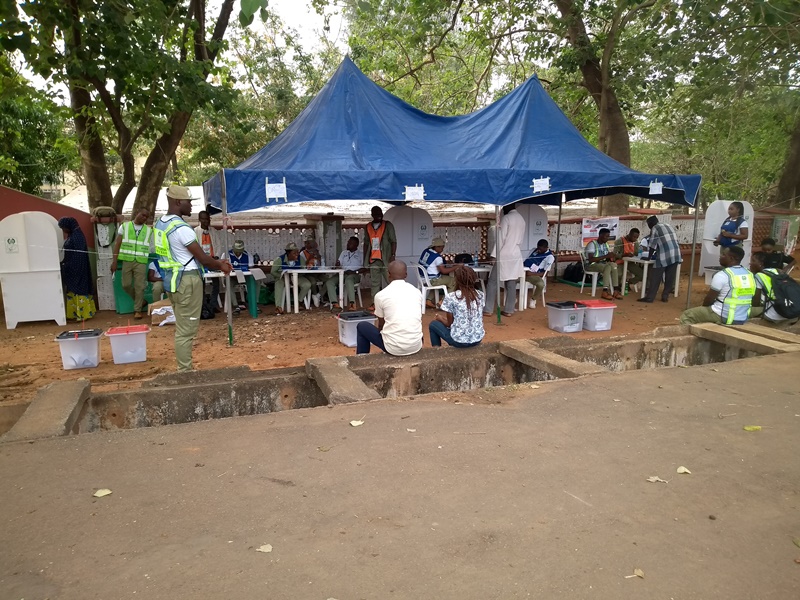
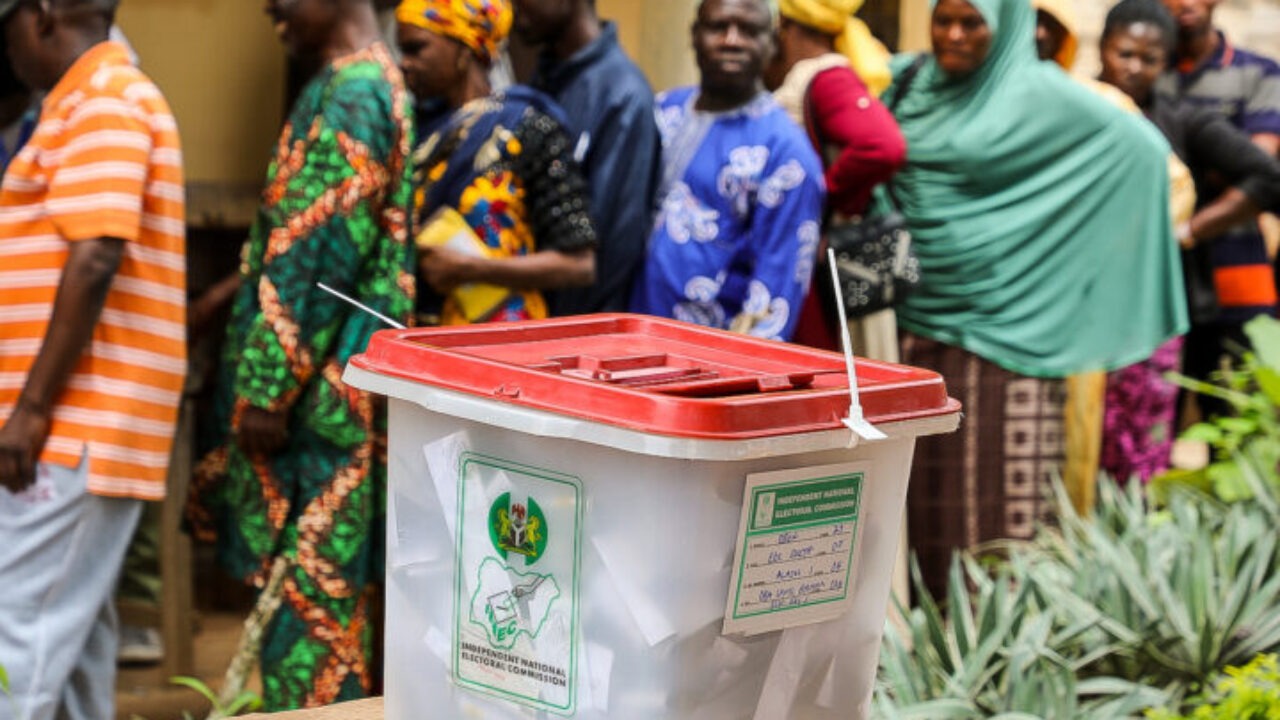
The Independent National Electoral Commission (INEC) reported that during the 1999 general election, out of 58 Million Nigerians that registered to vote, only 30 million were able to vote, 42 out of 61 million registered voters voted in 2003, only 35 million out of 62 million in 2007, 39 million out of 74 million cast their votes in 2011, 29 million out of 67 million in 2015, 29 million out of 82 million in 2019 and, sadly, in the recent 2023 presidential election we have witnessed the lowest turnout whereby of all the 93.46 million eligible registered voters we have, only 24.97 million came out and cast votes.

Though many factors like; lack of voter education, electoral malpractices and vote buying during primary elections, which produce uninspiring candidates in the general elections, rigging during the general election, and the activities of political thugs are contributing factors to political absenteeism during elections, the major factor that converts responsible citizens into political absentees is bad governance resulted by poor- performing elected officials and political parties.

To respond to this signal of “not having feelings” citizens about the political affairs of our dear country, resulting from a lack of efforts from the side of our political leaders to improve people’s situation, I see it that the best way to lure people back to the polls is to promote people’s welfare. Campaigns and sensitisations are less effective these days—only action matters.

Take, for example, the issue of vote buying. You can’t convince someone who lives from hand to mouth, similarly being denied the opportunity of going to market on election day to get what to eat, not to collect a bag of grated maize for a vote—relief materials matter.

Zaharaddeen Muhammed wrote from Azare and could be reached via zahmuhaza@gmail.com.

Between morality and the law

By Ismaila Academician

Nigeria’s 2023 general elections are the first many people would describe being free and fair without any other positive collocations.

Be that as it may, many would say it has no difference from previous elections we strongly condemned. But to be fair to the discourse, it was much better than the previous ones. Nigerians have witnessed a drastic reduction in vote buying, overvoting, and voter disenfranchisement, among many things.

We saw videos and pictures of election violations nationwide on election day. Some are real, and some are mere fabrications aimed at disrupting our peace – or in the popular phrase, to tire our patience than mislead our senses. However, some of these violations are just an act of immorality from urchins, and the rest are unlawful acts from unpatriotic citizens. Unfortunately, we may end up barking at the wrong tree once we separate the two above.

This is not the first time to hear that immorality is bad for you and your community. For example, one scene might have been where area boys scared off voters that they may steal from them. However, in this case, scaring off somebody is immoral, while stealing from him is unlawful.

As we know pretty well, there are no elections free from irregularities. There are people whose work is to rig elections. We could neither be able to stop them nor avoid them. But we could learn the possible ways to surprise them.

To make my points clear that we have had free and fair elections, we know that Tinubu is contesting for the ruling party. He is from Lagos, one of the most important states in the political calculation as per Nigeria is concerned. In addition, Lagos’s current governor is also from the same ruling party and complies with the presidential candidate, as many would say.

When you combine these protons, neutrons and electrons, a powerful nuclear weapon will statutorily emerge. APC would have won Lagos presidential elections against the Labour Party. But due to free and fair elections, Peter Obi surprisingly made it, and so it was.

In conclusion, for the first time, Nigeria has free and fair elections, though with few unlawful violations of electoral rules. Those denying it are mere victims of utopianism or those who lost it, and we know failure cannot be readily accepted. To date, Donald Trump is claiming to be the winner of the last American elections.

Let peace and unity reign!

Ismaila Academician can be contacted via ismailaacademician@gmail.com.

Gawuna plans to grant local government autonomy if elected – Bashir Ahmad

By Ahmad Deedat Zakari

Bashir Ahmad, the Special Assistant to President Muhammadu Buhari on Digital Communication, has disclosed that the Deputy Governor of Kano State and Gubernatorial Candidate of the All Progressives Congress, APC, Dr Nasir Yusuf Gawuna, pledged to grant autonomy to local governments in Kano State if elected governor. 

 Ahmad stated this in a tweet on his verified Twitter handle on Thursday. 

According to Ahmad, this is one of the many reasons why Kano electorates should vote for Gawuna. He noted that Gawuna would govern and operate differently.

“Dr. Nasiru Yusuf Gawuna, the Kano State APC Gubernatorial Candidate, has pledge [sic] to give local governments in the State autonomy to operate if elected as Governor. This is one of many reasons why we will vote for Gawuna as our next governor, he will govern and operate differently.” He tweeted.

Election postponement: My main focus

By Ishaka Mohammed

While some people are after the quality of leadership, others are primarily concerned about the identities or affliliations of the people in positions of authority. Anyway, democracy gives us the chance to participate in the process of choosing our leaders. The responsibility of the electoral body, therefore, is to ensure free, fair and credible elections. But can this body be graded excellent by all the electorate or citizens?

The answer is no. It’s impossible for an agency like the Independent National Electoral Commission, (INEC), to avoid fierce criticisms. Provided some candidates lose elections, issues must be raised against the commission. However, this body can reduce doubts to the bare minimum if it scores high in terms of transparency. Sadly, it usually scores low in this aspect. 

INEC has rescheduled the governorship and state assembly elections to March 18, as against the initial date: March 11, 2023. That’s just a week difference. This decision comes with diverse consequences, but my main focus is on how it affects the suffering inflicted by the so-called cashless policy.

The Supreme Court of Nigeria ruled on Friday, March 3, 2023 that the old naira notes (N200, N500 and N1,000) remain legal tender until December 31, 2023. Many Nigerians celebrated the pronouncement, but I was unsure if President Buhari and the Central Bank of Nigeria would honour the ruling. Expectedly, it’s been almost a week since the judgment, but neither of the two has issued any statement about it. However, there’s been a sense of relief as many banks are reportedly paying and accepting the old notes.

As for the President and the CBN, I expected them to say something, maybe a few days after the governorship and state assembly elections, as they might consider the scarcity of cash as an effective measure against vote-buying. So, I was counting down to the end of our suffering—our struggle for cash—when INEC scattered my thoughts by rescheduling the elections. With this postponement, we’ll have to endure the suffering a little longer.

This cashless policy introduced by the Federal Government of Nigeria has been disastrous for the the country. Businesses and individuals are facing tough times due to the scarcity of cash in the economy. The stress of queueing at banks and POS shops, more hunger for the majority, transport costs to and from banks, a depressed market for traders (particularly those running small-scale businesses dealing in perishable goods), difficult in commuting to workplaces or schools, etc. — these are just a few of what Nigerians are enduring.

While I was preparing to go to the bank a few weeks ago, an elderly neighbour transferred N5,000 to my account to help her withdraw. It would been easier for some of us (Jaiz Bank customers) until that time. I went to the bank, fully prepared for long queues, but there was no cash. The woman’s money remained in my account for a few more days until one afternoon, when she called me on the phone (while I was at work) to send it back to her. She’d seen a POS attendant somewhere with some cash. She quickly sent her daughter home to get her debit card, but within a few minutes, the POS operator exhausted the cash by serving other customers in the queue. He charged N200 for every N1,000 withdrawn, yet the queue was long. The woman regretted leaving her card at home; she needed money to cook for her children. Before that time, she had, on two or three occasions, gone to queue at banks as early as 5 a.m. 

Talking about businesses, although some business owners have started acquiring POS machines and accepting bank transfers, bad network remains an obstacle. Besides, most business owners can’t afford such because of many reasons, including illiteracy and the smallness of their business scales. These are enough proof that Nigeria has yet to be ready for the cashless policy.

I can say that with the presence of digital financial institutions like Opay and PalmPay, multiple debit cards, and my little exposure due to education, I’m better off than millions of Nigerians in terms of the capacity to cope with the scarcity of cash in the country. Despite my obvious advantages, when a student of mine gave me N300 to buy a book for her a few days ago, I kept the cash in my pocket and transferred the same value to the bookseller. Yes, I needed the cash to buy items like onions, tomatoes, etc.

Back to the rescheduling of the elections, I don’t know if I’m being somewhat pessimistic, but this is just what I think. Neither President Buhari nor Godwin Emefiele may say anything about the Supreme Court ruling until after the governorship and state assembly elections. As a result, the postponement of these elections means that we may have to endure the suffering for another couple of days, say 11 or even more.

Ishaka Mohammed wrote from Kaduna State. He can be contacted via ishakamohammed39@gmail.com.

Man embarks on ‘backward trekking’ to celebrate Senator Sumaila’s victory, receives slot to observe Hajj

By Khadija Muhammad 

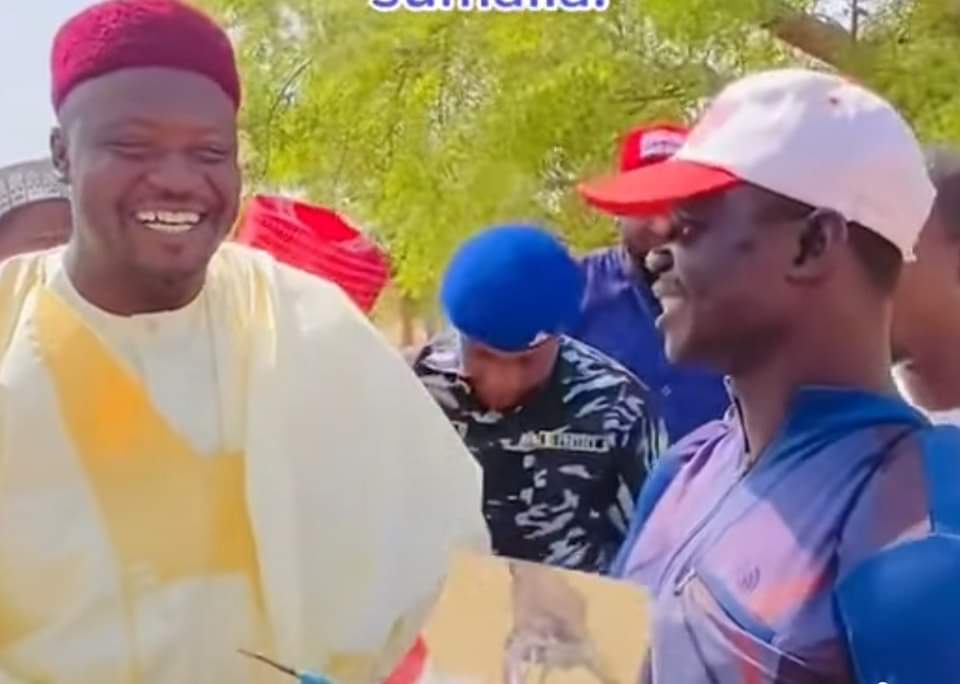
A young man from Jigawa state has embarked on backward trekking from Gwaram in Jigawa State to Sumaila town in Kano state, to celebrate the election victory of Honorable Kawu Sumaila. 

The young man whom Kawu Sumaila met on the road explained that he was doing this backward trekking because almost every style of trekking has already been done, so he decided to do his own.  

Even though Sumaila asked him to go back home since they met on the road, the young man insisted that he would not go back, because he had sworn to do it. 

On arriving, the senator gave him a token, and he promised him a slot to go on Hajj to Makkah, because of this manly effort that he took upon himself to travel a long in a backward manner to congratulate the senator.  

Ado Doguwa: INEC Returning Officer admits declaring results under duress

By Ahmad Deedat Zakari

Professor Ibrahim Adamu Yakasai, Returning Officer of the Tudun Wada/ Doguwa House of Representatives Election, has admitted to declaring the election results under duress. 

The Professor made this known in a voluntary statement dated February 28, 2023.

According to Professor Yakasai, his life and that of other INEC officials in his company were threatened, and he was afraid he would lose his life. He added that the collation area was completely under siege by hoodlums, and he was ordered to declare the results within an hour. 

“I served as the Returning Officer for the 2023 Tudun Wada/ Doguwa House of Representatives Election, whose Result was declared by me on the 26th February, 2023. However, I will want to testify that the declaration I made was under duress for fear of losing my life and other INEC officials who were with me. ” He wrote in the statement.

Prof. Yakasai’s statement

He further stated that the situation made it impossible for him to act in accordance with the extant provisions of the Electoral Act.

On his reason for the disclosure, Professor Yakasai said he is testifying with the hope that necessary actions be taken to remedy the situation. However, Professor Yakasai refused to disclose whose bidding he was coerced to carry out then.

INEC has already declined to issue a Certificate of Return to Mr Doguwa, the Majority Leader at the outgoing National Assembly, for the same reason. A court in Kano granted the embattled lawmaker bail after being arrested for murder charges last week.

Saving Democracy in Kano State

By Abdul Mutallib Muktar

Democracy can be likened to a human being in terms of characteristics and functions. A person is rendered incapacitated by the amputation of his limbs or by the removal of his eyes or ears. Using violence, buying votes, and bribing electoral officers and security personnel to rig elections not only render the democracy incapacitated but also lifeless. An election is the most sacred aspect of democracy that must be protected against any form of interference from within or outside the commission responsible for conducting elections, state government, national government or any foreign state.

It is worrisome how Kano State, one of the fast-developing and economically vibrant states in Northern Nigeria, is facing severe attacks from the antagonists of democracy. It could be recalled how the 2019 Governorship Election in the state was characterised by violence, intimidation, disenfranchisement, arson, and killing and injuring of voters. This prompted my article “Democracy Bleeds in Kano”, published in Daily Trust on 4th October 2019. Thanks to CP Wakil (nicknamed Singham) for standing firmly in controlling the terrible political tragedy of that year. Sadly, in the Presidential and National Assembly Elections held on 25th February 2023, a similar premeditated political tragedy occurred in some Local Government Areas of Kano State. A member representing Doguwa/Tudun Wada in the Green Chamber, Ado Alhassan Doguwa, allegedly shot innocent citizens and ordered his thugs to set on fire a building with people inside.

The Governorship Election coming on 11th March 2023 is feared to be unfree from grave challenges, especially as many issues have continued to unfold since last week. Some of these issues are mentioned below. A few days ago, the Nigerian Police Force, State Headquarters, Bompai, Kano State, released a piece of information about how it discovered a plot by some politicians to disrupt the forthcoming election using political thugs. There is a serious allegation against some politicians hiring thugs even from outside Kano to disrupt the electoral process. One may find it difficult to disagree with the allegation given the recent happenings in the state’s political space. Two Local Governments Areas that experienced this violence last week are Tudun Wada and Takai.

What raises more questions about the 11th March Election are the movements of some trucks seen across the state in the last few days, carrying a lot of food commodities and clothing materials suspected to be distributed to the masses in exchange for their votes. As alleged by some observers, those food commodities and clothing materials had not been seen during the Covid-19 predicament—a time when people direly needed assistance. Generally, Nigeria is battling abject poverty, sending many people hungry. As such, the unfortunate situation presents a golden opportunity for politicians. Vote buying, either by money or offer of any commodity, is a severe attack on democracy that any well-meaning citizen cannot oversee.

Some political parties, especially from the opposition, have cried out a plot by the ruling party in the state to buy the conscience of INEC’s staff and the security personnel, which, if found to be true, will be highly condemnable, immoral and illegal.

I am, therefore, using this opportunity to call on the Federal Government, the Nigeria Police Force, the Independent National Electoral Commission and the Kano State Government to rise to the occasion and prevent the occurrence of the 2019 political tragedy in Kano and also investigate the above allegations with a view of ensuring a free and fair election. While human beings can cheat one another, they can never cheat history.

I am also calling domestic and international election observers to be extra observant in the Kano 11th March election. Political parties and the media have a massive role in creating awareness and enlightening the masses, especially in rural areas, about the catastrophic consequences of vote buying. Security personnel and INEC’s staff should remember that there is a life after death and that one must reap what he sowed. The masses must display boldness throughout the stages of the election. They must quickly report suspicious activities by anyone to the appropriate authority. I pray that Kano State and Nigeria will have peaceful, free, and fair elections on 11th March 2023.


Abdul Mutallib Muktar can be reached via abdulmutallib.muktar@gmail.com.

The power of same-faith tickets

By Ibrahym A. El-Caleel

First, I am neither a propagandist nor an apologist of any of the personalities mentioned in this article. I am a Nigerian with keen interest in the Nigeria project.

Gov Nasir El-Rufai is many things. I used to say Governor Hajjaj bn Yusuf Al-Thaqafiy of the Umayyad Dynasty and Governor Nasir El-Rufai of Kaduna State share some leadership traits. Both of them are efficient leaders who lead with uncommon pragmatism. They set and achieve their goals not minding whose ox is gored in the process. They made stellar achievements that haven’t been recorded by their predecessors. Both Hajjaj and El-Rufai are vicious in handling political rivalry. They fight it with mightiness, or what Robert Greene would say; crush your enemy totally. Juxtapose everything that Hajjaj did in Iraq with El-Rufai’s lockdown during Covid; mass sackings or what he calls right-sizing; demolition of houses. How El-Rufai demolished the house of his political rival and a serving senator, Suleiman Othman Hunkuyi is an example of how extreme he can handle political rivalry. So this is a man who you should ordinarily avoid when selecting a wrestling mate in the political ring. But somehow, the Kaduna Christian South establishment seemed not to have studied the personality close enough.

Their melodrama was so graphical that they presented the region as a sworn political opposition to El-Rufai. From 2015-2019, El-Rufai’s deputy, the Late Arc Barnabas Bala Bantex was from that region and a Christian himself. They have been friends from their university days and worked amicably as leaders of Kaduna State. El-Rufai would travel and give Bantex the acting governor capacity. But that hasn’t fetch El-Rufai any political capital from the region where his deputy hails from. In 2019, Bantex decided to contest for a senatorial seat in the same Kaduna Christian South but he failed the election. Thanks or no thanks to his dining with a man whose politics they are not in good terms with. On his part, El-Rufai felt he has nothing to gain politically from a people who abhor his politics. So, he decided to pick a Muslim running mate from the minority in that region. He was willing to test the depth of the river with both feet. He must be a daring researcher to experiment a Muslim-Muslim ticket in Kaduna State. No one has tried it since the return of democracy in 1999. He took the calculated risk and it eventually worked. Today, anyone can try it knowing that it flies to victory.

Kaduna State looks like Plateau State from the demographics. El-Rufai must have borrowed the template from neighbouring Plateau State, which despite having a significant Muslim population, have always fielded a Christian-Christian ticket which has always succeeded. It has never been a Christian-Muslim ticket in Plateau. We underestimate these politicians, but they are cunning. We waste so much time insulting and criticising them, while they study us carefully. Bravo to them. In this article, let’s review how they successfully study and beat the intellect of the proletariat. When did the choice of a running mate began to matter?

Five Nigerian heads of state have died while in office. Three were killed in bloody coups, while only two died from natural causes to pass the leadership mantle to their deputies. Few civilian governors died in office to give way to their deputies. In conclusion, most elected leaders complete their tenure. However, there is a developing appetite to discuss the possible death of a president or governor. The main aim is to develop some vibrancy around the offices of Deputy Governor and Vice President; to show that it matters.

These two ”assisting” offices are largely inert. When you occupy either of them, then literally, the only freedom you have is the freedom to choose the type of tea you drink in your office. The president/governor is the man who calls the shots. You don’t get to do much “to your people” unless Oga gives you the go ahead. You will be visibly absent in the news. Indigenes of your village will unconsciously forget that they have their brother in government. I explained this better in the long Hausa article I wrote in defence of VP Atiku who is constantly fired that he hasn’t done anything for the north.

If you ask my view, I would say the Vice President and Deputy Governor positions are ceremonial. Unless you have a boss like President Buhari who will gladly give you the “Acting President” for two months to show your muscle; or you have a boss like Gov El-Rufai who will give you “Acting Governor” position to swing the armchair for 3 weeks. Many ogas never give their deputies any chance to do something tangible. If a deputy is quite ambitious, then his Oga’s men (aka cabal) will easily notice it. They will set him at loggerheads with Oga. He is eyeing your seat! This is how Ogas and their deputies usually start their fight. Go and verify!

How was VP Goodluck Jonathan faring under President Yar’Adua? Was he doing anything spectacular in his native Niger-Delta region? Was Deputy Governor Ramalan Yero even in the mass media while Gov Patrick Yakowa was calling the shots in Kaduna? Deputies are not even visible, talk less of executing anything so serious. VP Yemi Osinbajo is only lucky that President Buhari is a nice Oga. Yemi Osinbajo could even use his ad-hoc “Acting President” muscle to dismiss DG SSS, Lawal Daura. He was given the opportunity as an Acting President to swear-in Justice Walter Onnoghen as Chief Justice of Nigeria after Buhari kept the judge in an acting capacity. Buhari is a soft and simple Oga. No Nigerian Vice President in the last 24 years enjoyed this opportunity and audacity. It was on this basis that I made my case saying VP Atiku was being unfairly flogged over something that was beyond his control. In his case, he was not just ambitious, he was fighting with Oga’s third term agenda. How could Oga give him any breathing space to look politically relevant in his region?

Anyway, back to my main discussion:

Today, these deputy posts have only become a discussion topic because politicians are playing to the gullibility of the fairly-conscious electorate. Religion is serious and appeals to the sensibilities of the average electorate. In a state like Plateau with a very large number of Muslim population, it has always been a Christian-Christian leadership. Currently in Kaduna, APC is hosting a Muslim-Muslim ticket, while PDP is hosting a Muslim-Christian ticket. In Plateau State, both APC and PDP are hosting Christian-Christian tickets. The same faith ticket in Plateau has become a culture in such a way that no one is even talking against it any more. Any major political party that dares host a Muslim deputy governor in Plateau State is already wearing a political disadvantage. Ditto Taraba and Benue States.

El-Rufai and Kaduna APC have understood that a Muslim-Muslim ticket in Kaduna appeals to the majority of the voters in the state as well. It worked perfectly in 2019, this is why the template is re-applied in 2023. The only reason why the success is not guaranteed this time around is because of El-Rufai’s excesses in mass layoffs, demolitions, prolonged lockdown of the major cities and markets during the pandemic and other anti-proletariat actions. This is why some voters are thinking they need to punish El-Rufai by not voting his anointed candidate in the APC. But religion is something we place above everything. When the average voter remembers the Plateau and Taraba scenarios, his mind will draw him closer to vote for the Muslim-Muslim ticket in favour of the APC. Especially since this time around, El-Rufai is not the face on the ticket. Uba Sani is largely seen as generous and will not be as socioeconomically toxic as his friend. This is why Uba Sani has better chances of coasting to victory than Isah Ashiru. 


If the APC makes it to the Kashim Ibrahim House another time, then the PDP might have no choice than to also start adopting a Muslim-Muslim ticket effective 2027. I told you that both APC and PDP are fielding Christian-Christian tickets in neighbouring Plateau State. No political party exists to appeal to your personal religious sentiments. What maters to every political party is to win elections by virtue of what majority of the electorate are okay with. This is why it was laughable watching some Islamic scholars on their pulpits explaining how the Tinubu-Shettima ticket is the next best thing to Islam since Salahuddeen Al-Ayyubiy. It is all politics!

Tinubu is a veteran politician. He knows that picking a northern Christian means he wants the PDP to defeat him as early as 8:00 am on the election day. In your right senses, do you think Tinubu believes that Yakubu Dogara or Babachir Lawal as Christian northerner will earn him the huge political capital laden in the populous Muslim North? It is said that Yoruba Muslims are a minority when you look at the entire population of Southern Nigerian. So Tinubu emerged from the so-called minority there, then he will come to the north and pick a running mate from the Christian minority again? Two minorities on a ticket? Isn’t that a recipe for defeat? This was why he picked Shettima; to tap into the political capital in the Muslim North. Not because he will launch Shari’a in Abuja. If he was that type, he wouldn’t be confidently telling you his wife is Christian. Expectedly, the average Nigerian christian electorate ran away from that ticket as if it was sponsored by ISIS; while the average Nigerian muslim electorate welcomed it as if it was formed by Shehu Usman Danfodio 200 years ago. But it was all politics! Apologies to Simon Kolawole. Tells you that Asiwaju Bola Tinubu knows his onions. A long time ago, even Chief Olusegun Obasanjo has testified that Tinubu is a great politician. 


The same faith ticket will still be a key discussion in the 2027 polls especially if Tinubu is able to get it correctly on either security or economy, or both. These two issues are the main troubles affecting the north at this time. Even if he fails every other thing, but gets these two correctly, then the north will still be so passionate about the Muslim-Muslim ticket again. The average northern electorate will only have second thoughts if he sees the same Buhari poor scorecard is what Tinubu is generating. This is when the opposition parties can have a space to gain some votes, just like we are seeing in Kaduna. Uba Sani’s strongest opponent is not Isah Ashiru. It is Gov Nasir El-Rufai. Had people not felt that El-Rufai mercilessly dealth with them, then Isah Ashiru would have been a walk over for Uba Sani. The mere mention of Muslim-Muslim ticket will command a huge voter turnout, and Uba Sani would not have so much to worry about. Especially since Uba Sani appears to be more qualified and ready for the job than Isah Ashiru.

Same-faith tickets give very little room to discuss what matters in a nation like ours. No time to discuss quality of the candidates and what they have to offer for our myriad of problems. In 2023, Nigeria that used to be richer than Singapore does not have a stable electricity; her universities could be closed for a whole academic session because of striking lecturers; her doctors are leaving its underfunded health sector. Many pressing issues. But politicians are using religion to take away the minds of the suffering electorate from all these pressing needs.

It shall be well, someday!

Ibrahiym A. El-Caleel writes from Zaria, and is reachable via caleel2009@gmail.com