2023 Elections

Kawu Sumaila, the Sabo Bakin Zuwo of our time

By Mukhtar Sani Yusuf 

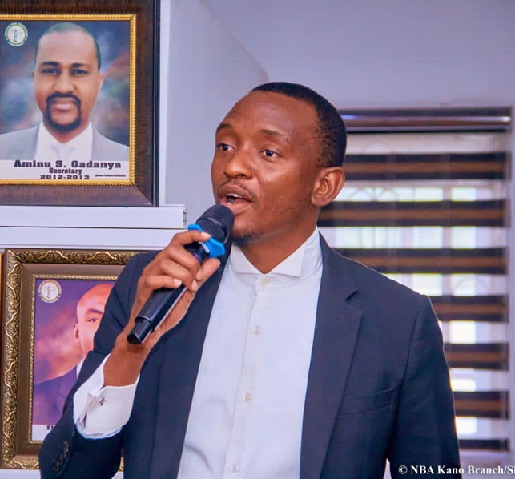
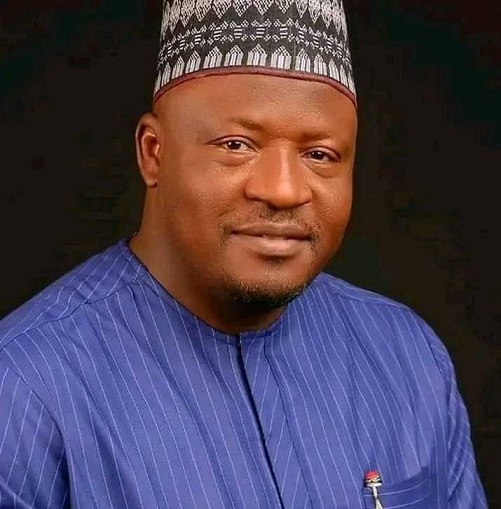
I heard Senator-elect Honourable Kawu Sumaila describing himself and Senator Rabiu Musa Kwankwaso as Sabo Bakin Zuwo and Aminu Kano of our time in an interview he granted to local radio stations in Kano a few days after he was declared the winner of the just concluded election on Kano South Senatorial district under the platform of New Nigeria People’s Party (NNPP). Perhaps, Kawu Sumaila’s analogy has to do with the relationship that existed between Malam Aminu Kano and Aliyu Sabo Bakin Zuwo, the relationship between a leader and his disciple and those who fought and championed the course of emancipation of the poor people and the downtrodden. Kwankwaso and Kawu are now under the same umbrella, as a political leader and his loyalist following the same path of fighting for the common man’s rights.

Although Malam Aminu Kano and Alhaji Sabo Bakin Zuwo are household names in the political history of Nigeria and Kano state in particular, Kawu Sumaila’s recent statement aroused my attention as passionate of political history to take a deep dive into the political history of the two ace politicians of the blessed memory. And in this piece of writing, I laid my emphasis on where Bakin Zuwo and Kawu Sumaila shared some similarities and differences.

According to Wikipedia, “Sabo Bakin Zuwo had no background in formal education, he missed the opportunity to get formal education at an early age but was said to enrol himself at the age of sixteen at Shahuci primary school adult literacy class in 1950-1954, Igbo community school Sabon Gari and a course on local government administration in ABU Zaria. He also attended Malam Aminu Kano political school in Sudawa, Kano. An outspoken politician, Zuwo was said to have used radio more effectively than any other politician in Northern Nigeria. He was elected to the Senate in 1979 and sponsored more bills than any other senator at the time.”

Unlike Bakin Zuwo, Kawu Sumaila acquired formal education at an early age. He attended Sumaila  Gabas Primary School, Sumaila, and Government Secondary Sumaila, where he earned his First School Leaving Certificate and Secondary School Leaving Certificate in the years 1976 & 1988, respectively. He proceeded to Bayero University Kano and acquired a Diploma and an Advanced Diploma in Educational Management before he was elected to the House of Representatives in 2003 and spent 12 years representing Sumaila/Takai Federal constituency. Like Bakin Zuwo, Kawu utilises radio oftentimes to enlighten the local populace. An outspoken lawmaker, Kawu sponsored many important bills that reshaped the status of Nigerians during his days in the House of REPs.

In the 1983 gubernatorial election in Kano, Bakin Zuwo contested the election under the platform of PRP and defeated former governor Alhaji Abubakar Rimi. Even though he had the shortest reign as a governor of Kano state from October to December of 1983, he is remembered for his act of closing down the popular palace cinema in Kano, which was considered the haven of immorality at the time after listening to the yearnings of people. 

Like Bakin Zuwo, Kawu also contested the seat of Kano state governor in 2015 after he finished three tenures in the House of Representatives. He later withdrew the contest on the day of the APC primary election to support the candidacy of the current governor of Kano state, Dr Abdullahi Umar Ganduje. He was appointed SSA to the president on National Assembly matters shortly after president Buhari emerged as president of the Federal Republic of Nigeria in 2015.

In what appears similar to the act of Alhaji Sabo Bakin Zuwo in 2016, there was a public outcry in Kano on the federal government’s proposed film village to be cited in the state after listening to the peoples’ call who vehemently rejected the project, Kawu singlehandedly took the bull by the horns to approach the president on the matter. This single act led the federal government to rescind its position about the project.

One thing I learned about Alhaji Sabo Bakin Zuwo and Senator-elect Kawu Sumaila, which they shared in common, is vociferousness in voicing out their stance, especially when fighting for the interest of their people.

Hon. Kawu Sumaila is now elected Senator who will represent the people of Kano South in the Red Chamber, and before he was elected, he reached the pinnacle of formal education as he bagged PhD in political science.

Mukhtar Sani Yusuf wrote from Kano and can be reached via mukhtarsaniyusuf678@gmail.com.

New CP pledges peaceful election in Kano

By Ahmad Deedat Zakari

The Commissioner of Police in charge of the forthcoming gubernatorial election in Kano State, Muhammed Usaini Gumel, has pledged to ensure a peaceful election in Nigeria’s Center of Commerce.

CP Gumel, in a press briefing on Thursday in Kano, disclosed the readiness of the Police to ensure that the guber and state parliamentary elections are conducted peacefully.

CP Gummel, in the press briefing, outlined the measures taken by the Police to avoid security breaches during the election.

According to him, the Police have undertaken security analysis and upscale the level of preparation across all the polling units in Kano State.

He said, “We have undertaken security threat analysis and upscale the level of preparation for the elections across all the polling units at the local government areas of the state, and we are fully prepared to emplace the requisite strategies towards managing the identified threats.”

Against the backdrop of Police preparedness, CP Gumel sought the trust and confidence of the people of Kano. He stated that criminals that wish to thwart the electoral process would be decisively dealt with.

“Ladies and Gentleman, please give us confidence so that nobody should be in doubt, I repeat, nobody should be in doubt as to the current capacity and renewed determination of the police to deal decisively with elements that attempt to test the will by engaging in political violence or other electoral manipulations including vote buying or use of threats; direct or indirect which are some of the elements threatening our democratic values.

“A similar warning also goes to any person that intends to offer himself to be used negatively by some ungodly political class in the state and urges him/her to take the advice that it will be better to have a rethink or else be ready to face the harsh consequences. Thank you for listening,” He said.

Re: An open letter to Barrister Abba Hikima

By Abba Kyari Mohammed

I read an article with the heading above written by one Yakubu Nasiru Khalid, which somewhat tries to demonise activists and freedom fighters venturing into politics. I got heartbroken and dumbfounded at our level of understanding of politics and its roles in our lives and nation-building.

The writer asked a pertinent question: Should a real social fighter be partisan? In this article, I will address just the question.

For clarity, by social fighter, I believe he meant someone who promotes and fights for socially progressive ideas and, where necessary, takes actions that benefit society. This is typical of Abba Hikima’s activism and benevolence in helping less privileged people access justice, voicing out the predicaments of people, the maladministration, and educating the populace about their civic rights and responsibilities. Also, by partisan, I believe he meant partisan politics, where one supports the candidates of one political party over others or decides to contest for office under a certain political party.

To start with, Abba Hikima has not been appointed as a ‘social fighter’ by anyone, nor did he, from my knowledge, ever arrogate to himself that title. It is a result of the work he does in promoting social justice, good governance and progressive ideals that people decided to refer to him as Freedom Fighter, Human Rights Activist, Social Fighter and many more nomenclatures to qualify the person that he is, which left to me are very deserving of him.

However, being a Social Fighter does not in any way exempt a person from participating in the democratic process of his country, which our Constitution generously guarantees and even demands explicitly. Therefore, I believe it is a gross injustice and discrimination to demonise or question anyone from exercising his rights because of his voluntary service to his community and nation, which you coined as ‘social fighting’.

It is also disheartening that we think politics and participation in the political process is an exclusive preserve of the elites or people who have no feelings for social justice and people´s emancipation or people with no impact on society. A serious society should rather have the Social Fighters, the Activists, the Freedom Fighters like Abba Hikima, who are adept at understanding societal problems and proffering people-tailored solutions, than some proletariat who live upstairs and have no touch with the masses to dictate to them whom to vote and even lead them.

For example, Barrack Obama of the United States was a lawyer and community organiser before he ventured into politics. Look how it turned out. Gani Fawehinmi is a Nigerian Human Rights Lawyer and Activist who campaigned for democracy, fought the brutish military regime, defended its victims for over 40 years, and later ventured into politics and contested the presidential election in 1994.

Nelson Mandela, a South African anti-apartheid activist, lawyer and former leader, fought and resisted apartheid in South Africa and was also a politician to become the first black Head of State, among many others. These tell you the place of politics in societal emancipation and social justice.

More so, what Abba Hikima does is more of civic enlightenment to the citizenry on what he firmly believes is right, especially in the face of what seemed like a gang-up to impose characters that have no business in leadership. According to Martin Luther King Jr., “The ultimate tragedy is not the oppression and cruelty by the bad people but the silence by the good people”.

The questions now are: Do you expect Abba Hikima to keep silent in the face of current political oppression in his state? Do you want him to disenfranchise himself because some people think he should not do so when no law or moral code is pointing towards that? Do you want Social fighters to steer clear of politics so thugs and the proletariat can take it over? These are questions worth pondering.

Abba Kyari can be reached via abbakyari2013@yahoo.com.

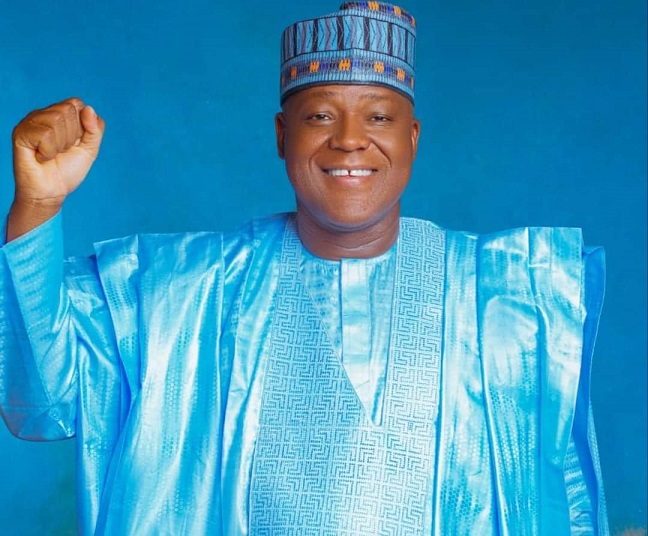
I don’t belong to any political party for now—Dogara

By Muhammadu Sabiu 

Yakubu Dogara, a former House of Representatives speaker and representative for the Dass/Tafawa Balewa/Bogoro Federal Constituency, has declared that he is not presently a member of any political party.

In addition, he stated that he would only support individuals running for elective offices in the general elections of 2023, regardless of their political affiliation.

Dogara stated this on Wednesday while participating in the Politics Today programme on Channels Television.

Recall that Dogara left the APC for the PDP after vehemently criticising the latter’s Muslim-Muslim ticket and announcing his support for Atiku Abubakar, the PDP’s presidential candidate.

He was quoted as saying, “I am supporting candidates; I am not doing any political party for now, I am supporting candidates.

“Everybody knows that I backed Atiku Abubakar for Presidency for reasons I told the whole world but in Bauchi State before primaries were concluded, I had supported the aspiration of Air Marshal Sadique Abubakar who is the current APC governorship candidate and I have my candidates for House of Assembly in my constituency.

“I have Senatorial and House of Representatives candidates that I helped midwife into those positions, and I can’t abandon them for political stability.”

Senator Hanga: A beacon of hope for Kano Central

By Mubarak Umar

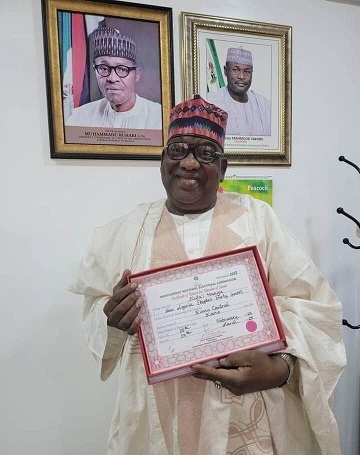
With the Supreme Court judgment affirming Senator Rufai Sani Hanga of the New Nigeria Peoples Party (NNPP) as the Senator-Elect, Kano Central Senatorial District, the people of Kano Central have reason to rejoice.

Kano Central is genuinely abuzz with excitement following the judgment. Senator Hanga challenged the Independent National Electoral Commission’s (INEC) declaration of Malam Ibrahim Shekarau as the winner of the February 25, 2023, senatorial election in Kano Central.

This victory of Senator Hanga is a significant boost for the NNPP. It also demonstrates the importance of pursuing justice through the appropriate legal channels rather than resorting to violence or other unlawful means. This is a win for democracy and the rule of law, a testament to his resilience and determination to fight for his right.

I am delighted that Senator Hanga has been elected to represent Kano Central at the National Assembly. With his experience and dedication to public service, I believe he will be an effective advocate for his constituents and a valuable asset to the Nigerian government.

A graduate of Accountancy, one-time member of the House of Representatives (1992-1993), and senator who represented Kano Central from 2003 to 2007, Hanga chaired several committees. They include Chairman Senate Committee on Drugs, Narcotics and Financial Crimes; Chairman Senate Sub-Committee on Housing and Urban Development; Chairman Sub-Committee on Finance; Vice Chairman, Senate Committee on Tourism and Culture; and Vice Chairman, Senate Committee on Special Duties.

These positions contributed to Senator Hanga’s deep understanding of Nigeria’s political and economic landscape. In addition, he has shown himself to be a skilled negotiator and collaborator, able to work effectively with others to achieve common goals. These qualities will serve him well as he navigates the complex issues facing the Kano people, particularly his constituents.

Senator Hanga has demonstrated a solid commitment to developing his community and the nation. His focus on education, healthcare, and infrastructure has been commendable. I am confident that he will continue to work tirelessly to address these and other critical challenges facing his constituents.

He is a politician with an impressive track record of public service, making him a valuable asset to any government. With years of experience working at various levels of government, Senator Hanga has developed a deep understanding of the political process, the needs of his constituents, and the challenges facing the country. His wealth of experience and expertise will undoubtedly prove invaluable in driving positive change and development initiatives in Kano Central.

Kano Central Senatorial District, located in northern Nigeria with fifteen local government areas, is known for its political and economic importance. It is the metropolitan commercial city of Kano, one of the largest cities in Nigeria.

One of the major reasons Kano Central needs good representation at Nigeria’s National Assembly is to ensure that the interests and needs of its people are adequately represented and addressed at the national level. This is important because the National Assembly is responsible for making laws that affect the entire country. It is also crucial that the laws made are fair and just for all Nigerians, including those in Kano Central. Now, the voices of Kano Central people will be heard, and their needs will be addressed in the national discourse.

Senator Hanga’s representation at the National Assembly should ensure that Kano Central gets its fair share of the national resources. This includes funds for infrastructure development, education, healthcare, and other social amenities. Moreover, with his effective representation, the district will not be left behind in terms of economic development, as policies that promote economic growth and development are made at the national level.

Furthermore, Kano Central is facing several challenges that require urgent attention from the National Assembly. These challenges include insecurity, unemployment, poverty, and a lack of access to clean water and electricity. Effective representation at the National Assembly can help to address these challenges and improve the standard of living of the people of Kano Central.

The importance of good representation at Nigeria’s National Assembly cannot be overemphasized. The National Assembly is the highest legislative body in Nigeria, responsible for making laws that govern the country. Therefore, good representation is crucial for developing any district or constituency.

Kano Central is in dire need of infrastructure development. The district is home to several markets, industries, and transportation hubs, making it a hub of economic activity in the state. However, the lack of good roads, electricity and other basic amenities hinders economic growth. A good representation of Senator Hanga at the National Assembly should ensure that the district receives adequate funding for infrastructure development.

Kano Central has several tertiary institutions, including Bayero University, Kano State Polytechnic, and Yusuf Maitama Sule University. However, the education sector in the district needs significant improvement. His representation at the National Assembly should ensure that these institutions receive adequate funding to improve the quality of education and provide better facilities for students.

Kano Central is also in dire need of better healthcare facilities. The district has several hospitals and health centres, but most are understaffed and lack adequate medical equipment. Senator Hanga should ensure that the district receives proper funding for healthcare facilities and training and medical personnel recruitment.

Kano Central has a high rate of unemployment, especially among the youth. Senator Hanga now has the opportunity to use all means of legislation that can attract foreign investors to the state and promote entrepreneurship, leading to job creation and economic growth.

Kano Central has experienced several security challenges recently, especially phone snatching, political thuggery, and burglary. Senator Hanga should ensure the district receives adequate security funding to combat these challenges and maintain peace.

I am excited to see what Senator Hanga will accomplish during his time in office. With his dedication to public service, commitment to his constituents, and extensive knowledge of the Nigerian political landscape, I am confident that he will be a valuable and effective representative for Kano Central. I wish him all the best in his new role, and I look forward to seeing his positive impact on the people of Kano and Nigeria.

Mubarak Umar can be contacted via mubarakumar96@yahoo.com.

Atiku Abubakar and the myths against his personality

By Yusuf Murtala

Many people have been brainwashed to believe some myths or lies againts their fellow humans without throughly investigating by themselves about what they have been told about someone for them to either believe or discard it.

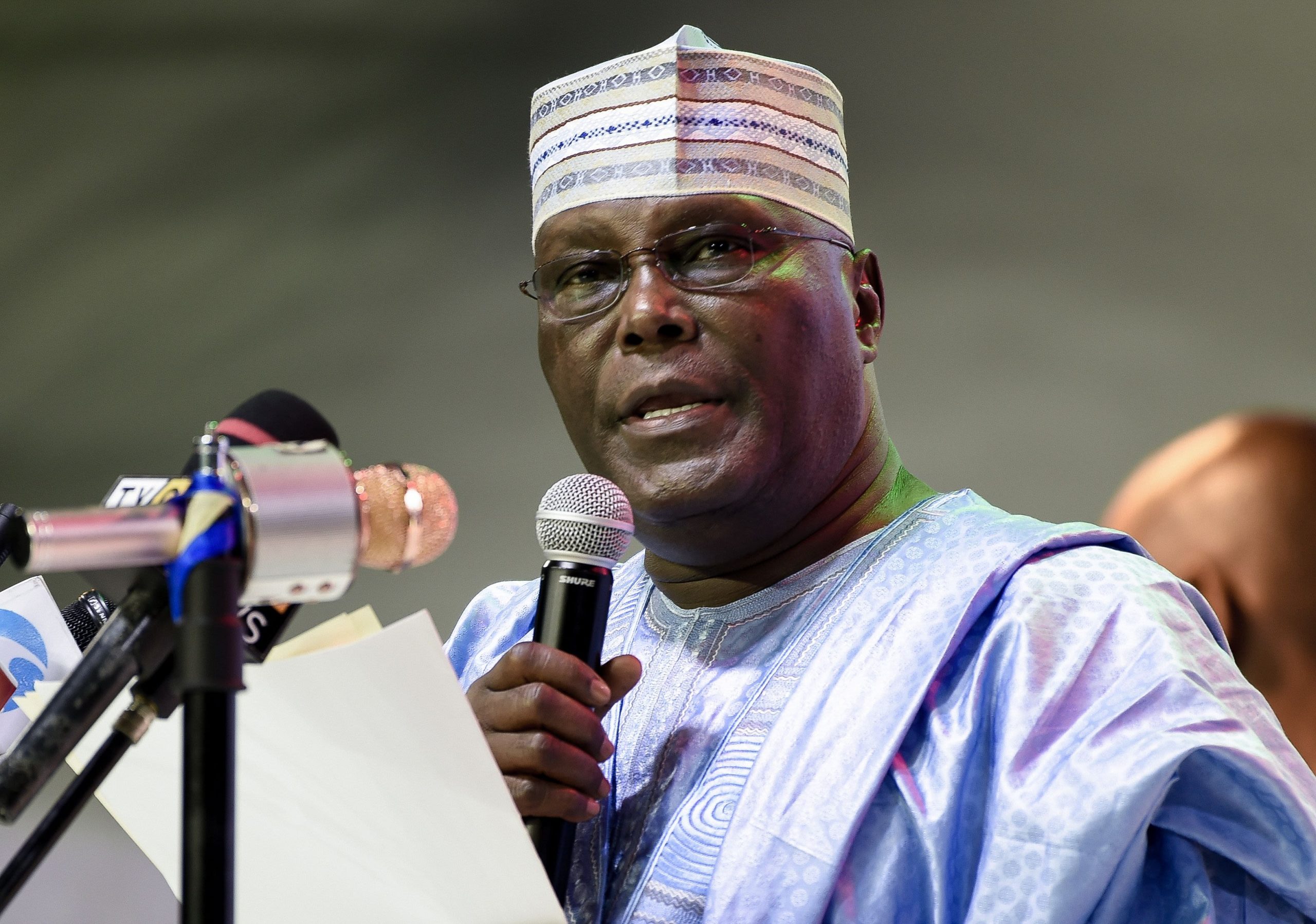
Majority of people have been victims of such unfounded stories and accusations — one of which is a prominent politician in Nigeria’s political space, Atiku Abubakar. This man has suffered a lot from many allegations against his personality.

Two days ago, I was in Keke Napep (popularly known as Adaidaita Sahu) when this kind of discussion broke between two passengers and the driver. The three of them were bitterly complaining and narrating how Atiku Abubakar is funding terror acts in some places which according to them is what has backfired to cost him his presidential election.

Most of the things they were discussing and alleging were products of hatred, dogmatism, sectionalism and tribalism.

I’m neither an Atiku supporter nor his loyalist but, I never for once believe that Atiku has a hand in disrupting the peace and security of my country: Nigeria. I regard him as an established politician who is ready to take the mantle of leadership in Nigeria in order to change the narratives and lead us to the promise land.

Lastly, I urge my fellow Nigerians to personally investigate and think critically before believing or debunking stories on people, especially prominent personalities: politicians, business people, technocrats and renowned clerics so as not to fall into the trap of rumour mongers, disinformation and misinformation. Furthermore, we should also develop the habit of investing our time and energy in reporting and sharing positive stories about our fellow Nigerians, not hatred, propaganda and false stories.

Yusuf Murtala can be reached via his Facebook handle at Youngstar II.

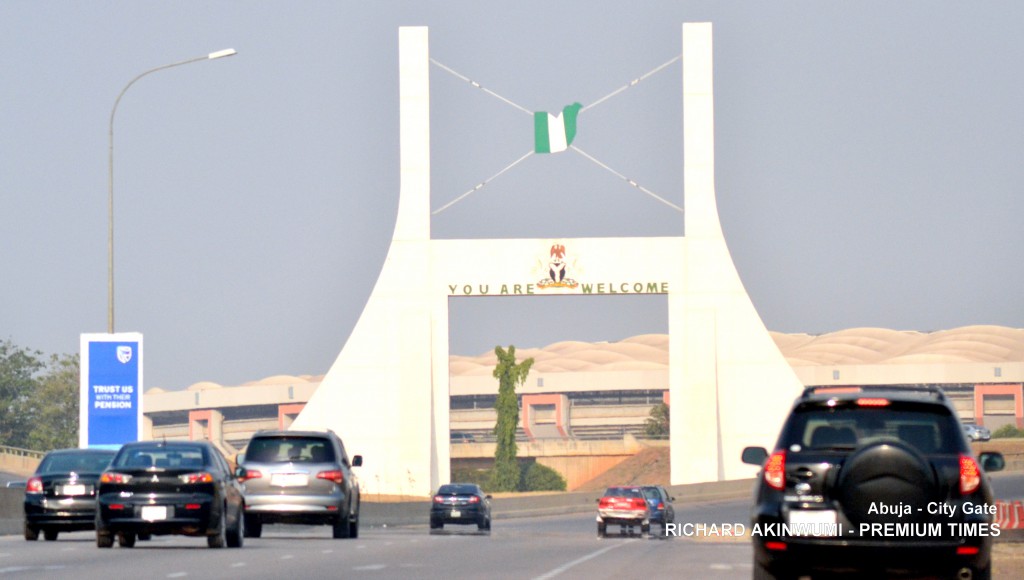
FCT Abuja: Please, appoint a native as minister

By Abdullahi Adamu

As the Nigerians await a ministerial list from the executive, we urge president-elect Asiwaju Ahmad Tinubu to balance Nigeria’s political diversity by appointing a minister among natives of the Federal Capital Territory, Abuja.

“We  are appealing to Mr President to appoint somebody from FCT as a Minister in the federal cabinet because we believe that doing so will give Abuja natives a sense of belonging within the Nigerian federation.”

FCT natives have contributed immensely to the nation’s socioeconomic and political development. Accordingly, their exclusion is a gross injustice and a negation of constitutional provisions, including the federal character principle.

The contributions of FCT indigenes in maintaining the country’s unity, none of its kinsmen was occupying leadership positions within the nation’s political, judiciary or military circles.

The exclusion of Abuja natives in the last administrations and appointing any credible person within the FCT indigenous population as Minister would right the perceived wrongs and injustices.

“We are appealing to President-elect Asiwaju Ahmad Tinubu to use his exclusive powers to appoint an FCT man as a Minister in the Federal Executive Council.

In making appointments in any portfolio, please consider FCT natives. As stated in the Constitution of the Federal Republic of Nigeria, every citizen shall be treated equally. Likewise, where the nation’s capital is located, the FCT natives should be included in the executive council of the presidential cabinet. To balance Nigeria’s political diversity, everyone should be carried along.

Since the inception of Democratic governance in 1999, it has been crystal clear that FCT natives shall be appointed as the territory minister.

Your excellency, sir, it might interest you to know that with the huge amount of populated FCT natives in Nigeria, they only have one senator and two members of the House of Representatives only at the national assembly. It is an injustice.

We need a state status to increase our franchise beyond local government elections to enable us to have an executive governance structure and independent governing body and to expand our representation at the National Assembly.

Abdullahi Adamu wrote via nasabooyoyo@gmail.com.

An open letter to Barrister Abba Hikima

By Yakubu Nasiru Khalid

Should a real social fighter be partisan? Does this mean the side he has taken has no weakness at all, or does it mean Abba Hikima is no longer a freedom fighter as people regard him but a politician? 

Bar. Abba Hikima is a well-known social fighter, and he is one of the four most influential persons in Kano State who day and night fight to liberate have-nots peoples from the slavery of crooked individuals. 

He is a loving person within Kano State metropolitan area. His lovers are from various political parties such as NNPP, APC, PDP, etc. Many of his supporters use his picture as a slogan for their businesses, like tricyclic drivers (Keke-Napep), just because he fights to liberate them from evil hands. Many love you because they do not know you are partisan.

It is good for a social fighter to build relationships with politicians and policymakers to create positive change. You should try to connect with politicians who share similar values and goals. Building trust and respect with politicians is essential to maintain their dignity while dealing with politics.

But should Abba Hikima be partisan as politics is concerned? Your benefit is more meaningful and beneficial as a freedom fighter than to be a politician. You can only maintain your dignity in politics by staying true, which is costly in Nigerian democracy. “If you want to understand a person, give him power.”

Being partisan means you are willing to swallow all sweetness and bitterness of the side without scrutinising. Still, social fighters always struggle to ensure that the public meets their needs effectively and efficiently. 

Yakubu Nasiru Khalid can be contacted via yakubunasirukhalid@gmail.com.

Nigeria’s failure is a combination of the individual and collective disgrace of the system

By Nura Jibo

Nigerians living within and staying in the diaspora should start a self-cleansing effort to seek Allah’s forgiveness. Already, the people of the country have wronged God. Unfortunately, the current leadership does not want to agree with this position. However, let me start with the individual failures before I descend to the collective disgrace and abuse of the system.

1. The recent presidential election overtly exposed the INEC chairman’s unpreparedness. He was highly unprofessional and produced a very abysmal and disappointing outcome. In the history of Nigeria’s electoral commission, there has never been a time that a lump sum of money amounting to N335 billion was spent on a presidential election under the pretext of the Bimodal Voter Accreditation System (BVAS) or IReV (portal) or whatever parlance Prof. Mamud Yakubu wants to call it. This guy ended up giving Nigerians the most controversial and expensive presidential election in the entire history of the world. As a professor of history, he went to Chatham House and bragged to Prof. Alex Vines and co. that in his office, “There is one of his engineers that even promised him to design a voting machine that could sense voters’ body odour.” He was telling this open and brazen “invention” to global audiences at Chatham House even when he ended up giving Nigerians the most terrible BVAS and IReV technologies that, up until now, he is struggling to fix by postponing the Guber elections by a week!

2. The N335 billion that Henry Omoru of Vanguard reported that Prof. Mamud asked from the Federal Government to conduct this kind of election was an upshot of the initial INEC budget of N305 billion plus an additional N10 billion. This stupendous amount is enough to build eight state universities in each of the 36 states of the federation, including Abuja, with a take-up grant of N1 billion each!

3. According to Dennis Amata’s analysis of the INEC 2023 election budget that appeared in Dataphyte, “The Federal Government spent N444.5 billion to conduct the country’s last three general elections, and a total of N255 billion was wasted due to the low voter turnout recorded in each of the elections.”

4. And if it is true that Mamud is a first-class historian from Usman Danfodio University, Sokoto, Nigeria, and he used his historical antecedents to brag at Chatham House and, in the end, give Nigerians this BVAS melodrama, then his first-class degree is now subjected to the vagaries of his incompetence and lack of ICT knowledge. And this is why! His poor BVAS and IReV performances had already reduced him to a local champion or, better put, a local history professor overrated in Nigeria.

5. A cursory look at the INEC’s nine (9) key items that it budgeted for the conduct of the 2023 election shows that there was a very depressing procurement of hi-tech/advanced ICT facilities such as BVAS and a hi-tech result storage database that could safeguard the security of online and offline result submittals and transmittals, as Mamud wants us to believe. Indeed, Mamud is not aware of or lacks knowledge about the disadvantages of using BVAS as a voter accreditation system. On the contrary, he was probably carried away by it because INEC was told that it could eliminate electoral malpractices and prevent multiple registrations.

6. But Mamud, as a “first-class” academic and Professor of Political History, ought to have known that using such a biometric voter identification and transmitting apparatus for instant results collation is always problematic for developing countries such as Nigeria because there is no adequate network in African countries that could effectively allow the use of BVAS and IREV portals (transmission). In fact, the incessant network failures in Nigeria and, by extension, Africa are enough to get Mamud informed of the disadvantages of using this failure-prone network facility. Moreover, as a learned history professor, this ought to have informed him how this kind of network failure gave President Yoweri Museveni an advantage to impose an internet blackout that cut off access to news, social media, and messaging services ahead of the Ugandan presidential election.

Seriously, Mamud, as a professor, needs to know better than anybody the calamity in the erratic supply of electricity that could ravage his entire BVAS and IREV efforts. In 2019, I had an international conversation with Volkswagen’s Head of Sustainability in Madrid. I tried to persuade him to patronize African countries by supplying electric cars to Nigeria and other African countries. The Volkswagen giant quickly checked my ideas by saying thus: “There is no constant supply of electricity in Africa that could charge the batteries that will drive the cars”. Therefore, Prof. Mahmud and co. ought to have known this simple arithmetic. They could have visualized that no ample network or electricity in Africa could make BVAS and IReV function well!

Fellow Nigerians, friends, and colleagues of Nigeria, that was Mamud Yakubu’s disgrace to Nigerians!

And one wonders what the likes of Mohammed Haruna are doing at INEC as Resident Commissioners by allowing Mahmud to use Nigeria’s ample resources and, in the end, put the entire country into global shame! Whenever I see Mohammed Haruna sitting beside Prof. Mahmud with his hand akimbo, I know that Nigeria does not have a future. Because if a combination of Mohammed Haruna, who spent a significant part of his life writing long essays about Nigeria’s underdevelopment and democratic misgovernance, and Yakubu could disgrace Nigeria this far in the name of INEC staff, then we need to call it off for Nigeria. Indeed, there are so many Mamud Yakubus and Mohammed Harunas in the land that time and space will not allow us to exemplify most of them in this analysis. Therefore, we can only mention a couple of Mahmud’s similar disgraceful elements that constitute the Nigerian system’s individual failure before narrowing down to the specific scenarios that have thrown the country into a global failure and a pariah state.

7. Therefore, the next individual’s disgrace worth mentioning here is that of Adamu Adamu, the current Nigerian Minister of Education. Adamu took ample time to write his folklore about ASUU and how to make it better. But in the end, he goofs up Nigeria’s education by forcing the entire system to suffer universities’ strike action for over seven months! Courtesy of Adamu’s Taqiyya Amana, which he displayed amidst growing educational tensions that distract Nigeria by throwing it backwards by two-semester backlogs.

We can go on and on! But to cut the story short, the colossal loss to Nigeria on this INEC’s BVAS and IReV drama has successfully reduced its chairman to a local champion who made his country not reap the benefit(s) of the huge monies that he spent on this so-called BVAS without giving Nigerians value for their money. It is a shame that for all the money he asked for, he could not provide Nigerians with an enabling environment to come out en masse and cast their votes. Mamud and co. sincerely deceive themselves by hiding under the pretext that Nigeria’s democracy is the biggest in Africa. He also brags about this point anytime he is given a chance to speak. He doesn’t know that several African countries are fairing better than Nigeria. Unfortunately, Prof. Mamud doesn’t know that his country is lagging behind certain African countries regarding voter turnout and conducting fair elections without BVAS! Here I will conclude by quoting extensively Ray Ekpu’s take on the need for INEC to wake up from its slumber and engage in a serious campaign on voter turnout.

According to Ray Ekpu, “Many African countries have done far better than Nigeria in combating voter apathy. Their voting figures are close to 100%. Look at these: Rwanda’s 2017 presidential election produced a 98.2% voting record; Equatorial Guinea (2016): 92.7%; Angola (2017): 90.4%; Seychelles (2016): 90.1%; Guinea-Bissau (2019): 89.3%; Zimbabwe (2018): 84.2%. For Nigeria to deepen its democracy, the voting figures have to go up drastically. That means that all concerned must work on improving voter education.

Voter education can also help in checking election rigging. Election rigging can only happen when there is collusion among the triumvirate, namely, politicians, INEC officials, and security personnel. Where there is no collusion, no rigging of fundamental significance can take place. There is no perfect election anywhere in the world, but rigging can be substantially reduced once people are interested in ensuring that their votes count. But in Nigeria, poverty is an issue. Many of the people who sell their permanent voters’ cards are poor. For them, those cards mean little or nothing, but a few thousand naira can mean a lot to them. It can mean the difference between a full stomach and an empty one”.

Nura Jibo is a Lifetime Member of the West African Research Association (WARA), African Studies Centre, Boston University, United States. He can be reached via jibonura@yahoo.com.

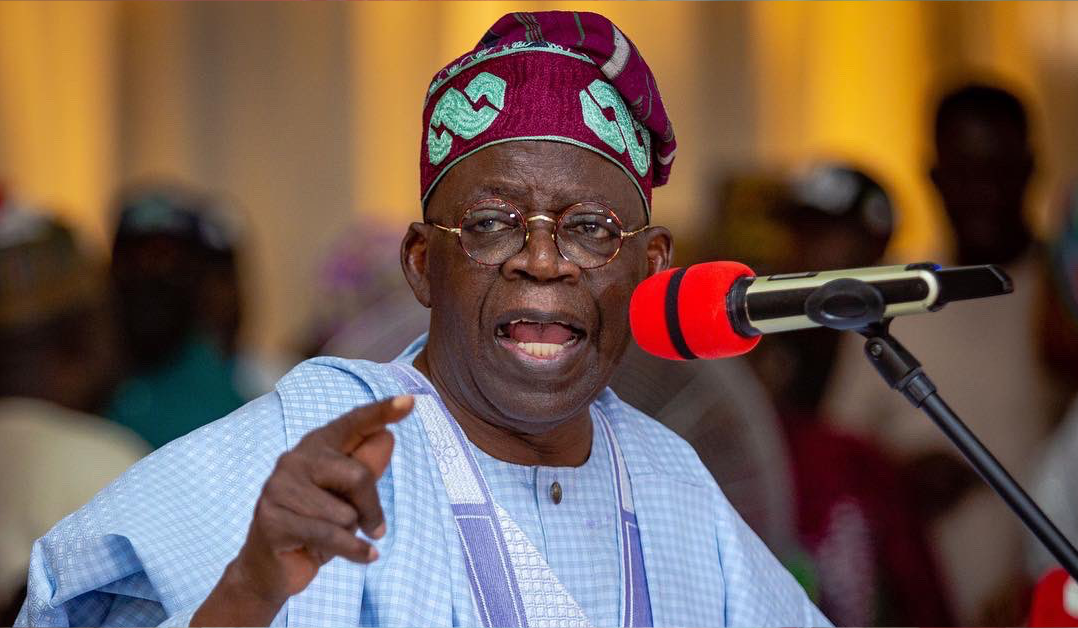
Tinubu: Savouring the triumph of an ageless political colossus 

By Lawan Bukar Maigana

It is now an open secret that the former Governor of Lagos State, Bola Ahmed Tinubu, is now Nigeria’s president-elect. For many who may not know, the erstwhile Lagos Chief Executive is not the typical run-of-the-mill Nigerian politician. 

A master political strategist of no mean repute, Tinubu has never lost an election since he started appearing on the ballot. The lessons in his political journey are enormous and worth studying by contemporary politicians, especially young people who aspire to be leaders of tomorrow. 

Tinubu’s political trajectory depicts the importance of building people regardless of any differences. He built builders, and the builders built him. 

Most people, including some members of his party, had thought that he was not going to win the February 25th presidential election because of some varying factors.

But Tinubu, for a minute, never lost hope. He consistently told people that he was going to win. He candidly said, “it is my turn, and I will win.” These were the songs he sang until he won. 

It is a fact known that most politicians fear the “enemies within”, but the reverse is the case with Tinubu as the Aso Rock cabals in President Muhammadu Buhari’s government fear him. He tackled them and moved on. 

The contribution of the people he built in politics to his emergence as president-elect cannot be overemphasized. 

Hours after he was announced as the winner of the keenly-contested election, he first extended his heartfelt appreciation to the Vice President-elect, Senator Kashim Shettima, and the entire northern governors who gave their best to his ascension to the presidency. 

One of the qualities of a resounding leader is his ability to unite people and carry everybody along. That is what Tinubu started with. He called on all presidential contestants to join him in building a new Nigeria for the betterment of all and sundry. Who has ever done that in the history of our nascent democracy? 

Tinubu’s track record as governor of Lagos is a testimony of his effort for the unity and development of Nigeria. He brought capacity hands outside Lagos for the betterment of his people. He has national spread, unlike his Labor Party rival, Peter Obi, who was largely voted by people of the east and a few from the west. 

Obi, being the governor of Anambra, does not take his state as his permanent residence. He lives in Lagos—a state developed by Asiwaju Bola Ahmed Tinubu. I expect him to calm down his supporters, conceit defeat and join hands with the president-elect to steer the Nigerian project. 

One of the best ways to advocate peaceful coexistence and give people a sense of belonging is by giving protection to the people you govern, regardless of any differences. Tinubu’s house is a good example. He’s a Muslim. His wife and children are Christians. 

Teeming Nigerians have joined Tinubu to savour his electoral victory in the penultimate Saturday’s presidential election. But the President-Elect knows, more than anyone else, that the journey ahead will be rough, bumpy tortuous. 

He, however, should do all that it takes to actualize the visions of his ‘Renewed Hope’ campaign slogan. It is not for anything that many, including his armchair critics, regard him as a political colossus who has greatly paid his dues in helping to entrench democratic governance in Africa’s Giant.

Lawan Bukar Maigana writes from Abuja and can be reached via email: lawanbukarmaigana@gmail.com.