2023 Elections

For Government’s Success: An open advice to President-Elect Bola Ahmed Tinubu (I)

BY Umar Ardo, PhD

PREAMBLE

First, let me seize this opportunity to congratulate Sen. Bola Ahmed Tinubu on his well-deserved victory in an unarguably the most keenly contested presidential election in Nigeria’s history. For me, I feel fulfilled in that the incipient seed of this outcome was sown by my humble self way back in January 2012, when I conceived the idea of the merger between Buhari’s CPC and Tinubu’s ACN, premised on the former being President and the latter Vice President. Aware of the previous failed attempt at such a merger, I sold the idea to Buhari in such a way and manner that I was confident he would accept. Even though he had then publicly announced that 2011 would be his 3rd and final attempt to contest for the presidency if he lost that year’s election, it turned out easy for me to get his buy-in to the idea as within three hours, he consented and promised me of approaching Tinubu with the plan. I then knew my job was done, as I was certain Tinubu, too, would consent to it.

And lo and behold, about five weeks later, Buhari called me to a meeting in Abuja, at which he briefed me on his meeting with Tinubu on the merger and that the man had accepted the proposition. I felt elated, knowing there and then that change had come to the country. The rest, as they say, is now history. (The details on this concept and how it was worked out are contained in chapter 7 of my book titled “Court and Politics: Chronicling my Experience in the Nigerian Theatre”, published by Sungai Books; New Jessy, USA, 2020. Both the president and the president-elect have copies of the book).

2. THRUST OF THIS ADVICE

Now, having won this hard-earned victory against so many odds, it is important for the sake of the country and the President-elect’s legacy that the regime succeeds. And this success is largely dependent on, among three other things, the thorough implementation of government policies.

The campaign manifesto of the President-elect has no doubt enunciated laudable core policy initiatives capable of resolving the teething problems facing this country. But this will depend largely on one thing – i.e. diligent implementation! In practical terms, this means that:-

➢ No matter how good a policy, maybe its end product lies in implementation;

➢ Citizens assess governance by what is implemented on the ground, and so citizens interact with public policies only at the implementation level;

➢ As the regime starts its term in office, it must ensure that its policies are fully implemented; and

➢ Without fully implementing its policies and making a difference at the implementation level, the regime also risks ending up a failure like previous regimes.

Yet, the major recurrent concern of governance in Nigeria over the years has been the failure to implement policies as conceived and formulated by governments successfully.

3. JUSTIFICATION

The fact that successive governments, not excluding the outgoing one, would come up with laudable policy initiatives, well-conceived and elaborately articulated, but eventually fail at the implementation level, to the disappointment of the public and discredit of the government itself, calls for a new approach to public policy implementation in Nigeria. To this end, it is important to highlight that:-

➢ The primary reason for this gap between excellent policy initiatives and pitiable policy implementation is mainly a lack of [or poor] monitoring and evaluation mechanism;

➢ Even with a strong will on the part of leadership, it has always been difficult to get things to happen in government organisations because of endemic vested interests that create resistance, inertia, discouragements and even sabotage to such policy implementation attempts; and

➢ Good ideas and the will of the government to implement the same are not sufficient; drive and follow-through are equally important, yet often insufficiently appreciated and applied.

Against this backdrop, so as to help the government overcome these challenges and make a difference in performance and achieve set policy objectives, I respectfully make this open advice for the kind consideration and approval of Mr President-elect, please.

4. ACTION STEPS

➢ Establish a Policy Implementation, Monitoring and Evaluation [PIME] Unit under the Office of the President by means of an Executive Order; and

➢ Appoint a Special Adviser to the President on Policy implementation, Monitoring and Evaluation as head of the Unit. Such a person must be knowledgeable, patriotic, trusted and of impeccable character.

5 STRUCTURE, FUNDING AND MODE OF OPERATION

➢ The PIME Unit is to be a policy Monitoring and Advisory Outlet constituted by an Executive Order to operate within the Office of the President;

➢ The Head of the Unit should report directly to the President;

➢ The Unit’s budgetary funding is to be within the budgetary provisions of the presidency; and

➢ Hold monthly 1hr Update Briefing Sessions with the President on the activities, findings and suggestions of the Unit for any further necessary actions.

6. AIMS AND OBJECTIVES OF THE UNIT

The PIME Unit should have the following aims and objectives:-

➢ To ensure full implementation of government policies, designs, projects and programmes for efficient delivery of expected results;

➢ To devise and drive new national policy-performance-design capable of reversing the endemic failure syndrome in policy implementation by the government; and

➢ To create and sustain a positive image of the government in terms of policy and budgetary implementation attitudes nationwide.

7. SCOPE AND FUNCTIONS OF THE UNIT

The PIME Unit should have the following scope and functions:-

➢ Design, develop and implement a systemic monitoring and evaluation framework to track, monitor, assess and report on the performance of all entities in relation to the government’s plans, activities and timeframes so as to improve the quality and quantity designs in policy, programme and/or project implementation relative to government interests;

➢ Monitor, assess and evaluate the performance of ministries, agencies, institutions, departments, projects and programmes of the government to ensure compliance with policy intentions, outputs, outcomes and impact on the polity;

➢ Organize, undertake and provide [if, where and when necessary] training and technical assistance to implementing entities and partners on specific policy implementation initiatives as may be required for the attainment of government goals;

➢ Produce and submit monthly Reports and prepare presentations of the Unit’s activities, findings and recommendations to the president;

➢ Advice the president on all issues relating to the full implementation of government policies, programmes, projects and obligations; and

➢ Perform any other scope and function as may be assigned to it by Mr President.

8. EXPECTED BENEFITS AND SIGNIFICANCE OF THE UNIT

The PIME Unit will yield the following benefits:-

➢ It will ensure that government policies, programmes and projects are fully implemented as conceived, and government’s goals are achieved;

➢ It will end the failure syndrome of government in policy implementation forthwith and ensure rapid and visible development of the country;

➢ It will establish and maintain inter-agency coordination in policy implementation and provide a consolidated source of information showcasing policy implementation progress, highlight lapses where they occur and devise necessary corrective measures forthwith, hence allowing operators to learn from each other’s experiences, building on expertise, knowledge and synergy;

➢ It will generate written reports that will contribute to transparency, accountability and efficiency, allowing lessons to be shared more easily and experiences and templates used as bases for steering decision-making processes;

➢ It will establish and deepen the culture of transparency, accountability and efficiency in public institutions and public services; and

➢ It will provide the presidency with a veritable measurement tool of the performances of public institutions and public servants.

9. CONCLUSION

The rationale for this open advice now is that I feel Nigerians are actually tired of the unending cycle of failures of successive governments of the country and that we need to put a halt to it. The sole objective of this memo, therefore, is to help create the needed momentum from the start of the incoming Tinubu-led regime that will make it succeed in breaking this failure syndrome in the most critical area where all other regimes had failed – policy implementation; to positively enhance the developmental fortunes of our country, and as a result at once mould public opinion favourable to President Tinubu and his new regime, both at home and abroad. This way, one will fill more gratified that one’s efforts in trying to bring positive change to our country and society have at last yielded fruits.
Ripples from the Adamawa 2023 inconclusive governorship election

By Zayyad I. Muhammad

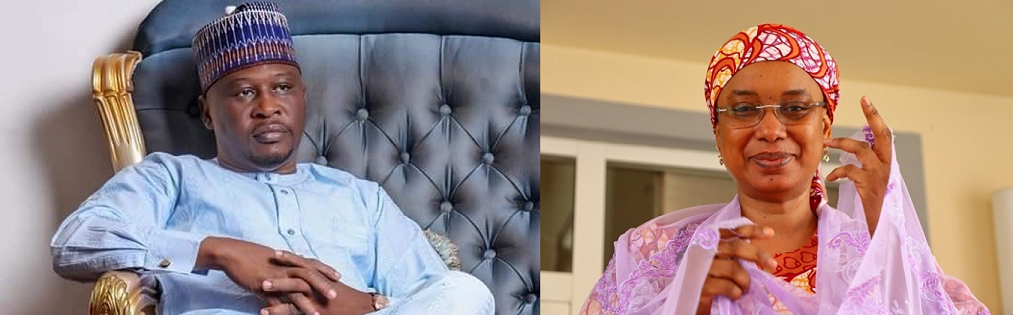
The Independent National Electoral Commission (INEC) has fixed Saturday, April 15th, 2023, as the day for the Adamawa state governorship supplementary election in 69 polling units across the state. Governor Ahmadu Umaru Fintiri is going into the supplementary election with a margin lead of 31,249 votes. Senator Aishatu Dahiru Ahmed Binani needs a miraculous miracle to dilute this margin from the 37,706 expected votes in the 69 polling units where the supplementary election will be conducted. Though miracles, they say, do happen!

Despite the opened anti-party she faced from some members and executives of her party. Her disregard for the crucial aspect of politics – collaborations with everybody and anybody, plus her failure to send an olive branch to some of the APC governorship aspirants who lost to her during the APC governorship primaries, including the indifference to her candidacy exhibited by some stakeholders of the Adamawa APC, Binani has proved a point- Binani shook Governor Fintiri in a way he never expected.

Candidate Fintiri came to the March 18 governorship election over-confident but with poor calculations and with so many off-the-shelves strategies. For instance, he thought that his 2019 bloc vote was still intact, but he was wrong- many people in the bloc vote have realised that they’ve nothing to gain from it- it was mainly Fintiri’s ‘cousins’ and close associates who mostly enjoy the goodies meant for the bloc vote. Fintiri’s second mistake was the poor deployment of logistics – this is obvious from how he performed in the Adamawa North Senatorial District- his primary constituency- Fintiri got only 53% of votes, losing 3 of the 5 LGAs. Though Binani also performed poorly at her central zone- she got only 45% of the total votes – winning only 3 of the 7 LGAs.

When the controversial Fufore LGA result was announced, Gov was pictured celebrating victory with his Aides. However, a few minutes later, when the final result was declared inconclusive – again Fintiri was pictured in a deflated mode. Students of politics and history should study INEC’s declaration of Adamawa 2019 and 2023 governorship elections as inconclusive relative to the man ‘ Ahamdu Umaru Fintiri’- it always brings out ‘the punctured him’. In 2019 when the election was declared inconclusive, Fintiri ran to former Vice President Atiku Abubakar for help and equality in 2023.

When his re-election was also declared inconclusive, Fintiri returned to Atiku for another help. In fact, in 2019, former governor Boni Haruna saved the day for Fintiri. In a press conference, Boni highlighted the difference and the importance of registered voters and PVC collected, which today has become a working document for all political parties and INEC itself.

 Fintiri is a man that often boasts that he is a man of great political sagacity, he often claims to have retired many people or has ‘shaved’ their heads from politics, but whenever he is faced with an intricate political situation, he suddenly becomes punctured and runs to same people for help.

As earlier mentioned, Binani needs a miracle, or the 8th wonder of the world, to upstage Fintiri’s 31,249 votes lead from a pool of just 37,706 votes. Nevertheless, whoever wins the 2023 Adamawa governorship election, will face a big legal tussle; that’s why people were shocked when Fintiri and his convoy were seen returning from Fufore LGAs, in the name of collection results to the state collation centre. It is simply bizarre- when a contender in an election turns himself into the electoral and collation officer.

 Politics is about interest and survival – the APC members and executive who worked against Binani – did it to survive- For the executive to protect their seat, while for some of the stakeholders- it is about 2027 calculation if there is an incumbent governor from the APC, the ticket is closed for eight years. And supporting Fintiri is also another of their calculations. If he wins, he will leave the scene after four years. Thus, 2027 will be free for all.

For some of the prominent PDP stakeholders who were also indifferent to Fintiri’s candidature, they did it to remind Fintiri that ‘big’ is ‘big’- Fintiri went to the election almost solo with his lieutenants, but he could not get an outright victory but managed an underdog-like inconclusive win.

 In conclusion, Governor Fintiri has the brightest chance of coasting to victory in the April 15th supplementary election, but he’s the biggest ‘loser’ in this election- his political might has been reduced to its lowest. He now knows that going to the Senate in 2027 is not as easy as he thought, and bringing a successor from the PDP is not in his absolute control. Another loser is the APC and some of its executives that opened antiparty – Adamawa APC remains fragmented for some time to come- this will hunt the party in the next cycle of elections, as pay-back-time will be the order of the day in the party for many years to come.

Binani, on the other hand, her chance of winning the election is near zero, but she is one of the biggest winners in the election – despite little support from her party in the state and open anti-party from some party executives, she made points and strong political statements. Another winner of this election is some PDP stakeholders and the PDP itself- this election has removed them from any shackle – had it been that Fintiri had a smooth ride; won the election with a significant margin effortlessly, he would attempted to ride on anybody in Adamawa politics in his second term.

 Zayyad I. Muhammad writes Abuja via zaymohd@yahoo.com.

Nigeria: Prognosis and challenges against the incoming government

By Iranloye Safiu Taiye

Nigeria became an independent State on 1st October 1960 from her former British colonial masters, which ushered Nigeria to the comity of a sovereign state and membership of the United Nations (UN) after decades of British colonial administration officially came to an end (1900 – 1960). On the eve of independence, our nationalists and politicians were mandated to administer Nigeria after rigorous agitations, struggles, and movements by our nationalists, who fought passionately to attain self-rule and independence. It was a memorable period when millions of Nigerian citizens, at home and in the diaspora, troops out with Nigerian flags to celebrate and jubilate the end of the British colonial rule on our father’s land. 

Nigeria is a heterogeneous and multiethnic state with multifaceted socio-economic and political backgrounds. These invariably made Nigeria a unique pluralistic State with more than 450 ethnic nationalities. Despite the diverse culture, religions, customs, languages, social beliefs, and norms within Nigeria’s setting, we’ve managed to dwell together even in the face of our glaring diversities, and this is one of our greatest achievements decades after the independence, notwithstanding the several events that have posed challenges to our national unity. Our country is one of the most blessed states globally, occasioned by the abundant natural endowments deposited across the States of the federation, which had positioned Nigeria better in the comity of nations. Not just that, we’re also blessed with adequate human resources capable of culminating our development. Hence, these human and abundant natural resources can better stimulate sustainable growth in Nigeria than we are currently experiencing.

Paradoxically, the Nigerian quest and cruise to greatness were aborted and short-circuited by the military intervention in Nigeria politics on 15th January 1966 led by Gen. Chukwuma  Kaduna Nzeogwu, who later installed Gen. J. T. U Aguyi Ironsi as the first military head of state, according to the prominent argument of many scholars. The 1966 bloody coup de tact and the subsequent counter-coup de tact had been pointed out by many as the rationality behind Nigeria’s development stagnation.  Because the military regime that lasted for three decades was driven by a mere parochial desire  to rule devoid of prior political training or orientation about governance

Like every other country, Nigeria had hills and challenges that required mechanisation to provoke development and fulfil its obligation to its citizens. However, six decades plus after Nigerian independence, there are some questions critically requiring answers; 

A.) Is this the envisioned Nigeria by our nationalists and founding fathers? 

B.) Have we been utilising our cultural plurality and resources to catalyse the State of our dream? 

C.) Despite these enormous endorsements, can Nigeria even compete with the countries aboard with little endowment compared to Nigeria? 

Nay! The Nigerian vision and enormous resources had been ill-managed, and we’ve scrapped our national interest to the hand of corruption, nepotism, favouritism, and chauvinism. It’s saddened these challenges have become a phenomenon, very terrifying, cumbersome, and complex because we have failed to implore a holistic approach to proffer an answer to our societal challenges. Hence we pursue individualistic and least regional interests against national interests, which have ejected the spirit of one Nigeria from most citizens. Sadly, this has also metamorphosed and Jingerd the swagger of many separatist movements and self-rule agitations across the Northern and Southern pole of the country. i.e. IPOB in the Southeastern region, Middle-belt in the Northcentral region, and Yoruba Nation in the Southwestern region.  

Security which has to be the first duty of every government, has been compromised by the action of terrorists, bandits,  kidnappers, armed robbers, ethnic militias, and other criminals everywhere. This horrible event threatened the safety of life and properties of every citizen, regardless of their position or calibre in the state. Therefore, though the actions of our gallant military men, Nigeria police, and other law enforcement agencies cannot be overemphasised, they will be better off if they can empower the service men with better-sophisticated weapons and machinery to curb the insecurity across the nooks and crannies of our country. Therefore, more advanced weapons and ammunition with technical military training are germane now than ever.

The Nigerian economy was known to be enormous and giant before, but currently, the buoyancy of our economy is now a past glory; even Naira is now at the bottom of the global currency index. Diversification of our economy from crude oil dependency must move from a mere paper presentation to reality. The agricultural and manufacturing sector needs serious attention. Recharging this sector is the only remedy to witness a balance of trade, open the door for more investors and open Nigeria’s market to the international community, and change our status of a perpetual importer, if we want our economy to get back on track and compete favourably with other developing and developed countries of the world. Significantly, both the education and health sector needs critical attention and consideration because this is the brain and blood of every state, and the sorry situation of these two sectors is currently condemnable. 

Glaringly, Nigeria has been ravaged with internal problems ranging from separatist movements, clamouring for restructuring, intimidations, domination, and masterminding of regional agenda despite the constitution forbidding that. However, the pluralistic situation that has polarised us must be considered when deciding to affect the entire country if we don’t want unnecessary agitation that can further divide us. 

In conclusion, I will opine the new regime because of National unity and to curb rising agitation for self-government from different parts of the country. The political parties that won the national election should establish a federal government, not the usual winner-take-all, and douse the growing tension. Optimistically, realising Nigeria’s better tomorrow is achievable and redeemable only if we are ready to admit our differences and substitute our regional, ethnic, religious, and personal agenda for national interests. 

Notwithstanding, we must all be ready to partake in national affairs, challenge our leader for accountability, and embrace our national culture devoid of unholy ethnic jingoism when debating national issues.  

Iranloye Safiu Taiye (Optimism Mirror) can be reached via iranloye100@gmail.com

Open letter to Mallam Adamu Adamu

By Mukhtar Jarmajo

Sir, you are aware that the 2023 general elections have come and gone and the dust it has raised in the Bauchi State All Progressives Congress (APC) is yet to settle. Also given that you are one of the prominent leaders of the party who definitely call the shots, most of the issues at hand clearly have your name, among others, written on them. It is therefore only right that you open up and clear the air on the grey areas where you are alleged to have worked in different dimensions with your party. This is important not only because it will help in making sure that your statesmanship and gentlemanly statue remain intact, but also because it will see to it that posterity remembers you as a true party man. 

Honorable minister, it is alleged that you did not support the APC governorship candidate in Bauchi State, retired Air Marshall Sadique Baba Abubakar in the just concluded general elections. It is also alleged that you did not support him because of the following reasons: 1. If the APC in Bauchi State gets a governor, you will seize to be the party leader in the state. You are therefore comfortable with the present arrangement; 2. If he becomes governor, Air Marshall Sadique Baba Abubakar may not be submissive to you unlike the present governor who you are alleged to have been working together with; and 3. The Katagum factor. 

While it is very difficult to believe all these allegations because of your known principles of altruism, you will do a great deal of service to your political party, the APC, if you clear the air especially when certain reasons are used to back the allegations. They are: 1. Throughout the campaign period, you did not attend any of the party’s rallies in Bauchi State; 2. The Bauchi State APC Chairman, who allegedly was brought by you from the Social Democratic Party (SDP), has also not been on ground to discharge his responsibilities. It was alleged that you were together in Abuja; 3. In contravention to the agreement that a state governorship aspirant was to coordinate the APC Presidential Campaign Council in his state, you allegedly worked day and night to replace Air Marshall Sadique Baba Abubakar with your friend; and 4. It is not yet clear whether or not you were in Azare, your home town, both during the presidential and governorship elections to vote.

With all these at hand, it is alleged that Mallam Adamu Adamu, the Honorable Minister of Education in an APC led administration worked hard to ensure that the APC presidential candidate, Asiwaju Bola Ahmed Tinubu lost Bauchi to PDP’s Atiku Abubakar. Similarly, you allegedly worked to ensure that most of those who vied positions to the national assembly in Bauchi State did not win. Certainly, this scenario is difficult to understand just as the entire picture is hardly legible. But you are in the best position to clear the air. 

Jarmajo wrote from Kukadi/Gundari Ward, Misau Local Government. 

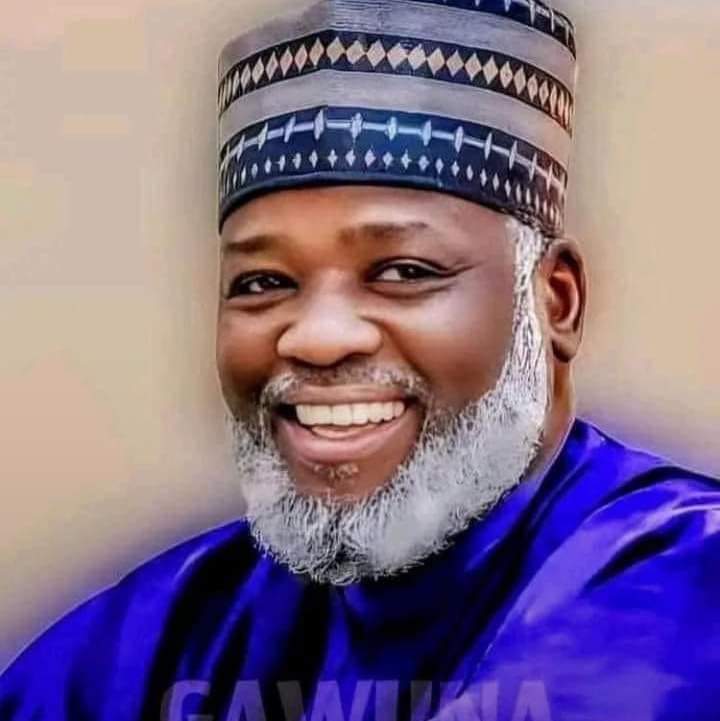
Dr Nasiru Yusuf Gawuna has paid his dues

By Ibrahim Siraj Adhama, Ph.D.

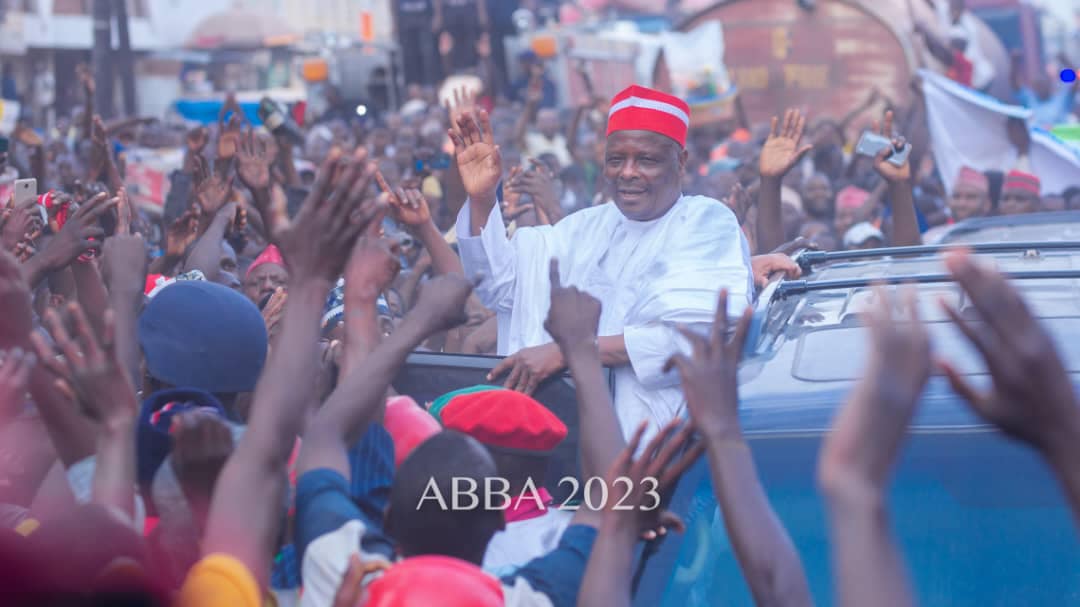
The governorship election in Kano has come and gone. The battle has finally been won and lost. No doubt it will go down as one of the most keenly contested guber elections in our State in recent history. At the end of it, a winner emerged in the person of NNPP’s Abba Kabir Yusuf, alias Abba Gida-Gida. While congratulating him, his party and his teeming supporters, it is our collective prayer that Almighty Allah will give him the courage, wisdom, guidance and tenacity to lead Kano to greater heights.

Not unexpectedly, the March 18th election has left in its wake several talking points that will continue to dominate public discussion and intrigues that may take years to unravel. Its outcome will go a long way in shaping the future of Kano politics for a long time to come. Questions will continue to be raised about the legality or otherwise of the returning officer’s result declaration when it appeared there were more registered voters affected by cancellations than the margin of lead between the two candidates with the highest number of votes against the provisions of the 2022 Electoral Act and INEC election guidelines. Not a few people will be tempted to suggest a spectre of legitimacy haunting governor-elect Abba’s declaration arising from that controversy until all doubts are justifiably cleared.

The purpose of this piece, however, is to x-ray the governorship contest vis-a-vis the heroic performance of His Excellency Nasiru Yusuf Gawuna, candidate of the ruling APC, who, despite not winning the big prize, has given a very good account of himself as a great and promising young leader and politician with immense rich and potential. All fair analysts will give it to him that he had fought a good fight.

It is safe to argue that no candidate of a ruling party has gone into an election with many odds working against him as Gawuna in the just-concluded election. From his living under the burdensome shadow of Governor Abdullahi Umar Ganduje to widespread disillusionment against his party, APC, across the levels, from Kwankwasiyya’s massive followership and unflinching determination to effect a change to highly biased and unfriendly media, Gawuna’s task of winning could not be more daunting.

Gawuna contested the election as Ganduje’s backed candidate and a possible successor. One needs to understand how unpopular Ganduje’s government has become to appreciate how much of a liability that was. Ganduje had been practically on a mission to cultivate as many enemies as possible for himself, his administration, his party, his family and everything associated with him. Ganduje had, for a better part of his administration, pressed the self-destruct button.

Ganduje’s controversial land grab and conversion policy, his poor handling of education and students’ welfare, the falling standard of healthcare and poor state of hospitals in the State, his mismanagement of A Daidaita Sahu cyclists, his apparent lack of empathy towards such vulnerable groups as junior workers, pensioners and retirees, his failure to provide leadership towards resolving his party’s internal wranglings thereby causing the defection of key members to opposition parties, among other terrible blunders and unforced errors, Governor Ganduje has made things a lot easier for the opposition NNPP.

With Ganduje, you needed no enemy; he was his government’s number one detractor and his party’s foremost de-campaigner. His largely self-inflicted injury had overshadowed his modest achievements, especially in peace and security, urban renewal, expansion of economic opportunities and general infrastructural development. Hardly do people take note of these achievements.

Consequently, the opposition succeeded in making every declaration of support for Nasiru Gawuna as an endorsement of Ganduje’s litany of “atrocities”. Efforts to prove that the Deputy Governor might not himself be happy with Ganduje’s ways and will almost certainly correct those mistakes, given a chance, were taken with a pinch of salt. Many who campaigned for him faced the daunting challenge of convincing other voters that he would act differently. It’s that difficult!

As the ruling party in control of the centre, the APC did not help matters either. In a move that had the potential of jeopardizing the chances of the party’s candidates nationwide, the Federal Government announced a plan to redesign the country’s currency ostensibly to curb vote-buying and payment of ransom to bandits and kidnappers. This policy, coming on the eve of general elections, fueled speculations within the ruling party itself that certain fifth columnists close to President Muhammadu Buhari were part of a plot to rock the ship of the APC, considering how unprecedented cash crunch riled up already suffering Nigerian masses against the ruling party. Though APC has somehow managed to win the Presidential election and maintain control in most States, the damage done by this ill-advised policy to the party’s electoral fortune could just be imagined.

That His Excellency, Deputy Governor Nasiru Yusuf Gawuna, was able to score nearly nine hundred thousand votes is no mean feat given these circumstances. For me, he should be grateful to Almighty Allah, who made it possible for him to harvest this massive figure in spite of all attempts to rubbish him or undermine his chances using Ganduje’s failures. This feat is majorly attributable to his ability to connect well with some key segments of society who stood by him.

In appreciating Gawuna’s performance, though, I pay little heed to reports of widespread vote-buying. This is due to the realization that both NNPP and APC were culprits; available evidence has shown that the two major parties had tried different tricks at voter inducement. And as experts would say, vote-buying itself works on nothing, and it mostly targets undecided voters.

Since his foray into politics 20 or so years ago, Gawuna has been rising and rising. The outcome of this election represents a temporary setback which does not in any way signify his downfall as naysayers would want to believe. For careful observers of his trajectory in politics, it’s just a matter of time before he recovers and continues to rise higher and higher. Let his detractors know that the man is not going down anytime soon.

With the highest number of votes obtained by an APC gubernatorial candidate anywhere in Nigeria, Gawuna looks set for something very great, especially with an APC federal government of Asiwaju Bola Tinubu in place. No doubt, Gawuna will be an invaluable asset in Jagaban’s cabinet, going by experience. After serving for 20 years as Local Government chairman, commissioner and deputy governor, who knows if Allah is preparing him for national service? Only time will tell, and our prayers are with him now and always!

Dr Ibrahim Siraj Adhama is a Senior Lecturer from the Department of Mass Communication, Bayero University, Kano and can be reached through isiraj.mac@buk.edu.ng.

Kwankwaso, Kwankwasiyya and Arewa beyond 2023

By Aminu Alhassan Kuba

During the 2023 general elections, Eng. Rabiu Musa Kwankwaso contested for the office of the President Federal Republic of Nigeria under his newly registered party, the New Nigeria People’s Party (NNPP). Unfortunately, he came a very distant 4th, winning just one State out of 36 plus the Federal Capital Territory, Abuja, with a little over 1 million votes. His party also presented candidates for the governorship in a few other states apart from Kano, and the closest it came to winning apart from Kano was in Taraba.

Before the elections, Senator  Rabiu Musa Kwankwaso had been engaged in a fierce political battle with his erstwhile political friend and deputy and present governor of Kano State, Dr Abdullahi Umar Ganduje.

In 2015, Kwankwaso supported Ganduje to succeed him, but afterwards, trouble started. In a video I watched sometime in 2018, Ganduje accused Kwankwaso of envy. He said he did everything to respect and be loyal to his former boss, but it seemed Kwankwaso wanted everything. He accused Kwankwaso of wanting to be governor by proxy.

The fight between the two finally culminated in the now infamous inconclusive governorship election of 2019, where Kwankwaso tried to unseat Ganduje and replace him with his former PA, former commissioner, son-in-law, now governor-elect Eng. Abba Kabiru Yusuf. In that titanic battle for Kano, Ganduje emerged victorious.

The win led to other unfortunate matters, including the dethronement and banishment of the then Emir of Kano, His Royal Highness Muhammadu Sanusi II, the balkanisation of the Kano Emirate into five (5) smaller entities and the eventual appointment of two of Sanusi’s cousins among others as Emirs of Kano and Bichi, respectively.

In the succeeding four years, the political rivalry and fight between Kwankwaso and his old friend and political ally only intensified, culminating in the defeat of Ganduje’s candidate by same Kwankwaso’s son-in-law Eng. Abba Kabir Yusuf in the just concluded governorship election in the State.

Following NNPP’s victory, Kwankwaso’s supporters mainly and some commentators have sought to present Kwankwaso as some political wizard in Northern Nigeria. While this is true to a certain degree and circumstance, it is more accurate if Kano and not Northern Nigeria was the point of reference.

Kwankwaso has indeed managed to remain politically relevant compared to his Northern governor colleagues, alongside whom he contested and won elections to become governor in 1999. However, since his stated goal is not to become or produce the governor of Kano State but to lead Nigeria as President and Commander in Chief, the fairest comparison should be with those who have demonstrated similar ambition. And in this category, the most worthy comparison should be with the President-elect, His Excellency Asiwaju Bola Ahmad Tinubu, former Senator and Governor of Lagos State.

This comparison is even worthier considering that Lagos and Kano share similarities in population, political history, economy and commercial relevance to South and Northern Nigeria, respectively.

Let’s take a dive

In 1992 when Tinubu won a seat to become Senator of the Federal Republic, Kwankwaso won one in Nigeria’s House of Representatives and became its deputy speaker.

In 1999, both Tinubu and Kwankwaso contested and won to become governors of Lagos and Kano, respectively.

In 2003, while Tinubu was re-elected for a second term in office despite Obasanjo’s backstabbing and cynical takeover of the entire South West (except Lagos, of course), Kwankwaso lost his seat to a former permanent secretary, Malam Ibrahim Shekarau, whom he had humiliated and relegated to a classroom teacher. Shekarau went on to serve two full terms as governor of Kano. Kwankwaso was eventually appointed Minister of Defence by Obasanjo.

In 2011 Kwankwaso returned to Kano for a second shot and won. He served the next four years, delivering spectacularly on the massive infrastructural transformation of Kano and investing heavily in education and social services. In addition, he provided scholarships to hundreds of Kano indigenes to undertake postgraduate studies around the world. By the end of his tenure in 2015, he easily transited to the Senate under the newly minted alliance party, the APC, with General Muhammadu Buhari’s CPC, Asiwaju’s AC and Atiku’s rebellious PDP G-5 governors.

 In the same period, Tinubu chose not to run for office but worked to build a formidable political base with the South West as its fulcrum, installing governors in at least four of the region’s six States, many of them his former commissioners and going beyond to support former comrade Adam Oshiomhole to take Edo from the PDP.

In the same period, Tinubu not only built the Lagos-Ogun axis as Nigeria’s financial and economic powerhouse, but his former appointees also became a Vice-President, ministers, governors, chief executives of agencies and parastatals of the Federal Government.

Kwankwaso and his Kwankwasiyya movement have failed to go beyond the borders of Kano into neighbouring states like Jigawa, Katsina, Kaduna, Bauchi, etc.

Notably, they have ruled Kano with his former deputy turned adversary for 16 years. Despite its industrial and commercial potential, Kano has failed to significantly grow its internal revenue base to compete favourably with its peers in the country. In a shocking manifestation of its leadership crisis, a civil service state like Kaduna now generates more internal revenue than Kano.

Again, in education, Kano tops the list of states with the most out-of-school children. This is where I find difficulty in understanding Kwankwaso’s education investment model of sending vast numbers of Doctors, Pharmacists, Nurses, Engineers and other university graduates outside Nigeria to undertake postgraduate studies while millions of children are roaming the streets wretched, hungry and illiterate.

While I do not begrudge the beneficiaries of his scholarship largesse, many of whom I know personally, I think the billions of naira public funds he spent in that endeavour would have been best spent in strengthening Kano’s capacity to educate its underprivileged poor urban and rural population.

Therefore, it’s now twenty-four years after Kwankwaso and Tinubu first became governors; Tinubu could comfortably lose Lagos but still win in the rest of Nigeria and become President; Kwankwaso could only win his Kano and ended up a distant 4th in the same presidential race. This is a testament to how far both have come.

To bolster the point further, while Kwankwaso has managed to build a competent and diverse political team across Nigeria, on the one hand, even in his beloved Kano and over 24 years, he could only find his son-in-law and former PA worthy of his trust to become governor.

Beyond Kano in the wider Arewa, he has failed to create a political support base. Instead, he is mainly seen as the head of a violence-prone, uncouth, fanatic and cult-like group willing to insult and denigrate anyone who dares to disagree with its methods. This is not without justification either. Evidence in utterances, actions and inactions from him, his closest lieutenants and supporters that they are willing to use violence to achieve political ends when push comes to shove.

The behaviour of his supporters after the governorship election in Kano in which his candidate was declared the winner and his silence speak volumes. After attacking and burning down Rarara’s property within the Kano metropolis, no word of condemnation or reproach came from the Madugu [leader] or this party.

Despite Kwankwaso’s failings, however, at this moment of Nigeria’s political journey, Arewa needs a viable opposition to put the APC-led government on its feet from May 29th this year. And Kwankwaso’s NNPP, with a base in Kano, could position itself as a viable platform for the role. From the results of both Presidential and Governorship elections so far declared and its history in this part of Nigeria, PDP can no longer pose a serious challenge to the ruling APC.

Now practically wiped out of the North East, North West and North Central except in some minority enclaves like Taraba and Plateau and unfortunate governance failure examples like Zamfara and possibly Adamawa, PDP is practically dead. In Bauchi and Adamawa (maybe), I don’t see PDP surviving beyond 2027. All these added that Alhaji Atiku Abubakar, its leading financier, is now both old and tired. A Kwankwaso-led NNPP could therefore become a viable alternative for the greater North.

But for NNPP and Kwankwaso to take up this role, I suggest they need to rebrand; Kwankwaso needs to convince the rest of Arewa and Nigeria that his movement can grow beyond the personality cult Kwankwasiyya is now.

He must also convince the rest of Arewa and Nigeria that Kwankwasiyya is not a violence-prone provincial cult that quickly resorts to arson and looting at the slightest opportunity. Finally, he must convince the rest of Nigeria that when his interests clash with that of the State, that of the State will take precedence and that he is willing and able to reign in his supporters.

Aminu writes from Kaduna and can be reached via aminukuba@yahoo.com.

The rise of Nigeria’s electoral process

By Bilyamin Abdulmumin

Nigerians yearning to return to the path of democracy saw the light of day in 1999 when the military head of state, the late Sani Abacha, succumbed to the pressure to plan the Democratic transition. The Independent National Electoral Commission was therefore (established in 1998) and tasked to oversee the election process of the young democracy.

In its maiden election, INEC adopted a secret ballot system. This was a departure from the 1993 election: an open ballot system where voters lined up behind the poster of their candidate of choice. Although this system of voting was seen as the fairest, safest, and cheapest but on other hand, it was dubbed as a violation of voter’s choice privacy.

Other developments brought by INEC in the 1999 election were improved voter cards, transparent ballot boxes, and invitations from foreign observers. Despite irregularities in some areas, the reports said the 1999 election was free and fair. This is evidenced by the relative spread of victory across political parties in the election.

But, things began to go wild in the next election. Again, the incumbents would hold tight. They would fight tooth and nail to ensure their re-election. To make matters worse, the 2003 election (like 1999) was fragile and vulnerable, courtesy of the manual process, from voter registration to accreditation and collation.

The quality of the election process went further down the hill in 2007. When this time around, the incumbent swore to anoint their successors. And transparency and information were not in the public domain compared to the current election process.

But the election process improvements began to take off after 2007. When the winning presidential candidate Umar Musa Yar’adua not only conceded the irregularities in the election that brought him but pledged to improve the election process. He would be committed to his promise and set up a Justice Muhammad Uwais committee.

Although Umar Yar’adua’s determination threatened to hit a glass ceiling with his untimely death but his successor, Good Luck Ebele Jonathan, continued with the electoral reform. As a result, Prof. Attahiru Jega, a widely respected technocrat with an unassailable good track record, took charge of the umpire. From 2010 to 2015, when he led the commission, he brought game-changing policies such as electronic accreditation, the academics for results collation, security features on form EC 8A series as well as ballot papers, provision of clusters (for timely movement of polling team to polling units), and creating voting points to decongest Polling Units.

Like the 1999 election, national and international observers praised the outcome of the results. The 2015 General Election brought back hope to many Nigerian electorates. For the first time in the history of the Nigerian election, the incumbent President would be removed from office by the opposition. The then president Jonathan conceding to the defeat was equally remarkable and unprecedented.

The 2019 and 2023 General elections saw the electoral process in Nigeria blossom. However, professor Mahmoud Yakub will raise the bar even higher. Thanks to the electoral act 2022, Yakub would not consolidate Prof. Jega’s gains only but add other innovative developments: online voter registration, BVAS, IREV, e-school, and chatbot (for public education and effective training on the election process), provision of PVC collected in the margin of lead principle (to reduce the prevalence of “rerun”), finance tracking (to checkmate politicians excessive spending). And that is not all. He converted voting points to polling units, widening the ad-hoc number (collation officers and SPOs). In short, the election process went digital, from registration and accreditation to collation.

The progressive timeline success of INEC was made possible due to the continuity of development from one chairman to another, the dedication and perseverance of the entire INEC staff (both ad hoc and permanent), and the public unreserved scrutiny. With this steady improvement in the election process, the most touted electronic and even voting ahead of election time are not far-fetched.

Bilyamin Abdulmumin can be contacted via bilal4riid13@gmail.com.

Uba Sani, Kaduna legislators receive Certificates of Return

By Sumayyah Auwal Ishaq

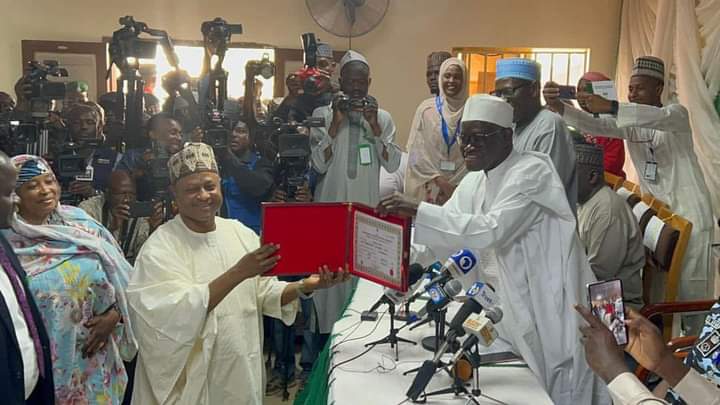
The Governor-elect, Kaduna State, Distinguished Senator Uba Sani, and his deputy, Dr Hadiza Sabuwa Balarabe, were issued Certificates of Return by the Independent National Electoral Commission (INEC) on Friday.

This came after their victory at the March 18 governorship election in the state. Accordingly, the issuance of the certificate of return included lawmakers-elect to the Kaduna State House of Assembly.

Senator Sani, who won the election on the All Progressives Congress (APC) platform, garnered 730,000 votes to defeat his closest rival, Peoples Democratic Party’s (PDP), Isah Ashiru, who polled 719,196 votes.

‘Change Begins with Me’: The power of citizen participation in governance

By Aliyu Bugaje

Many of us have been quick to criticise the government for a long time about certain policies and decisions that we feel are not in our best interest. We voice our frustrations to anyone who cares to listen, and often, we do nothing more than that. But what if we could do more? What if we could participate in the governance process and influence key decisions that affect our lives and the lives of those around us? The truth is that change begins with us.

Recently, I was invited to participate in the APC campaign council in the Dikko/Jobe Call Centre Katsina and subsequently in the APC Situation Room. This opportunity allowed me to understand the workings of the party, the workings of the state government, and how elections are won. In addition, I was allowed room to influence key decisions of the party, was trusted with confidential party documents, and sat down with the gubernatorial candidate and other key figures. This experience has forever changed how I view governance and politics in general.

As citizens, we often complain about the government’s inability to deliver on its promises, but what are we doing to ensure those promises are kept? Are we actively participating in the governance process, or are we content with being mere spectators? The truth is, if we want to see real change in our communities, we must be willing to roll up our sleeves and get involved.

Citizen participation is the bedrock of any democratic society. It is the foundation upon which governments are built and the driving force behind meaningful change. Moreover, when citizens participate in the governance process, they bring knowledge, experience, and ideas to help shape policies and decisions in people’s best interests.

Participation can take many forms, from joining political parties and volunteering for political campaigns to attending town hall meetings and engaging with elected officials. It can also mean organising and mobilising communities around critical issues affecting their lives and holding government officials accountable.

One of the benefits of citizen participation is that it can help bridge the gap between the government and the people. When citizens actively participate in the governance process, they become more invested in decisions. As a result, they are more likely to support policies and programs that benefit the community. It also helps to build trust and confidence in the government, which is essential for a functioning democracy.

Another benefit of citizen participation is that it can help to create a culture of transparency and accountability. When citizens are actively engaged in the governance process, they are more likely to demand transparency from their elected officials and hold them accountable for their actions. This can help to prevent corruption and ensure that government resources are being used for the benefit of the people.

The power to bring about meaningful change in our communities lies within us. As citizens, we must be willing to step up and actively participate in the governance process. We must hold our elected officials accountable for their actions, demand transparency and accountability, and work together to build a better future for ourselves and our children. Change begins with us, and it is up to us to make it happen.

Aliyu Bugaje wrote via aliyukb@gmail.com.

An open letter to the President-elect and APC’s National Working Community

By Mu’azu Ibn Abdallah

Firstly, I would like to begin by congratulating you on the success of the APC in the recently concluded national elections in which the party won the presidency and majority of seats in both the upper and lower chambers of the national assembly, and also the majority of the governorships and state assembly seats in the country. This is indeed a remarkable achievement which, if adequately sustained, would continue to position the party as the ruling party in the country and the largest political party in Africa.

It is obvious that Nigerians voted for the party because they believed in the messages of RENEWED HOPE which our party promised them. They hope for a better life and a prosperous future, which we can only deliver as a party if we adhere to the principles of social justice, equity and social inclusion.

As the party is set to make a formal announcement with regards to the zoning of political leadership in the country and with the President-elect and Vice President-elect already coming from the South-West and North-East geopolitical zones, respectively, I am strongly drawing the attention of the members of the National Working Committee (NWC) of the party, President Muhammad Buhari, the President-elect Asiwaju Bola Ahmad Tinubu and all other critical stakeholders in the party to consider, as a matter of necessity and in the best interest of the party and the spirit of equity and social justice, zoning the Presidency of the 10th Senate to the North-West especially taking into consideration of the following reasons.

First, there is a need for the party to demonstrate clearly that it always appreciates and rewards members’ confidence, support and loyalty by zoning the senate presidency to the North-West where it got the highest votes from. This will pave the way for the emergence of a competitive race among the zones as to who will produce the highest votes for the party in the subsequent elections, which will, in turn, leads to more and more votes for the party.

Moreover, this has been the tradition in the political arrangement of Nigeria since the return of democracy in 1999, where the region that gives the ruling party the highest votes is favoured for such a position. For instance, during the era of President Olusegun Obasanjo, PDP zoned the senate presidency to the South-East fact that the zone overwhelmingly voted for the PDP. Also, during the tenures of Late President Yar Adua and President Jonathan Senate Presidency was zoned to North-Central Zone for the same reason. Therefore, in the present circumstance, the North-West zone, due to its significant contribution to the victory of APC in the presidential election (the highest votes of 2.7 million among the geopolitical zones in the country), deserved to be rewarded with the senate presidency, especially, looking at the fact that the zone has never produced a senate president despite its strategic relevance in the Nigerian politics.

Secondly, as the largest political party in Africa, the party is expected to draw lessons and experiences from the just concluded 2023 general elections and embark on early preparations and strategic planning towards the 2027 elections so as to address some of the challenges faced in the recent elections and to make sure that RENEWED HOPE is extended to 2031 and beyond. The party should do everything humanly possible to avoid the costly mistakes of losing Kano, Kaduna and Katsina, which ideally should have cost the party its success (if not for the disorganisation of the opposition and the confidence of the Nigerians in the party’s candidates).

Historically, these three states are strategic in Nigerian politics just like California in American politics, and the time to start planning for the recovery of the 3Ks (and the entire north-west and Nigeria in general) is now, specifically by zoning the senate presidency to the zone and ensuring a competent and high-profile politician with a record of effective political strategy and the confidence of the electorates is elected into the coveted position. This would help APC to address the existential threats posed by Sen Rabi’u Kwankwaso’s NNPP, which caused the APC significant harm in the recent elections.

Thirdly, the Senate presidency is a sine qua non to the success of every democratic administration, a sensitive office that may make or mar the realisation of the APC’s much anticipated RENEWED HOPE, and the party should try as much as possible to avoid the repeat the circumstances similar to what transpired in the build-up to the inauguration of the 8th senate which subsequently led to the emergence of the leadership against the party aspiration (including some positions going to the opposition party). To avoid this, the party should, as a matter of national interest and social justice, zone the presidency to the North-West zone due to the fact that the zone is still the stronghold of the APC (with the highest number of registered voters, the highest number of APC card-carrying members, five state Governors and many members of the National Assembly). Also, the zone is blessed with high-profile politicians who can network and canvass the support of senators-elect from across the geopolitical zones for whoever emerges as the candidate from the zone.

Coincidentally, the North-West zone is blessed with a wide range of high-ranking law-makers with effective legislative and administrative experience to fit into the job and, if elected and can efficiently and excellently provide the president-elect with the requisite collaboration and support required for synergy and complementarity to deliver his mission of RENEWED HOPE to the Nigerians. Top on this list is Senator Barau I. Jibrin CON, representing Kano North Senatorial district, who recently declared his interest in running for the post.

Senator Jibrin, a third-term law-maker who has demonstrated his political capability by winning the Kano North senatorial seat continuously for three consecutive elections, and more importantly, in the most recent election, despite the threats of annihilation faced by APC he was able to strategically endure the NNPP’s onslaught and return his senatorial district to the APC and as well large proportion of votes for the presidential candidates. Senator Jibrin is a politician with solid experience and impeccable pedigree, a track record of success working both as a lawmaker and administrator but one who has never been involved in any scandal or incidents any corrupt practices by any of the federal government anti-corruption bodies.

Finally, there is no doubt in the fact that the success or otherwise of the president-elect’s administration and its ability to deliver the much celebrated RENEWED HOPE depends largely on the type of legislative leadership he will work with, as such, for the success of his administration, the president-elect needs no other person as the president of the senate than Senator Barau Jibrin.

Barau is a soft-spoken, laid-back, highly motivated and experienced legislator who has the respect and cooperation of his colleagues and has been responsible and successful in every position he has held due to his approachability and humbleness. An experienced law-maker who has held the position of the appropriations committees in both the House of Representatives and the Senate and has been successful in discharging his duties and guaranteeing thorough budget oversight. Senator Barau has also served as the vice-chairman of the Senate’s committee on Petroleum Resources (Downstream) and later as chairperson of the same committee. He has previously held various positions, such as the chairman of the Kano state Investment and Properties Ltd, Kano state commissioner of Science and Technology and a member of a committee Budgetary procedure.

Conclusively, the just concluded elections have further indicated that Nigerians have higher hope for a better Nigeria, they have spoken with their votes on the direction they want the country to advance, and the elections have indicated that Nigerians have confidence in APC. And from his acceptance speech when INEC issued him with the certificate of return, the President-Elect has clearly demonstrated his commitment and motivation to embark on the renewal journey which he promised Nigerians during the campaigns. As such, he needs a committed and motivated President of the Senate with whom they can deliver effectively to Nigerians the better life and prosperity promised in the RENEWED HOPE messages. To achieve this, the President-Elect must work with an equally motivated, experienced and committed President of the Senate. Among all those who are capable and eligible to contest for the senate presidency, no candidate befits such an exalted position more than Senator Barau Jibrin.

Muazu ibn Abdallah wrote from the Department of Sociology, Federal University Dutse and can be reached via muazuabdullahi29@gmail.com.