2023 Elections

Road to 2023: A race to inherit a weak system

By Nusaiba Ibrahim Na’abba

As Northern Nigeria continues to be engulfed by violent activities of terrorists by the day, the thoughts of dreadful terror acts of the famous Sunni Ali of Songhai who conquered the old, widely acknowledged historic city of Timbuktu keeps reappearing on my mind. The likes of late Muhammad Yusuf, late Abubakar Shekau and most recently Bello Turji and Dogo Gide, including some of the ‘unknown’ alleged sponsors of these activities, are no different than Sunni Ali – ‘tyrannical, cruel and merciless’.

The only probable difference is that the miniature Sunni Ali’s of our time live under the protection of a democratically elected government that vowed to protect our lives. This system we all thought would salvage us from the brink of destruction. With all the high hopes for this salvation purposely adopted to elect President Buhari into office, it is under his watch that in 2018, the Nigerian army gave an order to halt the near-arrest of late Abubakar Shekau in the depths of Sambisa Forest.

While at secondary school, it used to be quite fascinating to read and learn about the legends of some of the most powerful kings in Africa. Timbuktu’s Mensah Musa, Usmanu Bin Fodio of Sokoto, the rulers of Ghana’s Asante Kingdom and their powers on their followers, especially their strength, have always remained interesting references for their followers, especially history scholars and political leaders around the world. From leadership structure, means of sustenance, warfare and particularly military strength devoid of politicking have remained exemplary and worthy of emulation as legends have primarily documented.

Inherent in today’s Nigeria, a ravaging systemic corruption, unambitious leadership, lack of education prospects contributing to a staggering number of unemployed youths (some even throwing their hats in the ring and retiring from the state of being called youths), poor security apparatuses and myopic economic vision that continues to increase our foreign debt figures without pans of paying back. Not even the vibrancy of our historic leadership structure is being inculcated in the ‘democratic system’ we (African countries) borrowed from our colonial bosses.

Nigerians are already hopeless as the nation races towards the 2023 general elections. About two months back, I went shopping in Abubakar Rimi market (alias Sabon Gari market). All I could hear filling up the sky were words of hopelessness about the state of our dear Nigeria. “I would rather lose my voter’s card than to elect anyone in 2023”, “Our leaders will not make heaven, I tell you,” and “I’m just hoping to make it to next year alive; we are not celebrating anything” among many unending agonies. 

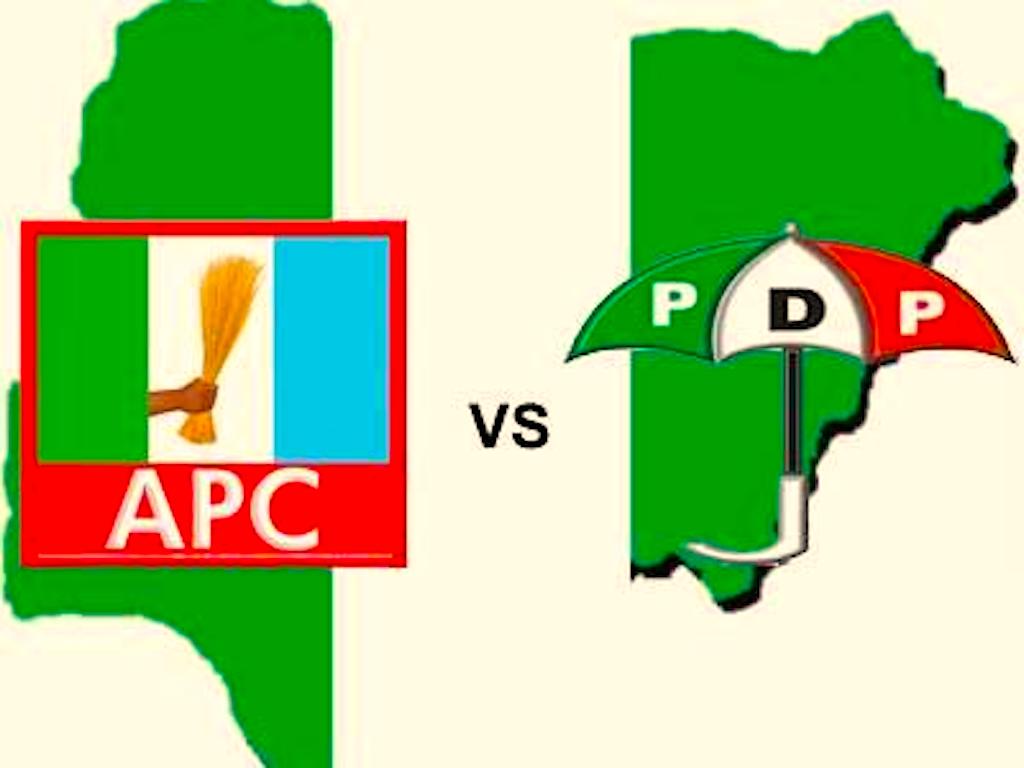
It is no coincidence that the President himself vindicated these agonies in an interview NTA aired on January 8, 2022. He warned his political party that “the opposition Peoples Democratic Party (PDP) could win the 2023 presidential election and return to power, if the All Progressives Congress (APC), does not settle crises that have stymied the party”. Of course, a speech of such nature and coming from the President is subject to multiple interpretations from analysts, experts, particularly politicians and lay-Nigerians. However, the President has undoubtedly depicted a lack of confidence in his party to exacerbate an already hopeless situation. His first thought is PDP winning elections to continue from where they stopped – over a decade of misrule.

Indeed, it is pretty late that Nigerians realize that both APC and PDP are birds of a feather that flock together. During an interview with Talk to Aljazeera on February 15 2015, then-presidential candidate General Buhari highlighted the weakness of PDP’s 16-year-misrule. He, specifically, lamented on the rising insecurity and the deteriorating economy as oil prices dropped significantly. A year later, when he had a similar discussion with the same Aljazeera on his visit to Qatar in early 2016, he tried to admit that he hasn’t failed Nigerians – as Boko Haram held some strategic places in the outskirts of Maiduguri. Over the years of his administration, we now fully understand who has failed Nigerians the most.

Like every race to a general election in Nigeria, we all scale through hurdles and hitches. However, what is particular about the 2023 general elections is that it showcases the real wielders of the entire Nigerian system – the elites. Indeed aspiring candidates are fully aware of problems they will undoubtedly inherit from their predecessors. They also know that they may worsen existing situations in most cases. Thus, they shall race through rising insecurity than ever before, calls for secession from the Eastern part of the country, deteriorating economy, a staggering number of unemployed youths and out of school children, dilapidated schools, bloodshed, brain drain of medical personnel, weak security apparatuses, widely acknowledged electoral violence and, to cap it all, systemic corruption.

Since Nigeria’s return to democracy in 1999, every political aspirant has been fully aware of the problems ahead of them, but they always divert followers’ attention by being optimistic. This is why it was pretty easy for most Nigerians to succumb to President Buhari’s change agenda.

Be it as it may and with almost nothing to redeem ourselves, expectations are meagre as the race to 2023 heats up. It’s no longer news that the country’s entire political economy continues to suffer in the hands of the few ‘powerful’. The masses do not wield enormous influence in the system that steers the affairs of Nigeria. So, we absolutely cannot change the country’s political structure without owning the system. Therefore, there is no confidence or trust in the election processes with ‘inconclusive elections’ that have come to stay with us since they favour the wielders of the system. 

Nonetheless, we will remain optimistic that Nigeria will prosper as a united and incorruptible country no matter what it takes. This storm shall pass. Borrowing from the words of South Africa’s Apartheid icon Nelson Mandela, “I am fundamentally an optimist. Whether that comes from nature or nurture, I cannot say. Part of being optimistic is keeping one’s head pointed towards the sun, one’s feet moving forward. There were many dark moments when my faith in humanity was sorely tested, but I could not give myself up to despair. That way lays defeat and death”.

Nusaiba Ibrahim Na’abba is a master’s student from the Department of Mass Communication, BUK. She is a freelance writer and researcher. She can be reached via nusaibaibrahim66@gmail.com.                                     
The drama that is 2023 general elections

By Idris Yana

Bola Ahmed Tinubu’s declaration of interest to contest for Nigeria’s presidency in 2023 is a prologue to the array of drama that we are going to witness in the next couple of months.

The 2023 presidential election will defy many political and analytical rationales.

Tinubu’s candidacy poses a challenge to both Tinubu himself and the Nigerian political philosophy. Currently, the unsigned sacred pact is that Nigeria cannot afford a president and his vice who belong to the same faith. Thus, Tinubu, being a Muslim, cannot have a Muslim vice-presidential candidate. Another “gentleman agreement” is that the president and his vice cannot come from the same part of the country. Therefore, this means that Tinubu’s running mate must come from the North and be a Christian. Though we must define where is North, at some point.

This is the epitome of the complexity (you can call it confusion) of Nigeria’s democracy. I will tell you why shortly.

The Northern Nigeria I know and live in can hardly support Christian to become Tinubu’s running mate. This, whether we say it out loud or not, is the mentality of an average Northern Muslim: A fact we all pretend does not exist.

While I cannot foresee an enduring strategy that Tinubu can use to navigate through this maze, I believe two parties stand a chance to benefit from his quagmire. The first is the current vice-President, Yemi Osinbajo. Although the witty professor-cum-pastor did not come out yet to declare his intention to run for the number one office, his body language and some events that have unfolded have already shown that he is in the race.

Osinbajo, being a Christian from the South, is very much aware that Tinubu’s dilemma is to his advantage. Many people in the North will prefer to have him as the presidential candidate so that they can field a Muslim running mate for him.

The other party that stands a chance to benefit from this is PDP. Like Osinbajo, I am sure PDP monitors the unfolding of Tinubu’s candidature and waits for the right time to make their move. They have many options to explore. One of such options is appealing the sentiment of the North by fielding a Muslim candidate from the part, most likely Atiku, and a Christian running mate from either South-South or South-East with Nyesom Wike as the most likely candidate. They have the option of reversing this and trying their luck.

Whatever happens in 2023, Nigerians will have multiple lessons to learn from. For me, the most important lesson is the dire and urgent need for the country to move away from the political ideology that favours primordial sentiments over competence. Instead, Nigerians must learn to elect a leader that is capable of saving us from us.

Idris Yana writes from Exeter, United Kingdom. He can be reached via idrishyana@gmail.com.

Buhari hints on successor

By Ahmad Deedat Zakari.

President Muhammadu, on Wednesday, while granting an interview on Channels TV, reportedly said he had a favourite successor.

The President, whose tenure will be over in less than two years, dropped the bombshell during an exclusive interview on Channels TV on Wednesday, January 5, 2022.

However, the president refused to state who the favourite successor was on the ground of their safety.

The President, in his own words, ” I wouldn’t (mention the name of my favourite successor) because he may be eliminated if I do. I better keep that a secret.”

The interview has generated ripples and different reactions across the political spectrum in the country.

PDP can still zone presidency to the North

By Abdulhaleem Ishaq Ringim


Zoning, especially of the presidency, is not a product of a national consensus but that of certain political parties’ internal dynamics. It is pertinent that we understand that. Nigerians did not sit in a national conference and agree to zone or rotate power. So it is not binding on the broader national politics.

The idea of zoning started with the PDP in 1998, it was entrenched in PDP’s constitution in Article 7, Section 7.2(C), and it prescribes that “In pursuant of the principles of equity, justice and fairness, the party shall adhere to the policy of rotation and zoning of party and public elective offices and it shall be enforced by the appropriate executive committees at all levels”.

Chief Olusegun Obasanjo, a southerner, became president in 1999 and prevailed as president for two terms representing eight uninterrupted years. In 2007, Umaru Musa Yaradua was nominated to fulfil this zoning principle and rotation of power to the North. Hence, he was supposed to also prevail as president for eight uninterrupted years as the president of Nigeria.

Unfortunately, he was only able to serve for about three years due to his ill health and subsequent death. As a result, president Goodluck Jonathan, who was the Vice President, assumed office as Acting President through the invocation of the “Doctrine of Necessity” principle and completed the term, which was supposed to be between May 2007 to May 2011.

However, according to the zoning agreement, it was still the turn of the North as a Northern President was supposed to go for eight uninterrupted years. But Goodluck Jonathan was not going to have it; he insisted on contesting the presidency, thereby jettisoning the PDP’s zoning principle.

A serious crisis erupted within the party, and a section of the party’s membership was hell-bent on adhering to the zoning agreement and even went ahead to endorse Atiku Abubakar as the Northern Consensus candidate to complete the North’s uninterrupted eight years.

The stalemate prevailed until a case was made that Jonathan would only be completing the Yaradua Ticket, which he was initially part of. And it was agreed that Jonathan would only be going for a single term. The decision still contravened the zoning arrangement, but Jonathan had his way; he contested and won the 2011 elections.

Jonathan, however, went back on his promise and still contested for the 2015 elections even while it was supposed to be contested by a Northern candidate as per the 2011 agreement and the broader zoning principle. And he lost.

Hence, it is only fair that the presidency is rotated back to the North “In pursuant of the principles of equity, justice and fairness”.

So no matter where the party chairmanship is zoned, the party’s zoning principle will still favour the North for the Presidency. And come to think of it, the circumstance is not novel, for this is not the first time a Northern Presidential candidate would emerge during the chairmanship of a Northern Party Chairman in the PDP. Col Ahmadu Ali was PDP’s Chairman from 2005 to 2008, and Yaradua was nominated to fly PDP’s flag and was voted to office in 2007 while Col Ali was still chairman.

Coming back to the National outlook, the (unofficial) zoning agreement in the APC favours the South for the 2023 elections, while that of the PDP favours the North. And this is where the calculation is!

Peradventure the parties adhere to these zoning agreements, and we get a PDP Northern Candidate (for example, Atiku Abubakar with a running mate like Peter Obi, Nyesom Wike or Okonjo Iweala) and an APC Southern Candidate (for example, Asiwaju Bola Ahmed Tinubu with a running mate like Babagana Zulum, Maimala Buni or Boss Mustapha), who would the calculation favour?

Answer this, and you would understand why PDP would want to lure APC into fielding a Southern candidate!

Abdulhaleem Ishaq Ringim is a political and public affairs analyst. He writes from Zaria and can be reached through haleemabdul1999@gmail.com.

Electronic transmission of results: Is APC jittery?

By Lawan Adamu Usman

The glimmers of hopes that the country will have a free and fair election in the 2023 general election have been dashed by our senators. Section 52(3) of amendment bill 2021 which will provide room for the electronic transmission of election results from the polling unit, received a kiss of death by the APC senators after a rowdy session in the senate. In 2015, when president Jonathan introduced the card reader machine, which was part of the technology drive to checkmate multiple voting and detect elections fraud and ensure a free and fair election, the APC, which was desperate to clinch to power, commended the bold initiative. There is no gainsaying the fact, APC was the beneficiary of the card reader machine in the 2015 general election. The election victories recorded by the party across the country could be credited to such technological innovation.  

Little wonder, many Nigerians expected President Muhammadu Buhari to maintain the momentum in 2019 by passing section52(3) of the electorate act into laws, which will pave the way for electronic transmission of results. However, President Buhari failed to convince Nigerians why he could not approve the bill, cited short of time as the reason ahead of the 2019 general election. Also, our lawmakers’ lack of political will to unanimously agree and take a common position for the quick passing of the bill is unfortunate. While other African countries have since embraced technology and reformed their electorate process in tandem with the best global practice, some unpatriotic senators are dragging us to the medieval period.

By its name, the Independent National Electorate Commission (INEC) should act independently according to the laws that established it. For the Senate to insist that INEC should collaborate with the Nigeria Communication Commission (NCC) on the possibility of adequate network coverage in the country and seek its approval before it adopts electronic transmission of results raises serious suspicion on its part. 

The million naira questions begging for answers are: why the majority of APC senators voted against the electronic transmission of results? Are they acting on the script of their party to frustrate any genuine efforts to have a credible and acceptable poll in 2023? It is either the ruling party plans to rig the 2023 elections as suspected, or it is jittery that the electronic transmission of results will expose it to serious defeat.

Civil societies organisations and Nigerians should wake up and reject this glaring rape of our democracy. Democracy the world over thrives and flourishes based on free and fair elections. This can only be achieved if INEC is allowed to conduct credible elections and transmitted the results electronically as obtained in other democratic climes.

Lawan Adamu Usman (aka Mr LA) writes from Kaduna State. He can be reached via imustapha650@gmail.com.