2023 Elections

How Tinubu should compensate the North West

By Prof. Abdussamad Umar Jibia

It is no longer news that Alhaji Bola Ahmad Tinubu has taken over as the President and Commander-in-Chief of the armed forces of the Federal Republic of Nigeria. Nigerians are always happy when there is a change of leadership because we are a hopeful people. It doesn’t matter that we have been disappointed and had our hopes dashed many times over. Most of us believe that it shall be different this time around. Nigerians believe that the hardship that immediately greeted the inauguration of President Tinubu due to removal of oil subsidy is only temporary. This only shows how optimistic our hope can be.

Party stalwarts who have participated in campaign and are important enough to be remembered by Mr. President are even more hopeful. Offices shall soon be shared. Ministerial appointments, advisors and other aides of the President, Boards membership, headship of Government agencies are some of the ‘gifts’ given to individuals who have shown enough commitment to the project of selling Mr. President and his party to Nigerians.

Another way in which politicians compensate states that gave them a large number of votes is situating infrastructural and empowerment projects. 

To become the President of Nigeria, Asiwaju, a National candidate, polled  8,794,726 votes  to defeat Atiku Abubakar and 16 other candidates, some of whose influence does not transcend their states of origin. Out of this number of votes, more than thirty percent came from the North West. Thus, if political support is important to Tinubu, and of course it is, he has an obligation to thank the people of North West and to practically acknowledge that they are his people.

Now, how is Tinubu supposed to compensate the North West? To answer this question it is important to note that only an insignificant few of the more than two million voters mentioned above are politicians who are expecting contracts or appointment to public offices from President BAT. Thus, while those appointments and contracts may or may not affect commoners in the North West, there are things that affect their lives for which they need the attention of Government.

President Tinubu has taken over at a time when banditry has exhausted and impoverished an average villager in the North Western part of Nigeria. Banditry began as cattle rustling by people who believe that only they have the right to own cattle. It then metamorphosed into full scale armed robbery and occupation. As I m writing this, there are many communities under bandits’ control. Many of them decided to submit willingly out of frustration since their Government has failed to provide them protection.

For communities that have not submitted to the bandits’ authority, the attacks continue.

To rationalize banditry, a number of false narratives have been created and spread by bandits and their sympathizers. For example, it is common to hear people saying that banditry was brought about by the unfair treatment given to nomadic Fulani for decades. Thus, according to this narrative, what we are witnessing today is a backlash of this unfair treatment. Some years ago, I had a reason to write a rejoinder to a group of Islamic scholars who bought into this narrative and, instead of calling on the Government to deal ruthlessly with bandits, were asking for fair treatment of nomads.

I don’t know of any group of Nigerians that is not complaining of unfair treatment. In fact, Nigerians, especially the proletariat, have for long been unfairly treated by the elites and the system they control. Does that mean every Nigerian should acquire arms and become armed robber? Surely no. Injustice does not justify crime. This narrative is thus faulty in every ramification. It is unfortunate that some people in Government have been deceived into accepting it.

Another narrative is that banditry taking place in the North West and North Central geopolitical zones is a fight between Hausa farmers and Fulani cattle-rearers. This is even as we saw travelers who are not Hausas being intercepted and burnt alive. We also saw Fulani cattle rearers  who refused to join criminal gangs being attacked and killed in their homes. Yet, the immediate past central Government bought into this narrative and asked Governors of the affected states to negotiate with bandits. If nothing else, those negotiations exposed the identity of the criminals. They appeared before press cameras and confessed their crimes and gave conditions to Government. They continued with their crimes almost immediately after the 2016 and 2019 peace accords. 

Another false narrative is that banditry is being executed by foreigners from other West African countries. Yet, during the failed peace negotiations all the bandit leaders were Nigerian Fulani whose ancestry is well known. In fact, all the bandits known to be operating in the North are like that. Now that they have occupied many rural communities their identities are even more exposed. 

This is the number one problem of the North Westerner that Tinubu should confront even if it means stepping on some of the biggest toes in this country.  Fortunately he has come at the same time with Governors who are interested in fighting crimes. In particular, the new Governors of Katsina and Kano have shown early signs that they mean business as far as crime-fighting is concerned. Working with them closely would help President Tinubu. Zamfara that has been serving as the hideout of bandits has also a new Governor.

Professor Abdussamad Umar Jibia wrote from Bayero University, Kano. He can be contacted via aujibia@gmail.com.
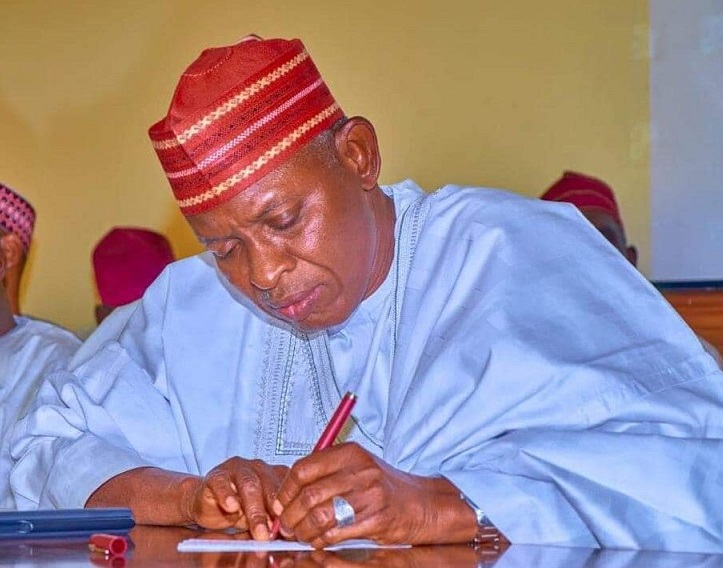
Open letter to Governor Abba Kabir Yusuf

Dear Sir,

First and foremost, I must offer my humble congratulations on your election victory. By electing you into this exalted office, the people of my dear Kano State have no doubt placed their tomorrow’s trust in you to lead us with compassion and dedication towards a better, prosperous future, and we are hopeful that you will rise to the occasion.

Dear Abba Gida-Gida, as you take on this vital role, we urge you to prioritise the needs of the good people of Kano above all else. 

Kano faces numerous challenges, including economic inequalities, healthcare disparities, educational deficiencies, traffic congestion, and dilapidated roads, which become hazardous for drivers, pedestrians, and cyclists: increased crime rates, environmental degradation and strain on public services like schools and hospitals. We require a leader committed to tackling these issues head-on and finding lasting solutions that benefit all residents, regardless of their background or socioeconomic status.

During your campaigns, you have had the opportunity to mingle and connect with many individuals, giving you a deeper understanding of their struggles and challenges. Therefore I urge you to know their worth and show concern for their well-being.

I must also encourage you to prioritise transparency and accountability in your administration. The people have a right to know how their paid taxes are spent and whatever decisions are made on their behalf. Open communication and free accessibility to your office will go a long way in building trust with the general public.

Finally, we ask that you lead with compassion and empathise with the needs of your people. Our State is diverse, with unique, distinctive opportunities and perspectives that make us stronger and shoulder above our peers.

As Governor, you are responsible for ensuring that all residents feel seen, heard, cherished and valued. By working together, we can create a brighter future for all.

Once again, congratulations on your election. We look forward to working with you to make our state the best.

Abbas Datti wrote from Kano via abbasdattibashir@gmail.com.

Presidential tribunal declines request for live coverage of proceedings

By Muhammadu Sabiu
 
The Labour Party (LP), the Peoples Democratic Party, and their presidential candidates’ requests for a live broadcast of the election petition proceedings in court have been declined by the Presidential Election Petition Tribunal in Abuja.
 
On Monday, Justice Haruna Tsammani, the Tribunal’s head, denied the request for live coverage of the court proceedings, adding that the request lacked merit.
 
The All Progressives Congress candidate, Bola Tinubu, won the presidential election on February 25.
 
Atiku Abubakar, the PDP’s candidate for president, submitted a request on May 8 for live coverage of the court proceedings in his case.
 
Peter Obi, who was also running for president in the election, had also submitted a request for a live broadcast of the court hearings related to the election petition.
 

“Bring Back Dokaji” to APC is an unnecessary exercise 

By Mukhtar Jarmajo

In a democratic system, individuals have the right to associate with any political party of their choice. This right is enshrined in the Nigerian Constitution, and it guarantees the freedom of political association to every citizen of the country.

Recently, there have been efforts to call back Halliru Dauda Jika, a former member of the All Progressives Congress (APC) in Bauchi state, who left the party to pitch his tent with the New Nigeria Peoples Party (NNPP) ahead of the 2023 general elections. Reliable sources close to Jika said he decamped from the APC because he felt he deserved the party’s governorship ticket, having funded the party since 2019.

However, it should be noted that the call-back efforts are unnecessary and uncalled for since the person in question has the constitutional right to be in any political party he so desires. Jika has the right to leave the APC and join another party, just as he now has the right to rejoin the party as an ordinary member.

It is crucial to understand that political parties are voluntary associations individuals join based on their beliefs, ideologies, and interests. Therefore, deciding to join or leave a political party is a personal choice everyone should respect.

The call-back movement seems driven by people who were likely his supporters while in the APC. However, if these people genuinely believe in the ideology of the APC, then they should work towards strengthening the party by promoting its values and ideals.

All should respect the constitutional right to political association, and call-back movements should cease, especially when they are unnecessary and uncalled for. Instead, political parties should focus on strengthening their values and ideals, and individuals should be free to join or leave any party without fear of persecution or intimidation.

Jarmajo wrote from Wuse Zone 2, Abuja. 

It’s phone robbery, not phone snatching

By Salisu Uba Kofar-Wambai

It is no longer a front-page story that phone robbery has become a mammoth calamity in Kano state. And it’s gradually spreading like cancer to other parts of Northern Nigeria. One trait peculiar to Northern Nigeria as a geographical entity is that new trends quickly spread and gain ground like wildfire without being questioned. This is precisely what occurred with kidnapping cases.

 If one has no guiding principle, one will always be carried away in imitating others, whether good or bad actions. Phone robbery is now a trend. Many caught in the act would testify that they were not such but got tempted by what others were doing and getting away with it. What a society!

However, unsuspected members of the public have lost their phones, valuable properties and above all, their dear lives and some got injured as a consequence of this brutal and barbaric act. And 95% of the confessions of the wrongdoers have shown that they’re drug addicts and Indian hemp smokers.

Unfortunately, phone users can no longer display their phones or pick up a call because those robbers are somehow like invisible elements and can appear with their life-threatening weapons to pounce on you, which include thorny knives, hatchet, long sharp metals and have you. Often, any attempt to resist their advancement will land one in trouble of losing his life or getting a severe injury that may eventually threaten his health and life. The victims of this are uncountable in Kano and other parts of the North.

However, our legal system is not helping to curb the menace either. Many caught red-handed are seen getting their freedom back. At the same time, those arrested for capital offences are languishing in prisons without meeting appropriate punishment measures on capital offences. And the politicians who have just finished using these thugs and other undesirable elements of society are also contributing a lot in this direction.

Politicians employed them in their recent campaigns as a strategy for winning elections. After the campaigns and elections, they usually leave them alone after spoiling them with vast amounts of free money from the state treasury to enjoy. Those thugs have nowhere to turn in the absence of such goodies but to terrorise unsuspecting and innocent citizens.

Before this, society had its traditional way of dealing with truants and miscreants. The schools of “Yan Mari” are used to shackle those children and disassociate them from the public so that they were given moral remedy of teaching them Quranic recitation, training them on new religious upbringing, and making them off drugs. Owing to the weakness of this system, the Federal and State governments abolished the system by tagging it “gross human rights abuses and violations” instead of helping them to improve and enhance it.

Nevertheless, what’s on everyone’s lips now is that since the government has failed in checkmating the catastrophes, let’s employ jungle justice that everyone caught in the act should be maimed and killed on the spot to serve as a deterrent to others. But can our society accept this? The sanctities of our moral and religious upbringing won’t allow us to think like Lagos Area Boys of burning suspected thieves with tyres alive. Instead, we need to think of more civilised methods.

First, most perpetrators of this act are Indian hemp smokers and drug addicts. So, what are we doing to mitigate it? We allow Igbo drug traffickers to make our state their paradise. And in turn, they are every day, every minute spoiling our young men (and women) who are our future.

Secondly, we haven’t built rehabilitation centres to change these criminals to develop positive characters and morals so they can be reincorporated into society again. And those built were closed down for the greedy notion that the government could no longer feed them. Sad!

Thanks to the new legal thinking, such suspects will be tried as armed robbers from now on. But all these measures cannot solve the problem in toto until we fight Indian hemp and drug smugglers. We can only end up killing our children and still, others joining. Parents also have to do more for their kids.

May Allah guide our children and us all, amin.

Salisu Kofar-Wambai wrote from Kano and can be contacted via salisunews@gmail.com.

Allow senate presidency to go to Southern Christians – MURIC

  • NewsDesk

As Nigeria approaches May 29, the inauguration date of a new administration, newly elected lawmakers and politicians have intensified the lobby game. The Muslim Rights Concern (MURIC), an Islamic human rights group, has also joined the debate. Though a Muslim group, MURIC wants the Senate presidency to go to a Christian from the South. The group has therefore called on all Muslims vying for the post to withdraw.

This was made known in a statement issued on Thursday, May 18, 2023, by the Executive Director of the group, Professor Ishaq Akintola.

The statement reads:

“As the clock ticks away for the 29th May inauguration date of the Bola Tinubu administration, elected lawmakers and politicians have intensified the lobby game. We have seen how the different geo-political zones, as well as individual politicians and stakeholders, have demanded key positions in the National Assembly.

“Chief among those positions is the Senate presidency as it is the Number 3 position in the country after the president and vice president. As a major stakeholder in the affairs of Nigeria, we have followed with keen interest the imbroglio, which greeted the Muslim-Muslim ticket and how it ended in Nigeria having a Muslim President-Elect and a Muslim Vice President-Elect.

“In view of this outcome and considering the multi-religious character of our dear country, Nigeria, it is our considered opinion that the post of senate president should go to a Southern Christian. Nigeria needs the cooperation of both Muslims and Christians because only such collaboration can engender peace and development.

“Although we are a Muslim group, we believe very strongly that Muslims should not take all the top posts despite being the undisputed majority group in the country. Muslims must be ready to share power with their Christian compatriots. Politics is a game of give and take, and Nigerian Muslims must play it right.

“We must all be ready to demonstrate a willingness to work together as a people in spite of our religious differences. Afterall, there is no Muslim electricity supply, no Christian roads, no Muslim public transport system and no Christian naira. Our problems are identical, and whatever affects our country affects both Muslims and Christians together.

“A good example is COVID-19. Hunger knows no Muslim, and malaria knows no Christian. Poverty is common among the adherents of both faiths. Let us, therefore, share what belongs to all with love and find solutions to our common problems together.

“MURIC, therefore, calls on all Muslim candidates vying for the position of the senate president to withdraw in order to allow Christian candidates from the South to have a free hand in the competition (preferably the South-South because the South East has occupied the post on several occasions).

“In addition, MURIC tips any suitable candidate from the North West for the post of deputy senate president in view of the fact that the zone gave the largest number of votes to the party and the candidate that won the election.” 

Fatima Dikko Radda: An inspiration to women and youths

By Amir Sa’ad Ribadu

The 2023 election cycle has introduced quite a handful of female politicians ranging from the candidates themselves to the wives of candidates. Some female politicians have garnered massive publicity and relevance within their states, while others have become national figures and inspirations to women all over Nigeria.

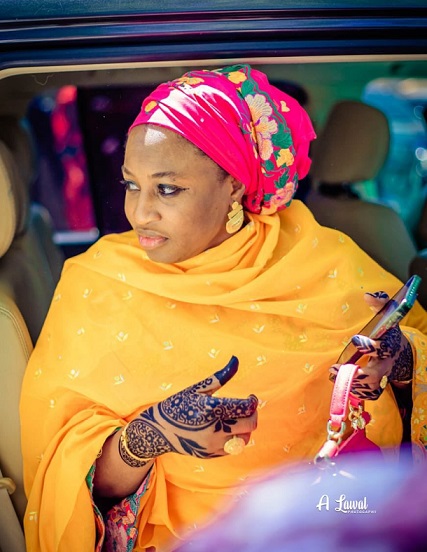
One such woman is the wife of Katsina state Governor-elect Hajiya Fatima Dikko Radda, whose sudden emergence in the Katsina state political scene has made her an inspiration to women and a political force to reckon with in Katsina.

Before her emergence into the scene as a result of her husband’s success at the Katsina APC primaries sometime in May 2022, Hajiya Fatima, fondly known in Katsina as Zinariya is only known for her philanthropy, passion for educating the girl-child and healthcare delivery by a few beneficiaries of her foundation, PAC-F. PAC-F, which she founded a few years back, has kept her busy. In a recent interview, Hajiya Fatima attributed her passion for philanthropy, which birthed PAC-F, to her late mother.

In another interview in December, she told reporters how she intends to support her husband’s policy, especially in eradicating poverty and improving the healthcare and educational environment for the Katsina girl child.

It is therefore not surprising when she was seen campaigning so vigorously that she is said to have taken her husband’s message personally to 146 wards out of the 361 wards in Katsina, which is unprecedented for the wife of any guber candidate in any state in the North.

Her campaigns mainly centred around her husband’s policy document. Also, they focused on her passion for helping the girl child and supporting her husband in making healthcare delivery accessible to all in Katsina, especially women.

She seems to have been accepted by women and young people in Kastina because most can relate with her, owing to her age, ability to understand and proffer solutions, and natural propensity for generosity. Her acceptance is evident through the crowd she gathers every time she’s at a campaign rally or even in her house when she’s around Katsina.

Her Batagarawa low-cost home has become a popular destination for many who need assistance for medical purposes or daily needs. Her humility, they say, is akin to that of the carpenter of Nazareth.

Her youthful determination and willingness to contribute to her husband, Dr Dikko Radda’s campaign, could be seen in how passionately she reached out to the electorates in Katsina villages. She travelled through the length and breadth of Katsina’s Funtua Zone, a zone marred by insecurity and violence, and on many occasions, some members of her entourage have opted to stay back, but not Zinariya. This is because she was determined to witness first-hand the situation of the typical Katsina family in the villages where insecurity and poverty are rife.

It is, therefore, not surprising to see youth and women rally around her, chanting slogans of hers and her husband’s whenever she is around. This and many more reasons are why Katsina is said to be lucky to have a youthful, energetic, and passionate Governor in Dr Dikko Radda, who shares precisely the same qualities as his wife, Zinariya Fatima Dikko Radda.

Amir Sa’ad Ribadu writes from Libreville Crescent, Wuse 2, Abuja. He can be contacted via mrribadu@gmail.com.

A great government is built on quality appointments and commitment

By Muhammad Auwal Yahaya

A great government is not solely determined by the promises made during political campaigns but by the quality of the individuals appointed to key positions. Therefore, when a governor-elect, such as Mallam Umar Namadi, is entrusted with the responsibility of leading a state like Jigawa, it becomes crucial to prioritise quality political appointments. These appointments play a pivotal role in delivering campaign promises, establishing an exceptional government, and gaining the trust and support of the people.

Selecting candidates based on merit and competence is essential for building a strong government. By appointing individuals with the necessary skills, knowledge, and experience, a governor-elect can ensure that the government is led by capable individuals who can effectively address the challenges and complexities of governance. In addition, merit-based appointments promote efficiency, innovation, and delivering high-quality services to the citizens.

A government that reflects the diversity of its people is more likely to understand and address their varied needs and aspirations. A governor-elect can create a balanced and inclusive government by prioritising diversity in political appointments. This means appointing individuals from different ethnic, religious, and cultural backgrounds, as well as women and minority groups. Such representation fosters a sense of belonging and ensures that policies are formulated comprehensively about the diverse population.

Achieving regional balance in political appointments ensures equitable development and representation across all state regions. By appointing individuals from various areas, a governor-elect can ensure that the government’s focus and resources are not concentrated in one area but rather distributed fairly. This promotes balanced growth, reduces regional disparities, and fosters a sense of unity among the citizens.

Political inclusivity is vital for a government to effectively represent its constituents’ diverse interests and perspectives. A governor-elect, Therefore, could consider appointing individuals from different political affiliations, not just members of their party. This fosters a sense of collaboration, encourages healthy debates, and enables the government to make informed decisions that benefit the entire state rather than a specific group.

Transparency and accountability should be the cornerstones of political appointments. A governor-elect must ensure that the selection process is transparent, with clear criteria and mechanisms for evaluating candidates. By doing so, they can instil public trust and confidence in the government. Additionally, appointees should be held accountable for their actions, with mechanisms in place to monitor their performance and address any misconduct or negligence.

Consulting experts and seeking their advice is crucial when making political appointments. A governor-elect should consider individuals with the expertise and knowledge required for specific positions. By involving experts in the decision-making process, the government can benefit from their insights, innovative ideas, and strategic thinking. This leads to more informed and effective governance.

Nepotism and cronyism have no place in quality political appointments. A governor-elect must prioritise fairness and integrity, ensuring arrangements are based on merit rather than personal relationships or favouritism. By avoiding nepotism and cronyism, the government can inspire public confidence, enhance transparency, and attract competent individuals with the state’s best interests.

Regular performance evaluation of appointees is essential for maintaining accountability and ensuring optimal governance. A governor-elect should establish clear performance metrics and mechanisms for assessing the effectiveness of individuals in their appointed positions. This allows for identifying areas of improvement, providing necessary support or training, and making changes when required. Performance evaluation fosters a culture of continuous improvement and reinforces the government’s commitment to delivering results.

Involving the public in decision-making and seeking feedback is crucial for a government to be responsive and accountable. Therefore, a governor-elect should actively engage with the citizens, listen to their concerns, and incorporate their perspectives into political appointments. Public engagement and feedback not only enhance the legitimacy of the government but also provide valuable insights that can inform policy-making and ensure the delivery of services that truly meet the needs of the people.

Governor-Elect Mallam Umar Namadi has crafted an impressive blueprint for the development of Jigawa state. His vision and commitment to the betterment of the state deserve appreciation. Moreover, the blueprint demonstrates his understanding of the challenges and opportunities ahead. With such a well-thought-out plan, it is evident that he has the potential to lead Jigawa to new heights.

To transform the blueprint into reality and deliver on the campaign promises, Governor-Elect Mallam Umar Namadi should prioritise quality political appointments. By carefully considering the criteria of merit, competence, diversity, regional balance, political inclusivity, transparency, accountability, consultation, and expertise, he can assemble a team of capable individuals who share his vision and are committed to serving the people of Jigawa diligently.

The people of Jigawa state have placed their trust in Governor-Elect Mallam Umar Namadi and have high hopes for the incoming government. Therefore, it is essential to keep the spirit alive and maintain optimism for the positive changes that lie ahead. As citizens, we are responsible for supporting the new government and actively participating in the development process.

Let us pray for the success of Governor-Elect Mallam Umar Namadi and his team. Through prayer, we can seek guidance, strength, and wisdom for the government to effectively navigate the challenges and fulfil its responsibilities. We can contribute to building a prosperous and exceptional Jigawa state with our prayers and support.

Muhammad Auwal Yahaya, known as Amujaheed, is an indigene of Jigawa state and the visionary behind jgONLINE, an innovative online platform. A technophile, Jigawapreneur, and an advocate of good governance who strives for inclusivity, commitment and excellence.

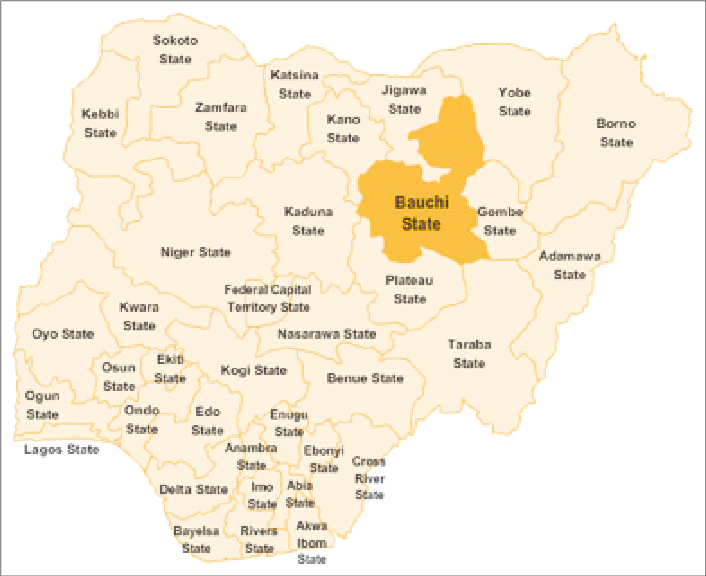
Bauchi 2023 and the power tussle

By Mukhtar Jarmajo

It is startling to learn that for most politicians and their supporters, elections are simply the means to grab power by hook or crook. Perhaps, for many politicians, politics, especially in Africa, is a power struggle for the sake of bad governance. Or better still, politics, as it is played here, is not about the promotion of the citizens’ quality of life. Rather, it is about ruling them for gaining access to excessive personal wealth and pleasure.

For this reason, politics here is hardly issue-based. It is mostly about religious, regional, ethnic or regressive political and socio-economic sentiments predicated on the desire of grappling power to rule based on personal gains, thereby subjecting the people to untold hardship.

Here in Bauchi state, the story is no different, as evidenced by the miasma of hopelessness with dead public schools, ineffective healthcare service, vulnerable women and children, moribund industries, poor housing schemes, ineffective food production system and dead civil service. Yet, all that some politicians care about is retaining power.

Sadly, this crop of politicians wants to remain in power, not because they have ever shown any propensity for making the lives of the people any better as they hold sway, but because being there, for them, is a means of survival even if that is at the expense of the masses. Surprising as this is, more surprising are the supporters of these regressive politicians who are at the receiving end of the actions and (or) inactions of their political leaders.

It beats every imagination that there is anyone out there who consciously endorses ideas that aim to reverse progress, suppress change as well as ensure social, economic and political retrogression. Maybe, this is a pointer to the fact that our people need more enlightenment on the concepts of government, governance, democracy and politics.

Jarmajo wrote from Kukadi/Gundari ward, Misau Local Government.

On pseudo-intellectual engagement in Nigerian social media

By Iranloye Sofiu Taiye

One of the essential elements that strengthen the unity of countries with numerous ethnicities is the mutually esteemed mode of communication, respect for their diversities, and by extension, mutual political relationship. But presently, the Nigeria social media fora are nothing but a channel for perpetrating, promoting, and sowing seeds of national discord, anchored on the uncivilised conduct of the politician and the supporters of political parties. It’s now conspicuous, apparent, and plausible that the spurious actions of the users of the social media platforms encompassing Facebook, Twitter, Instagram, and WhatsApp groups have nourished the already perturbed and suffocating political terrain. 

Glaringly, this is an indication that we have a long battle to wrestle with, considering the pandemonium that ravaged the online space aftermath of this year’s general election. It’s very disheartening and daunting that we now freely strike and attack each other on the online space devoid of decorum and let alone having regard for divergent political opinions, which ought to be the beauty of democracy. The uncultured and vulgar attitude of the Baptists, Obidient,s, and Articulators was very appalling, which invariably made users of social media jettison the esteemed hitherto cultural mode of interpersonal communication, alas! we’ve now regrettably substituted it with barbarous, sadistic, and wanton mannerisms. 

The magnificent of social media platforms being a free platform where people exchange ideas, audio-visual content, and debate political perspectives with the use of internet connection had forthwith metamorphosed into caliginous and obscurity due to the pretentious salvage rhetorically disseminated by politicians to their naive and gullible followers who have been brainwashed with the grandiloquence of their preferred candidate. Hence, mutual content-sharing and collaboration have become hallucinations in the social media space.

It’s a known fact that all the political parties now budget a humongous and whopping sum of money on social media purposely to manipulate the thinking of the people to kowtow to their interests. These are cliques and gangs the political parties recruited as an online army of soldiers to perform several tasks, including the following: cyberbullying, paddling false information, using hate hashtags, threatening and intimidating their opponents with their unguarded utterances and abusive statements, spreading derogatory anonymous articles and engaging in an illogical debate just to mislead the public. 

This is quite terrible, horrendous, and awkward. Many youths have been cajoled and fed with negative thoughts and hatred about the country. After all, youths are the major users of social media, and this uncivil engagement is a stigma on the image of our nation State. The hate speech and this needless confrontation, brawl, and hullabaloo have set the citizens against each other, which is a setback to our nascent democracy and a violation of the expression of freedom, respect for the dignity of man and freedom of association as entailed in our national constitution. 

However, Since the ill-ambitioned politicians and the hatred-fed supporters of the political parties have no monopoly on expression and the online space is free for all citizens to utilise, then the intellectuals, scholars, and objective writers should brace up their pen to engage in thoughtful and analytical political discussions, and logical debates on the Facebook, Twitter, Instagram, and other online space, to stem this delinquency before it wakes up the sleeping dogs. Let’s remember that the pen is mightier than the gun.

Note a Yoruba maxim said, “When elders are in the market square, the head of a new baby cannot be laid upside down”

Iranloye Sofiu Taiye (Optimism Mirror) is a public affairs analyst, public speaker, writer, and youth advocate. He can be reached via iranloye100@gmail.com