2023 Elections

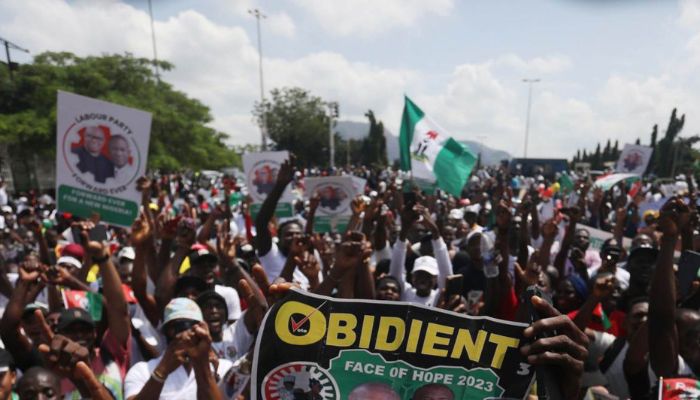
Obidients and the Godification of Obi

By Sule Abubakar Lucky Mark

The throwing of verbal punches soars dramatically, and I don’t know when it will come to a screeching halt. These Obidients are radical but not tactical. To them, all that glitters is Obi, and all that is Obi glitters! And if it is not Obi, then it should not be any other person. All that is Obi should be deified, but all that is not should be demonised, demolished and desecrated. What insolence!

Of course, political wrangling is not bad. On the contrary, a sensible, harmless political dispute beautifies democracy, especially as it has almost become our culture in Nigeria during electioneering. However, if it is taken to the extremes, that is when such political culture becomes autocratically undemocratic!

When people declare their interest/candidacy, they automatically sign up for public scrutiny and surveillance. And as we all know, deep-seated criticism is one of the essential components of democracy. ‘It’, according to Professor Farooq Kperogi, ‘marks the difference between autocracy and democracy.’ Unfortunately, this central democratic constituent is subdued in Nigeria, especially by some of these Obidients.

Peter Obi has been literally deified (aka ‘godified’) by most of his supporters, especially the ones I have seen and met. Whenever Obi is subject to intense scrutiny, it is considered blasphemy. They have malevolently vilified me (and others, too) for harmlessly asking questions and even writing objectively on Obi. Some of them come up with unsubstantiated claims that some people have paid me to write what I write or that I have some political affiliations with certain presidential candidates. Some of the Obidients go as far as sending irritating, threatening and accusatory PMs to me. Funnily enough, an elderly Obidient told my first cousin that my cousin should not greet him again for supporting a different candidate from his.

This visceral deification of Obi was surprisingly taken to the extremes when I saw some Obidients threaten other people with metaphysical and extrajudicial threats of death. On Facebook and, especially, on Twitter, the more intense your criticism of Obi, the higher your threat. And the milder your criticism of Obi, the milder your invective from the Obidients!

Democracy, as I always say, is choice-driven. So, you can’t use asinine threat, weak-kneed verbal causticity, and the modern pejorative sense of rhetoric to compel others in a democratic setting. Coercion is an infringement on the democratic rights of people!

Every criticism hurled at Obi is considered by this set of Obidients as sacrilegious. When Obi is brought under even the littlest public scrutiny, such public scrutiny would be instantly met with their stiffest form of opposition. Their belief in the sacredness of Obi is as strong as they come, but I can unequivocally say that Obi, like every other Nigerian politician, is not some infallible demigod. So, the beatification of Obi should stop now!

If the ‘Obidient movement’ is for ‘political revolution’, as they say, why do they still tow the path of vulgarity which could eventually stymie their goals? Such hostility towards other people could make Peter Obi’s chance of winning the election peter out because the more they are hostile towards people, the more they unwittingly drive prospective supporters away.

Supporters are won over through brilliant persuasion, not through the usual throwing of verbal punches at other people and the hurling of rhetorical missiles at prospective voters/supporters!

Sule Abubakar Lucky Mark via suleabubakarmark2020@gmail.com.

Why ‘The Atiku Plan’ is better for youth empowerment and job creation

By Abdulhaleem Ishaq Ringim

As rightly identified by policy documents of both Atiku Abubakar and Bola Ahmed Tinubu, young people remain the country’s most valuable assets. However, this tremendous resource base is severely underutilized, as evidenced by unemployment and underemployment numbers. This makes job creation and youth empowerment significant points of policy focus and concern for both candidates. 

Tinubu, to start with, in the 3-paged “Youth Empowerment and Entrepreneurship” section of his policy document titled “Renewed Hope 2023”, outlined a number of strategies his administration would implement if elected into office to ensure enhanced job creation, youth entrepreneurship development and empowerment. 

Identifying the lack of access to credit at the fore of the challenges impeding youth entrepreneurial development, Tinubu plans to ensure easy access to low-cost credit for youth-led enterprises and simplification of loan application processes. He plans to leverage the instrumentality of the CBN to develop suitable incentives for commercial banks in this regard and mandate federally owned and affiliated financial institutions to develop similar schemes. 

He also plans to bolster intergenerational business mentoring and cooperation with 2 million volunteer entrepreneurs and professionals across the nation committed to working with youth to find employment, hone job skills and create businesses. Per the plan, a Youth Advisory Council would be inaugurated to the Employment Action Plan the administration would develop if elected. 

In his bid to reform the National Youth Service Corps(NYSC), Tinubu intends to develop and strengthen a job-matching programme for graduates to enable more corps members to enter the private sector during their service years. Employers would also be incentivized to retain corps members at the end of their service.

Additionally, he intends to expand business incubation centres to support youth innovators to acquire and protect through patent and trademark registration, intellectual property and other proprietary rights over inventions and innovations. 

As far as governance and political appointments are concerned, his administration intends to preserve at least 3 cabinet positions for persons under 40, 6 more positions for persons under 50 and 20 per cent of political appointments to MDAs to persons under 40. A Presidential Fellowship Scheme would also be established to train future leaders. 

On the other hand, Atiku dedicated 10 pages to discussing his plans on “Job Creation”, where he outlined four pathways(to jobs ) his administration would create if elected President come 2023. 

The first pathway is the Informal Sector Pathway to Jobs. It starts with relaunching the National Open Apprenticeship Programme(NOAP). The programme would recruit 100,000 Master Crafts Persons(MCPs) annually who would, in turn, train 1,000,000 apprentices(especially those who have lost the opportunity to attend or complete basic education) on various trades and skills. 

The MCPS and apprentices(upon graduation) would be beneficiaries of 21st-century standard business advisory services, and their training clusters would serve as robust ecosystems that would guarantee ease of access to finance and other ancillary services. 

National Board for Technical Education(NBTE) would be mandated to create a credible, recognized and verified skills/competencies certification system for the beneficiaries of the programme. The certificates would serve as credentials for employment purposes in the “new-collar” or informal skills-based sector. The Programme, of course, would be operationalized in close collaboration with the private sector and relevant trade associations. 

The second pathway is the Entrepreneurship Pathway. It starts with working towards the speedy passage of the National Research and Innovation Fund(NRIF) Bill. When passed, the Fund would receive funding from the CBN’s MSME Fund, Development Bank of Nigeria, Bank of Industry and other private sector institutions and donor agencies. It is expected that at least 100,000 budding entrepreneurs will be added annually. 

Support from the NRIF will be in the form of grants, loans or equity investments in small enterprises. It shall be provided either as start-up capital or to scale up innovations that have already demonstrated a strong track record of impact and effectiveness. 

Atiku also seeks to introduce and actively promote a Graduate Trainee Internship Programme (GTI), which would target National Youth Corps members. The GTI will transfer useful employability skills to Corps members to increase their chances of finding sustainable employment. While they undergo entrepreneurship training, the NYSC will be matched with potential employers for internship/traineeship in the private sector. 

The technical and financial capacity of the Industrial Training Fund (ITF) would be grossly improved to operate its internship and apprenticeship programmes at a much higher scale to cover a minimum of 2 million workers per year.

The Schools to Jobs Pathway is the third pathway identified by Atiku. Here, a formal Technical and Vocational Education and Training (TVET) system will be supported and technical colleges and vocational skills acquisition centres will be re-positioned to produce skills and competencies for innovation and the creation of new ideas and products inside enterprises from where future jobs and future prosperity will derive. 

This would be followed by training of a low-level workforce, such as operatives, artisans, craftsmen and master craftsmen for commerce, industry, agriculture, and ancillary services. The absorptive capacity of the formal post-basic TVET and Vocational Centres will be increased from the current total enrolment and completion of fewer than 200,000 students to 500,000 in 2025 and 1,000,000 by 2030. 

Additionally, selected vocational training institutions would be remodelled into a one-stop shop to provide vocational training, entrepreneurship (accounting, management training expertise), life-skills programmes, etc. 

Enterprise start-up training programmes to be delivered by SMEDAN would be provided to the graduates of technical and vocational training centres who opt for self-employment. Upon completion of the training, participants will submit business plans to Micro Finance Banks and apply for loans from the Bank of Industry, which will be supported by a start-up grant from the National Innovation Fund. 

Graduates of the technical colleges will receive loans and Business Development Service coaching and support from SMEDAN/ Business Development Service Providers. On successful repayment of loans, graduates will receive a final grant (matched to the value of the original loan value) to boost their businesses.

The fourth and final pathway, as outlined by Atiku, is the MSME /ICT Special Entrepreneurship Pathway. This shall start with the facilitation of the establishment of the SME Venture Capital Fund by the private sector to provide longer-term capital for targeted small firms. The administration shall aim to attract a minimum of $250 million in private-sector funding for Nigerian small businesses. 

The administration would create a platform for de-risking SME lending, increase the MSMEs funding window from N200 billion to N500 billion, and set aside the same for the new platform. Awareness of the National Collateral Registry of Nigeria will be rigorously promoted, and the collateral registration process will be further simplified, especially for places without internet access. Enhanced registration access will help unlock much-needed finance for MSMEs. 

The administration would also establish the Financial Innovation Fund((FIF) to incentivize commercial and Microfinance banks to develop innovative solutions for providing credit facilities to the MSMEs sector. The Small-scale Industries and Graduate Loan Guarantee and the Small -Scale Industrial Credit Scheme shall be reformed and reintroduced. 

Special focus on the ICT sector will be provided by Atiku’s administration, and Nigeria shall be aggressively marketed as an outsourcing destination. With a robust IT infrastructure in place and more than 150 million mobile phones, opportunities abound in Business Process Outsourcing with the potential to create 2 million direct and indirect jobs. Nollywood, a great labour employer, would be actively promoted to make it the 3rd largest film industry in the world. 

And on political appointments, 40 per cent of the cabinet would be reserved for youth and women. 

On comparison, one would notice certain points of convergence from the above excerpts as directly culled from both policy documents. For example, both documents identified a lack of access to credit and finance as a major impediment to youth entrepreneurial development. 

However, while the Tinubu plan heavily stresses easing access to commercial loans and simplification of loan application processes, Atiku’s planned interventions seem more specific, overarching and diverse (with adequate involvement of the private sector). They also seem more sustainable as most of them would be backed by legislations and institutional pillars like the NRIF, SME Venture Capital Fund, Financial Innovation Fund etc. 

Another point of convergence is the identification of the imperative of intergenerational business mentorship as a veritable avenue for job creation, youth empowerment, and entrepreneurial development. However, with ease of access to funding interventions, the Atiku plan seems more practical considering specific policy prescriptions like the establishment of the NOAP under the Informal Sector Pathway to Jobs. It also seems more sustainable as it seeks to create a new labour market and standard for employment to be legitimized by the new NBTE skills/competency certification system. 

Additionally, while Tinubu’s NYSC reform focuses heavily on ensuring more corps members join the private sector mainly by simply incentivizing employers to retain them, the Atiku plan approaches the problem more prudently as it seeks to equip corps members with high-value employability and entrepreneurial skills through the Graduate Trainee Internship(GTI) programme before matching them with potential employers. No incentive matches the availability of employees with enhanced employability and entrepreneurial skills for private sector employers as it means enhanced productivity. 

The same goes for other interventions that both policy documents commit to pursuing. One intervention, however, that is important but seems missing in the Atiku plan is the Presidential Fellowship Scheme proposed by Tinubu to serve as a platform that gives young people the opportunity to experience and participate in public service and governance as with Kaduna State’s Kashim Ibrahim Fellowship and Lagos State’s Lateef Jakande Leadership Academy. 

Notwithstanding, the Atiku plan clearly provides more specificity and seems more practical and sustainable(backed by legislation and institutions). It is also more diverse in scope and solutions pathways for identified impediments towards enhanced job creation and youth entrepreneurial development. The Atiku plan is better for job creation and sustainable youth empowerment.

Abdulhaleem Ishaq Ringim is a political/public affairs analyst. He writes from Zaria and can be reached via haleemabdul1999@gmail.com and @pragmatist_AIR on Twitter.
Sokoto: Police apprehend man in possession of 101 PVCs

By Muhammadu Sabiu

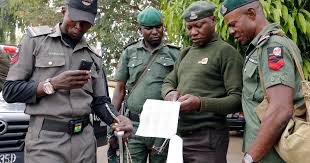
Reports reaching The Daily Reality have revealed that the Sokoto State Police Command has detained one Nasiru Idris of the Sabon Birni Local Government Area in possession of 101 permanent voter cards (PVCs).

The suspect was apprehended on October 10, 2022, in Sabon Birni, Police Commissioner Hussain Gumel said to reporters during a briefing.

He, according to the police commissioner, was unable to explain where he obtained the 101 PVCs, adding that, “It is envisaged that owners of these cards are not only from Sabon Birni local government but could be from other parts of the state because we could not trace the rightful owners of the PVCs.”

The CP promised that after a month, the police would hand over all of the unclaimed PVCs to the Independent National Electoral Commission (INEC).

He also urged members of the public, especially those whose identification cards were lost or stolen, to visit the command headquarters and check for identification.

Atiku as ‘an honest flattering man’

Sule Abubakar Lucky Mark

What aphorism could have more aptly encapsulated Atiku’s socially divisive, searing and bigoted mannerism better than the saying in William Shakespeare’s play – ‘Much Ado About Nothing’ – which goes thus: ‘Would rather be a plain-dealing villain than an honest flattering man.’? By being a ‘plain-dealing villain’, Shakespeare means to be strict and yet upright so that people could even swear that despite your ever-growing strictness, your uprightness is still intact. So, in summary, it means to be a sharp model of rectitude.

And, being ‘an honest flattering man’, on the other hand, means, in a nutshell, to be tactically implicit in your wording so that no one’s ox would ever be gored, i.e., to be politically correct!

And so, I’ve always wondered why Atiku Abubakar, who intends to rule a multi-ethnic and multi-religious country like Nigeria, would be trapped in a circle of ‘honest flattery’ in his political voyage, and the most surprising thing is the fact that he does this without remorse. If you want to rule people, you should instead be a ‘plain-dealing villain’ than an ‘honest flatterer’, for it is in your ‘plain-dealing villainy’ they will know whether you would express deep concern about their collective plight or not in case you eventually become their leader.

On 16 October 2022, in an interactive session, Atiku reportedly told the Northern Elders Forum in Kaduna, ‘…I think what the northerners need is someone who is from the north and also understands the other parts of Nigeria, who has built bridges across the country. This is what a northerner needs. He doesn’t need a Yoruba candidate or an Igbo candidate.’ – Punch newspaper.

Atiku’s geo-ethnic bigotry and supremacism can be likened to what Shakespeare described in the play above as ‘mortifying mischief.’ And this ‘mortifying mischief’ of Atiku, if he is not adequately cautioned for it, could fan the flames of deep cleavage among Nigerians.

A presidential candidate who is said to be a ‘unifier’ should not carelessly shout an ethnic slur on/against other regions. He is expected to strengthen the dwindling bond of our existence and not weaken the already ailing breath of the fatherland. A patriotic ‘unifier’ should not play the ethnic card in the north and play ‘the unifier card’ in other regions. That’s sheer hypocrisy!

In his usual ethnocentric delusion, Atiku has always played ostrich when it comes to pressing national issues. On 12 May 2022, when some homicidal youths took the life of Deborah Samuel at Shehu Shagari College of Education, Atiku quickly posted on his verified Facebook account and condemned the illegal act. Still, after some people threatened that they would not vote for him, Atiku shamelessly removed the condemnatory post he had made earlier. That act alone has a subtle undertone: Atiku is in thrall, and he has no guts to pilot the affairs of this country!

And who knows if William Shakespeare also had Atiku Abubakar in mind when he described one of his characters in that same play: ‘Thou wast ever an obstinate heretic in the despite of beauty.’ In Atiku’s case now, despite his undeniable beauty, seemingly athletic figure, etc., he is still a rash reprobate. And if you are still inwardly an ‘obstinate heretic’, as a man, despite your beauty, especially in contemporary Nigerian society, you cannot be a reliable leader. Your government will be fraught with fabulous fraud and a glittering facade!

At this critical stage of national politics, people must be careful as they make their choices because they are in the hands of manipulative political musketeers who masquerade like angels with their honeyed rhetoric and empty promises. And if Nigerians are not careful, they will later have to find an answer to Birago Diop’s rhetorical question in his poem, which goes thus:‘If we cry roughly of our torments, what hearts will listen to our clamouring’?

Sule Abubakar Lucky Mark sent this article via suleabubakarmark2020@gmail.com.

I’m healthy enough to rule Nigeria – Tinubu slams critics

By Uzair Adam Imam

The Presidential Candidate of the All Progressives Congress (APC), Asiwaju Bola Tinubu, slammed his critics who claim he is unhealthy.

The presidential candidate argued that he is healthy and capable enough to occupy the highest office in the land.

Tinubu stated this in Kano during a meeting with businessmen in the state on Saturday.

He said, “I am not running for 100 yards or 500 yards; I am running for presidency. I’m not competing for WWE Wrestling. If I go out there, they would say he is sick. I’m standing before you, do I look like a sick man?” Tinubu asked.

“To everyone of you who had come out today, I say a big thank you. Thank you for walking and spending your time for a better Nigeria. Walking for the mission and the vision of a prosperous country. You have done it with your expectation, that this country must be inclusive and serve you as a nation.

“For everyday I spend as your President, when elected I promise you with strong determination that you will not be disappointed. Your hope is renewed. Our nation will be accomplished.

“You will be successful as Nigeria will be successful. Thank you for your strong effort and raising the hope of other millions that will come after you. Thank you. God bless you and God bless our country,” he said.

Tinubu also promised not to disappoint his supporters if elected President.

Kano 2023: Why Bala Gwagwarwa is the best man for the job

By Ibrahim Uba

Many observers have already concluded that no gubernatorial election in Kano has ever drawn more aspirants like the forthcoming 2023 election. There are over ten politicians who are vying for the governorship position. All these contenders have started their publicity campaigns, creating political razzmatazz on social media, radio stations, and across every nook and cranny of Kano state.

I carried out some research about each of the aspirants and also studied their campaign activities carefully. Some appear to lack experience and competence to govern the great Kano state, while others adequately fit the job. But I form an opinion that Bala Gwagwarwa, of SDP, is the overall best for the following reasons:

1. Of all the aspirants, Gwagwarwa is the only one who held leadership positions in all three tiers of government — local, state and federal. He served as local government chairman, commissioner for water resources; commissioner for science and technology; and national treasurer of the All Progressive Congress (APC). None of the other aspirants has as huge hands-on administrative experience as he does.

2. From his interviews and speeches, Gwagwarwa is very aware of how people suffer from growing poverty, especially in rural communities. He also seems to understand all the needs clearly and wants of the Kano people. The recurrent statement in all his speeches is that:

 “When I am elected as the governor of Kano, my administration will prioritise vital sectors of the economy. I will not concentrate on insignificant projects of building flyovers and underpasses which have nothing to do with the economic progress of the people. My administration will  empower the poor and restore the autonomy of local governments to help the development of rural communities…”

3. Moreover, while the rest candidates are campaigning through splashing money and political mobilisations, Gwagwarwa’s campaign focal point is explaining his blueprint and plan of action. He is fully prepared and ready to swing into action from day one. I was awed at his recent interview on radio stations, where he skillfully explained ways to revitalise small business owners in Kano.

4. Gwagwarwa is also well-educated and visionary. Moreover, he is a man with a good disposition and charisma that the Kano people will be proud to call their governor.

I hope the good people of Kano state will pay attention and vote wisely. Any aspiring candidate who is inexperienced and/or without a manifesto doesn’t deserve our votes. We tried many, but they failed us. Our inability to vote for the right people is the main problem.

May Allah make the best of choices for us, Ameen!

Ibrahim Uba wrote from Kano via ibrahimuba752@gmail.com.

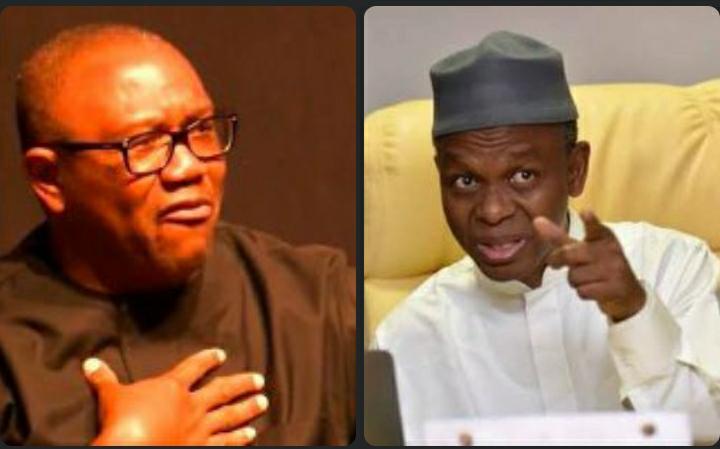
I was not behind your detention – Obi tells El-Rufa’i

By Uzair Adam Imam

Peter Obi, the Presidential Candidate of the Labour Party, denied the allegation made by the Kaduna State Governor, Nasir El-Rufa’i that he was detained during Anambra governorship election in 2013.

El-Rufa’i laid the claim on Monday at an event for presidential candidates organised by the Arewa Joint Committee, saying that Obi ordered security operatives to detain him some nine years ago.

Responding, the LP candidate stated that he was not behind the directive for El-Rufai’s detention in Anambra.

He said, “When I came in now, somebody told me that my brother, the governor of Kaduna state, said that he came to my state and I detained him. Let me tell you, it is good when these things happen, you clarify them.

“Number one, in my eight years of being governor, only in the first three months did I have a commissioner that is not from the north — Commissioner of Police. And that’s because I met the person.

“At the time the governor said this, it was during election. The police commissioner that was there then was from Adamawa — CP Gwari from Adamawa. The AIG that supervised that election was CP Nasarawa from the north. The DIG that came for that election was from Kano.

“Tell me my power, that I was in APGA — government was PDP and APC. Tell me how APGA person will issue order for somebody to be detained. Even me was detained in my local government.

“However, the only offence I committed is that when they asked me, I said ‘that’s how they treat everybody; that I wouldn’t be in Kaduna on the day of election’. That was the only thing.

“I cannot do that. As governor of Anambra state, I had the best ADC in Nigeria — the best policeman. My ADC, Mohammed, is from Kano. He’s the best policeman that I have ever met. Who will I give the order? How will I tell who lives in my house every day; I’m close to his family; I get up and say ‘Mohammed, I want to deal with your people’, and he will stay there.

“Call my ADC today. I will give you his phone number. He’s the best policeman. He’s a CSP now. So, when people say Peter Obi is black. 2019, I was [vice-presidential candidate], I was a good man. Now that I want to be president, I’ve become a bad man. I did not do anything wrong. I want to change Nigeria.”

Dr Kwankwaso and the moral burden

By M.A Iliasu

Education in Nigeria is not yet indoctrinated because it’s neglected. After all, why dictate what you can deny in the first place? The discord between the intellectual class & the ruling class is a piece of good news that suggests freedom of thought, but not when you realize the latter is intentionally suffocating the former. It’s like the mother who grants an infant freedom despite knowing he’s naturally obligated to her milk; is that called freedom? Yes, but freedom to die a horrible death or to survive and become anything that could have gone wrong in a human being.

Basic Education has never been worse than it is. The universities are on an eight-month-old indefinite strike after coming out of the previous one which lasted for almost a year but isn’t acknowledged because it was overwhelmed by Covid-19. Every tangible and intangible force that’s holding education together is shaking. And such caused me to take a nostalgic look at the good old days with a tearful eye. Back in 2002 when we were first enrolled in Primary School when every pupil gets two sets of school uniforms annually with reading and writing materials every term. When they’ll bring food to our table during the two breakfast hours; firstly at 9 AM and secondly at 11 AM.

We all thought it was a norm that’ll persist forever until two years later everything changed when we were merely in primary three. We enquired why we no longer get school uniforms, reading, and writing materials, and food during breakfast, and the school administration said Rabi’u Kwankwaso is no longer the governor of Kano State. That was the first time I learned about government change at the end of its tenure; and what sad learning that was!

Looking at the reality of political establishment in Nigeria especially as the elections approach will expose any person that’s capable of thinking to one index, which is the length and depth at which education is bastardized. Do they even care? Yes, they do, but in a very bad way! The intellectual output of the emerging bracket of youth in Nigeria is a pity. And the only effort being put in is to further exacerbate it.

When we graduated from secondary school we all failed SSCE. And where we come from usually marks the end of one’s education. But with the little we gained, we were counseled by a group of scholars who got scholarships in Nigerian universities, thus feeling the urge to pay back to their society through mentoring. They told us that we should all apply for CAS Kano, because not only would they allow us to rewrite SSCE before we finish, but we’ll also enjoy the scholarship. Thanks to no one other than the famous Dr. Kwankwaso who won the elections once again. Whose government paid for their scholarships that brought us into contact in the first place? We quickly applied and the rest is history!

I read an interview co-edited by the Nobel Laureate in Economics Sciences Professor Paul Samuelson, and Professor Bannet, elsewhere, that the famous Nobel Laureate in Economics Sciences Professor Franco Modigliani wrote his Magnum Opus at the age of 25. And when Professor Robert Solow, the interviewer and Nobel Laureate himself, asked him how it happened, he said: I hadn’t studied very much in Italy of any use. There was no useful teaching of economics. What was taught there was something about the corporate state. (Thanks to the fascist alliance between Hitler and Mussolini). So all I picked up was at the New School of Social Research in New York with the guidance of Jacob Marschak (with which he wrote the paper).

Prof. Modigliani was pitying himself about how much he would have achieved if there was a functioning education in Italy, which compared to how efficiently he used the little he learned in America, he would have done something far greater at 25. As I’m writing this piece I wonder, would I have had the proficiency to have done so if Dr. Kwankwaso hadn’t served two tenures as the governor of Kano State? What would have happened had all the governments that succeeded his own followed in his footsteps?

Let this be a campaign or promotion or whatever, but as an educated person, someone who can think, who knows the value of education, who loves and knows the use of knowledge; you have got a moral obligation to vote for someone who stands as an outlier in the politics of education in Nigeria. The politician that upgraded the most populous human establishment in Nigeria from informal traders who are content with basic education and undergraduate degrees to an elite intellectual society with numerous postgraduate degree holders and Doctors of Philosophy, with which development occurred the swiftest climbing in the socioeconomic ladder in the history of Kano society. The only politician that satisfied the demands of both the gold-diggers who wish to climb and the patriotic who champions the society; in no way other than giving both the weapon of education.

Dr Rabi’u Musa Kwankwaso is the personification of the only
instance in which individual interest equals collective interest, and perhaps the only time when self-interest is enlightened enough to equal collective interest. He is loved by the working-class comrades because he gives them the weapon to climb and sit at the discussion table through education. He is loved by the liberals because he gives them the intellectual satisfaction through education. He is loved by the conservatives because the class he represents is their class, and he brings new members to it without threatening the establishment or whatever informs their bias.

When voted, he’ll be the president for all and sundry!

Iliasu is an economist, essayist, blogger, public and socioeconomic affairs analyst. He can be reached via Muhada102@gmail.com

Nigerians will have free education, foreign and local scholarship if elected president – Kwankwaso

By Ahmad Deedat Zakari

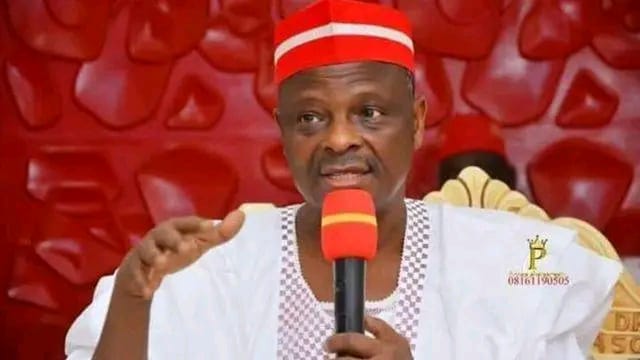
The Presidential Candidate of the New Nigeria People’s Party (NNPP), Rabiu Musa Kwankwaso, said he will grant scholarships to outstanding students if elected president.

Mr Kwankwaso made the promise while addressing mammoth crowd at the inauguration of the Kano State NNPP office on Sunday.

“Those of you supposed to be in primary school will have access to free education, the university students will be back to school, while outstanding secondary students stand the opportunity for scholarship in both Nigeria and foreign universities,” he said.

Commenting on his chances of winning the presidential election, he told the crowd that he will defeat candidates of the the ruling All Progressives Congress (APC) and the Peoples Democratic Party (PDP).

“This crowd signifies the need and urge for new leadership, not only in the state but the country at large. The biggest surprise will come when our party, the NNPP wins the 2023 presidential election, God willing,” he concluded.

Gridlock as Tinubu supporters roam Lagos’ major roads 

By Uzair Adam Imam

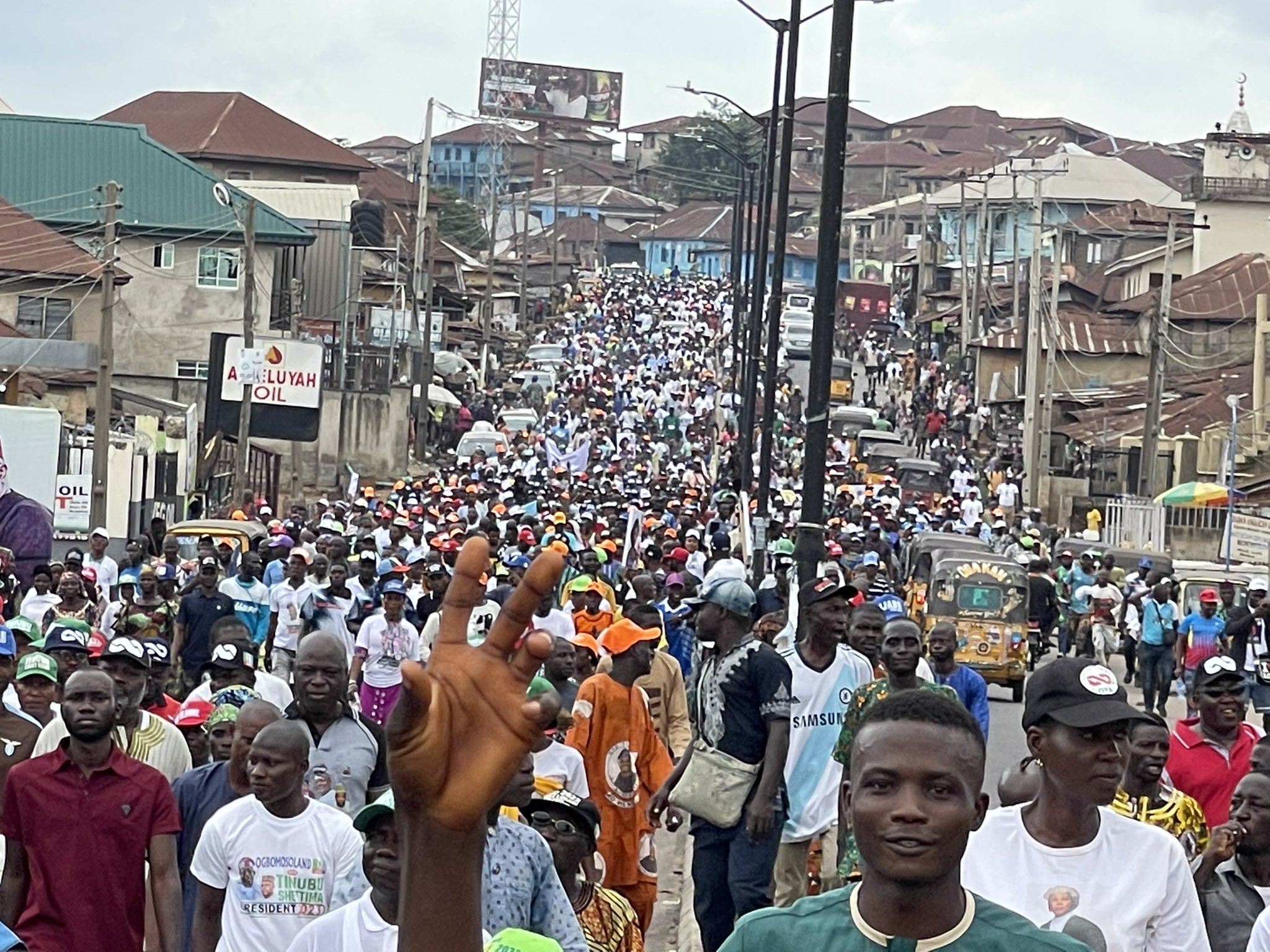
Reports from Lagos indicate that the supporters of the presidential candidate of the ruling All Progressives Congress (APC) roamed the state’s major roads and caused a gridlock. 

The supporters were said to have taken the streets as a solidarity rally for the candidate, Asiwaju Bola Ahmed Tinubu. 

The former Chairman of the National Union of Road Transport Workers (NURTW), Musiliu Akinsanya, announced on Sunday. 

He said, “Many vehicles struggled to make their way as the crowd occupied a significant portion of the road.

The Daily Reality recalls that this is coming after the supporters of the Labour Party Presidential Candidate, Peter Obi, marched on various streets of Lagos last week.

However, the Peoples Democratic Party (PDP) challenged the ruling All Progressive Congress (APC) for not having a valid presidential candidate in the 2023 general elections. 

The National Publicity Secretary, PDP, Debo Ologunagba, disclosed this on Saturday while addressing the party’s conference on Saturday. 

However, the challenge appeared to have been unfavourable and did not sit well with the APC and Tinubu supporters.