2023 Elections

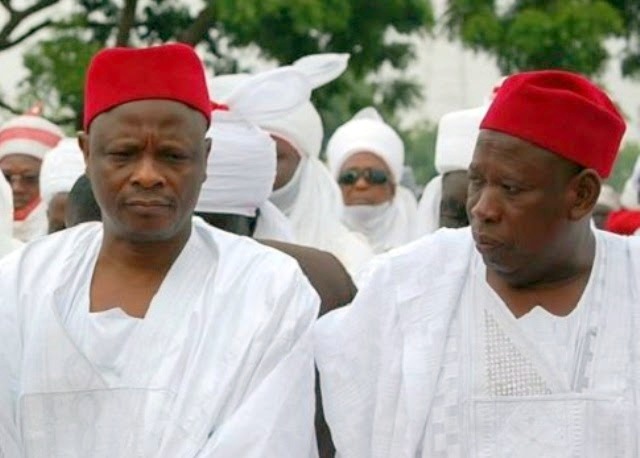
Naja’atu Muhammad declares support for Kano’s Abba Gida-Gida 

By Ahmad Deedat Zakari

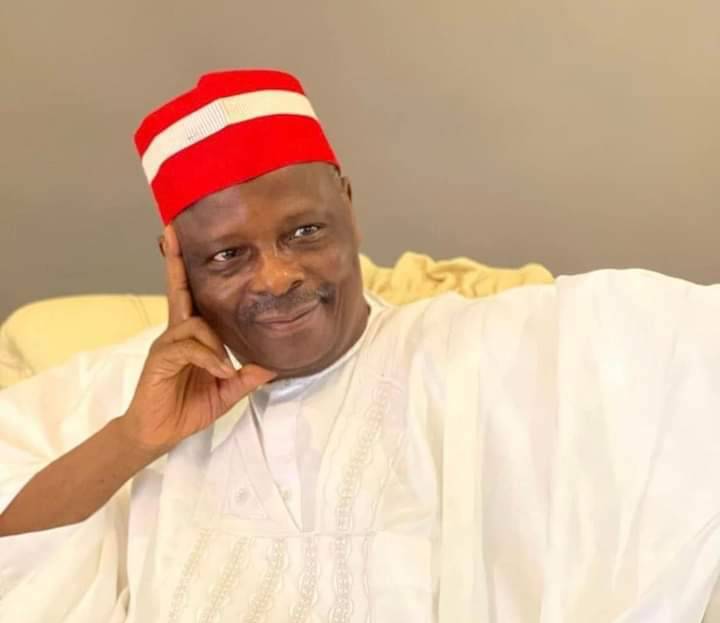
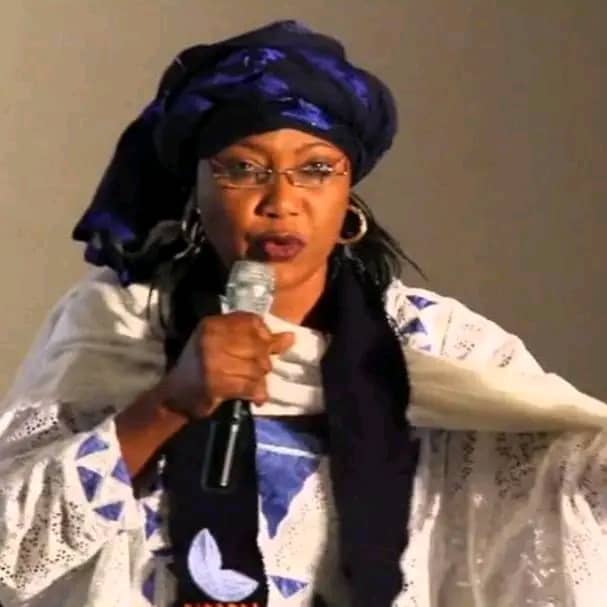
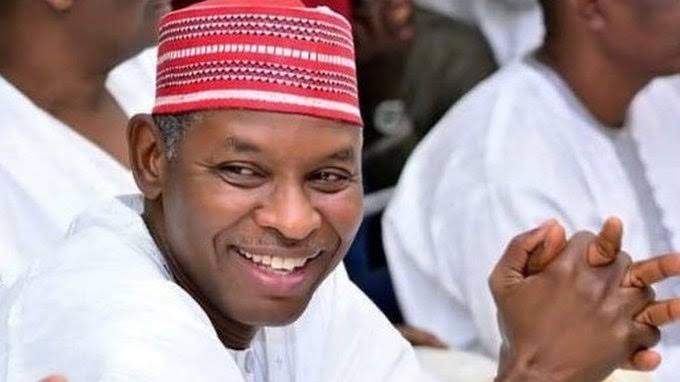
A former Director in the Presidential Campaign Council (PCC) of the All Progressives Congress (APC), Hajiya Naja’atu Muhammad, has declared her support for the Kano gubernatorial candidate of the New Nigeria Peoples Party, Abba Kabir Yusuf, alias Abba Gida-Gida. 

On Arise Television’s Morning Show programme, Naja’atu disclosed her reasons for resigning from the PCC-APC and other reasons for supporting other candidates in the forthcoming election. 

She said while she would not be a card-carrying member of any political party, she would support the Kano NNPP’s gubernatorial candidate, Abba Gida-Gida.

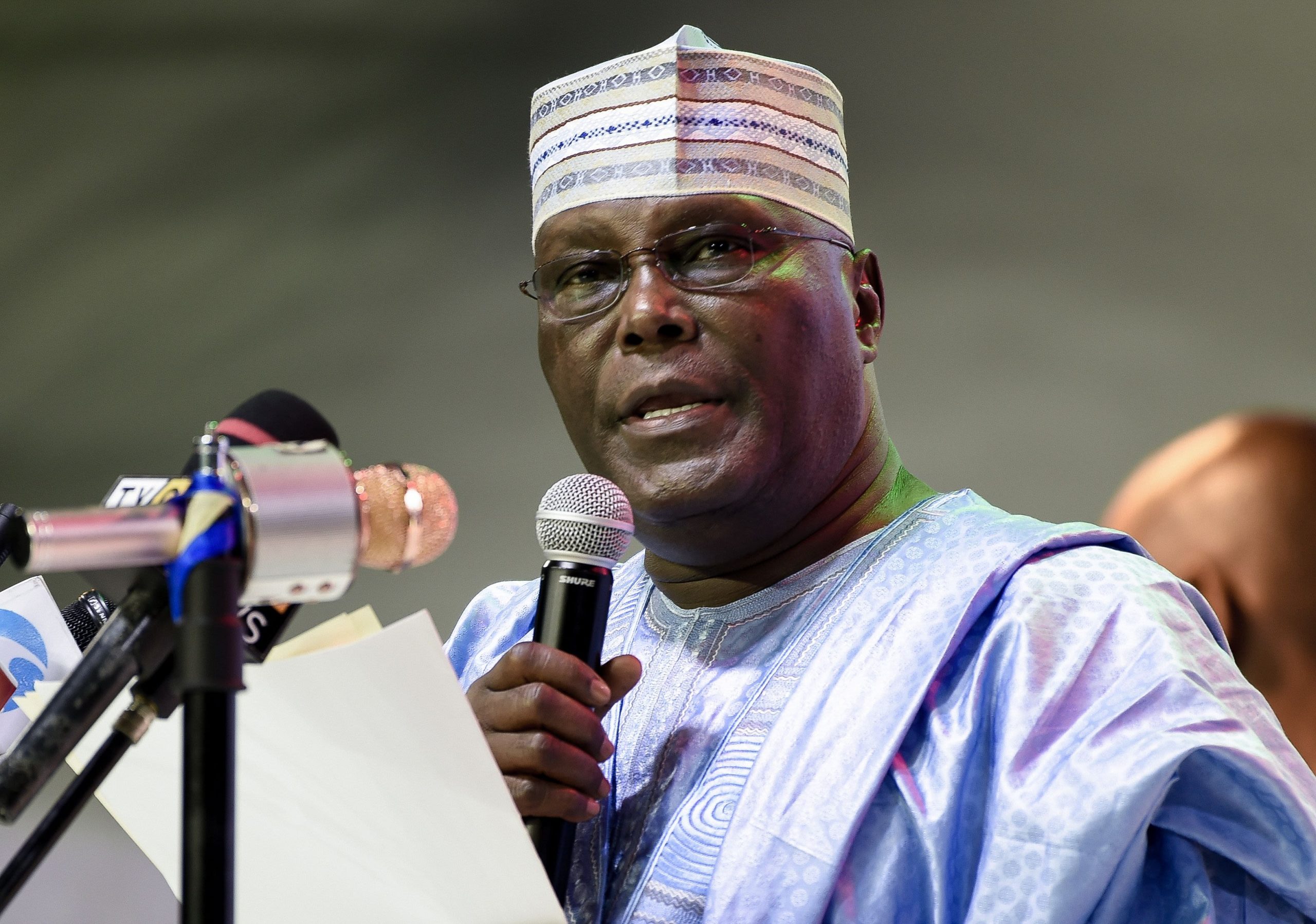
She also disclosed that she would support former Vice President Atiku Abubakar of the Peoples Democratic Party, PDP, for President and Aisha Binani of the APC for governor of Adamawa state. 

Explaining her reason for choosing Atiku over Tinubu, she said Tinubu is the devil and Atiku is the deep sea. 

She also alleged that the APC’s Presidential Candidate, Bola Ahmad Tinubu, is physically and mentally unfit to lead Nigerians.

Don’t extend deadline – Opposition parties tell CBN governor

By Uzair Adam Imam

The opposition political parties have urged the Central Bank of Nigeria (CBN) not to bow to pressure on the extension of the deadline for phasing out old naira notes in the country.

The CBN Governor, Godwin Emeifele, has identified the 31st of January as the deadline, the decision many people continue to criticize due to the unavailability of the new naira notes.

As the deadline is approaching, the banks in Kano and other states across the country are congested with people who go there to cash out the new naira notes and deposit the old ones.

Several authority figures in the National Hause of Assembly, including the state governors, the likes of Dr Abdullahi Umar Ganduje, have asked the CBN governor to shift the deadline.

However, the opposition political parties urged the CBN governor not to extend the date, adding that the decision would seriously affect the Presidential Candidate of the ruling All Progressive Congress (APC), Asiwaju Bola Ahmed Tinubu.

The Peoples Democratic Party (PDP), the Labour Party (LP) and the Zenith Labour Party (ZLP) said these views Friday in separate interviews in Abuja.

Tinubu is frustrated – PDP

Mr Phrank Shaibu, the spokesperson for the Presidential Candidate of the Peoples Democratic Party (PDP), Atiku Abubakar, said Tinubu is frustrated with the decision.

He stated, “Tinubu is obviously frustrated by his inability to stop the cashless policy and currency redesign of the Central Bank of Nigeria (CBN) that will curb vote buying and enhance the credibility of next month’s election, he has begun crying over his imminent defeat.

“Even though the CBN policy affects all 18 political parties, APC is the only one frustrated because their plan to deploy bullion vans and bribe poor voters and security agents on the day of election has failed woefully.”

Naira redesign is a patriotic decision – ZLP

Speaking in a similar vein, the Presidential Candidate of the Zenith Labour Party (ZLP), Chief Dan Nwanyanwu, described the CBN Naira redesign policy as a patriotic decision which should be supported by all.

He said, “I want to use this opportunity to call on Godwin Emefiele, governor of the central bank, not to succumb or listen to anybody from anywhere suggesting that there should be an extension for the return of the old note back to the bank.

“His name will be written in gold if he gets this thing done. And on the part of the President, his mantra failed Nigerians, and he has come up to tell Nigerians that he will ensure free and fair elections.

“I want to say that the decision taken by the central bank of Nigeria and with the approval by President Buhari is the best for this nation.

“It is a patriotic decision taken by CBN as it relates to the new banknote and the time stipulated for the removal of the old note.”

He further said, “We have been in this country and people given the responsibility to serve to go there to help themselves.

“They steal the money and put it to personal use. They don’t use it to even develop their environment.

“They stack the money at home, in septic tanks, in the farm, and some of these funds have been there for more than ten, fifteen years, idling away. So why do you steal what you do not need?

“So, the CBN had to put on its thinking cap. Those categories of naira notes, if not returned before the date stipulated by CBN, would become toilet paper.

“That is, will be of no use. Now people are afraid to take these notes to the banks for fear of being identified.

“Billions and millions of naira notes are still in the homes of some people. It is either they take the courage to bring it to the banks, or by the end of next week, they become toilet paper. 

“This is one way to ensure free and fair elections by making we politicians not have access to money to buy votes.

“So, whether they are National Assembly members or anybody whatsoever who is opposed to this is very unpatriotic.

“Must you carry cash in all your transaction? Go and do the transfer? Let us not cry, we have been enduring for seven and half years.

“This money will get back into circulation immediately after the election, and I suspect CBN will release a little so that Nigeria will have some money in their hands. Those crying are crying because they want money to go and buy votes.

“Emefiele, don’t succumb, you have the support of most Nigerians. Over 95 per cent of Nigerians are behind you in this regard.”

APC plays cash and carry politics – LP

Also, the National Publicity Secretary of the Labour Party, Dr Yunusa Tanko, said, “We are not surprised that those at the forefront of cash and carry politics, who are used to deploying bullion vans for election purposes, are the ones complaining about this laudable government policy targeted at curbing inflation.

“Look at the inflation figures today, inflation numbers are coming down. The CBN must not back down, the bank should insist on the January 31st date to prevent a situation where those who have stashed billions in their closet with the aim of buying votes will be denied that opportunity. “
Old naira notes exchange: Atiku begs CBN to extend deadline 

By Muhammadu Sabiu

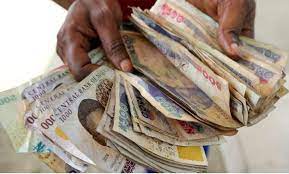
The presidential candidate in the 2023 election under the platform of the Peoples Democratic Party, Alhaji Atiku Abubakar, has called on the Central Bank of Nigeria to extend the deadline for the exchange of old naira notes.

This was contained in an address posted on his verified Facebook Hausa page.

Recall that a CBN policy says that the old naira notes in circulation will cease to be legal tender on January 31, 2023.

Commenting about the deadline, Atiku Abubakar noted that such a policy is practised worldwide due to its impact on the economy, adding that Nigerians, at this critical moment, need an extension of the deadline.

He was quoted as saying, “There is no doubt that the CBN policy has generated heated debates within and outside Nigeria.

“It should be noted that the change of currency is a normal practice from time to time—it is not something new.

“Looking at the fact that the January 31st deadline is drawing nearer, patriotic Nigerians are expressing their fear of the policy worsening the situation of Nigerians.

“It would be difficult for many people who do not transact online to have their old notes changed before the deadline.

“While we will continue to educate people on the policy, it’s important for the CBN to consider extending the deadline.”

Is the Southern Nigerian press scared of Kwankwaso?

By Muhammad Sulaiman Abdullahi, PhD

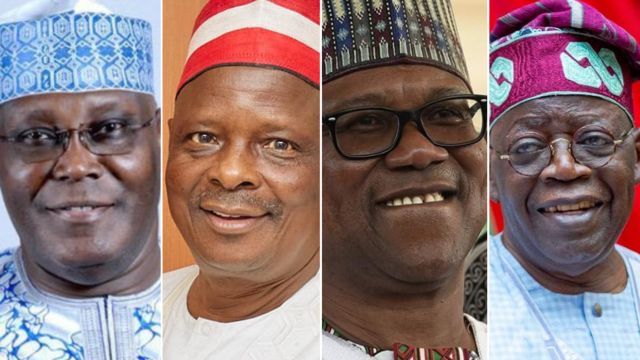
Dr Rabiu Musa Kwankwaso’s NNPP has seemingly become the nightmare of many politicians in the Northern and Southern parts of Nigeria. This is simply because many Nigerians are not truly yearning for a better country.

Some Southern press, especially those who used to set the agenda for the country years ago, downplay Kwankwaso’s candidature and deliberately omit, ignore and replace Kwankwaso’s more prominent and more formidable party with someone who is not known beyond Twitter in their coverage.

The Southern press may be scared of Kwankwaso due to several reasons. These could be myopia, tribalism, regionalism, and religious mischief. Yes! I agree that Atiku Abubakar of the PDP and Asiwaju Bola Tinunbu of the APC may be considered as forefront candidates in some contexts. Thus, they may be regarded to be above Kwankwaso in terms of age, venturing into national politics, and political spread but nothing more.

Kwankwaso is naturally ahead of them in terms of integrity, health, foresight, political sagacity and shrewdness, and above all, the love and commitment towards the development of Nigeria. Moreover, his academic credentials are higher than all those who are contesting.

Furthermore, the Southern press thought they could do as they wished without being noticed. So, they cunningly choose to propagate one Yoruba (Tinubu), one Hausa (Atiku) and Peter Obi (Igbo). The latter cannot even publicly and unambiguously condemn the IPOB secessionists’ evil atrocities. Does he even believe in one indivisible Nigeria himself?

The Southern press is not alone in this mischief and tribalism. Some Northern writers who are, to some extent, their puppies and puppets downgrade Kwankwaso and fail to point out a single reason. They even tag him as a local champion. What is bad in being a local champion? All champions should be local, otherwise they don’t have any base.

If you check newspapers, both print and online, such as Vanguard, the Guardian, Punch, Premium Times and the likes, they are at the forefront of this amateur journalism. How can someone be so glaringly subjective in their journalism to the extent that even a blind can see? What kind of a country is this? Are they not aware of Kwankwaso’s credentials and positive antecedents? Are they unaware of how Kwankwaso transformed and developed Kano rapidly? How on earth can you compare Kwankwaso to all those contesting if someone is sensible and objective in his assessment? Most of them are either tribalistic or looking for big brown envelops filled with foreign currency.

These Southern press are not helping matters and are not objective. They are so divisive and tribalistic. To borrow from Orubebe’s outrage when he intended to save the nation from the ongoing catastrophe this Buhari-led government brought, while referring to Jega, he said: You are tribalistic. You are myopic, and we can’t take it!

Finally, the Southern media has achieved much in their agenda-setting warfare. Even some international media outlets borrow a leaf from them and mention Atiku, Tinubu and the other Igbo guy and, conspicuously, leave out Kwankwaso.

However, suppose we are to be sincerely and patriotically fair, let us put all the leading contenders on a scale of preference which is based on capacity and capability and see what happens. In that case, Kwankwaso is the best, followed by the Igbo man, and then Atiku while Tinunbu comes last. At least if they are to be objective, we have four leading contenders and not three, as they are falsely portraying.

Our votes are for Kwankwaso. And he will surely get more than many corrupt contenders and will win the presidential elections.

Muhammad Sulaiman Abdullahi, PhD, wrote from Kano. He can be reached via muhammadunfagge@yahoo.com. @muhammadunfagge.

Tinubu campaign director resigns, quits partisan politics 

By Ahmad Deedat Zakari

A campaign director of the Presidential Candidate of the All Progressives Congress (APC), Bola Ahmad Tinubu, has resigned from her position.

Najatu Muhammad was the Director of the Civil Society Directorate of the APC Presidential Campaign Council (PCC) before her resignation on Thursday, January 19, 2023.  

Ms Muhammad, in a letter, addressed to the National Chairman of the APC, Abdullahi Adamu, said she is resigning from partisan politics due to a lack of ideological differences amongst political parties.

The letter reads in part, “In line with article 9.5 (i) of the Constitution of the All Progressives Congress (APC), I am writing to you to intimate you of my resignation from the All Progressive Congress (APC). I am by this letter also informing you of my resignation as the Director of the Civil Society directorate of the Presidential Campaign Council of the APC.

“It has been a great honour working with you (Mr Adamu) to contribute towards the building of our dear nation. However, a number of recent developments in the country’s political and democratic space make it impossible for me to continue to participate in party politics.” 

Ms Muhammad is the third member of the PCC to officially resign from the Council. In early January, Ahmed Ibeto and Zanna Ali resigned. 

Ahmed Ibeto, The Assistant Secretary of the North-central Directorate of Mobilization, in a letter dated January 3, 2023, which was addressed to the APC Ibelu Central Ward, Magama Local Government, Niger State, said his resignation was due to lack of unity of purpose and unending litigations, among others.

Another PCC member, Zanna Ali, a member of the Directorate of Youth Mobilization, North-east, also said his resignation was based on the inability of the ruling party to present a credible presidential candidate.

2023: Atiku is Nigeria’s best option – Aliyu Bello

By Sumayyah Auwal Ishaq

The Kaduna State youth leader of the People’s Democratic Party (PDP), Alhaji Aliyu Bello, has affirmed that the PDP Presidential candidate in the 2023 Presidential election, Alhaji Atiku Abubakar remains the best among the presidential candidates in the presidential race.

Alhaji Bello said that Atiku has the prerequisite experience, contacts internationally and across the country, and has impacted many lives through his philanthropic works.

While speaking with The Daily Reality reporter, he disclosed that Atiku understands how to bring deliberate steps and actions to create big ripple effects that can impact an economy and make life far more abundant for the people in the country. 

He urged Nigerians of voting age to pick up their Permanent Voter Cards (PVCs) from the various Independent National Electoral Commission (INEC) offices in their localities to participate in the forthcoming general elections.

2023: BBC Hausa holds debate for governorship candidates in Kaduna 

Sumayyah Auwal Ishaq

The Kaduna Gubernatorial debate by the BBC Hausa Service has ended with four governorship aspirants airing their varied opinions on how to move the state forward. After Kano’s debate on the weekend, Kaduna is the second of the five selected northern Nigerian states BBC plans to organise the debate before the 2023 elections.

The debate was hosted at Kaduna State University. Leading participants included Senator Uba Sani (All Progressive Congress, APC), Isah Ashiru (People’s Democratic Party, PDP), and Sulaiman Uthman Hunkuyi (New Nigeria Peoples Party, NNPP).

The debate had the aspirants speaking on issues ranging from security, economy, infrastructure, education, job creation, and health, among others. 

While the candidates differed on the methods with which they would take Kaduna to a higher echelon, they agreed that peace and security would play a key role in driving the process of development in the state. 

After the debate, the candidates exchanged pleasantries and left the hall with their supporters.

Shettima’s legacy: A brief look at home 

By Lawan Bukar Maigana 

“Home is wherever you leave everything you love, and never question that it will be there when you return.” – Leo Christopher

My two-week stay in Borno after being away for a year has exposed me to some of Governor Babagana Umara Zulum’s developmental projects across the Maiduguri Metropolitan Council. I have seen the ongoing reconstruction and construction of quality drainages and roads. The expansion of roads at Monday Market, Bulabulin Alinkotoko and Gwange Areas, among other places in the metropolis, is commendable and timely. It has been long overdue. There would be no traffic jams when the projects are completed, and people will have easy mobility within the metropolis. 

The state capital has however been in total blackout for the past two years since the destruction of utility poles along Damaturu road by the Boko Haram murderers. It is on record that the governor has spent a lot of resources on restoring electricity in the town, but all efforts have been consistently sabotaged by the terrorists. Their defeat and displacement have however supported the restoration of light in parts of the metropolis. 

My neighbour told me that they enjoy a minimum of 4-hour power supply daily. That is far better than being in a total blackout which the people endured for years.  

“They mostly restore electricity after Magrib and interrupt it before midnight. That is how we manage it,” he said. 

However,  I have heard many people bitterly complaining about the high rate of unemployment that is becoming a threat to the fragile peace of the state. The state has limited opportunities for youth. It is said that criminal activities likely thrive in places where a larger population of youths are restive and jobless. Therefore, Governor Zulum should introspect and start focusing on job creation. 

My interaction with some young people has made me realise that opportunities are limited in Maiduguri at the moment. One of them told me that even becoming a labourer is now not an easy task. According to him, the only sustainable and reliable job is tricycling.

The very day I got to Maiduguri, I saw campaign banners and posters everywhere courtesy of young people who were either hungry for power for the sake of it or living off godfathers. That is not bad, but it would have been better to invest their youthful energy and time in more productive ventures like learning a craft, acquiring a skill or doing business, each of which can stand the test of time. 

The state government has invested a lot in infrastructural projects which are spread across the state. However, Borno needs a lot of investments in human capital if the state must recover from the many years of destruction caused by the Boko Haram sect. 

In terms of business, the economy is struggling. Families have accused marketers, especially foodstuff sellers, of overpricing. They accused them of hiding under the exchange rate in the country to unjustly increase the price of goods and services in the state. They want the market authorities and state government to work together to ensure that marketers stick to the prices of goods without any corrupt changes. 

Shettima’s Legacy 

This is another opportunity to recall that the immediate past governor of the state, Senator Kashim Shettima, put about seven production firms in different parts of the state, and they were meant to create jobs, eradicate poverty and generate revenue for the government. 

The plants include Tomato Plant, Garri Plant, Water line Plant, Solar Panel Plant, Onion Dehydration Plant, Corn Chips Plant, Plastic Plant and others. Out of all the plants, only the plastic plant is functional, and it has created jobs for an appreciable number of youths in the state. 

Aside from these plants, the state has other abandoned industrial establishments that can help generate revenues for the state as well as create job opportunities for youths. Why can’t we invest in those firms to overcome joblessness? Borno should learn from Kano, Kaduna, and other states that build firms to boost their revenue and provide jobs for their people. Borno state should not only build these factories but sustain them and take advantage of them, not abandon them. 

It is high time Governor Zulum directed his attention towards the establishment and reformation of institutions that can accommodate jobless youths and give their lives meaning. 

The fact that a lot of these firms are already in place, having been built by Senator Shettima, is a huge advantage for the present administration. Aside from the advantages of having those plants fully operational to the state, Governor Zulum should be more interested in sustaining the legacy of his boss and predecessor. 

Lawan Bukar Maigana writes from Abuja and can be reached via email: Lawanbukarmaigana@gmail.com.

2023: Drama as Ganduje, Kwankwaso trade words over Kano votes

By Uzair Adam Imam  

Governor Abdullahi Umar Ganduje of Kano State and his former boss, Dr Rabi`u Musa Kwankwaso, the Presidential Candidate of the New Nigerian Peoples Party (NNPP), have continued to trade words over Kano votes in the forthcoming general elections of 2023.

Ganduje, while addressing his party`s supporters, said Kano people would vote for Asiwaju Bola Ahmed Tinubu, the Presidential Candidate of All Progressive Congress (APC), against Kwankwaso, who is a citizen of the state.

He added that Kano would repeat what happened in the 1993 presidential election when the state supported a Southern candidate, the late MKO Abiola, against its citizen, the late Bashir Tofa.

However, responding to what Ganduje had said in a statement, Kwankwaso stated that whoever works against him in Kano in the forthcoming election would regret it.

Kwankwaso said, “I had a rally not long ago, which was one of the best rallies. I had one in Wudil, the southern senatorial district. I had one in Bichi, northern senatorial district. I opened my office in Kano Central, and one of the best rallies because you can’t compare it with the ones by some of the candidates who had crowds that came to Kano from neighbouring states and so on.

“Now, you see, I don’t want to talk about that man. I don’t know whether he said it or not. But the reality is that anybody who works against NNPP or Kwankwaso in 2023 one day will regret it, that he made a mistake.

“Anybody who knows me, who knows my antecedents, believes that, if I win this presidential election, Kano will have maximum benefit. Of course, northern Nigeria will benefit and, of course, the country.

“So, I am surprised if you go and say I should hold a rally. I have done many rallies in Kano. In just recent months, January and December in Kano, in all three senatorial districts. So, what is the problem with holding a rally in Kano?”

Nigeria and its challenges: The need for competent leadership

By Muhammad Nazif Abubakar

Nigeria is facing several challenges that threaten its stability and prosperity. From economic struggles to political corruption, the country is at a crossroads and, come February, must take to the ballot and vote for competent leadership that can take actions to address these issues to secure its future.

Nigeria’s numerous economic challenges can be overwhelming in recent years, including declining oil prices and organised oil theft. The latter has significantly impacted the country’s economy, leading to billions of dollars in lost revenue for the government and oil companies and lost profits for businesses operating in the oil industry. This lost revenue could have been used to fund critical public services and infrastructure projects, exacerbating the adverse economic effects of crude oil theft. Moreover, the financial struggles in Nigeria have led to high levels of unemployment, particularly among young people, and have contributed to widespread poverty. In addition, the country has struggled with high inflation levels and a weak currency, making it difficult for people to afford necessities.

Political corruption is another major issue in Nigeria. Politicians and government officials are frequently accused of embezzlement and misusing public funds. Examples of this corruption, most of which were documented by Dr Nura Alkali in his book entitled When Stealing is Not Corruption: Nigeria Under President Jonathan, include the 2015 elections, which were marred by allegations of vote buying and the use of government resources to support certain candidates; the 2012 fuel subsidy scandal, in which billions of dollars in subsidies were embezzled by government officials; the 2010 Halliburton scandal, in which the company paid bribes to Nigerian officials to secure contracts; and the 2015 DasukiGate scandal, in which former National Security Adviser, Colonel Sambo Dasuki embezzled public funds meant for military equipment. More recently, a former Accountant General of the federation was involved in over a 100-billion-naira scandal. Corruption has contributed to a lack of trust in successive governments. It has made it difficult for the country to address its many challenges.

In addition to these economic and political challenges, Nigeria is also facing several security threats. Before 2015, the country was plagued by violence and terrorism, with groups like Boko Haram carrying out attacks on civilians and government targets. This has destabilised the country and made it difficult for citizens, especially in the northeast, to go about their everyday lives. Attacks by members of Boko Haram have drastically subsided in recent years. However, Nigeria is struggling with increasing levels of banditry in its northwest region. This has included armed robberies, kidnappings, and attacks on communities and security personnel. These bands of criminals have caused widespread fear and insecurity in the region, especially in Katsina and Zamfara. In addition, they have made it difficult for people to go about their daily lives.

The root causes of this banditry are complex and multifaceted. Poverty and unemployment are major contributing factors, as many of these bandits are driven by the desire to make a quick profit. In addition, the lack of effective law enforcement and security in the region has made it easier for these criminal groups to operate with impunity. The government has attempted to address this issue by deploying security forces and implementing programs to address poverty, but these efforts have had limited success. It will require a more comprehensive and coordinated approach to effectively address the problem of banditry in Nigeria’s northwest region.

Nigeria has a large and diverse population and a rich history and culture. With exemplary leadership and policies, Nigeria has the potential to become a thriving and prosperous nation. However, this will require a concerted effort to address the issues holding the country back. This will require tackling corruption, improving the economy, and managing security threats. It will also require working to build a more inclusive and just society where all citizens have the opportunity to succeed and thrive.

Despite Nigeria’s many challenges, there is hope for the country’s future. This hope lies in the decisions made during the next election cycle. The person chosen to lead Nigeria must be capable of addressing the country’s problems. As former US Senator Daniel Patrick Moynihan once said, “The single most exciting thing you encounter in government is competence because it is so rare.” Competence is a rare quality in the Nigerian political landscape. Still, it is essential for the success and prosperity of the country. Therefore, we must choose a competent leader to navigate Nigeria’s challenges.

Muhammad Nazif Abubakar from Kaduna via muhd.abubakar@hotmail.com.