
Gunmen abduct elderly man, shoot son in Kano border community
By Uzair Adam
Gunmen suspected to be bandits have attacked Kururawa community in Lakwaya district of Gwarzo Local Government Area, Kano State, abducting an elderly resident, Alhaji Yakubu Na Tsohuwa, and injuring his son, Badamasi.
According to a source who spoke on condition of anonymity, the attackers, armed and riding on two motorcycles, invaded the community from neighbouring Katsina State.
They reportedly overpowered the household, seized Yakubu, and shot his eldest son in the leg as he attempted to stop the abduction.
Badamasi is currently receiving treatment in a hospital.
The source noted that Lakwaya shares a border with Malumfashi and Musawa Local Government Areas of Katsina State, adding that the assault on Kururawa—located about one kilometre from Lakwaya—was the first of its kind in the area in a long while.
He appealed to the Kano State Government to establish a security base in the area to protect residents, saying the attack has left the community in fear and uncertainty.
As of the time of filling this report, the Kano State Police Command had yet to issue an official statement, and efforts to reach its spokesperson, CSP Abdullahi Haruna, were unsuccessful.

Ethical AI, public health reforms dominate resolutions as IMAN concludes 26th conference
The Islamic Medical Association of Nigeria (IMAN) has rounded off its 26th Annual General Meeting and Scientific Conference in Kaduna with strong calls for ethical regulation of artificial intelligence in healthcare and the elimination of harmful cultural practices that threaten public health.
The five-day hybrid conference, held at Arewa House from December 1–5, brought together 1,018 delegates from across Nigeria and beyond.
Discussions focused on the conference theme, “Artificial Intelligence in Healthcare,” alongside subthemes on reproductive health, harmful customs, medical ethics, palliative care, and the rising burden of non-communicable diseases.
Experts highlighted concerns about the rapid growth of AI technologies outpacing legal and religious guidance, the persistence of female genital mutilation and vaccine refusal, and the risk of AI reducing human compassion in clinical care.
Delegates also noted that cultural and religious misconceptions continue to hinder timely uptake of vaccinations, contraception, and modern treatment.
At the end of deliberations, IMAN resolved to push for Islamically grounded legal frameworks for AI and reproductive technologies, intensified collaboration with religious leaders to dispel myths, and stronger national ethical oversight of AI.
The Association also called for improved training of Muslim health professionals, development of AI-based accident-prevention systems, and expansion of telemedicine nationwide.
IMAN expressed gratitude to President Bola Ahmed Tinubu, Kaduna State Governor Sen. Uba Sani, Jigawa State Governor Mal. Umar A. Namadi, the Emir of Zazzau, and other health sector leaders for their support and hospitality.

CGC Adeniyi presides over first WCO policy session, boosts Nigeria’s standing in global customs affairs
By Sabiu Abdullahi
The Comptroller-General of Customs, Adewale Adeniyi, has chaired his first meeting as head of the World Customs Organisation (WCO) Council, leading the 93rd Session of the Policy Commission in Antigua, Guatemala.
The gathering strengthened Nigeria’s profile within the global customs community.
The session took place from 2 to 4 December 2025 at the historic Hotel Soleil and brought together Heads of Customs Administrations and senior representatives from the WCO’s six regions.
During the opening ceremony, CGC Adeniyi welcomed the delegates to Antigua Guatemala, a UNESCO World Heritage city.
He paid tribute to customs officers who died in the line of duty and encouraged participants to engage meaningfully on issues that influence global customs operations.
He was joined by WCO Secretary General Ian Saunders and Guatemala’s Vice Minister of Public Finance, Honourable Patricia Joachin, who addressed attendees on behalf of the host country.
Delegates were later treated to a traditional cultural dinner at the historic Capuchinas Ruins.
CGC Adeniyi’s emergence as WCO Council Chair in June 2025 is widely seen as a significant achievement for Nigeria and the African region.
His election placed the country in a leadership position within an organisation that comprises 187 customs administrations.
Reflecting on the importance of the role, Adeniyi stated that the position carries “a major responsibility for Nigeria and for Africa,” noting that his focus is on delivering leadership that supports global trade, security, and fair customs practices.
His remarks align with comments he made earlier in an exclusive interview on The Customs Exchange: Conversations with Global Customs Leaders, where he said his election affirmed Nigeria’s ongoing customs reforms.
According to him, the trust placed in his leadership is “an endorsement by the global customs community that we are on track,” as he highlighted key reforms undertaken by the Service over the past two years.
These include the modernisation of procedures, system upgrades, and improved cooperation with international partners.
Adeniyi listed the Authorised Economic Operator (AEO) programme, developed with WCO support, as one of the most significant changes.
He said the programme has reduced clearance times, boosted revenue performance, and strengthened trust between Customs and compliant traders.
He also mentioned the SAFE Framework of Standards, the Time Release Study (TRS), and progress on advance rulings as further proof of Nigeria’s commitment to global standards.
Calling for stronger partnerships among customs authorities worldwide, Adeniyi emphasised the importance of inclusiveness within the WCO, saying, “Our uniqueness is our strength. We must allow that diversity to continue creating opportunities and progress for us.”

Nigeria secures release of 100 kidnapped schoolchildren
By Hadiza Abdulkadir
The Nigerian government has secured the release of 100 schoolchildren abducted last month from St. Mary’s School, a Catholic boarding institution in the Papiri community of Niger State.
The attack, which occurred on November 21, saw armed men take 303 students and 12 teachers hostage. In the days following the abduction, 50 pupils managed to escape and were reunited with their families.
According to officials, the rescued children are expected to be handed over to Niger State authorities for medical and psychological evaluation. Government sources confirmed the release but did not disclose whether it resulted from negotiations, military operations, or other interventions.
Despite the successful rescue, concerns remain high. More than 160 students and staff members are still unaccounted for, leaving many families anxiously awaiting news of their loved ones.
Child-protection advocates and community leaders have renewed calls for stronger security measures around schools, stressing that the safety of students must be a national priority as mass abductions continue to plague parts of the country.
ES inspects newly revitalised NERDC Press
By Sabiu Abdullahi
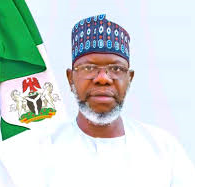
The Executive Secretary of the Nigerian Educational Research and Development Council (NERDC), Prof. Salisu Shehu, has inspected the fully refurbished NERDC Press located at the Council’s South West Zonal Office in Jibowu, Lagos.
The press had been inactive for several years. Prof. Shehu visited the zonal office on 10 May 2025 and pledged to restore the non-functional printing facility to improve its productivity. In early September 2025, the Council began the refurbishment work in fulfilment of that promise.
At the start of the repairs, the Press Manager, Mrs Precious Iweha, praised the Executive Secretary for approving the intervention, explaining that “we have commenced work on the generator set and are currently servicing the Sord Z machine, Polar cutter machine, and one of the Gestener machines”.
She added that “we are grateful for ES’s approval of the repairs and servicing of the Printing Press. This initiative will ensure that the Council’s investments in plants, machinery, and infrastructure will yield optimal results”.
Upon completion of the project, the Executive Secretary visited the facility on Thursday, 4 December 2025, to assess the work completed.
He expressed satisfaction with the progress recorded in his first year in office and gave an assurance that the revitalised press would be put to full use in line with its intended purpose.
The Head of the South West Zonal Office, Mr. Babatope Oloruntoba, and Mrs. Iweha commended the Executive Secretary for the achievement.
They described the successful revamp of the press as a significant milestone for both the NERDC Press and the Council as a whole.

Tax reform, content creators and the rest of us
By Isyaka Laminu Badamasi
It is becoming glaring that the Federal Government is taking Nigerians for granted. A few months back, we were all here condemning the new tax reform introduced by the APC administration led by President Bola Ahmed Tinubu, a reform whose implications will be deeply felt by Nigerians, especially the downtrodden.
Though some analysts and experts argue that the new tax reform is the right step, particularly for an economy whose revenue depends almost 70% on crude oil, my little contribution to the debate is not to analyse the reform or weigh its positive and negative impacts on our well-being. Rather, it is to raise a few critical questions arising from my thoughts on the matter at hand.
My concern is specifically about content creators who were engaged to sensitise Nigerians on the new bill—a development that sparked another debate, one that again exposed our disunity as a people and our lack of seriousness about matters of national importance and those inimical to our well-being. Nigerians, especially Northerners, instead of examining the bill and preparing for constructive criticism, began complaining that none of the selected content creators was from the core North. As if having a core Northern content creator in the sensitisation team would somehow change or reduce the taxes that will eventually be imposed on core Northerners.
With or without any sensitisation or awareness campaign, the new tax reform has come to stay. Regardless of how people accept or reject it, it will be implemented as planned. The content creators engaged by the government may not even understand the policy themselves, let alone be able to sensitise the public properly.
For me, therefore, this entire conversation about the “selection of content creators” is unnecessary. To my understanding, it was technically designed to divert Nigerians’ attention. Instead of focusing on constructive criticism of this inhumane policy, we have been pushed into arguing over who should be involved, when, and how—a distraction that does not help an already fragmented country.
Let us not forget that we are in 2025, in the 21st century—111 years as an amalgamated entity and 65 years as an independent nation, with more than two and a half decades of an uninterrupted democratic dispensation. It is high time we appreciate our togetherness despite the odds and chart a path toward unity. This is especially crucial at this moment, when we are facing serious and multidimensional security challenges, particularly here in the North, ravaged by bandits, insurgents, and kidnappers, with pockets of ethnic and religious conflicts here and there. Do we so easily forget that Nigeria was once declared a “country of particular concern” by the US President, Donald Trump?
It is important for policymakers and implementers to avoid introducing issues that, instead of fostering peaceful coexistence, end up dividing us. Meanwhile, those in positions of authority continue siphoning our meagre resources—resources that have failed to address our critical challenges in health, education, security, and other essential sectors.
On the issue of not engaging or selecting content creators from the core North for this “all-important” sensitisation campaign, the situation is both baffling and questionable. It is strange that the PR unit of the FIRS/FGN did not consider the three major languages—Hausa, Igbo, and Yoruba—alongside English, our official language, as part of their information-dissemination strategy. However, it is still not too late to make corrections.
Whatever the reasons may be, Nigerians—regardless of region or religion—should prepare themselves, as the policy will take effect come January 2026.
Isyaka Laminu Badamasi wrote via makwalla82@gmail.com.

Tinubu praises military for halting coup in Benin
By Abdullahi Mukhtar Algasgaini
President Bola Ahmed Tinubu has praised Nigeria’s military for swiftly intervening to protect democracy in the Republic of Benin following an attempted coup on Sunday.
The action came at the formal request of the Beninese government, which faced an uprising led by Colonel Pascal Tigri.
The coup plotters seized the national broadcaster, announced the overthrow of President Patrice Talon, and suspended democratic institutions.
Acting on two urgent requests from Benin’s Foreign Ministry, President Tinubu, as Commander-in-Chief, authorized the deployment of Nigerian Air Force fighter jets.
The jets entered Beninese airspace to help dislodge the plotters from the TV station and a military camp where they had regrouped.
Nigeria also deployed ground forces to support the protection of constitutional order.
Nigeria’s Chief of Defence Staff, General Olufemi Oluyede, confirmed that all requests were fulfilled, with Nigerian forces now on the ground in Benin under Beninese command authority.
After loyalist forces, assisted by Nigeria, regained control and restored constitutional order, President Tinubu commended the armed forces.
He stated they had acted within the ECOWAS Protocol on Democracy and Good Governance, helping to stabilize a neighboring country and upholding democratic values.
“Today, the Nigerian armed forces stood gallantly as a defender and protector of constitutional order,” Tinubu said. “Nigeria stands firmly with the government and people of the Republic of Benin.”

Arewa Community Germany disowns Berlin “Hausa International Protest,” warns against divisive messaging
By Muhammad Sulaiman
The Arewa Community Germany has formally disassociated itself from a video circulating online about a so-called “Hausa International Protest” organised by Hausa Tsantsa Development Association, staged in Berlin.
In a letter addressed to Nigeria’s Consul General in Frankfurt, Ambassador Yakubu A. Dadu, the group said it had no role in organising or endorsing the demonstration and warned that the protest’s message conflicts with its core values.
The association, represented by Alhaji Tijani Garba, Dr. Ummah Aliyu Musa and Buhari Abubakar, stressed that it was founded on the principle of unity among all northern Nigerian peoples. It noted that Hausa, Fulani, Kanuri, Tiv, Nupe and other groups share a common heritage, adding that the organisation “does not draw lines” between northerners and will not support any activity that promotes ethnic profiling or elevates one group above another.
According to the statement, the Berlin protest risks fueling division and misunderstanding among Arewa communities in the diaspora, where the group says cohesion is especially important. The association reaffirmed its focus on cooperation, peaceful engagement and presenting a positive image of Northerners living in Germany.
The Arewa Community Germany also cautioned the public against linking its name to the protest, emphasising that any event involving the association will be announced through its official channels.
The group concluded by reaffirming its stance on harmony, mutual respect and a united Arewa identity.

Governor Yusuf orders probe after assault victim alleges irregular release of suspect
By Uzair Adam
Kano State Governor Abba Kabir Yusuf has ordered an immediate investigation into an alleged assault case involving Rabi Hamza Danladi Nasidi, following widespread public concern generated by a social media video in which the victim appealed for the governor’s intervention.
The development was confirmed in a press release issued on Sunday by Abubakar Tijjani Ibrahim, the Special Assistant on Media to the Attorney General and Commissioner for Justice, Kano State.
The statement outlined the circumstances surrounding the case and the government’s response.
According to the release, Rabi Hamza Danladi Nasidi was allegedly attacked at her residence by one Kabiru Aminu, resulting in injuries that left her in a fragile condition.
Although the suspect was initially remanded by Magistrate Court No. 36 until January 20, 2026, the victim later discovered that he had been released—an action that triggered significant public outrage and questions about possible irregularities in the handling of the case.
The viral video, in which the victim appealed directly to Governor Yusuf for justice, brought renewed attention to the matter.
The governor, described as deeply concerned by both the severity of the allegations and the circumstances of the suspect’s release, immediately directed the Attorney General, Abdulkarim Kabiru Maude, SAN, to conduct a thorough investigation.
The Attorney General has since assured the governor that all necessary legal steps will be taken and that anyone found complicit—whether in the alleged assault or in any procedural lapses—will be held accountable in line with the law.
The statement reaffirmed the Kano State Government’s commitment to protecting citizens’ rights, strengthening public trust in the justice system, and ensuring that cases of this nature are handled transparently and without prejudice.
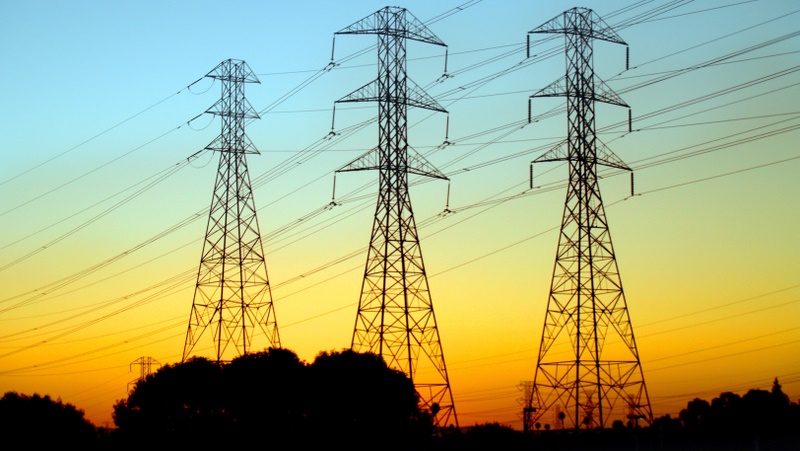
Tudun Jukun residents face unbearable KEDCO bills amid worsening economic hardship
By Maryam Shehu
Electricity remains one of the most essential public utilities in Nigeria–central to daily life, small-scale enterprises, and family survival. Yet for residents of Tudun Jukun, Madaci and other communities in Zaria, power has become a source of deepening hardship rather than progress.
For nearly three weeks, Tudun Jukun and several neighbouring communities have been plunged into a persistent blackout, with no meaningful announcement from the Kaduna Electricity Distribution Company (KEDCO) or any government authority. The outage comes on the heels of a controversial and devastating spike in electricity bills that many residents say they were never consulted about and cannot afford.
In October, KEDCO reportedly reclassified the community into Band A, one of the highest electricity tariff categories, despite Tudun Jukun’s socio-economic reality. The community, home to more than 2,000 households, has less than 40 per cent of residents considered middle class, while the majority struggle daily with food insecurity, unstable income, and rising costs of living. Many parents rely on public schools, yet still struggle to provide basic learning materials for their children.
Residents say KEDCO claimed to have engaged community elites before implementing the Band A classification. Shortly after, households were issued bills of ₦10,000—already burdensome for a community where many live below the poverty line.
The situation worsened dramatically in early November, and households received bills as high as ₦115,000, and in some houses, even higher. With residents unable to pay, the community was soon thrown into darkness. Since November 20, 2025, Tudun Jukun has remained without electricity, despite petitions and repeated attempts by concerned people to seek redress.
The power cut has devastated small and micro-businesses that rely on electricity to function. Welders, tailors, food vendors, shop owners, and artisans have seen their livelihoods crumble.
“My father is old and serves as a Ladan at a nearby mosque, so my family depends on me for everything,” said Ibrahim, a local welder. “I tried carrying my machines to Hayin Usama, where they had light, but now they also haven’t had power for two days. My clients are collecting their materials without waiting, and things are completely ruined for me.”
Women-led household businesses are also affected. “I used to make ₦3,000 to ₦5,000 daily from soyamilk and zobo,” said Hadiza, a mother and small-scale producer. “That money supported my household, but since the first week of this outage, I’ve had to learn how to survive without income.”
Across the community, youths, artisans, and family breadwinners now face worsening poverty, prolonged idleness, and rising frustration as no tangible explanation or action has been offered by authorities.
Residents are calling on KEDCO, the local government, and all responsible bodies to urgently address the issue. They argue that the prolonged outage and unexplained tariff hikes undermine their rights to dignity and economic participation as protected under Sections 14(2)(b) and 17(3)(a) of the Constitution of the Federal Republic of Nigeria, which obligate the government to ensure the welfare of citizens and provide adequate facilities for their livelihood. They also reference the regulatory duties of electricity distribution companies under the Nigerian Electricity Act and NERC guidelines, which require fair billing, transparency, and continuous service except in cases of officially communicated faults or approved maintenance.
Residents are demanding a transparent review of the billing process, a resolution to the petitions already submitted, and direct engagement with the community’s leaders. They insist that electricity must be restored immediately, alongside compensation or remedial measures for what they describe as an unjust disruption of their rights and livelihoods.
Until then, Tudun Jukun remains in darkness, both literally and economically.
Maryam Shehu writes from Zaria and can be reached at maryamshehu6354@gmail.com.