


Nigeria @ 61: I will not celebrate sickness
By Aliyu Nuhu
At 61 years of age the only progress Nigeria made is in population growth, something that is not properly managed. It jumps from 36 million people formerly, we are now approximately 200 million. A clear case of quantity without quality.
What do we have to celebrate while Nigeria today is in company of Somalia, DRC, Sudan, Zimbabwe, Afghanistan, Niger, Iraq, Pakistan and host of other failed states in terms of development?
According to UNICEF about 20 million Nigerian children are not attending primary school, about 6 million that are attending will still come out illiterate due to poor quality of teaching. The worst is that the government pretends that all is well and is doing nothing about it. Almajiri system of education is still in practice and not properly managed. It is one of the indicators that Nigeria is not serious about its future.
Another tragedy is that, around 80 million Nigerians are unemployed, in fact about 98% of Nigerian youths are all without job or any form of social and economic engagement. Suddenly, Covid-19 came and made matters worse as more people are losing their means of livelihood. Banditry and kidnapping have chased people away from their farmlands.
Nigeria is without electricity, roads, railways, good airports, clean water and sanitation, public toilets and all other critical social and economic infrastructures.
The government naively claimed that the economy is growing forgetting the relationship between economic growth and job creation. How can growth be justified with 80 million unemployed citizens? How can growth be justified with 3000mw of electricity? That is far below what South Africa generates from renewable energy. According to the Ministry of Energy, South Africa’s total domestic electricity generation capacity is 51,309 megawatts. About 91.2%, or 46,776 MW comes from thermal power stations, while 4,533 MW or 8.8%, is generated from renewable energy sources.
How can growth be justified with industries failing, the entire Northern Nigeria is without viable industry! All the critical sectors that make a nation strong are either absent in Nigeria or in shambles. The chemical, commercial, communication, manufacturing sectors, dams, defense, emergency services, energy, banking and other financial services, food and agriculture, health care, information technology, nuclear reactor, material and wastes management, transport and waterways, all and sundry are either not working or completely corrupt and dubious.
Don’t roll the drum to celebrate, as a matter of fact we should remain in our houses and mourn our collective failure as a nation.
The Mo Ibrahim foundation just placed us among the 10 worst governed countries in Africa. The Economic intelligence Unit (of the London Economist) placed us among the world’s failed nations. And these institutions are not the opposition, it is not PDP that is giving this grim picture of our country.
It is easy for Nigerians to rise and say we are not a failed state, but going by the definition of state failure, a nation that fails to discharge its obligation to its citizens, is indeed heading to the direction of a failed state.
Everyone knows Nigeria cannot provide basic security to its citizens. We have hundreds of thousands of people displaced by insecurity. This is the kind of story associated with state failure because the state, after failing to secure lives, will also not be able to bring the criminals to justice.
We are never worse in terms of security, people are killed daily in our cities. They are kidnapped and attacked in their homes. Corruption has never been worse, yet the courts have simply joined the thieves. In Nigeria today, nobody gets jailed for corruption.
To me there is no need to celebrate, we should all put our hands on our heads and cry. Our leaders, both past and present should bury their heads in shame for bringing our country to its knees.
Nigeria is also practically not good for the poor and vulnerable. If you can’t get plum government appointment, just be rich.The rich are allowed to claim fuel subsidy, evade tax, have import duties, manipulate commodity prices, bet on stocks with privileged information they get from golf clubs. The equivalent of all these or even less, when done by the poor, is called stealing. And the poor also had their bad ways as well. Leaders looting by example while followers learning by instinct.
Nigeria allows great deal of latitude to the rich. The courts are even scared of them. This is our way of making up to them for creating a society in which everything can be done for money, while nothing is worth having at all.
I can only say happy independence to the Nigerian rich, they, along with our leaders, help in ruining this nation. They are now reaping the fruits of their labour. As things get so bad, there is no peace for them to enjoy their wealth. They are an endangered species on the highway. Kidnappers are looking for them the way hunters look for antelope. At home there is no peace. Even behind heavily fortified walls, they sleep with open eyes. It will continue to degenerate because peace exists only in a society that has shared prosperity among its people.
Sadly again, Nigeria is the most badly governed and mismanaged nation on earth. Most poor and backward countries owe their present condition to war, natural disasters, geography and size, but it is not the same with Nigeria. It is its people in the hierarchy of the leaders, the rich and the poor masses.
Vietnam was in a state of war for 20 years. Korea was at war for three years. Today they are developed economies.
Nigeria only witnessed civil war for three years and remained in peace for the best part of its 61 years existence, earning about $1 trillion from sale of oil. Yet with all that money it achieved nothing in terms of development. Most of it has been shamelessly mismanaged or stolen!Today Nigeria is 61 years old. Here are some reasons for sober reflection and adjustments by our leaders.
1. In 1960 Nigeria has only 2 universities. Today it has 40 federal universities, 40 state universities and 61 private universities. However its people have to run to Ghana, a country with only 9 universities to study. The reason is because the 141 universities in Nigeria are below international standard due to corruption, mismanagement and neglect. The country, according to UNICEF has 10.5 million children outside primary school. It means in 20 years, about 30% Nigerians will not be able to secure employment as security men, because the job will require basic literacy as qualification. Public primary and secondary education system has collapsed in Nigeria. Parents spend their earnings to educate their children. This goes to say adding weight is not equal to good health.
2. Twenty years ago India has the largest number of pure scientists in the world but it was considered a poor country compared to China because the number of scientists did not transform India into net exporter of goods and services. It was until India changed its ways and started producing technicians like China that it began manufacturing goods and earned the respect of the world. Numbers matter but vision matters most. The Indians were not seeing the world as the Chinese. Like India and China, Nigeria has abundant human and intellectual capital which have been wasted by neglect due to poor attention to education. And because of that our numbers produce nothing. In this age with our size we cannot produce needles, toys and bicycles. These are simple products that don’t require rocket science.
3. Today we have 193,600kms federal highway. Out of that length, only 28,200 kms are paved in the whole 60 years of the country’s existence. The paved highways are death traps killing hundreds of people daily. Meanwhile in 1960 Nigeria had 8,800km of paved federal highways in relatively good condition. The increase in the length without quality today does not translate to progress. Nigeria is considered the worst country among it’s neighbors in terms of road infrastructure. Quality matters more than numbers.
4. In 1960 Nigeria had 118 mission hospitals, and 101 government hospitals. Today it has 22 Federal Medical Centers, 23 giant teaching hospitals, about 46,000 state owned hospitals/health centers and hundreds of thousands private hospitals, clinics and dispensaries. But Nigerians run to Ghana to treat skin infection and UK to treat ear infections! For most heart and brain surgeries we have to go to India or Egypt. Some of us go to Niger and other neighbouring countries!
5. In 1841 Britain and Wales had a population of 15 million people. However Great Britain virtually held the entire world by the jugular, colonising all and every important nation and defining their destiny. Dynamites come in small sizes.
6. Today the US has a population of 325 million people but controls and sets standards for the world with a population of 8 billion. By contrast Nigeria has a population of 182m and military of 400,000 strength but is overwhelmed by a rag tag Boko Haram with a strength of 16,000 followers or even less.
7. Nigeria has 91 million hectares of arable land of which it is able to cultivate only 42% of it using crude and simple tools. Industrial scale holding is nonexistent in Nigeria. Despite being able to produce large quantities of rice, beans, sesame, cashew, cassava, cocoa beans, groundnuts, gum arabic, kolanut, maize (corn), melon, millet, palm kernels, palm oil, plantains, rice, rubber, sorghum, soybeans, bananas and yam; Nigeria is not a net exporter of agricultural products and it imports food to feed its population. FOA report put Nigeria slightly ahead of Niger, Ivory Coast, Liberia, Burkina Fasso and Sierra Leone in food security. Today Nigeria is facing food crisis due to inflation. Most households cannot feed. Those barely eat, eat poisonous, damaged or expired foodstuffs.
It is not how old you are but how well you are. It’s not your numbers that matter but the quality. I feel we have nothing to celebrate. Let’s not be a bunch of jokers!
Aliyu Nuhu, a public commentator, writes from Abuja, Nigeria.

Nigeria @ Sixty One: Beneath and beyond 1960
By Abdulrahman Yunusa
Perhaps, at the beginning the journey was hectic, contentious, tough and apparently rough. But yet it appears to be seemingly successive at the end for the relentless effort of those that masterminded it. Meanwhile, it appears to be more dulcet at the end when a bettee take up the job. Amidst an era of human devaluation through filthy acts of enslavement, the roaring lions called “Pan Africanist” made a move towards emancipating their dear homes to which some lost their lives to this great struggle of African salvation.
To thoroughly and vividly give the chronicle of African journey toward the door of freedom, hardly one narrates the enticing account of how Africa was liberated from colonial masters without mentioning such outstanding personalities like of Du Bois, Nkurma, Nyerere, Pandmore, Zik among others. These intellectual Negroes were recognized as the pioneers of the African independence journey. George Pandmore was said to be the propeller of the movement and was among those who led from the front. This signifies the gargantuan role these men of honor and class undertook painstakingly and this role will forever be remembered, glorified and praised by every grateful living African child.
They fearlessly faced the fire of oppression and resisted it at the best time. Despite being the son of slaves who were transported through sea and under scorching sun through the hazardous Sahara axis, but survived all these ill-treatment.
They lived as kidnapped souls and wallowed in their in anxiety to set themselves free from the barbarism of their abductors. In the 1950s, the movement began to attract daredevil teaming African youths who ever ready to confronted the oppressors of their parents and grandparents.
Locally, after the continental activism movement the great Azikwe of the blessed memory blew horn self-governance. He search for young educated Nigerians whose minds were full with the idea of independent. The likes of Sardauna of Sokoto, Tafawa Balewa, Awolowo, Akintola, Anthony Enahoro and other people of impeccable character join the movement. They formed an unbreakable chain of unity, self-determination and nationalism to salvage their father land. They were not corrupt in mind and soul. They did it for the good of all within this geographical location. Nigeria was lucky to have those topnotch activists at the hey-days of colonialism.
However, prior to our independence, a lot of events unfolded and those who studied the situation will remember with nostalgia. The conference of 1953 was regarded as one of the major moves that led to the actualization of a sovereign Nigeria, as independence was attained around that historic moment. It was at the conference session Sir A Enahoro moved a motion that by 1955 Nigeria must look for her independence but Northern parliament humbly rejected it. The leaders said, “No, unless Northerners are educated on western education.” And God so kind the rejection was honored by the conference and 1960 was marked independence in line with another motion moved by Remi Fani Kayode, who stated that by April 1960 our independence should be granted, although there was some little modifications by the British government which elongated it to October 1, 1960.
Luckily enough, at the dawn of 1960, Octobern 1 the long awaited day manifested itself in a hugely decorated form. Nigerians buried themselves in the cave of exult and celebration as the country now become an autonomous state with full political, economic and cultural freedom.
Furthermore one of the ever memorable days for Nigeria has been discovered, felicitated and later sealed with the band of history. That was the beginning of the new chapter for Nigeria and Nigerians. Huh, what a joyous moment was that day!
Beyond that a series of both pleasant and unpleasant events took place, where some are of greater value to be remembered as a happier moments while the rest became the opposite.
The rupture of nasty sode of history began to thrive right after independence, the event of 15 January 1966 is one of the ugliest calamities to befall Nigeria ever and what the country is still paying the ugly price on its basis. Sadly as some self-tagged gang of miscreants sneaked themselves in to the group the selfless men of honor with terrible intention of bringing chaos to the country, unfortunately, later they have achieved their unwanted wishes by killing some top Nationalist with the sole aim of monopolizing the power and seizing the credit.
Day by day, things keep taking a weird shape simply because the toxic of identity politics couple with regional nepotistic wishes were at lead then. Up till today the ugly narratives keep unfolding incessantly, but many are with the opinions it’s the price of the heinous actions of 15 January that we are paying handsomely. Yes, we can agree with their version for none can commit a crime against God loving souls and scot-free and verily a price must be paid for that action. As at the middle of the journey a block of mistrust have been put in place by the enemy of progress, Nigerians continue to witness a series of myriad of sorry events. Some orchestrated them for political sake, some for regional; some for economic, while only few are being orchestrated for religious sake because the entire masterminds were after economic benefits.
Until we recently and recklessly reach onto a point where we voluntarily begin to tow the path of the sorry state of Somalia with regards to peace and security, become the facsimile of Zimbabwe economically and finally move to imitate the condition of Niger as a country with highest rate of poor living citizens. Who should be in question of our woes? The people or the leaders? Perhaps the leaders should take the burden of blame because in most cases they are the ones plotting for our mess.
Alas, as our leaders mind not to imitate the selfless and tireless spirit of the past heroes in the course of their leadership affairs, in contrary they throw the lessons which are being taught by the past heroes on how to make their nation a place of high repute, great and marvelous image in the international community.
A Way Forward
It’s a fact that a develop country can be achievable when there is an ingredients of utmost patriotism in the minds of its subject, transparency in their affairs, love and unity in their veins and most importantly when their soul is intellectually blessed with change ideas that can pave way to other endowed resources manifest themselves in a lustrous way. Same way a country of our vision can also be actualize when we elect analytical and leaders with foresight. These are the set of people whom can efficiently utilize the little resource we have to take us out and compete with the rest of giant countries out there in the international community; therefore leadership can play a vital role in actualizing this gigantic dream.
Well, as we can stand in a better position to narrate how sick our country is and how hazy the atmosphere is at this moment is which is occasioned by the shenanigans of our unfocused leaders who are excelled in exacerbating our sorry conditions instead of bringing an ease to it.
Therefore we can also have the gut to hold our clueless power mongers accountable about all the predicaments dragging Nigeria back. Their nefarious actions in nexus with the mendacious moves against Nigeria’s unity and progress is absolutely glaring as they have the wherewithal to ignite the flame of secession among the different regions of the country for their political gains and despite the potentials we have and they can also hijack any developmental gesture, we can further resuscitate and rekindle the spirit of one Nigeria thereby walking the ideas we have at hand. Thus that could only be possible when we use our knowledge wisely instead of glorifying money over rationality.
Moreover, we have been in the company of unpatriotic citizens, who has been trying to wreak havoc on the common man. Neither a northerner nor a southerner is free from their nuisances as agents of dooms, also a sadist as well.
Learning that we are being deceived countless times and most annoyingly being divided through the lane of political differences, religion, region and sectarian basis by some bad eggs among Nigerian elites, then it’s very pertinent for us to take a deep sigh, ponder and make a move towards self-extrication from the hole of artificial misery. This can however only be achieved through soul searching and introspection, and nevertheless through equipping ourselves with all the available resources. Of course, we do have the potentials and the materials to positively transform our country as well. But lacking the zeal, whims and helping hands that will assist us in creating a comfort zone for ourselves is the huge block causing us a great setback, the agent of dooms. Yet we are shamelessly flaunting ourselves as the “Giant of Africa”; has not this not sound so ironically? Imagine a country that that is left behind in the developmental indices ranking among its peers and still be naively parading itself as the mother of all African countries! Huh, this is a slap on our self and a huge mark on our eyes.
However, in spite of the odds bedeviling us, we can get things right when we mind to do away with our differences and set our foot towards the path of attaining self-perfection through collective efforts and setting a blockage to the enemies of progress whom happen to our modern politicians yet source of our tragedies. Thus, those monsters that have taken years rocking our ass and siphoning our treasury for their own gain, we must revolt against their devilish plans against us by educating our mind with strong course on Nationalism and by towing the path of rationality and fraternity of which the era of Zik and Sardauna towed upon, with such sumptuous philosophy we can get to the promise land.
Happy 61 Independence day!
Actually, Loving a country is beyond flaunting your nation and showering a falsely remark upon it and upon it past and current leaders at such memorable occasions; but it’s about having the raw faith and determination couple with zeal of moving it forward with all that you have thereby creating a conducive environment for one and all. That’s the only yardstick that can gauge one’s love in the eyes of every reasonable person.
But our level of complacency while dealing with bad omens and predicaments that might cripple us is what often reveals our bald ass. We false claim loving Nigeria yet it often appears impossible seeing every one of us wishing the same Nigeria a prosperous and happy future rather we often chose to side with it saboteurs in the name of political support and sycophancy in lieu of resisting to their act of madness and unpatriotic moves towards Nigeria. That’s one of the big reasons of our perpetual failure.
On a lighter note, it costs nothing to be optimistic. On that regard, i do believe through fervent prayers, hardwork, dedication, soul searching and most importantly collective effort and team working, we can get the country of our vision achieved. Hence, as it has been narrated that “It’s in line with faith to have a love for your country’, in one Hadith though it authenticity is questionable, but it can stand here to justify our actions of being in euphoria for the sake of any milestone achievement recorded by country that born out of sheer love and patriotism.
Probably Nigeria might look so ugly, chaotic, a place of haphazard setting, an underdeveloped place and some may even espy it as a failed state from the lens of outright pessimism, but I can’t afford to burry my head inside the murky hole of sheer ungratefulness to wish a calamity to befall her or wish to change it as my motherland. However, all I get to do as a patriotic citizen of this great country, Nigeria will forever be seen as our Dubai, USA, England or China that we all yearn to be part of because for over years we lived inside her; she fed us all the succulent stuffs she had at her disposal and luckily despite me wearing an anxious face, she made us happier more than we could ever imagine, for that I can say Thank you Nigeria for that you have given me.
Moreover, as it’s obvious that Nigeria is year older now since her freedom journey, i can’t relent to pray in ecstasy that may those obstacles which strangle this magnificent developing country cease to exist, now and forever and may all the bounty of blessings which are hidden be visible to an extent that sad narratives will forever be a history upon which we shall only reminisce in the future.
Finally, we must happily dive into the ocean of hope and goodwill to have the prospects to triumph against our adversaries, with that, I can say, I’m certain that Nigeria will be healed sooner or later. That’s my utmost wish upon my beloved dear Nigeria.
I love you and I cherish anything about you except the woes hampering your prosperity are things I loathe utterly. May Nigeria Prosper.
Happy Independence day Naija.
Abdulrahman Yunusa is a political and public affairs analyst, he writes from Bauchi and can be reached through abdulrahmanyunusa10@gmail.com or 08106283412
Nigeria at 61: The Nigeria we want
By Muhammad Auwal Ibrahim
While growing up in Nigeria, we learned that we are lagging far behind in terms of agriculture, education and information technology. Why? It could be a result of bad governance, laziness and selfishness of our leaders. Should we not try to produce good leaders, become more caring, work harder, and become selfless, Nigeria would deteriorate to something else worse than present Nigeria.
The Nigeria we are living in is far from the Nigeria we want but we all hope to get there. How we are reaching there matters. Is it by folding our arms and watching? Is it by sitting down and looking or by laying on our beds to sleep? Let us tell ourselves the truth. We all know what should be done. We all know that those countries laughing today had really worked hard and made sacrifices before they could now (today) enjoy. They did not reach there by just mere wishful thinking. But was it through revolution? No, never. It is a crime. Revolution is not in any way and can never be the way out for Nigeria. However, there are peaceful and constitutional ways.
It is no gainsaying that it is not all Nigerians are doing what they ought to do. Instead of planning for a better future, the future is being killed. It is very sad. There were days when the headlines of the national dailies were about the call for revolution. There were so many debates even on social media platforms. Is revolution what we need now in Nigeria? This is what we should have asked ourselves first. Revolution is however not the best for us.
Mr Attahir Esq. in a paper he presented in 2018 in Gombe titled “Restructuring Nigeria: Issues, Challenges and The Way Forward”, cautioned Nigerians about the challenges of restructuring Nigeria and I quoted: The tendency to indulge in corruption is a major factor that retards progress. Therefore, whether Nigeria remains united or not we must restructure our attitudes.
Most importantly, he stressed the need for us to restructure our attitudes first. it is good to have good attitudes. We cannot swallow the bone at once. We have to break it, chew it and then swallow it if we want to. Culture has a vital role to play in our society more especially these days. But it seems like we have abandoned it.
The level of corruption in Nigeria is very high, more especially amongst top government officials and those at the grass root. If there is any factor that has been retarding Nigeria from attaining fast development is corruption. Until honesty and integrity are returned back into our system before things will smoothly move the way they are supposed to. In addition, a corruption-free society is needed.
Unity is a challenging factor that we need to reach the Nigeria we want. It is often ignored or maybe it is considered as less important. Najib Adamu Usman, a poet, called for unity among Africans. He said so in his hausa poem, “Wakar Hadin kan Afrika”. Upon his concern, I built this point. Without unity, in other words, brotherhood, we cannot achieve the aims and/or goals of modern governance. We have to wake up from our sleep and do the needful at the right time. We still have time, the sun is not yet down.
Another challenging factor is our literacy level. The level of literacy today is quite low because the level of our government investment in the education sector is low. That’s why our educational sector is in a sorry state. At this juncture, the government and the educated elites must see investment in youth (the most important pillar of every society) through education as a priority, if only they want the teeming youth to collaborate with them to achieve Sustainable Development Goals.
There is no country in this world that can develop in the world without immensely investing in the education sector at this time of ours that I can call a digital era. This is in line with what Justice Ayo Salami (retd.) said and I quoted: Education is power” in his paper, “how ex-CJNs Sold Our Independence of The Judiciary To Executive”. A typical example is without the education imparted in me, I cannot write this article.
Believe me or not, education in general plays a great role in the moral upbringing of a person. Let’s take a look at some countries that advanced through investment in education. Take for example Japan, Korea, China and the rest of them. Their governments see investment in education as a top priority. The above-mentioned countries are not blessed with many natural resources but they are talented. They used human resources to develop their country. They import raw materials and export manufactured products to other countries. Even to countries bigger than them in age, size and everything. But that isn’t what we are doing, trying to do in Nigeria.
Knowledge should be considered. Knowledgeable can be found in learning institutions. Therefore, institutions should be put in place to teach our younger ones leadership traits before it becomes too late to overcome the present challenges.
The Nigeria we want should have good leaders. From the mere look of things here, there is the absence of effective leadership/good governance and the best system of government. These are also some of the problems of Nigeria today. Our leaders are corrupt, selfish and incapacitated to lead. But whose fault? Sorry to say that not all Nigerians can differentiate between suitability and eligibility and legality and legitimacy as Dr Usman Bugaje asserted in a lecture he delivered at Gombe High School in December 2018 in Gombe.
At this age of Nigeria, 60, then, it must be a shame on us. The world will laugh at us. Because the differences are very obvious. There is no day that this fire will stop burning since we know the extinguisher hence we are still looking for something else.
We want creativity to flourish in Nigeria. We Nigerians are creative and at the same time, we are careless. Maybe we don’t know. In Nigeria, most of the youth are willing and able to work but unable to find paid jobs. Unemployment is growing bigger by the day yet, there are scarce jobs. Why? We limit ourselves to only one source of employment i.e the government which also generate its revenue from the oil sector.
We want a Nigeria with a digital economy. The world is changing from an oil-based economy to a knowledge-based economy. We
We the subjects or more preferably the ruled or the led have our various contributions to good governance at our various levels of life. Aside from obedience and compliance with the laws so long as they are not evil and abominable. There are other positive contributions, like constructive criticisms, advising the government on good things and warning against evil as asserted by Prof. Salisu Shehu, in his book Social Justice Leadership Responsibility in Islam and prayer as well. But today we are relentless to all of these. Not all, but only a few of us are doing that.
It is high time we should pray for more peace and security in Nigeria than calling for riots. It was not too far when we cried daily. Have we forgotten when some of us could not even eat, not to mention farm? And now, some people have forgotten. Is like Nigerians don’t learn their lessons. We prioritise what is less important or unimportant in place of the most important.
Prof. Salisu Shehu, 2016 has identified justice as a very important aspect in any given society. A leader, therefore, must be just. We should pay special attention to this quality before selecting any leader in Nigeria. After this, then we can expect to have the just Nigeria we want.
Competence is another most appealing quality. The ability of a leader to overcome situations and how he handles matters mattered a lot. But do we care about that? We should not just go ahead and select a representative knowingly that the person is not competent. Prof. Shehu and Dr Bugaje have emphasised the need to select a competent, suitable leader in Nigeria for our betterment.
Our future depends on our vision earlier. We have to shape our future right from now. The Nigeria we want is attainable if only we are ready to change our attitudes in order to survive all the challenges of modern democracy we have been facing. We can reach where we want if we are ready to implement the points expounded earlier in this piece.
Muhammad Auwal Ibrahim is an award-winning journalist, fellow African Investigative Journalism Conference (AIJC) 2020, Wits University, Johannesburg, South Africa. He can be reached via awwalbinibrahim@gmail.com.

Nigeria at 61
By Abba Muhammad Tawfiq
In her tattered garments, the old woman shrieks out of excruciating pains alone. Without even an iota of mercy, her progenies are malevolent to her in all aspects. There is neither honesty nor good followership or rather citizenship in a substantial number of them. Some of them have become vicious bandits, terrorists, kidnappers; some are suffering from the deleterious sickness of kleptocracy; looting from her treasury solely to attain their insatiable desire for materialism and of affluence.
These beastly pernicious whims and delights are bred into the dear hearts of her younger children as they too set their minds with the view to following the aberrant footsteps of their elders, having no sincere affection and compassion for the senile Mother by indulgence in the follies of the elders!
Albeit the kind-hearted ones amidst the children come to salvage her, kissing her forehead with intensive love, the vicious ones and their vices will never cease to drive them to distraction only to leave the fate of old weeping Mother in a doom and gloom. What a horrible fate of a mother!
The deplorable story of Nigeria today is equivalent to the analogy of the prologue mentioned above. The ineptitude of those who have had the privilege to govern our country has mercilessly caused mayhem to the country in terms of development in almost all sectors in the nation.
This, however, is not because their neural tissues are devoid of intelligence but their failure to think widely cognitive beyond their narrow interests and selfishness in rendering loyal servitude to the nation.
It is pathetic that our youth, the anticipated leaders of tomorrow, recommend spearheading embezzlement and corruption in its broadest sense which they know will further impoverish the people and weaken our economy as a country. Our youths are increasingly developing a fondness for political offices or leadership, not really because they are looking forward to promoting good governance, ameliorating and fixing broken Nigeria. Thus, alleviating the plights of her citizens who have been subjected to untold hardship. Unfortunately, they solely seek offices to get wealthy swiftly, even at the expense of the masses. Their eyes are fixed at the attendant spoils of high office in all its negative manner: riding exotic vehicles and live a life of luxury–exalting kleptocracy to the apogee.
We are not created to weep eternally. The need to equip ourselves with honesty, patriotism and the spirit of good governance for the greater glory of Nigeria starts today and precisely now. Our toils and troubles shall only strive to mend by us coming together under one umbrella of unity and harmony. Having all hands on deck and keeping our tribal sentiments, religious bigotry, and regionalism will enable us to put our potentials to optimal use to figure out our problems without much ado and efficiently climb the ladder of success in halting Nigeria from wallowing in the misfortunes of the past.
We pledge to Nigeria our dear Mother. We pledge to Nigeria to be faithful, loyal, and honest. We pledge to serve Nigeria with all our strength, vigour and zeal. We pledge to elevate her honour, glory and unity to the zenith.
Oh my God! Are we really fulfilling these obligations? Biafrans, Hausa/Fulani relatives, the Oduduwa clan, It is high time we kept our differences and strived collectively for the betterment of our dear nation. The labour of our heroes past! Shall never be in vain. One Nigeria, one people, let peace_reign. Happy Independence day.
Abba Tawfiq can be reached via abbamuhammadtawfiq@gmail.com.
Zamfara: Government directs restoration of telecom services in Gusau
By Sumayyah Auwal Ishaq
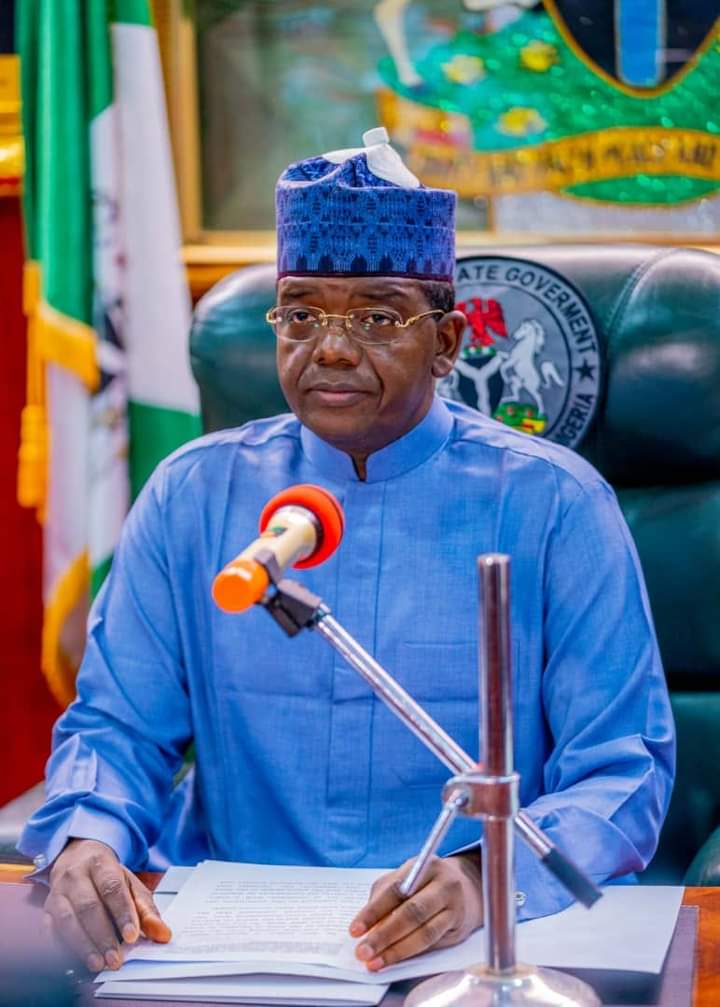
The Government of Zamfara State has directed for the restoration of telecommunications services within the state capital of Gusau with effect from today, Friday, 1st October, 2021.
According to the State Governor’s Special Adviser on Public Enlightenment, Media and Communications, Mr. Zailani Bappa, the restoration of the service at the state capital becomes imperative following the tremendous success recorded in the fight against banditry in the state and to ease the hardship faced by both the private and public sectors of the state.
Mr. Bappa further stated that the “Government finds it necessary to ease the tight measure after the recorded success desired of it which has no doubt destabilised the syndicate of criminals terrorising the state leading to the successes recorded against them by the security operatives”
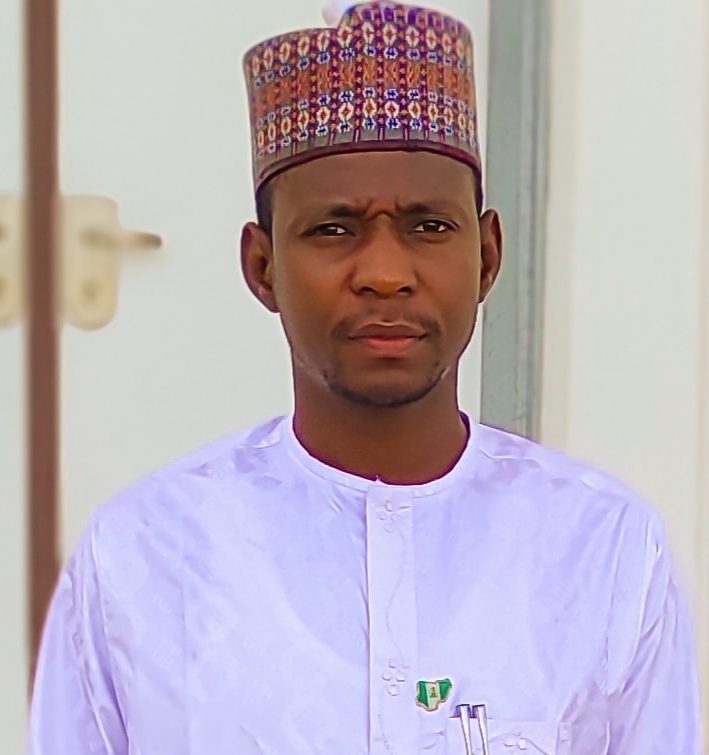
Re: 2023, Osibanjo-Zulum ticket
By Tajudeen Ahmad Tijjani
This is a response to the mischievous interview published by the Dailypost on Friday, which was credited to one Dr Garus Gololo. This brings the camp of Hon. Mohammed Garba Gololo to our feet and compels us to officially clear the air on this purported interview lest the general public confuses the pseudonym Garus Gololo as the reputable Hon. Mohammed Garba Gololo.
Dr Garus Gololo was quoted by the Daily Post to have said, “APC should field Vice President, Yemi Osibanjo, and Governor Babagana Zulum of Borno State, for an overwhelming victory in the 2023 presidential election”. In the interview, he uttered many unprintable statements on some of the party’s critical stakeholders like our National Leader, Bola Ahmed Tinubu, Secretary to the Federal Government, Boss Mustapha and the incumbent Ondo State Governor, Rotimi Akeredolu.
To avoid doubt, Gololo is a name of a particular village in Gamawa LGA of Bauchi State, which many aboriginals use as their last name as it’s a common practice in Northern Nigeria. Therefore, anybody can pick the surname Gololo, but there is no APC chieftain with such a name in our blessed constituency to the best of our knowledge. We suspect it’s done to soil the courteous relationship between our Boss and the APC hierarchy.
Our Boss, Honorable Muhammad Garba Gololo, who was a representative of Gamawa Federal Constituency 2015-2019 in the green chamber, and a stakeholder in his own right and a loyal member of the APC, has nothing to do with that malicious interview.
It’s pertinent to remind the public that the relationship between Honorable Muhammad Gololo, Professor Yemi Osibanjo, Bola Ahmad Tinubu, Governor Babagana Zulum, Mr Synergy, Boss Gida Mustapha and Governor Akeredolu is cordial and intact. Therefore, no amount of blackmail would jeopardize the long-standing friendship that was built on trust and disposition.
Indisputably, Honorable Gololo is a firm believer in destiny. Beyond a shadow of a doubt, only God, the creator of the universe, gives power to whom he so wishes at his appointed time, regardless of tribe, religious or political inclination. Besides, health and life are prerogatives of God; none of us has the guarantee of reaching tomorrow talkless of 2023 that’s far ahead.
Notwithstanding, Hon. Garba Gololo as a devoted APC member is opposed to anything contrary to the provisions of our great party’s Constitution, which has yet to zone its presidential candidate to any region. However, let’s make it clear that our camp will not allow any deliberate or coincidental attempt to set up our principal against the party he laboured for right from its founding days all through the thick and thin that brought it to power.
We hope the general public will accept this as a disclaimer from the political camp of Hon. Mohammed Garba Gololo, which categorically disassociated our principal from the said interview.
Tajudeen Ahmad Tijjani writes from Bauchi State.
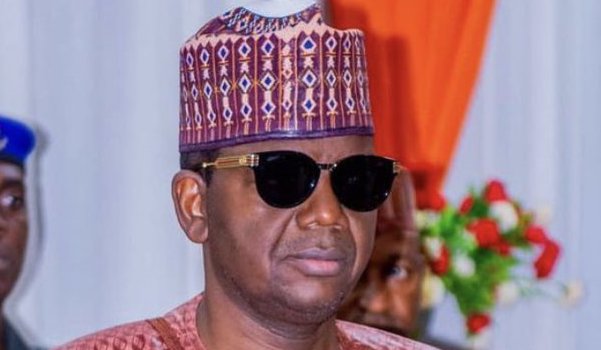
We have arrested 2000 bandits’ informers—Zamfara gov’t
By Muhammad Sabiu
Following the ban placed on telecommunication services and other commercial activities in Zamfara State due to incessant killings and kidnappings, the government on Thursday says about 2000 suspected informers assisting bandits have been apprehended.
Ibrahim Dodara, Zamfara State Commissioner for Information, disclosed this during a press conference in Kaduna.
Mr Dosara was quoted as saying, “The government has set up a situation room where complaints are being received to ensure prompt action.
He added that the terrorists are being eliminated by troops and have been hit by acute hunger due to the ban placed on commercial activities in the state.
“Many bandits have been neutralised by the army. Most of them are forced to eat raw food like millet because they have been cut off from their collaborators in town,” he said.
Based on the reports coming from the state in recent weeks, there has been tremendous success in the area of the fight against the terrorists in north-western Nigeria.
Afghanistan: Superpowers’ invasion and history of resistance
By Aminu Rabiu Kano
The history of Afghanistan is one characterized by epic tragedy. The narrative of the “Afghan problem” has been diverse, with each actor telling their side of the story in a bid to justify their action or inaction as the case may be. A poor, landlocked Afghanistan is one of the few countries in the world which events happening in and around it have been dominating the headlines for decades. Both the mainstream and social media are obsessed with happenings in the country. Indeed, even the layman on the street is more or less interested in the Afghan problem to the extent that virtually everyone can say one or two things about it. The question that follows, therefore, is, why is the world interested in happenings in Afghanistan? In other words, why are developments in Afghanistan capable of generating reactions around the world? Also, why have the superpowers in history found it necessary to invade Afghanistan?
To answer the above questions, we must begin by establishing the geopolitical relevance of Afghanistan on the world map. Afghanistan is doubtlessly strategically located. It is at the crossroads of Central and South Asia. It borders Pakistan, China, Iran, Turkmenistan, Tajikistan and Uzbekistan. It is predominantly mountainous and inhabited by approximately 32 million people – nearly 45% of whom speak the Pashtun language. Moreover, the Afghan population is primarily Muslim. This reason, coupled with the fact that it borders Iran, Afghanistan is sometimes seen as a part of the “Wider Middle East.”
From the list of the countries bordering Afghanistan, one will realize the geographical importance of Afghanistan in the international political environment. Of the five countries that bordered it, Iran and China stand out. However, Uzbekistan, Tajikistan and Turkmenistan had been part of the former Soviet Union that fell apart in the 1990s. This implies that Afghanistan has been a neighbour to glorious powers both in the past and present.
Therefore, it was invaded severally by several empires across ages due to its essential, strategic location. For example, Alexander The Great of the Macedonian empire invaded Afghanistan in 330 BC as part of the war against Persia. Alexander saw that he could only get the Persian empire subdued by invading Afghanistan. Similarly, foreign powers such as the Persian Empires, the Mongol Empire led by Khan Ghengis, the Mughal Empire, the Timurid Empire, the Rashidun Caliphate, and the Sikh Empire conquered Afghanistan.
Little wonder, Afghanistan, even in the modern era, grappled with yet other rounds of invasions, but this time around by the “superpowers”. The superpowers being the USA and the USSR. During the cold war, these superpowers used Afghanistan, among other countries, to test their military, economic and political powers. It all started when, in April 1978, the People Democratic Party of Afghanistan overthrew the Afghanistan government. Nur Muhammad Taraki, secretary of the PDPA, became president of Afghanistan. But Taraki’s government was communist in orientation and enacted some policies that were not well received by the masses. Thus, the masses hated government, and, as a result, Taraki was overthrown by Hafizullah Amin in September 1979. Despite the change of government from Taraki to Amin, opposition to communist rule continued even under Amin. In December 1979, Amin was shot and replaced by Babrak Kamal, who was in exile in Moscow. Kamal’s government heavily relied on the Soviet military for support and protection against his vast opponents.
Opposition to the communist government continued, which prompted the USSR to invade Afghanistan, deploying more than 50,000 soldiers. This occupation was even met by fierce resistance by Afghans, who have joined the Mujahedeen – a guerilla movement that proclaimed to be fighting anti-Islamic forces in Muslim lands. The Mujahedeen would later be referred to as the “Taliban”. The Taliban was formed by Mullah Muhammad Umar, who recruited young Muslim students from Afghanistan and neighbouring Pakistan to fight the Soviet Military. Over the next ten years, hundreds of thousands of lives were lost. In the end, the Soviet military was forced to withdraw from Afghanistan.
However, the mujahedeen (or the Taliban, if you like) did not fight the war alone: they were heavily supported, armed and financed by the USA, Saudi Arabia and Pakistan. USA was mainly instrumental in its support to the Taliban because it feared that if the USSR succeeded in occupying Afghanistan, its national interests would be threatened. In fact, the US’s intervention was informed by the need to resist the advance of what former President Reagan called the “evil vampire”. Then, the two superpowers – the USA and USSR – were in the heat of the cold war. Therefore, the US saw that if the Soviet Union succeeded in implanting communist rule in Afghanistan, the domino theory would materialize. This means that the USSR would also succeed in spreading communist ideology into those countries neighbouring Afghanistan. Most Fundamentally, by gaining the control of the Middle East, the USSR would determine oil and gas supply to the US and its allies in the West. This meant that the Soviets could do great harm to the US economy and those of its allies by cutting off the oil supply since oil was a vital product so crucial that military and industrial operations heavily depended on it.
After the withdrawal of the Soviet military from Afghanistan, the Taliban formed an Islamic government. Osama Bin Laden – a Saudi citizen – was instrumental in fighting the Soviet army. As the son of a rich and influential citizen in Saudi Arabia, Osama contributed substantial financial resources to the Afghanistan war that lasted for ten years. He later formed Al-Qaeda, which was said to be a terrorist movement determined to liberate the Muslim land from Western influence. On 11 September 2001, 4 aeroplanes were hijacked by, allegedly, the Al-Qaeda. Two were flown to the Twin Towers housing the World Trade Centre, one flown to the Pentagon and the other to Pennsylvania. As a result, more than 5000 people lost their lives, and critical government infrastructures were destroyed.
The US was quick to blame Osama’s Al-Qaeda for the tragic 9/11 event. The US President George Bush soon declared war on terror. The war was first on Afghanistan, which led to the overthrow of the Taliban government. After that, the American forces established a democratic government with its foundation in and allegiance to American imperialism. However, after 20 years of occupation, the Taliban expediently returned to power when the US forces willingly decided to withdraw from Afghanistan.
From the foregoing, three lessons can be learned. One, Afghans have a genetic history of resistance to foreign domination. Second, Afghanistan is a strategic country that played an important part in the Great Game power struggles for centuries. Finally, it is evident from the above that Afghanistan’s series of invasions was no end in itself, but a means to an end. Put it more succinctly, Afghanistan is a gateway for foreign powers. Its invasion would allow the superpowers to dominate the Asian continent, including the oil-rich Arab world. Overall, Afghanistan, despite its myriad of aggression by foreign superpowers, is still in existence. It survives!
Aminu Rabiu Kano is a political and public affairs analyst. He can be reached via 08062669232.
Does North want to retain power?
By Aliyu Nuhu
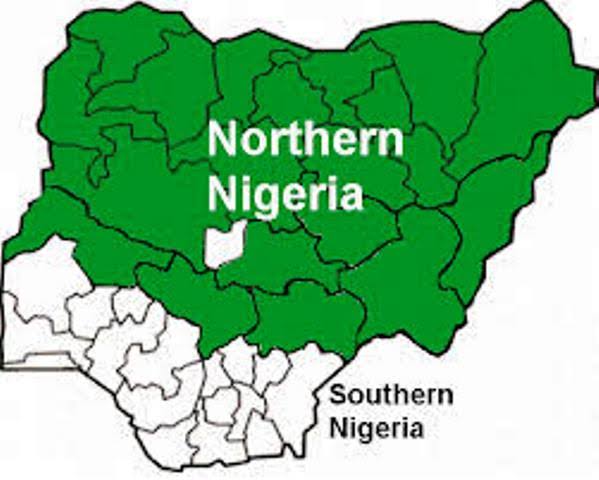
Northern leaders are expressing their position on 2023 election. The North wants to retain power. They rely on the Constitution and tenets of democracy to reach their conclusion. Nigerian constitution does not recognize power rotation or zoning. They said democracy is a game of numbers, and that since the North has the numbers it can rule forever.
For North to actualize its “day”dream, it should also field both presidential and vice presidential candidates from the North. That will ensure they keep power even if the president dies or suffers from infirmity.
Well let us just say our laws are flawed given our peculiar plural nature. Leadership of Nigeria cannot follow the law and still keep Nigeria in one piece and we are entirely to blame.
In every election win, Nigerians know how to bask on ethnic triumphalism and use power to alienate other tribes. Nepotism defines Nigerian leadership. If the North has been treating Nigeria as a one entity in fairness, the complain from the South will not be much. But look at Buhari presidency and tell me why a Southerner will want to remain under the northern rule, where both the Northerners and Southerners suffer greatly!
Fortunately APC does not think like northern elders. The party will pass its ticket to South West. APC has what it takes to win 2023 election. PDP will field a northern candidate, and surely that will be its funeral.
So far Nigeria is not matured for democracy. We are still learning the ropes. One day we shall get to that point where the origin and religion of leaders don’t matter. That will only happen if we eschew tribalism, nepotism and bigotry and appoint people to position based on competence.
Aliyu Nuhu is a socio-political analyst, from Abuja, Nigeria
20 new programmes to be introduced in Federal University Birnin Kebbi in 2022 – VC
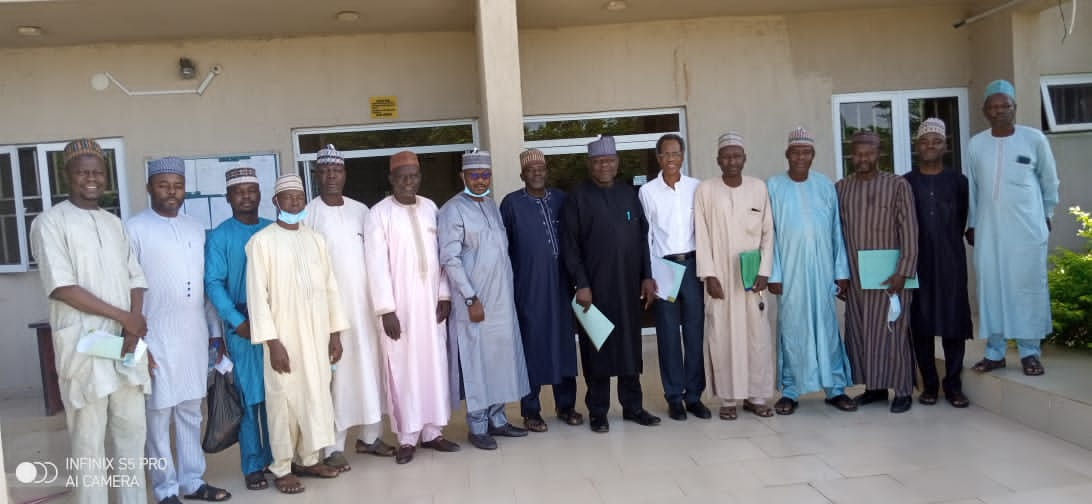
The Federal University Birnin Kebbi (FUBK) inaugurated a Joint-committee on collaboration with Waziri Umaru Federal Polytechnic, Birnin Kebbi on Thursday, September 23, 2021.
The collaboration which is aimed at promoting symbiotic relations between the two institutions would be geared towards experience sharing, staff and students exchange, use of instructional and workshop facilities, among others.
In their separate remarks, Vice Chancellor Prof. BB Shehu and Rector of Waziri Umaru Federal Polytechnic, Birnin Kebbi emphasized that the collaboration could not have come at a better time as the University started ten (10) new programmes in relevant of common interests.
The Vice Chancellor who frowned at frightening statistics and low-level gap of educational status in northern Nigerian states, particularly Kebbi also disclosed that the University would commence twenty (20) new programmes in 2022. This includes Urban and Regional Planning, Estate Management, Industrial Design, Software Engineering, Biotechnology, Medical Laboratory, Science Laboratory Technology, among others.
He highlighted that while the Polytechnic groom students to attain Diplomas and NCEs, the partnership would enable them to secure regular and top-up Degree Programmes in their various fields of human endeavour at the University.
In appreciation, the Rector who was represented by Deputy Rector, Dr. Usman Tunga acknowledged the “speedy” transformation of the University. He said the Polytechnic is delighted to affiliate with the University to commence new programmes on Environmental Studies and other relevant fields.
He further appreciated the University for accommodating staff of the Polytechnic on sabbatical and visiting appointments, hoping that the dream of the collaboration would come true in no time.
Meanwhile, the Registrar of the University Mal. Abubakar Aliyu and his Polytechnic counterpart, Mal. Atiku Muhammad Bello harped on optimal synergy while presenting members of the Joint Committee.
FUBK Bulletin reports that the Committee is chaired by the Director Post Graduate Studies of the Polytechnic, Dr. Sani Ahmad Alhaji, while Barr. Abdulkadir Abubakar of the University Legal Unit serves as Secretary.
Members of the Committee from the Polytechnic are Director Academic Planning, Isiyaku Abdullahi; Director Environmental Studies, Dr Utenge Jonathan and Head of Statistics Department, Dr. Abubakar B. Dallatu.
Other Committee members from the University include the Dean of Post Graduate School, Prof. UM Chafe; Director Academic Planning, Dr. Aliyu A. Turaki and Director, Management Information System, Dr. Abdulhakeem Ibrahim.
(Signed)
Jamilu M Magaji,
Public Relations Officer,
Federal University Birnin Kebbi.
September 28, 2021