
Expect more job opportunities in 2022, Buhari tells Nigerians
By Uzair Adam Imam
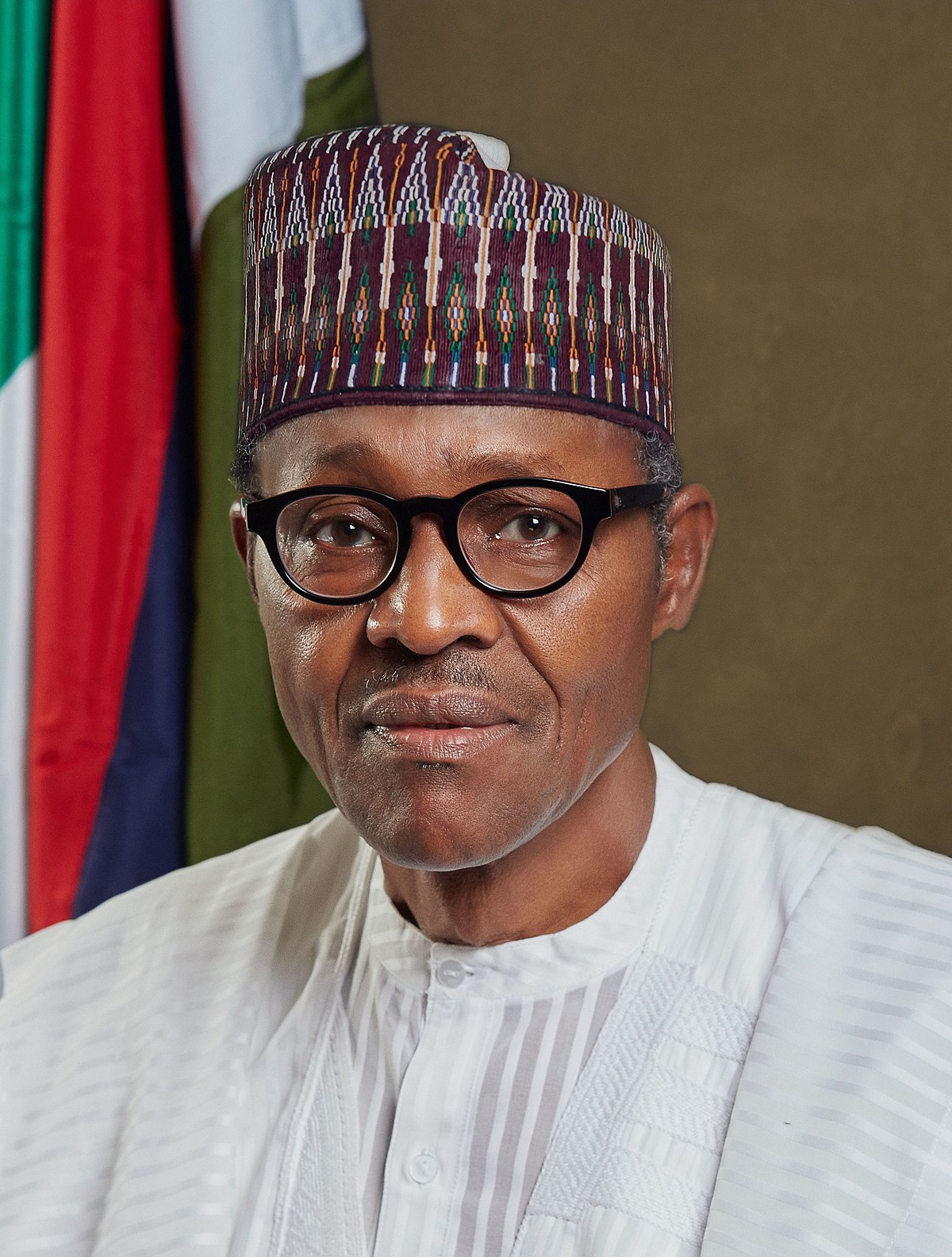
President Muhammadu Buhari has confirmed that new jobs are on the way for Nigerians in the new year, 2022.
The president made this public in his new year message to Nigerians, adding that his administration would deploy ICT (Information and Communications Technology) platforms.
According to Buhari, the purpose of job creation is to ensure the diversification of the economy to support other emerging sectors.
Senate President Ahmad Lawan also asked Nigerians to continue having faith in the country and its democratic institutions.
The National Leader of the All Progressives Congress (APC), Asiwaju Bola Tinubu, said that given the way Nigerians fought to contain the COVID-19 pandemic, there is no doubt that they can equally “stand up to problems that seek to shackle us.”
Speaking about security challenges in the country, Buhari promised that government would not relent in tackling the problem citing the “number of insurgents and bandits who have willingly surrendered to our security forces and continue to do so through various channels and the Safe Corridor created for that purpose.”
“The persistent insecurity in certain parts of the country may have threatened to unravel the incremental gains achieved in the real sectors of the economy and in the administration’s overall objective to position the nation on the irreversible trajectory of sustainable growth and progress, but I assure you that we will remain resolute in our commitments and shall continue to press ahead with our programmes and plans,” he added.
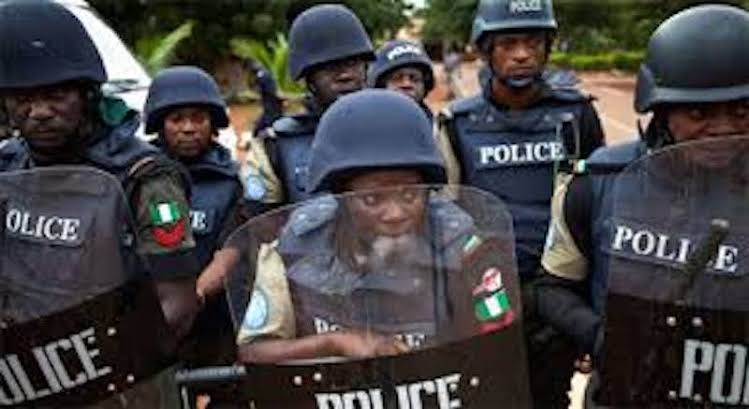
9 people rescued as police storm bandits’ camp in Kaduna
By Uzair Adam Imam
Reports from Kaduna State disclosed how the Nigeria Police Force stormed bandits’ camp on Friday.
The camp was said to have belonged to one Isiya, a notorious bandit, located in Sabon Birni forest of Igabi Local Government Area (LGA) of the state.
During the raid, one bandit was reported killed while two were arrested on December 31, 2021.
ASP Jalige Muhammed, the State Command’s Public Relations Officer, in a statement issued on Saturday, disclosed.
He said that the operation was carried out by the operatives of the state command in collaboration with the Force Intelligence Bureau and Special Tactical Squad of the Force Headquarters, Abuja and some local vigilantes.
The statement also added that nine kidnapped victims were rescued by the operatives that stormed the camp.
“The mission was cautiously and successfully executed which resulted in one bandit neutralized, while many others escaped with varying degrees of bullet wounds.
“Two suspects namely; Rabe Baushe and Badamasi Usman, were arrested and taken into custody for further investigation,” the statement added.
Meanwhile, eight of the nine rescued victims have now been reunited with their families immediately after undergoing a medical checkup at the Police medical facility and were profiled.
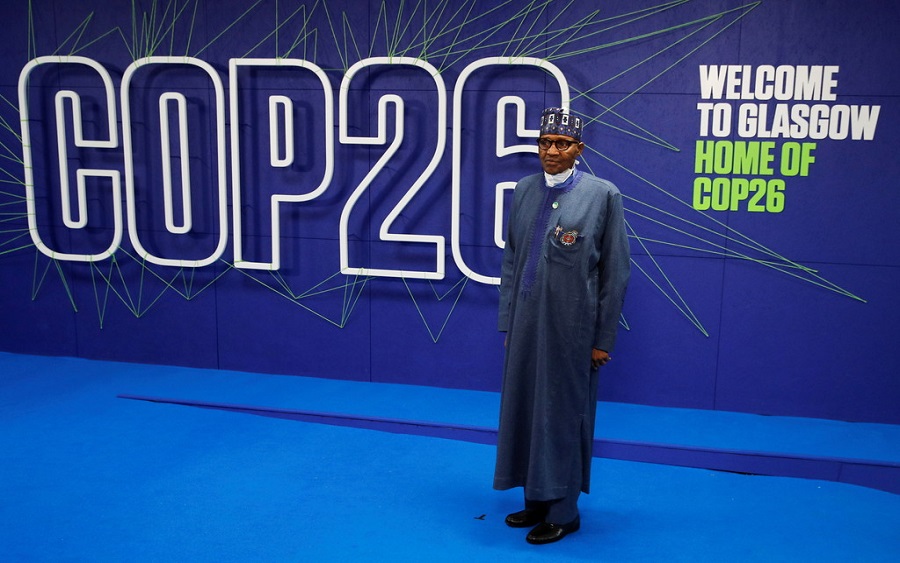
Mitigating the menace of climate change in Nigeria
By Mukhtar Ya’u Madobi
Unless proactive measures are put in place and fully implemented, otherwise the commitment made by Nigeria at the just concluded 26th annual edition of the Conference of Parties (COP26) Summit on climate change in Glasgow, United Kingdom, to end deforestation by 2030 and equally attain zero-net emission in another 30 years later, will continue to remain a mirage! This is evident if one looks at the country’s unprecedented hikes in cooking gas prices, not to even talk of diesel and kerosene.
Many people will resort to cutting down trees for fuel, leading to increased emission, deforestation and fewer flora communities to absorb methane gases being released to the atmosphere occasioned by human activities. What a setback?
Due to the volumes of greenhouse gases being continuously added to the atmosphere triggered by humans, it was observed that the earth is now 1.1 degrees Celsius warmer compared to the pre-industrial level. The impacts of climate change are now evident worldwide, ranging from wildfires in Greece and Algeria to flooding in Germany and Turkey to drought in Australia and Northern Nigeria.
There is also the crisis of extinction of land and ocean species, rising sea levels, and increased drought. Like Nigeria, these issues lead to increased food shortage, animal migration, health risks, poverty, and displacements for developing countries. In 2020, the 10-highest climate change-induced disasters occurred in some of the poorest parts of the world. It cost over $130 billion, killing thousands and displacing millions. These costs are escalating every year.
According to the latest version of National Security Strategy 2019, a document released by the Office of the National Security Adviser (ONSA), climate change has contributed to excessive flooding across the country, causing enormous human and economic losses. Additionally, it has led to seasons of drought, which affected agricultural activities and caused shelter losses. In 2019, the National Emergency Management Agency revealed that floods had displaced approximately 1.9 million Nigerians.
Research by scientists from Europe, US and China predict that by 2070, a third of the global surface would be unsuitable for human life as the global temperature rises. The prediction included West and Central Africa, which will force the majority of the people to migrate to a suitable region. It is estimated that about 81% of Nigeria’s population would suffer from these extreme temperatures. Despite our preference not to relocate, the extreme temperature may drive many people to do so.
Nigeria has outlined measures and plans toward combating the effect of climate change over the years. These include establishing a national youth climate innovation hub to harness climate innovation ideas from young Nigerians and include them in decision-making processes. The country has also approved the national action plan on gender and climate change to ensure that women, men, youth, and other vulnerable groups optimally benefit from climate change initiatives, programmes, policies, and funds. Nigeria has also developed a National Adaptation Plan (NAP) — which aims to build a framework for climate change adaptation, planning and governance, and an adaptation communication that would highlight adaptation activities and efforts in the country.
It is heartwarming to learn that President Muhammad Buhari signed into law on Thursday, November 18, 2021, the climate change bill passed by the national assembly. In signing the law, the president has made Nigeria join an elite group of countries that have enacted emissions-target legislation aiming to eliminate carbon emissions. This is a big deal for an oil-dependent nation also ranked as one of the world’s most vulnerable countries to climate change.
The main objective of the climate law is to provide an overarching legal framework for achieving Nigeria’s long-term climate goals, including a net-zero carbon emission target, national climate resilience, an adequate volume of climate finance, and the mainstreaming of climate change actions into national development priorities. In addition, the bill places climate change action in the broader context of efforts to achieve inclusive green and sustainable economic development for the most populous black country in the world.
Nigeria has long maintained that it wishes to use its climate policies as part of wider measures to achieve low-carbon, resilient, and equitable economic growth. Therefore, the act seeks to facilitate the intensive and complex cross-ministerial coordination of climate change action and the involvement of businesses and the civil society needed to achieve long-term climate objectives while also promoting climate-resilient social-economic development in the country.
The act also sets out to establish a systematic approach for the country to identify the significant climate risks and vulnerabilities facing the country and how to strengthen existing capacities to adapt to the impacts of climate change.
With this current development of enacting the climate change act, it is apt to say that Nigeria is on the right course towards averting the dangers of climate change.
Nonetheless, individuals should also, on their own, help in projecting this campaign by abstaining from activities that cause environmental exploitation, especially illegal cutting down of trees, which ultimately trigger climate change.
With the pledges made by the affluent nations and private institutions during the Glasgow COP26 to collectively provide a minimum of $100 billion annually by 2023 in order to achieve the mandates of reducing climate change, getting financial guarantees for Nigeria will not be difficult. However, it must adopt climate action as fast as possible because scientists keep telling us that the planet is burning. Therefore, our lives literally depend on this global joint effort that COP 26 in Glasgow has represented.
Mukhtar Madobi wrote from Kano. He can be reached via ymukhtar944@gmail.com.
Jigawa State Gov’t approves death penalty for rapists
By Uzair Adam Imam
In an effort to put the menace of raping to an end, the Jigawa State government has on Wednesday approved the death penalty for child rapists in the state.
The Commissioner for Justice and the Attorney General, Dr Musa Adamu, made the announcement at a press briefing.
Sexual assault is one of the issues that linger for a long time in the country that need to be addressed.
Adamu disclosed that anyone convicted of raping a child below the age of 10 would be sentenced to death with no option.
“A total number of 196 case diaries while 178 pieces of legal advice were prepared in respect of the case diaries received. Earlier this year, Governor Mohammed Badaru Abubakar signed the Violence Against Prohibition Bill, which prescribed the death penalty for rapists but with the option of life imprisonment.
“But recently, the government has also signed the child protection law, which prescribed the death penalty for anyone that raped a child below the age of 10.
“Out of the total number of the case diaries, 90 were rape cases; 27 culpable homicides; sodomy has 31; kidnapping and abduction have a total number of 18 cases; incest two; two 2 acts of gross indecency; 20 armed robberies while road traffic offences have two cases.
“The ministry has prosecuted and defended a total number of 25 appeals before the Court of Appeal, Kano Division and has also completed the prosecution of 83 criminal trials before eight High Courts at Birnin Kudu, Dutse, Gumel Hadejia, Kazaure and Ringim. 34 convictions and 49 defendants were discharged and acquitted.”
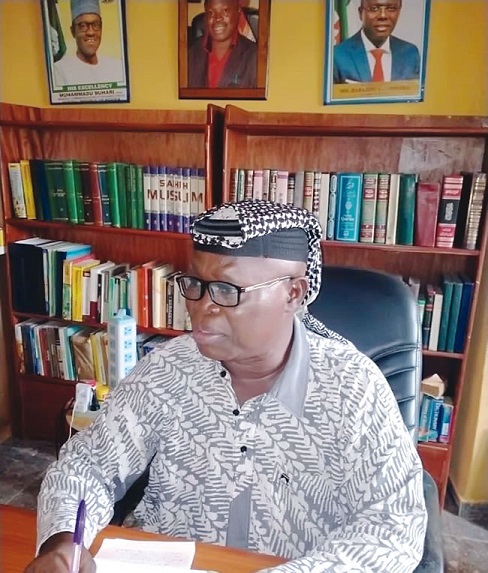
MURIC mourns Prof. Hussein, Dr Datti Ahmad
By Muhammad Abdurrahman
The death of two foremost Islamic scholars, Professor Hussein Akande Abdul Kareem and Dr. Ahmad Datti, has been announced. Professor Abdul Kareem died in Lagos on Sunday, December, 26, 2021, while Dr. Ahmad Datti died in Kano on Thursday December, 30, 2021. An Islamic human rights organisation, the Muslim Rights Concern (MURIC), has described them as two giant scholarly figures.
MURIC’s reaction was contained in a statement issued by its director and founder, Professor Ishaq Akintola, on Thursday, 30th December, 2021.
MURIC said: “Islamdom in Nigeria has been hit by the loss of two great scholarly figures who died within four days of each other. Professor Hussein Abdul Kareem died in Lagos on Sunday, 26th December, 2021 while Dr. Ahmad Datti died in Kano on Thursday 30th December, 2021.
“Professor Hussein was a former president of the Muslim Students Society of Nigeria (MSSN). He was one of the founding fathers of the Islamic Welfare Foundation (IWF), the Islamic Study Group (ISGON) and many others Islamic organisations. He was a great motivator, a team player and a transparently honest man. He was a profound ascetic who shunned worldly luxuries.
“A professor of biochemistry, he taught and researched in several local and overseas universities including the University of Khartoum, Sudan, University of Maiduguri and the Lagos State University. He retired voluntarily in 2006 and became a full time Islamic worker. He was nominated by the International Biography Centre, Cambridge, England as the International Man of the Millenium Award in 1999. Professor Hussein died at the age of 85. He has since been buried in Badagry, Lagos State.
“Dr. Ahmad Datti was an energetic Islamic activist of no small measure. A trained medical doctor, he was the president of the Supreme Council for Shariah in Nigeria (SCSN). The deceased played a prominent role in the spread of Shariah in the Northern states of the country from 1999 onwards.
“A pragmatic Muslim leader, Dr. Datti encouraged Muslims to join politics in order to bring the teachings of Islam on probity, accountability and good governance to bear on politics and Muslim politicians. He practiced what he taught by becoming an aspirant of the Social Democratic Party (SDP) in the early 90s.
“He became a household name particularly in the whole northern Nigeria. He also participated in the activities of several Islamic organisations and he was the chairman, Board of Trustees of the Usman bin Affan Islamic Trust, Gadon Kaya, Kano. He died after a protracted illness at the age of 83. He was buried at the Tarauni Cemetery, Kano. Dr. Datti has left a vacuum that will be difficult to fill.
“The death of these two giant Islamic scholars has left MURIC in deep grief. We are devastated. We pray that Almighty Allah will overlook their trespasses and repose their souls in Al-Jannah Firdaus. We also pray that Allah will give their families the fortitude needed to bear the losses.
“As we commiserate with the governor of Lagos State, Babajide Sanwo-Olu, MSSN, ISGON and the Lagos Muslim Community on the death of Professor Hussein Abdul Kareem, we equally condole with the governor of Kano State, Abdullahi Umar Ganduje, MURIC Kano Chapter and the good people of Kano, over the demise of Dr. Datti Ahmad.”
10 abductees rescued in Zamfara
By Muhammad Sabiu
The Nigeria Police Force has rescued at least ten persons abducted on Wednesday in Zamfara State.
The victims were said to have been abducted in Bungudu Local Government Area when terrorist bandits stormed the Gada community.
In the attacks that lasted for hours, the terrorist bandits also killed a district head, Ummaru Bawan Allah, and abducted many others.
However, speaking to journalists on Wednesday, the state’s police commissioner, Ayuba Elkana, confirmed that his men had been able to rescue ten of the abductees.
He added that the rescue mission was successful after a coalition of police officers, soldiers, and vigilante members swung into action by chasing the terrorist bandits.
Zamfara State is one of the northwestern states that the activities of the gunmen have ravaged.
Man, 26 others, arrested for murder of his wife
By Uzair Adam Imam
The Police in Jigawa have confirmed the apprehension of a 26-year-old man for allegedly killing his wife in Sule Tankarkar Local Government Area of the state.
The confirmation was in a release signed on December 29, 2021, in Dutse by the Police Public Relations Officer (PPRO) in the state, ASP Lawan Shiisu.
Reports have unveiled how the suspect hit the deceased with a stick when they had some misunderstanding that led to her death.
The statement reads: “On Dec. 27, at about 1250hrs, one Bulama Muntari Ubale of Baldi village Sule Tankarkar LGA, reported that, on the same date at about 1130hrs, a couple, one Yusuf Zubairu, aged 26, of Fulanin Mailefe in Baldi village and one Fatima Hardo Dare, aged 23, of the same address, were having misunderstanding between them.
“And in the process of the fracas, the said Yusuf Zubairu, a.k.a Sallau, used a stick and hit Fatima Hardo (now deceased) on her head.
“And when one Rabi Lawan of the same address came to intervene, the said Yusuf Zubairu, also inflicted serious injury on her,” the statement added.
However, the PPRO stated a team of policemen rushed to the scene shortly after receiving the report.
“The victims were conveyed to Gumel General Hospital, where Dare was confirmed dead by a Medical Doctor, while Lawan was admitted for treatment.”

Northern statesman, Ibrahim Datti Ahmad, is dead
By Uzair Adam Imam
The President-General of the Supreme Council for Sharia in Nigeria (SCSN), Dr Ibrahim Datti Ahmed, is dead.
A family source disclosed that Ahmed died in the early hours of Thursday, December 30, 2021, in Kano.
According to the source, the deceased had been battling with an ailment, and unfortunately, today, he answered the call of his creator.
Until his death, Ahmed was a renowned medical doctor, politician and Islamic cleric.
The former President-General was reported to have left behind a wife, ten children, and several grandchildren.
Thousands of Muslims attended his funeral prayer, which took place at Al-Furqan Mosque, Alu Avenue, Kano.
May Allah have mercy on him and forgive him.
Banditry: Governor Masari commands civilians to get firearms
By Uzair Adam Imam
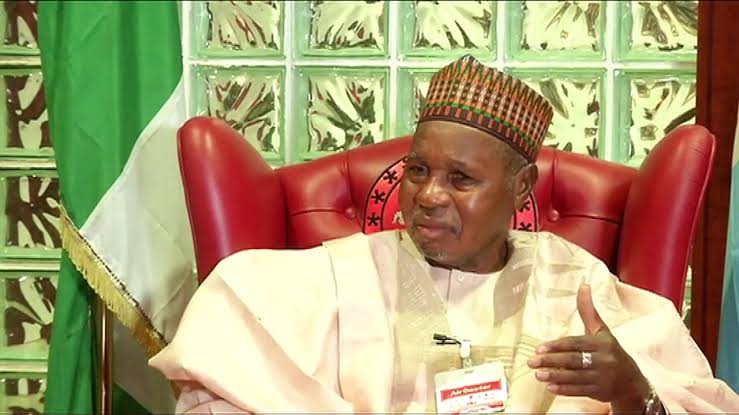
Governor Aminu Masari of Katsina State has called on residents of the state to arm themselves and confront bandits, reiterating that it is “Islamically allowed for one to defend himself against attack.”
Masari said the state government would help those who are ready to own arms with the view to help end the menace. The governor lamented that the security officials alone could not tackle insecurity in the state.
Katsina State is one of the states in the northwestern part of the country that has witnessed incessant attacks by bandits. Reports disclosed how hundreds of people had been injured, killed or kidnapped in Katsina this year, with thousands more displaced from their homes.
Governor Masari made the call while speaking during a media parley with journalists at the Muhammadu Buhari House in Katsina. He added that the number of security personnel they have is insufficient to tackle the situation.
Masari was quoted as saying: “It’s Islamically allowed for one to defend himself against attack. One must rise to defend himself, his family and assets. If you die while trying to defend yourself, you’ll be considered a martyr.
“It’s surprising how a bandit would own a gun while a good man trying to defend himself and his family doesn’t have one,” the governor said.
“We’ll support those who come with the initiative to procure arms because residents need to also complement the efforts of security agencies. These people (security agents) don’t have the number to protect the people.
When President Buhari came, he even tried by increasing the number of our security agents, but it’s inadequate. Count it yourself, how many policemen do we have in this country? How many soldiers do we have?
“Even if we say every policeman should go back to his home state, it’ll still not be enough. So, if we fold our arms and decide to do nothing, we’ll be the ones to suffer most,” he lamented.
However, Masari added that the police would register all guns bought by the residents to ensure they are put to the right use.

The role of media in troubling times
By Muhammad Auwal Ibrahim
Nigeria is burning. We have to stop it. We can’t afford to lose our dear nation. But who can be of help? The media has a critical role in extinguishing the fire before it goes out of hand.
Information is power, thereby making the media a powerful tool for sending persuasive messages. The more the messages flow in our societies, the higher their ability to shape public discourse. Media is a powerful tool used in shaping public opinion and thereby changing the way people behave, think, and even live sometimes. Unfortunately, the power elites often use it to achieve their aims. In present-day Nigeria, where things are still falling apart, are the media organisations playing a positive or negative role?
The media has the role of information dissemination, which is accurate, factual and unbiased to a large and scattered audience. Terrorism and insecurity information is not an exception. Therefore, the media should accurately inform the people about future threats, chaos and fear of terror attacks and how to avert them, should they occur.
Also, the media plays a critical role in every society by holding leaders accountable, especially in times of crisis. However, it should be noted that it is not lawful in any way for the media to undermine national security in the process of discharging such responsibilities.
Furthermore, it is no gainsaying that the media have to build a nation and not destroy its existing pillars. The media, in other words, can be said to be fire extinguishers and not fire fuel. Through this process, the media can only promote national security and harmony.
The media can give several contributions to national growth and development if properly managed. However, when the reverse is the case, they will contribute to national underdevelopment or worse.
It is evident in Nigeria today that some media houses have been diverted from their role to being used to spread hate speech and fake news, which may result in violence or more troubles than the one Nigeria currently battles now. Supporting violence, sensationalism, and hatred will do nothing but add to the already burning fire in this country. However, these are not the responsibilities of the media, and hence, they should take heed.
A veteran journalist, Kadarai Ahmed, said, “Despite numerous examples that exist which have proved, including not too long ago in Rwanda, that the conduct of the media can help in, starting, promoting and perpetuating violence and ethnic strife, we have turned a deaf ear to pleas to not become a tool that enables hate. But we have failed to heed these warnings.”
“We have given platforms to the worst among us, the extremists and the bloodthirsty. We have turned militia leaders and criminals into champions. Instead of us to lead a calm and rational discussion on the existential challenges we face with a view to promoting actionable solutions, we have succumbed to hysteria and the next exciting clickbait headline.”
Therefore, the media can positively contribute to the prevention of terrorism, insecurity, and other threats by specifically portraying how other nations responded to such scenarios and how it yielded positive outcomes without bias. In other words, it is known as development journalism.
Muhammad Auwal Ibrahim is a multiple–award–winning journalist, fellow AIJC 2020, Wits University, Johannesburg, South Africa. He can be reached via awwalbinibrahim@gmail.com.