

As former Wazirin Zazzau goes to court
By Safiyanu Ladan
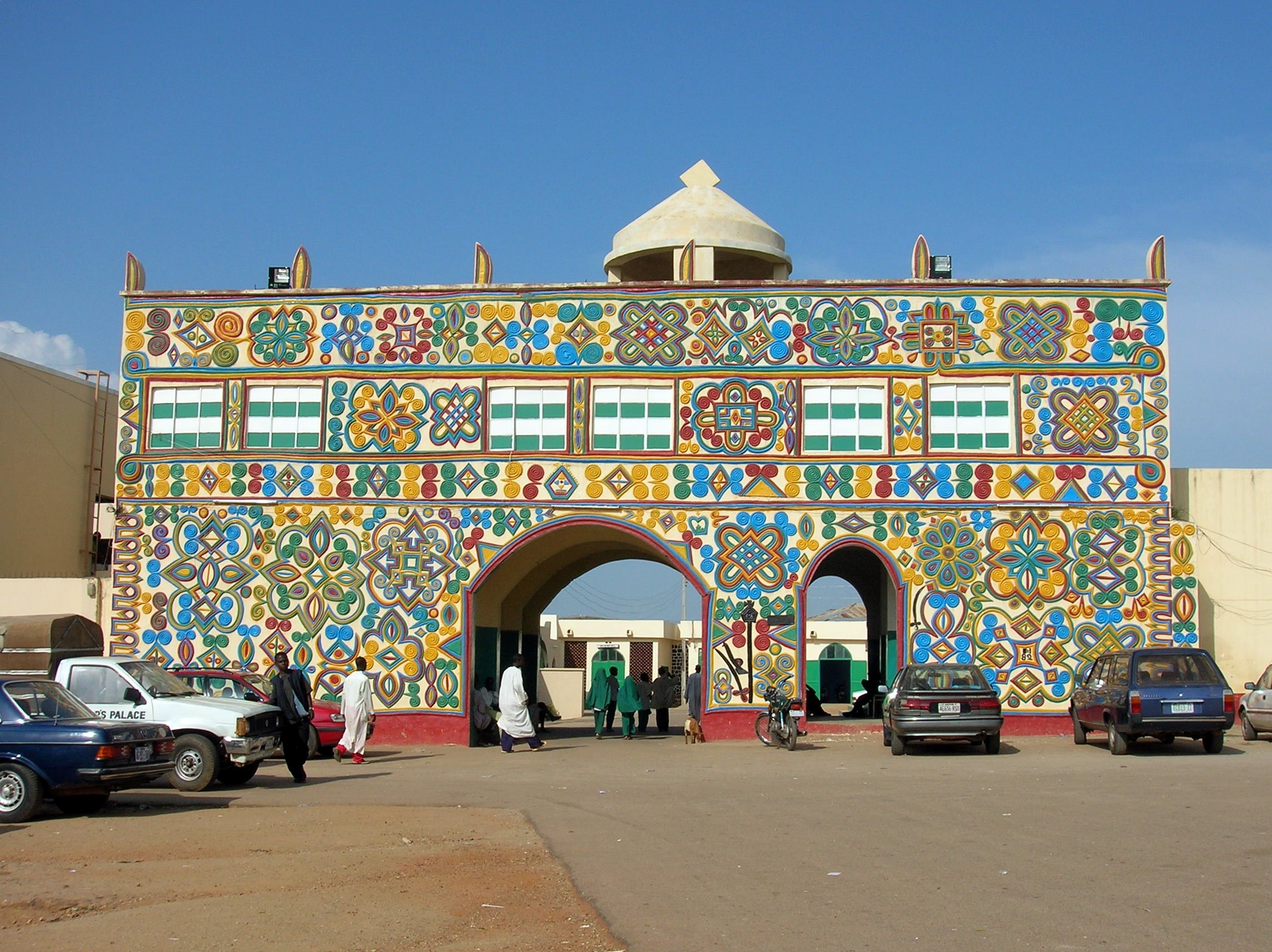
The death of Emir of Zazzau Alhaji Dr Shehu Idris on 20 September 2020 has thrown hundreds of thousands of people across the length and breadth of this country into mourning. As it also provided an opportunity for princes in the four ruling houses of Zazzau Emirate to jostle for the vacant throne.
Per the law, the Zazzau Emirate Council, under the leadership of Wazirin Zazzau Ibrahim Muhammad Aminu, as the chief custodian of the tradition of the Zazzau Emirate in the absence of the emir, wrote to the Kaduna State Government notifying the governor of the demise of the emir and the vacant position created by his death.
On the third day of Fiddau prayers, the governor, while eulogizing the late monarch, said ever since the emir died, he could not sleep in the night until he took drugs, saying that the late emir used his wisdom, knowledge and experience in helping his administration.
In the selection of the emir, he openly demonstrated his neutrality as he prayed for the kingmakers to get a worthy heir to the throne that would emulate the good leadership qualities of the late emir.
Having been empowered by the law to select a new emir upon the death or deposition of an emir, the kingmakers have every right to choose any person they deem fit and worthy of the throne without prejudice against any person or group.
The law said that, and I quote, “Upon the death, resignation, or deposition of any chief or any head of chiefs other than a chief of a kind referred to in section 4, the Governor may appoint as the successor of such chief or head of chiefs any person selected on that behalf by those entitled by customary law and practice to select in accordance with customary law and practice.”
Any ulterior motive from any individual or group in this will set unprecedented hostility in a peaceful and all-accommodating emirate.
The ill decision of the government to undermine the most peaceful selection process by appointing Ahmed Nuhu Bamalli and other than the three nominees forwarded by the kingmakers has further divided the once united ruling houses, which they have enjoyed for decades as a result of intermarriage between them that produced hundreds of children.
In 2020, Wazirin Zazzau Ibrahim Muhammad Aminu, chairman of the Zazzau Kingmakers committee, was suspended by the Kaduna state government for dishonouring an informal invitation and was subsequently taken to court for allegedly violating the government’s rule.
While still in court, he was removed and replaced by Khadi Muhammad Inuwa Aminu in 2021.
In what appeared like an unending tussle last week, the removed Waziri notified both the Kaduna State Government and Zazzau Emirate of the decision to take legal action against his wrongful removal and wrongful appointment of Ahmed Nuhu Bamalli as the Emir of Zazzau.
As we await to see how the court events would unfold in what seems like there are numerous vested interests in the tussle but hiding in the shadow of Waziri, time would expose and unmask their faces.
Safiyanu Ladan wrote from Kaduna. He can be reached via uncledoctor24@gmail.com.
Remembering Comrade Abdullahi Ali Yakasai: a tribute to a friend and hardworking unionist
By Murtala Muhammad, PhD
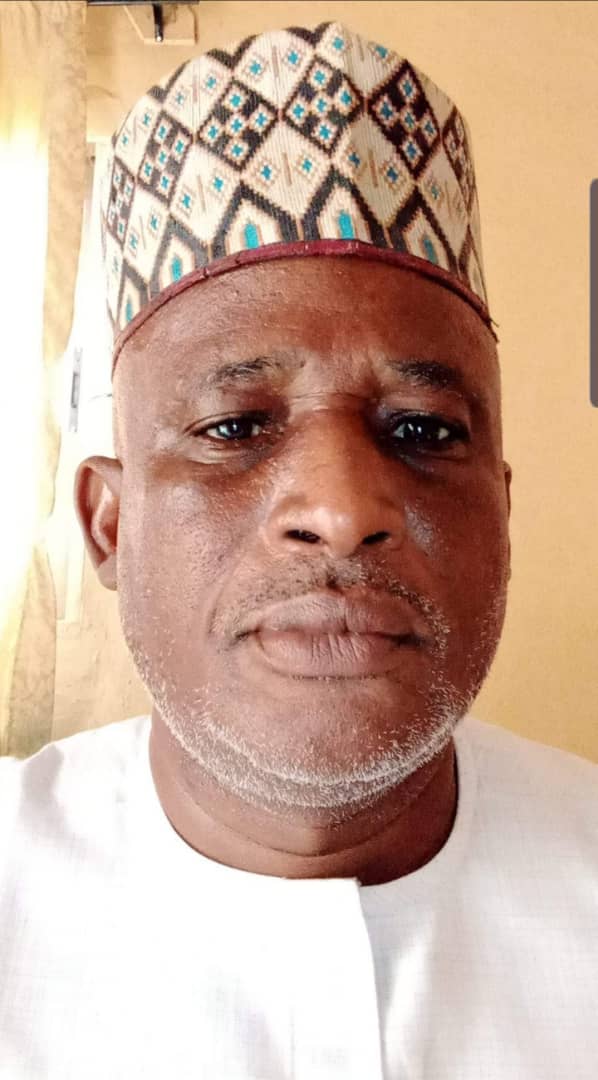
In July 2015, Reuben Abati, the Special Adviser on Media and Publicity to President Goodluck Jonathan, bemoaned that his phones that rang endlessly remained deafeningly silent when his boss was voted out of power. Sadly, the phones of thousands of colleagues, family and friends of Abdullahi Ali Yakasai stopped receiving goodwill messages from him from the fateful morning of Tuesday, 20th September, 2022. The phone calls and messages ceased coming. The calls, messages and personal visits did a vanishing act. The daily admonitions and glad tidings dried up because Comrade Abdullahi Ali Yakasai was no more. Our phones remained deadly silent from his messages. His death is indeed devastating and heart breaking for the people of: Yakasai Quarters, National Association of Academic Technologists (NAAT) community at both Branch and National levels, Association of Science Laboratory Technologists of Nigeria (ASLTON), the teaching and non-teaching staff at Kano University of Science and Technology, Wudil and the Nigerian Labour Congress (NLC), Kano State Chapter, mourned one of its most formidable and reliable comrades.
Without a shadow of doubts, Abdullahi Ali Yakasai was a man of many facets – a family man, public servant, labour leader, community developer and humanist. Yakasai’s patience allowed him to win the hearts of many. In Yakasai, Abdullahi was an expert who could see beyond short term gains with admirable consciousness in the promotion of togetherness and socio-economic development. He, alongside other leaders of Yakasai Zumunta mobilised resources for the execution of basic infrastructure and amenities that raised the living standard of the community. To keep the restive youths from the allure of anti-social gambits, they floated community funds mobilisation to pay SSCE fees for the less privileged students. He also participated actively in the provision of the material needs of the poor widows and vulnerable members in the community. The forum also floated scholarship awards to ensure that indigent and intelligent secondary and tertiary school students acquire the 21st Century skills for self-sustenance.
In community planning, Abdullahi was visionary. He planned projects with cognitive maps allowing him to organize his plans and tease out flaws. He chaired and served as member to committees celebrating outstanding sons and daughters of Yakasai. He was a man who was responsible and accountable to his commitments. Comrade Auwalu Mudi Yakasai claimed that “being a community leader is not an easy task.” One of the major dilemmas faced is the conflict between responding to the needs of the family and the collective needs; both are legitimate concerns. To one’s astonishment, Abdullahi balanced the two. He also became magnets of other tasks in the community. Having proven that he could be depended upon, he was eventually appointed into all other tasks. He sets aside his personal ambitions in order to facilitate the development of others. He absolutely excelled at everything he puts his attention to. With a personal mantra of, “do the right thing, the right way, and right now” he lived and died in activism and community development.
The Chairman, Nigerian Labour Congress (NLC), Kano State, Comrade Kabiru Ado Minjibir, said: “NLC honours and cherishes Comrade Abdullahi for what he has done for labour and recognizes his life well spent for better labour in Kano State and Nigeria.” Abdullahi served in the capacity as Treasurer, NAAT-KUST, Wudil; Treasurer, ASLTON at the National level; Member, State Executive Council, NLC, Kano State; Chairman, Gamji Memorial Association, Kano State Chapter; Member Executive Committee, KUST Multipurpose Cooperative Society; Member, Old Boys Association among many other positions. Abdullahi Ali lived up to billings of his name “Comrade”. He was extraordinarily generous in sharing his time and wisdom with younger comrades; most notably in his role as a mentor. Across his decades-long career as a union activist, organiser and leader, he was completely dedicated to empowering workers to take action to win improvements in their lives at work and in broader society. He campaigned for dignity, respect, peace and for a better world for all.
Abdullahi was friendly and accommodating. His messages were delivered through SMS, Facebook Messenger, Instagram DM and WhatsApp on daily and weekly basis. Many confessed that his message alerts announced to them, it is Friday. Speaking to me, Umar Abdurrahman, a staff of KUST, described Abdullahi as a colleague of inestimable value, who cared and loved everyone to a fault. He noted that his memories would remain indelible. “I received SMS from Abdullahi every Friday. More fascinating, I never met him in person. He treated me like a friend. He was someone who spread happiness and peace. His care will be missed forever. His legacy lives and breathes kindness. His efforts to give pieces of valuable advice and hard work among other virtues, will be remembered.” The response of many after the announcement of his death was “we have lost a friend.”
May Allah in His infinite mercy forgive Abdullahi Ali Yakasai, a lovely person, kind and generous not just with material things but with his time, intelligence wealth of experience. May Allah give his family the fortitude to bear the loss of a tireless advocate of any just cause.
Dr. Murtala Muhammad is an Associate Professor of International and Strategic Studies,
Kano University of Science and Technology, Wudil.
Kwara doctor arrested for alleged killing of girlfriend, one other
By Uzair Adam Imam and Muhammad Sabi’u
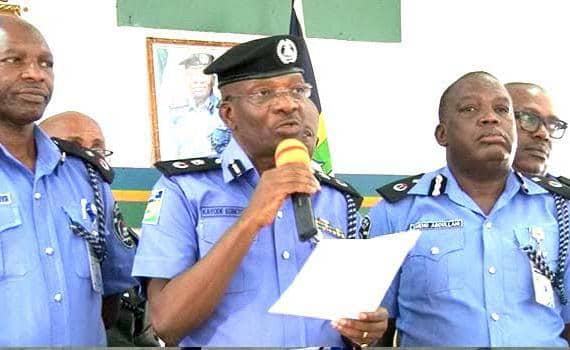
A Chief Medical Director of Kaiama General Hospital, Dr. Adio Adebowale, was arrested for allegedly killing his girlfriend and one other lady in Kwara State.
A statement issued and signed by the state police command PRO, Ajayi Okasanmi, disclosed this on Sunday in Ilorin.
The suspect was arrested in Edo and had confessed the killing of his girlfriend, Ifeoluwa, who declared missing in Table area of Ilorin in 2021.
”The investigation led the team to Kaiama general hospital where the suspect worked as the Chief Medical Director.
“The suspect’s office was forced opened and a decomposing corpse of an unidentified female body was found buried in a shallow grave,” the spokesperson said.
Further search to his office led to the discovery of another decomposing corpse of missing Nafisat Halidu in a trash can.
“Based on the commissioner’s directive, investigation into the case began and that the Police worked on an information based on the arrest of one Dr Adio Adebowale in Edo,” the statement added.

Pi mining – the way I see it
By Bilyamin Abdulmumin
314,159 dollars a Pi
One of the grand sagas that have been taking public attention is the issue of the Pi network. This project is said to be launched early in 2019. All potential subscribers need to come on board is a smartphone and data.
It depends on when one starts and how often they mine. But some pioneers (those who register for the crypto) have mined as much as 10000 Pis. However, the contentious saga that has been drawing attention was the Pi (cryptocurrency) relative value.
The value floating across as said to be the Global Consensus Value agreed by the world pioneers was a staggering 314,159 dollars. And already, many pioneers have as many as 10000 Pis. So, at this consensus, an average pioneer with 1000 Pis, the equivalent of 314,159,000 dollars, will need the services of similar camels that transported Alhaji Alhassan Dantata’s coins as the first person in 1929 to open an account with the First Bank. While a regular pioneer with as much as 10000 Pis, the equivalent of 3,141,590,000 dollars, will need the services of the Mansa Musa’s entourage like that accompanied him in 1324 for his first mecca pilgrimage.
The pioneers are determined and looking forward to this gargantuan windfall. Whether jokingly or not, some have already begun to imagine how to spend such jackpots. Many have embarked on the dream of climbing up the top social ladder by building exotic houses, expensive cars, or circumnavigating the globe for those who fancy the adventure.
Like many jackpot winners, these potential overnight billionaires continue to promise family and friends some bounties, including marrying them off, buying them houses in Asokoro, the latest iPhone, or sponsoring their pilgrimages.
While these pioneers continue to sail in their realm, their critics consider their aspirations at best as a mirage and, at worst, question their mental well being
When the President of the Association of Psychiatrists in Nigeria (APN), Taiwo Obindo, says that more than 60 million Nigerians are suffering from mental illnesses, the Pi critics say no wonder.
But one posing point the Pi critics raised is that instead of the pioneers assuming mining, it is actually them who are being mined. In other words, they are the cash cows, referring to the advert pool fee that the Pi initiators are generating from about 40 million users. Very plausible because in this era of social media, subscribers are gold.
On the other hand, the pioneers’ reason, too, is not a pushover. Instead, they point to the traction the Pi is getting, the global state of transition from the fiat currency, and the success of some previous cryptocurrencies such as Bitcoin. According to them, history is repeating itself. When Bitcoin started in 2008, everything was against its subscribers. They were seen as shadow chasers and laughed at. But when success stories began to come in, the doubting Thomas was nowhere to be found.
For those who don’t know how the current Pi value of 314159 came about, Pi is a useful mathematical constant with infinite values ranging from 3.14, 3.14, 3.141, 3.1415, 3.14159… to infinity. But, disregarding the point behind the decimal and in the ascending order, the pioneers arrived at 314159. In addition, to commemorate this mathematical constant, the official Pi lunch was on March 14, which is 3.14, the Pi first value mentioned.
In my opinion (everything considered), the expectations of the pioneers on the Pi network have reached a fever pitch, but the cryptocurrency hitting the market is on the horizon.
Bilyamin Abdulmumin is a PhD candidate in Chemical Engineering at ABU Zaria. He is also an activist for a better, informed society. He can be reached via bilal4riid13@gmail.com.

Nigeria at 62: Bad governance, corruption, others drag Nigeria back – experts
By Uzair Adam Imam
On Saturday, October 1st, 2022, Nigeria celebrated its 62nd independence anniversary, but experts said that bad governance, corruption, poverty, and insecurity, are among the forces dragging the country back.
Every October 1st, Nigeria celebrates its Independence Day. On October 1st 1960, the country gained independence from Great Britain after colonial rule that lasted for decades.
Independence Day in Nigeria is welcomed with a public holiday, and numerous activities are organized to mark the auspicious day. Youth dressed in green and white shirts and trousers, some march onto the streets singing the country’s national anthem and dancing to show their open support to their fatherland.
Several reports indicated that every year a considerable number of Nigerian youths who recklessly drive or ride bikes to celebrate the day sustain grave injuries, or worst, lose their lives.
Nigeria’s independence only in word
Despite the attention the day gets from the authority and Nigerians, some people still believe that the country’s independence exists only in words.
A lecturer at Bayero University, Kano, Dr Rukayya Yusuf Aliyu, argued that the country is still trying to define and understand itself at sixty-two years.
She said Nigeria is “an independent nation still trying to define and understand itself at 62.”
She said, “Certainly a developing nation with abundant wealth, very poor and clueless leadership, and a careless citizenry.
“Nigeria is an independent nation even though it should have done better. Nigeria is independent of colonial rule yet dependent on foreign nations for aides. She should ordinarily be provided to smaller, poorer nations at 62.”
Another lecturer, Dr Abba Ahmad Muazu, said the country is independent in reality but dependent because it hugely relies on other developed countries to survive.
He said, “In my perception, Nigeria is independent but dependent. The fact is that in terms of security, Nigeria can’t protect itself. So we rely on developed countries to provide us with arms and support.
“In education, Nigeria can’t invest in its educational systems to attract foreign students. Moreover, if you look at the current lingering ASUU Strike in Nigeria, the issue is yet to be resolved.”
At 62, Nigeria is still toddling
A classroom teacher, Yusuf Shu’aibu Yusuf, decried the present situation in the country, saying the poor in Nigeria are yet to secure their Independence.
He stated, “Freed from the white domination only to be subjected to the worse form of domination by our fellow countrymen. In my opinion, the ruling class and their capitalist cronies are the ones whom this Independence is for. The poor are not yet free. The masses are yet to secure their independence.”
A Kano-based businessman, Hassan Ibrahim, said Nigerians were more independent during the colonial administration than now.
He said, “In those days, kids were taken to school for studies free of charge. All the necessary things, including school tokens, were provided for them. But today, things have fallen apart. Nigerians are in a mess.”
Bad governance drags Nigeria to its knees
A renowned political scientist and analyst, Professor Kamilu Sani Fagge, said bad governance has brought about the current situation in Nigeria.
He stated, “There are numerous factors involved that resulted in the current situation of Nigeria. But the major one is bad leadership, which contributed to many political crises in the country.
“And the issue of bad leadership has brought about corruption in Nigeria. When we have good governance, corruption will give way to a developed Nigeria.
“In addition, it will also boost the country’s economic growth.”
Nigeria needs to diversify to grow
Professor Fagge added that for Nigeria’s economy to grow, the country needs to diversify.
He said, “Nigeria has depended hugely on oil since 1970, after the second world war. Nigeria has been blessed with many resources, including farmlands. So we need to diversify.
“Nigeria also needs to bring back to work our closing industries and also provide good electricity to revive these companies.”
The living condition should be improved
Professor Kamilu Sani Fagge added, “The citizen’s life should also be improved. Citizens are the backbone of every country’s development.
“Quality education should be provided to all. But, sadly, our government concentrates more on infrastructure. Countries like India, Brazil and China have attained recorded success by improving the lives of their citizens,” the professor added.

Kannywood Movie Review: Mutuwar Aure
By Franziskus Kazimierz (Casmil)
The Al-Mubarak International Film Production LTD movie Mutuwar Aure (Hausa: Death of the Marriage), produced in 2018, tells a story set in a modern-day Hausa community by and large dealing with the common, or perhaps a rather notorious topic of divorce in the Hausa cultural context. Thus, set exclusively within a family context, the film’s plot tells a narrative between a family drama – or what it may be for “Hausa eyes” – and a love-triangle story. It also heavily proselytizes Islam and defends its values and proscriptions – especially prayer – and against sorcery – a generally well-pronounced motive within Northern Nigeria’s Kannywood. It is, arguably, also against the oppression of women being pronounced by critics outside and within the community.
But beyond the mentioned main themes in the film, Mutuwar Aure develops a pretty interesting plot structure on its own, awaiting the spectators with unexpected turnarounds and slightly mixing genres, thereby making the plot’s twist even more curious.
To give an overview of the film’s plot – which primarily involves but a few characters only, making the film more understandable but maybe giving it too much “soberness”. It will certainly not be a spoiler to cheat about its beginning, when Abbas hands over a divorce letter to his wife, Rahma, containing the emotionally charged words “Náà-sàkee-ki” – I divorce you. By that, Abbas, a young man maybe in his early thirties, cuts one of the three possible ropes (igiyoyi) – with three cut ropes making reunification of the couple almost impossible. The twist of gloom on Abbas’ face makes the story’s plot seem predetermined, making him the “bloody antagonist” within the film – and Rahma, his victim, to be defended.
It is in this pattern the plot seems to be starting, but it is also precisely from this moment on that the story takes the unconventional twists mentioned above. In defence of Rahma, her family – in whose house Abbas is living – with a strong accent on its women seems to be ready to do everything for her – pronouncing it in a very hostile manner. By avoiding showing the strength of reconciliation, Mutuwar Aure heavily resembles Fuska Biyu (dir. Yaseen Auwal, 2018), a well-known Hausa movie containing similar features of adult women’s aggressiveness in order to fight for the interest of their own family. Throwing Abbas’ possessions out of the house, he also has to leave – having tried himself to send Rahma and their children away before. What is unknown to the spectators at this time is that the house where Abbas and Rahma had lived was granted to him by Rahma’s dad out of generosity. Therefore, by working heavily with fading-in back plots and visualized daydreams, the viewers may get the impression of Abbas being more than an antagonist while also being shameless and ungrateful.
Still, the movie contains more secrets to reveal. The more Abbas comes to Rahma, her dad and her family, the more it also becomes clear that there is something more to the divorce. Rahma was rude to him when she suspected that Abbas was having an affair with his secretary, Zainab – in this regard, we can observe a reversed love triangle.
Thus, shortly before Abbas can marry his secretary, Zainab, they can reunite by the strength of Rahma’s prayers – while Zainab is being rejected for using sorcerers to conquer Abbas’ heart – finally, the superiority of prayer over magic is demonstratively portrayed.
It can, therefore – also looking at the whole film – not be underlined enough in what grade the film proselytizes the traditional Islamic way of life. Rahma and her family, whom some might surely cheer in their fight for women’s rights initially, drop to be full of naivety and false morals, constantly humiliating a righteous man asking for their forgiveness. Rahma’s father finally admits that he had called him names for nothing.
Abbas, on the other side, a poor teacher at primary school who seems to be doing nothing but exploiting Rahma and her family until they don’t seem to be profitable anymore and moralistically reciting the Qur’an, changes to a mistakenly humiliated, righteous character. Rahma, herself, finally asks for his forgiveness.
While dealing with a fascinating plot, the way of making it a film probably could be better. The setting resembles Risala (dir. Abubakar S. Shehu, 2015) – as it is set in a different time – than other films being set in the modern day – by being quite sterile. There are hardly any scenes beside the Abbas’ house, making it appear like filmed theatre – the exact production environment for many, especially early, Kannywood movies. Though constantly in the background, music doesn’t play any role like in vocal numbers. By the combination of these circumstances, the film looks pretty puristic. It might be, therefore – although there are significant differences, why not (?) – a counterpart of Risala set in modern times portraying Abbas to be an innocent man being persecuted. Interestingly, though – of course – the place where Mutuwar Aure is set in – does contain modern equipment, the modernity is not really to feel, probably by missing liveliness. Also, in the end – and somehow similarly to Risala – the happiness is again relativized by new – though unreasonable – suspicions of Rahma.
Still, the plot is full of exciting and probably unconventional twists opening a broad horizon for this kind of movie. Though it could have been livelier and more trenchant in its actions, it still has a powerful message and is, by that, fitting to be talked about, if not purely for entertainment.
Casmil wrote from Cologne, Germany, via kafrakize@aol.com.

Nigeria at 62: Which way forward?
By Habibu Maaruf Abdu
Nigeria gained independence from Britain in 1960. That’s 62 years ago. Unfortunately, however, the country has made no significant advances since then. In my opinion, it takes the collective efforts of all Nigerians to change the story. Nigeria’s ethnically diverse people must agree to unite and develop a sense of working together to move the country forward. In other words, Nigeria must first be united to reach its destined greatness.
To achieve a united Nigeria, the government of the federation must endeavour to command a ‘national loyalty.’ That is, to get support from the people of every part of the country. The government could get this if it gives members of all the parts an equal opportunity in the government and its agencies. This will send a sense of belonging and satisfaction to them. The government should also treat all Nigerians equally, regardless of their regions, religions, tribes, and political affiliations.
Another thing that can bring Nigeria together is leadership rotation across the six geo-political zones. This should be regarded considering the reality in the southeast today. There are grumblings, and even mass agitations, from the southeasterners, mainly because they have never produced a president since the second republic. This fact makes them feel as though they are treated as outcasts in the country and therefore agitate. When leadership rotation is implemented correctly, such agitations will unlikely arise again. Also, the federal government should ensure that no region is envious of the other by making fair zoning of capital projects and equal distribution of resources across every part of the country.
For the peaceful coexistence of ethnically and religiously diverse Nigerians, all ethnic and religious groups must reject their prejudices against one another. They must also understand their differences genuinely. This is necessary for them to have a common ground for respecting and tolerating their differences (cultural, ethnic and religious). It will also help them to live in harmony and build a society with strong human potential and economic progress.
‘Discipline’ and ‘patriotism’ are also areas of emphasis. No nation can be great without these values instilled in the psyche of its citizens. This is why many countries, like china, have a whole ministry for national orientation. Nigeria should copy these countries and launch a massive and consistent campaign for the ethos of civic behaviours and responsibilities in Nigeria. This will help to build discipline, respect and love of the country, as well as national pride, in the society. When these values are present in society, the people will uphold discipline and patriotism. They will reject corruption and all other harmful habits that could cripple their dreams and inhibit their country’s development.
On another side, economic diversification should be considered to put Nigeria on the right track. The country’s economy is, at present, heavily reliant on the revenue derived from the export of crude oil. This leads to low economic growth, which, in turn, favours poverty as there is no room for massive job creation. But the diversification of the economy will certainly change the story. Therefore, Nigeria should diversify into areas like agriculture and industrialization. The agricultural sector, which was the mainstay of the country’s economy before the discovery of oil, has a long value chain. And a firm industrialization policy can create thousands of manufacturing jobs for people.
Nigeria should also make policies that will attract more foreign investors, especially those who produce different kinds of products and machines. This, together with reasonable provisions for private enterprises, will go a long way in reducing unemployment and alleviating poverty in the country.
Notwithstanding the above, Nigeria should do better for the education sector. The saying, “No country can really develop unless its citizens are educated,” cannot be more correct. Unfortunately, Nigeria spends very little on education (less than 8% of its total GDP). The number of out-of-school children is high, and universities remain closed for over seven months due to an indefinite strike by the Academic Staff Union of Universities (ASUU). To save education from this mess, Nigeria should increase its expenditure on the education sector; map out a plan for revamping it, and see the plan through with maximum commitment.
At this juncture, I want my fellow Nigerians to remember that; all the developed countries we currently admire have, at some point, been where Nigeria is today. It’s therefore valid to believe that Nigeria can equally develop. Fortunately, the country is blessed with both material and human resources to facilitate the process. However, it is rightly said that Rome wasn’t built in a day. Progress is made with sustained effort over time. Therefore, we need to unite, do our patriotic duties, uphold discipline and get professional and morally upright leaders to drive the country.
I will conclude by quoting Chinua Achebe in his book The Trouble with Nigeria, published in 1983, where he opined that “Nigeria can change today if she discovers leaders who have the will, the ability and the vision. Such people are rare in any time or place. But it’s the duty of enlightened citizens to lead the way to their discovery and to create an atmosphere conducive to their emergence. If this conscious effort is not made, good leaders, like good money, will be driven out by bad.”
It takes our collective efforts to move Nigeria forward.
Habibu Maaruf Abdu wrote from Kano, Nigeria, via habibumaaruf11@gmail.com.

On writing business
By Sulaiman Maijama’a
A barrage of questions troop into my inbox daily from people outside the writing circle, declaring their interest to come in. Some questions are worthy enough, while some are funny and crazy. For example, a young lady asked me to teach her “Article Writing” via WhatsApp. Another once asked, “can I become a writer in one week?” Somebody told me “kai kam rubutu bayi maka wahala“. What a wrongful assumption!
Let me, in order not to give a wrong impression of myself, humbly submit that I’m just a fledgling writer aspiring to be a pen wizard one day. My decision to write on “writing” this time was prompted by the fact that those who excelled are too busy to avail themselves and become beast of burden for aspiring writers. Be that as it may, a dot in the circle (like me?) may have something to offer. And as the saying goes, “there is love in sharing”. Thus, I will share the following tips for aspiring writers:
1. BE PASSIONATE AND AMBITIOUS. This, in my view, is the first step to becoming a writer. Writing is daunting, time-consuming, attention-demanding and a continuous learning process. Whoever tells you the contrary is leading you astray. But your passion and ambition are the driving force that will keep propelling you to defy all odds and cross the blocks on your way to the promised land. I believe that one (1) inspiration can overcome ninety-nine (99) perspiration.
Haven’t you ever asked yourself why some people who read English or Mass Communication write poorly or don’t write? But others who are trained scientists are writing professionally standard _Medical Doctors, Zoologists, Agriculturalists among others write well. This is to tell you that writing is a product of passion and ambition. Regardless of what you read, you can be a writer per excellence.
2. MASTER YOUR LANGUAGE. Reasonable proficiency in a language is a prerequisite for any writer who wants to be taken seriously by his readers. Not necessarily English Language, but any language you write in. Master the language to the level that the native speaker will appreciate you. Nobody can afford to devote his time to reading trash in the name of writing. Nobody will take you seriously when your essay contains grammatical errors, sentence fragments, dangling modifiers, and incoherent and incohesive sentences and paragraphs.
3. READ. I do not know a better way a writer can improve than by taking an avid interest in reading. Reading good writings is what makes good writers. And the volume of the text you read must supersede the magnitude of your writing. For instance, you need to read and analyse at least ten articles when writing a single piece. Before you write a single book, read and review one hundred books. Do you know that when a writer stops reading, it reflects in their writings?
4. HAVE MODEL(S) AND MENTOR(S). In any profession one wants to excel in, they must have people they look up to. Different writers have different styles of writing. As a young aspiring writer, identify your hero(s), look up to them and read them more. While having a model(s) will help you raise the bar of your success by dreaming bigger, having a mentor(s) will, on the other hand, help you be on the rightful terrain to the promised land. Mentors are a blessing; they show you the way, and when you feel like giving up, they reinvigorate your confidence.
5. WRITE FREQUENTLY. It is impossible to learn writing by theory; it is learnt by the practical application of theoretical ideas. But, like a muscle getting stronger by exertion, writing improves through frequent practice. If you write frequently, you will discover that today’s writing is better than yesterday’s. Your writings this week are better than those of previous weeks. That’s one magic about it. So, never get tired of writing if you want to become a good writer.
6. HAVE AN AREA OF INTEREST. A writer should specialise in a given area, preferably the area they are more interested in. For instance, some people are sport-loving, some follow every trend in politics, some on entertainment, some on terrorism etc. The wisdom behind identifying an area of interest is that whatever you are interested in, you will not find it too daunting but rather fun that will push you to break the glass ceiling. But this does not mean limiting yourself to a single area; a good writer should be able to write on every topic under the sun.
7. DON’T BE DECEIVED BY ENCOMIUMS: Writers carried away by flattering are likely to feel complacent. Most of the encomiums coming from people are not genuine. Regrettably, this has led to the downfall of many writers. Some people will overrate you; some will send you positive responses even without reading you. However, positive responses are motivating, but be relaxed, know your level and keep improving.
8. ACCEPT CORRECTIONS AND KEEP LEARNING. Nobody has a monopoly in this business. There is no level of professionalism a writer can attain where they are above mistakes. Even globally recognised writers make mistakes. Always keep your doors open for corrections, learn from them, and keep learning every day.
Maijama’a is a student at the Faculty of Communication, Bayero University, Kano and wrote via sulaimanmaija@gmail.com.
At 62: Nigeria’s independence and the future we desire
By Babatunde Qodri
It can be argued that ever since Nigeria got her independence in 1960, the country hasn’t gotten worse like it’s today. Every year is filled with insurmountable challenges beyond the control of both leaders and citizens. It appears, sincerely, as if the country has been cursed. Every opportunity to believe in Nigeria’s prosperity is dashed by a litany of crises ranging from insecurity, poor education and health systems and economic downturn. The country seems to have been brought to her knees.
The occasion of independence does not move people from different corners of the country. On the contrary, the convention of this remarkable celebration is a history remembered with joy and happiness. Many other African countries celebrate their independence with scores of impressive feats, despite avoidable crises. Unfortunately, the case isn’t the same here in Nigeria, where leaders expected to make people proud resort to disappointing charades to the country’s detriment.
The ongoing industrial action by university lecturers says a lot about how blighted Nigeria has been. Students have been away from classrooms for months. One would expect that a 62-year-old country should have grown past deleterious distractions capable of creating barricades in the way of her education system. It hurts that a sector as eminently necessary as education can be allowed to suffer while the Government continues to fund frivolities. The question is, which country develops or has developed without serious attention to education?
In other words, education in Nigeria is now in a comatose state. It’s hard to believe that this is Nigeria where Sir Ahmadu Bello, Obafemi Awolowo, and others once lived and governed. Nigeria’s present predicament, evident in her leaders’ shameless willingness and obsession with greed, has ruined those past years of free education packaged to liberate Nigerians for genuine patriotism. What used to be, in terms of quality, transformative education now constitutes a culture of abandonment, taking a heavy toll on the survival and growth of the country.
Insecurity is another problem. Severalerians have been in captivity for years. We are now the headquarters of banditry and kidnapping for ransom. Non-state actors have taken advantage of the country’s vulnerability to unleash horrors daily. And the complete loss of strength by people constitutionally paid and expected to protect lives and property heightens fears. Because of this unwholesome reality, the country has become a no-go area for foreign investors who should have helped her economically. The fact that people are becoming strangers in their homeland explains the mass migration of Nigerians out of the country in search of averagely better and more peaceful climes. Internal unrest, sadly, continues to drag the country backwards.
This reality is worsened by intractable corruption. Despite being an oil-producing country, it’s still disgusting to hear that Nigeria cannot refine her oil, which makes the country hugely indebted. While other OPEC countries leverage the international market amid restrictions posed by the ongoing Russia-Ukraine crisis, Nigeria is wallowing in a financial crisis resulting from endless oil theft. Isn’t it funny that the country has to borrow to service her debt? This is indicative of the depth of mess in which Nigeria is in.
Unarguably, Nigeria needs urgent solutions through the diversification of its economy. We must take advantage of modern agriculture to produce what we consume and vice versa. The country should stop wasting funds meant for critical goods on exotic cars for politicians. Our Government must invest in the education sector, health care system, and others.
Plus, effective legislation is paramount. Nigeria is in dire need of a fresh set of leaders with brand new ideas, leaders who are committed to viable plans and collective change. The issue of climate change must also be given urgent attention. Climate change and poverty have the exact root cause, and their impact contributes to the national underdevelopment the country is witnessing.
As we move into 2023, Nigerians should understand that our country deserves a befitting future. So we must be interested in candidates who will focus on doing the right thing at the right time. We must go for candidates with clear readiness and vision to transform our education system and uphold justice and transparency. We must do away with activities capable of fueling the embers of disunity in the country. 2023 should be about these.
Babatunde Qodri can be reached at babatundelaitan@gmail.com.
2023: Ɗankantoma canvasses support for Tinubu, Sani, APC aspirants in Kaduna
By
Sumayyah Auwal Ishaq
1st October, 2022
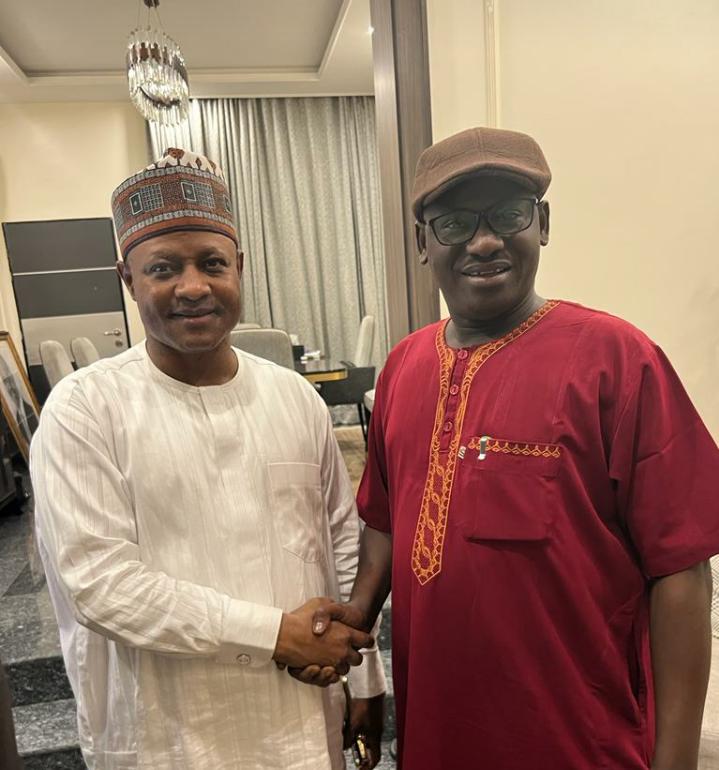
The Personal Assistant to the Minister of Agriculture and Rural Development, Alhaji Hussaini Ɗankantoma, has kicked off what he described as house to house campaign for the presidential, gubernatorial and other candidates of the All Progressives Congress (APC) in Kaduna State.
Speaking shortly after meeting the Kaduna State APC gubernatorial candidate, Senator Uba Sani, Ɗankantoma noted that the Kaduna State is very strategic for the realisation of Tinubu’s presidential ambition.
He further noted that the landmark achievements of the APC’s led administration in the country will boast Tinubu’s chances of winning the election. On the other hand, Ɗankantoma expressed optimism that Senator Uba Sani would address all the challenges confronting the Kaduna State and revamp all the critical sectors in the state.
He further called on leaders of the party in the state to close ranks and work harmoniously for the victory of the APC’s presidential candidate in 2023.