

SAS Kano promoted Shari’ah after Jihad – Prof. Naniya
By Ibrahim Mukhtar
The main aim behind the establishment of the famous School for Arabic Studies (SAS) Kano was solely to promote Shari’ah after the conquest of Northern Nigeria by the colonialists.
This was disclosed by Professor TIjjani Naniya of the History Department, Bayero University, Kano, during the SAS day celebrations, which marks the 82nd anniversary of the school.
The History professor went down the history lane and narrated how the school was established and how the then-colonial government wanted to undermine Shariah by promoting their own legal system.
According to the professor, “Sarki Alhaji, who was the first emir of Kano to have performed Hajj, was the one who applied and sought the approval of the colonial masters to establish a school which would cater for the peculiar legal needs of the Northern Muslims.
The colonial masters thought it would be another way to distort and dominate the Islamic legal system, but unknown to them, the School for Arabic Studies would outshine them and their mischief.”
Prof. Naniya narrated how the school admitted only brilliant students based on merit and how a son of a late business tycoon in Kano was expelled as a result of his bad attitude then.
He further talked at length about how the story of the school went high and how the model was copied and established in other states in Nigeria and beyond. Finally, he urged all the attendees to pray for those emirs and leaders who worked very hard to promote Islam and Shariah for all the country to benefit.
The 82nd anniversary took place Monday, December 26, 2022, on the school premises. The event was well-attended by the alumni of the school and other dignitaries.
Currency redesign and its attendant expectations
By Muhammed Umar-Hong
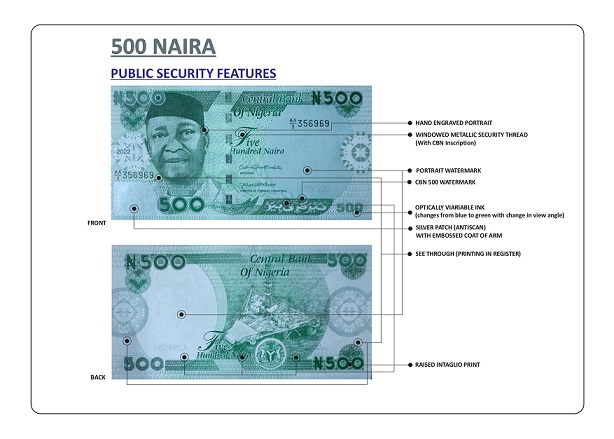
Changing the appearance of a country’s currency is widely practised worldwide by various methods and for different reasons. It could portray a nation’s rich cultural heritage, a change in regime to symbolise a ruler or celebrate national heroes with portraits of them attached to these currencies. However, the most cited reason has been to combat threats of counterfeiting. Threats which may lead to inaccurate figures of the total amount of money in circulation, for example.
The Naira is certainly not a stranger to the redesign concept, which has seen various denominations change over the last few decades. Chief among the changes had been the transition to more durable currency notes which began with the N5, N10, N20 and N50 denominations all upgraded to polymer substrates in 2007. While 2014 saw the birth of the N100 commemorative note marking the nation’s centenary celebration.
It should thus not be a contentious issue if the CBN decides, as it has, to make further modifications to the country’s currency. After all, it is within the apex bank’s constitutional powers as stated in the CBN Act, 2017 (Section 19, subsection 1b). This time, its primary aim will be to address our security challenges by reducing the hoarding of certain denominations whilst ensuring proper monitoring of monies in circulation.
But before the release of the new bank notes, however, interactions on social media had clearly shown that not many Nigerians understood the difference between currency redesign and currency redenomination (which involves removing/adding more zeros to the currency), and some were highly expectant of the policy to have some technical outcome. Opinions and suggestions are illogical or don’t seem to rest on sound economic principles. But I took the trouble to note a few, and to explain my views on them below. Feel free to make your contributions.
Q: Why wouldn’t the government set our highest currency denomination to N20 to end money laundering?
V: The reason for raising our highest denomination to N1000 is because our Naira has a fallen value. The change in exchange rates between two countries is usually determined by the constant demand for one currency by the other. If a country produces goods and services in commercially exportable quantities, the demand for those goods by foreign customers would automatically lead to foreign currencies being converted to local currency to enable these purchases, which ultimately drives the value of the local currency up. Foreign currencies would have to chase more Naira, thereby bolstering its value.
On the other hand, for products such as petroleum, where the purchases are made in US dollars, the additional dollars can be used by the apex bank to purchase the Naira, thus creating a sort of artificial demand for the Naira that usually raises its value.
I don’t think any money launderer (assuming I know how this is being done) would be deterred just because he now has to carry/stash away more currency in N20 denominations.
Q: Why wouldn’t the government choose an interval of four years to redesign its currency?
V: The international standard for countries to redevelop their currencies is between a 6 – 8 year interval. This is not, however, a strict rule, as some countries do it more frequently than others. In the US, for example, the practice is to focus more on widely used denominations (prone to more wear-and-tear) or are frequently targeted for currency fraud (counterfeiting) for a redesign. For instance, a currency like the two-dollar bill has a much longer lifespan due to its near-absence in daily transactions compared to a dollar bill.
Additionally, not every need for currency changes can be accurately foreseeable. And it may only sometimes be financially viable to make wholesale changes if it coincides with financial or economic shocks. Both of which our mono-economy is particularly susceptible to.
Q: Will the unaffected currency notes (i.e. N5, N10, N20, N50 and N100) remain in circulation after this redesign? Would their value fall?
V: The other currency notes that haven’t been affected by the current redesign will still maintain their legal tender status, fortunately, until the CBN says otherwise. They will also retain value as market forces dictate and are expected to remain in wide circulation. Elsewhere though, lower denomination currencies have been the most exchanged and most subjected to redesign, mainly due to their frequent use.
Q: Why not grant amnesty to hoarders of cash instead of embarking on the expensive redesign?
V: Well, I believe you can’t exert leverage over hoarders of cash if you were never going to carry out your threat (the redesign).
But Abdullahi Imam has another angle to it: The question of amnesty is straightforward. Amnesties are mostly for criminal activities. It’s not a crime to have cash or to store it. So the topic of amnesty is a non-starter. Except if an amnesty is for those that need to exchange their old notes before the agreed deadline.
Q: The government should introduce the use of coins if it hopes to increase its purchasing power.
V: Purchasing power is simply the value of a unit of currency in terms of the goods/services it can buy, which is effectively how strong/weak your currency is. The higher the purchasing (buying) power of a unit of your currency, the greater the number of goods/services it can purchase, and vice versa.
Does the N5 note come to mind? It’s okay to say the note has become worthless these days. I can’t remember when I walked into a shop for an item priced in the multiple of 5. Most of our goods have now been (deliberately, I think) rounded up to the power of 10.
Although they play little or no role in our daily transactions, coins are currently the oldest form of money available to us. They used to have intrinsic value based on the valuable metals (gold, silver) they were made with until it became less expensive to produce using materials like Copper. In more notable climes, they have been used for commemorative purposes.
Just recently, Britain had to redesign its fifty pence (50p) coin to feature the portrait of its new king, Charles III, following the death of Elizabeth II. And in many other countries, coin usage has practically been resigned to handling smaller transactions, often serving as ‘change’ from paper currency payments. This is more evident in countries assigning lower denominations to coins, effectively making the highest value of the coin in circulation worth less than the lowest-value note.
Even in our case, Prof. Soludo, then CBN governor, in his 2007 paper titled ‘Strategic Agenda for the Naira’ had proposed the reintroduction of coins in the following denominations: 1 kobo, 2 kobos, 5 kobos, 10 and 20 kobos in his bid to make the Naira a currency of reference in Africa.
Paper currency has become the preferred medium of exchange for higher denominations worldwide due to their convenient nature and the fiat status conferred on them by governments. To the best of my knowledge, no relationship EXISTS between using coins and increasing the purchasing power of a nation’s currency. But that’s not to say coins are wholly valueless and lack significance in the overall dealings of a country because, who knows, “the most important decisions you will ever make in your life may be decided with the toss of a coin.”
Muhammed Umar-Hong wrote via muhammedu.hong@gmail.com.
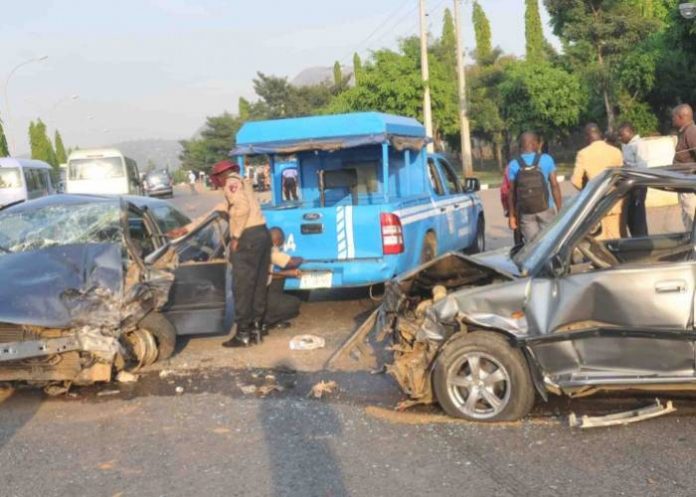
Six killed, many injured in Bauchi auto crash
By Muhammad Sabiu
A car crash along the Kafin Madaki-Ningi route in the Ganjuwa Local Government Area of Bauchi State claimed the lives of six persons on Christmas Day.
The accident, which occurred at 11.50 a.m., also injured sixteen other people to varying degrees.
Yusuf Abdullahi, the state’s FRSC Sector Commander, stated that a white Toyota Hiace bus owned by the Bauchi State Government was involved in the fatal collision.
He said, “Immediately we got the call, our men rushed to the scene within 20 minutes for a rescue operation. They evacuated the victims and rushed them to the Kafin Madaki General Hospital.
“It was when they got there that a medical doctor confirmed six people dead. Sixteen others sustained various degrees of injuries.
“There were a total of 22 people consisting two male adults, four male children, 10 female adults and six female children in the bus when it crashed.
“The lone fatal crash involved a Bauchi State Government vehicle, a Toyota Hiace Bus, white in colour.
“Those killed included two female adults, two male children and two female children.
“Those who sustained bruises and fractures are two male adults, two male children, eight female adults and four female children.”
The need for first aid training for all
By Abubakar A Gummi.
Accidents happen in daily activities – in house halls, schools, offices, markets, or on the roads. A woman cuts her hand while cutting an onion. A boy falls from the wall or on a bicycle and faints or breaks his leg. Motorcycles and cars crash every day. Many people die in a fire outbreak. Lives may be lost not because of these accidents but lack of knowledge of what to do at the moment of occurrence or before taking the victim to the hospital.
Many situations may require emergency treatment to save lives. A hospital may be located far. Fire service may not be available. Road safety may be far from the place of the event. As a result, victims suffer a lot. If it is an accident, he may lose much blood, resulting in death before taking him to the hospital. Hence, individuals need to be trained to rescue minor or serious ills or injuries.
An attempt has been made to reduce the number of mortality, hence introducing a new topic in basic science and essential technology in our primary and secondary schools; first aid. First aid is emergency assistance given to an ill or injured person before taking him to the hospital.
This was a good move because educating a child is like educating the whole society. As it was said, “teaching a child is like writing on a rock; it will never wash away”. Unfortunately, the topic mainly focused on what first aid is, the type of first aid, and why the need to know about first aid, not how to perform the first aid.
In recent years, new inventions have been made, more types of machinery increased, vehicles and more factories have been constructed, and people have turned to using gas stoves, Electric stoves and heaters. More and more electrical appliances are used .hence the chance of increased accidences and incidences.
Therefore, there is a need to explain more on the topic and expand it to subjects in particular in our various schools. There is a need to teach them the following:
-What is first aid.
-Importance of first aid
-Types of first aid
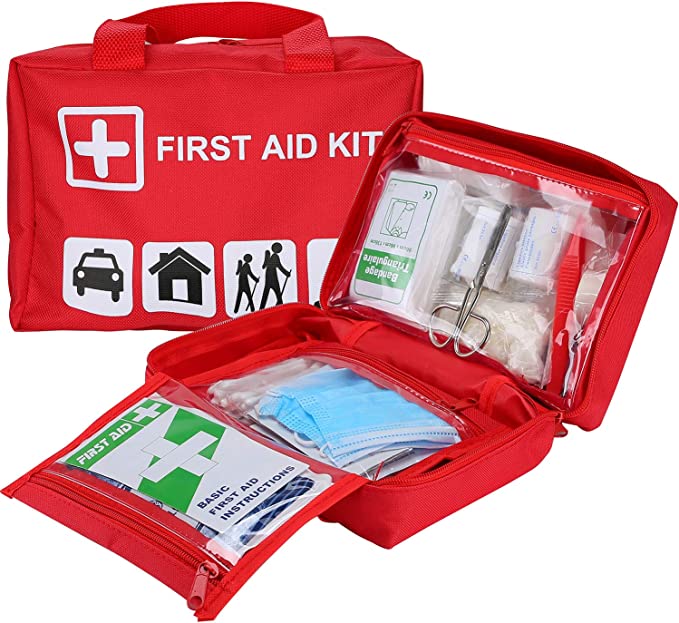
-First-aid Kit
-Travelling requirements
-What to keep at home for the need of first aid
-What to keep in our offices
-What to keep in our schools
-Precaution to stay away from Hazard
-How to prevent hazard
-First aid for CPR
-First aid for a person choking
-First aid for a medication or drug overdose.
-Reducing the risk of infected wounds during first aid
-Using a bandage during first aid
-Making an arm slip
-First aid during flooding
-How to return home safely after flooding
-Abdominal pain in adult
-Abdominal pain in children
– How to respond to Hazard
-How to treat yourself when hot water burns you.
-how to call for rescue.
And many more.
All these mentioned above can only be treated as a topic in detail with practicality. There is a need to focus more on it because more lives are lost every day, not because of the hazard but not knowing what to do.
Before government turn to this, there is a need for people in our society to learn more about first aid and enlighten others.
In today’s digital era, there are many ways to learn. There are free online courses, and there is
Google and there are YouTube channels.
You can teach thousands of people through social media by sharing your ideas. It is not necessary that you must have an organisation. You can decide on your own to go to any school in your community and request permission to use one period to enlighten students. You can share in mosque one or two tips every day.
Our youths need to understand that no matter how little it is, their contribution is significant to society.
NGOs are doing their best to enlighten and give a day workshop to students or organise a few days of training to equip people on first aid. But people are also needed to contribute more.
Abubakar A Gummi wrote from Zamfara state via abubakargummi06@gmail.com.
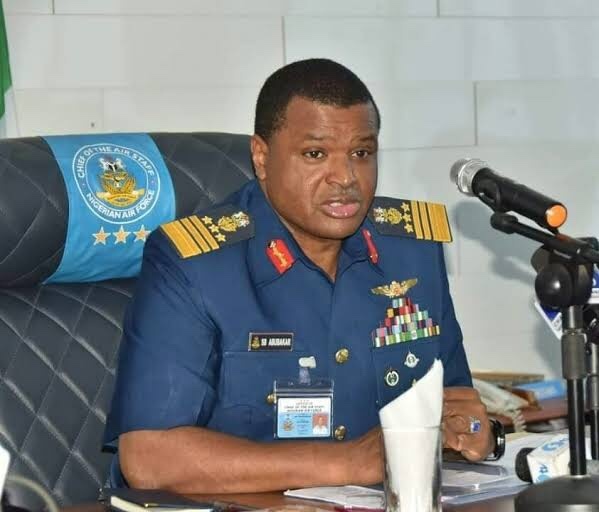
Air Marshal 2023 Campaign: A wrong step in the right direction
By Abdulrahman Yunusa
“Democracy is based upon the conviction that there are extraordinary possibilities in ordinary people.” – Harry Emerson
Of course, it’s not obscure to anyone with an in-depth understanding of Politics and Democracy that strategy and astute plans play a pivotal role in setting a candidate on the track to success. And once one fails to plan well, the outcome becomes blurry and unappreciative.
My name is Abdulrahman Yunusa Darazo. I’m a staunch fan of Baba Sadieque Air Marshal and, at the same time, a State member of the Air Marshal campaign council who is additionally yearning to see the success of Amb. Air Marshal to uplift the status of Bauchi state in the sight of both indigenes and non-indigenes.
However, it came to our notice with tremendous and utmost dismay that in the recent campaign of our candidate on Thursday, 22 December 2023, which is the most crucial step in his political voyage. He and his cohort have goofed tremendously this time at the beginning of the game, for they could have made an attractive move. Yet facing one of the most shrewd political actor-cum-incumbent governors of the state.
Though I must acknowledge that they gathered a mammoth crowd in his first official political campaign, that is not the only way to sell a product. Having many eyes with a dearth of good marketing strategies brought nothing good to the seller. However, when the product is qualitative and still accompanied by good packing, it stands a better chance of being sold quickly.
Sorry to say this, but to my knowledge, the recent outing is one of the most haphazard, unstructured, and virtually ill-organized campaigns to have ever taken place in Bauchi state. Therefore the Campaign DG and his team need to wake up and adjust for a better war which is imminent against us. They should discard the holier-than though attitude of feeling they can do it alone.
The dark horse often lurks and waits for a chance to pick and use it against poor managers and political strategists. This tells a lot about the future of this ambitious journey.
More so, the event was packed with lacunae as some stakeholders needed to be carried along in the process. In short, the Campaign Committee should have honoured the members ranging from Local government to the state level with a bit of exception as both have never been briefed ahead of the campaign exercise. Thus, even some groups among the Artisans were busy complaining covertly for the inconvenience meted yesterday at the Campaign ground.
Hence giving the wrong impression that they have all it takes to go a long way with such a poorly designated team. What are they trying to insinuate, for God’s sake, is rendering our kerfuffle, registering and voicing our grievances as diehard supporters of Baba Sadieque an offence? Let it be if it is, but we must speak for the goodness of Sadieq Baba’s candidature.
Nevertheless, I have a question to ask at this juncture, which requires no response. What are they planning to gain with such a poor outing? What do they stand to achieve with such a gang of uninformed men surrounding our future governor if they tend to go this hazy way? Just ponder on these two questions in soliloquy.
As a matter of urgency, we need to build something gigantic and reliable that can stand the test of time. Something which even our foes would find hard to fathom, let alone penetrating to score some political points against us. Until we become wary and intelligent of our affairs, our contending parties could take advantage of our parochial approach and use it against us. God forbid.
Conclusively, it is evident that there is another crucial task to undertake, particularly in the Election. And ignoring some figures thinking they have no relevance whatsoever, won’t be a brilliant idea because they could be the ones to root for massive votes for our giant candidate Amb. Saqieque Air Marshal.
A stitch in time, save nine.
Abdulrahman Yunusa writes from Bauchi and can be reached via adulrahmanyunusa10@gmail.com.
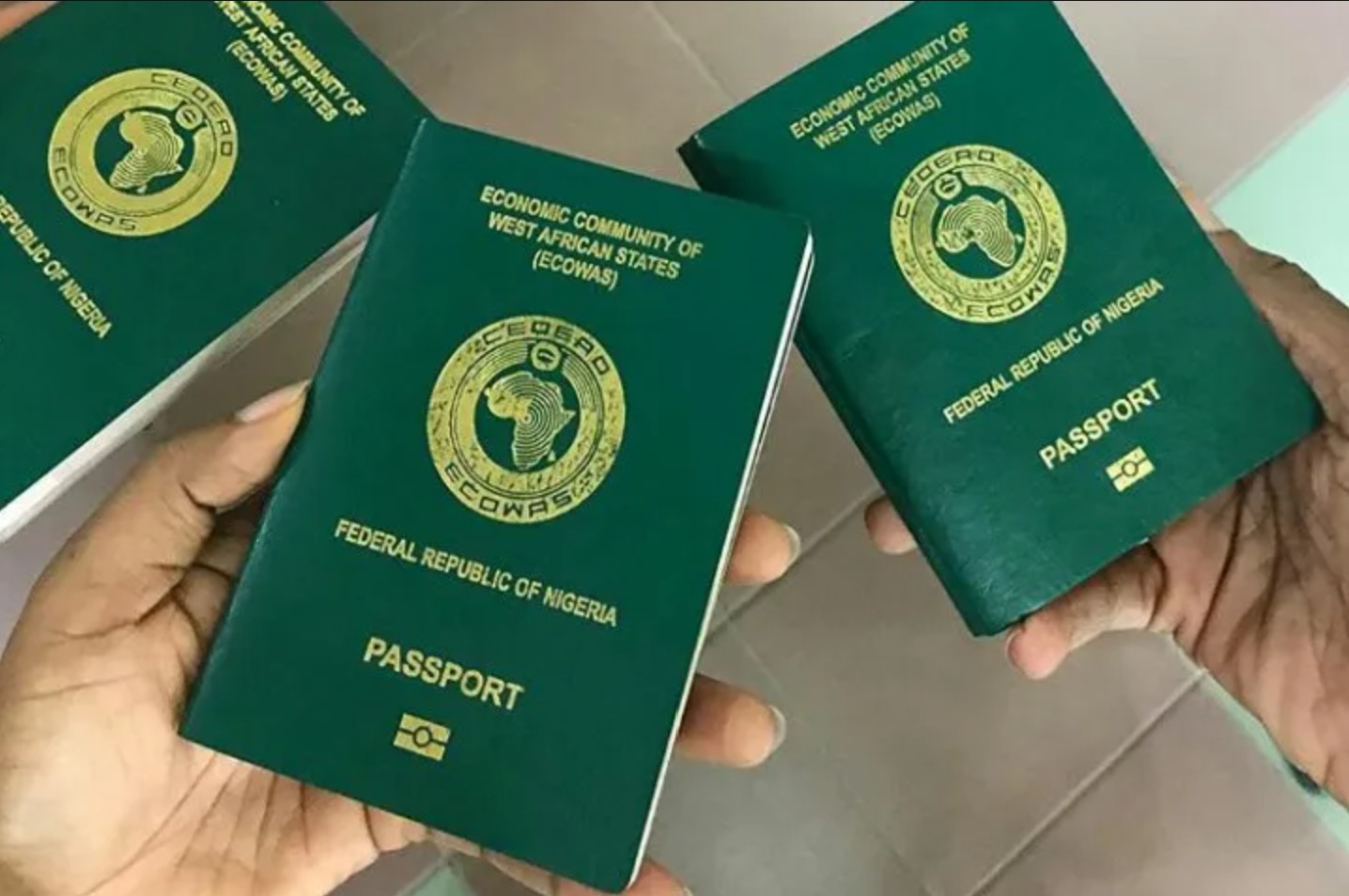
NIS warns against patronizing touts for passports
By Muhammadu Sabiu
The Nigeria Immigration Service (NIS) has issued a warning to the general public, particularly those looking to apply for passports, to be aware of the actions of touts posing as immigration officers.
This was stated at the Command’s End-of-Year celebration and award ceremony on Saturday in Owerri by Mr. Cyril Alaje, the Deputy Comptroller of Immigration and Passport Control Officer for the command.
He gave the people of Imo his words that the Command will keep up its commitment to provide top-notch customer service while meeting all of its primary objectives.
Also, NIS Comptroller in Imo, Mrs. Nkechi Ezugwu, said that the recognition was a call to better service while recognizing outstanding officers in the state. She added that they were deemed deserving of the awards after a “rigorous selection process.”
She conveyed her sincere gratitude to the state’s governor, Sen. Hope Uzodimma, for approving the Command’s Headquarters’ move to a new location and her certainty that the required legal paperwork to support the move will be processed quickly.
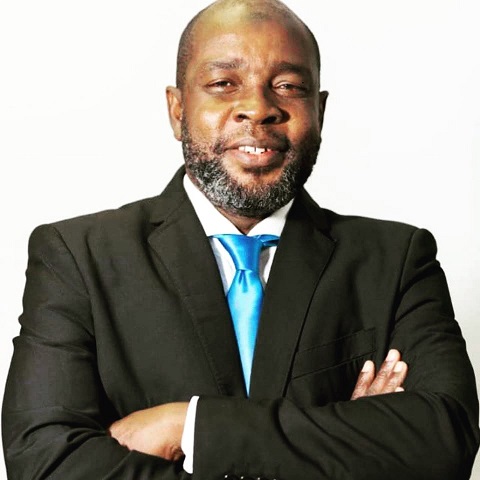
NIGCOMSAT gets new Managing Director
By Muhammad Auwal
President Muhammadu Buhari has approved, with immediate effect, the appointment of Engineer Tukur Mohammed Lawal Funtua, as the new Managing Director of Nigeria Communications Satellite (NIGCOMSAT), following the retirement of the erstwhile Managing Director, Dr Abimbola Alale, after two terms of 10 years in office.
Engineer Tukur Mohammed Lawal Funtua, an indigene of Funtua Local Government Area of Katsina State, Northwest Nigeria, was born on 24th November 1966.
He holds a Bachelor’s Degree in Chemical Engineering, PGDM, MBA, a Professional Diploma in Education and a PhD in Environmental and Sustainable Development Management in view, at the University of Port Harcourt.
He was, before his appointment, Director, health community affairs, safety and environment with BUA Cement Plc, and served in various capacities, including Health and Safety Manager, Country HSE Manager and Regional Manager for Communications, Public Affairs and Sustainable Development at Lafarge Africa Plc and Group Head, Environment and Community Affairs at Dangote Cement Plc among others.
Engineer Tukur, who has thirty years of professional experience in manufacturing, process engineering, health, production, safety and environmental management, communications and various other fields, is a Chartered Environmentalist at the Society for Environmental Toxicology and Pollution Mitigation, a Fellow of the Nigerian Society of Chemical Engineers, and the Professional Leadership Practitioners Institute.
He is a Registered Engineer with the Council for the Regulation of Engineering in Nigeria (COREN), a member of numerous professional bodies and institutes.

Bauchi governor appoints new commissioners, caretaker chairmen and advisers
By Ahmad Deedat Zakari
Two new commissioners, caretaker chairmen and special advisers have been appointed and sworn in by Bauchi State Governor Alhaji Bala Muhammad.
Media Aide to Bauchi State Governor Lawal Muazu Bauchi disclosed this in a statement on Friday.
Jamila Mohammed Dahiru and Amina Muhammad Katagum were appointed to head the state education and rural development ministries, while Yusuf Garba and Abdullahi T. Musa were sworn-in as special advisers.
The Governor also appointed Caretaker Committee Chairmen of the twenty Local Government Areas of the state and their deputies.
Speaking at the inauguration ceremony held at Multipurpose Indoor Sports Hall Bauchi, the Governor advised the new commissioners to work hand in hand with permanent secretaries and staff of their ministries for the effective implementation of policies and programmes of government.
He further admonished all the new appointees that his administration had no tolerance for corruption or sabotage. He said they are expected to participate actively in the actualization of the Bauchi renewal project.
Speaking on behalf of the sworn-in Caretaker Chairman, the Caretaker Chairman of Katagum Local Government, Umar Hassan, thanked the Governor for the honour and promised to justify the confidence reposed in them.
Unknown gunmen attack Kaduna amidst mourning of mass killing
By Uzair Adam Imam
Unknown gunmen Friday launched a fresh attack on Kagoro, a community in Kaduna state, amidst mourning of mass killing in Mallagum-Kagoro, Kaura Local Government Area of the state.
The Daily Reality learned that the incident occurred at night when most people were sleeping.
However, a resident who spoke to the journalists disclosed that the gunmen stormed the community around 9:00 pm.
He added that the gunmen started shooting sporadically immediately as they roamed the community.
A resident who pleaded anonymity said the attackers arrived fully armed and started shooting, forcing people to run for their lives.
He stated, “but thank God there was no loss of life because the military repelled the attackers,” he said.
But no official statement from security agencies or the government has been made when filling this report.

Morocco’s outstanding World Cup campaign and the lessons for Africa
By Abdulrazak Iliyasu Sansani
As the 22nd edition of the FIFA world cup ended, Africa had its best and most memorable performance at the Mundial. This World Cup, the first in the Arab World and only the second to be held in Asia, was so contentious that many football fanatics thought it wouldn’t be possible even when Sepp Blatter-led FIFA awarded it to Qatar. On the 2nd of December 2010, it was announced that Qatar, a tiny but rich gulf nation, would host the 2022 FIFA World Cup. Everything is history as it commenced on November 20, 2022, and ended on December 18, 2022.
The 22nd FIFA World Cup edition came with numerous upsets, though World Cup matches are hardly predictable. This World Cup delivered the most in this regard. The FIFA World Cup is football’s flagship tournament, which the first edition was held in Uruguay and started on July 13, 1930. The FIFA world cup has a unique place among sporting events, arguably unrivalled in all sports.
From the first qualification phase, in which 211 member associations were eligible for this edition and 206 participated in the qualification process up to the moment, 32 national teams qualified for football’s showpiece tournament: the most significant single sporting event in the world offers unmatched entertainment, fulfilment, and a lifetime experience.
Over the years, the FIFA world cup created moments eternally engraved in the minds of the approximately 3.5 billion football followers worldwide. From Lucien Laurent scoring the first goal at the world cup, Uruguay winning the inaugural edition of the world cup in 1930, Italy winning it on home soil in 1934, Uruguay silencing the overly expectant crowd at the Maracanã in 1950, Pele making his debut in 1958, Brazil team of 1970 considered by most football experts and supporters as the most outstanding football team ever winning the tournament, cruff losing a World cup final despite his brilliant performance, Maradona taking the game by scruff of the neck in 1986 against England by scoring an infamous first goal and the second arguably the greatest goal ever in the history of the most popular sport in the world, Bahamast’s brave call in 1998 in Norway versus Brazil match; Canavero’s defensive master class in 2006, Messi, a player widely considered as the greatest player of all time winning the World Cup in Qatar to cement his place among the greats, name it, you want sport at its best: you get it at the FIFA world cup throughout its renowned history.
For Africa as a continent: we have a long, difficult, and complicated history at the grandest football competition in the world. Africa began sending representatives to the world cup in 1934. The Pharaohs of Egypt became Africa’s first team at the world cup in its second edition. Since then, Africa has been sending representatives to the FIFA chief tournament. Herein are the nations and the year they debuted at the world cup: 1970 the Atlas Lions of Morocco, 1974 Leopards of DR Congo, 1978 the Carthage Eagles of Tunisia, 1982 the Indomitable Lions of Cameroon and the Desert Foxes of Algeria, 1994 the Super Eagles of Nigeria, 1998 Bafana Bafana of South Africa, 2002 the Lions of Taranga, 2006; Black Stars of Ghana, the Elephants of Ivory coast, Giant sable antelopes of Angola, and The Sparrowhawks of Togo. These member associations of the Confederation of African Football (CAF) have participated in the world cup seeking the all-important diadem in 88 years.
The just concluded edition of the world cup produced Africa’s first semi-finalist at the world cup: the Atlas Lions of Morocco. Before this, the best outing in Africa had been going to the quarter-finals on three occasions: Cameroon in 1990, Senegal in 2002, and Ghana in 2010. The Atlas Lions of Morocco, led by Walid Regragui, have shown clearly that Africa can and will one day win the world cup, just as predicted by the legendary Pele some decades ago. Their scintillating world cup campaign in Qatar exemplified what Africa can do when we engage in the right practice and comprehensively develop the sport most Africans are passionate about. Morocco’s historic run was not by chance. No, it wasn’t. It resulted from a considerable investment, a clear blueprint, and masterful implementation.
“The development of football in Morocco is founded on a triangular approach that should form the basis of the development of any system: facilities, talent and qualified personnel,” the Moroccan Football Federation (FRMF) president, Fouzi Lekjaa, said.
In 2007 King Mohammed VI decided to change the fortunes of Moroccan football by doing the needful and not just wishful thinking. He didn’t wait for the magic. He did what every African nation that seeks sporting excellence should do. It has taken 15 years since that great investment started, and the Moroccan Football Federation has since proceeded with a series of programmes aimed at improving the overall performances of the North African country in the sport they are crazy about. The results didn’t show overnight, as with most great projects.
However, the football world today celebrates Morocco. Moroccan national teams and clubs have achieved terrific results at almost all levels of football. From the Atlas Lions finishing fourth at the World cup, the lionesses of Atlas playing at their first Women’s African cup of nations final only to be defeated by South Africa, Morocco winning the African Nations Championship (CHAN) against Mali, Wydad Athletic Club winning the CAF Champions League, RS Berkane winning confederation cup, AS FAR clinching the Female CAF Champions League. This is the model for African football to follow. This is the reward for the investment in the beautiful game, technical growth, hard work, patience, and belief in merit.
In a nutshell, we must develop football from the grassroots, create a serene atmosphere for football to thrive, build facilities, employ top-notch tacticians, enhance our leagues, patronise our domestic leagues, upgrade the officiating of matches, and tackle corruption holistically to take Africa to the summit of world football.
Abdulrazak Iliyasu Sansani is a TV producer and presenter of Haske TV Sports, located in Jalingo, Taraba State.