The Kano of my dreams
By Ibrahim Abubakar
In the late 1890s, my great-grandfather narrowly escaped the evil claws of the Mahdi’s hostile and belligerent lieutenant, Rabeh Bn Fadlallah, who had invaded Borno to spread the Mahdist ideology. They sacked the empire’s capital of Kukawa, captured and executed Sheikh of Borno, and enslaved many people. This martial excess sent trembles across the land, and many thought it wise to migrate westward into the Sokoto Caliphate for safety. Among those who migrated to the Caliphate was my great-grandfather, Mamadou. Of its two dozen emirates, Mamadou chose Kano as his refuge.
Kano was the jewel of the Sahel, a centre of trade and commerce with walls 50 feet high and immensely thick, surrounded by a deep artificial gully making it an impenetrable fortress; a marvel to behold! It is this sense of security and opportunity, I believe, that made Kano a desirable place for my ancestors.
During colonial times, Kano increased in its majesty. The British administration modernised trade and industry, built hospitals, schools, and railways and improved the justice system by integrating and superbly implementing strategies that supported the rule of law and ameliorated the superficial old system. Kano’s commercial strategies were carefully designed to produce a positive net economic effect. For example, hide, skin, groundnut, animal feeds, meat and textile were exported to Britain. These export plans were supported by long-term government programmes that continued into post-independence Kano.
According to a World Bank report, Kano State’s mainstay is agriculture. It employs about 60% to 70% of the population producing rice, maize, millet, groundnut, beans, etc. Livestock production is another source of income for the farmers. The industrial output is from oil mills, textiles, tanneries, flour mills, and several others.
As the centre of commerce, Kano handles about 75% of finished goods from Lagos, Ogun, and Oyo industries. These are distributed to all the northern states and the neighbouring states of Niger, Cameroon, Chad, etc. From Kano, the following are exported: semi-finished leather, cotton lint, gum, hibiscus, sesame seeds and other minor items. All of the above have immensely contributed to enhancing Kano’s GDP as one of the highest in the country.
Unfortunately, the contemporary situation is rather bleak. Most of the factories have closed or have reduced their production capacity. Kano had about 30 tanneries producing over 45 million goats and sheep skins for export. In addition, over 7 million cattle hides were processed as finished leather for making shoes and other leather goods. However, there are only a dozen tanneries in production today. As for cattle hides, 90% of it is consumed in southwestern Nigeria as Ponmo or Ganda. In addition, cattle hides are imported from neighbouring countries and Mali, CAR, Sudan, and Saudi Arabia. The last textile to close was Angel Spinning and Dyeing Limited.
It is not a hidden fact that education has crumbled in recent years. Many children in Kano are poorly educated (the lucky ones?) and without a solution in sight. Although I am aware that education has exacerbated globally, for example, my father, 48 years older than me, is better educated in most branches of general learning. Kano is in the top five states in the country with substantial numbers of out-of-school children.
Healthcare facilities across the state are in a deplorable state. For example, the last time I visited the A&E department of a general hospital in Kano, I was sickened by the gruesome sight of accident victims on the floor, literally bleeding to death. In addition, there is an enormous disparity in the doctor-to-patient ratio, albeit not the worse in the country. It is, however, in the top ten states lacking doctors, with a ratio of 1 doctor for every 14,123 persons. To put it into perspective, the UN standard doctor-to-patient ratio is 1:600.
Kano used to be safe. Growing up, very few isolated incidences of theft were heard of in the city. Today, people get robbed in broad daylight. Thieves with sharp knives of all shapes and sizes attack people on the streets to rob them of their phones and other belongings; those who refuse to comply are fatally stabbed without remorse. Rape cases are rising exponentially. This year alone, over 1,300 cases of rape were reported. It is sad to see Kano vitiated.
The Kano of my dreams is the Kano my great-grandfather fell in love with. A Kano where there is opportunity and hope for everyone regardless of gender, ethnicity, or religion. A Kano where I feel safe walking any street at any hour of the day or night. A Kano where women can feel comfortable around men without fearing harassment or misogyny. A Kano with subsidised agricultural products such as fertilisers and an established avenue for creating liaisons with agencies that will be responsible for borrowing funds from the banks of industry and agriculture for the benefit of farmers, and this will increase productivity as well as employment.
Similarly, the Kano of my dreams will create an investment agency to secure funds from the Bank of Industry for the closed tanneries/factories and companies at low capacity. This will enhance business activity and employment. Furthermore, the Kano of my dreams will utilise Tiga Dam power generation to supply electricity to the industrial areas of the state and set a good precedence for the future supply of power to the entire state, either through hydroelectricity, solar energy, or thermal power.
The Kano of my dreams is a Kano where children are given quality education regardless of the social and economic status of the family they come from. A Kano where children do not go around begging for food on the streets. The Kano of my dreams is a Kano where hospitals are abundant, and doctors, nurses and other healthcare workers have all the needed equipment to make their jobs easier. A Kano where the large, proposed sports complex at Kofar Na’isa is turned into a colossal state-of-the-art medical centre to cater for the entire country. A Kano where neighbours assist one another.
I dream of a Kano where the rich invest more in local small-scale industries to boost production and employment rather than holidaying abroad and boosting the economy of the colonial order neglecting their brothers and sisters at home languishing in abject poverty. Lastly, the Kano of my dreams will have excellent and selfless leaders that genuinely care about the advancement of the state and will put in their utmost to see to it becoming the gem that it was, if not better than it was in days of yore. In sha Allah!
Ibrahim Abubakar won the 2nd position in the 2022 “The Kano of my dream” writing competition jointly organised by Muhsin Ibrahim, PhD, and The Daily Reality online newspaper. He can be reached via ibrahimabubakhr@gmail.com.

A look at the Kano Hisbah Board law vis-à-vis Nigerian Constitution
By Rabi’u Muhammad Gama
Introduction
The Kano State Hisbah Board (hereinafter referred to as “the Board”) has been an object of controversy, particularly on social media, for quite some years – probably right from the inception of the Board. The controversy usually surrounds the way and manner by which the Board, or more properly, the foot soldiers of the Board (the Hisbah Corps), carry out its, supposedly, statutory responsibilities (functions), ranging from matchmaking, reconciling civil disputes between persons and/or organisations, seizing and destroying bottles of alcohol, imposing a certain mode of dressing on people to waylaying young people, especially males, when they seem to have a certain objectionable hairstyle considered to violate Islamic morals.
Even though some historical accounts of the philosophical underpinnings behind the evolution of Hisbah will be very rewarding for a better appreciation of the topic, this article restricts its scope to the constitutional status and the functions of Hisbah as provided for in the Kano State Hisbah Board Law No. 4 of 2003.
The Constitution of the Federal Republic of Nigeria
The Constitution of the Federal Republic of Nigeria, 1999, (hereinafter referred to as “the Constitution”) is the Supreme Law of the Land. It is the Law over and above which there is no other law. As such, if any other law, either deliberately or by necessary implication, happens to be inconsistent with the provision of the Constitution, the Constitution shall always prevail, and that other law shall, to the extent of its inconsistency, be void and of no effect whatsoever. See Section 1(1)(2)(3) of the Constitution.
The Constitution is not only the Biggest Law of the Land, but it is also the Fountain Law of the Land from which all other laws flow. It (the Constitution) distributes legislative powers between the federal and state legislatures. Section 4(1) confers on the National Assembly(which comprises the Senate and the House of Representatives) the power to make laws for the whole country or any part thereof. Section 4(6) likewise empowers the State House of Assembly to make laws for the state or any part thereof. However, these powers are to be exercised within some certain constitutional limits: the National Assembly cannot legislate outside the Exclusive Legislative List and the Concurrent Legislative List, while the State House of Assembly cannot, and shall not, trespass upon the Exclusive List. This clear distribution of powers forms the foundation of the debate as to the legality of the Hisbah Board Law, but that should be a topic for another day.
In response to the then prevailing circumstances and mounting agitation for the reintroduction of Shari’ah in the State, which was sparked by the reintroduction of Shari’ah in Zamfara State, the Kano State House of Assembly exercised the powers given to it by Section 4(6) of the Constitution by enacting a law known and cited as “The Kano State Hisbah Board Law No.4 of 2003, which brought the Hisbah Board into existence.
The Hisbah Board Law
The Kano State Hisbah Board Law, 2003 (hereinafter referred to as “the Law”) came into force precisely on the 7th day of November 2003. The law is relatively short: it has 17 Sections only. Section 3(1) of the Law establishes for the State “…a Board to be known as the Kano State Hisbah Board”. “This Board”, says Section 5 of the Law, “shall be responsible for general policy-making as well as coordination of activities between State and…Local Government Hisbah Committees”.
Section 7(1) of the Law empowers the Board to establish the State “Hisbah Corps”, who, according to the Section, may be eligible for appointment as Justices of Peace. By virtue of Section 7(2), the Corps so established shall be under a Commander who shall be appointed by the State Governor. And the duty of the Commander of the Corps, by virtue of Section 7(3), shall be the general administration of the Corps.
According to Section 11(1) of the Law, the Board shall have a Secretary who shall be appointed by the State Governor. The Secretary to be appointed shall be a legal practitioner with not less than 6 years of post-call experience. That Secretary shall be both the legal adviser and the head of the legal department of the Board.
It is important to assert, at this juncture, that the Kano State Hisbah Board, in spite of the raging debate going on in the legal cycle, is a legal and lawful organisation/institution which is duly and validly created by the Kano State House of Assembly pursuant to Kano State Hisbah Board Law No.4 of 2003. See also the case of Yahaya Farouq Cheɗi v. A.G Federation (2006) 13 NWLR (Pt.997) 308 (CA).
Duties of the Hisbah Corps
The Hisbah Corps, created by Section 7(1) of the Law, is the most active arm/department of the organisation. The Corps is the foot soldiers and the chief executor of the responsibilities of the organisation. For the sake of clarity and precision, below are the functions, or rather, responsibilities of the Hisbah Corps, as provided for under Section 7(4) of the Law. According to the said Section, the Hisbah Corps shall have responsibilities to:
Render necessary assistance to the Police and other Security agencies; encourage Muslims to unite in their pursuit of justice; encourage kindness to one another; advise against acquiring of interest, usury, hoarding and speculation; encourage charitable deeds, particularly the payment of Zakkah; give advice on moral counselling; encourage orderliness at religious gatherings; encourage general cleanliness and environmental sanitation; reconciling of civil disputes between persons and/or organisations where parties are willing; assisting in traffic control; emergency relief operations; assisting in any other situations that will require the involvement of Hisbah.
Anything other than the above is beyond the statutory functions of the Hisbah Corps. This begs the question: can the Hisbah Corps give itself powers or functions that are not given to it by its enabling law? The answer is “No”! And one fundamental thing that can be deduced from the above functions is that the Corps seems not to have any “actual power” to execute anything. The Law seems only to empower the Corps to “advise”, “encourage,” and “assist”, nothing concrete and definite! The Hisbah Corps clearly has no power to arrest, detain, waylay or force anybody to do anything against his or her will. The Law could not be clearer, and it is there for all to see.
Conclusion
The Constitution of the Federal Republic of Nigeria, 1999, is the first and the ultimate law of the country, the Grundnorm of the Land, so to speak. It creates and empowers the Kano State House of Assembly to make law for the peace, order and good government of the State or any part thereof. It is in the exercise of these powers that the Kano State House of Assembly made the Kano State Hisbah Board Law No. 4 of 2003, which brought into existence the Kano State Hisbah Board. The Kano State Hisbah Board Law, 2003, also creates the Hisbah Corps and empowers it with some specific functions and/or responsibilities.
It is the view of this writer that any act, no matter how noble or well-intentioned, done by the Board or the Corps must be in accordance with the provisions of the Kano State Hisbah Board Law, 2003; otherwise, the act is illegal, unlawful and ultra vires. And where an act of the Hisbah Board, or the Hisbah Corps, happens to be in conformity with the Kano State Hisbah Board Law, 2003, but not in conformity with the Constitution of the Federal Republic of Nigeria,1999, or any other law validly made by the National Assembly, then the Constitution, or the law of the National Assembly, shall prevail and that act stands unlawful and illegal, no matter how religiously rewarding or well-intentioned the act is. See the case of Musa v. INEC (2002) LPELR-11119 (CA).
Rabi’u Muhammad Gama is a Law student; he writes from the Faculty of Law, Bayero University, Kano, BUK. He can be reached via rabiuminuwa327@gmail.com.

The Kano of my dream
By MA Iliasu
The dilemma with Kano has always been about standards. So, naturally, Kano’s advantages and disadvantages in socioeconomic assets have outgrown everyone’s. The history of Hausa land and much of the Sahel will confirm that assertion.
Kano’s population was approximated in 2022 as the second largest in Nigeria after Lagos and sixth in the Gross Domestic Product (GDP), ranking behind Lagos, Rivers, Delta, Oyo, and Imo. Kano is blessed with more than ten major markets across its rural and urban settlements, with Kantin Kwari and Dawanau serving as the largest textiles and food markets in West Africa, respectively. The state is enriched with the twentieth highest landmass in Nigeria, the biggest part of which is a prosperous arable land, with a favourable temperament that enables consistent rainfall and harmattan during rainy and harmattan seasons, on top of the twenty dams distributed across the rural economies of the state. Kano is one of the largest industrial hubs in West Africa, and the aggregation of these natural and human resources earns the state the title of “Centre of Commerce” in Nigeria.
By the same standard, however, the same factors make Kano an unfavourable environment. The massive population is more neglected than cared for, thus becoming a liability rather than an asset. There is a large number of out-of-school children roaming streets as beggars and hawkers, with many engaging in child labour. Many youths have been reduced to thuggery, thievery, and drug abuse. The economy is overwatched, yet doesn’t reflect in the state’s treasury by how the state rank lower in revenue generation, signifying, among others, the corruption and mismanagement holding its potential backward. The landmass is underutilised, with poor urban planning in the metropolitan areas and primitive agriculture in rural areas.
Consequently, signals of environmental hazards like crime, congestion, and flooding have become significant threats to the Kano metropolis. The dams have been neglected in the rural settlements. The widening gap between the rich and the poor makes the Human Development of the state ranks 28th, according to Human Development Index (HDI) 2019, among the very worst in Nigeria. The income per capita of Kano is among the lowest, with its healthcare being one of the worst in Africa. As of 2021, the state could only hire one medical doctor to tend to the emergency unit of Murtala Muhammad General Hospital during the weekends.
The common factor in both the contrasting pictures is that Kano never does anything in small doses – it’s so-called standard. The Kano of my dream, therefore, is the one in which this standard is retained but only positively to enable the growth and development of the state to measure up to it.
In the Kano of my dream, agriculture and industry are the central focus. A coherent plan which utilises the twenty dams for irrigation farming in forty local governments has been implemented. And courtesy of that, the agricultural output from Kano has outranked every state in Nigeria and equals the capacity of many African countries combined. The landmark is achieved thanks to overwhelming human labour and fertile land, and after the state government widens its thinking beyond small partnerships with regional development banks by reaching out to international agricultural cartels.
A deal has been stroke with India, China, Nepal, and Thailand that sees to it all Kano dams have been utilised in exchange for an uninterrupted supply of agricultural output to the Asian markets. And the reliance on agriculture has paved the way for the flourishing of other farming and manufacturing industries, the rural economy, and infrastructure, which consequently ends rural-urban migration and reduces the pressure on metropolitan areas. Resurgence occurs in food and technology markets, with advanced research in agricultural institutes and massive employment generation for the teeming population. Agriculture is Kano’s largest labour employer for the first time this century. And the problems of unemployment, revenue generation, urban migration and planning, rural negligence, and food security have become negligible.
The multiplier effect of achieving such economic landmarks will, among others, boost the GDP, HDI, Per Capita Income (PI), and general economic buoyancy across all social classes, which in the Kano of my dream, enable investment in education and healthcare. The fantasies of free education and healthcare are now history. The government has seen the truth and intensified its efforts towards achieving a hundred per cent literacy rate and eighty years average life expectancy through massive investment in education and health infrastructure, with more than sixty per cent of its talent pool channelled to study science and technology.
The revolution in the education sector takes place in two dimensions. The first is by reconstructing the state institutions and equipping them with modern learning tools, recruiting more teachers and retraining them, and taking their remunerations to a world-class standard. The second dimension is by reshuffling the curriculum by removing the outdated, less relevant subjects and introducing modern, relevant ones, and rearranging the method of achieving Senior Secondary School Certificates (SSCE) by turning terminal examinations into grade point averages, the cumulative of which will determine whether a student qualifies to take the SSCE or not. Students who excel by having high cumulative grade points from their terminal examinations across six years of Secondary School education will be able to sit for SSCE and secure government scholarships. While those who have yet to excel will have to engage in compulsory remedial studies before they become eligible to write SSCE. That way, the higher institutions will admit students not by chance but by competence, making them more productive intellectual environments. Breakthroughs have since been recorded in research and innovation.
Investment in healthcare starts by providing each local government with a general hospital and enough health workers. Infant and women mortality shall be met with formidable maternal health departments. And health education shall be prevalent, especially among women.
The political culture in Kano of my dream is perceptive and intentional. The fusion of power between state and local governments is abolished, enabling a reformed, energetic, merit-based, transparent, and accountable leadership style of leadership that is appropriately informed by and with the major activities of the clerical, academic and social establishment in the state.
Sports and recreation are engaged with remarkable intensity by establishing sports academies to meet the demands of modern football, basketball, tennis, and boxing. Kids are trained at a young age, adults are funded to do their coaching badges, and sports entrepreneurs are granted smooth platforms to facilitate the transfer of Kano talents to major European and American leagues, revolutionising domestic football to a world-class standard. For the first time in football history, Kano Pillars, an African team from the Nigerian league, has won the Club World Cup, thanks to the formidability of local talents.
In the end, the Kano of my dream isn’t only distinguished with glowing physical features such as roads, schools, hospitals, and recreational facilities but also with a glowing soul, mind, and heart. The spiritual infrastructure is also revolutionised through changing mindsets, attitudes, and beliefs. As a religious society, we have admitted to the supremacy of destiny, one who greatly appreciates the purity of our hard work and ethics. And through the pursuit of this, we turn into reality the endless upward possibilities of our beloved ancient society.
MA Iliasu won the 1st position in the 2022 “The Kano of my dream” writing competition jointly organised by Muhsin Ibrahim, PhD, and The Daily Reality online newspaper. He can be reached via muhada102@gmail.com.

Top 5 Kannywood films of 2022
By Habibu Ma’aruf
The year 2022 has not been great for the Kannywood film industry. There was a substantial decline in feature film production as the popularity of series films soared, piquing the interest of more producers. Cinematic releases were at a premium throughout the year, with just nine films, making it a ratio of less than one release a month. The situation was so severe that no major production was shown at cinemas, even during the Eid ul-Fitr festivities.
However, while some of the few releases fell flat on their faces, others have managed to make it in the trying year. Find below the top 5 Kannywood films of 2022. Please note that only feature films were considered for this list.
- Aisha
Directed by Hafizu Bello, the movie, Aisha, is critically and commercially successful. It beats Kayi Nayi (Dir, Gumzak 2021) to become Kannywood’s biggest grosser by earning over ₦5.5 million during its elongated run in two cinemas. This is not surprising as it’s a production of ‘the box-office king’ Abubakar Bashir Mai-Shadda. The story revolves around the eponymous character, Aisha (played by Amal Umar), who dies after being raped, and her parents’ struggle for justice. The plot is uncommonly twisted but perfectly pieced together. The film has a strong message and a realistic narrative. It exposes the grim reality in some higher institutions where students commit serious misconduct. It stars Amal Umar, Nura Hussaini, Adam A. Zango, Sani Danja, and Shamsu Dan Iya, among others.
- Lamba
Before the premiere of this Ali Gumzak-directed comedy, there had already been an overwhelming craze for its title song. This has helped the film to rake in ₦1.32 million on the first day, beating the previous record first-day collection of ₦1.25 million by Fanan (Dir. Alolo 2021). Produced by Abubakar Bashir Maishadda, Lamba is a social satire set against the backdrop of ‘Audio money’ (a slang term for the fake display of wealth). It tells how some three young men (Adam A. Zango, Umar M. Sharif and Ado Gwanja) flaunt false riches to impress the classy girls they meet on social media. The unveiling of their true identity is later shown in brilliantly executed, hilarious scenes that get the audience laughing throughout. The film lacks an innovative script, but it’s an excellent comedy that succeeded in tickling the funny bone. Other casts include Aminu Sharif (Momo), Maryam Booth, Maryam Yahaya, Bilkisu Abdullahi, Aisha Najamu, etc.
- Nadeeya
Although the eponymous movie Nadeeya wasn’t initially meant for cinematic release, it still managed to get a large audience while showing on the big screen. The film is an issue-based drama about ‘upbringing’. It depicts how some parents spoil their kids, specifically daughters, and the practical difficulties such children face in life. The story focuses on a pampered daughter, Nadeeya (acted by Rahama Sadau), who faces similar challenges after marriage. The film is hard-hitting and very meaningful. It shows that children’s first learning begins at home, and their personalities and morals depend largely on their upbringing. The actor’s performance is also impressive. It was produced by the leading actress Rahama Sadau and directed by Yaseen Auwal. Other casts include Umar M. Shareef, Rabi’u Rikadawa, Asma’u Sani, etc.
- Hikima
This movie is a murder mystery specially made with a considerable budget to meet the requirements for showing on Netflix. It’s, however, yet to show on the online viewing platform. The film, which premiered in cinemas in late 2021, was released to the wider public in 2022. It tells the story of a philogynist lecturer, Sadiq (Nasir Naba). It begins from a court session with Sadiq being accused of murdering his female student. The film is richly suspenseful, but many audiences criticise it for having a convoluted plot. Moreover, the cinematography and actor’s performance, among others, place it ahead of its peers this year. Hafizu Bello directed it, while Mustapha Ahmad (Alhaji Sheshe) was the producer. It stars Nasir Naba, Ishaq Sidi Ishaq, Sarah Aloysius, Sani Mu’azu, Maryam Yahaya, etc.
- A Bikin Suna
A Bikin Suna tells the story of Mustapha (Ali Nuhu) and his wife Ummulkhairi (Mommy Gombe). They have been married for five years without giving birth to a single child. This fact makes Mustapha’s relatives accuse Ummulkhairi of infertility. She becomes pregnant afterwards, and everyone begins to like her. However, a new conflict erupts when the young baby gets missing during the naming ceremony. The film is generally enjoyable. It’s directed by Yasin Auwal and produced by Danjuma Salisu. Other casts include Saratu Daso, Musa Mai-Sana’a, Maryam Yahaya, Shamsu Dan Iya, Rahama MK, etc.
Habibu Ma’aruf Abdu wrote from Kano. He can be reached via habibumaaruf11@gmail.com.

FG closes 7 petrol depots for selling above government price
By Muhammadu Sabiu
Seven private depots were closed by the Nigerian Midstream and Downstream Petroleum Regulatory Authority (NMDPRA) for selling gasoline above the N148 per litre permitted by the federal government.
Independent petroleum marketers had complained in recent months that they were purchasing the product from private depots for more than N200 per litre, making it impossible for them to sell the commodity at the government-approved price.
The Authority’s Chief Executive, Engr. Farouk Ahmed, said the depots would be closed until a decision was made on how to proceed while speaking to journalists on New Year’s Eve in Abuja.
Among the companies, he identified were Ardova, Rainoil, TCL, Bluefin, and NEPAL.
According to Engr. Ahmed, two of the depots are in Lagos, two are in Warri, one is each in Oghara, Port Harcourt, and Calabar.
He reassured customers that the closure would not affect the availability of petrol around the nation, stating that there would be enough fuel for about 30 days.
He said that in an effort to lessen fuel shortages, the authority had many discussions with marketers on how to address supply issues that operators were having.
He also noted that certain privately operated depots were found to continue loading the commodity above the government-approved price, despite having obtained the cargo under favourable circumstances.
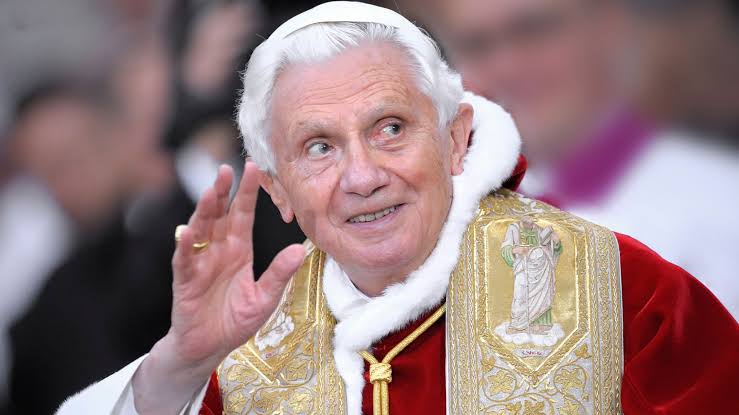
Former Pope Benedict XVI has died, aged 95
According to a BBC report, the formed old Pope died in the early hours of today. “He led the Catholic Church for fewer than eight years until, in 2013, he became the first Pope to resign since Gregory XII in 1415.
Benedict spent his final years at the Mater Ecclesiae monastery within the walls of the Vatican where he passed away at 09:34 (08:34 GMT) on Saturday.
His successor Pope Francis will lead the funeral on 5 January.”
No Zazzau title holder arrested for sodomy – Zazzau Emirate
By Ahmad Deedat Zakari
Zazzau Emirate Council has debunked the rumours that a title holder of the Emirate was arrested on the ground of sodomy.
Spokeperson of the Emirate, Malam Abdullahi Aliyu Kwarbai, in a statement issued on Thursday, said the suspect is not a title holder of the Zazzau Emirate but one of the Emir’s servant.
According to him, Shehu Umar Ciroman Baraya, who was accused and arrested is one of the Emir’s servant (Bawan Sarki) and not a title holder of the Emirate as claimed.
He added that the media should always verify claims concerning the Emirate Before rushing to the press and that the misleading reports be corrected immediately.
He said: “The attention of Zazzau Emirate Council has been drawn to the News in the Media that a “TITLE HOLDER” of the Emirate has been arrested for Sodomy.
For the record, the Emirate Council would like the General Public to note that the arrested suspect (SHEHU UMAR CIROMAN BARAYA) is one of the Emir’s Servant (BAWAN SARKI) and NOT a TITLE HOLDER of the Emirate as claimed.”
Zaria residents, let’s be more security conscious
By Safiyanu Ladan
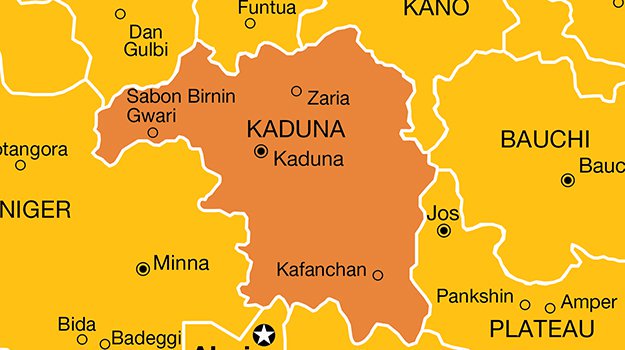
The nefarious activities of bandits in Zaria and its environs are walloping. It was in 2019 that, for the first time, I heard about the kidnapping incident in Zaria, which saw the abduction of Malama Rabi Shamaki, a lecturer at the Nuhu Bamalli Polytechnic, Zaria. Since then, several such incidents have been reported in various places in the ancient city. However, on several occasions, the security operatives had been said to have thwarted their evil plans of unleashing mayhem on the people.
The operatives of Kaduna State Police Command, while on surveillance patrol on 23rd December 2022, intercepted motorcycle riders with suspicious concealed bags in Basawa, Zaria LGA of Kaduna state.
In a bizarre circumstance, upon being stopped for search, one of the riders jumped down and escaped, heightening the operatives’ suspicious minds.
The timely intervention of the police has led to the successful recovery of Four(4) AK-47s, three hundred and forty-four (344) live ammunition, and ten (10) telephone handsets and charms from the other suspect.
The courageous efforts of police and other security agencies in taming the security challenges in Zaria and its environs have undoubtedly yielded the desired result. However, much still needs to be done to arrest the deteriorated and fragile condition.
Collaborating with security agencies to weed out the criminals in the communities is paramount. Hence, the need for people to be security conscious and proactive in reporting criminal elements to the appropriate authority.
In the meantime, I would like to appeal to the residents of Zaria to report any suspicious characters to the police or other security personnel. Helping security personnel in intelligence gathering will go a long way to nip in the bud the intended evil activities of bandits and other outlaws roaming in the nooks and crannies of the community.
Safiyanu Ladan wrote from Zaria via uncledoctor24@gmail.com.
Three ways that help Nigeria in alleviating her poverty
By Dansaleh Aliyu Yahya
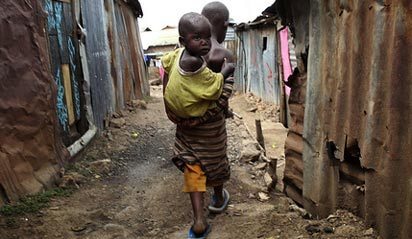
Nigeria, as a country of more than two hundred million people, must get some or many ways to eradicate poverty from both angles. There is no poverty, so almost everybody in the country is employed. As a result, we will be free from hunger, with good health and well-being. For that, I’m going to point out some points that might end poverty in our blessed country of Nigeria.
They are as follows:
1. Voting for good leaders: This is the essential part of all the ways I thought of because we all have in our minds that leaders can make every impossible possible in their respective regions. Without their help, no one could do anything. The work of advisors and analysts is to tell them “this” and “that” should be done in such ways and places. Leaders are responsible for making it happen attractively. If they don’t want to do it, it will never happen. You know!
Good leaders might be the only leaders that will help give their citizens a happy atmosphere that will be good for them to live in by creating awareness, employment, and bringing out important activities close to their people. Else, the people will be maltreated. For that reason and more, we need them to take in eradicating poverty from our country.
2. Creating awareness on the importance of skills and small businesses: It is a good response for the government, educators, and entrepreneurs to help their country in bringing an end to poverty by fixing a time and date to lecture the citizens, especially the youths.
This awareness method will give people enough knowledge to understand that they need to learn some skills and start something new, to earn and live in a good conditions. From there, they will improve their lives, fight hunger, and have good health. In addition, the government should invest in giving the attendees working tools or capital so that they start immediately after they leave. To prevent losing the ideas they learned in the place, due to a long time.
3. Providing centres that will teach technical skills to people: this method will help fight poverty in our country. People will learn hand skills that will help them in building their businesses. If they have this, they will not stand redundantly without anything. I am sure that they will use the skills learned from the centres and even be able to employ others in the community.
In addition, the government can build good relationships with companies so that the companies will help them by employing some part of the community in such a way that they will put hand in hand in fighting poverty together.
These ways and many more could alleviate poverty, resulting in the sustainable development of zero hunger, good health, and well-being.
May we have peace and tranquillity in our minds, stomachs, and pockets, amin.
Dansaleh Aliyu Yahya wrote via dansalealiyu@gmail.com.
Chinese woman converts to Islam in Nigeria
By Ibrahim Mukhtar
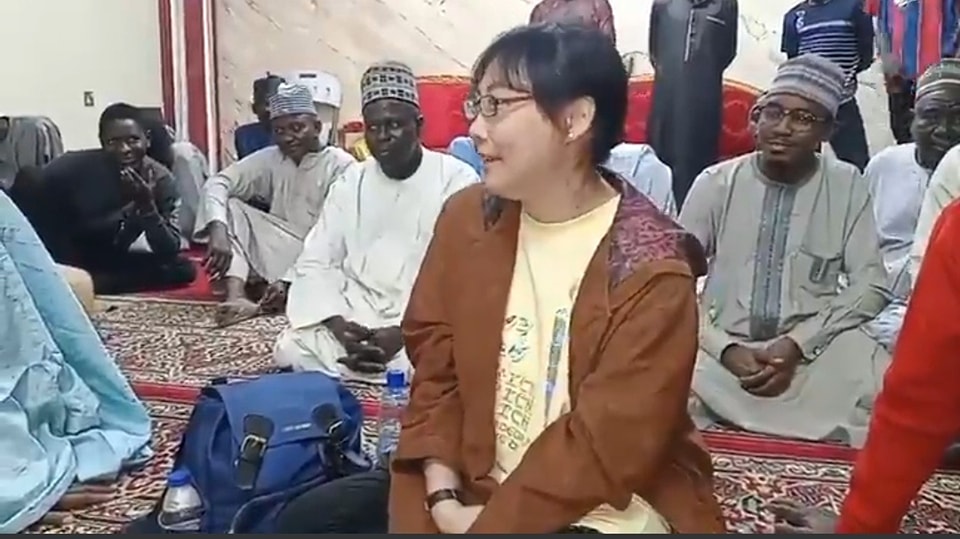
A Nigeria-based Chinese woman accepted the religion of Islam at the palace of the Emir of Machina in Yobe State.
The woman who was at the palace with her fiancé explained that no one forced her to accept the religion—she wanted Islam on her own conviction.
After she took the Kalimatu al-Shahada from His Highness, the Emir of Machina, she was asked to choose the name she wanted.
The Daily Reality learned that she chose “Fatima” based on the advice given to her by her fiancé.
Fatima was observed to have been happy and relaxed alongside all those with her in the Emir’s palace.