


2023: Buhari working for PDP, says Ganduje
By Ahmad Deedat Zakari
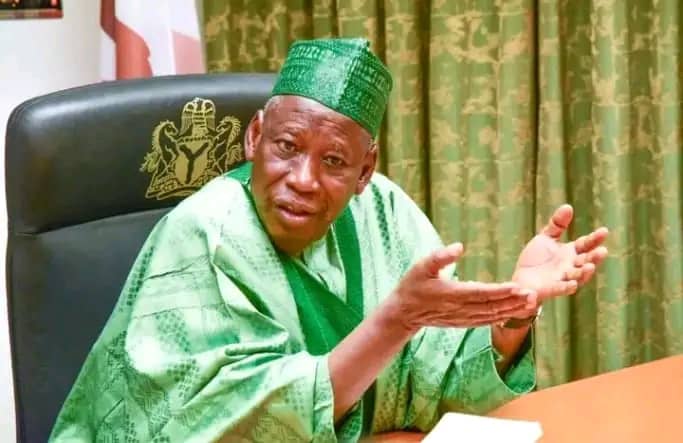
Kano State Governor, Abdullahi Umar Ganduje, has accused President Muhammadu Buhari on working for the defeat of the All Progressives Congress (APC) in the forthcoming presidential election.
In an audio recording, Ganduje was quoted in Hausa saying, “President Buhari should remember that for several times he was trying to contest Presidency but he could not make it until there was an alliance , but now after enjoying everything , he turned back against the same democratic system that saw him to office.”
This is coming from Ganduje after Buhari’s address to the nation on Tuesday. Buhari had in his address poignantly refused to obey the Supreme Court order on the extension of time for the use of old Naira notes. A move Ganduje and other APC stalwarts believe jeopardises their chances in the February election.
Ganduje then criticised and counselled the president thus: “I wonder why the President is hellbent in making the same Party that helped him to win elections lose out, what did we do to him that he is this ignorant on several advice forwarded to him.”
“This same Buhari he contested again and again but he couldn’t win not until there was an alliance, now he wins and win again for the second term, but now that he is living, he wants to cripple the same Party that brought him to power why?
“This Currency Swap Policy, why didn’t the President bring it seven and a half years ago or after elections, but now one must be compelled to think that there is an ulterior motive in the whole thing.”

Election safety advice
By Abdurrazak Mukhtar
As the election season draws near in Nigeria, it’s imperative to prioritise one’s safety. Political elections, although crucial to democracy, can often lead to tension and conflict. Thus, citizens must be aware of the potential dangers and take necessary precautions to ensure their well-being.
Safety should always come first, and in times of political elections, it’s of utmost importance. By staying informed through reliable news sources, avoiding large gatherings and protests, and following safety advice provided by local authorities, individuals can take control of their safety during such times.
For instance, it’s recommended to steer clear of crowded areas during demonstrations or political rallies and to dress in a manner that doesn’t identify one as a supporter of a particular political party.
Moreover, respecting the rights of others is a fundamental aspect of ensuring a peaceful and safe election season. Political differences should never be used as an excuse for violence or intimidation, and individuals must refrain from engaging in illegal activities. This not only protects the safety of others but also helps maintain peace and stability in the country.
In conclusion, as citizens gear up for another election season, it’s essential to prioritise one’s safety. By being aware of the potential dangers, following safety advice, and respecting the rights of others, individuals can participate in the democratic process peacefully and responsibly.
Therefore, let’s work together to promote harmony and ensure that the elections in Nigeria are conducted in a fair, transparent, and safe manner, securing a peaceful and stable future for generations to come.
Abdurrazak Mukhtar can be contacted via prof4true1@gmail.com.

Nigerian youth and their quest for high-paying jobs
By: Muhammad Danjuma Abubakar
On the weekend, while scrolling through my phone casually, I clicked on the Google App to open the search box. I stared for a while as I had no question in mind. Although, it is advised that one should have a specific question in mind before attempting to consult the internet; to enable the user to save precious time and better organisation the resources therefrom.
As I was thinking about which question was most relevant to the search, I suddenly typed ‘best paying jobs that can earn me millions’ as my query in the search box. This took a better part of my time for hours as I kept searching through Google – the most admired search engine today, to find out the ‘best jobs’ that could earn a person millions, whether in naira or whatever currency.
The outcomes from the search engine result pages (SERP) could not cease to amaze me. The more results I got, the greater my curiosity for further searches as I kept re-phrasing the queries.
While on this, I also remembered that our society today is such that it overrates affluence and attaches respect to any ‘rich wheat’ regardless of whether one can genuinely justify the means to its acquisition.
Because of these, most young Nigerians wish, in a resolute manner, to find a professional career in jobs that could offer them huge pay to enable them to build a big house and get a car or cars of choice, among other acquisitions in the shortest time possible. These are society’s key indicators for measuring success in life or otherwise.
Emphatically, it is because of the perceived belief that studying certain courses in the university could translate more in good paying jobs that some parents impress it upon their children to forfeit one university admission for another or go to a greater length such as using monies to get the desired choice of course(s) of study for their children.
In one of my recent articles titled ‘Our Schools, the rots and dangerous implications’, I discussed some of these unfortunate realities and how best to tackle them. That aside.
As I realised further the fact that our youths today do not choose a career or job that aligns with their interests but those ones that pay more, I took my research more seriously as I began to write down the results from my search queries. And at the end, I got massive results from my google searches.
Good-paying jobs could fetch you millions are many. Yet, I was shocked to see that most jobs I had expected to find, considering the perceived potential of the courses leading to those jobs, did not make a list, and those least expected were on the list. How ironic!
Some list of the careers/jobs I expected to find are: Politics, Aeronautical engineering, Pilot, Photography, Data visualisation, Water resources engineering, web development and Planning Officer. Others are shipping and logistics, music, and filmmaking, among others. I did not find any of these.
For clarity, my expectations were well placed. Because for example, politics is one of the most desirous ambitions, particularly in Nigeria, where even a ward councillor easily amasses wealth within his shortest period in office. Most Nigerians, especially those who wish to feel they belong, desire to win an elective office.
Another notable example is photography. It is estimated that over 20,000 events take place in Lagos State every day, according to the vanguard newspapers report.
Photography has become a speciality that has stood the taste of all times and has proven to be a money-spinning venture. If you must know, politicians of class, businessmen, top government functionaries and blue-chip organisations now have trained photographers in addition to their spokespersons and media teams. This is why even some universities, particularly overseas, now run degree and even higher degree programs in modern Photography.
Similarly, the job of being an aeronautical engineer or pilot could also be very rewarding. According to statistics from Statista, the number of current active commercial aircraft is more than 25,000 globally, with Africa accounting for 888 of this number, with an annual growth rate of no less than 3.8%.
But, the only very financially fulfilling jobs, according to Google, despite repeated searches, were a Sales manager, Chief executive officer, Financial manager, Software developer, Lawyer, Investment Banker, Negotiations expert, Neurosurgeon, Psychiatrist, Human Resources Manager, Risks Analysts among others.
The best cure for ignorance is a constant search for knowledge. So, I took my research further this time by picking each of these jobs one at a time to ask google again ‘why they were the best-paying job. I wondered, this time, why I kept receiving tips on ‘how to be successful and earn better pay’ instead.
Put differently. My search results indicated that there are key conditions for you to excel and eventually earn more in these jobs earlier regarded as the ‘most financially’ rewarding. Google listed the conditions to include; passion, staying evergreen through the search for new ideas, and competence, among others.
At this point, it is reasonable to believe that any legitimate job and vocation is a best-paying job and could make you a millionaire when you imbibe certain principles.
Therefore, instead of seeking the best-paying jobs, the youths must rather seek a job that aligns with their purpose and personality in life, seek to become like a ‘bunch of keys’ with broad ideas and creativity in their chosen career and seek to work to learn more, not to earn more; because it is said that, when you work more than you earn; you will later earn more than you work.
Muhammad Danjuma Abubakar lives in Minna, Niger State. He can be contacted via muhammadcares4u@gmail.com.
‘Banks lost over N5bn to protesters due to naira scarcity’, Association cries
By Muhammadu Sabiu
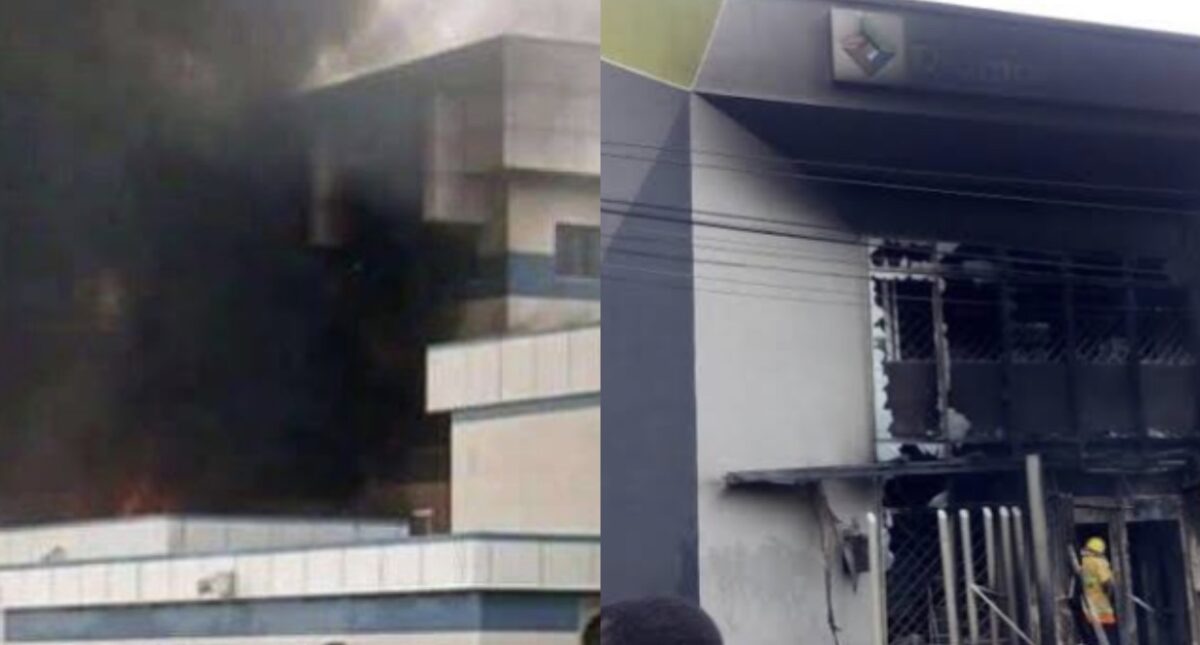
An umbrella organization for banking sector employees, the Association of Senior Employees of Banks, Insurers and Financial Institutions, revealed that banks lost N5 billion as a result of demonstrators’ attacks on assets due to naira scarcity.
Oluwole Olusoji, the group’s president, revealed this on Thursday in Lagos.
He also lamented that the attacks by demonstrators had affected 17 commercial banks.
He explained that in addition to attacks on bank employees, bank premises and ATMs were set on fire.
He said, “We call on the public to desist from threatening or attacking our members or destroying our properties as they will be only proverbially cutting their noses to spite their faces. We can only give what we have been provided with and nothing more.”
Philip J. Jaggar: The exit of another giant Hausaist scholar
By Prof. Abdalla Uba Adamu
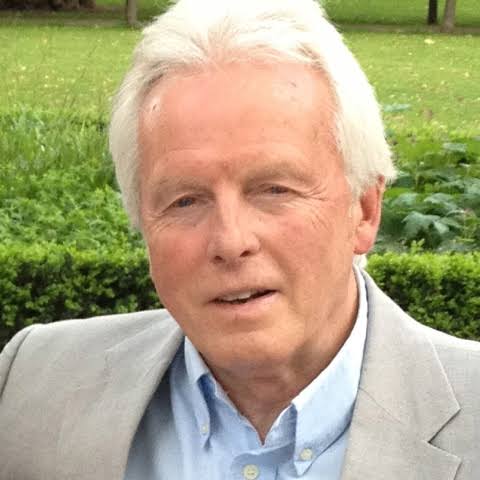
I first met Philip Jaggar in March 2008 at the School of Oriental and African Studies (SOAS) when I was engaged as the cinematographer for a visit, mediated by the British Government, of Sheikh Dr Qaribullah Nasir Kabara of Kano, to various places in the UK, including the University of London.
While I knew of Jaggar (although never having met him before), the rest of the team was pleasantly surprised by his total command of the Hausa language (and inner city Kano Hausa at that) – and his absolute refusal to respond to any question except in Hausa. The SOAS meeting brought together an impressive list of scholars to receive Sheikh Qaribullah. These included Graham Furniss, Dmitry Bondarev (specialist on Hausa handwritten Warsh Qur’anic manuscripts of Hausaland) and Philip Jaggar himself. It was a very pleasant encounter, full of banter.
My next encounter with him was later in November 2008, when I was commissioned to deliver a lecture at the Universität Hamburg. Jaggar had taught at the university, and I was honoured he attended my public lecture. Only two meetings, but he treated me like a long-lost friend, despite the eleven-year age gap between us. I was also elated when he told me of his interest in my works which at that time were beginning to gain traction in media and cultural studies. It was our last meeting, but very memorable for me due to his simplicity, love for Kano and absolute devotion to Hausa studies. He taught at Bayero University Kano from 1973-1976 and had pleasant memories of his experiences.
Jaggar’s most famous and highly acclaimed book is simply titled Hausa (John Benjamins, 2001). It was considered a classic comprehensive reference grammar of the Hausa language spread over sixteen chapters which together provide a detailed and up-to-date description of the core structural properties of the language in theory-neutral terms, thus guaranteeing its ongoing accessibility to researchers in linguistic typology and universals.
While Jaggar, or Malam Bala as he preferred to be addressed when he was in Kano, was known for his immense contributions to Hausa grammar, I interfaced with his work on the ‘maƙera’/blacksmith industry of Kano. Jaggar was the first to provide a comprehensive study of the blacksmith industry in Kano. His landmark book, The Blacksmiths of Kano City: A Study in Tradition, Innovation and Entrepreneurship in the Twentieth Century (Rüdiger Köppe, Cologne 1994), brought out the honour, dignity, creativity, aesthetics and the technology of the metalworking industry in the heart of Africa. The blurb of the book summarizes this amazing work:
“The present book examines the factors involved in the expansion, during the colonial and post-colonial periods, of a traditional pre-European craft. It discusses the art of blacksmithing in Kano City, northern Nigeria, and its eventual conversion into a modern metalworking industry. In doing so, it challenges the widely-held and simplistic assumption that such traditional professions declined before the economic and technological onslaught of colonialism.”
For me, the book provides a fascinating and ethnographic picture of the industrialization of the inner core city where I spent the early years of my life. It vividly brought to life the alleyways, the people and the entrepreneurial focus of the various wards in the city. This alone is enough to endear a reader to the book, even without the fascinating focus on the blacksmithing industry. I was able to snatch a copy in a bookstore at the University of Maiduguri in 2003 at ₦800 – barely 2€ now, but the publisher is currently selling it for 24€, about ₦12,000.
If, and only if, someone in the policy circles of the Kano State government of the day had taken note of the book, our maƙera would have received a boost and been incorporated into the development agenda of a national creating a synergy between its creative proto-industrialists and modernity.
When he celebrated his 75th birthday in 2020, many of his colleagues paid a lot of glowing tribute to him. Now that he has sadly passed away, those tributes remain etched in stone. He will be surely missed by hundreds of his colleagues and thousands of Hausa students who benefitted, directly or indirectly, from his extensive scholarship on the Hausa language.
Tribute to Philip Jaggar (2020)
https://study.soas.ac.uk/tributes-to-philip-j-jaggar/
About Philip Jaggar
https://study.soas.ac.uk/jaggar-hausa-champion-soas/
Various scenes with Phil Jaggar and the OP, as well as with Sheikh Dr Qaribullah Nasir Kabara’s team
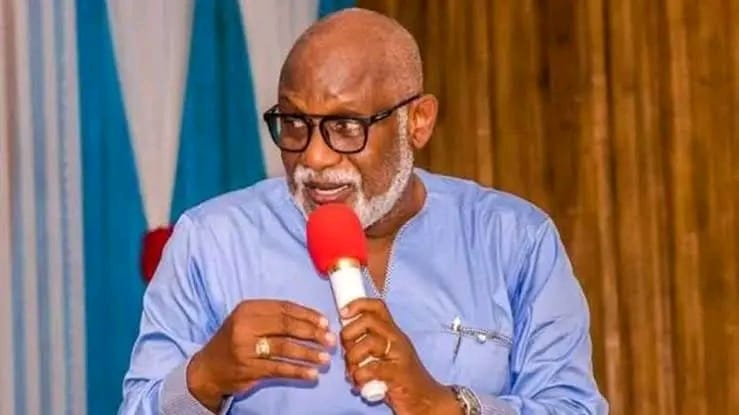
2023 Elections: Naira swap threatens APC chances, Akeredolu tells Buhari
By Muhammadu Sabiu
The governor of Ondo State, Rotimi Akeredolu, states that the All Progressive Congress’ (APC) popularity has been harmed by fuel and naira scarcity.
Akeredolu begged President Muhammadu Buhari to give the Governor of the Central Bank of Nigeria (CBN), Mr Godwin Emefiele, the appropriate instructions to reverse the naira redesign policy right away.
He said this while meeting with members of the All Progressive Congress (APC) Presidential Campaign Council (PCC), led by Seyi Tinubu, the son of the party’s presidential candidate, Asiwaju Bola Tinubu, in Akure, the capital of Ondo state.
He said, “We have a problem we are facing in this country today. Our rating as a party is not that favourable.
“Let’s not deceive ourselves. Must it be now that we will have this financial policy?
“How? Fuel and everything? Things are not easy. This policy is not right at this time. It should be reversed.
“Reserve it and tell CBN that we are reversing it. Let old, and new notes co-exist.”
So far, there have been reports of Nigerians taking to the streets to protest the scarcity of naira notes, leading to the burning down of some bank branches in Delta State.
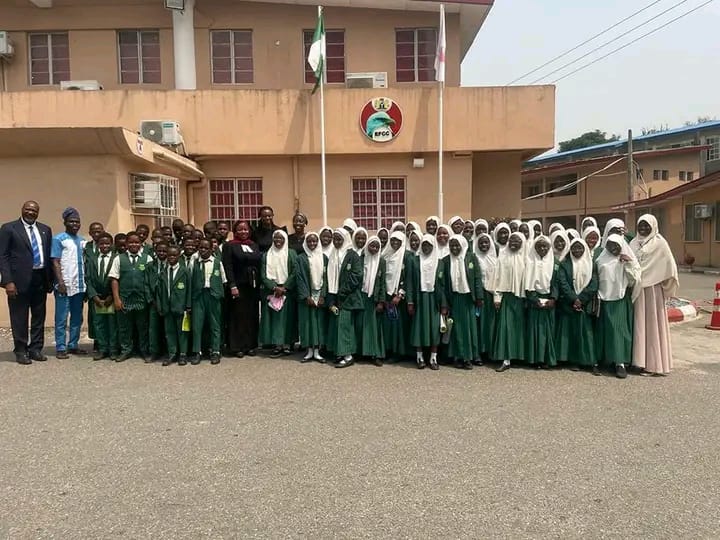
EFCC to inaugurate Integrity Club in Lagos college
By Ahmad Deedat Zakari
The Economic Financial Crimes Commission (EFCC) is set to inaugurate the Commission’s Integrity Club in a Lagos secondary school.
On Wednesday, the Lagos Command of the EFCC said the inauguration of its Integrity Club in Crescent College, Lagos, is in line with its strategic objectives to continuously enlighten and reorientate the youth about the menace of economic and final crimes commission.
The EFCC made the promise to the students during the former’s visit to the Lagos Command of the EFCC.
Addressing the students, the Deputy Zonal Commander, Lagos Zonal Command, Emeka Okonjo, urged the students to join the EFCC Integrity Club. He said joining the Club affords them an opportunity to become ambassadors of the Commission in the anti-graft campaign.
He said, “We want you, the leaders of tomorrow, to join in the campaign against economic and financial crimes and become change agents in your environment, schools, churches and mosques.
“We want you to join hands with us to tell everyone that integrity, honesty and hard work are the sure routes to living a successful life”.
A representative of the school, Shukrah Odunola, expressed profound gratitude to the EFCC for honouring the school invitation, adding that the lunch of the integrity club in the school would go a long way in ensuring that the students “are enlightened on the consequences of corruption in the society and Nigerian as a whole.”
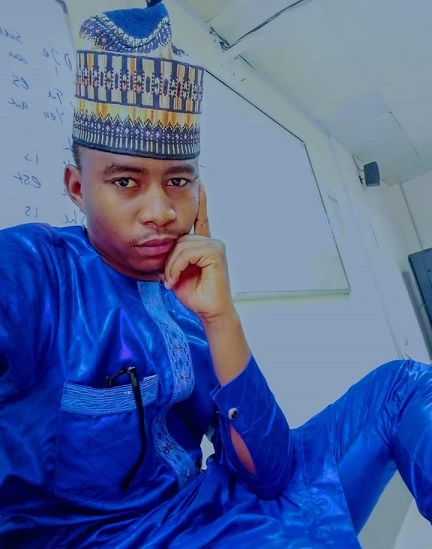
Are deaf people really aggressive?
By Zulkifil Aminu Adam
Over the years, people with hearing loss, primarily those who cannot speak, particularly the uneducated ones, experience the stereotype of being naturally aggressive. And that’s nothing but a misunderstanding that continues to remain despite continuous awareness against it.
The terming of deaf people as aggressive is not only done by ordinary people but also by lecturers, doctors, and even special educators. And as a matter of fact, the absence of a psychological approach in how people reflect on this matter leads them to conclude so grossly incorrect.
Imagine you cannot hear and you cannot talk. And you’re living in a community that has deprived you of the privilege of effective communication and self-expression, given the fact that nobody knows how to communicate with you. So you will surely be lonely and depressed. And then an incident happened where you were maltreated and stigmatised.
Psychologically, people naturally react and respond to treatments directly to indirectly. They speak and complain to defend themselves and their dignity when mistreated. But you’re deaf and can’t open your mouth to exercise self-expression. You can’t say, “I don’t like how you treat me. Please, treat me with respect.” At that point? What would you do?
You will think of what to do to ensure the person who maltreats or stigmatises you learn a lesson. A deaf person has three options: exhibiting frustration or using physical violence to respond to the treatment they received, and the third option is crying. The weak do the last chance because that’s the only thing left for them. They will always look for a language that the people who maltreat them will understand, i.e. crying, showing their frustration, or applying violence.
Deaf people are not aggressive. Instead, they use aggression as a defence, a means of self-expression, or a way of showing their inner disapproval because they often have no other means of communicating their feelings to people who don’t have a genuine knowledge of the deaf or sign language.
As long as deaf people can effectively communicate and have a mutual understanding with a person, the person will surely realise that they are no different from normal people who possess various traits, both positive and negative.
The only thing the Deaf needs from their family, colleagues, and society is attention and understanding. And these two require the presence of effective communication. For this reason, the Deaf continues to spread the knowledge of sign language and continuously create awareness and advocacy, for they know that the most powerful method for eliminating the conflicts between them and normal people is to connect both with the wire of communication. It is to bridge the communication gap that disconnects the two communities.
I have talked with different deaf children and older ones regarding their stay with their families. All of them expressed a disheartening amount of loneliness and anxiety, the cause of which is the iota of attention they receive at home that is inadequate and depressingly isolating, harming their lives. Yet, at the same time, it stays unnoticed by their family members.
Moreover, when deaf family members attempt to bring it up, they hardly get the attention they expect. Even if they do, once another family member interrupts, that’s always the end of the conversation. Their effort to retrieve the attention that deviated from them to another family member often fails, making several deaf family members give up on discussions with their parents and siblings.
Zulkifil Aminu Adam is a 100-level student at Bayero University, Kano. He can be reached via zulqeepil19@gmail.com.
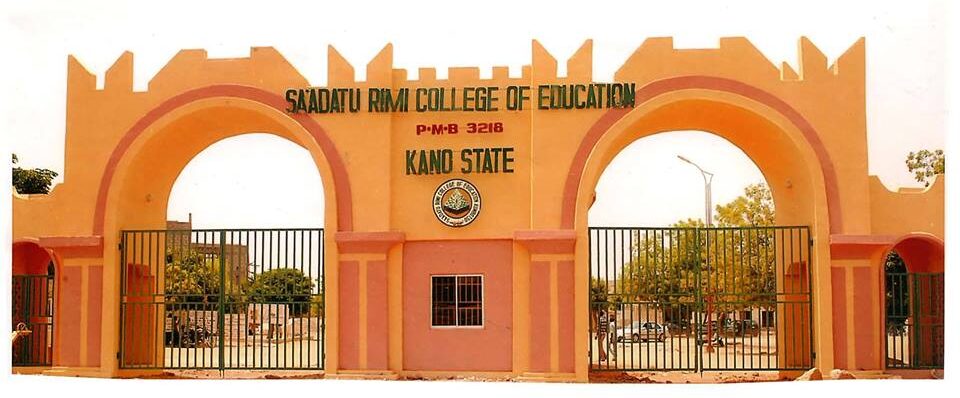
FG upgrades Sa’adatu Rimi COE to university
By Ahmad Deedat Zakari
The National Universities Commission ( NUC), has approved a new university for Kano State.
Consequent of the approval, Sa’adatu Rimi College of Education, Kumbotso is now a university of education.
On Tuesday in Abuja, the Executive Secretary of NUC, Prof. Abubakar A. Rasheed, presented the letter of recognition of the institution to Kano State Governor, Abdullahi Umar Ganduje .
Ganduje said, the new university was part of his administration’s efforts to meet the growing demand for education in the state.
According to him, the university, which is the third under Kano State, has 116 lecturers with PhDs.

Nigerians lament as MTN suffers service outage
By Muhammadu Sabiu
Service outages were observed by some MTN subscribers throughout Nigeria.
It was learned that the subscribers were unable to make a phone call, use the internet, and SMS services offered by the mobile network operator.
The telecom provider expressed its regret for the inconveniences in a tweet that read, “Due to an unexpected technical issue, some customers have difficulty using our services at this time.
“Work is ongoing to resolve this issue as quickly as possible.
“We regret all the inconveniences this may cause.”