
Social media addiction: A quick take
By Muhsin Ibrahim
I am in my late 30s. However, I sometimes struggle to minimise my presence online. That is even though being online is part of my main job (thanks to digital ethnography) and my ‘side hustle’. Often, one or another thing on the internet will take your focus away, and before you know it, you waste quality time doing nothing important.
According to reports, TikTok rolled out new screen-time limits for teens yesterday to help them reduce their addiction to the video-sharing platform. Under-18 users will get an alert when “they hit an hour of daily scrolling. To dismiss it, they’ll have to enter a passcode.” Unfortunately, this may not help much because kids know how to navigate these restrictions. For instance, they can fake their ages.
Folks, select whom you interact with on and off social media carefully. Avoid toxic people even if they are ‘influencers’. If their content continually disturbs you, unfollow, unfriend, or even block them. Don’t seek people’s validation; learn to ignore and tolerate trolling.
Perhaps more importantly, remember that there is a life beyond social media and outside the internet in its entirety. Live it very well. It’s, in fact, the real deal.
Muhsin Ibrahim lives and works in Cologne, Germany. You can contact him via muhsin2008@gmail.com.
Changing the poor as a strategic paradigm against poverty
By Lawi Lawal Yusuf
The early solutions to poverty were based on the premise that poverty is an aspect of inequality and could only be solved by restructuring society. As a result, most of the policies explicitly aimed at its reduction were developed from the stratification theories. But quite the contrary, from the late 1960s, many social scientists felt that the war on poverty had failed.
Despite governments’ energy and resolve, the poor remained stubbornly poor. As a result, some sociologists of welfare increasingly predicated that poverty is merely a problem of the poor, and solutions must be crafted on the assumption that the issue of poverty lies with the poor themselves and need cultural reorientation.
Radical sociologists object to the welfare state by taking a more radical right-wing view than the left-wing socialists and social democrats as they argue for a freer, more open and more competitive economy and minimal state intervention. They were critical of much state intervention in welfare. They saw it as having a negative impact by discouraging self-reliance, creativity and entrepreneurship and promoting the dependency culture as people rely too heavily on state hand-outs.
Also, they further argued that as social problems progressively increase, the welfare state would become more and more expensive, leading to an excessive tax burden on private enterprises which prevents reinvestment. Hence, undermining economic growth and development.
Alternatively, they provided new impetus to changing welfare along neoliberal lines by defining poverty as a way of life and therefore developed solutions from the culture of poverty theories.
These three trends – the progressive increase of state financial burden coinciding with the stupendous rising cost of welfare administration, which had not equally extrapolate poverty. The emerging dependency culture on the welfare state results in what we might call a poverty trap, where the poor feel contented with the benefits available than taking low-paid work, giving them less incentive to work, which undermines their self-supporting abilities – have led to a pro-capitalist line of critique of the welfare and an alternative policy approach.
Arising in both the academic and policy fields, this critique and alternative approach pursue more explicitly a cause that prioritises individual initiative, economic competitiveness, encouraging responsibility and rewarding effort. But indeed, not isolated from a context where social justice and general fairness are being institutionalised.
The philosophical underpinning of this perspective is that even though all members of society are entitled to a reasonable minimum living standard regardless of their ability to work, welfare involves the moral expectation that people must take responsibility for their behaviour and the jobless must look for a job tirelessly and must accept any suitable one. Furthermore, individuals must be empowered to seize control of their future by being competitive, industrious and entrepreneurial, while the state is obligated to open up equal opportunities.
In context, these ideologues see poverty as a result of cultural influences on poor’s behaviour. They can be tackled by counteracting such behavioural dysfunction by changing faulty attitudes with universal moralities such as achievement orientation.
Thus, policies designed on this strand of thinking aim to undo the presumed effect of the culture of poverty by fostering ambition, hard work, initiative and motivation. Programmes are designed explicitly to change the social, psychological and vocational shortfalls of those bred to a life of poverty and are socialised to become more responsible and to remove such presumed deficiencies and bad attitudes by instilling work habits, character building and determination.
In the same vein, policies of job creation and encouraging people back to work and other measures that make work more attractive are introduced so that idleness could be significantly reduced to cut unemployment and increase the number of people working. Similarly, persons with defects are assessed to determine whether they are fit enough to do some work and in a position to help themselves, allowing them to fend for themselves.
It is gratifying to note that under this spectrum, measures coordinated to fight poverty are not formulated to displace it from society by providing more generous universal services (such as transport and social housing) or providing the poor with sufficient income to raise them above the poverty threshold, as direct aid is the least popular approach. Such brunt of benefits only cushion the misery produced by poverty but couldn’t dissipate it altogether. Contrarily, it was hoped that changing the poor would make them upwardly mobile on the social strata. To perfect this idea, the poor need a hand-up, not a hand-out to always depend on.
They needed the support and opportunities to help themselves rather than simply count on the state. And they must be willing to take these vantages once they have the education, training and work experience, while some have to be compelled to take advantage of the opportunities. In almost all circumstances, as experience has shown, significant benefits to the poor discourage many from taking a paid job.
Efforts are made to move away from universal benefits and services by reducing the huge government expenditure on welfare to a minimum for only those with genuine needs to avoid fraud. At the same time, resources are redirected towards training and development of the poor and other extreme societal needs. This helps the poor turn enterprising and therefore take care of themselves.
The solution to poverty rests on a broader range of coordinated measures. Therefore, it’s more efficacious to have an effective welfare state that cushions the harsher edges blunted by capitalism while rewarding individualistic efforts, encouraging responsibility and ensuring equal opportunities.
Lawi Auwal Yusuf wrote from Kano via laymaikanawa@gmail.com.

Conversations we must have with the President-elect
By Abubakar Suleiman
The period preceding the presidential elections was greeted with intense and unrestrained emotions, outright bigotries and zingers from political opponents and supporters alike, so much that discussing issues that really matter was out of the table.
Public pundits who tend to raise their voices or pen down their thoughts on the challenges ahead got their ideas or pressing questions drowned amidst fierce online arguments. Discussing the manifestoes of the parties of the major contenders took the back seat while bickering on variables like the contestants’ age, health, religion, region, and ethnicity became the front burner across many platforms.
As the wave of the electioneering is beginning to disappear and the elections have been won and lost, I think we can start to ask the president-elect, where do we go from here? His job has been well cut out for him. And it will definitely not be an easy ride, and we need to be realistic.
Contextually, should subsidy finally go or stay? Should education at tertiary institutions be subsidised or commercialised? How do we push the country towards a knowledge-based economy? How will the poor access quality basic and tertiary education? How do we fund deficits in the power sector to make industries wake up? Can we change the security architecture? Should state police be created? Should we continue to maintain two chambers in the National Assembly? And how do we source the fund to run the government? To what extent should we play politics with governance? Can all these and many more be done in 8 years? The questions are many.
The election and its aftermath exposed the fragile unity between the regions and religions that made up this geographical space called Nigeria. Therefore, as a matter of urgency, the President-elect should hit the ground running by reaching out to aggrieved regions and their leaders by assuaging their real or imagined fears and grievances.
The problems of the country are too enormous to be dragged back by agitations and the feelings of being left out. Therefore, an inclusive government and approach to governance have never been this necessary.
Security
Just when President Muhammadu Buhari was about to claim victory over Boko Haram and insecurity in the North East, unprecedented spates of killings, kidnappings and banditry reared their ugly heads in Northwestern Nigeria.
A huge swathe of land became inaccessible, many major roads were deserted, farming nosedived, and a humanitarian crisis ensued. With these problems, many people found themselves in the yolk of poverty. Others became homeless, and fangs of hunger rendered many others dead.
The security structure is in dire need of an overhaul. Community policing, intelligence gathering, using a non-kinetic approach and the continued procuring of more weapons cannot be over-emphasised. The procuring process of these weapons should be monitored to evade financial abuse by unpatriotic elements in security management.
Personnel on the front line serving the country should also be motivated. A situation where underperforming service chiefs are rewarded with tenure extensions or a slap on the wrist should end with President Buhari.
Furthermore, I think decentralising the Police Force is necessary to curb the spread of insecurity across the country. State police is an idea that could be floated and established while strong laws preventing sub-national governments from abusing it should accompany such establishment.
Successive governments have failed to face and address the epileptic power supply problem headlong. A humongous amount of public funds have been infused into the power sector only to purchase more darkness for Nigerians. We had intermittent national grid failure with President Buhari. Many Small and Medium Enterprises (SMEs) depend on the power supply to fester as many others have yet to recover from the COVID-19 pandemic and cashless policy shocks and effects.
The state of the economy is scary. Unemployment has increasingly become high; inflation rates are biting hard; economic growth is sluggish; the country’s debt burden upsurged; the gap between the poor and rich has widened; and the conservatism of the Central Bank was thrown to the dogs by Governor Emefiele thereby making monetary and fiscal policies blurred.
These indices have been detrimental to the security and well-being of the citizens and their businesses. Therefore, the President-elect has a considerable responsibility to close the gap between the rich and poor through job creation, effective wealth distribution, social protection programs with measured outcomes and strengthened fiscal policies.
Subsidy
Only a few among the unlettered in Nigeria don’t know this word. Even those who cannot speak English have a name for it in their language. It is obviously no longer sustainable, as we even borrow to close budget deficits. However, oil is the most critical ‘social safety net’ for the poor in Nigeria; a tweak in its price is greeted with snag, suspicion and impoverishment.
The distrust between the leaders and the led has reached a crescendo, and the oil sector is marred with irregularities so much that we are not even sure of the amount of our domestic oil consumption. Therefore, critical infrastructure needs the money channelled into the subsidy to enhance economic diversification and gradual departure from over-reliance on oil.
And an excellent way to allay the masses’ fears that the money derived from the lack of subsidy might be squandered is through involving vital stakeholders like the Nigeria Labour Congress, Trade Union Congress, civil societies, sub-national governments, community leaders, and other relevant bodies. A comprehensive Key Performance Indicator or milestone should be developed and tracked by these stakeholders, and a project implementation and result delivery unit on the side of the Federal Government.
ASUU-FG Debacle
Another problem the President-elect will carry forward from President Buhari and even presidents before him is the ASUU-FG debacle that has refused to succumb to any pragmatic solution. Fake promises and insincerity on the side of the Federal Government and dogmatic or unbending approach on the side of the Academic Staff Union of Universities have made it impossible for the two to reach a sincere, realistic and practicable solution on the way forward.
Corruption
Plus, we are still battling corruption. Padding in the budget, red tape in the civil service, inflation of contracts and other forms of abuse of public office for personal gain are still with us. Corruption has basically been cancer eating up the already meagre and dwindling resources meant for economic growth, nation building and stability.
Corruption will not disappear overnight, but with the help of technology, building strong institutions and strengthening existing ones like the Judiciary will go a long way in minimising it.
The issues mentioned above and many more are parts of the conversations we should naggingly keep having with the President-elect, who will be sworn in as the President come May 29, 2023.
We should be less tendentious in doing so, but we should never relent in holding our leaders — presidents, governors and other elected or appointed public officers —accountable as humanly possible. The era of lack of communication and the body language that being our President is like doing us a favour should end with President Buhari.
I wish the President-elect, Asiwaju Bola Ahmed Tinubu, successful days in office. May Allah grant him firm political will and a competent team to drive good policies and push the country towards greatness. Let the conversations continue.
Abubakar Suleiman writes from Kaduna and can be reached via abusuleiman06@yahoo.com

Tinubu receives Certificate of Return as Nigeria’s President-elect
By Ahmad Deedat Zakari
The presidential candidate of the All Progressives Congress, Bola Ahmad Tinubu, has received the Certificate of Return as the President-elect of Nigeria.
On Wednesday, the certificate was presented to him by the Independent National Electoral Commission Chairman, Professor Mahmood Yakubu, at the International Conference Centre, Abuja.
Tinubu was accompanied by his beloved wife, Senator Oluremi Tinubu, Vice President-elect Kashim Shettima and a retinue of governors and party chieftains.
Tinubu had polled 8,794,726 votes to defeat his closest rival, Atiku Abubakar of the Peoples Democratic Party (PDP), who scored 6,984,520.
The Vice President-elect, Kashim Shettima, also collected his certificate of return alongside his principal.
NSCIA cautions politicians against dragging the country into anarchy
By Ahmad Deedat Zakari
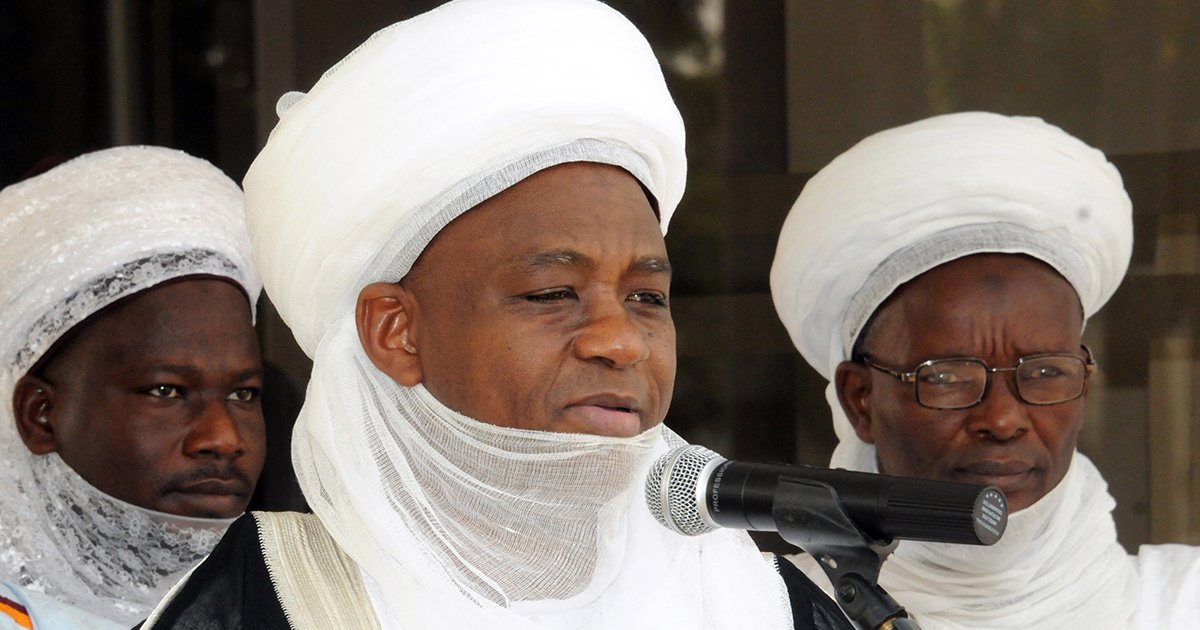
The Nigerian Supreme Council of Islamic Affairs, NSCIA, has cautioned political actors not to drag Nigeria into anarchy.
On Tuesday, the apex Islamic organisation gave the warning in a press statement jointly signed by the organisation’s Secretary General, Prof Salisu Shehu and the Director of Administration, Arch Zubairu Haruna Usman-Ugwu.
The NSCIA warned political actors to refrain from making unguarded and provocative utterances.
Part of the statement reads, “While reckless statements from inconsequential individuals can be easily ignored, this is not so of those from respected political leaders.”
“It is important that patriotic and well-meaning Nigerian leaders should support unrelenting adherence to process and procedure in the ongoing electoral process. This is because any inclination to unprocedural decision or action at this critical time is a direct call for anarchy which will not yield any positive outcome to the Nation.”
MURIC congratulates Tinubu
– NewsDesk
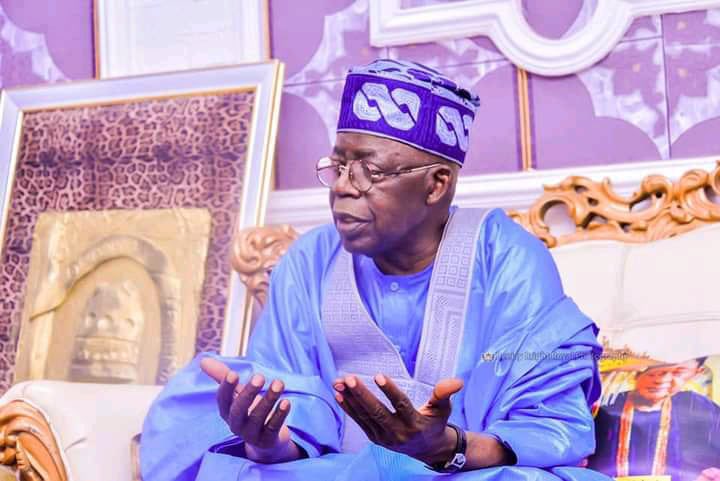
The Independent National Electoral Commission (INEC) has declared Bola Ahmed Tinubu of the All Progressives Congress (APC) the winner of the 2023 presidential election held on Saturday, 25th February 2023. Meanwhile, the Muslim Rights Concern (MURIC) congratulated the President-Elect and wished him two successful terms.
MURIC’s congratulatory message was contained in a press statement signed by the Executive Director of the Islamic human rights organization, Professor Ishaq Akintola, on Wednesday, 1st March 2023.
The statement reads:
“The Independent National Electoral Commission (INEC) has declared Bola Ahmed Tinubu of the All Progressives Congress (APC) the winner of the 2023 presidential election held on Saturday, 25th February 2023. Tinubu polled a total of 8,794,726 votes to defeat his closest rival, Atiku Abubakar of the People’s Democratic Party (PDP), who scored 6,984,520 to emerge second. Peter Obi of the Labour Party (LP) came third with 6,101,533 votes.
“First and foremost, we thank Almighty Allah for making Tinubu’s victory at the polls a fait accompli. Next, we congratulate the President-Elect, Bola Ahmed Tinubu, the Jagaban of Borgu, for this great feat, and we wish him two successful terms in good health, bounteous national prosperity, peace and stability. Bola Tinubu is, indubitably, not only the most eminently qualified for the position but the best well-prepared for it. His victory is, therefore, well deserved.
“We urge the President-Elect to remain focused on rebuilding Nigeria as he rebuilt Lagos and to stay in character by inspiring religious tolerance the same way he had always tolerated all faiths. We have no scintilla of doubt that Tinubu, who has been married to a Christian pastor for the past 40 years and led a happy marital life, will successfully manage a multi-religious entity like Nigeria.
“At this juncture, we heartily congratulate the First Lady Elect, Senator Oluremi Tinubu, for successfully nurturing a model macro home in a multi-religious microcosm called Nigeria.
“MURIC thanks the North for standing by Tinubu and for remaining faithful to their pledge. The Northern Region has proved to all and sundry that it is a region of honour and nobility. The strong statement that has been made with the trajectory of the presidential election is that the North is a reliable friend. The North has demonstrated the essence of Islam in terms of trustworthiness and fulfilment of promises. We are very grateful.
“We congratulate Yoruba Muslims for securing the presidency for the first time since independence. It is on record that three Yoruba Christians have occupied the post in the past. The victory of Tinubu, a moderate Yoruba Muslim, came as a fulfilment of the yearnings of Muslims in the region.
“We give kudos to INEC for doing a great and professional job. Professor Mahmood Yakubu will be remembered for his nonpartisanship. We call on Nigerians to support Tinubu’s government when it finally comes on board.
“We remind the opposition to accept the status quo because it is only Allah that picks leaders of men. Romans 13:1 says, ‘Let everyone be subject to the governing authorities, for there is no authority except that which God has established. The authorities that exist have been established by God.’
“The Glorious Qur’an 3:26 also says, ‘Say Oh Allah, Lord of all dominions! You give the kingdom to whom You will, and You take away dominion from whom You will, You exalt whom You will and abase whom You will. In Your Hand is all good. Surely You are All-Powerful.’
“We, therefore, charge the main opposition candidates to accept the wish of Allah, congratulate Tinubu and work together with the President-Elect in order to sustain the good work of President Muhammadu Buhari. This is not the time to dissipate resources on legal disputes. Nigeria needs peace and stability.
“MURIC congratulates the Yoruba people for Tinubu’s victory. Two great sons of Yorubaland, Chief Obafemi Awolowo and Chief M. K. O. Abiola tried it in vain, but today, another great son, Bola Ahmed Tinubu, a bona fide Yoruba and the greatest political strategist in Nigeria, has won the presidency. It is an achievement worthy of celebration by this great ethnic nationality.
“We, therefore, call on all the Yoruba people, regardless of religion, ideology and political leaning to rally behind Tinubu and to transform his ‘emilokannism’ (it is my turn) to ‘awalokanism’ (it is our turn).”
#CongratulationsJagaban #ThankYouNorth #WelcomeJagaban
Just In: APC’s Bola Tinubu wins 2023 Presidential Election
By Muhammadu Sabiu
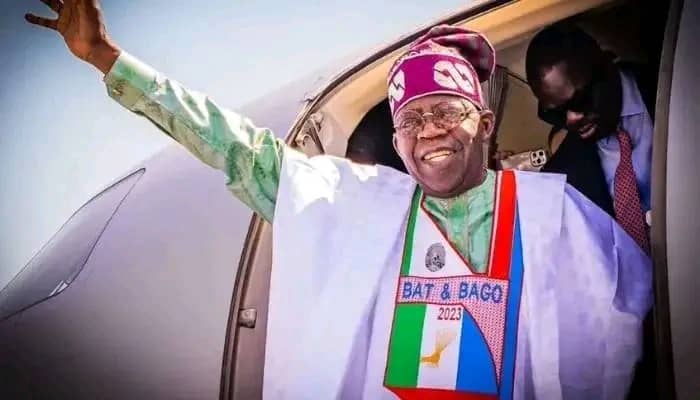
Asiwaju Bola Ahmed Tinubu, the candidate for the All Progressives Congress, has been declared the winner of the 2023 presidential election by the Independent National Electoral Commission.
After gaining 8,805,420 votes to win the election, Tinubu, a former governor of Lagos State, was named president-elect. In the wee hours of Wednesday, INEC Chairman Professor Mahmood Yakubu made the declaration at the International Collation Centre in Abuja.
Tinubu triumphed against rival candidates Atiku Abubakar of the Peoples Democratic Party, Peter Obi of the Labour Party, and Rabiu Kwankwaso of the New Nigeria Peoples Party.
The three front-runners for president each won 12 states, although Kwankwaso only won Kano State. Atiku, a former vice president and his closest rival, lost to Tinubu by a margin of no less than 1.8 million votes.
Other candidates vying for the presidency of the country, in addition to Tinubu, Obi, Atiku, and Kwankwaso, are Dumebi Kachikwu of the African Democratic Congress, Kola Abiola of the People’s Redemption Party, Omoyele Sowore of the Africa Action Congress, Adewole Adebayo of the Social Democratic Party, Malik Ado-Ibrahim of the Young Progressive Party, and Prof.
Christopher Imumulen of the Hamza Al-Mustapha of the Action Alliance, Sani Yusuf of the Action Democratic Party, Nnnadi Osita of the Action Peoples Party, Oluwafemi Adenuga of the Boot Party, Osakwe Felix Johnson of the National Rescue Movement, and Nwanyanwu Daniel Daberechukwu of the Zenith Labour Party are also on the list.
Ogun, Oyo, Ondo, Kwara, Ekiti, Kogi, Benue, Zamfara, Borno, Rivers, and Jigawa are among the states that Tinubu has won, while Atiku has triumphed in Bauchi, Yobe, Gombe, Kaduna, Kebbi, Bayelsa, Adamawa, Akwa Ibom, and others.
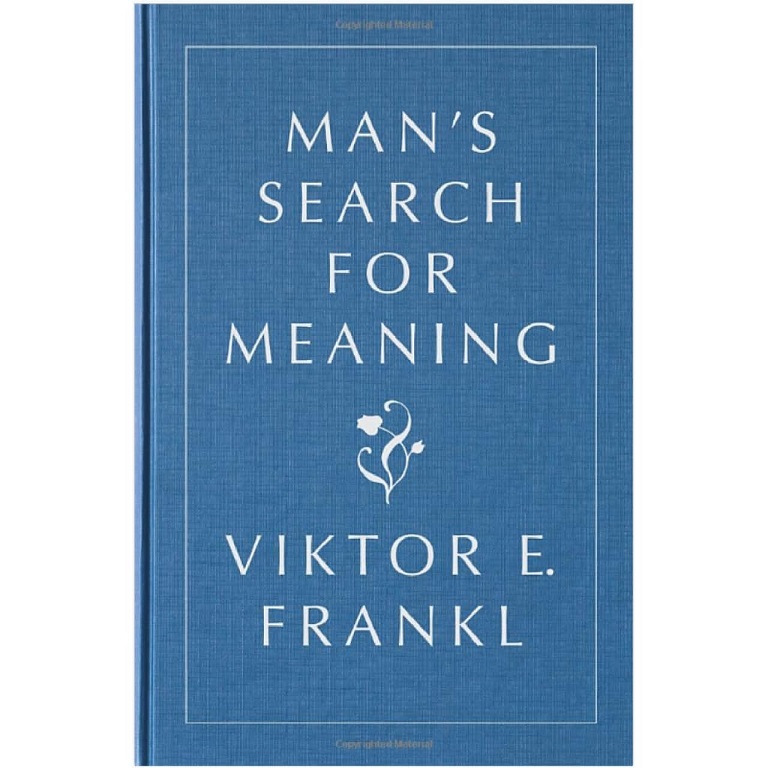
Book Review: Man’s Search for Meaning
By Muhammad Muzzammil Bashir
Think of a moment when you once found yourself in a situation where you were either physically, spiritually, or emotionally stressed, or both, where you could not help but give in and submit to your predicament, and all of a sudden, a flash of thought crossed your mind of the consequences of your choices, inspiring you to become decisive in your fate and bear with the situation while looking forward to its end until you are free from it.
The book, Man’s Search for Meaning, is the story of a psychiatrist, Victor E. Frankl, and his life at the Nazi concentration camp, envisioning and inspiring his colleagues to find meaning for life ahead while enduring the horrendous experiences of the camp.
The book accounts his experiences together with those of his colleagues’ lives at the camp, the sacrifices, the crucifixion, and the deaths of the great army of unknown and unrecorded victims, and of course, those who gave up on life and hope for a future; thus, they died less of lack of medicine or food than of lack of finding meaning or purpose to live for.
Frankl likened the experiences to assert that while we cannot avoid suffering, we can choose to learn how to cope with it, find meaning in it, and move our lives towards a renewed purpose.
The author asserts that life is not primarily a quest for pleasure, wealth, or power but rather a quest to find meaning in one’s life. He coined his ideas in theory called “logotherapy,” meaning that striving to find meaning in one’s life is the primary motivational force. The force usually comes from three possible sources: work, love, and in courage during difficult times.
A purpose-driven life is one that is enveloped in finding meaning that the mind holds subconsciously to pursue no matter the circumstances one is in. Obstacles may delay I but cannot deter that mind from pursuing its course. Fankl’s Man’s Search for Meaning is a masterpiece in this field, written in simple terms to comprehend its message easily.
Muhammad Muzzammil Bashir can be contacted via mbashir199@yahoo.com.
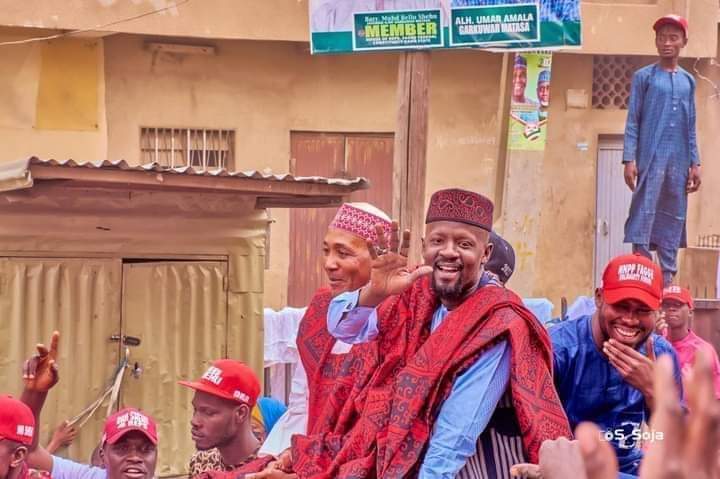
Group orders INEC to declare winner for Fagge National Assembly
By Ahmad Deedat Zakari
A pressure group, Voice of New Fagge, has demanded that the Independent National Electoral Commission (INEC) declare the winner of the Fagge Local Government’s National Assembly election held on Saturday.
Dr Muhammad Suleiman Abdullahi Fagge, the spokesperson of the group, made the request in a letter addressed to the chairperson of INEC in the Fagge Local Government Area of Kano State on Tuesday.
According to Mr Fagge, tension and uncertainty are brewing in Fagge over the refusal of INEC to declare the winner in the election on time.
He said: “We write in order to notify INEC about the growing tension, apprehension, anger and uncertainties brewing in Fagge Local Government’s communities over the recently concluded National Assembly elections. We also want to notify all the authorities concerned that the Fagge Local Government’s National Assembly election winner should be declared without wasting time.”
Mr Fagge also alleged that plans are underway by Hon. Aminu Suleiman Goro to increase the number of cancelled votes in order for him to comfortably thwart the will of the electorates.
He said: “There’s an allegation that Hon. Aminu Suleiman Goro, who is the third in this election, is working tirelessly to increase the number of cancelled votes to pave the way for him to rig the election in his favour, and this will not augur well with our democracy and the peace of the people of Fagge Local Government. It is upon this background that we call on INEC to immediately declare the winner of Fagge Local Government’s National Assembly election. This is in order to preserve the peace of the good people of Fagge Local Government and Kano State in general.”
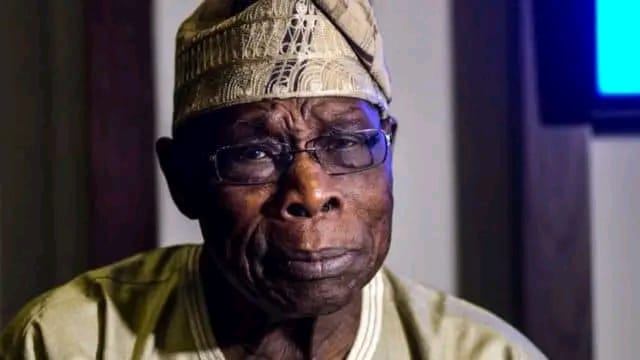
Obasanjo is a danger to democracy, says Gen. Akinrinade
By Ahmad Deedat Zakari
A former Chief of Army and Defence Staff, General Akinrinade Alani, has faulted President Obasanjo’s call for the suspension of the collation of results of the presidential election.
In a press statement released to the public on Tuesday and titled, “An Interloping Former President is a Danger to Democracy”, General Akinrinade condemned the former president’s stance on the ongoing presidential election.
The retired soldier said, “The recent statement by former President Olusegun Obasanjo over the recently concluded elections must be condemned in the strongest terms by democracy loving Nigerians and those who care about the unity of this country.”
President Obasanjo in a press statement had earlier requested for the stoppage of collation of result on ground of electoral malpractices.
General Akinrinade further stated that, as Obasanjo’s contemporary, who fought for the unity of this country, he finds it disturbing that Obasanjo made such suggestion.
He therefore called on President Muhammadu Buhari to ignore Obasanjo’s vituperation and focus on the lawful process.
He noted that he is confident President Muhammadu Buhari will let the process run its full course and will not intervene in an undemocratic manner.