


As you prepare for success, make provision for failure
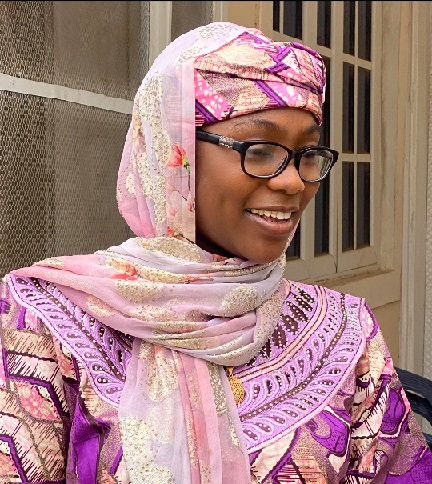
By Aisha Musa Auyo
One thing everyone wishes for and works towards is to succeed in life. From infancy to adulthood, up to old age, we aim to succeed in every part of our lives. But what we fail to do is also to prepare ourselves for failure. Yes, because it’s inevitable.
One of the pillars of the Islamic faith is the belief in qadr (divine will and decree), good or bad. This means that good and bad will surely ensue in life, success and otherwise. It’s how life is designed. But why do we do nothing or very little in preparing ourselves and our wards for failure? Why are we shielding ourselves and wards from the reality of life?
This may be why people cheat, as they cannot afford to fail. They just have to win at all costs. Others commit suicide. Some go on drugs because they have been unable in certain expectations or tasks.
So as parents and teachers or elders, we need to let ourselves and our wards know that failure, not consistently winning, or not being at the top is okay. It is acceptable, and life does not end there. We can always try later and do better.
Let’s show our wards and significant others they can trust us to be there for them whenever they fail. Just as they will want to come to us with success stories, they should be free to do that with failure stories. This is what unconditional support is all about. We should be a shoulder to cry on.
We should also, as parents, accept that we sometimes fail and let our kids see how we feel and how we are going about it. The norm is to show the kids that we are always succeeding and doing great, just so they can be inspired, but we are not helping them by doing so.
In summary, these are the points I want us to reflect on and ponder.
1. Prepare your child for failure. We will always have good and bad days. Let them know they cannot always win, and it’s okay.
2. Let us always put in the back of our minds and theirs that “Over every possessor of knowledge is one [more] knowing”. Qur’an 12:76
Regardless of one’s intelligence, hard work, and luck, we will surely meet others who are better than us. Let us know that we are better than others too.
3. Failure is a learning process to know what to do and what to avoid in the future. If one fails in a certain task, one may succeed in another task.
4. We should learn to compete with ourselves, not others. Set a target for yourself, and work towards achieving it.
5. Life doesn’t end or begin with school grades, work promotions, or huge profits. There’s more to life than these.
6. Good relationships, emotional intelligence, compassion, contentment, and adaptability guarantee success in every life situation.
8. It’s lonely up there: If you cheat your way up or compete to be better than everyone else, people will leave you with your success. No one wants to be with someone who always wants to be on the top by hook or crook. Cheating often backfires. And if it doesn’t, the people who made it to the top by defrauding others end up very lonely and have no genuine person to share the success with.
9. Healthy competition is okay. Being motivated by other people’s success stories is okay, but we should not cheat or compete. We are made differently.
10. Avoid social media attention or fame: The pursuit of likes, followers, and validation has led to detrimental effects on mental health, values, and overall well-being. The obsession with social media fame has resulted in a culture of superficiality, narcissism, and moral erosion, hindering the progress and development of society as a whole.
Parents and teachers must take responsibility and invest in youth development, focusing on their holistic growth, character development, and real-world contributions. By doing so, we can create a future where youth can realise their full potential and social media platforms can be used for positive change rather than as a means of self-promotion and validation.
11. School, parental, and peer pressure
School positions are not necessary; Those numbers instil unhealthy competition among students. Instead of children competing against themselves, they are pushed to compete with each other.
A student should be encouraged to push himself harder to get better grades, not in comparison with another student. Teachers should do as much as possible to adopt learner-centred teaching so that each student receives the attention they crave.
Parents should learn to accept their children when they fail. We should know our capabilities and not push ourselves and our wards to be what we can’t be. I know it’s hard to accept defeat or reward failure, but that is the moment when self-love and support are needed most. If we know we did our best, we should not be disappointed.
Parents should stop comparing siblings. Each child has his/her unique quality. A child lacking intellectual intelligence may score higher in emotional or social intelligence. Let’s focus on our highs instead of our lows.
When the storm is over, parents or guardians can discuss with the kids how to do better, with a reward or promise that will make the kid want to do better. We elders must learn to discourage cheating and encourage integrity and self-acceptance.
Aisha Musa Auyo is a Doctorate researcher in Educational Psychology, a wife, a mother of three, a Home Maker, a caterer and a parenting/ relationship coach.
Islamic New Year: Kano gov’t declares Wednesday work-free day
By Uzair Adam Imam
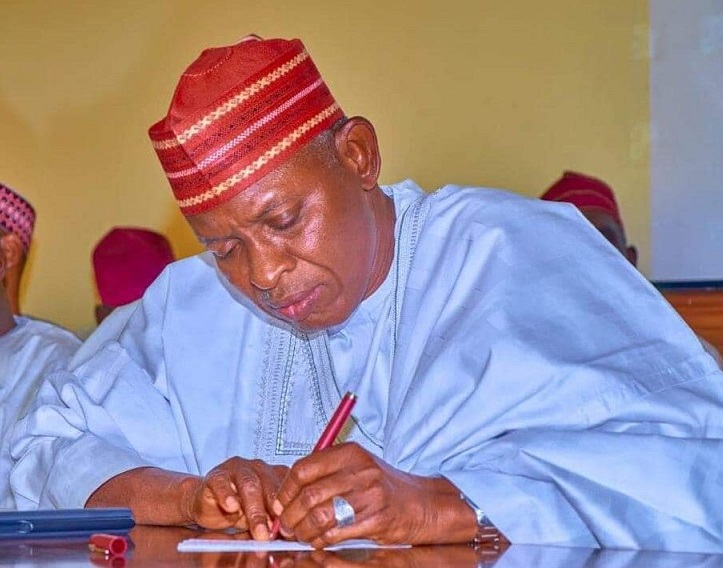
The Kano State Govenor, Abba Kabir Yusuf, has declared tomorrow Wednesday as a work-free day in commemoration of the 1445 Islamic new year.
A statement by the Commissioner of Information, Baba Halilu Dantiye, disclosed this on Tuesday.
The statement read in part ‘’The Governor who congratulated Muslims around the world on the dawn of the new Islamic year, enjoined the civil servants and the people in the state to pray for peace and tranquility as well as economic development of our dear state and the country at large.’’
According to Dantiye, the govenor also called on the good people of Kano state to live in accordance with the teachings of prophet Muhammad (SAW).
He added that, “The Governor also called on people to live their lives based on the teachings of Islam and practice the virtues of kindness, love and tolerance as exemplified by our Holy prophet Muhammad peace be upon him.”

Petrol price hits 617 per litre in Abuja
By Ahmad Deedat Zakari
The price of Premium Motor Spirit, PMS, popularly known as petrol, is now about 617 Naira per litre.
Customers reportedly purchased the product at 617 per litre at the Central part of Abuja on Tuesday.
The Price of PMS skyrocketed following the declaration of subsidy removal by President Bola Ahmad Tinubu in May.
The product, which was sold at about 540 in May, is now being sold at about 617 Naira in some parts of the country.
However, Malam Abdulmajeed, a Cybercafe operator in Zaria, confirmed to The Daily Reality that the price has not changed in Zaria.
As regards the reported price increase in Abuja and other parts of the country, the Nigeria Midstream and Downstream Petroleum Regulatory Authority (NDMPRA) is yet to comment on it at the time of filling this report.

₦8000 palliative: who sold this wretched idea to President Tinubu?
By Aliyu Nuhu
Can ₦8000 given over a period of 4 months solve poverty or alleviate the sufferings of people imposed by withdrawal of petrol subsidy?
If 12million people are getting the money, what of the remaining 168 million poor Nigerians? What will be the selection criteria. Sometimes you wonder at the quality of the thinking of our leaders.
Who sold this idea to president Tinubu?
To solve poverty you have to create business opportunities and provide loans. That was how China created wealth among its people. Loans were given with defaults in mind on self recognition only. No penalty for delinquency or business failure. Definitely some businesses will fail but many will succeed. China gave tax holidays to business startups and subsidized electricity and wages.
Brazil reduced poverty by reduction of inequality through equitable wealth redistribution programs. It did not only focus on economic growth, but accompanied this growth with active social policies for redistribution. The end results, economic growth led to better living standards for much of the population, through better wages and social transfers. Brazil gave family scholarship, business loans and huge minimum wages.
Egypt has long had a cash transfer/social assistance programme (maash al-daman al-igtimai), a program of the Ministry of Social Solidarity that reaches approximately 1.5 million households unable to work and uncovered by any other social insurance scheme. This mainly includes widows raising children, the elderly and the disabled.
In addition, two new cash transfer programs were launched in 2015. Karama (dignity) which provides an individual monthly allowance of LE320 for the elderly and those with severe disabilities. Takaful (solidarity), a conditional cash transfer program disbursed quarterly, which offers poor families with children who are younger than 18 a monthly allowance of LE325 and additional sums of LE60, LE80 and LE100 per child in primary, secondary or high school respectively, on condition of regular attendance. These programs, launched in early 2015 in some of the poorest villages in Upper Egypt, now reach almost 160,000 beneficiaries, with plans for geographic and quantitative expansion. Unlike Nigeria, the monies were not diverted and it surely reached the intended targets because of government sincerity of purpose.
It is not just about announcing unimplementable programs with no results in sight. Government must think deep and look at what other countries are doing. We cannot reduce poverty while at the same time imposing 7.5% tax on petrol and increasing price of electricity. We cannot end hunger, the bigger factor in poverty while banning importation of food that we don’t produce enough or closing borders. We cannot address inflation when we unleash extortion gangs on the highways collecting bribes from trucks that distribute goods to our cities.
It is as if Tinubu did not understand Nigeria and did not prefer or intend to govern it.

The danger of eating Ponmo/Ganda
By Bala G. Abubakar
Pre-historic people used to live by hunting. Clothes were necessary for protecting the body from cold and rain. It is very likely that for clothing, the pre-historic hunter utilised the skins of the animals he killed by converting them into leather.
Why LEATHER?
The art of converting hides and skins into leather is called TANNING. Tanning is the art by means of which putrefiable animal hides and skins are preserved from decay and converted into an imputrescible substance known as leather. The main characteristic or attribute of leather is COMFORT. Comfort means the leather ‘breezes’; as such, when it is COLD, the leather keeps the body warm; at the same time, when it is HOT, the body is COOL. The skins of large animals are called hides, and small animals are called skins. Hides are large and thicker in substance and heavier in weight than skins.
Animal skin is composed of water, protein, minerals, fats, and carbohydrates. About 80 per cent of dry skin is made of protein. Collagen is the main structural protein that makes leather. Proteins are made up of organic compounds called Amino acids.
Your body needs about 20 different acids to function properly. While all 20 of these are important, only nine are essential. Collagen protein, the main constituent of hides and skins, has only three (3) essential amino acids out of the 20. Notably, the daily requirement of protein containing all the essential amino acids is 90 grams. As outlined, collagen has only three essential amino acids; the six non-essential amino acids, plus other proteins and carbohydrates in the bloodstream, are all converted into glucose. Thus, spiking blood sugar leads to insulin resistance. Insulin resistance happens when the body does not respond appropriately to insulin, leading to high blood sugar. Consequently, the following diseases or ailments are imminent:
- Type 2 Diabetes: This is a debilitating disease everyone is conversant with.
- Metabolic Syndrome: this is the medical term for a combination of diabetes, high blood pressure, and obesity. It puts you at a greater risk of coronary heart disease, stroke and other conditions affecting the blood vessels.
- Overweight and obesity are defined as abnormal or excessive fat accumulation that presents a health risk.
- Non-alcoholic fatty liver disease is a term for a range of conditions caused by a buildup of fat in the liver.
- Cardiovascular disease is a general term for conditions affecting the heart or blood vessels.
- Polycystic ovarian syndrome (PCOS) is a hormone imbalance in women. This included insulin. People with PCOS are almost three times more likely to develop cancer.
- Alzheimer’s disease is the most common dementia. It involves brain parts that control thought, memory, and language.
- Insulin resistance has no symptoms but is reversible.
Professor M.K. Yakubu of the Nigerian Institute of Leather and Science Technology (NILEST) disclosed that Nigeria loses about 855 billion Naira in revenue annually from importing cattle hides. The hides are imported from neighbouring countries, including Mali. Others are the Central African Republic, East Africa, and recently, Saudi Arabia. The estimate is about 3 million pieces of which are consumed by Ponmo eaters. Nigeria produces over 7 million cattle hides yearly; 90 per cent are used as a food delicacy, an alternative to proteins. Statistics show that most of the consumers are from the Southwest states of the country. Therefore, the Consumption of Ponmo ultimately has immense adverse effects on the country because of the following:
- Healthcare: Insulin Resistance may have been the cause of many killer diseases.
- Loss of Revenue to the Nigerian government.
- The closure of several tanneries processing hides into Side leather in Kano, Maiduguri, and Sokoto has some impact on the governments due to loss of revenue and to workers job-wise.
- Owing to Insufficient side leathers, many big shoe Companies have closed their plants and shops to relocate elsewhere. A big example is the Bata shoe company. Lennards has recently imported Completely Knocked Down (CKD) parts to assemble shoes.
- Shoemakers of Aba, Onitsha, Lagos, and Kano use mostly man-made materials, which has no comfort in making shoes.
- Only 10 per cent of the population of this country uses leather shoes, while the rest use ones with man-made material imported from China and India.
To SUM it up, hides and skins from time in memoriam have been used for making shoes and clothing, but not for EATING!
Bala G. Abubakar is a livestock and leather consultant. He can be contacted via ibro240@yahoo.com.

Juan Cuadrado joins Inter on a one-year deal
By Muhammadu Sabiu
Juan Cuadrado prepares to undergo medical tests as the latest addition to the Inter squad.
Football journalist Fabrizio Romano made a statement about the transfer this morning via his social media handles.
The Colombian star is set to join the Italian giants on a one-year deal, with no option for an extended season.
Cuadrado’s decision to make the move to Inter comes with its fair share of intrigue. The talented winger turned down a lucrative €8 million salary per season proposal from a club in Saudi Arabia, opting instead for the allure of playing for Inter.
Stay tuned for further updates as we await the official confirmation of Juan Cuadrado’s move to Inter Milan.
The elusive nature of common sense: Unravelling the mystery
By Abdurrazak Muktar Makarfi
Common sense, the practical and intuitive understanding that guides our daily lives, is often regarded as an inherent trait. However, the phrase “common sense is not so common” lingers as a lament, suggesting that this attribute is not as prevalent as expected. In this article, we explore the reasons behind the scarcity of common sense in various situations.
One contributing factor to the scarcity of common sense is the existence of cultural variations. Different cultures have distinct norms, values, and expectations, leading to differing interpretations of what constitutes logical or rational behaviour. Consequently, common sense in one culture may be entirely foreign in another.
A lack of relevant experience or exposure also plays a role in the scarcity of common sense. Common sense is often developed through personal experiences, observation, and learning from mistakes. Individuals with limited exposure to certain situations or lacking diverse life experiences may struggle to apply common sense principles effectively.
Human cognition is prone to various biases that can hinder the application of common sense. Cognitive biases are systematic errors in thinking that deviate individuals from rationality. These biases can distort judgment and decision-making processes, making it challenging to apply common sense consistently. For instance, confirmation bias leads individuals to favour information confirming their beliefs, potentially clouding their judgment.
Emotions can significantly impact decision-making, often overriding common sense. Strong emotions such as fear, anger, or love can impair rational thinking and lead individuals to make choices that defy common sense. In these instances, emotional responses take precedence over logical reasoning, resulting in behaviour that may seem irrational to an outsider.
Critical thinking is a fundamental component of common sense. It involves analysing information, evaluating its validity, and making sound judgments based on evidence and logic. However, many educational systems prioritise rote memorisation over fostering critical thinking skills. As a result, individuals may struggle to apply common sense when faced with complex or unfamiliar situations.
The modern world’s complexity and information overload make it increasingly challenging to discern what constitutes common sense. The abundance of conflicting information, rapid technological advancements, and evolving societal norms can create confusion and dilute the clarity of common sense principles. In such an environment, individuals may need help distinguishing between valid common sense and misleading or erroneous advice.
In conclusion, common sense, often considered a natural and universal trait, can be elusive in certain situations due to cultural variations, lack of experience or exposure, cognitive biases, emotional influence, lack of critical thinking skills, and the complexity of the modern world. Recognising these factors helps individuals develop a more nuanced understanding of common sense and strive to enhance their ability to apply it effectively.
Abdurrazak Muktar Makarfi can be contacted via prof4true1@gmail.com.

APC chairman Adamu reportedly resigns
By Muhammadu Sabiu
Reports reaching the Daily Reality have indicated that Senator Abdullahi Adamu has resigned as the National Chairman of the All Progressives Congress (APC).
According to reports, he tendered his resignation on Sunday night. As of the time of this publication, neither the APC chairman nor the party had officially confirmed the story, and party officials have declined to confirm or refute it.
However, according to party sources, a press conference is scheduled for Monday at noon. The resignation is anticipated to be made official at that time, and an interim National Chairman will be selected.
The briefing is anticipated to follow the present meeting of the party’s National Working Committee (NWC). According to Channels TV, Senator Adamu will be thrown out of office through a vote of no confidence, according to some party insider sources, if he does not quit by himself.
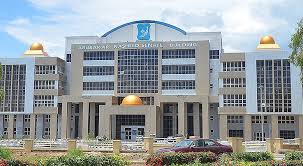
BUK, CSACEFA train civil society on budget trackikg, analysis
By Uzair Adam Imam
Bayero University, Kano (BUK), in collaboration with the Civil Society Action Coalition for All (CSACEFA), organised a one-day capacity-building training on education budget tracking and analysis.
The event, titled “Education Budget Tracking and Analysis Tools”, took place at the Centre for Gender Studies, Bayero University, on Sunday.
One of the organisers, the President of the Kano State Accountability Forum on Education, Professor Muhammad Bello Shitu, said the purpose of the event was to enlight people on issues related to the education budget.
Professor Shitu stated that their intention was to help “the practitioners and civil society actors to have knowledge and skills of budget analysis as well as budget tracking.”
Also speaking after the event, Dr Auwal Halilu lamented the rising number of out-of-school children in Kano State in recent times.
He stated that “However, with the coming of the new government, which claims to top education on their priority list, we are hopeful that things will change,” he added.
Dr Halilu added that the issue of the rising number of out-of-school children in Kano state, which reached over 1.4 million, is alarming and should be addressed instantly.
The event had converged many educationalists, social and political analysts, as well as civil society activists who came from all walks of Kano to grace the event.

Harry Maguire relinquishes Manchester United captaincy
By Muhammadu Sabiu
In an official statement released today, Harry Maguire announced that he will no longer serve as the captain of Manchester United.
The decision comes after discussions with manager Erik ten Hag, who informed Maguire of the change.
While personally disappointed, Maguire expressed his commitment to continue giving his all for the team.
Maguire took the opportunity to express his gratitude to the passionate Manchester United fans for their unwavering support throughout his tenure as captain.
According to a football journalist, Fabrizio Romano, the defender expressed his gratitude towards Ole Gunnar Solskjaer, the Manchester United manager, for initially entrusting him with the captaincy.
Maguire concluded his statement by extending his well wishes to the individual who will assume the role and offering his full support.