Does bail mean acquittal?
By Abba Kyari Mohammed
In the Nigerian legal system, terms such as bail, discharge, conviction, acquittal etc., have always confused the non-lawyers, leading them to take erroneous stands over some issues. Anytime there is a high-profile trial before our courts and bail is granted to the accused person, Nigerians will curse the entire justice system describing it as weak, ineffective and a system that rigs itself to favour the rich – all because the courts exercise powers vested in them in a constitutional way to preserve the rule of law.
I, therefore, find it pertinent to clarify some of these terms so Nigerians will stop bashing the judiciary and can redirect their anger to the right quarters while recognising their rights in the event they come in contact with the justice system, which for all intent and purposes is there to dispense justice in the best possible way.
Let’s start with Bail, which is what always sparks the uproar in Nigeria, especially on social media, where you expect people to have become conversant with this term yet have somehow been misconstrued to mean absolute discharge and even exculpation from the charges for which the person on bail is being tried.
Bail simply means a temporary or conditional release of a person arrested, charged or convicted of a crime. It’s granted by the police pending the investigation of a matter before it, by the court when the case is pending determination, and by the court pending an appeal when a person must have been convicted (Which is rare and only under compelling circumstances).
When bail is granted, it doesn’t mean the person is exonerated of the charges; it only means that he is released on the condition that he attends his trial until the end. In the end, the court may find him guilty, then sentence him(punish) or not guilty, and discharge and acquit him(release and exonerate) of the charges.
Why grant bail?
Some may ask why grant bail to people who have done despicable things. Why not convict them outright since all the facts are as clear as crystal, such as having video evidence, a confession etc? There are so many whys on our minds; perhaps, this may explain.
To start with, under Nigerian Law, there is the Presumption of Innocence under section 36(6) of the Constitution of the Federal Republic of Nigeria 1999 as amended. It means every person charged with a criminal offence shall be presumed innocent until proven guilty by a court. To prove a case before the court in Nigeria, there are procedures and requirements laid down by the law which must be complied with. It’s not enough for the media or anyone to believe the accused person is guilty or the amount of evidence people think there is. This means that the presumption of innocence can only be rebutted when a person is convicted for the offence charged by the court.
Premised on the above, persons charged with an offence (since they are innocent) are entitled to the right to personal liberty generously guaranteed by section 35 of the Constitution and cannot be derogated except in the circumstances justified by the Constitution or other extant laws. This means bail is a constitutional right enjoyed by persons accused of committing crimes, just like all of us do.
The courts, therefore, grant bail not because they are paid off or have regard for the criminals because of their status or offices but because it’s their constitutional right which cannot be trampled upon unless it is legally justifiable. However, bail is only granted upon an application made to the Police or the Court by the accused or his surety(s). It means you must ask the court to release you and explain why it should release you. Some may wonder why many low-profile criminals rot in a dungeon while others are released even though the crimes differ in gravity. The simple explanation is that “They don’t ask”.
Then discharge. It is similar to discharging a person from the hospital but not entirely the same. Suppose a man has cancer and he was taken to a hospital for treatment, but the family does not have enough money to proceed with the surgery prescribed by doctors; the man is discharged, perhaps, to be brought later when the money is realised or may not be brought depending on the circumstances.
To discharge an accused person by the court doesn’t mean the court finds him innocent, but it means the court is letting him go because there is not enough evidence on the part of the prosecution to ground his trial or the prosecution withdraws the case etc. In these circumstances, the person can be rearrested and brought to court when the prosecution gathers enough evidence, just like in the case of the cancer patient when the family raised enough funds.
Acquittal means that the court has found the accused person innocent of all the charges preferred against him after carefully looking at the facts and evidence presented by the prosecution. In a criminal trial, the case is said to have been unsuccessful and failed because the prosecution is unable to prove his case beyond all reasonable doubts. Once the accused is acquitted, the doctrine of autre fois acquits is activated under Section 36 (9) of the Constitution of the Federal Republic of Nigeria [as amended] 1999, which means the person cannot be arrested or tried again for the same offence. It is similar to removing the cancer in the patient. Once it is removed, he is free from it.
The Take-home therefore are:
Bail is a temporary and conditional release of an accused person pending when his trial is concluded. The accused goes home and always comes to court during his trial. In the end, the court may jail him or set him free.
Discharge is the release of the accused person by the court but not a declaration of innocence. The person can be rearrested and brought to court again.
Acquittal is the complete and total exoneration of the accused from the charges after the conclusion of a trial and the evaluation of evidence.
Abba Kyari Mohammed can be reached via abbakyari2013@yahoo.com.
Atiku warns against using military force to resolve Niger unrest
By Muhammadu Sabiu
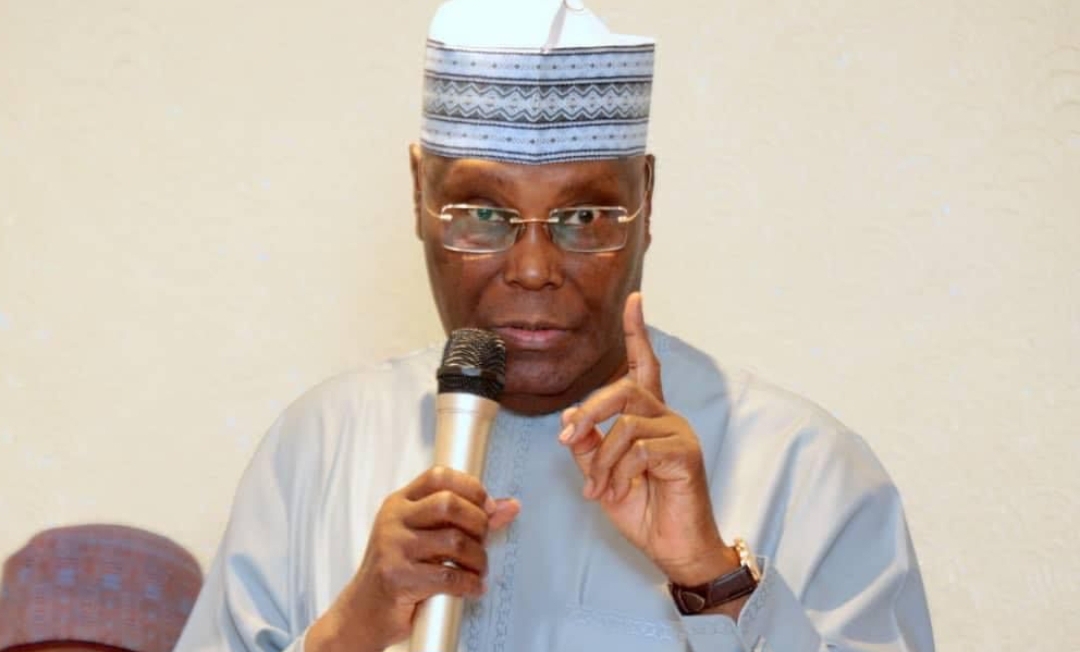
Atiku Abubakar, a former vice president of Nigeria, has cautioned the Economic Community of West Africa (ECOWAS) against using military hostilities to resolve the Niger Republic’s leadership obstacle.
Following coups in neighbouring Mali and Burkina Faso, President Mohamed Bazoum of the Niger Republic was deposed on July 26 by his own guard in the third putsch in the region in as many years.
After the coup in Niger, the regional economic bloc threatened military action.
Atiku criticised the strategy in a tweet on Thursday night, stating that deploying military techniques may make the situation worse.
He contends that the situation calls for diplomatic efforts, which implies that open lines of communication are essential.
Nigerians warned against travelling to Niger Republic amid imminent tension
By Muhammadu Sabiu
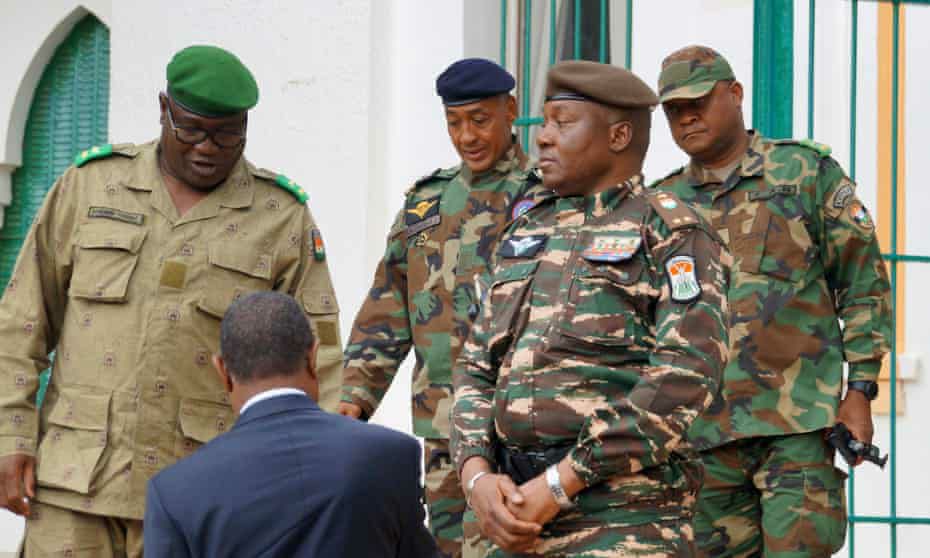
Nigerians have been advised against visiting the Niger Republic by Mustapha Sani, the NIS Comptroller in Charge of the Jibia Special Border Command, Katsina State.
This is because the Niger Republic is currently experiencing a crisis as a result of a coup d’état. Sanctions have been imposed on West Africa as a result of the event.
On Thursday, he addressed a joint celebration for the NIS’s Katsina State Command and the 60th anniversary of the service.
“Nigerians should stay at home and not attempt to go to the Niger Republic until the embargo is lifted. And we are determined to return any Nigerien we catch who is planning to come to this country,” he said.
He noted that the Service is deploying its officers to take care of the Katsina border to help curtail illegal movement from the Niger Republic.
“Despite the fact that we are divided by colonial masters, we share certain things in common like religion and culture, and that doesn’t guarantee them to enter Nigeria without valid documents,” he added.
“We have already put our officers on alert, and we have already deployed some to go and man the orthodox routes through which some of the foreigners use to enter into Nigeria and from what we have on the ground, we know it will be impossible for them to enter into Nigeria.”

President Tinubu’s broadcast: A Muslim’s plea
By Abubakar Suleiman
1. The 7 pm national broadcast by President Bola Ahmed Tinubu on the 31st of July 2023 was timely, especially as many Nigerians are still trying to pick up the pieces of their lives necessitated by the country’s current economic realities and hardship. The removal of oil subsidy and redressing of the multiple exchange rate system are undoubtedly the major causes of this new current of hardship and inflation.
2. There is seemingly no love lost between the government and the hoi polloi; hence Nigeria’s presidential speeches or live chats are not accorded due relevance. The masses see them as the old regurgitated rhetorics or decoys used to sway them from nagging realities.
3. However, no matter how much we have lost confidence in the government’s promises, we still need to give it the benefit of the doubt and allow it to test-run its policies and strategies. At the same time, critical stakeholders hold it as responsible and accountable as is humanly possible.
4. The little over 1700 words speech tagged “After Darkness Comes The Glorious Dawn” sounds promising and reassuring that Mr President’s removal of the subsidy and his intention or action plan to cushion the effect of its removal are noble. However, the noblest of plans might still fail if the economic and even cultural behaviours of the actual or direct beneficiaries of lofty government interventions are not considered.
5. Therefore, it is against this backdrop that I wish to interrogate some aspects of the government interventions in the broadcast speech that have hugely and negatively affected many practising Muslims in the past and will invariably have the same effect in the coming months.
6. In his speech, Mr President rightly emphasised that his economic interventions will drive financial inclusion by onboarding beneficiaries into the formal sector, but I think this inclusion did not take into cognisance many practising Muslims’ behavioural approach towards accessing loan facilities as it contravenes a delicate aspect of our religious dictates – usury.
7. For instance, the economic intervention with the noble, planned scheme of funding 100,000 MSMEs and start-ups with N75 billion, whereby promoters will access between N500,000 and N1million, is laced with 9% interest per annum and a repayment period of 36 months. Despite the loan’s appealing single-digit interest rate, many practising Muslims who want to venture into start-ups have been shortchanged because a “non-interest” model seems not to have been incorporated into this scheme.
8. Plus, the aforementioned is also the case with interventions in the manufacturing sector that is aimed at funding 75 enterprises that have the potential to “kick-start sustainable economic growth, accelerate structural transformation and improve productivity.” President Tinubu earmarked N75 billion between July 2023 and March 2024 for this promising purpose. Still, the “9% interest per annum” is a huge stumbling block for practising Muslims.
9. In the twenty-third paragraph of the text speech, Mr President hinted that the know-how of Development Finance Institutions and commercial and microfinance banks would be tapped for a viable and appropriate transactional structure for all stakeholders.
10. Therefore, an encompassing financial inclusion plan that carries all members of social strata (especially practising Muslims) bearing the brunt occasioned by oil subsidy removal and the eradication of multiple exchange rates is feasible and should also be implemented. And this should be quickly considered to bring business ideas to fruition, resurrect dying businesses and lift millions from among the Muslim populace above the poverty line.
11. If there is one thing Tinubu’s presidency should help the Muslim Ummah with, then it should be financial inclusion through non-interest loans and financing of businesses.
12. As a matter of necessity, the National Assembly shouldered with the responsibility of making laws should look into the Acts of Banks and other financial institutions and tweak certain provisions that impede the development of viable and encompassing solutions around non-interest loans and financing of businesses.
13. Consequently, the likes of the Central Bank of Nigeria, the Bank of Industry, the Development Bank of Nigeria, the Bank of Agriculture, the Federal Mortgage Bank of Nigeria and other financial institutions should have workable solutions around non-interest issues to bring a significant chunk of the Muslim population on board government’s socioeconomic interventions. It is a gateway to take many Muslims out of poverty, in sha Allah.
14. Again, the other thing Muslims would find useful from this presidency is collaborating with state governments to find a way around street begging and almajiranci – reformation or whatever works.
15. As a matter of urgency, Ulamas or faith-based organisations should make these demands as bargains for the 2027 presidential and National Assembly elections, for it will indeed augur well for Muslims going forward. These demands need nagging, strategic campaigns, and comprehensive media coverage. And immediate, mid and long-term results should be attached to these demands.
Abubakar Suleiman writes from Kaduna and can be reached via abusuleiman06@yahoo.com.
Tinubu, the kindle of hope is still glowing
By Musa Kalim Gambo
Approaching the first 100 days since Bola Ahmed Tinubu took oath as the president and commander in chief of the armed and unarmed forces of our beloved federation, life seems to have taken a painful and difficult dimension. This comes from the orthopaedic approach deployed to heal our irredeemably crippled nation –now on the edge of a hopeless recuperation from the previous government’s futile attempts at ‘change’.
How did we get here? Renewed hope! We rode on the feeble back of an aged horse, ultimately believing we could reach a place distant from the troubles of our land. Tinubu inspired hope for a better nation, that life will be better for even those ‘papa-mama-pikin’ fanatics who would rather ‘waste’ their inconsequential votes, in the words of a certain Woman of God. However, Tinubu remains the best horse for this turbulent race and is just coming on board.
We shouldn’t expect birth from a government that is still on honeymoon. The intercourse is not over yet. Tinubu’s government is still on a rough foreplay with the crippled Nigerian state, so there will be no immaculate conception.
After all, Tinubu has never promised to sell PMS to anyone at a cheaper rate! He has rather, at different times, threatened to withdraw government subsidy from this critical element of our daily lives – he said, “no matter what”, he will remove the subsidy. He boldly reiterated that there was no going back when he eventually inherited a nation without such subsidy. His top two contenders made similar threats, so why are we disturbed that he is now fulfilling one of his campaign promises?
We clapped at the justification because we believed the popular narrative that a certain top few political and business elite was short-changing us in this whole subsidy deal. We did not call on the government to go after them. We just simply hold this toxic populist notion that some big men are feasting on our commonwealth, which often comes in the format of ‘them’ against ‘us’.
What should be known is that no amount of political gra-gra can flip the side of the wealth distribution coin to favour the overwhelming destitute majority in a failed system. The few profiteering elites will always find their way around unfavourable government policies and return the burden on the proletariat.
In an edition of the Daily Trust (25th July 25, 2023), President Tinubu’s Senior Special Assistant on Print Media, Abdulaziz Abdulaziz, came up with the “Tinubu’s Seven Wonders in Seven Weeks” – a summary of his principal’s efforts as leader of Africa’s most populous nation, or rather the most complex and complicated country in Africa.
Abdulaziz started by reaffirming Mr President’s physical and figurative energy in grabbing some of Nigeria’s hitherto scary and untouchable issues with courage and decisiveness. Grabbing the bull of fuel subsidy and dollar rent-seeking by the horn is undoubtedly commendable – no one will disagree with Tinubu’s government. However, while Abdulaziz does his job quite well for his principal, it is possible that he is now too far and dining directly from the sound-proofed kitchen of power to hear the unending cries of the collateral victims of their policies. But Daily Trust’s editorial of July 24, 2023, which called for the reversal of Tinubu’s ‘chaotic subsidy policy’, painted a high-definition image of the situation. So it is possible that Abdulaziz’s “Tinubu’s Seven Wonders in Seven Weeks” is an attempt to neutralise the arguments contained in Daily Trust’s call for the reversal of the subsidy policy.
Now is not the time for arguments and counter-arguments; it is time to listen to the distant voices that defied the heat of the sun and, in some places, the threat to life by non-state actors to bring on board this much-anticipated government. The kindle of hope is still fresh and glowing, don’t blow it out.
Musa Kalim Gambo wrote from Zaria via gmkalim@hotmail.com.

Ousmane Dembele leaves Barcelona, joins PSG
By Muhammadu Sabiu
Paris Saint-Germain has secured the services of Ousmane Dembélé from Barcelona for a fee of €50 million.
The decision was finalised on Sunday night, and the player has already arrived in Paris and is set to undergo a medical examination on Friday.
The contract signing is expected to be completed by the end of the week, locking Dembélé into a five-year deal with PSG until 2028.
A private clause was activated on Monday morning to facilitate the transfer with Barcelona set to receive just over 50% of the transfer amount.
Meanwhile, PSG continues to reinforce their squad, and their next target is reported to be Gonçalo Ramos from Portugal. Stay tuned for further updates on this exciting transfer window.
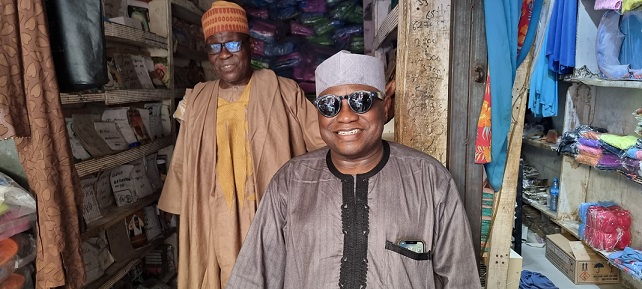
A visit to an ace Hausa ethnomusicologist – Muhammad Kalarawi
By Prof. Abdalla Uba Adamu
In an attempt to gauge the current popular culture market in Kano, I visited my old haunt at Kasuwar Ƙofar Wambai today, 2nd August 2023. It was the place where virtually all Hausa popular culture media products were distributed in the late 1990s to 2000s. It was simply the best in West Africa, as media products from this market – which took over from the Bata market – were distributed to other parts of Hausaphone West Africa.
I was shocked at the fact that there were only three shops selling CDs/DVDs and cassette tapes. The market had been taken over by plastic household items and blouses/football jerseys! It was so sad to see such a vibrant market – the best in West Africa – down on its luck. Discussions with three forlorn merchants reveal two main reasons for this sorry state of affairs of consumptive popular culture media in Kano.
The first was the proliferation of Download Centres. In these places, films were ripped off DVDs or CDs and with a reduced resolution to fit a Smartphone screen – and dozens were packed on a microSD card and sold for peanuts. This denies the content providers of profit from their hard labour. A licensing compromise was agreed between filmmakers and Downloaders to everyone’s satisfaction. Thus, no more CD purchases that require both a CD player, a TV and electricity to play. Downloaders often get their primary source directly from the producers – thus eliminating the media production processes.
Second was the rise of TV series, popularised massively by Arewa24’s Dadin Kowa (although it was not the first). Now almost every producer has jumped on the TV series bandwagon and using YouTube to distribute their programs. With data getting cheaper, it means viewership has migrated to YouTube series dramas – where more money is made with AdSense clicks. Rarely does a producer bother now with a feature film.
Sad as I was with these developments, I perked up when I visited the shop of Alhaji Muhammad Kalarawi. He is quite simply the best ethnomusicologist in the market. His nearest rival, Musa Nasale, passed away some time ago (and no one knows what has happed to his catalogue of unique and rare music field recordings).
Alhaji Muhammad Kalarawi got his name from being the recordist of the late Kano-based Islamic cleric, Alhaji Lawan Kalarawi (d. 1999). The term, “ƙala rawi” means ‘the narrator said’. Kalarawi established himself as a fearless, acerbic preacher in Kano – earning him numerous jail sentences. He was really telling it like it was – bringing his incredible interpretations on leaders (both modern and traditional) and commoners alike. Thanks to modern media technologies, there are hundreds of Lawan Kalarawi’s archival recordings on YouTube and MP3 trawler/caching sites.
Kalarawi’s popularity was enhanced by his street speech mode with jovial, often bawdy commentaries, which made him immensely popular. I personally count three Islamic preachers in Kano as those I avidly listen to: Lawan Kalarawi, Ibrahim Khalil and Aminu Daurawa. All down to earth. Just as it is, without any excess baggage or appendices.
The current Muhammad Kalarawi has almost every incidence of the late preacher’s recordings. That is a huge treasure trove. In addition, he still has stacks of tapes and CDs of traditional Hausa griots, which are simply not found anywhere. I was so elated to know he is still in the game, despite the suffocating pervasive influx of Hausa Afropop in Kano (which studiously avoided the Wambai market). I wish research institutes such as the History and Culture Bureau in Kano, or Arewa House in Kaduna, would license Kalarawi’s priceless catalogue and digitise them for posterity. Once they are lost, they will be gone with the wind.
ECOWAS picks Abdulsamami, Sultan Abubakar to go to Niger for mediation over recent coup
By Muhammadu Sabiu
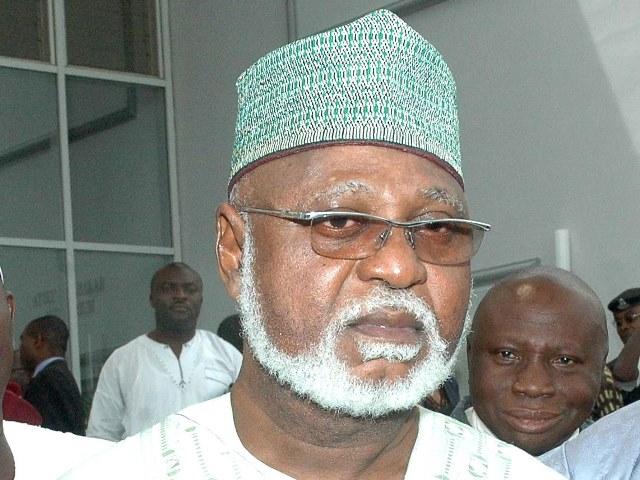
Abdulsalami Abubakar, a former military leader of Nigeria, has been picked by the Economic Community of West African States (ECOWAS) to lead a mission to Niger for mediation.
He will be accompanied by Muhammadu Abubakar, the Sultan of Sokoto, who commands great sway over the Muslim population both inside and outside of Nigeria.
Alieu Touray, the head of the ECOWAS Commission, is also a member of the group.
Patrice Talon, the president of Benin, and Mahamat Déby, the president of Chad, had previously been sent to Niger by the sub-regional bloc to meet with the coup plotters.
On Sunday, ECOWAS slapped sanctions on Niger, including a travel ban and a blockade, until President Mohamed Bazoum, who was overthrown by the military on July 26th, was reinstated.
Meanwhile, it summoned the sub-region’s defence commanders and threatened to deploy force.
A meeting of the defence chiefs reportedly took place in Abuja. Mali, Niger, Guinea, Guinea Bissau, Burkina Faso, and Guinea were not present, though.
The restrictions are already in place, as Nigeria started cutting power to Niger on Wednesday.
Nigerian Senate receives second list of ministerial nominees for confirmation
By Muhammadu Sabiu
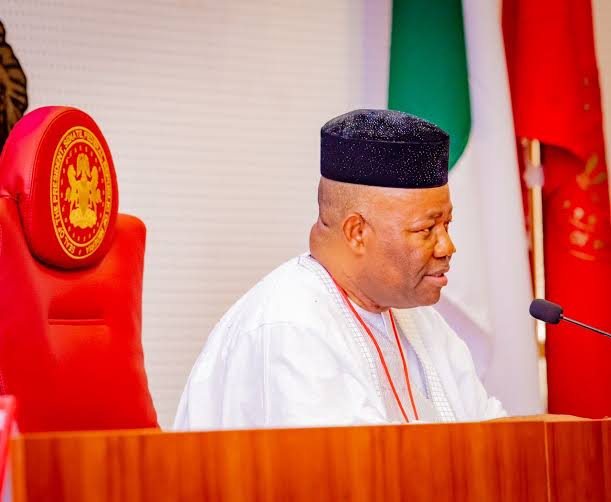
In a recent development, President Asiwaju Bola Tinubu has forwarded a second list of 19 ministerial nominees to the Nigerian Senate for confirmation.
The list, presented by Femi Gbajamiabila, Chief of Staff and former Speaker of the House of Representatives, includes notable candidates such as Adegboyega Oyetola, Bosun Tijani, Bello Mattawale, and Dr. Isiak Salako.
The chamber’s protocols were momentarily put on hold at 3:15 p.m. to accommodate the Chief of Staff’s entrance into the revered Red Chamber.
Among the other nominees are Sen. Sabi Abdullahi, Dr. Mariam Shetti, Prince Shuaibu Abubakar Audu, and Uba Maigari Ahmadu.
This comes after the Senate’s reception of the first list earlier this week, which included prominent figures like former Kaduna State governor, Malam Nasiru Ahmad El-Rufai, former Rivers Governor, Nyeson Wike, and health specialist Prof. Ali Pate, among others.
Is Sheikh Idris Abdulazeez a victim of sacrilege or political vendetta?
By Zaharaddeen Muhammad Azare
Years back, people saw it as taboo to question or criticise what religious scholars said, regardless of how illogical it sounded. However, as people started becoming wiser and more educated, they discovered that religious scholars, as fellow human beings, can understand and misunderstand laws, ministerial statements and concepts. Thus their comments are subject to verification, reconstruction and even falsification.
What happened to Sheikh Abduljabbar Nasiru Kabara that led to his imprisonment in Kano due to his inability to defend his speeches that were considered blasphemous serves as a motivative factor for holding religious scholars accountable for their actions and inaction.
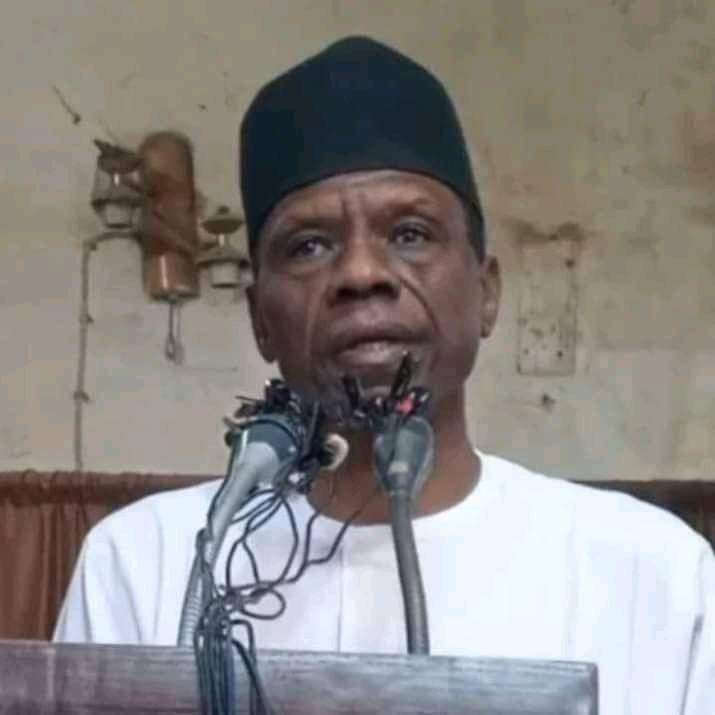
Many people see the case of a known Bauchi-based Islamic scholar Sheikh Idris Abdulazeez as similar to Sheikh Abduljabbar’s, which led to the imprisonment of Sheikh Idris too. But is Sheikh Idris indeed being imprisoned for blasphemy or political reasons?
To answer this question, I take us back to some historical antecedents. Sheikh Idris Abdulazeez is a religious scholar who sees himself as a representative of his people and believes that as a citizen of Nigeria should be politically active to improve efficiency in governance and promote the welfare of the citizenry.
Sheikh Idris supported and criticised political leaders, which seems to be for the public good; the scholar condemned the state government’s actions when Barr. Mohammed Abdullahi Abubakar SAN who believed in the constitution, the application of the rule of law and the whole exercise and grant of human rights, was the state’s governor from 2015-2019.
The Sheikh saw the then leadership as dust to the people of the state, thus needing elimination. And the then governor allowed him to voice out his opinions as an indigene of the state; the scholar condemned the ruled APC government and endorsed the incumbent state’s governor under the platform of PDP.
After the victory of the incumbent governor of the state Sen. Bala Mohammed Abdulkadir, in the 2019 general election, the government started doing activities contrary to what the scholar believed to be right; for this, he began criticising the government and was tagged as an enemy. In the recent 2023 general elections, the scholar directed his followers to vote for the former Nigerian Chief Of Air Staff Baba Sadiq (Air Marshall) of the All progressive congress (APC), against his counterpart Sen. Bala Mohammed of the People’s Democratic Party (PDP). Bala Mohammed got re-elected.
Some see the case which led to the imprisonment of the religious scholar as revenge for he was not allowed to defend his statements, like what happened to Sheikh Abduljabbar in Kano, where Islamic scholars of different sects were gathered for him to intellectually defend himself in a public which failure to do so bagged his imprisonment.
Most people believe that not allowing Sheikh Idris Abdulazeez to defend himself originated from the fact that he has legal evidence for his statement and how deeply educated religious scholars influx into Bauchi from several states to attest to his statement before the organised debate was cancelled due to these reasons which could set the scholar free. He was later taken to court and got jailed. Not Sheikh Idris alone, who is in jail for nearly a month over the so-called public disturbance. This week, Some traditional rulers have been dethroned by the state governor for what he describes as “involvement in partisan politics” during the 2023 general election.
Someone who can’t endure opposition shouldn’t go into politics in a democratic state.
Zaharaddeen Muhammad Azare writes from Bauchi state and can be reached via zahmuhaza@gmail.com.