


Microbial evolution and the menacing threat of anitimicrobial resistance (I)
By Dr. Ismail Muhammad Bello
You have likely heard about climate change, a pressing existential threat demanding global collaboration. However, it is not the sole concern. Antibiotic resistance is another rapidly emerging issue that demands urgent attention.
Not too long ago, the pathological basis of diseases was shrouded in mystery, often attributed to superstitions. About four hundred (400) years back, the role of microbes in disease causation was still unknown. It took the discovery of the microscope and the works of Antoni Van Leeuwenhoek to open our eyes to the unseen world – the realm of microbes – surrounding and inhabiting us.
Microbes, omnipresent and adaptable, have evolved significantly to thrive in a constantly changing world. The human connection with microbes is extensive and intriguing. Thanks to their versatility, microorganisms are instrumental in driving human technological advances through their varying applications in agriculture, environmental protection, medicine and industrial production. From drug discovery and development to their role in bioremediation, biotechnology, and the emerging field of genetic engineering, microorganisms have played a monumental role in the survival and progress of life forms on Earth, even shaping civilizations.
Nevertheless, despite their crucial role in the earth’s functions, microbes also contribute to human misery as pathogens. Despite global efforts to combat them, infectious diseases persist as a challenge, particularly in Sub-Saharan Africa where the existing weak health system grapples with a double burden of diseases – an increasing prevalence of non-communicable diseases alongside prevailing communicable diseases.
Apart from the substantial morbidity and mortality resulting from infectious diseases, the burden encompasses economic losses due to healthcare expenses and disabilities, as well as a decline in productivity. In a broader sense, infectious diseases hinder human development by adversely affecting education, income, life expectancy, and other health indicators.
While current morbidity and mortality rates remain notably high, the situation contrasts significantly with the past where certain infections, now easily treatable, were once considered death sentences or challenging to address. The serendipitous discovery of Penicillin by Alexander Fleming stands out as a pivotal moment in medical history. “Antibiotics” not only transformed the curability of many diseases but, coupled with advancements in anaesthesia, also enhanced the safety and feasibility of major surgeries.
While the term “antibiotics” holds a more specific meaning in pharmacology, commonly it refers to a category of drugs utilized in treating “bacterial” infections. Bacteria, while a significant group, represents just one class of microorganisms; others include viruses, fungi, parasites, and even prions. Antibiotics function by disrupting vital processes in microbes leading to a loss of structural integrity or functional capacity, ultimately causing them to die or halt their replication.
Antibiotics encompass a diverse group of drugs, belonging to various classes, each effective against specific types of organisms. They include the well-known Amoxicillin (Amoxil), Ampicillin-Cloxacillin (Ampiclox), Metronidazole (Flagyl), Ciprofloxacin, Amoxicillin-Clavulanate (Augmentin) and numerous others easily accessible over-the-counter in our setting. Antibiotics have played crucial roles in combatting menacing diseases like Tuberculosis, Leprosy, Gonorrhoea, Syphilis, bacterial pneumonia, acute bacterial meningitis, and many others.
The introduction of these drugs came as a huge blow to the pathogenic microbes that previously had a field day. However, in line with natural selection, they didn’t succumb passively and perceived the development as a declaration of war. Over the years, these microbes evolved, becoming insensitive to many of these drugs—a phenomenon known as antibiotic resistance.
In response, scientists discovered new drugs, tweaked some of the existing drugs or synthesized novel ones. This led to a vicious cycle, whereas new drugs are developed, these organisms adapt and become resistant. This trend persists to our present day, leading to the emergence of highly resistant strains of microorganisms that are not susceptible to most of the antibiotics used in treating the kind of infections they cause – the so-called Superbugs.
Unfortunately, this cycle is not sustainable for mankind. The rate at which microbes adapt to our drugs is faster than the turnout of our drugs. It takes about 10-15 years to develop a new antibiotic. Not only that, studies have shown that the estimated global cost of developing a new, targeted antibiotic will cost over a billion USD ($1 Billion), making it a highly expensive and risky venture for pharmaceutical companies.
The combination of these factors has impeded innovation in the field of antibiotics. Notably, the latest discovery of a new “class of antibiotics” that has reached the market was back in 1987. Since then we have been in a “discovery void” era, and currently, there are few novel antibiotic classes in the drug development pipeline.
In 2022, the World Health Organization (WHO) identified twenty-eight (28) antibiotics in clinical development that address the WHO list of priority pathogens, of which only six (6) were classified as innovative. The repercussions are felt globally as an increasing number of bacterial infections are becoming hard to treat, once again posing a threat to global health and development.
Undoubtedly, resistance is a natural phenomenon and will eventually develop against some antibiotics. However, the accelerated rate at which it is occurring is aided by our irrational use of these drugs. Therefore, prudent use will surely slow down the process.
Key determinants of antibiotic resistance include antibiotic abuse in veterinary and medical practice, inadequate provision of Water, Sanitation and hygiene (WASH) infrastructure, and the effectiveness of policy development and enforcement.
Dr. Ismail is a Medical Officer at Khalifa Sheikh Isyaka Rabiu Paediatric Hospital, Zoo Road, Tarauni, Kano State.

Custom generates 6.9 billion revenue in Kano
By Ahmad Deedat Zakari
The Nigeria Custom Service, NCS, has raked in the sum of N6.9 billion for the month of November in Kano State.
The Comptroller of the NCS in the State, Dauda Ibrahim Chana, made the disclosure to the press on Monday.
The Kano Area Command of the NCS covers both Jigawa and Kano State respectively.
Mr Chana also disclosed that the NCS had seized goods that were being smuggled into the country.
“We have also seized 2,817 bags of foreign rice, 1,428 pieces of used tyres, 250 Jerry cans of 25-litre vegetables oil and 690 cartoons of foreign soap.
“Other seized items are, 429 bales of second-hand cloths, 1,226 packages of royal tramadol, 470 blocks of compressed Indian hemp and 1,530 cartons of foreign spaghetti.” He said
The comptroller added that the command had introduced more sensitive security measures to prevent all forms of smuggling in the area.
“We have already positioned our officers at strategic locations to deal decisively with all those involved in illegal materials,” he told newsmen
He said that the area command had ordered the deployment of officers to border posts in Maigatari in Gumel Local Government area of Jigawa to intensify efforts at mitigating activities of smugglers.
The comptroller enjoined residents in the state to embrace local goods and shun all forms of illegality.
FG unveils N150b economic relief package for businesses amid fuel subsidy removal aftermath
By Sabiu Abdullahi
The federal government has introduced two disbursement programmes, the Presidential Conditional Grant and the Presidential Palliative Loan, to inject a total of N150 billion into the economy.
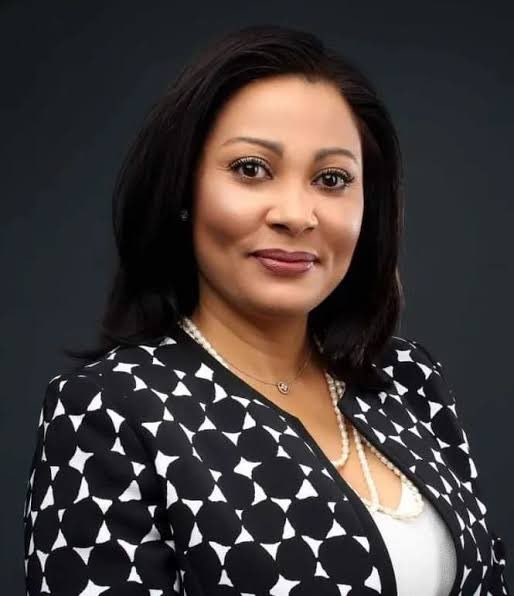
According to a statement from the Minister for Industry, Trade and Investment, Dr. Doris Uzoka-Anite, the programmes are strategically designed to support businesses grappling with the aftermath of the fuel subsidy removal implemented on June 1.
Under the Presidential Conditional Grant Programme, the government plans to disburse a grant sum of N50,000.00 to nanobusinesses across all 774 local government areas in the country.
Collaborating with various stakeholders, including state and local governments, federal legislators, federal ministers, banks, and others, the programme aims to provide relief to the most grassroots-level enterprises.
Eligible nanobusiness owners are required to furnish proof of residence or business address in their local government area, along with personal and bank account details, for identity verification.
The government has also earmarked N75 billion for Micro, Small, and Medium-sized Enterprises (MSMEs) and an additional N75 billion specifically for manufacturers.
The loan facilities, offered at a single-digit interest rate of 9 percent per year, aim to stimulate growth and address financial challenges faced by businesses.
MSMEs can access loans up to N1 million with a three-year repayment period, while manufacturers can secure up to N1 billion for working capital with repayment terms of one year for working capital or five years for machinery and equipment.
The application process for these loans involves submission through a dedicated portal, with access facilitated through participating banks.
Applicants are required to meet their respective banks’ risk assessment criteria.
Noting its commitment to economic development and empowerment, the Federal Government believes these initiatives will foster entrepreneurship, spur job creation, and contribute to the overall economic recovery of the nation.
Interested parties can find more information and apply on the dedicated website for the programmes.
2027 presidency: Atiku Abubakar strategises to maintain control amidst PDP power tussle
By Sabiu Abdullahi
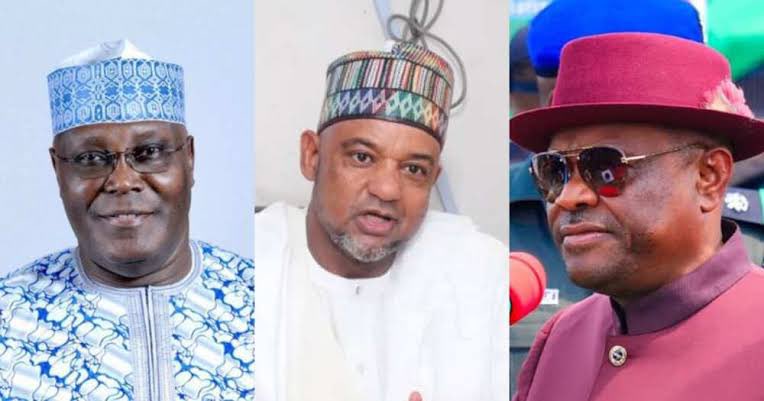
Former Nigerian Vice President Atiku Abubakar is reportedly gearing up for the 2027 presidential race while simultaneously working to solidify his influence within the People’s Democratic Party (PDP).
However, internal tensions have surfaced as Atiku and his allies express discomfort with the current acting National Chairman, Ambassador Iliya Damagum.
Accusations have been raised against Damagum, with Atiku’s faction claiming his allegiance to the G-5 axis of the party, led by the Minister of Federal Capital Territory, Nyesom Wike.
Despite various attempts, including the unsuccessful and forceful return of National Secretary Senator Sam Anyanwu, efforts to remove Damagum have fallen short.
The crux of the issue lies in Damagum’s perceived support from Wike, the G-5, and key members of the PDP Governors Forum, headed by Bauchi State Governor Bala Mohammed, who harbours presidential ambitions for 2027.
Atiku and party leaders are rallying behind the suspended National Chairman, Dr. Iyorchia Ayu, advocating for his reinstatement through a legal battle, viewing it as the last resort to rescue the PDP from Wike and the G-5.
Notably, Dr. Bukola Saraki, a former President of the Senate, has resisted calls to assume the role of the next national chairman.
Sources indicate that Saraki is wary of presiding over a party embroiled in internal strife, opting to observe the unfolding PDP crisis before making any definitive decisions.
The cold war within the party and the ongoing court case involving Ayu have created an atmosphere of uncertainty, influencing Saraki’s reluctance to take on a leadership role at this tumultuous juncture.

Empowering inclusion: Collaborative strategies towards SDGs with persons with disabilities
By Ibrahim Tukur
Every December 3rd marks the International Day of Persons with Disabilities—an annual global celebration aimed at advocating for the rights, fostering understanding, and promoting inclusive actions for people with disabilities. It’s a day to acknowledge their accomplishments and emphasize the imperative need for equitable opportunities and the recognition of their fundamental rights.
The theme for this year’s edition is “United Action to Rescue and Achieve the Sustainable Development Goals (SDGs) for, with, and by Persons with Disabilities.” It underscores the urgency of collective efforts in realizing the 17 comprehensive global objectives established by the United Nations in 2015. These goals encompass a wide spectrum of critical issues, including poverty eradication, healthcare, education, gender equality, access to clean water, creating sustainable cities, and addressing climate change, all aimed at fostering a better and more sustainable future for all by 2030.
However, to attain these ambitious SDGs, a collaborative approach is essential. It involves harnessing the diverse abilities and strengths of individuals, including the remarkable capabilities of Persons with Disabilities (PWDs). Despite facing substantial obstacles, particularly in many developing nations, where barriers to education, healthcare, employment, and societal integration persist due to prevalent negative stereotypes and discrimination, PWDs possess incredible potential and capacities.
Inclusivity emerges as a pivotal catalyst in this pursuit. It not only enhances the lives of PWDs but also nurtures a sense of belonging, shattering societal taboos and providing PWDs the platform to contribute significantly to society. By fostering an inclusive environment, we can effectively reduce social stigma, enabling PWDs to become independent.
Across various continents, initiatives and programs championing disability inclusion, notably in both developed nations and within African countries, have exhibited remarkable progress. However, these advancements are only the beginning. Collaborative strategies involving Persons with Disabilities, disabled people’s organizations, governments, and local communities are imperative to facilitate active participation and remove barriers impeding the realization of the SDGs.
Empowering Persons with Disabilities through comprehensive skill development and robust advocacy efforts is paramount. Engaging in advocacy not only raises awareness but also nurtures a deeper understanding of the rights of PWDs, propelling their inclusion across all spheres of life.
On this significant day, let us commend the invaluable contributions of meaningful PWDs, disability rights advocates, organizations, and NGOs dedicated to championing the rights and inclusion of PWDs. Let’s stand united in our support for initiatives that actively promote inclusivity, equity, and the materialization of the SDGs for persons with disabilities.
Ibrahim Tukur is a hearing-impaired individual who hails from Ingawa town in Katsina State. He earned his first degree in Special Education/Sociology. He is a disability rights advocate and can be reached via inventorngw@gmail.com.
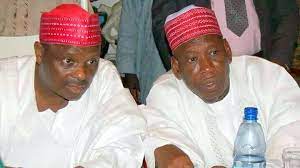
Dirty politics will bring Kano down
Appeal court confirmed the candidate of the opposition party Dr. Nasiru Yusuf Gawuna, of All Progressive Congress (APC), as the winner of the March 2023 gubernatorial election.
But if we can recall, immediately after the first announcement of the election results in the radio stations and some social media handles, we heard the voice of the opposition candidte,Dr. Nasiru Gawuna saying that he is Muslim and for that; he accepted everything that happened to him with good faith. But later, the leadership of the party coming out with a lot of controversies, rising issues of invalid votes, rigging of election and many other sinister ways of usurping power. Later we heard that the tribunal has deducted 165,663 votes from Engineer Yusuf’s total votes as invalid votes, stating that the affected ballot papers were not stamped or signed and therefore declared invalid.
The verdict comes nearly two months after the Kano Governorship Election Petition Tribunal, on September 20, sacked Yusuf, declaring the All Progressives Congress (APC) candidate, Nasiru Gawuna, as the winner of the March 18 election. Abba Yusuf, who contested on the platform of the New Nigeria Peoples Party (NNPP), was declared the winner of the election by the Independent National Electoral Commission (INEC) after the polls in March, 2023.
But remember what is currently going on in Kano is as a result of a clash or misunderstanding between the Kwankwasiyya and Gandujiyya political movements which started some years back in the year 2016, and these misunderstandings continue until 2019 election when the same issues like this occurred, which led to inconclusive. And from that time to date there is no sign of reconciliation between these two political movements.
The leaders of both movements; Engr. Rabiu Musa Kwankwaso and Dr. Abdullahi Umar Ganduje are very prominent people in the politics of Kano and even Nigeria as large. Without mentioning these two names, the politics of Kano in this 21st century will not be complete. What I want to say here in essence is that, before this quagmire, Kwankwaso was the boss to Ganduje, who was first governor in this dispensation, while Ganduje was his deputy. And after the tenure of Kwankwaso ended, Ganduje was the successor of Kwankwaso. Therefore, the duo had worked together for long, but selfish interest, envy and the devil crept in between them.
After Abba Kabir Yusuf become the governor of Kano State, he started his tenure by demolishing of what his government described as illegal structures in Kano. This reckless demolishing raised tension and made many people from the opposition to redouble their hatred towards his government. It was also alleged that after the incident, Abba lost some of his fans or supporters but believe me you upon all the demolishing, the majority of Kano people are still with Abba, and this is simply because, most of the demolished properties are genuinely illegal and they were all erected on the public places.
Finally we all know that the Kwankwasiyya movement is with the poor masses. If you can see the last four years of Kwankwaso, one can understand a clear view of what I am saying. There are so many developmental projects, like the issues of empowering youths and women, healthcare, education, scholarship scheme which is unprecedented in nature, among many other goodies to the good people of Kano, which Abba continues from his boss.
Kwankwasiyya or Gandujiyya; I appeal to both parties to leave politics aside in order to rescue Kano and to develop Kano and its environs or else even the existing development will automatically decay. I believe reconciliation will only happen if actually Kano is in their minds, before they allow their dirty politics to take Kano down.
Haladu Muhammad, writes from Maiduguri, Borno State.
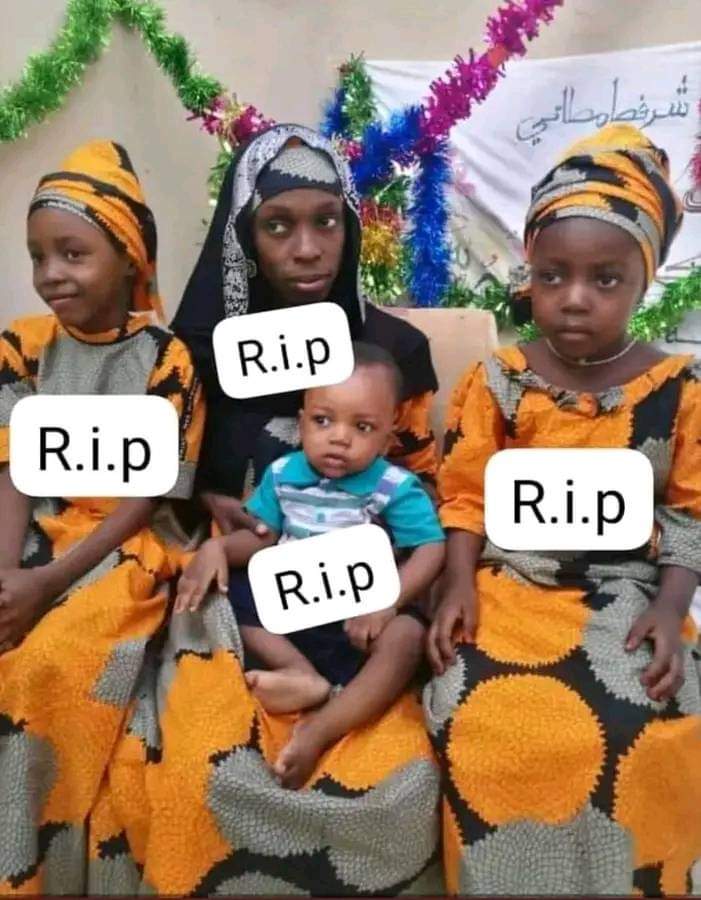
Fire outbreak razes down house, kills family of five in Kano
By Uzair Adam Imam
The people of the Agadasawa community in Kano State were in profound mourning after a fire broke out and destroyed a house, killing a woman and her four children.
The tragic incident, which has sparked sympathy from thousands of people across the state, was said to have occurred at midnight on Wednesday while the deceased were asleep.
The deceased, Zainab, and her four children, Amatullahi, Amaturrahman, Safiyya, and Muhammad, were family members of a Kano businessman, Ado Muhammad Uba.
A relative, Jazuli Jibril Aminu, reported that the tragic incident occurred when electricity was restored and the woman forgot to turn off the refrigerator she had plugged in, which caused the gas cylinder to explode.
According to Aminu, Zainab frantically tried to save her children from the fire, but her efforts were sadly in vain.
“Upon realising the fire outbreak, the mother, in her attempt to rescue her four children, couldn’t see the way.
“So, being a mother, she decided to put all the children beneath her so that the fire could burn only her.
“Sadly, all the clothes she was wearing burned in her body, and the children also got burned,” Aminu disclosed.
Attempts to save the victims were in vain
Aminu, who described the incident as a terrible tragedy, said the victims were rushed to the Murtala Muhammad Specialists Hospital.
However, one of the children sadly passed away on the way to the hospital.
Two days later, two more children followed, leaving only their mother and one child.
While receiving treatment, Zainab, the mother, also passed away on Friday, and the last child died the following day.
My cousin is in a state of complete family loss
“This family belongs to my cousin, who, Allah the WISEST, tested with a complete family loss. The husband, Baba Ado, had gone to work in another state when he tragically lost his entire family.
“Baba Ado is now left with neither family nor wealth, for everything in the house has burned to ashes. Ya Rabb, Ya Rahman, and Ya Razzaq, come to the rescue of Baba Ado. This is a very serious test. Please, brothers and sisters, pray for them and Baba Ado.”
Pray for me and my family—husband
Ado Muhammad, the husband, found it difficult to speak in detail about the incident when he was contacted by the Daily Reality.
Muhammad rather pleaded with people to include him in their prayers so that he could cope with the loss and to also pray for his family members.
He said, “I take this as a test of faith. So, I ask my fellow Muslims to pray for me so that I can cope with this loss and pray for my family.”
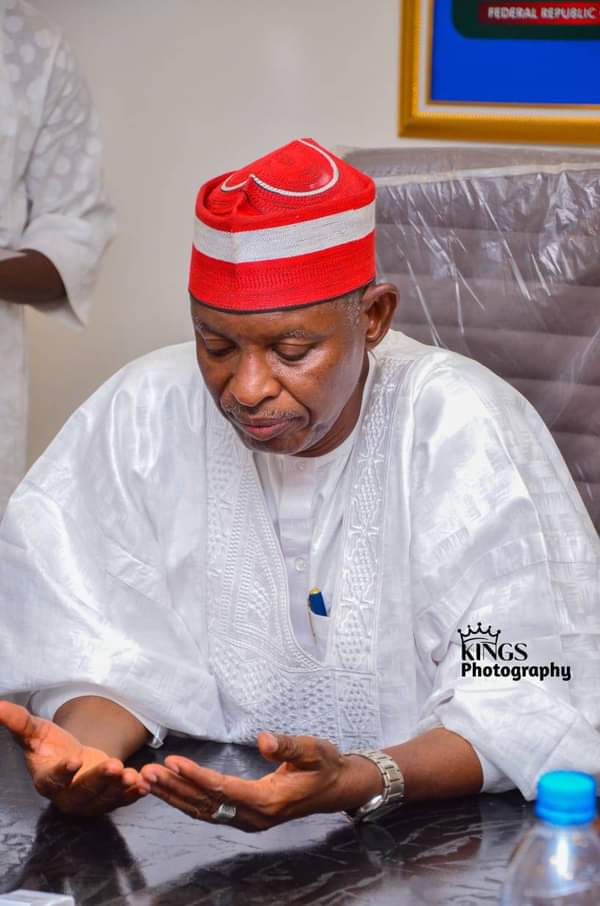
Why the North needs to stand for Abba Gida-Gida
By Sani Umar Adamu
It’s said “An injustice to one is an injustice to all”. The cursory in justice would be an insincere simulacrum that spells the rogue society, but only to who knows must say the least. Going by the saying ‘what the heart thinkenth the tongue speaketh’ with all viable indications the awaiting judgement would not serve and do away with stud whom were racing to twist the world known mandatory, just on the floor of pristine judgement which by the way would be the Nigeria’s biggest justice robbery.
Abba was returned elected and officially declared winner by the INEC, the election which was supervised by both the internal and external observers was believed to be freed from any howl, in fact; it was an afflatus to stimulate by other states. Only greedy and depredator would cease the rectitude of the election and thinkenth to reverse the will of millions. We have known that the only substitute to the lies and unfairness is shaping the mendacity to bring in seizing, itch and threatening of the democracy.
We became tootles in reticent the voices of our concern are in taciturnity where we no longer feel the pain in others; the pain of my neighbor is no longer threatening, as if telling the truth is synonymous to being a workshy. The naked truth has become something invisible – that which can not be seen simply because the ambitions and hopes are tied to president’s apron string. To cleanse the Augean stable – we definitely need to voice up our concern learn from the history of Hercules who was to clean the stables of Augeas King of Elis in which were 3000 oxen and which stables had not been cleaned for thirty years. Hercules performed the task in a single day by leading the rivers Alpheus and Peneus through the farmyard… this is to show how quality of trusting and voicing the concern is. So on no account we should lay out our hands, our voices and our fortitude to this least moiety-imballlance we have received from the judgement of the Kano state governor. With menacle or co-adjutor, with wantonness or pride we all have to coalesce to break the unspeakable inept trench drawn between justice and injustice.
To secret or not to do the Injustice is lethal and apparently we shouldn’t live in negation to it’s very existence, the wrath horror would summon the every existence of our survival. And when the fury unleash it wouldn’t spare the opulents or the one in abject poverty we all be the receiving edge and in the midst the pollutants disseminate the unity in our lands and finally mock the affirmation of our peaceful coexistence.
A close shave to this prospicience is to replete the almost will of justice towards its impartial equilibrium. That’s the Justice must be served in no conjunction or appeliation to party membership, it should be served on the ground of impartiality. The crooked or inanimate cupidity to topple the incumbent and democratically elected Governor will be checked and stopped on the spot. It’s truly beyond comprehension to figure out why all this hatred in the name of polity? Comparisons are odious, and an empty bag will not stand upright. Decisively this justice miscarriage sensed the intended failure to oust the duly elected Governor. At length the plutocracy is in sight and this will bring the collapse of our youngish democracy and it’s an injure to the prescribed rule of law and when this happens just wait for the time to commiserate the down fall of the entire system at large.
Sani Umar Adamu (Kawun Baba) can be reached via umarhashidu1994@gmail.com.
 | ReplyForward |
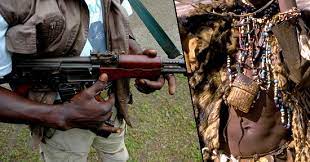
Charms against bullets
By Bilyaminu Abdulmumin
Guns are the enigmatic force that charm practitioners, all over the world, have been trying to crack since time immemorial. There was no length these charm practitioners didn’t go to contain this mysterious “oyibo” invention. In 2017, Daily Trust reported an awful story about a member of a Vigilante Group in Katsina and his quest for bullet charm. This lad was said to test the charm while in the middle of the vigilante gathering, so in a show of bravery and gallantry, he wrapped himself up in the charms, did incantations, picked a dane gun, and fired on himself. He died instantly!
Coincidentally six years later two similar stories shook the internet. One was in Bauchi State. According to an interview by the Bauchi police in the viral video of the purported spiritual helper, luck ran out of them. As he was testing the charm on his client the bullet pierced the helper’s stomach. The second incident, all the way in Ghana, but this time around it was gang members who claimed to have gotten the charm against the bullet, so this too, when testing the charm against one of them he immediately kicked the old bucket. Why is the constant desperation going unorthodox ways for bulletproof when it could be easily achieved when tuned to science’s endless ways?
Bulletproof materials are simply materials fabricated using layers of strong fibers. The fibers that are strong enough can “catch” and deform a bullet, mushrooming it into a dish shape and spreading its force over a larger portion of the fiber materials. In other words, fiber materials like vests could absorb the energy from the deforming bullet, bringing it to a stop before it can completely penetrate the textile matrix. There are fibers everywhere including heaps of waste along the roadsides in our cities, this could be harnessed for such purposes. Some time ago, I heard in an interview from one Nigerian student who was working to harness the fibers in chicken feathers to develop a bullet vest. This student further elaborated the idea behind the bulletproof in another way, he said strong fibers arranged in a particular way act like black hole phenomena, the concept that was revolutionized by the greatest 21st theoretical physicist, Sir Steven Hawking.
A black hole consumes any force that comes close to it without a trace. So a carefully prepared fiber material has this awesome feature. I wish I could learn further where the idea of this student has gone. Perhaps for the show of bravery and gallantry the charms practitioners want it natural, without the use of any vest. Then they should cry no more because there is equally a research in this direction. This involved directly engineering human skin to deflect the bullet. In the Netherlands, another student researched this by bioengineering a small sample of human skin to include spider silk between its layers. The Netherlands Forensics Institute has test-fired low-speed rifle bullets at it, and shown that it halts them.
So, it’s up to researchers to pick up from here by bioengineering human skin with spider silk for higher rifle endurance. The sons of slain victims of bullet charm would have very good motivation to continue with this research. Whenever it comes to bullet charm, Bokero’s legacy stands out. Bokero claims to be possessed by snakes, as a result, he became known for assisting with every spiritual help. So when the East African countries, Tanzanians and co, grew impatient with German colonial rule, back early in the 1900s, they turned to Bokero for help. He provided them the war medicine, according to Bokero the concoction would not only protect them from the German bullets but would turn the bullet into water, motivated by this new charm, these zealots would confront German firearms. May the souls of about 300,000 rest in peace.
Kano Governor files appeal against tribunal ruling, claims error in ballot analysis
By Sabiu Abdullahi
Governor Abba Yusuf of Kano state has filed an appeal at the Supreme Court challenging the decision of the Kano State Governorship Election Petition Tribunal.
The tribunal had declared Yusuf Gawuna of the All Progressives Congress (APC) winner of the March 18th, 2023 election, deducting over 165,000 votes from Yusuf’s tally due to alleged lack of proper endorsements on the ballot papers.
In a notice of appeal filed by his lawyer, Wole Olanipekun, SAN, Yusuf argues that the tribunal made a significant error in its analysis of the evidence presented by the APC.
According to the appeal, the analysis conducted by the APC’s own witness only identified 1,886 ballots without proper endorsements, a stark contrast to the 165,616 deducted by the tribunal.
The appeal argues that the tribunal erroneously deducted over 165,000 votes from Yusuf’s tally due to a misunderstanding of the evidence presented.
It claims that the analysis conducted by the APC’s witness identified only 1,886 ballots lacking proper endorsements, significantly less than the number deducted.
The appeal further clarifies that even among the ballots flagged, many had partial endorsements like signatures or stamps, not justifying their complete removal.
The appeal emphasizes that all the disputed ballots carried official markings like the INEC logo, coat of arms, and serial numbers, confirming their legitimacy.
Governor Yusuf’s legal team is confident that the Supreme Court will recognize the errors in the tribunal’s decision and restore his rightful victory.
The outcome of this appeal will have significant implications for the political landscape of Kano state and could set a precedent for future election disputes.
The Supreme Court is yet to schedule a hearing for the appeal.
Both parties will present their arguments to the justices, who will then issue a final ruling on the matter.