
Local hunters, police team up to fight bandits in Bauchi
By Uzair Adam Imam
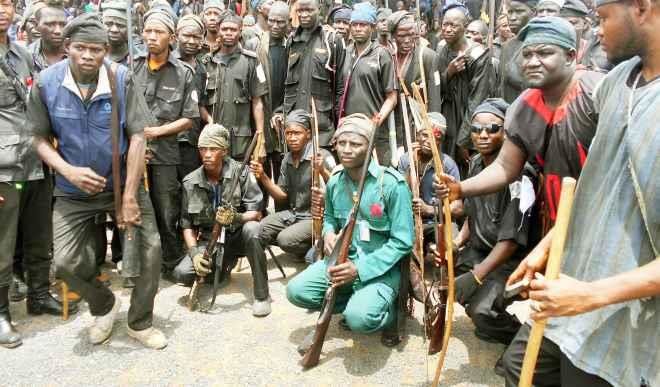
In a joint operation, the Bauchi State Police Command and local hunters from Ahmed Ali Kwara have neutralized six suspected bandits terrorizing communities in Ningi LGA.
The operation was carried out in response to complaints from local residents about increased bandit activity in the area.
The police and local hunters are continuing to work together to keep the community safe and bring peace to the region.
The Commissioner of Police Auwal Musa Muhammad, disclosed this on Wednesday while briefing journalists in Ningi.
He said the operation was also a response to the brutal killing of eight people, including the traditional ruler of Kada and Gamji village in the LGA in July.
CP Muhammad explained that following the brutal killing of the eight people, the command raised a team of detectives in conjunction with the quasi-security outfits of Ahmed Ali Kwara.
He reported that a joint team of police officers and local hunters engaged suspected bandits in a gunfight on December 26 at 4:03 AM, resulting in the deaths of six of the suspected bandits.
CP Muhammad noted that two AK47 rifles, 55 live ammunition, four empty magazines, the sum of N4.5 million, one Golf 3 vehicle, seven new SIM cards, and six keypad phones were recovered from the bandits.
The commissioner further revealed that stolen items recovered from them included 11 Android phones, four keypad phones, 24 pieces of mobile batteries and 190 pieces of recharge cards.
He added that, “preliminary investigation revealed that the bandits, within two weeks, invaded four villages around Ningi, including Bukutumbe, Iyayi, Kayadda and Gamji, where they shot four people and killed one member of the vigilante at Bukutumbe.
“They proceeded to Kiyawa Local Government Area in Jigawa State where they kidnapped two wives of the Chairman Kiyawa LGA, Jigawa State,” He added.
The joint team is continuing its efforts to secure the community and apprehend any remaining suspects.

Does internet help in medical treatment?
By Aliyu Nuhu
I saw a post by a friend advising people not to check their symptoms on internet and should go to hospitals for all their complaints. He was partially correct, but wrong in underestimating the power and importance of internet-based knowledge.
Medicine recognizes home treatment for non emergency medical conditions. But there is a caveat that you should consult a doctor if symptoms persist or get worse.
Always remember that doctors themselves know a lot about their speciality, but they also know little in a vast ocean of knowledge in other fields of medicine. You can know better than them if you choose to read.
My son was given about fifteen medications to take after heart surgery. But because I have knowledge of the disease and drug options,I was able to engage the doctor and at the end the drugs were reduced to four. Take note that I did not reduce the medication on my own. I only used my knowledge of pharmacy to engage the doctor and get him to reduce them himself. Some of the drugs were to be taken for few weeks and to be discontinued. Some were doing the same job and one of them has to go. Some were to alleviate symptoms, and if the child didn’t have the symptoms what was the need for them? Some were for pains from surgery and if the wound was healed there was no need for them. I once educated a doctor for asking a child to take calcium for bone strength, but he obviously didn’t know that the body would need vitamin D to successfully process calcium. Medicine is so vast that doctors must also read the internet to keep abreast.
There are treat-at-home symptoms you can learn from internet. I successfully treated myself for common illnesses through internet and over the counter medications. Why should I for instance go to hospital to treat nail fungus? You are your own best doctor. Arm yourself with knowledge before approaching your doctor.
There are symptoms that you know you need professional help. You know the red flags for potentially life threatening symptoms. When you can’t breathe you don’t need anyone to tell you to rush to get medical help at the hospital. When you have severe headache and other symptoms you never had before you should know that you need an immediate medical emergency.
I know when to see a doctor. The important thing for you is to also know when to see your own doctor. Even when meeting with my doctor, my vast knowledge of medicine prepares me for drug options and procedural choices. Internet makes you even choose the right doctor. If you have blood in your urine check for the possible causes. The regular GP may not detect if your condition is postate cancer. Oncologist knows what other tests to do and confirm if you have the condition. If you have shortness of breath, painful arm, etc, the cardiologist is the person that will know that you need angiogram to know if there is blockage in the circulatory system.
We have good doctors no doubt but always know that we have imposters, some that did not even read medicine in the university. Our hospitals are populated with half-baked professionals that only knowledge could save you from their deadly mistakes.
A whole teaching hospital treated a relative of mine for cerebral malaria when she actually had tuberculosis of the spine. My son was diagnosed with truncus ateriosis when in actual fact he had tetralogy of fallot. Without internet I would have been lost. However, a careful check gave me better understanding of the symptoms and led me to the right laboratory that identified the right disease. Internet led me to the right doctors abroad.
It will be suicidal just to rely on doctors without having elementary knowledge of your symptoms and treatment options. Drugs have side effects and also, interaction issues with other drugs or foods. If you don’t read you won’t know. Your doctor is human and has many patients and will not have time to educate you. Educate yourself. Knowledge is not only power, but in medicine it can be a life-saver.
Aliyu Nuhu writes from Abuja, Nigeria.
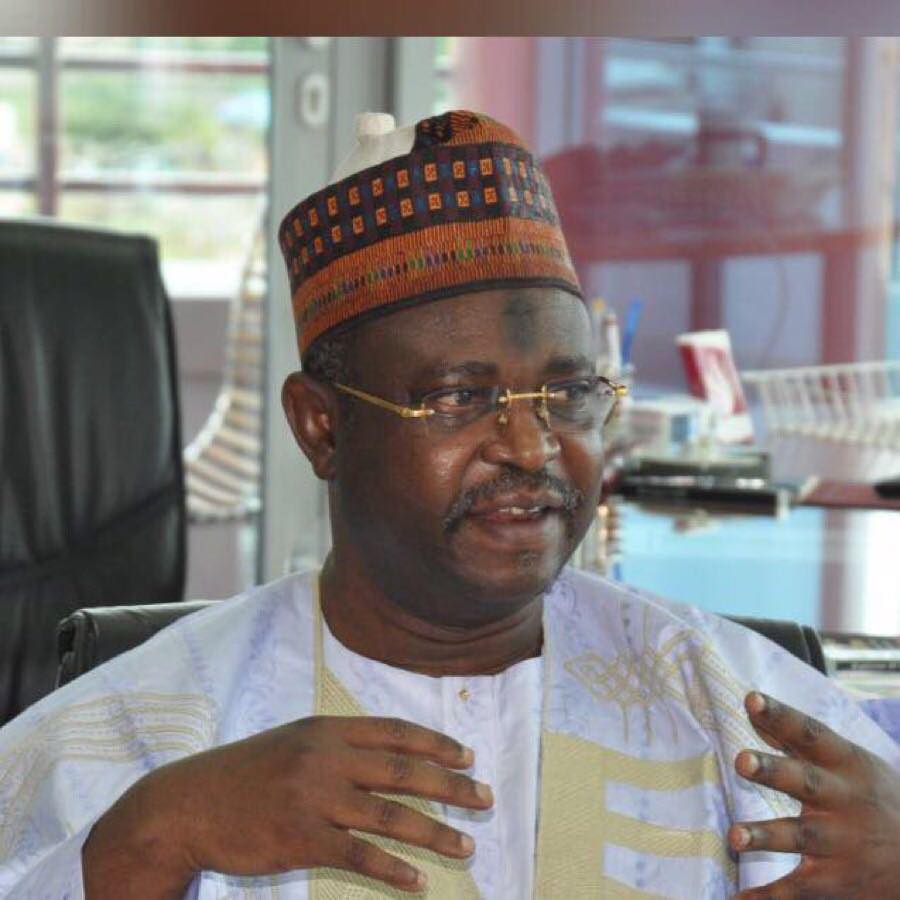
A personal tribute to Ghali Umar Na’Abba
By Amir Abdulazeez
Sometime in 2006, I walked into the famous Gidan Akida building, the then-Kano State headquarters of the Advanced Congress of Democrats (ACD), a new party formed by the breakaway PDP faction. I was there to inquire about how lowly-placed people like us can actively participate in the development of the party. The State Public Relations Officer told me that I have the option of choosing to belong to any of the four main houses within the party: Muhammad Abubakar Rimi, Malam Musa Gwadabe, Alhaji Gwadabe Satatima and Ghali Umar Na’Abba.
When the PRO heard that I cherished them all but wanted to work in the Na’Abba camp, he congratulated me for working under a disciplined, courageous and principled politician. Unknown to him, I had already known Ghali Na’Abba some ten years before, maybe earlier. Apart from being too young to know much about the other three political leaders practically, I have taken time to follow the stewardship of Ghali Na’Abba as the Speaker of Nigeria’s House of Representatives for the better part of 1999-2003.
In that same year, 2006, Na’Abba was declared for the Kano State Governorship. I was genuinely convinced that if elected, he would make Kano one of Nigeria’s most disciplined and organised states. His discipline, confidence and organisation have often been misunderstood as arrogance. On this, he has cleared the air on many occasions. From what I know of him, he was a man of few words expressed only when necessary; he has a gentle and reserved personality, which makes him never delve into affairs that don’t concern him.
I remember working with like-minds to engage in one of the best intellectual mobilisations any young undergraduates could do to garner support for Na’Abba to become Governor then. Unfortunately, he withdrew from the governorship race some weeks before the Action Congress (AC) primary elections. This new party was the product of a merger between ACD, Bola Tinubu’s Alliance for Democracy (AD) and other groups. Ghali’s withdrawal speech wasn’t detailed, but his arguments were that the process was too manipulated for any honest and disciplined aspirant to withstand. I think that was the last time Ghali contested for any position in his political career.
Ghali Umar Na’Abba was more than a political figure—a beacon of integrity, courage, and unwavering dedication to Nigeria. As a former Speaker of the House of Representatives, his legacy resonates far beyond his political tenure. Na’Abba’s commitment to democratic values and principles shaped the course of Nigeria’s political landscape. His leadership during a critical juncture in Nigeria’s history marked him as a staunch advocate for transparency and accountability.
Beyond politics, Ghali Na’Abba was a symbol of resilience and fearlessness, unafraid to challenge the status quo for the betterment of his nation. His vision for a prosperous, united Nigeria was evident in every action and word he spoke.
Na’Abba’s tenure as the Speaker of the House of Representatives marked a significant chapter in Nigeria’s political history. He was known for his principled stance and his assertive approach to upholding the legislature’s independence and separation of powers, particularly in the face of President Olusegun Obasanjo’s bullish administration.
The Fourth Republic in Nigeria was still in its infancy when Na’Abba assumed the role of Speaker. With the country transitioning from years of military rule to a democratic system, the political landscape was rife with challenges. However, Na’Abba brought to the forefront a blend of experience, political acumen, and a commitment to legislative oversight. He staunchly believed in the autonomy of the legislative arm of government and its pivotal role in checking the excesses of the executive. This belief set the stage for numerous clashes between the National Assembly, under Na’Abba’s leadership, and Obasanjo’s administration.
Obasanjo could not have the audacity to unleash his anti-democratic tendencies until Na’Abba left the Speakership in 2003. Every Nigerian who witnessed the two tenures of Obasanjo (1999-2007) will testify to this. During his tenure, Na’Abba led the House of Representatives with a firm hand, asserting the legislature’s independence and challenging executive actions deemed against the national interest. One of the notable confrontations arose from the legislature’s insistence on its oversight function. Na’Abba’s House of Representatives was resolute in investigating various issues, including allegations of corruption within the government, regardless of pressure from the executive arm.
Sadly, today’s many young political followers did not have the opportunity to witness and be inspired by the era of great and principled leaders like Ghali Na’Abba. They are unlucky and unfortunate to find themselves supporting reckless crooks and shameless greedy people who have turned them into sycophants, social media warriors and other roles that have kept them perpetually stupid. These are some of the reasons that have kept Na’Abba on the sidelines since 2007.
Since 2007, whenever Ghali has attempted to reactivate his participation in Nigeria’s political landscape, he has immediately realised there is no space for disciplined people like him. Rather than adjust and follow the trend, he simply retreats and faces his private issues. He had always chosen integrity over selfishness. In 2011, his house was burned down in Kano by hooligans because he supported President Jonathan. I have never heard him complain publicly about this treatment meted out to him by his people. As always, he was calm, reserved and simply forged ahead. That was how he permanently minded his business away from the murky, dirty and irresponsible waters of Nigerian partisan politics.
Today, 27th December 2023, we have lost Ghali Na’Abba, a few months after turning 65 and almost exactly one year apart from the death of his mother, another woman of trust, integrity and kindness. May Allah have mercy on them both. His legacy lives on as an inspiration to current and future leaders. Ghali’s contributions to Nigeria’s democratic journey will forever be remembered and cherished, a testament to the enduring power of principle-driven leadership.
At a point when Kano’s reputation soared by the Salisu Buhari Toronto certificate scandal, Ghali Na’Abba, his successor as Speaker, worked diligently to give the state a good name nationally and even globally. His active career was short-lived, but he managed to enter the comity of the political all-time greats in the history of Kano State. It now remains to see how the current custodians of the state will work to have his name honoured and legacies preserved.
After surviving numerous blackmails, countless threats, and several impeachment attempts as Speaker, President Obasanjo later ganged up with his foot soldiers and garrison commanders in Kano to deny him a return to the National Assembly in 2003. First, they failed to stop him from getting the Kano Municipal PDP ticket, and then they later ganged up to work against him and their own party in the General Elections, and they succeeded. The fall of Ghali Na’Abba marked an abrupt end to the era of Legislative Independence and Political courage in Nigeria.
Twitter: @AmirAbdulazeez
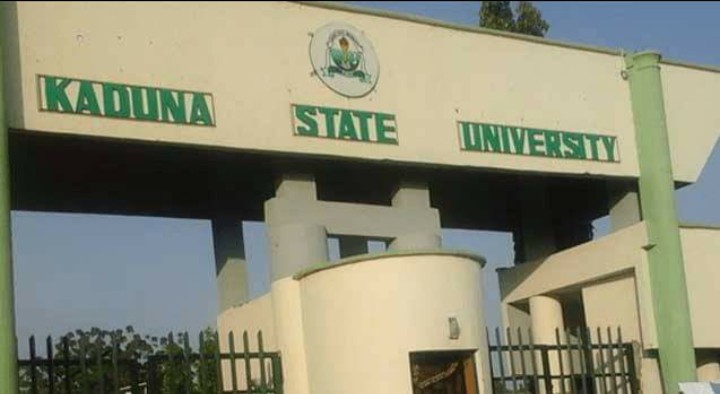
KASU demands 10 essays from applicants seeking lecturing jobs
By Ishaka Mohammed
In its latest recruitment exercise, which commenced on December 18, 2023, Kaduna State University (KASU) is demanding ten essays from every applicant seeking a lecturing position.
The Daily Reality gathered from an applicant that the writing section is one of the ten steps in the application process. The essay topics revolve around technology in education, teaching philosophy, assessment formats, critical thinking development and journaling.
KASU opened its recruitment portal on December 18 for qualified individuals seeking lecturing jobs in the various departments. The positions include contract, internship, graduate assistant, assistant lecturer, lecturer II, lecturer I, senior lecturer and professor.
The application is completely online, and interested individuals are to create accounts at https://recruitment.kasu.edu.ng and submit their applications on or before December 31.
Founded in 2004, KASU has about 40 academic departments and is the only state university in Kaduna.
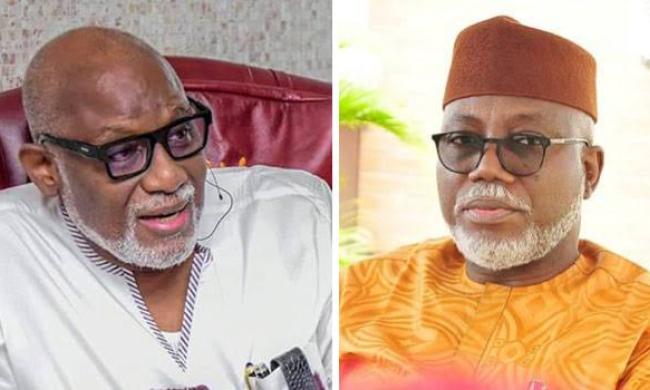
Ondo State swears in new governor after death of Rotimi Akeredolu
By Uzair Adam Imam
Today, Ondo State acting governor, Lucky Aiyedatiwa, will officially be sworn in as the new governor of Ondo State.
A reliable source at the state House of Assembly said that “it’s true that the acting governor would be sworn in today by 4 p.m.
The swearing-in ceremony for Ondo State’s new governor, Lucky Aiyedatiwa, comes after the recent passing of the previous governor, Rotimi Akeredolu.
He added that, “He is presently out of the state. As soon as he’s back, the Chief Judge of the state, Justice Olusegun Odusola, will swear him in as the governor.”
Recall that the state Information and Orientation Commissioner, Mrs Bamidele Ademola-Olateju, announced the death of the governor via a statement in Akure.
The statement read: “With a heavy heart, the Ondo State Government announces the tragic passing of our beloved Governor, Arakunrin Oluwarotimi Akeredolu (SAN).
“Mr. Governor peacefully departed from this world in the early hours of today, Wednesday, December 27, 2023.
“This tragedy has left behind a profound void in our hearts. Governor Akeredolu answered the eternal call while receiving medical treatment in Germany.
“He succumbed to complications arising from protracted prostate cancer.
“A letter has been sent to President Bola Tinubu to officially inform him of this devastating news.
“The Family and the Ondo State Government appreciate Mr. President for his support for Governor Akeredolu during his illness.
“The family and the state government will release further details regarding the funeral arrangements.
“Governor Akeredolu was an extraordinary leader whose unwavering dedication to the state and its people was both commendable and unparalleled.
“He not only served as the Governor of Ondo State but also emerged as a prominent advocate for the entire Southwest region and the nation.
“Governor Akeredolu was a courageous leader and an exemplar of integrity. The weight of this loss is truly unbearable.
“However, we find solace in the knowledge that Arakunrin Oluwarotimi Akeredolu lived a purposeful life, devoted to the service of God Almighty,” the statement added.

“No one ever makes rich with salary”
By Mohammed Usman (Noble-pen)
I often see people confidently saying the above statement, especially to sway someone’s mind and make him subscribe to their opinion. And most of them don’t care to take the time to think about it thoroughly.
On the surface, the statement is true and leaves susceptible minds with no option but to agree. But suppose we subject it to close examination, broaden our lens of thinking horizon, and look at it from a different angle. In that case, we realise that the statement is not as accurate as it is often considered.
Most people quickly make this statement; they merely take the case study of low-level salary earners working for a government or at a government ministry and then confidently make this sweeping statement: “No one ever makes rich with salary.”
Suppose we hover our thinking over those low-level salary earners at government ministries and those holding miniature academic certificates. In that case, we cannot deny that no one among them, or hardly one among them, becomes rich with salary because the amount most of them receive as salary can only keep them breath and save them from dying of absolute starvation. They are mere slaves.
Worst still, some people have very little or no savings and investment power. The rate of their disposal out of the salary outweighs that of their savings by a large percentage. They are living hand to mouth.
However, no one can tell me that those holding advanced academic certificates and working in top levels of government, national and multinational corporations, and organisations (nongovernmental) that they are not making rich with their salary. Even the low-level workers in such organisations and corporations are getting rich!
Therefore, the above statement is false whenever we look at it from this angle. And so we advise those people making the statement to reframe it accordingly because they are not right.
In any case, the word “Richness” is subjective. Different people perceive and interpret it differently depending on their different life orientations. Some perceive and interpret being rich as only when you garner, in large profusion, materialistic things. Some interpret being rich as being able to manage scarce resources to attain satisfaction. Therefore, in this class, a poor person is greedy, always looking for more and more, and never gets satisfied with what he has. I belong to this class of people.
If a person wants to work to earn a salary and sustain a living, let him do it. And that makes him no less reasonable than someone aspiring to enter a business venture. It is called “Individual and personal opinion”. By the way, it would not be brilliant to expect everyone to become a business owner or own a business venture or enterprise for a living.
But of course, business is worth it, especially in this current global economy. It offers numerous benefits to individuals, society, and the economy, such as : (1) Job Creation: Businesses create jobs which help people earn a living and improve their standard of living. They provide employment opportunities for workers of all levels of education and experience ; (2) Economic Growth: Businesses contribute to economic growth by generating revenue, investing in research and development, and creating new markets and industries. This, in turn, stimulates economic activity and raises the standard of living for everyone…. You can mention the others!
So whether business or salary earning, the end is the same: “to earn a living”, and being rich, as I said above, is a subjective case.
Thank you
Mohammed Usman (Noble-pen) wrote via mohammedusman5706@gmail.com.
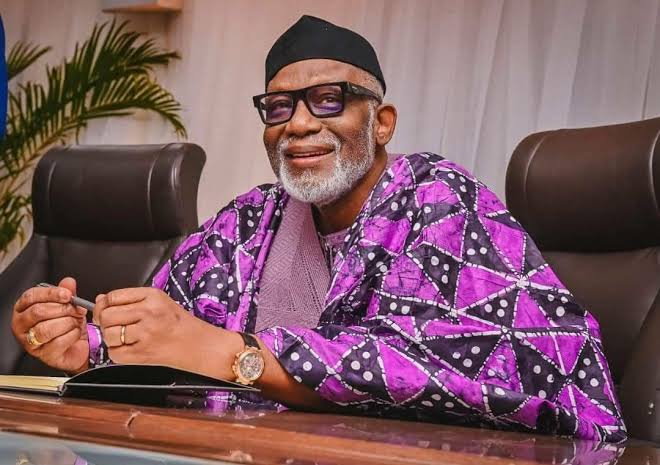
Governor Rotimi Akeredolu of Ondo State passes away at 67
By Sabiu Abdullahi
Ondo State is in mourning as Governor Rotimi Akeredolu, aged 67, succumbed to health challenges in Lagos.
Despite efforts to secure medical treatment abroad, the governor remained in Lagos under State House doctors’ care until his demise.
Returning to Nigeria in September after a three-month medical leave in Germany, Akeredolu faced persistent health issues.
Recently on medical leave again, he handed over power to his deputy, Lucky Aiyedatiwa, who has been acting as governor.
The late governor’s decision to govern remotely from Ibadan, Oyo State, sparked public outrage.
Ex-speaker, Ghali Umar Na’Abba, passes away in Abuja
By Sabiu Abdullahi
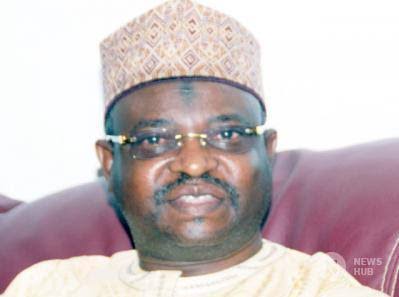
Ghali Umar Na”Abba, former Speaker of the House of Representatives, passed away early Wednesday in Abuja.
Sources indicate he succumbed to a brief illness at an Abuja hospital.
Born on September 27, 1958, into the family of businessman Umar Na’Abba in Tudun Wada, Kano City, Na’Abba, a political science graduate from Ahmadu Bello University in 1979, left a notable mark on Nigerian politics.
His early education at Jakara Primary School, Kano, and later at Rumfa College and the School of Preliminary Studies, Kano, paved the way for admission to Ahmadu Bello University in 1976.
In 2004, he capped his educational journey with a postgraduate programme on leadership and good governance at Harvard University.
What are you bringing to the table: Reflections
By Abdelghaffar Amoka
I have read comments from some ladies on social media that they can’t marry a man who earns less than a certain value, for example, N300k. I have no issue with setting such a minimum. I am of the school of thought that a man should be able and ready to take care of a woman before making that marriage decision. It is okay to set a minimum amount that the man must bring to the table. But that means you must have also set a minimum you are bringing to the table. So, what are you bringing to the table?
Don’t tell me about your body because we all have a body we are bringing to the table. Of course, your fine face and body shape may be the first point of attraction to a man. He will be wow! See beautiful face! See fine shape! Lower your gaze, bro. But that is just a motivation. A man needs more than a pleasing face in a woman/wife to keep him going. In the words of Jim Ryun, “Motivation gets you started, but habit keeps you going”. There must be something to keep you going, or else it crashes.
In 2012, shortly after returning from the UK, I got into a talk with a lady I really liked. She told me she, too,really liked me, but her feelings for me were not enough to survive a lifetime relationship. I was happy with her honest submission. That was the most honest response I have got from a lady. So, both parties must bring something that will keep a lifetime relationship. That thing is most likely beyond your pretty face and his 300k.
There are different kinds of wives. The normal wife and the Trophy wife. Do you want to be a Trophy wife? Your body is all that is needed to be. You can be brainless; it doesn’t matter; your value is in your physical appearance. You are just a status symbol who has to ensure a flawless look to enhance the social status of your husband. He sure knows you need that money to spend on your looks to stay attractive to him and the clients you are to impress. He will make provision for that. They (Trophy wives) seem to serve the same purpose as models.
For the normal wife, your value is not your physical appearance but your personality. The same personality that made you feel he would be a great husband and father to your kids. Husband and wife are full-fledged partners in making their home happy and prosperous. They are supposed to be loyal and faithful to one another and genuinely interested in each other’s welfare and the welfare of their children. A woman is expected to exercise a humanising influence over her husband and to soften the sternness inherent in his nature.
While a fine face could be the motivation for a lifetime relationship, we are expected to bring our heads to the table. We should be able to share ideas. He should be somebody to look up to and be able to be your guide. He should also be able to tell you the ideas in his head for your input and criticism. You should be his second opinion. You should be able to help him grow his ideas.
A man is enjoined to also educate and develop the women in his care so that they cultivate the qualities in which they, by their very nature, excel. You should be willing for that development. You should be able to transform your ideas into a product, even from your kitchen, to support yourself. He will want to come home and be told: “Sweetheart, I have done so and so to transform the 100k you gave me the other time to 120k and have got so, and so plans to re-invest it for more gain”. He will be like, Yeah! That is my wife.
He may not need the money as he is responsible for taking care of you. But you should be able to support yourself in some things. You can also voluntarily support him without asking. Marriage is about growing a family. It’s not just about bringing a minimum of N300k to the table. The N300k may still not be enough if she doesn’t have what it takes to manage it. It is having what it takes to help him manage and maximise his resources for the family.
You are not a commodity. You are priceless. Stop objectifying yourself. Your worth and potential are in your head. It does not lie on that flaunted sexualised fatty part of the body. Your value is unquantifiable. Stop putting a price tag on yourself. Not even the pleasure derived from talking with each other can be priced. No amount of money can buy that. Take a lesson from those humble, beautiful women and wives who are professionals and entrepreneurs. There are a number of them that I admire every day.
To brothers, if you are looking for a Trophy wife, ensure you have the cash to maintain the trophy. Her flawless look must be kept intact against all odds.
Dear friends, be yourself and listen to yourself. Relationships are not destined to be or not to be. They work because the people involved find something interesting about themselves and are willing to make sacrifices to make it work. I hope to write about my mother someday. Don’t live by social media. Don’t get carried away by social media euphoria. Don’t let some frustrated individuals on the net confuse you. The value of family is priceless. Let’s bring our heads to the table to build that small empire for a beautiful family.
Abdelghaffar Amoka Abdelmalik, PhD, wrote from Ahmadu Bello University, Zaria. He can be reached via aaabdelmalik@gmail.com.

Teaching: the most underrated profession in Nigeria
By Ibrahim Tukur
Teaching, a practice dating back to the inception of human civilization, remains the cornerstone of knowledge dissemination and societal development. Across diverse forms, teaching has wielded a profound influence in shaping our lives and the world at large. It is the vessel through which knowledge, information, and invaluable experiences are preserved and transmitted across generations. In the structured confines of schools, students engage with various disciplines, not solely to absorb knowledge but also to challenge, reframe and contribute to a brighter future.
Yet, despite being the progenitor of all professions, Nigeria seems to overlook the significance of the teaching profession. Unlike professions like law or medicine, where extensive training and years of study are prerequisites, teaching frequently appears as an accessible career path, sometimes attracting individuals without the essential pedagogical skills or comprehensive subject mastery.
This oversight manifests glaringly in the under-appreciation of teachers by the Nigerian government, notably in the form of insufficient compensation. The meagre salaries offered to educators fail to recognize the intricacies and demands inherent in their roles, severely limiting their ability to perform optimally and affecting their morale.
Additionally, the teaching landscape in Nigeria grapples with a multitude of challenges which impede effective delivery. Inadequate infrastructure, including scarcity of classrooms, laboratories, libraries and teaching materials, acts as a significant barrier to effective teaching and learning processes. This scarcity, coupled with a shortage of qualified educators and deficiencies in teaching methodologies, hampers students’ ability to reach their academic potential. The lack of comprehensive and quality teacher training programs stands as a significant challenge faced by educators in Nigeria.
Many teachers enter the profession without adequate preparation, lacking essential pedagogical skills and updated teaching methodologies. This deficiency in training directly impacts their ability to effectively engage students, cater to diverse learning needs, and employ innovative teaching techniques. Insufficient training also hampers educators’ efforts in adapting to evolving educational trends, impacting the quality of education imparted to students across various levels of schooling.
Consequently, Nigeria’s education system suffers, and the negative ramifications are dire. If not rectified, this neglect of teaching – the bedrock of all professions – will perpetuate the birth of under-qualified professionals. It’s a situation that could escalate brain drain, where competent educators seek opportunities abroad where their expertise is appreciated and duly rewarded.
Recognizing the pivotal role which teachers play in shaping society, there’s an urgent need for substantial reforms. It starts with acknowledging and properly compensating teachers for their arduous task of moulding minds and futures. Additionally, investing in comprehensive teacher training programs, extending the duration of educational courses to allow for a more thorough mastery of teaching methodologies, and implementing stringent selection processes for educators are imperative steps.
The government’s commitment to furnishing all schools with adequate resources and facilities is equally crucial. This holistic approach is essential to ensuring seamless teaching and learning experiences, vital for the nation’s educational advancement.
In conclusion, it’s paramount to accord teachers the reverence and support they deserve. Their pivotal role in shaping both individuals and the world demands not only acknowledgement but also concrete actions aimed at rectifying the systemic deficiencies currently hampering the teaching profession in Nigeria.
Ibrahim Tukur is a hearing-impaired individual who hails from Ingawa town in Katsina. He earned his first degree in Special Education/Sociology. He is a Disability Rights Advocate and can be reached via inventorngw@gmail.com.