


MURIC hails FG for suspending degrees from Benin, Togo
By Abdurrahman Muhammad
An Islamic human rights organisation, the Muslim Rights Concern (MURIC), has commended the Federal Government (FG) for suspending the accreditation of degrees obtained from the Republic of Benin and Togo.
The ban on accreditation followed the discovery of irregular and fraudulent practices in the admission and course programs of some universities in the two countries.
MURIC’s commendation came through a statement issued by its Executive Director, Professor Ishaq Akintola, on Wednesday, 3rd January 2024.
He said:
“A laudable move was made yesterday by the Federal Government (FG) when it suspended the accreditation of degrees from the Republic of Benin and Togo for their irregularities and fraudulent practices” (FG Suspends Accreditation Of Degree Certificates From Benin Republic, Togo – Channels TV).
“It will be recalled that Umar Audu, an investigative journalist of Daily Nigeria newspaper, reported recently that he bagged a degree within six weeks of being admitted into one of such universities and also served as a corper in the National Youth Service Corps (NYSC) with the certificate obtained. The undercover journalist received both the transcript and certificate of the Ecole Superieure de Gestion et de Technologies (ESGT), Cotonou, Benin Republic, after six weeks only.
It was this story that prompted FG to ban the accreditation of certificates obtained from universities in those countries (https://dailynigerian.com/undercover-how-daily-nigerian/).
“MURIC lauds FG for banning those fraudulent certificates. The holders of such fake credentials pose a grave danger to the lives of Nigerians and the quality of public service, too.
“We charge the ministries of education at both federal and state levels to be wary of holders of such certificates. Those found to have been employed with them should be shown the way out. Furthermore, the security agencies should fish out those behind the fraudulent admissions within Nigeria. Those are agents of the fake tertiary institutions in faraway Benin and Togo. They should be made to face the full wrath of the law.
“We demand an investigation into circumstances surrounding the clearance letter issued by the Federal Ministry of Education, which confirmed that the university (ESGT) is on the ministry’s list of accredited institutions. It was this letter which enabled NYSC to accept 51 fake graduates to serve in the scheme. On its own part, NYSC authorities must take necessary action on the 51 fake corpers from ESGT who are serving illegally. They must be flushed out.
“We also advise gullible but innocent Nigerians who have obtained the certificates to quickly set the machinery in motion to correct the anomaly. They should upgrade themselves by seeking authentic university admission either within or outside the country.
“Education may be the key to technological breakthrough and the concomitant industrial progress, but half-baked education and fake certificates are deadly dynamites in the system which is capable of destroying everything that may have been achieved.
“Before we draw the curtain, we find the undercover journalist equally worthy of encomiums. He went underground to unearth this educational fraud. He put his life on the line for the sake of his country. Umar Audu is worthy of emulation by his colleagues in the Fourth Estate of the Realm.”

As bandits relocate to Taraba and the Plateau
By Zayyad I. Muhammad
Recently, the media have been awash by the news of bandits’ attacks in Taraba and Plateau states. On November 24, 2023, it was reported that gunmen in their numbers attacked and killed 20 people in the Yangtu Development Area of the Ussa Local Government Area of Taraba State. In the early hours of Tuesday, December 19th, 2023, other gunmen attacked the Pupule community in Yoro Local Government Area of the same Taraba state, kidnapped Umaru Nyala, the chief of Yorro chiefdom, and also abducted 22 other people.
The Taraba State police command and other security operatives killed over 50 bandits terrorizing villages along the corridor of Bali Local Government Area on Tuesday, November 28th, 2023. On the other hand, on Wednesday, December 27, 2023, a group of bandits stormed the Gondon Maliki weekly market in Taraba State, kidnapped scores of people, and carted away food and wares using motorcycles.
The Sultan of Sokoto, Alhaji Sa’ad Abubakar III, while condemning the gruesome murder of over 100 people in the Plateau, said, “The bandits seem to be ahead of the government.”
To be fair to all the Nigerian security operatives, they’ve done an excellent job in the Northwest states of Zamfara, Kaduna and Katsina, in facing the menace of the bandits. These states have witnessed a visible improvement in security in areas being terrorized by the bandits, and the Abuja-Kaduna highway is secured while the Niger axis is a little bit silent.
It appears that the military onslaughts on the bandits and other terrorists have killed many of their leaders, and they have dispersed to the Northeast axis and some parts of the Plateau. Why did the bandits settle in these areas, especially the Northern parts of Taraba State – Yorro, Lau, Jalingo and Ardo Kola local government areas? Is it due to its topography, location or economy? Taraba State is among the poorest states in Nigeria but rich in agriculture and forestry. Probably the bandits found solace in Taraba due to its uniqueness in geography and agricultural activities. Furthermore, the Cameroonian mountains, which stretch almost to the entire Northern and Southern parts of Taraba, linking the state with the River Niger, will certainly provide a hiding place for criminals, bandits in particular.
The only way of this menace is for the state, federal and local communities to work together; collaboration is key to security management. For example, at its 8th and 9th meetings held in Maiduguri, the Borno State capital, on September 9th, 2023, and in Yola, the Adamawa State capital, on November 24th and 25th, 2023, the Northeast Governors’ Forum expressed its concern about the new dimension of the growing banditry in Bauchi, Gombe and Taraba states, and this may be as a result of the concerted efforts of the military on neutralizing the bandits from other parts of the country. The governors called on the federal government to intervene and promised to work with and support all security agencies.
Managing security in a vast country like Nigeria with inadequate modern technology for security management can be very difficult, and our security operatives cannot be everywhere and anywhere at the same time. So what is the solution?
The re-invigoration of the kinetic and non-kinetic security approaches by the Office of the National Security Adviser (ONSA) has resulted in many successes and breakthroughs; however, more intelligence gathering is needed; community engagement and direct communication with the bandits should be employed. In community engagement, the model being used by the Governor Ahmadu Umaru Fintiri-led Adamawa state government in tackling farmer-herder conflict should be adopted; the community should be made to feel part of the solution in security management, thus providing intelligence and also being a watchdog for security operatives without being endangered.
Secondly, the reported ongoing ‘soft approach’ should be sustained and, indirect communication with the bandits. Most of them now also use social media; thus, a kind of smooth operation should be launched by the ONSA and other relevant bodies to recruit people who speak the languages of bandits to send convincing messages to them on the ills, disadvantages and evils associated with their dangerous ‘trade’ while showing them the beauty and benefits being enjoyed by their ‘kind’ who adopt normal lives, go to school both western and religious, but still maintain their culture, beliefs and inherited legal trade.
Furthermore, radio and TV are also tools to reach the bandits, as satellite TV and solar power technology have now made it possible to watch or listen to the world, wherever one is – bandits, hiding in thick forests, use solar power and satellite technology to charge their phones, watch TV and listen to the radio. Above all, justice and fair play by those in power in providing the basics of life and alleviating poverty and ignorance away from these bandits will surely assist a lot in reforming them back to society.
Zayyad I. Muhammad writes from Abuja via zaymohd@yahoo.com.
The hidden reality of life in Europe
By Aminu Mohammed
This article was inspired by a recent post by Dr Muhsin Ibrahim on Facebook regarding money belonging to someone named “Hassan Idris” sent through his PayPal account. Muhsin made the post asking the person to identify himself by sending him a message. However, soon after, he was inundated with messages from people seeking help in various forms. Some even asked him for money, assuming he had won a lottery or had ample cash stocked somewhere.
This issue not only worried me but also made me sad about the attitude of our youths. So that you know, I also live in Germany. I am yet to fathom the reason for the sudden influx of requests based on a Facebook post. Is it desperation, greed, ignorance, or the belief that money grows on trees in Europe?
I have thought about this issue and wondered why this behaviour occurred. Is it that the economic situation in the country has impoverished a large segment of society, making people desperate and in dire need of free money? What could be the reason behind this attitude?
I want to make it clear that I am aware of the difficult economic situation in Nigeria due to inflation and other factors. I also understand that there are genuine people who are in dire need of help and who reach out to Muhsin for support. However, I want people to know that just because Muhsin lives and works in Germany, it does not mean he is rich.
The Untold Story About Europe
Europe is often seen as a paradise with streets paved with gold and abundant wealth. However, the reality is different. Life in Europe is not as easy as it seems. Homelessness and begging are common in countries such as France, Italy, the Netherlands and the United Kingdom. In London alone, at least 167,000 people are homeless due to the high cost of living. Comparably, a great number of immigrants, among them Africans, are stuck in Europe and unable to return home because they are afraid of what is ahead.
Although the standard of living is high in Germany and the government provides stipends for jobless citizens, there are still poor people, beggars and homeless people in the country. In my former city, Kiel, I have seen people sleeping in public buildings and bank corridors, even during the harsh winter months. I recently saw a naked woman amongst the homeless folks at the Hamburg Central Station, probably suffering from mental illness. It was heartbreaking.
Despite these challenges, there are still opportunities for people with relevant skills to excel and succeed in Europe. Even without a university education, one can live a good life in Germany by being disciplined and hardworking.
Rising Living Expenses
The ongoing war between Russia and Ukraine has brought about significant economic changes in Europe, particularly in Germany. As a result of Germany’s reliance on Russia for affordable energy, particularly gas, to power its numerous industries, the country has been severely impacted. Germany had to look for alternative gas sources, mainly from Norway and the Middle East. This has led to an increment in energy costs and subsequently affected the cost of living and production.
The high cost of living has affected many families, with numerous individuals struggling to pay their bills monthly. The rat race has worsened, and many people live paycheck to paycheck. Groceries and the prices of other goods have doubled or, in some cases, even more. This is in addition to an increase in rent, energy, water bills, etc.
2024 Goals
It is an incredible experience to step out of your comfort zone and explore new places in life. However, before travelling to any country, please conduct thorough research and set reasonable expectations. Life is not always easy, but you can succeed with diligence, perseverance, and hard work.
Set your goals for this year, and take concrete steps to achieve them. Additionally, aim to acquire new digital skills to increase your earning potential. I wish you the best as you enter the New Year with renewed energy and determination.
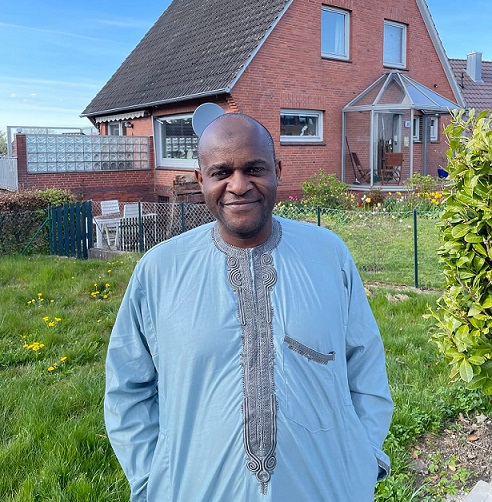
Aminu Mohammed wrote this article from Ingolstadt, Germany. He can be reached at gravity23n@gmail.com.
BUK graduates give out almost N1 million, foodstuffs to deceased colleagues’ families
By Sabiu Abdullahi
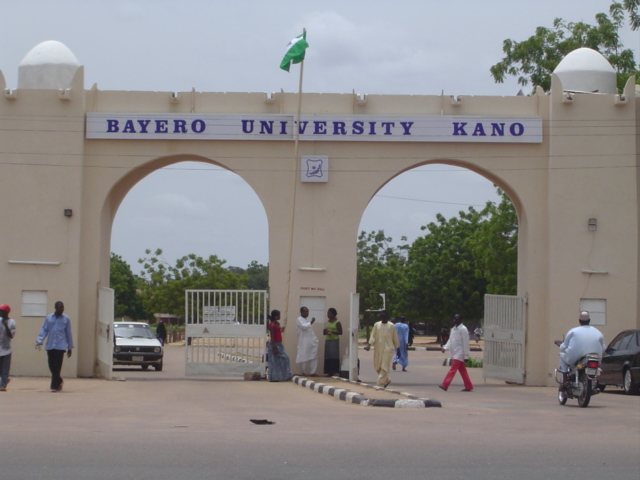
The graduates of the Faculty of Arts and Islamic Studies (FAIS) class of 2004 at Bayero University Kano (BUK) gathered at their 12th Annual General Meeting in Kano on Sunday to extend a helping hand to the families of 18 deceased classmates.
Chairing the reunion, Sulaiman Muhammad Adamu noted that the event wasn’t merely about socialising but a platform to reminisce about the past, savour the present, and collectively envision the future while fortifying the bonds that tie them together.
Daily Trust quoted Adamu to have said, “We are here to enhance unity among the members of this forum and support the families of our deceased colleagues who have passed away. We are supporting them in order to bring them in for more support.”
Disclosing that the support includes food items and a cash token amounting to N50,000 for each family, Adamu assured that the forum would continue to explore additional ways to assist the bereaved families.
The beneficiaries expressed gratitude for the thoughtful gesture, acknowledging the significance of being remembered and included in the activities of their former classmates.
This act of solidarity not only reflects the compassionate spirit of the FAIS class of 2004 but also serves as a testament to the enduring bonds forged during their university years.

UK issues strict policy stopping Nigerian, other international students from bringing dependents
By Sabiu Abdullahi
In its effort to curb the high rate of Japa, the United Kingdom’s Home Office has officially rolled out its rigorous policy restricting Nigerian students and other international counterparts from bringing dependents into the country via the study visa route.
This significant development, designed to tighten immigration controls, was announced on the Home Office’s social media platform, X (formerly Twitter), this Monday.
According to the updated regulations, only postgraduate research students and those with government-sponsored scholarships will be exempt from the prohibition on bringing family members.
This follows the implementation of a law in May 2023 that specifically targets the entry of dependents for Nigerian and other international students, reflecting the broader government objective of reducing immigration, which currently stands at approximately one million.
The Home Office reaffirmed its dedication to a substantial reduction in migration, declaring, “We are fully committed to seeing a decisive cut in migration. From today, new overseas students will no longer be able to bring family members to the UK. Postgraduate research or government-funded scholarships students will be exempt.”
In addition to the ban on bringing dependents, the new regulations include the removal of the permission for international students to switch from the student route to work routes before completing their studies, aiming to curtail any misuse of the visa system.
The UK government also announced a comprehensive review of the maintenance requirement for students and their dependents, coupled with a crackdown on “unscrupulous” education agents involved in improper applications that exploit immigration pathways rather than genuine educational pursuits.
A statement on the official site of the UK’s Home Office outlined the government’s objective to significantly reduce net migration by restricting the ability of international students to bring family members, with exceptions only for postgraduate research routes.
The move also seeks to prevent individuals from exploiting student visas as a backdoor route to work in the UK.

The Three Musketeers and the Last of the Mohicans
By Prof. Abdalla Uba Adamu
It is not every day that a series of coincidental events converge. Like the passage of Haley’s Comet, these events happen only once in one’s lifetime. I am eternally grateful to Allah (SWT) for enabling me to witness one of these coincidental events.
While still in active service in the university, where I have been for the last 43 years, I feel fulfilled that three of my students who became my colleagues and friends in the Department of Education have now become Vice-Chancellors in the same period within three years of each other. These are Prof. Sagir Adamu Abbas (VC Bayero University Kano, 2020), Prof. Abdulrashid Garba (VC, Khalifa Isyaku Rabi’u University Kano, 2023) and the most recent, Prof. Muhammad Ibrahim Yakasai (VC Sule Lamido University, Kafin Hausa, Jigawa State, 2023).
During their career development, I nicknamed them “The Three Musketeers” because of their closeness to each other, coupled with the almost military approach they adopted to their career. They started their doctoral studies at the same time, finished at the same time, rose and became professors at the same time! Each was highly focused with a target in mind. Each has proven his mettle scholastically – with each spending extended periods as a Visiting Professor in foreign universities. The research area of each of them was truly a contribution to knowledge in the discipline.
The term I chose to describe them is based on characters in a novel by Alexandre Dumas in 1844 called “The Three Musketeers”, which describes the adventures of three-foot soldiers who were close pals. I consider myself part of them because they are individually my friends. And these three Vice-Chancellors are really close, not just as professional colleagues but their families are also close.
Of course, besides myself, they had other tutors in the Faculty of Education (Bayero University Kano). Still, I am the only one remaining out of all those who tutored them since all the others have retired. I am, therefore, the Last of the Mohicans (another literary reference, this time to James F. Cooper, 1826) and had the unique opportunity of seeing his career convergence in December 2023 when Prof. Muhammad Ibrahim Yakasai was appointed the Vice-Chancellor of the Sule Lamido University, Kafin Hausa, Jigawa State.
It is a rare opportunity to see a celebration of such success, humility and friendship in each of them. Allah Ya taya su riƙo, amin.
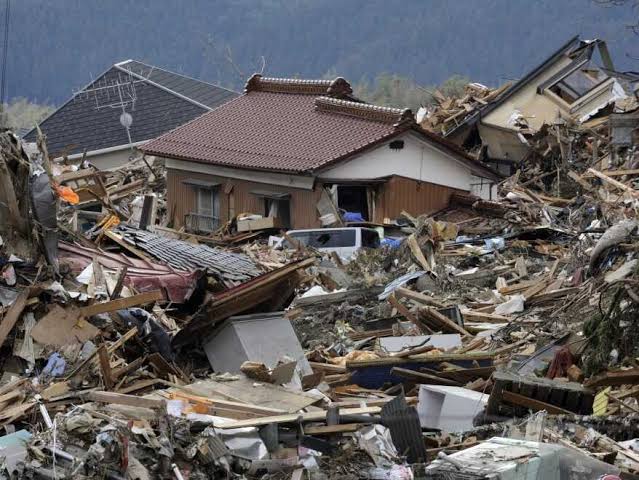
Devastating 7.5 quake hits Central Japan, tsunami threat looms
By Sabiu Abdullahi
Central Japan was struck by a powerful 7.5-magnitude earthquake on Monday, prompting urgent evacuations and tsunami warnings.
The Noto region in Ishikawa prefecture experienced a series of quakes, including a 7.6-magnitude tremor.
National broadcaster NHK and the Pacific Tsunami Warning Centre issued alerts, urging residents to move to higher ground.
Confirmed tsunamis of 1.2 metres hit Wajima city, with a potential five-metre wave expected in Noto, according to the Japan Meteorological Agency.
The US Geological Survey recorded multiple quakes, emphasising the severity of the seismic activity.
Japan, with its strict construction standards, faces haunting memories of the 2011 disaster and ongoing seismic threats.
Despite emergency preparedness, the nation remains on edge, with the historical seismic vulnerability of Tokyo echoing a century-old earthquake in 1923.
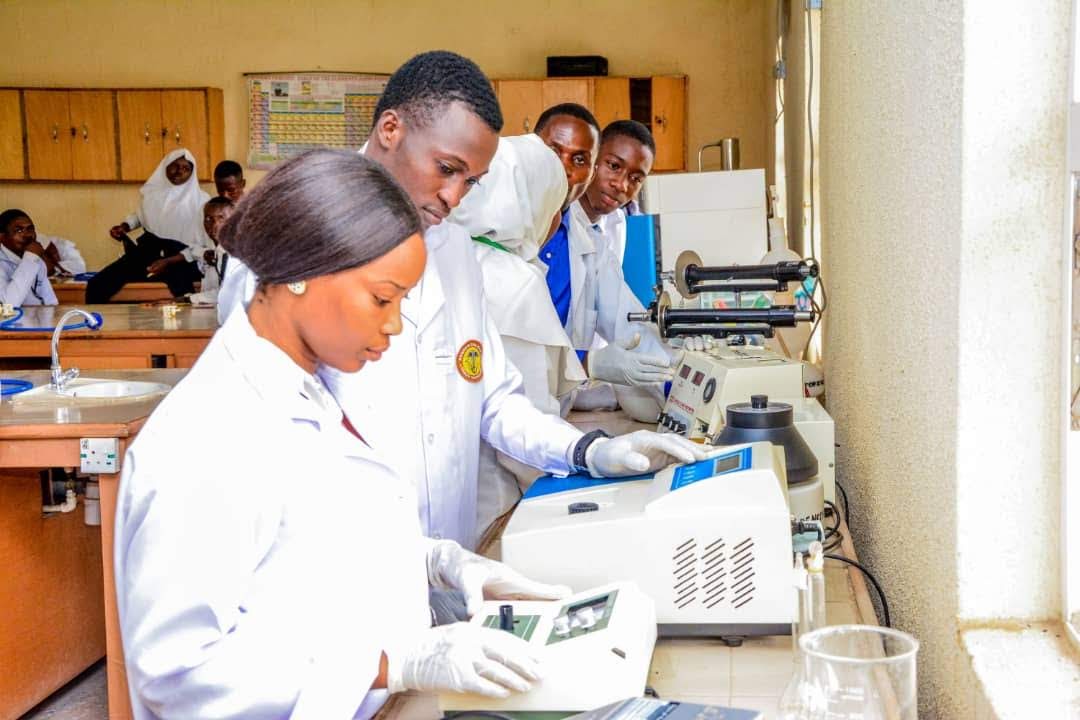
‘Over 10,000 medical laboratory scientists left Nigeria in 2023’—MLSCN calls for urgent policy intervention
By Uzair Adam Imam
Dr. Tosan Erhabor, the Registrar of the Medical Laboratory Science Council of Nigeria (MLSCN), disclosed that a staggering 10,697 medical laboratory scientists have left the country, with 4,504 departing in 2023 alone.
The brain drain, attributed to various factors, has prompted the Federal Ministry of Health to devise a policy aimed at regulating the migration of Nigerian health workers.
Dr. Tosan Erhabor expressed his concern about the exodus of medical laboratory scientists during an interview with the News Agency of Nigeria (NAN).
He highlighted the urgent need for a comprehensive policy to address the root causes of migration and establish regulatory measures.
“The total number of medical laboratory scientists that have migrated is 10,697,” Dr. Erhabor stated.
He further revealed that the Federal Ministry of Health is actively working on a policy framework that would govern the migration of health professionals and potentially curb the alarming trend.
To alleviate some of the challenges faced by health professionals, Dr. Erhabor shared that the government has initiated a review of the hazard allowance for health workers.
Additionally, considerations are being made to review the minimum wage and other allowances specific to health professionals. Dr. Erhabor underscored the importance of creating a safe and conducive work environment as a crucial factor in stemming the tide of brain drain within the medical laboratory science field.
The reasons behind the migration, as outlined by Dr. Erhabor, are multifaceted. He cited poor remuneration, uncertainties in career progression within teaching hospitals, the pursuit of education abroad, the desire to acquire new skills, and enhanced professional status as contributing factors.
Moreover, the security situation in the country, inadequate infrastructure, and a lack of modern equipment have prompted many professionals to seek opportunities abroad.
The rising cost of living emerged as a critical factor, with Dr. Erhabor noting that it has become practically impossible for the average medical laboratory scientist to provide basic care and quality education for their children.
The preferred destinations for these migrating scientists are reportedly the United Kingdom, the United States, and Canada, reflecting the global appeal of these nations for professionals seeking opportunities and a conducive working environment.
As the healthcare sector grapples with this significant challenge, the MLSCN and relevant authorities are urgently working towards implementing effective policies to retain and incentivize medical laboratory scientists within Nigeria.
The alarming departure of over 10,000 medical laboratory scientists from Nigeria in 2023 has prompted the MLSCN to call for swift policy interventions.
With a multitude of factors contributing to the brain drain, the urgency to address remuneration, career uncertainties, and infrastructural challenges is crucial to retaining and attracting skilled health professionals within the country.
NYSC: A case of poor data management
Ishaka Mohammed
In a recent report by DAILY NIGERIAN, a reporter called Umar Audu worked under cover and obtained a degree certificate from Cotonou in Benin Republic within six weeks instead of four years, and the National Youth Service Corps (NYSC) mobilised him for the mandatory national service.
Although the report contains a lot of disturbing revelations, only one thing surprises me. The said Umar Audu is a genuine graduate in mass communication who participated in the NYSC scheme from 2018 to 2019. Yet, the agency mobilised him again in 2023 and captured his fingerprints without catching him for multiple registrations. It’s scary to realise such poor data management in a scheme which, since its creation, has been headed mostly by high-ranking military officers.
Concerned Nigerians have discussed the benefits of data harmonisation and the effects of its neglect. One of the numerous consequences of scattered data in Nigeria is the presence of people receiving multiple salaries from government ministries, agencies or departments. This is widespread in the same country where millions of citizens, regardless of their qualifications, battle with unemployment, hence suffering from poverty and hunger. With a standard database management system, the suffering of Nigerians can be reduced significantly.
I sometimes wish that Nigeria would be a country with mandatory registration of children at birth. I dream of a country where every birth certificate would contain the bearer’s national identification number (NIN), which would be the chief of the eligibility criteria for free or affordable basic and secondary education, SIM registration, admission to tertiary institutions, employment, visa or passport application, etc.
I imagine a nation with a central database management system which makes everybody’s identification number and fingerprints verifiable. My ideal country is where every government ministry, agency or department can verify anyone’s date of birth, level of education, employment history, etc., using the person’s fingerprints. With all these in place, it would be impossible for one to simply outsmart a federal government agency just like Umar Audu did.
By the way, I commend everyone involved in that investigation. Stories of illegal Cotonou degrees can no longer be called baseless rumours. I’ve heard of similar racketeering in Kogi State but have yet to obtain any tangible proof.

Kano police unveil community-centric strategy for enhanced security as 2023 runs out
By Sabiu Abdullahi
The Kano State Police Command outlined its commitment to fostering peace and security as the year 2023 approaches its final hours.
This was announced in a statement released by the Kano State Police Public Relations Officer, Abdullahi Haruna Kiyawa, via his official Facebook handle.
According to Kiyawa, a community-based approach is needed to tackle criminal activities, especially violent and associated crimes in the state.
CP Gumel stated that the new strategy aims to eliminate bottlenecks and encourages residents to provide timely information and intelligence on suspected individuals within their communities.
The command has actively engaged with traditional and religious leaders to mobilise support from residents, urging them to collaborate with the police in the fight against crime.
“There is no more space for any form of criminality in our area of supervision as competent intelligence officers have been deployed in and out side the metropolis round the clock to build confidence of the people and beep up the desired security relentlessly,” revealed CP Gumel during the press briefing.
Emphasising a zero-tolerance stance on criminality, the CP urged the public to continue volunteering information to the nearest security outfits for prompt action.
Area commanders and Division Police Officers have been briefed on specific security measures to be implemented in their respective areas, ensuring a continued atmosphere of peace, especially during the Yuletide season and the transition into the new year.
As a final note, CP Gumel extended heartfelt congratulations and best wishes to the people of Kano State, expressing optimism for a new year filled with hope, aspirations, and opportunities.
The CP conveyed a message of joy, peace, and prosperity, echoing the sentiments of the entire Officers and Men of the Kano State Police Command.
The Kano State Police Command remains resolute in its commitment to safeguarding the well-being of residents and maintaining peace across the state.