


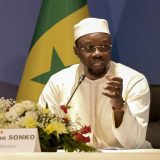
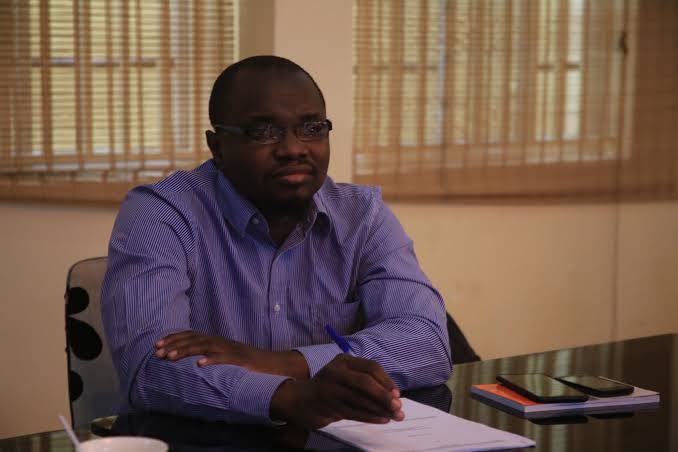
Don raises alarm over alleged job racketeering in Kano as governor promises action
By Sabiu Abdullahi
A Kano indigene and university lecturer based in Cologne, Germany, Muhsin Ibrahim, has raised concerns over alleged job offer racketeering in Kano State, claiming the practice remains widespread despite a change in administration.
In a series of Facebook posts, Ibrahim alleged that the sale of job placements in government ministries and institutions became common toward the end of the administration of former governor Abdullahi Umar Ganduje and has continued under the current government led by Abba Kabir Yusuf.
He stated, “Job offer racketeering was prevalent in Kano towards the end of Governor Ganduje’s administration, in late 2022 and early 2023. I wrote extensively about it here. I thought Governor Abba Kabir Yusuf, with his purported principles, would stop it. I was wrong.”
The lecturer explained that recent discussions with contacts in Kano revealed that the alleged practice is not only ongoing but expanding. He described a situation where employment opportunities are treated like commodities and sold openly.
“For two days, I happened to speak with family and friends about this illicit business in Kano. It is not only happening but also booming and carried out in broad daylight. Like merchandise, job offers at different ministries and institutions are priced and sold in the market,” he said.
Ibrahim also claimed that some individuals have fallen victim to fraud while attempting to secure such opportunities, describing the situation as “double jeopardy.”
“To make matters worse, several people have been scammed. I call this double jeopardy. You are duped while engaging in immoral, unethical practices. You have no one and nowhere to report your case to,” he added.
He acknowledged the challenges faced by job seekers, especially those who have spent years pursuing education without securing employment. However, he blamed those involved in selling job offers and criticised authorities for failing to curb the trend.
“I can understand why some people feel pushed into buy job offers. It is depressing to be without a job after investing so much money, time and energy in obtaining qualifications. So, I largely blame the sellers but also the government for doing almost nothing to stop this,” he stated.
The lecturer urged those involved to desist from the practice and called for adherence to due process in recruitment.
“Please stop selling job offers. Follow proper hiring procedures and standard practices. Do not abet corruption in Nigeria or anywhere else. Change begins with you and me.”
In a follow-up post, Ibrahim disclosed that a government official in Kano forwarded his earlier message to Governor Yusuf, who has reportedly pledged to respond to the issue.
“A Kano government official forwarded my previous post about job offer racketeering in the state to Governor Abba Kabir Yusuf. The Governor has promised to take appropriate action. May Allah (SWT) grant him the wisdom and the will to do so, amin.”
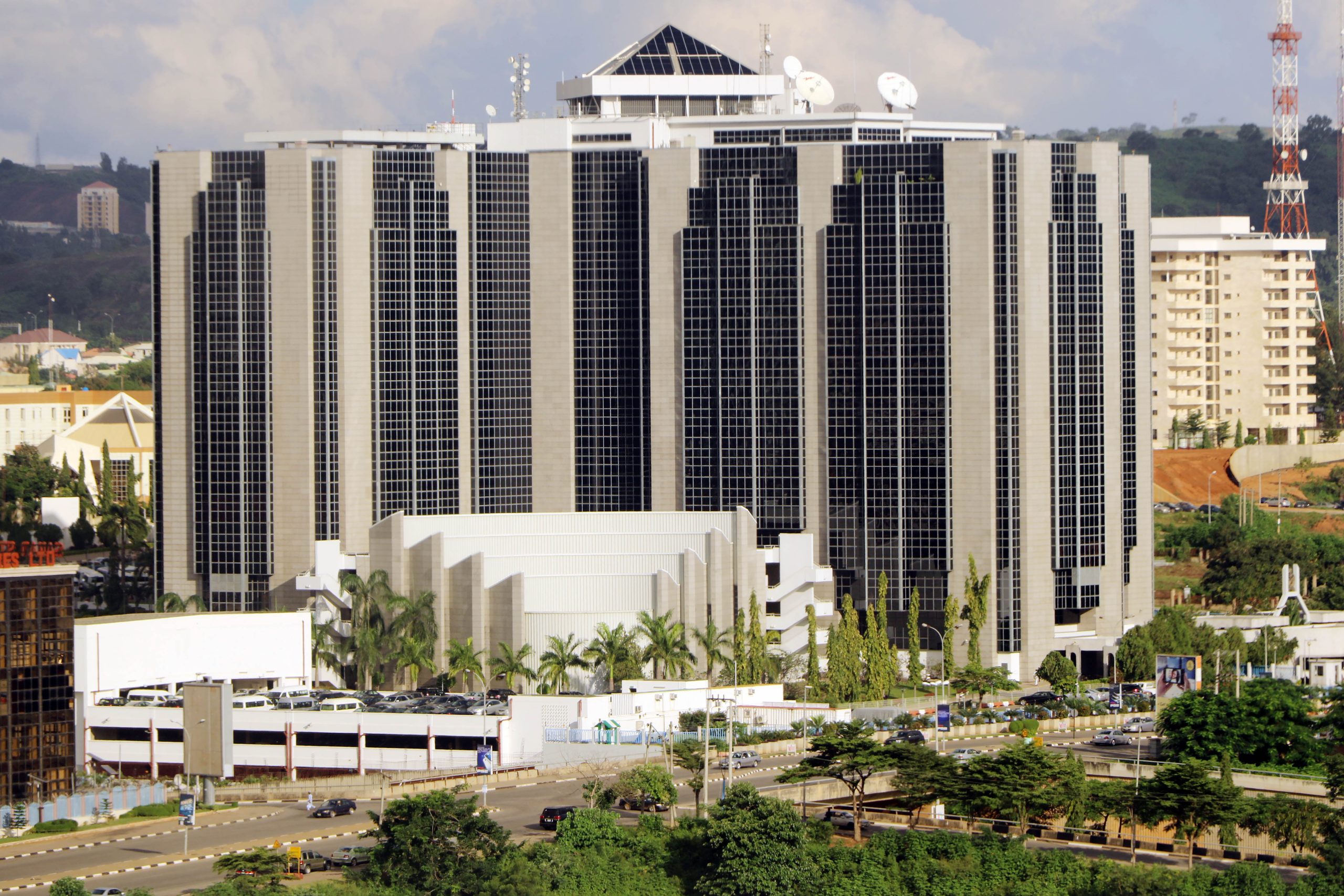
CBN reduces interest rate to 26.5%
The Monetary Policy Committee of the Central Bank of Nigeria has lowered the benchmark interest rate to 26.5 per cent.
The decision marks the second rate cut under the current leadership of the apex bank.
Governor Olayemi Cardoso announced the outcome on Tuesday after the committee’s 304th meeting held in Abuja.
Cardoso said, “The Committee decided to reduce the monetary policy rate by 50 basis points to 26.5%.”
He also stated that the MPC resolved to “retain the Standing Facilities Corridor around the MPR at +50/-450 basis points” and to “retain the Cash Reserve Requirement for Deposit Money Banks at 45.00 per cent, Merchant Banks at 16.00 per cent, and 75.00 per cent for non-TSA public sector deposits.”
The latest adjustment follows a similar 50-basis-point reduction in September 2025, while the committee maintained rates at its November 2025 meeting.
According to the governor, the move was based on “a balanced evaluation of risks to the outlook,” which indicates that “the ongoing disinflation trajectory would continue, largely supported by the lagged transmission of previous monetary tightening, sustained exchange rate stability, and enhanced food supply.”
He explained that headline inflation declined slightly to 15.10 per cent in January 2026 from 15.15 per cent recorded in December 2025. This represents the eleventh straight month of year-on-year decline.
Cardoso added that “Food inflation declined markedly to 8.89 per cent from 10.84 per cent,” while “core inflation declined to 17.72 per cent from 18.63 per cent.”
On a month-to-month basis, inflation dropped to -2.88 per cent in January from 0.54 per cent in December. The committee said this reflects “a continued softening of price pressures.”
The governor also highlighted progress in the external sector. He said the country’s gross external reserves increased to $50.45 billion as of February 16, 2026. He described it as “the highest in 13 years,” with an import cover of 9.68 months for goods and services.
He attributed the growth in reserves to stronger export earnings and higher remittance inflows. He said these factors have supported exchange rate stability and boosted investor confidence.
Cardoso further noted the introduction of Presidential Executive Order 09, which channels oil and gas revenues into the Federation Account. The committee “welcomed” the order and “acknowledged the potential impact of this Order in improving fiscal revenue and accretion to reserves.”
On the banking sector, the governor said key financial indicators remain within regulatory limits. He disclosed that 20 out of 33 banks involved in the recapitalisation programme have met the new minimum capital requirement. The committee described this as “steady progress towards a more robust and well-capitalised financial system.”
The MPC reiterated “the strategic importance of the recapitalisation exercise” and urged the bank to ensure its successful completion to strengthen resilience and support growth.
On economic performance, the Purchasing Managers’ Index stood at 55.7 points in January 2026. This suggests continued expansion in economic activity and possible improvement in output for the last quarter of 2025.
Looking ahead, Cardoso said the outlook shows that “the current momentum of domestic disinflation will continue in the near term,” supported by exchange rate stability and better food supply.
He, however, warned that “increased fiscal releases, including election-related spending, could pose upside risk to the outlook.”
The governor reaffirmed the MPC’s commitment to “an evidence-based policy framework, firmly anchored on the Bank’s core mandate of ensuring price stability, while safeguarding the soundness and resilience of the financial system.”
He added that the next MPC meeting is scheduled for May 19 and 20, 2026.
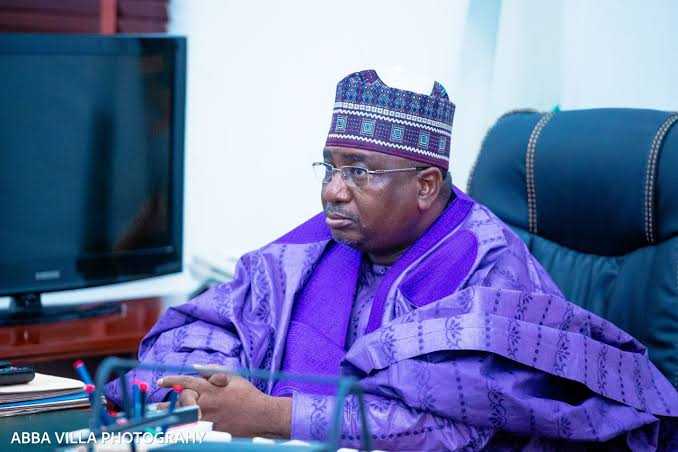
Kebbi to reintroduce housing, vehicle loans for school teachers
By Sabiu Abdullahi
Governor Nasir Idris of Kebbi State has announced plans to bring back soft loan schemes for teachers in the state. The initiative will target primary and secondary school teachers, with support for housing, vehicles, and motorcycles.
The governor made this known on Tuesday during the commissioning of 12,779 pieces of furniture for schools across the state. The items are meant for both teachers and students.
At the ceremony held in Birnin Kebbi, Idris said his administration remains committed to improving the welfare of teachers.
He said, “The government of Kebbi will continue to look into the plights of our teachers.
“In-Sha-Allah, by this year, 2026, we will come up with a package that teachers of primary and post-primary schools will benefit from.
“We shall soon come up with a soft loan package for teachers, this will cover: car loan, motorcycle loan and house loan, among others.
“This is with a view to giving our teachers a sense of belonging.”
The governor also stated that teachers would no longer be treated as second-class citizens. He noted that the provision of furniture forms part of efforts to improve conditions in schools across the state.
Idris said his government is determined to provide a suitable environment for teaching and learning. He added that the furniture distribution complements ongoing construction and renovation projects in schools.
“I want to assure the good people of Kebbi that this is just the beginning; we will continue to provide this kind of furniture for both teachers and students,” he stated.
He further directed that the furniture should be shared equally between the Ministry of Basic and Secondary Education and the Universal Basic Education Board.
Earlier, the Commissioner for Basic and Secondary Education, Halima Bande, commended the governor for his commitment to education and other sectors of the economy.
While expressing appreciation, she said, “We are happy for the projects you have been executing not only for education but across all sectors of the economy.”
Nigerian police apprehend man over alleged killing of girlfriend
By Sabiu Abdullahi
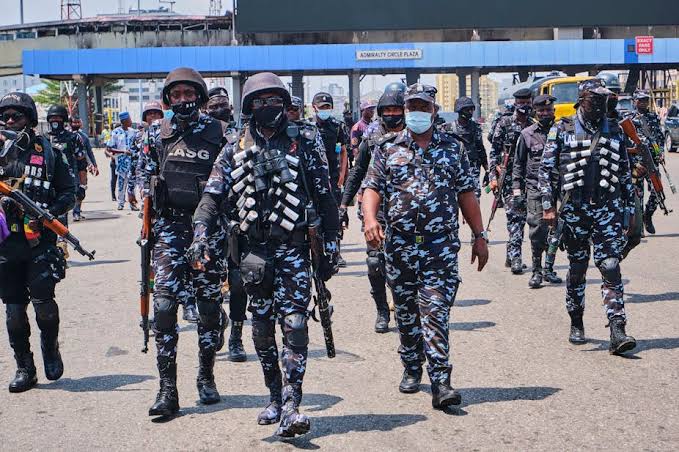
The Abia State Police Command has taken into custody a man identified as Edward Okorie for the alleged killing of his girlfriend, Sophy Chika, in Ohafia Local Government Area of the state.
Reports indicate that the suspect, who is from Isiugwu in Ohafia, was involved in a domestic dispute with the victim, a nurse, before her death. Chika was said to be from Ozu Abam in Arochukwu Local Government Area.
Sources familiar with the incident, who spoke on condition of anonymity due to security concerns, said the couple had been living together in Okagwe village prior to the tragedy. According to the sources, a disagreement between them escalated and led to the fatal outcome.
One of the sources said, “The tragedy struck yesterday, at Isiugwu Ohafia, in Ohafia LGA, Mr Edward Okorie killed his girlfriend. Miss Sophy Chika, who hails from Ozu Abam in Arochukwu LGA of Abia State, was killed by Mr Edward Okorie, an indigene of Isiugwu Ohafia, over a minor misunderstanding that ensued between them.
“The lovers, who were cohabiting for over three years now, had a misunderstanding in the early hour of yesterday and she was reportedly beaten to death by Mr Edward Okorie.”
Confirming the development, the Police Public Relations Officer of the Abia State Police Command, DSP Maureen Chinaka, said she received a briefing from the Divisional Police Officer in Ohafia regarding the case.
She explained that the matter has been moved to the State Criminal Investigation Department in Umuahia for further inquiry.
“Yes, the attention of the Divisional Police Headquarters, Ohafia, was called to it. Suspect has been apprehended, and the case will be transferred to SCID today by the DPO”
Chinaka added that the police have begun a detailed investigation to determine the full circumstances surrounding the incident.
The incident has caused grief and outrage among residents of the Abam community, with many calling for justice and a thorough investigation.
Tinubu removes IGP Egbetokun, Disu named successor
By Sabiu Abdullahi
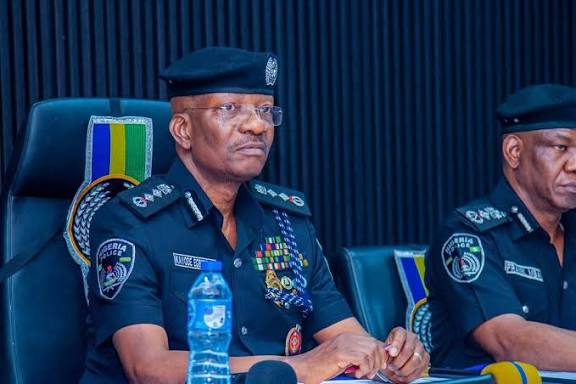
President Bola Ahmed Tinubu has removed the Inspector-General of Police, Kayode Egbetokun, from office.
Reports indicate that the President personally ordered Egbetokun’s dismissal. He is expected to hand over to Tunji Disu, an Assistant Inspector-General of Police in charge of the Force Criminal Investigation Department (FCID) Annex in Alagbon, Lagos.
Senior police officers and sources within the Police Service Commission confirmed the development.
“Egbetokun was at the (Presidential) Villa yesterday and was told to go and prepare his handover notes. I believe he has done that already and he will be handing over to Tunji Disu,” one of the sources said.
Another source criticised the former police chief, stating, “He is incompetent and the scandals are just too many. He is power-drunk. The President said he should leave to focus on getting treatment for himself. You know, he has kidney-related medical issues.”
Some police personnel were said to have celebrated news of his removal.
“Police officers jubilated on Monday when they heard the news. The First Lady Remi Tinubu wanted him to stay but the President was adamant. She fought that he should remain in office despite all the scandals,” a source added.
Egbetokun’s tenure was marked by several controversies. His extended stay in office beyond established retirement limits became a major point of debate. Regulations stipulate retirement at the age of 60 or after 35 years of service.
Civil society organisations and critics argued that his continued stay violated these rules, raising concerns about favouritism and disregard for institutional standards.
There were also allegations involving the rapid promotion of Bukola Yemisi Kuti, a Principal Staff Officer, under unclear circumstances. Critics linked her rise to her closeness to Egbetokun.
In addition, reports alleged that ₦100 million from Anambra State’s security vote was traced to an account associated with Victor, Egbetokun’s son. The claim sparked widespread concern over possible misuse of public funds.
Rather than allowing an independent investigation, authorities were said to have pursued legal action against individuals and platforms that reported the allegations.
During this period, Egbetokun’s office frequently initiated lawsuits against journalists and activists. He filed charges against Omoyele Sowore after the activist referred to him as an “illegal IGP.”
The dispute escalated into a legal battle, with a Federal High Court issuing orders restricting further publications about him and his family. Critics viewed these actions as attempts to silence dissent and limit press freedom.
Following additional reports on alleged promotions and financial misconduct, further court orders were issued barring Sowore and some media platforms from publishing new material concerning Egbetokun, his son Victor, and Bukola Kuti.
Observers argued that instead of addressing the allegations through transparent investigations, the police leadership appeared to rely on legal measures against critics, reinforcing concerns about the handling of the controversy.
Ex-Governor El-Rufai suffers nosebleed in detention, wife denied direct access to deliver food
By Sabiu Abdullahi
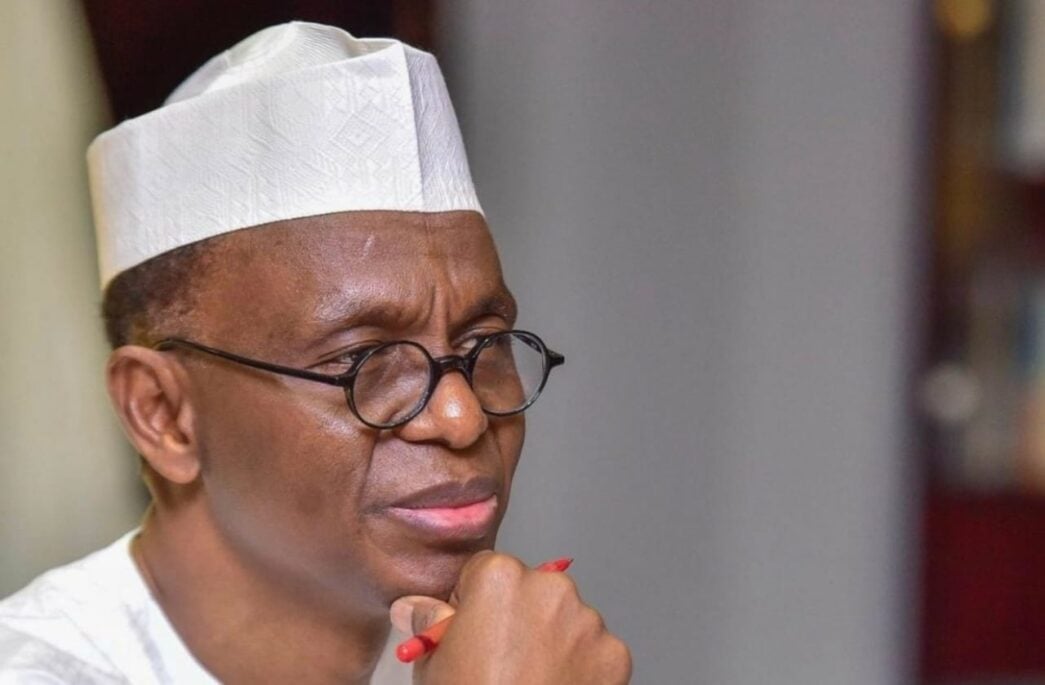
Fresh concerns have been raised over the condition of former Kaduna State governor, Nasir El-Rufai, following claims that he developed a nosebleed while in custody and that his family has faced restrictions in reaching him.
In a statement released on Monday, his media aide, Muyiwa Adekeye, said the former governor has spent eight days in detention after he honoured an invitation from the Economic and Financial Crimes Commission on February 16, 2026.
Adekeye explained that El-Rufai was questioned by officials of the commission and later granted administrative bail. He, however, noted that the former governor remains in custody as his lawyers pursue a review of the bail conditions, which he described as unjustifiable.
The aide also narrated that events took a troubling turn on February 17 when one of El-Rufai’s wives attempted to deliver food to him. She was reportedly stopped from handing it over personally and was asked to pass it through an official of the commission.
He further alleged that the former governor experienced a nosebleed overnight while in detention. According to him, the incident has increased concerns among his legal team regarding his health, welfare, and access to both family members and legal representatives.
Adekeye added that on the night of February 18, El-Rufai was transferred from the custody of the EFCC to the Independent Corrupt Practices and Other Related Offences Commission without prior notice. His lawyers, he said, were not informed before the relocation took place.
Since the transfer, his legal team has applied for bail before the ICPC but is yet to receive a response. Adekeye insisted that no valid remand order has been presented to justify the continued detention beyond constitutional limits.
He disclosed that the former governor is expected to appear before the Federal High Court on February 25 in a fundamental rights enforcement suit filed against the Federal Government, the ICPC, the EFCC, and the Department of State Services, seeking to secure his release on bail.
The aide warned that the development raises serious concerns about due process and the protection of detainees’ rights as the legal battle unfolds.
Earlier reports indicated that El-Rufai had filed a ₦1 billion fundamental rights enforcement suit at the Federal High Court in Abuja. He challenged what he described as an unlawful invasion of his residence by operatives of the ICPC alongside police officers.
The suit, marked FHC/ABJ/CS/345/2026 and filed on February 20, alleged that officers stormed his Abuja residence on February 19 using what his legal team described as a defective search warrant.
Through his counsel, Oluwole Iyamu, SAN, the former governor argued that the warrant contained multiple flaws. These include lack of specificity, material errors, and absence of probable cause, which he said rendered the operation unconstitutional.
Court documents also claimed that officials seized documents and electronic devices without providing any inventory. His lawyers argued that this violated provisions of the Administration of Criminal Justice Act, the ICPC Act, and constitutional rights related to dignity, personal liberty, fair hearing, and privacy.
El-Rufai is seeking court orders to nullify the search, compel the return of all seized items, and restrict the use of any materials obtained during the operation. He is also demanding ₦1 billion in damages alongside legal costs.
His legal team stated that the incident caused “significant psychological trauma, humiliation, distress, reputational damage, and emotional harm,” as concerns continue to grow over the handling of the case by authorities.
Army convoy foils ambush in Kebbi, kiIIs five terrorists, seizes weapons
By Sabiu Abdullahi
The General Officer Commanding (GOC) 8 Division and Commander of Sector 2, Joint Task Force North West Operation FANSAN YAMMA, Major General Bemgha Koughna, successfully foiled a deadly ambush by suspected Lakurawa Terrorist Group (LTG) near Mayama Hill in Kebbi State. The attack targeted the GOC’s convoy as it traveled to visit frontline troops deployed in the state.
This is contained in a press release signed by Lieutenant Colonel Olaniyi Osoba, Acting Deputy Director of Army Public Relations, 8 Division, Nigerian Army / Sector 2 Operation FANSAN YAMMA, on 23 February 2026.
According to the press release, the convoy “came under sudden and heavy fire from armed terrorists” while moving through the forested terrain. Displaying “exceptional leadership and tactical prowess,” Major General Koughna and his troops responded with overwhelming firepower, killing five terrorists and repelling the ambush.
“This operation not only secured the convoy but also disrupted the terrorists’ plans, delivering a strong deterrent message to insurgent groups that have been terrorizing local communities in the general area,” the statement said.
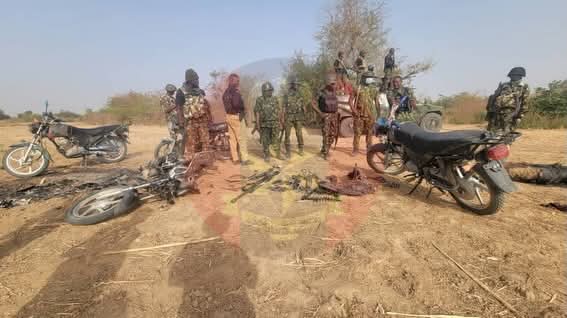
After neutralizing the attackers, troops conducted a thorough sweep of the area and recovered a significant cache of weapons and intelligence materials. Items recovered include “one OJC Gun, one PKT Gun, two AK-47 Rifles and four AK-47 Magazines,” as well as “one Bandolier of PKT Ammunition, several rounds of 12.7mm Ammunition, a camel bag containing ₦840,000, two mobile phones and five motorcycles.”
Troops remain deployed in the area, maintaining vigilance to prevent further attacks. The operation highlights the Nigerian Army’s commitment to “protect civilians and eliminate terrorist threats in the North West region,” the statement added.

Residents flee Gwana in Bauchi en masse over rising deadly bandit attacks
By Sabiu Abdullahi
Residents of Gwana District in Alkaleri Local Government Area, Bauchi State, have abandoned their homes and belongings as insecurity in the community intensifies.
Families are fleeing the area in large numbers, seeking safety in neighbouring states, leaving the settlement nearly deserted.
Pictures that have gone viral on social media show people hurriedly packing their belongings, loading household items onto vehicles and motorcycles, and preparing to leave the community amid palpable fear.
Witnesses state that repeated attacks and constant threats have made it impossible for residents to go about their daily activities. Some residents said the situation has become unbearable, with many unable to sleep peacefully at night.
“The absence of an adequate security presence has emboldened criminal elements, leaving villagers vulnerable to further attacks,” one local resident said.
The mass displacement has also disrupted farming and other economic activities. Many residents have left behind farmlands, livestock, and personal property, relocating to safer communities or seeking refuge with relatives in neighbouring states.
Authorities in Bauchi State had not issued any official statement on the situation in Alkaleri at the time this report was filed.

Seyi Law claims Nigeria safer now under Tinubu than 10 years ago
By Sabiu Abdullahi
Seyi Law has argued that security in Nigeria has improved compared to a decade ago, stating that the current administration has performed better than previous governments.
The comedian-turned-politician made the remarks during a yet-to-be-aired episode of the Honest Bunch podcast. He was responding to a question on whether the country is safer today than it was 10 years ago.
He maintained that the administration of Bola Ahmed Tinubu has delivered stronger security outcomes than those of former presidents Goodluck Jonathan and Muhammadu Buhari.
According to him, more bandits have been eliminated under the current government. He also pointed out that incidents such as bomb explosions have reduced in recent times. The 42-year-old further stated that the economy has improved since Tinubu assumed office.
“Nigeria is safer now than 10 years ago. This government has killed more bandits since Jonathan’s. When have you last heard of a bomb blast? It is not today that they have been kidnapping people in their houses,” he said.
“Nigeria’s economy is better than Tinubu met it.”
However, his comments were challenged during the discussion, as another guest disagreed with his position, insisting that “Nigeria is more unsafe than it has ever been”.
Nigeria continues to grapple with security threats in several regions. These include attacks by Boko Haram and Islamic State West Africa Province, as well as criminal gangs commonly referred to as bandits, who engage in kidnappings and armed attacks.
Data from the National Human Rights Commission indicates that at least 2,266 people lost their lives to banditry and insurgency within the first half of 2025. The figure exceeds the total recorded for the whole of 2024.
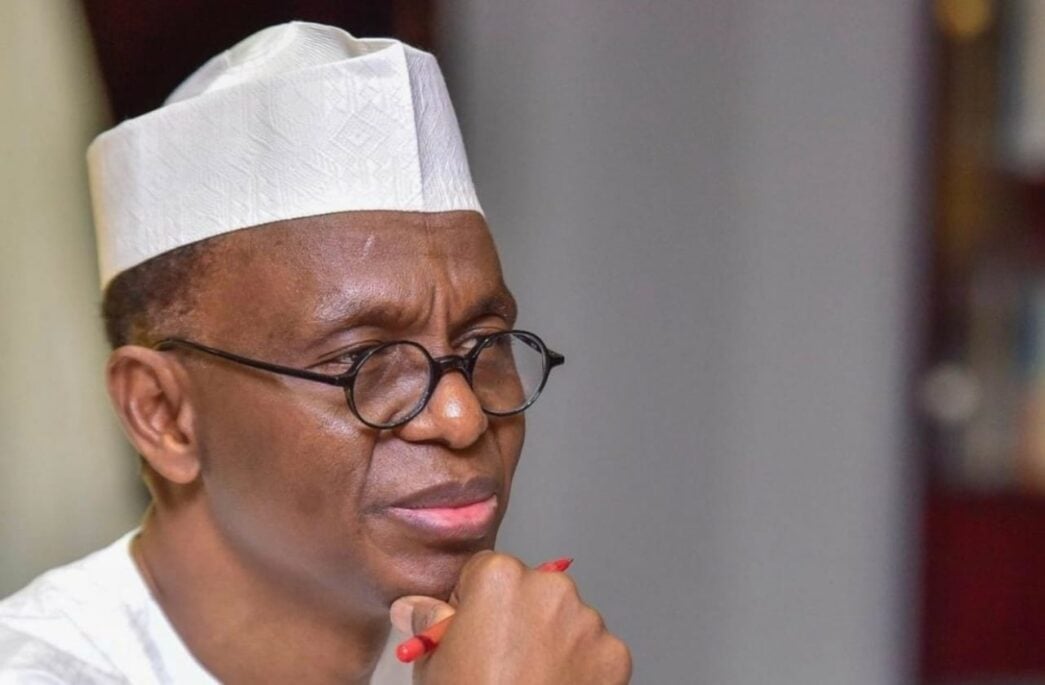
El-Rufai drags ICPC to court over alleged unlawful search of Abuja residence
By Sabiu Abdullahi
Former Kaduna State governor, Nasir El-Rufai, has taken legal action against the Independent Corrupt Practices and Other Related Offences Commission (ICPC), accusing the agency of illegally raiding his residence in Abuja.
The suit, marked FHC/ABJ/CS/345/2026, was filed at the Federal High Court in Abuja through his legal team led by Oluwole Iyamu. In the case, El-Rufai is asking the court to invalidate a search warrant issued by a magistrate court in the Federal Capital Territory on February 4. The warrant authorised security operatives to conduct a search and seize items from his home.
El-Rufai has remained in ICPC custody since Wednesday, February 18, over what officials described as “connection with investigations”. His media aide, Muyiwa Adekeye, earlier alleged that operatives of the anti-graft agency carried out an “unlawful” search at the residence.
In the fundamental rights enforcement suit, the former governor listed the chief magistrate who approved the warrant, the inspector-general of police, and the attorney-general of the federation as respondents.
He is seeking a court declaration that the actions of the ICPC and the Nigeria Police Force violated his constitutional rights. These include the rights to dignity, personal liberty, fair hearing, and privacy as provided under sections 34, 35, 36, and 37 of the constitution.
El-Rufai also asked the court to rule that any material obtained during the search should not be admitted as evidence in any legal proceedings against him. He argued that such evidence was obtained in violation of constitutional provisions. He further requested an order preventing the respondents from using any items seized during the operation.
In addition, the former governor urged the court to compel the ICPC and the police to return all items taken from his residence, along with a detailed list of those items.
He is demanding N1 billion in damages over what he described as trespass, unlawful seizure, psychological distress, and reputational damage. The claim includes N300 million as compensation for emotional trauma, N400 million as exemplary damages to discourage misconduct by law enforcement agencies, and N300 million as aggravated damages for what he termed “malicious, high-handed and oppressive” conduct.
El-Rufai also requested N100 million to cover the cost of filing the suit and legal representation.
‘Warrant Riddled With Defects’
In his argument, Iyamu maintained that the search warrant was fundamentally flawed. He said it failed to clearly state the items to be seized, contained significant drafting errors, and gave overly broad powers to those executing it.
“The search warrant was null and void for lack of particularity, material drafting errors, ambiguity in execution parameters, over-breadth, and absence of probable cause, thereby constituting an unlawful and unreasonable search,” the lawyer said.
He cited sections 143 to 148 of the Administration of Criminal Justice Act (ACJA) 2015, noting that applications for search warrants must be backed by sworn statements that show reasonable grounds for suspicion.
Iyamu further stated that the warrant “vaguely referred to ‘the thing aforesaid’ without any particular description”, adding that it did not follow the prescribed format and contained mistakes related to address, date, and district.
He also criticised the directive for being addressed broadly to “all officers”, which he described as excessive and lacking accountability.
An affidavit deposed to by Mohammed Shaba, identified as a principal secretary to El-Rufai, claimed that operatives of the ICPC and police arrived at the residence around 2 pm on February 19.
Shaba alleged that the warrant did not specify the items being sought and that officers did not allow themselves to be searched before the operation. He also stated that personal belongings, including documents and electronic devices, were taken.
According to him, none of the seized items has been returned, and the authorities “continue to rely on the unlawful evidence”.
He added that the suit was filed in good faith to protect El-Rufai’s constitutional rights.