

FG issues advisory to Nigerians in Middle East amid rising tensions
By Sabiu Abdullahi
The Federal Government has assured Nigerians living in Iran and neighboring Gulf countries of its commitment to their safety, following reports of military activities in parts of the Middle East.
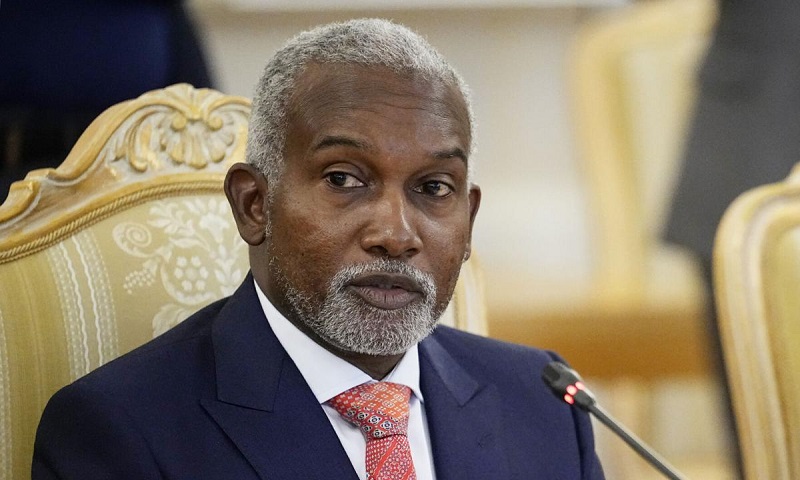
In a statement signed by the Ministry of Foreign Affairs’ Spokesperson, Kimiebi Imomotimi Ebienfa, the government said it is “closely monitoring the evolving and volatile situation in the Middle East,” emphasizing that the safety and well-being of Nigerians abroad remain a top priority.
The ministry urged Nigerian nationals in the affected countries to stay alert, restrict non-essential travel, and follow instructions from local security authorities.
It also advised citizens to avoid areas identified as strategic, military, or government installations, warning that such locations could become hotspots amid ongoing tensions.
“The Nigerian Embassy in Tehran and affected neighbouring Gulf countries are on high alert to provide required consular assistance and facilitate easy communication,” the statement noted.
Nigerians were encouraged to rely on credible sources of information and avoid acting on unverified reports circulating on social media. The government stressed that official communication channels remain the safest way to receive security updates.
The advisory applies to Qatar, Bahrain, Kuwait, the United Arab Emirates, and Saudi Arabia. Citizens in these countries were further urged to exercise caution, avoid large gatherings, and refrain from public demonstrations until the situation stabilizes.
Beyond immediate safety measures, the Federal Government called on all parties involved in the conflict to exercise restraint.
“The Government of Nigeria wishes to call on parties to the conflict to de-escalate the crisis by returning to the negotiation table for the interests of global peace and coexistence,” the statement read.
The government reaffirmed its commitment to protecting Nigerians abroad and reiterated its support for dialogue and diplomatic efforts to resolve conflicts in the region.
Why attacks, killings, other illegal activities by terrorists worsen – DHQ
By Anwar Usman
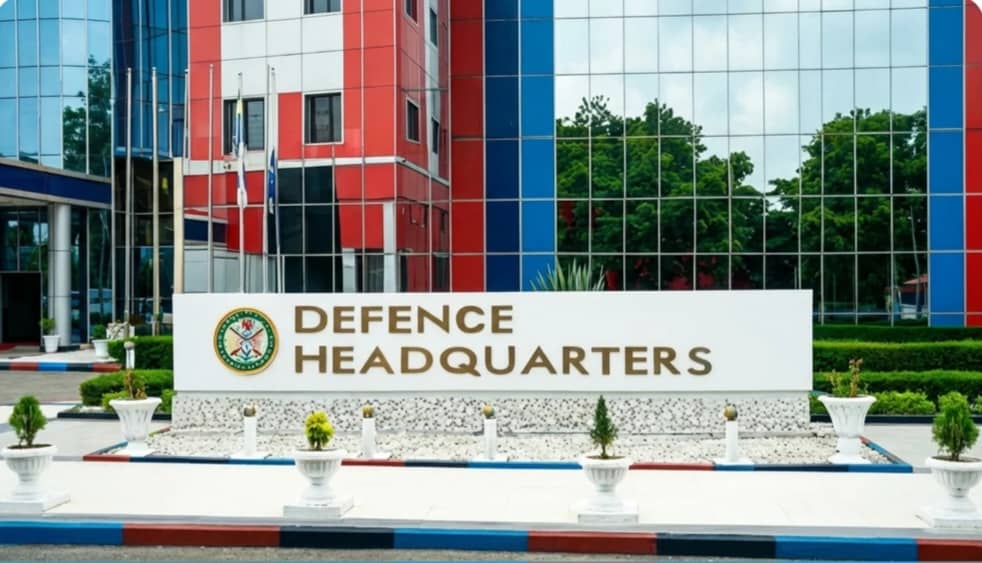
The Defence Headquarters has explained that the reason behind escalation in attacks and killings by terrorists across the North in recent times was as a result of pressure being mounted on them by troops through aggressive operations.
This was revealed by the Director Defence Media Operations (DMO), Maj.-Gen. Michael Onoja, on Friday at a news briefing, while addressing question on the incessant attacks, killings and kidnappings by the terrorists.
Onoja, however, said that scores of the terrorists were being killed across the country, assuring that their decimation is ongoing.
“You know, one of the things with terrorists is that when you put pressure on them, they are likely to target soft targets.
“I also want to let you know that that is what they are doing. But that should not deter us,” he said, adding that in the course of time the terrorists would be smoked out “from wherever they are”.
He added that, “What is happening is that due to the pressure that the cooperation with America is bringing to bear on them, they are now targeting soft targets in order to magnify their operations.
Onoja further state that terrorists need the oxygen of publicity to broadcasting their activities, but urged the media to employ professionalism in reporting some of their activities so that they will not achieve what they want to achieve, which is to cause panic within society.
He reiterated that the assistance from the Americans is adding value to troops’ operations, adding that the results would be manifest in no distant time.
Explaining the troop’s achievements in February 2026, Onoja said that a total of 312 terrorists were arrested, apart from several of them being neutralised, 409 kidnapped victims rescued, while 46 insurgents and their families surrendered.
He also gave the breakdown as follows: In the North East, 85 terrorists were arrested, while 104 kidnapped victims were rescued, and 46 insurgents and their families gave themselves up to troops during the period.
He said in the North West, troops arrested 36 terrorists and rescued 104, while in the North Central, 78 terrorists were nabbed and 54 rescued.
In the South South and South East, 59 terrorists and 54 terrorists were arrested, respectively, Onoja explained.
He said the military is taking proactive measures to checkmate the movement of fertiliser, especially in the North, as it is one of the components used for making Improvised Explosive Device (IED) by terrorists.
He said the achievements in February showed the Armed Forces’ steadfast dedication to building a safe and secure Nigeria.
“We urge everyone to remain security conscious, report any suspicious activity promptly via our emergency line 193 and collaborate closely with security agencies to ensure peaceful and incident-free observances,” Onoja remarked.
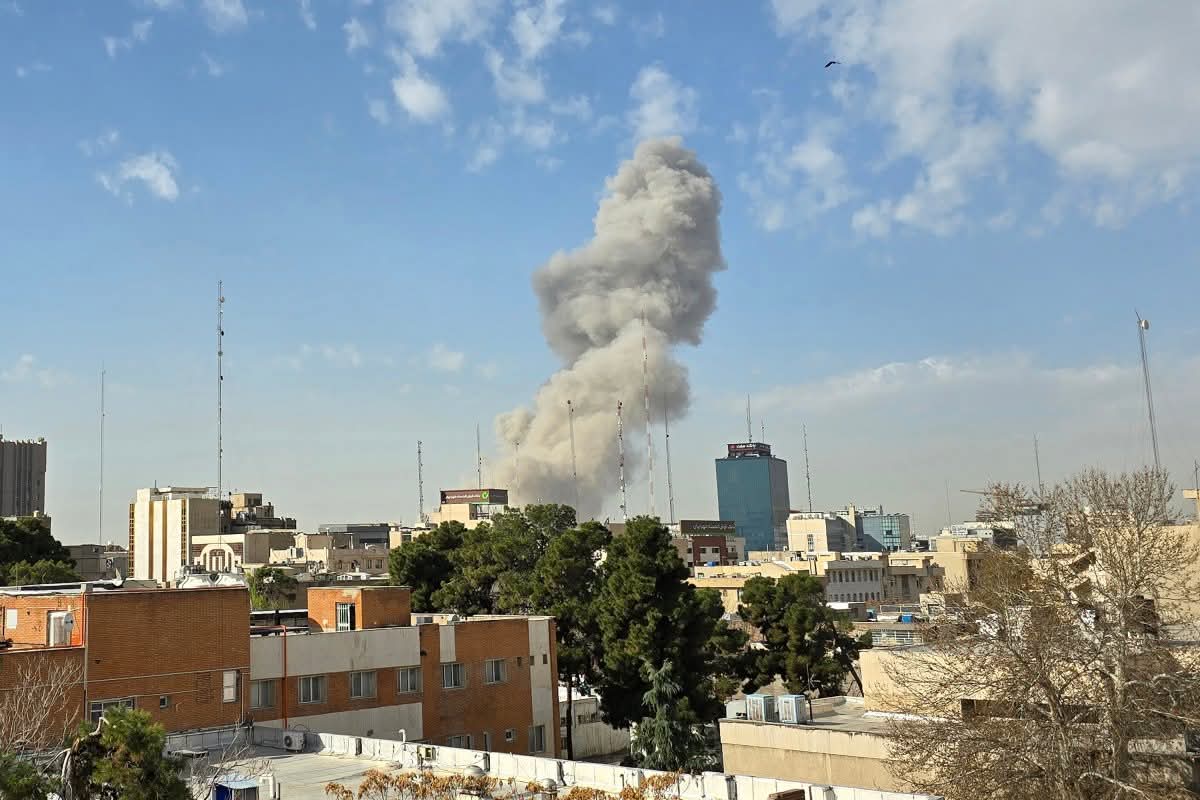
World leaders raise alarm over U.S.–Iran crisis, EU urges restraint
By Sabiu Abdullahi
Leaders across Europe have expressed deep concern over the rising tensions involving Iran, following recent military actions by United States and Israel.
In a statement, top officials of the European Union, including Ursula von der Leyen, described the situation as “greatly concerning.” They called for restraint, protection of civilians, and adherence to international law.
The bloc stressed that dialogue remains essential. It stated that diplomatic and negotiated solutions are key to preventing a broader conflict in the Middle East. Concerns were also raised about nuclear safety and the stability of the region.
The crisis intensified on Saturday, February 28, when U.S. and Israeli forces carried out joint airstrikes on Iranian targets. The operation marked a sharp escalation tied to disputes over Iran’s nuclear and missile programmes.
Iran responded shortly after with missile strikes on American and Israeli military positions in the region. The attacks led to casualties, including civilians, and triggered widespread international reactions.
European leaders reaffirmed existing sanctions on Iran. These measures target individuals linked to repression and activities seen as destabilising. Several EU member states warned against further escalation and urged a return to diplomatic engagement.
Reactions from other parts of the world reflected similar concerns. France called for an urgent meeting of the United Nations Security Council. It warned that the strikes could threaten global peace. The United Kingdom also cautioned against a wider regional war. It maintained that Iran must not acquire nuclear weapons, while emphasising the need for restraint.
Countries in the Gulf region voiced fears that the conflict could spread beyond its current scope. They warned of possible disruptions to energy supplies and the risk of large-scale displacement of people.
The impact is already being felt. Air travel across the Middle East has faced interruptions, while oil markets have shown signs of instability.
Within Iran, tension remains high among the population. Some groups fear that the situation could develop into a larger conflict.
Leaders from Europe, Australia, and other regions continue to call for calm. They insist on protecting civilians and upholding international law, even as the situation evolves rapidly.
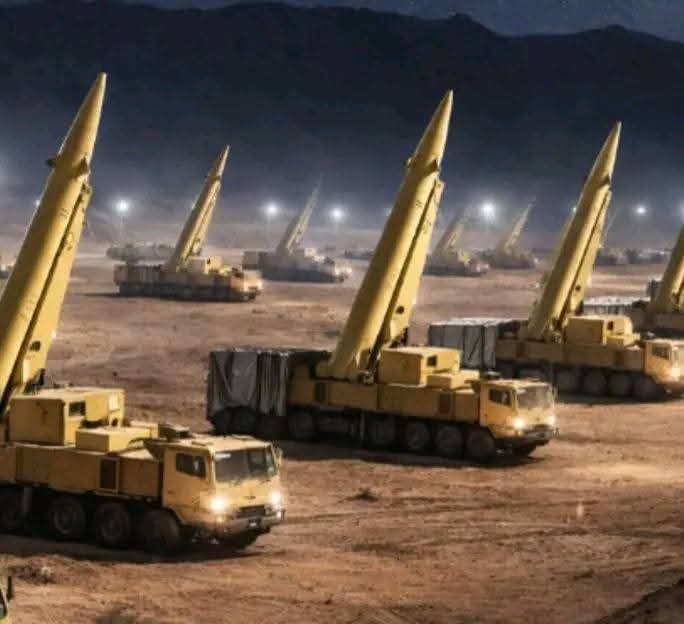
Iran launches retaliatory strikes on Israel, US bases across Middle East
By Sabiu Abdullahi
Iran has carried out retaliatory attacks following earlier strikes by the United States, targeting Israel and several American military installations across the Middle East, including in Qatar, Bahrain, Kuwait and the United Arab Emirates.
The escalation has disrupted air travel across the Gulf region. Several countries shut their airspace, which led to the cancellation and delay of hundreds of international flights.
According to Al Jazeera, authorities in Bahrain confirmed that a missile strike targeted the headquarters of the US Navy’s Fifth Fleet. In Qatar, the defence ministry said its Patriot air defence system intercepted an Iranian missile.
Meanwhile, Reuters reported that a loud explosion was heard in Abu Dhabi.
Prior to the escalation, Iran had warned that it would strike American interests in the region if attacked. Reports indicate that several of the targeted bases had already been evacuated, as the US anticipated a possible response.
Iran’s Islamic Revolutionary Guard Corps confirmed that it launched missiles and drones towards Israel. In a statement cited by Al Jazeera, Iran’s Ministry of Foreign Affairs said Israeli strikes earlier in the day hit the country’s “territorial integrity and national sovereignty, including defensive infrastructure and non-military locations in various cities across the country.”
“The renewed military aggression by the United States and the Zionist regime against Iran constitutes a violation of international law and the principles of the United Nations Charter. The Islamic Republic of Iran considers this aggression a clear breach of international peace and security and emphasises that it reserves its legitimate right to respond decisively.
“The Iranian nation has always demonstrated patience and restraint to prevent escalation and preserve regional stability,” it read, adding that the armed forces stand “fully prepared to defend the country and will make aggressors regret their actions.”
Iran also described the attacks by the US and Israel as a “clear example of armed aggression,” while referencing Article 51 of the United Nations Charter, which affirms its right to self-defence.
“History shows that Iranians have never surrendered to aggression. This time as well, Iran’s response will be decisive, and aggressors will regret their hostile actions,” the statement added.
Earlier, US President Donald Trump warned that American casualties could occur as the conflict unfolds.
“The Iranian regime seeks to kill. The lives of courageous American heroes may be lost, and we may have casualties — that often happens in war — but we’re doing this not for now. We’re doing this for the future, and it is a noble mission,” he said in a video message released after the joint US-Israeli strikes on Iran.
He also suggested that the objective includes a possible change in Iran’s leadership.
“When we are finished, take over your government. It will be yours to take. This will be probably your only chance for generations,” the president said, addressing protesters in Iran.
The latest confrontation comes shortly after indirect talks between Iran and the United States over Tehran’s nuclear programme. The timing mirrors a similar development last June, when Israel launched attacks during ongoing negotiations.
Tensions had been building in the region. Several countries, including allies of the US, cautioned against military action, warning that it could destabilise the Middle East.
Both Iran and Israel have now closed their airspace, while air raid sirens continue to sound in Israel. Authorities there have advised residents to seek shelter.
On Friday, countries such as the United States, China and the United Kingdom urged their citizens to leave Iran and Israel due to growing fears of a wider conflict. The US also advised its citizens in Gulf states like Qatar and Bahrain to remain indoors.
This marks the second major confrontation between Iran and Israel in less than a year. The previous clash in June resulted in a 12-day conflict that caused hundreds of deaths and widespread damage on both sides. The United States later joined Israel in striking Iranian targets.
In recent weeks, the US had increased its military presence in the region, deploying additional aircraft and naval assets ahead of the latest strikes despite warnings from global leaders.
The situation remains fluid, and further developments are expected.

Israel shuts airspace after launching ‘unprovoked’ strikes on Iran
By Sabiu Abdullahi
Israel has closed its airspace to civilian flights following a military operation against Iran, as tensions escalate across the region.
Authorities in Israel confirmed on Saturday that the action followed what officials described as a preemptive strike on Iran. Air raid sirens were activated in Jerusalem, while residents across the country received emergency alerts warning of an “extremely serious” threat.
In a statement, the defence ministry said: “The State of Israel has launched a preemptive strike against Iran.
“Defence Minister Israel Katz has declared a special and immediate state of emergency throughout the country.”
In Iran, witnesses reported explosions in the capital, Tehran. Two loud blasts were heard, and thick smoke was seen rising from parts of the city.
Iranian news outlet Fars suggested the nature of the incident. “The type of explosions suggests that this is a missile attack,” the agency reported.
Following the development, Israel announced a complete shutdown of its airspace. The country’s transportation minister, Miri Regev, said: “Following the security developments, the Minister of Transportation has ordered the Director of the Israel Civil Aviation Authority to close the airspace of the State of Israel to civilian flights.”
Iran also took a similar step. Its Civil Aviation Organisation confirmed that flights have been suspended nationwide. “The airspace of the entire country is closed until further notice,” a spokesman said.
The situation has prompted precautionary measures beyond the two countries. In Qatar, the United States embassy directed its staff to remain indoors as a safety measure.
The latest developments have raised fears of a wider confrontation, with both countries taking urgent steps to secure their territories.

JUST IN: Iran vows ‘crushing’ retaliation after US, Israel strikes
By Sabiu Abdullahi
Iran has threatened to launch a strong response following recent military strikes carried out by the United States and Israel, warning that any retaliation would be “crushing”.
Explosions were reported on Saturday in several Iranian cities, including Kermanshah, Lorestan, Tabriz, Isfahan and Karaj, raising fears of a widening conflict in the region.
Israel’s Defence Minister, Israel Katz, defended the operation. He said: “The State of Israel launched a pre-emptive attack against Iran to remove threats to the State of Israel.”
The latest strikes come months after a 12-day aerial confrontation between Iran and Israel in June. The development also follows repeated warnings from Washington and Tel Aviv over Iran’s nuclear and ballistic missile activities.
An Iranian official told Reuters that authorities in Tehran are preparing a counteroffensive that would be severe in scale.
Reports indicate that Iran’s Supreme Leader, Ali Khamenei, was not in Tehran at the time of the attack. He has since been moved to a secure location.
Reacting to the strikes, the head of the National Security Commission of Iran’s parliament, Ebrahim Azizi, issued a warning to both countries. “We warned you! Now you have started down a path which end is no longer in your control,” he said.
Meanwhile, United States President Donald Trump said the action was taken to safeguard American interests.
“A short time ago, the United States military began major combat operations in Iran. Our objective is to defend the American people by eliminating imminent threats from the Iranian regime, a vicious group of very hard, terrible people. Its menacing activities directly endanger the United States, our troops, our bases overseas, and our allies throughout the world,” he posted.
The situation has heightened global concern, as tensions continue to rise with both sides signalling further military action.
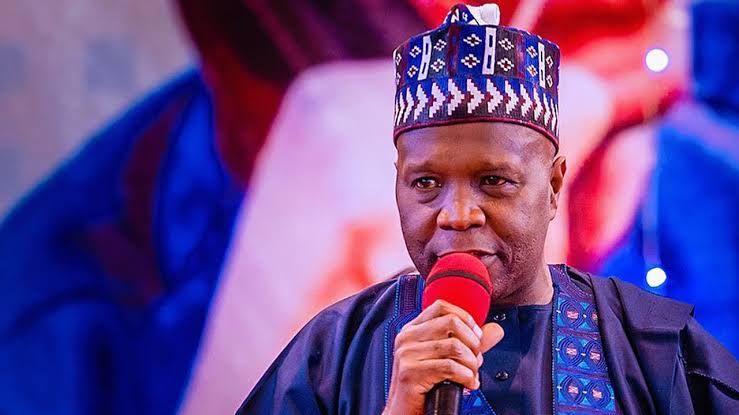
Gombe governor raises alarm over missing children, orders security action
By Sabiu Abdullahi
Governor Muhammadu Inuwa Yahaya has expressed concern over the safety of children in Gombe State, revealing that no fewer than 48 minors have gone missing under suspected cases of abduction and trafficking.
The governor made this known on Friday during the launch of the state’s Ramadan palliative distribution programme in Gombe.
He described the situation as a serious security and humanitarian issue that demands urgent attention from both authorities and residents.
According to him, official data gathered by the state government shows that the missing children are mostly between the ages of two and five. He added that the victims were allegedly taken to unknown locations, while their parents remain in the state.
“Available information before us shows that 48 children from Gombe State within the age bracket of two to five years have been taken away to unknown destinations,” the governor said.
“Their parents remain here, but we cannot say where the children are or whether they will be found.”
The governor did not give details about when the incidents occurred or the specific communities affected. However, he noted that the pattern of the disappearances points to organised criminal activity.
He also referred to a recent abduction in the Orji Estate area. He linked the incident to emerging security gaps following the partial easing of the state’s motorcycle restriction policy. Although the kidnapped child in that case was later rescued, he said the development highlights the risks children face.
Governor Yahaya called for collective efforts to tackle the threat. He urged residents to stay alert and provide useful information to security agencies.
“We must collectively confront these emerging threats if we want peace restored,” he said.
“There was a time Nigerians lived more peacefully. We must ask ourselves what has changed and take decisive steps, no matter how difficult.”
He further appealed to community leaders, parents, and residents to support ongoing government efforts aimed at safeguarding lives, especially those of vulnerable children.
The disclosure has heightened concerns among residents and civil society groups. Many have called for stronger child protection systems and more effective measures to combat human trafficking across the country.
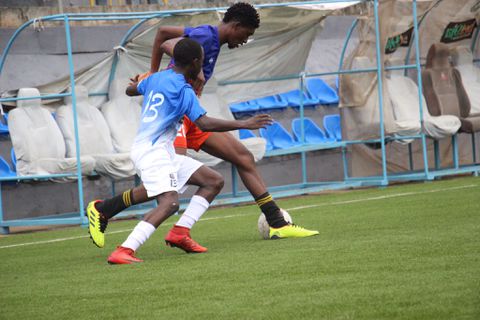
Beware of social media scams targeting young footballers
By Hadiza Abdulkadir
I am speaking out as a concerned sister after my younger brother from Kano, Nigeria, Ismail, was repeatedly contacted on TikTok by individuals claiming to be football agents.
They asked about his football journey and promised trials in another state where “European agents” would scout talented players. However, there was one condition: he had to pay for the registration form.
When I advised Ismail to ask what the form looked like, the so-called agent sent a blurry screenshot of a flashy, unprofessional document with no official logo, no verified organisation, and no connection to recognised bodies like the Nigeria Football Federation or FIFA. That was a big red flag.
According to people with deep knowledge about scouting, real agents do not randomly scout players on TikTok and demand upfront payments. Thankfully, Ismail asked questions before making any decision and did not send any money.
Many young footballers dream of playing professionally, and scammers are exploiting that dream. Parents and players must verify every claim, research every agent, and never pay fees without confirmed legitimacy.
Patience and due diligence can protect young talents from becoming victims. Beware.
Hadiza is Nigerian but writes from Cologne, Germany. She can be contacted via hadiza225@gmail.com.
On ‘Makiyan Kano’ slogan
By Umar Sani Adamu (Kawun Baba)
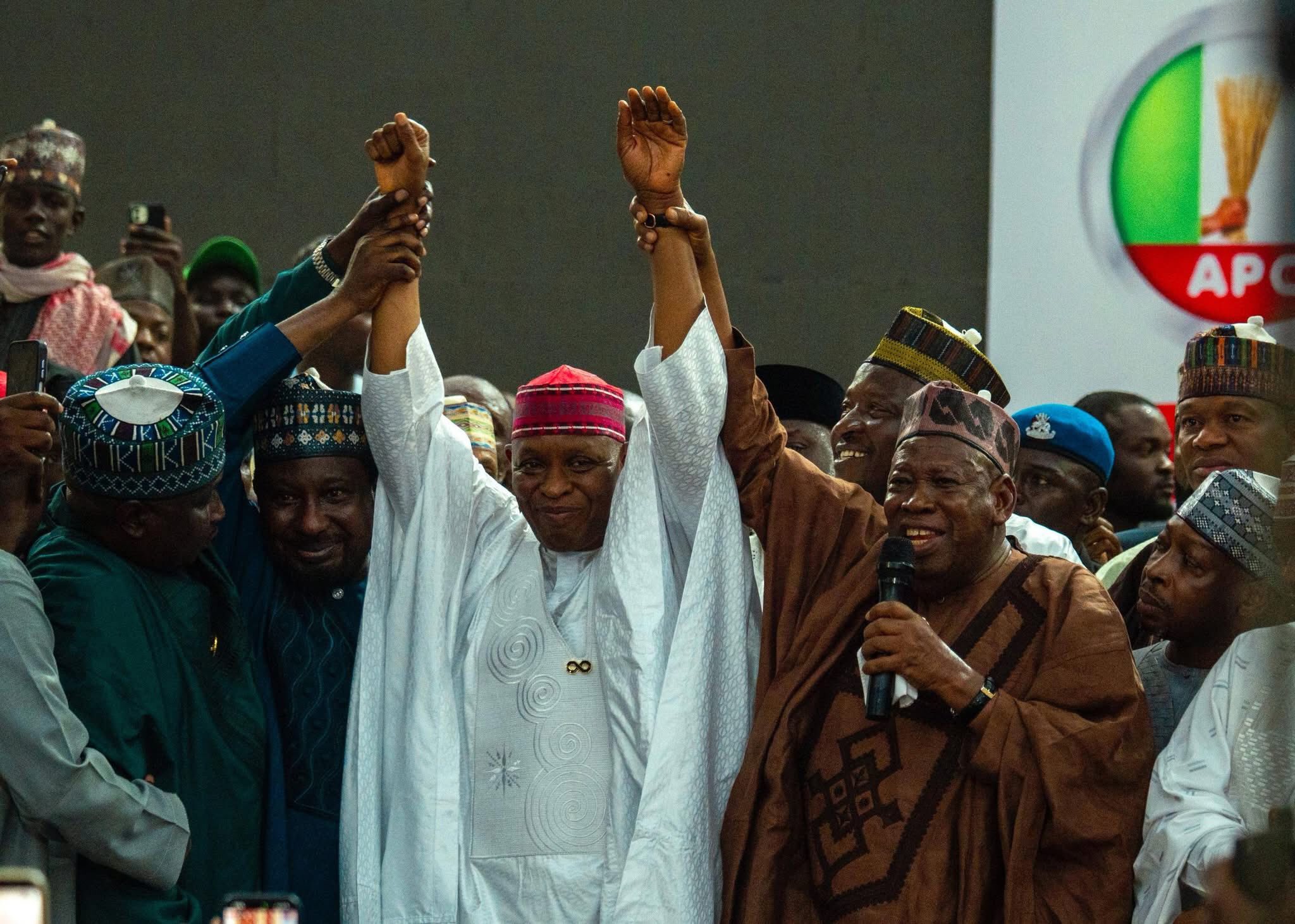
The defection of Kano State Governor Abba Kabir Yusuf from the New Nigeria Peoples Party, NNPP, to the All Progressives Congress, APC, has exposed more than a political shift. It has laid bare the fragility of slogans elevated above reason and the contradictions within Kano’s dominant political movement.
For years, the phrase “Mayiyan Kano” was used by followers of Senator Rabiu Musa Kwankwaso whenever events did not go their way. It served as a blanket response to court rulings, electoral outcomes, and opposing views. What began as a casual expression gradually hardened into a political shield used to dismiss criticism rather than engage it.
Ironically, Governor Yusuf was once celebrated as the ultimate proof of loyalty to the Kwankwasiyya structure. A report by The Daily Reality during the early phase of his administration went to remarkable lengths to present him as a devoted disciple of his mentor and political godfather. His actions, his rhetoric, and even his body language were framed as evidence of unquestionable allegiance. At the time, loyalty was portrayed as a virtue, and Yusuf was held up as its finest example.
That narrative has now collapsed under the weight of political reality. Following his defection, the same voices that once applauded his loyalty have rushed to brand him disloyal. The sudden moral outrage is striking not because politicians change camps but because of the selective memory at play. If loyalty were absolute, then it should have been defined beyond convenience. If it were conditional, then honesty demands admitting that politics is transactional, not sentimental.
The revival of Makiyan Kano, that’s “The enemy of Kano” or “One who works against the interests of Kano”. In this context reveals its emptiness. Rather than interrogate why a sitting governor would abandon the platform that brought him to power, some loyalists have retreated to slogans. It is easier to chant than to reflect. Easier to accuse than to accept that political authority ultimately rests with individuals, not movements.
What this moment exposes is a deeper problem within Kano politics: the attempt to freeze loyalty in time while ignoring changing realities. Governance is not sustained by personal allegiance to a mentor but by navigating power structures, resources, and national relevance. To pretend otherwise is to confuse political romance with political responsibility.
Supporters of the governor argue that his decision was informed by pragmatism and the pursuit of Kano’s broader interests. Whether one agrees or not, it is a position that deserves debate, not dismissal. Slogans do not govern states. Decisions do.
Makiyan Kano has returned to public discourse, but its meaning has shifted. It no longer signals confidence. It now sounds like frustration. In the end, movements that rely on chants instead of ideas often struggle when reality refuses to cooperate. Kano politics appears to be learning that lesson the hard way.
Umar Sani Adamu (Kawun Baba) wrote via umarhashidu1994@gmail.com.
PDP faction criticises Fintiri’s defection to APC as cowardice
By Anwar Usman
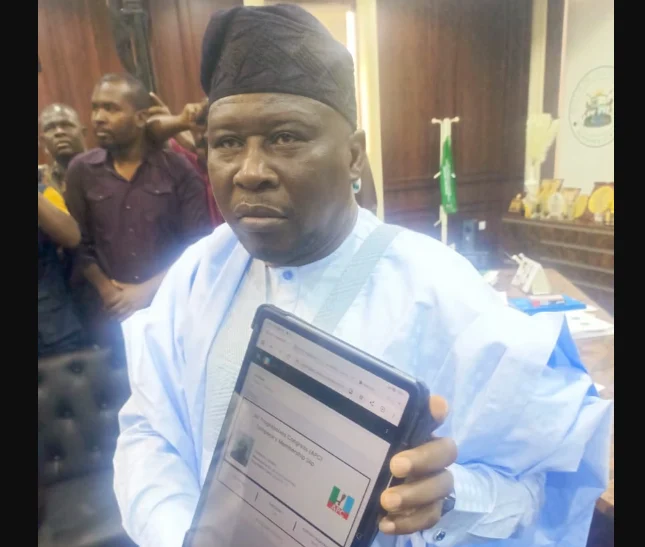
The Peoples Democratic Party has criticised Governor Ahmadu Fintiri’s defection to the All Progressives Congress, describing his exit as an act of cowardice that undermines the principles of multi-party system of government in Nigeria.
Tanimu Turaki (SAN)-led PDP National Working Committee, through its National Publicity Secretary, Ini Ememobong, on Friday reminded Fintiri that history and posterity serve as the ultimate and impartial judges of human actions, constantly recording both deeds and omissions.
After weeks of speculation, Fintiri formally left the PDP and joined the ruling All Progressives Congress on Friday.
In response, the Peoples Democratic Party stated that Fintiri’s decision to leave a platform that supported his political journey through multiple election cycles over minor inconveniences clearly shows unrestrained cowardice rather than the conduct of a principled politician.
The party stated that “We are aware of the official announcement of the long-speculated defection of His Excellency, Governor Ahmadu Fintiri, from our party to the All Progressives Congress, today via a broadcast in Adamawa State.
“This move, though long speculated, had attracted several rebuttals from the governor himself, even as recently as last week, after the presidential visit to Adamawa. By this announcement, the governor himself has confirmed what hitherto was a rumour, by aligning with the ruling party, a move he says is in the developmental interest of his state.
“While we acknowledge that this move is well within Fintiri’s legal rights, it is clearly against political principles and morality, a challenge to multi-party democracy and democratic consolidation.
The PDP urged its members in Adamawa State to accept what it described as a sad reality with composure.
The party further reiterated that “They should remain resolute in the hope that the rebirth movement of our party is on course and will certainly reposition our party back to winning ways”.