

6.2-magnitude quake shakes Istanbul, triggers panic but no casualties reported
By Sabiu Abdullahi
A powerful 6.2-magnitude earthquake hit the Sea of Marmara, near Istanbul, on Wednesday, prompting widespread panic as residents rushed out of buildings and gathered on the streets.
Authorities confirmed that no casualties or major damage had been recorded, although several aftershocks followed the main tremor.
The Turkish disaster management agency, AFAD, reported that the quake struck at 12:49 p.m. local time (0949 GMT) at a depth of nearly seven kilometers beneath the sea, just south of the city.
Interior Minister Ali Yerlikaya stated on social media, “An earthquake of 6.2 magnitude occurred in Silivri, Sea of Marmara, Istanbul,” noting that the tremor was also felt in neighboring provinces.
According to AFAD, the earthquake was succeeded by eight aftershocks, with magnitudes ranging from 3.5 to 5.9.
The sudden shaking of buildings led people to evacuate and seek safety in open spaces. An AFP reporter witnessed crowds anxiously checking their phones and calling loved ones.
“I just felt the earthquake, I’ve got to get out,” said a decorator who had been working on the fourth floor of an apartment near Galata Tower.
He declined to be identified.State-run Anadolu Agency shared footage showing the minaret of a mosque swaying during the initial tremor in the Beylikduzu district.
Speaking to TRT public television, Yerlikaya confirmed that no buildings had collapsed.
“Until now, nobody has called the emergency line to report their house collapsing,” he said.
However, the Istanbul governor’s office urged people to stay away from structures that appeared to be compromised.
Turkey’s NTV television aired visuals of a three-storey building that had collapsed in Fatih district.
The structure was said to be abandoned and unoccupied for about ten years.President Recep Tayyip Erdogan responded to the incident by saying he was “following the developments closely.”
Yusuf, a street vendor, described the fear that gripped many residents. “We all panicked and just ran. There’s absolutely nothing else we can do,” he said.
The tremor was reportedly felt as far away as Bulgaria, according to AFP correspondents in Sofia.
Silivri, located on the western edge of Istanbul, is also home to the jail where Istanbul’s Mayor, Ekrem Imamoglu, was recently detained amid a corruption case widely criticized as politically driven.
Students detained during related protests are also held there.Despite feeling the tremors, none of the detainees were harmed.
“The earthquake in Istanbul was most strongly felt in Silivri, but our children are fine. There is no problem at the prison—no parent should worry,” the Parents Solidarity Network posted on X.
Istanbul’s last significant earthquake occurred in November but caused no damage.
Experts have long warned that the city is at high risk of a major quake due to its location near the North Anatolian fault line, less than 20 kilometers away.
In 1999, over 20,000 people died when two massive quakes struck northwest Turkey, including areas of Istanbul, after the fault line ruptured.

Niger governor orders crackdown on dreadlocks, imposes strict security measures
By Abdullahi Mukhtar Algasgaini
Governor Umar Bago has directed security agencies to arrest individuals with dreadlocks in Minna, the state capital, as part of a broader clampdown on crime.
During a high-level security meeting on Tuesday, Governor Bago ordered that those with dreadlocks be arrested, forcibly shaved, and fined. “We will have zero tolerance for rascality. Anybody found with dreadlocks should be arrested, their hair barbed, and fined,” he declared.
The governor also banned commercial motorcycles and tricycles from operating between 6 p.m. and 6 a.m., except in cases of medical emergencies. Additionally, he warned parents to caution their children, vowing a “fire-for-fire” approach to crime.
Traditional rulers were instructed to document all residents in their domains, while houses harbouring criminals faced demolition. “Niger State is not for useless people,” Bago stated.
The measures aim to curb rising criminality and restore order in the state.

The Hausa reading culture is dead: Long live the Hausa reading culture
By Prof. Abdalla Uba Adamu
As we celebrate the World Book and Copyright Day (the UNESCO, not UK version) on 23rd April 2025, and even though it is targeted at children and youth, let’s reflect; after all, we were once children and youth. A historical excavation of our reading habits shows how lucky we were.
Hausa folks over 50 have always lamented the death of reading culture among contemporary Hausa youth. Such old fogies always hark back to the days of reading, mainly English language authors: James Hadley Chase, Denise Robins, Jacqueline Susann, Frederick Forsyth, Nick Carter, Stephen King, Robert Ludlum, Harold Robbins, Ayn Rand, Wilbur Smith, etc. Almost always English. Always British or American. The novels written by these authors, I would argue, laid solid foundations for their knowledge, command and mastery of the English language.
And the comics. Tintin (actually, Tan-Tan), Asterix, Mad Magazine, Marvel comics (Spiderman, Fantastic Four, Thor, X-Men, etc). The entire comics of London’s Fleet Street. Evoking memories of Valiant, Thunder, Eagle, Commando, Cor!!, Buster, Tiger, Battle. Even football comics (even though I don’t particularly like football at all), such as Roy of the Rovers. The novels, the comics and the TV shows (Star Trek, Space 1999, Man from U.N.C.L.E., Man from Atlantis, Perry Mason, etc.), to be frank, laid the foundation of what I am today. Not much from Africa, though. But the little we had was superb as well. These included Lance Spearman’s African Film, Fearless Fang’s Boom, and a romantic tear-jerker, Joy.
All were readily available at the Post Office in Kano and major supermarkets of Leventis and Kingsway. The latter in particular became a must-visit place for me in the 1970s. Nothing, absolutely nothing, beats the wonderful smell of fresh books being stacked on their shelves. And it wasn’t just books. I scrimped and saved pennies and shillings until I had enough to purchase my first vinyl record album – Rare Earth’s Get Ready in 1972, three years after it was released in 1969, when I first heard a single version on the radio.
This was what defined reading culture, at least for those of us in the urban centres who grew up with it. And even if one can’t afford fresh new books and comics from Leventis and Kingsway stores, there are many places in Kano centred around Plaza in Fage, Coca Cola Roundabout, and even the main Post Office frontage itself, where hundreds of second-hand books are sold, even up to now.
Exchanging books and discussing their plots, characters, and titles set the tone of conversations with friends. The most popular pulp fiction writer, of course, was René Lodge Brabazon Raymond, most popularly known as James Hadley Chase. Interestingly, his novels were written in the 1930s and later, painting an often-depressing picture of his setting (mainly the United States, even though he was British). Titles like Tiger By the Tail, Tell It to the Birds, Just a Matter of Time, Knock, Knock! Who’s There? There is a Hippy on the Highway that evokes our hastily copied Americanism. The garish covers, almost always graced by a long-legged sultry female model, made many truly judge the book by its cover.
These foreign novels existed alongside African novels, particularly those published by Heinemann since 1969. The Heinemann African Writers Series produced a massive variety of novels, almost 225, many by people from the eastern part of Nigeria. For most of us, though, their postcolonial themes seemed too intellectual. Further, they were made part of the set reading for those offering literature, so again, many who want to read a novel just for pleasure rather than pan-African political philosophy simply avoided them.
The struggle for the souls—and pockets—of school children in the 1970s continued in efforts to dislodge James Hadley Chase. In 1977, Macmillan Publishers decided to publish a low-cost paperback series under what they called the Pacesetters Series. These were published from 1979 to 1988 and became massively popular. I remember seeing one of the earliest, The Undesirable Element by Mohammad Sule from Kano, published in 1977, while we were students at ABU.
When Sule finished the novel (which he wrote while a student at the now Rumfa College Kano), he initially took the manuscript to the Northern Nigeria Publishing Company (NNPC) in Zaria, which rejected it because it was in English. Luckily, Macmillan was in partnership with NNPC and the MD, a Briton, asked his wife to evaluate it. She did it positively and recommended it to Macmillan London, who were just about to start their Pacesetter series. See providence. If NNPC had accepted it, they would have created a large pool of English language novelists in northern Nigeria
For Baby Boomers (1946-1964) and Generation X (1965 to 1979), the Structural Adjustment Program (SAP) of 1986 severely affected their reading culture in one way: the books just dried up, whether foreign or local. Foreign became too expensive, local became too repetitive and static. We simply went back to the old classics and read them again and again. It was Robert Ludlum re-read (especially The Parsifal Mosaic) for me.
All this was for ƴan boko. What about Hausa novels or reading materials? There are very few. By the 1980s, all the classics had been read, and no new ones were coming out. These included Magana Jari Ce, Ilya Ɗan Maiƙarfi, Gogan Naka, Nagari Na Kowa, Sihirtaccen Gari, Dau Fataken Dare, and a whole bunch of plays. Writing and publishing was very strenuous. Publishers could only publish if the books were to be made part of the set reading for WAEC, which limits the writer’s imagination and creativity.
Then Hafsat AbdulWaheed came along with So, Aljannar Duniya in 1980. The first published Hausa language novel. The first by a woman from northern Nigeria. Plotting the classic Hausa marriage situation. A revolution was ignited in Hausa language fiction, leading to Mills and Boons style romantic fiction or Littattafan Soyayya. In less than five years, both male and female writers had emerged with stories to tell. Writers’ collectives were formed. The printing presses of party politics made it easier to self-publish. So, the writers ignored the snotty hoity-toity “big” publishers, especially NNPC (although NNPC can PRINT your book for payment, as they did with Balaraba Ramat’s early novels).
In less than five years, the emergent authors have published more volumes than Heinemann (225) and Pacesetters (130). This made Hausa the most voracious reading public in Nigeria. Prof. Graham Furniss of the SOAS London even published a bibliography of the genre, including a whole website based at SOAS. When they became too much for the Kano State public culture, for that was where they flourished, a censorship board was created in 2001 to curb them. When that did not work, the Kano State government burned them in 2007 to cleanse the youth of the books. A harsher censorship regime debilitated them even more, throwing them out of business. The Hausa reading culture died.
Then the Smartphone came in 2007—the then-Kano state Governor publicly burned Hausa books the same year. The same year, a harsher censorship regime was instituted in Kano that made life hell for the creative industries (Maryam Hiyana, anyone?). The iPhone, while not the first smartphone (Blackberry, anyone?), nevertheless revolutionised communication in its innovative approach to design. Clone copies with Android operating systems cemented the mass appeal of the smartphone. Eventually, it became commodified.
Then, in 2013, Hausa novelists had their epiphany. They realised that with Facebook bubbling away, they could write their novels and escape censorship. Sure, no money, but they would be sharing their ideas. Things then blossomed from there. They created hundreds of Facebook pages for Hausa novels. When they became technologically proficient or engaged those who were, they created blogs sharing Hausa novels and creating massive readership throughout the Hausaphone world. For instance, Hafsat Hausa Novels (H²) had 471,000 members last time I checked.
Then they discovered Wattpad, which had been in existence since 2006. They moved on the site with massive gusto, creating novels in three presentation modes – Hausa, English and Enghausa. Mainly by women. The migration online redefines “reading culture” if it is seen as engagement with text. Wattpad’s metrics alone convincingly show that the Hausa reading culture has been revived. For instance, Jewel by Maymunatu Bukar had 1.1 million reads. Thus, E-books and online literary content became increasingly popular, and social media can be used to share and discuss these resources
And let’s not ignore social networks and social media posts and COMMENTS. Agreements, disagreements (including insults typical of Arewa Social Media), expanded explanations – all are READING, and far livelier than just reading a book on your own. But again, social media gives us the opportunity to discuss – have a debate – about the books we like/hate (Goodreads, anyone?).
“Reading culture” is a dynamic and evolving concept that encompasses more than the mere act of reading. It is an intricate web of practices, values, and institutional structures that defines how individuals and communities interact with texts. Whether viewed through a sociological, historical, or digital lens, understanding reading culture involves recognising the interplay between technology, policy, and the deeply personal ways that texts influence and reflect who we are.
I therefore argue that reading social media is very much part of today’s reading culture. It is a re-invention of reading culture. It may differ from traditional literary reading in depth, tone, and purpose, but it still involves interpretation, meaning-making, and cultural exchange. In any event, all the books, comics, and TV shows you so favoured are now digitally available (I have sourced all of these that defined my youth).
As reading culture adapts to the digital age, social media becomes an important arena for literacy and engagement in all spheres. Hey, you might even find the rest of the James Hadley Chase books you missed (you know he published 98, right?).
Happy World Book and Acibilisian Day to y’all.

ECOWAS holds meeting in Ghana amid Niger, Mali and Burkina Faso withdrawal
By Anwar Usman
The Economic Community of West African States (ECOWAS) member states will meet in Ghana on Tuesday to discuss the withdrawal of Niger, Mali, and Burkina Faso.
The meeting will take two days, Tuesday and Wednesday.
In a statement released on Tuesday, the bloc said member states will discuss the modalities of the countries’ withdrawal and its implications for ECOWAS agencies in the countries.
The bloc also said it would “set up a structure to facilitate discussions on these modalities with each of the three countries.”
Furthermore, the ECOWAS member state will discuss its relationship with the three countries in Accra today.
“The session is being held to deliberate on the reasons for the withdrawal of Burkina Faso, Mali, and Niger from the regional bloc.
The statement further revealed that “Key items on the agenda include the modalities of the withdrawal process and the implications for ECOWAS Institutions and Agencies operating in the three countries. The session will also address other related matters of regional importance”.
Three weeks ago, the junta-led states, under the Alliance of Sahel States, imposed a 0.5 per cent import duty on goods from ECOWAS.
The levy applies to all goods from ECOWAS countries entering any of the three nations, except for humanitarian aid.
The policy countered ECOWAS’s intention of ensuring free movement of goods between its members and the AES countries despite their official exit from the bloc in January.

Kano Hisbah shuts down fake ‘prophet’s footprint’ site amid public frenzy
By Abdullahi Mukhtar Algasgaini
The Kano State Hisbah Board has dismantled an unauthorized pilgrimage site in the Dakata Industrial Area after false claims spread that the spot bore the footprint of Prophet Muhammad (PBUH).
The site attracted large crowds when a muddy imprint and seeping water led to rumors of divine healing powers.
Videos showed people bathing in, drinking, and collecting the water while performing religious rites.
Deputy Commander Muhahideen Aminudeen of the Hisbah Board dismissed the claims as baseless, stating that the Prophet never visited Africa.
He warned against the health risks of consuming the water and urged the public to seek proper Islamic knowledge.
No arrests have been made, but authorities are investigating the source of the misinformation.

Troops arrest suspected kidnap kingpin, recover arms in Kano
By Uzair Adam
Troops of the Joint Task Force have arrested a 55-year-old man suspected to be a notorious kidnapper during a security operation in Sumana village, Tundun Wada Local Government Area of Kano State.
The arrest was disclosed in a statement issued to journalists by Capt. Babatunde Zubairu, Assistant Director, Army Public Relations, 3 Brigade, on Tuesday. According to the statement, the suspect was apprehended on April 20.
He was later paraded before the Brigade Commander, Brig.-Gen. Ahmed Tukur, during the commander’s Easter visit to troops of the Forward Operating Base (FOB) in Falgore, Doguwa LGA.
The commander commended the troops for their courage and professionalism, describing the operation as a significant success in the ongoing campaign against criminality in the region.
A cache of arms and other items were recovered during the operation. These include a fabricated AK-47 rifle, one Den gun, nine rounds of 9mm pistol ammunition, a woodland camouflage uniform, a desert camouflage outfit, a camouflage vest, and a Bajaj motorcycle seat suspected to be used for concealing weapons.
Brig.-Gen. Tukur reiterated the Nigerian Army’s commitment to working with other security agencies and local authorities to restore peace and order in troubled areas.
“The army remains dedicated to its mandate of safeguarding lives and properties. We will not relent in our efforts to bring perpetrators of criminal acts to justice,” the statement read.
The suspect is currently in custody and undergoing a preliminary investigation.
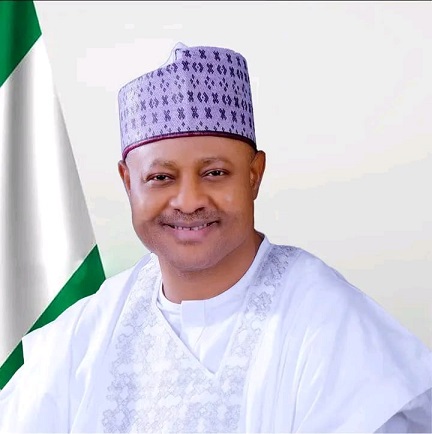
Kaduna governor blames northern elites for region’s woes
By Uzair Adam
Kaduna State Governor, Uba Sani, has said political leaders from northern Nigeria have failed the region and should collectively apologise to the people for decades of underdevelopment and neglect.
Speaking during an interview with Trust TV, Sani stressed that criticism of government policies should be driven by the genuine interest of the people and not by political ambition.
“Every democracy must allow criticism, but it must be constructive, and in the interest of the Nigerian people. That’s what we did as activists — not because we wanted power,” he said.
He noted that those who have held public office in the last two decades — including himself — bear responsibility for the challenges facing the region.
“Anyone who is from northern Nigeria and held a political office in the last 20 years, we all need to look at ourselves in the mirror and apologise to the people of northern Nigeria. We let them down,” he admitted.
Reflecting on his own time in office, the governor said the region’s problems stem from long-standing structural and economic neglect.
“I’ll say it here today — all of us; I was a senator in this country, and the problems of northern Nigeria didn’t start two years ago,” he added.
Sani also criticised the outcomes of the massive social intervention programmes under former president Muhammadu Buhari, saying they failed to uplift the region due to deep-rooted financial exclusion.
“Buhari spent hundreds of billions on social interventions,” he said. “But the North became poorer even after that because 70% of the population, especially the masses, were completely financially excluded.”
He pointed out that anyone who had served as a senator, minister, governor, or vice-president from the region over the past 20 years shares in the blame.
The governor cautioned politicians against misleading the public and lauded honest critics who maintain integrity and a people-first approach.
“We must not deceive the people of northern Nigeria. We must not mislead them. I’ve no problem with people criticising the government — people like Dan Bello Galadanchi.
“Those individuals have the moral right to speak. But those who contributed to the rot and now claim to have repented — I think that’s wrong,” he said.
_________________________________
University of Cologne
Blog: www.muhsin.in
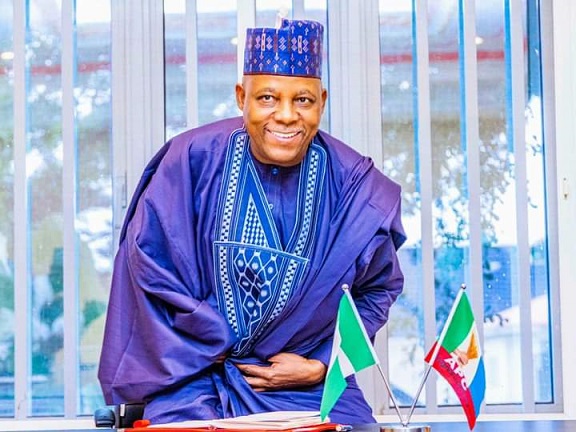
Rising through the storm: Kashim Shettima triumphs over trials
By Lawan Bukar Maigana
From the ashes of battle-weary Borno to the powerful corridors of Aso Rock, Vice President Kashim Shettima has consistently defied the odds. His journey has never been one of privilege but of perseverance, grit, and unswerving faith in destiny.
As governor, he governed Borno State at a time when Boko Haram unleashed one of the worst humanitarian crises in Nigeria’s history. While others fled, Shettima stayed. He took bold, calculated risks to keep his people safe, rebuild destroyed communities, and stabilise a state under siege. Many thought Borno would collapse—yet under Shettima’s leadership, it stood.
Transitioning to the Senate, Shettima faced different types of warfare—political manoeuvring, underestimation, and party intrigues. Yet again, he rose above, earning his place as a voice of reason and strength within the APC, known for his eloquence, intellect, and firm grasp of national issues.
Today, as Nigeria’s Vice President, Shettima faces yet another challenge—this time from within. A coordinated campaign has emerged, allegedly pushed by political actors with ambitions for 2027, aiming to sow discord between him and President Bola Ahmed Tinubu. Fake news merchants have been deployed to twist narratives and fabricate rifts. But the facts remain stronger than fiction.
President Tinubu’s trust in Shettima runs deeper than many understand. Tinubu chose Shettima as his running mate—without pressure, without external consultation, and certainly without seeking endorsement from even the most powerful figures like former President Muhammadu Buhari. His decision was based on conviction, not compromise.
Each time the media speculates on a rift, President Tinubu swiftly dispels it, reiterating his confidence and respect for Shettima. This alliance is built on shared vision and mutual respect, not convenience.
Kashim Shettima has emerged stronger, wiser, and more determined through every fire he has walked. History shows us that adversity sharpens his focus. This latest round of animosity, though loud, is fleeting. Just like before, he will rise—not only to prove his critics wrong, but to reaffirm the values of loyalty, resilience, and visionary leadership.
The noise will fade in the end, but Shettima’s legacy—like his rise—will endure.
Lawan Bukar Maigana is an award-winning journalist and humanitarian who can be reached at: lawanbukarmaigana@gmail.com.

President Tinubu returns to Nigeria after 19-day private trip to Europe
By Abdullahi Mukhtar Algasgaini
President Bola Ahmed Tinubu returned to Nigeria on Monday night after a 19-day private visit to Europe, where he stayed in Paris and London.
Initially, the presidency stated that the trip would last two weeks, but the extended stay raised concerns among Nigerians.
Upon his arrival at the Nnamdi Azikiwe International Airport in Abuja, President Tinubu was welcomed by top government officials, including Secretary to the Government of the Federation George Akume, Chief of Staff Femi Gbajabiamila, National Security Adviser Nuhu Ribadu, FCT Minister Nyesom Wike, and Defence Minister Bello Matawalle.
The president had traveled to Paris on April 2, 2025, before proceeding to London, where he continued handling official duties remotely.
However, his absence drew criticism from opposition leaders, including Atiku Abubakar of the PDP and Peter Obi of the Labour Party, who argued that the president should not have left the country amid worsening security challenges.
The Presidency dismissed rumors that Tinubu traveled for medical reasons, insisting it was a private visit.

Grand Imam of al-Azhar mourns Pope Francis, hails his legacy of peace
By Abdullahi Mukhtar Algasgaini
Sheikh Ahmed El-Tayyeb, the Grand Imam of Al-Azhar, expressed profound grief on Monday over the passing of Pope Francis, honoring him as a “distinguished humanitarian and dear friend.”
In a heartfelt Facebook post, El-Tayyeb praised the late pontiff for his lifelong dedication to serving humanity, advocating for refugees, the oppressed, and marginalized communities.
He also lauded Pope Francis’s efforts in promoting interfaith dialogue and global peace.
“The world has lost a towering symbol of compassion,” El-Tayyeb wrote, recalling the Pope’s steadfast support for Palestine and his condemnation of Islamophobia.
He highlighted the historic 2019 “Document on Human Fraternity,” co-signed by the two religious leaders, as a testament to their shared vision.
Al-Azhar acknowledged the strengthened ties between the Vatican and the Islamic institution under Pope Francis’s leadership, citing his 2017 visit to Al-Azhar’s peace conference as pivotal.
The Grand Imam extended condolences to Catholics worldwide and the Pope’s family, praying for solace during this difficult time.