


ICC prosecutor Karim Khan steps down amid sexual misconduct probe
By Muhammad Abubakar
The International Criminal Court’s (ICC) chief prosecutor, Karim Khan, has temporarily stepped down from his duties as an investigation into allegations of sexual misconduct against him gets underway.
According to a report by The Wall Street Journal, a junior staff member has accused Mr Khan of forcing himself on her—an allegation he strongly denies. The ICC has not released further details but confirmed that Mr Khan would take a leave of absence to allow for an impartial probe.
Mr Khan has recently been at the centre of international legal proceedings, having sought arrest warrants for leaders of both Israel and Hamas over alleged war crimes committed during the ongoing conflict in Gaza.
In his absence, the ICC announced that Khan’s two deputies will assume his responsibilities to ensure continuity in the Court’s operations.
The investigation is ongoing.

The names live on: Immortalizing Arewa literary and cultural icons
By Salim Yunusa
When we were neck deep into planning for KAPFEST 1.0, we decided that we would definitely have a poetry slam. Having seasoned spoken word poets on the team who had participated, judged, or simply watched one made planning for it easier. Everyone knew what to expect and what structure would work. The poetry slam was not going to be a filler—it was going to be a central experience of the festival.
Then came the aspect of naming it. Without hesitating, I suggested we either name it the Aminu Kano Poetry Slam or the Mudi Sipikin Poetry Slam. Both names carried weight. Both men represented distinct traditions of intellectualism, activism, and the power of the word. At the end, we settled for the Mudi Sipikin Poetry Slam. It felt right. It felt timely. It felt necessary.
When I informed my friend Mukhtar that we decided to name a segment of our program after his dad, he was elated. Genuinely elated. We didn’t do it because we wanted sponsorship from the family or anything like that. We didn’t do it because we were friends with the family members. We did it because of what Mudi Sipikin stood for—creative expression, social commentary, economics, science, thought, and literary legacy.
Salim Yunusa is the founder of Poetic Wednesdays Initiative and curates the Kano International Poetry Festival. He writes from Zaria, Nigeria.
He was one of those voices that had shaped public thought and intellectual culture in Arewa for decades. So came to pass the first edition of the Mudi Sipikin Poetry Slam. Young people from different places participated. They competed. They poured their hearts out. They won cash prizes. And they made history.
Two of Mudi Sipikin’s children—Mukhtar Mudi Sipikin and Sani Misbahu Sipikin—were there physically. Mukhtar, in a touching gesture, gifted the winners beautiful textile materials. The SSA to the President also showed up and made generous cash donations. It was a moment of recognition. It was a moment of continuity. It was a moment of reclaiming history.
Then came ZABAFEST. I was pleasantly surprised when they named their poetry slam after Dr. Abubakar Imam, the famous writer and intellectual who lived in Zaria. His name, for those who know, is one of the pillars of early Northern Nigerian literature. The slam segment was electric and greatly thrilled the audience. Two of Dr. Imam’s children were in attendance, and they expressed their appreciation for the gesture. It was not just about honoring their father—it was about honoring an entire generation of thinkers who laid the foundations for what we now call Northern Nigerian literature.
And then, just yesterday, the Jos Art and Culture Festival announced that there would be a poetry slam and it would be named after Danmaraya Jos. That news made me deeply happy. Danmaraya Jos was not just a musician. He was a griot. A chronicler. A custodian of memory. And seeing young people take the initiative to immortalize his name within a literary event speaks volumes. It is not about nostalgia. It is about remembering rightly. It is about giving names their due.
During the opening ceremony of the maiden Kano International Poetry Festival in 2024, I emphasized the significance of literary festivals, stating: “Can we have enough festivals? I am thrilled that we are having literary festivals spring up in this part of the country, where we have many unsung literary heroes and heroines. You see, festivals are remarkable opportunities to educate, empower, enlighten, and entertain the public. They are a breath of fresh air, where we reignite the fires of our literary passion, cultivate new friendships and rekindle old ones, and above all, engross ourselves in rich conversations about the arts, culture, music, and poetry.”
This is why naming these events after literary icons goes way beyond immortalizing them. It is a way of preserving their contributions to the literary world. It is a method of introducing their names—and possibly their work—to younger audiences who may never encounter them otherwise. When I curated the poetry exhibition on the life of Alu Ɗan Sidi, I realized how much has been forgotten. For many attendees, it was the first time they were hearing that name, let alone engaging with the literary and scholarly contributions of the emir. But what pleased me most was how that exhibition opened a portal of learning. It sparked appreciation. It generated questions. And it even led to plans for follow-up conversations and more literary and cultural exploration on of our rich literary legacy. That is how preservation begins.
We are in a time where the literary contributions of our ancestors are being neglected or sidelined. Curriculums barely reflect their names. Public discourse often forgets them. Archives are dusty. Monuments are few. So it is refreshing—no, it is necessary—to see young people bringing back these names and personalities to life through poetry, exhibitions, festivals, and critical discussions. This is more than memory work. It is cultural survival. It is literary resistance. It is about stitching our present to our past, so that the future does not forget.
Hopefully, this growing momentum will lead to proper archiving of their works. Hopefully, it will inspire scholars to take interest in their contributions. Hopefully, it will lead to deeper appreciation and appropriate honor for their legacies, in Nigeria and beyond.
Because the names live on. Because we must speak them. Because the griots must never be forgotten.
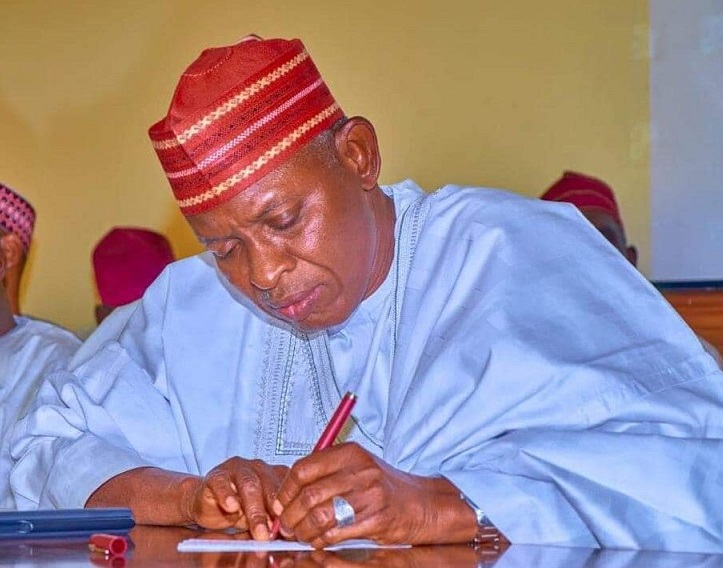
Open letter to Governor Alhaji Abba Kabir Yusuf
Accelerating Kano’s Future Through Technology and Innovation
Your Excellency,
I write to you with profound optimism about the transformative potential of technology and innovation to position Kano State as a beacon of progress in Nigeria and beyond. As Africa’s youth population surges, Kano, rich in culture, commerce, and human capital, is uniquely poised to harness this demographic dividend by embracing technology as a catalyst for economic growth, social equity, and sustainable development.
Your Excellency, I recognise and commend your commendable efforts and those of the Kano State Ministry of Science, Technology, and Innovation, under the visionary leadership of the Honourable Commissioner, in laying the groundwork for transformative projects already in the pipeline. The recent establishment of the Kano State Information Technology Development Agency (KASITDA) is a particularly strategic leap forward, signalling the state’s resolve to institutionalise tech-driven growth. These efforts are a critical foundation, and I urge sustained momentum to ensure their timely execution.
The recommendations outlined herein aim to complement and accelerate these existing plans, providing additional frameworks to attract global partnerships, amplify local talent, and unlock scalable opportunities. By building upon the Ministry’s initiatives and KASITDA’s mandate, Kano can fast-track its rise as a regional leader in technology-driven development.
Why Technology Matters
Technology is not merely a tool but a foundation for modernisation. It drives efficiency, creates jobs, and bridges gaps in education, healthcare, governance and more. For Kano, where over 60% of the population is under 25, investing in tech equips our youth with skills to compete globally while addressing local challenges like unemployment, agricultural productivity, and access to public services.
Globally, nations such as Rwanda and India have demonstrated that prioritising tech ecosystems can spur prosperity. Closer home, Lagos’s emergence as a start-up hub highlights the power of deliberate policy and infrastructure. Kano, with its strategic location, historical significance, and entrepreneurial spirit, can surpass these models by tailoring solutions to our unique context.
A Blueprint for Transformation
To unlock this potential, I propose the following actionable initiatives:
1. Establish Kano Tech City
Create a dedicated innovation district with co-working spaces, labs, and incubation hubs. Partner with organisations like Google, Alison – Free Empowerment Platform, Microsoft Africa, Altmentor and more to offer training, mentorship, and funding access. This ecosystem will nurture startups in EdTech, AgriTech, FinTech, HealthTech, etc, sectors critical to Kano’s economy.
2. Revolutionise Education
Integrate digital skills into school curricula. Launch “Kano Code Clubs” and sponsor scholarships for students pursuing careers in STEM fields. Collaborate with Universities to offer advanced degrees in emerging technologies, ensuring a pipeline of skilled talent.
3. Upgrade Infrastructure
Prioritise broadband expansion, especially in rural areas, and deploy solar-powered tech centres to overcome energy challenges. Reliable internet and electricity are non-negotiable for attracting global investors.
4. Enact Innovation-Friendly Policies
Offer tax breaks for tech start-ups, streamline business registration, and establish a regulatory sandbox for testing solutions. Launch a Kano Innovation Fund to provide grants and venture capital. Some Innovation-Friendly Policies are outlined below;
-Tax Incentives & Financial Support
- 5-Year Tax Holiday: Exempt early-stage start-ups (0–3 years) from corporate income tax, PAYE, and land use charges.
- Investor Tax Exemptions: Offer 100% capital gains tax relief for investments in Kano-based tech start-ups.
- R&D Grants: Fund 50% of R&D costs for startups in priority sectors (AgriTech, EduTech, renewable energy).
- Kano Equity Fund: Establish a state-backed venture capital fund to co-invest in high-potential startups, matching private investments 1:1.
-Ease of Doing Business
- 24-Hour Start-up Licensing: Create a dedicated tech desk at the Kano Investment Agency to fast-track business registration, licenses, and permits.
- Regulatory Sandbox: Allow start-ups in FinTech, HealthTech, and mobility to test products for 12 months without full regulatory compliance.
- Land Grants: Allocate subsidised land in Kano Tech City to start-ups and investors who commit to hiring at least 60% local talent.
-Talent & Immigration
- Tech Talent Visa: Partner with the Federal Government to expedite visas for foreign founders, engineers, and investors relocating to Kano.
- Residency Rebates: Offer 50% discount on residency fees for startups that train and hire 100+ Kano youths annually.
-Market Access & Growth
- Government Procurement Quota: Mandate 20% of state procurement contracts (e.g., e-governance tools, agri-supply chains) to be awarded to local tech startups.
- Export Incentives: Subsidise Saas (Software-as-a-Service) startups to scale across Africa by covering 30% of their cross-border marketing costs.
-Investor Confidence & Exit Opportunities
- Investor Matchmaking: Host quarterly pitch sessions connecting startups with angels and global VC networks.
- Acquisition Support: Legal and financial advisory subsidies for startups exiting to foreign or local acquirers.
-Sector-Specific Boosts
- AgriTech Subsidies: Free state-owned farmland for AgriTech startups piloting IoT-enabled irrigation or crop-monitoring drones.
- AI Ethics Framework: Develop Nigeria’s first state-level AI governance guidelines to attract ethical tech firms and global grants.
-Long-Term Stability
- 10-Year Policy Guarantee: Legislate a “Kano Innovation Charter” to lock in incentives beyond political cycles, ensuring investor confidence.
- Kano Tech Ambassadors: Appoint youth innovators as global ambassadors to showcase success stories in international media.
5. Host Annual Tech Conferences
Showcase Kano’s potential through events like “Kano Innovates,” attracting investors, entrepreneurs, and thinkers. Celebrate local success stories to inspire a culture of innovation.
Attracting Investment
A thriving tech ecosystem signals stability and opportunity. By cultivating homegrown talent and infrastructure, Kano will attract investors seeking opportunities in untapped markets. Public-private partnerships can further de-risk investments, while success stories will generate organic interest.
A Call to Legacy
Your Excellency, this vision demands bold leadership. Imagine a Kano where farmers use drones to monitor their crops, artisans sell their products globally via digital platforms, and students use AI to solve community problems. Championing this agenda will secure Kano’s place as a hub of African innovation, creating jobs, reducing poverty, and inspiring generations.
The time to act is now. Let us collaborate with stakeholders, businesses, educators, and youth to build a Kano that leads, not follows.
Abubakar Sadiq Umar writes from Kano and can be reached via email at aserdeeq@gmail.com

NANS president sues Seyi Tinubu, DSS, NTA for abduction, Torture, demands N38.3 billion compensation
By Abdullahi Mukhtar Algasgaini
The President of the National Association of Nigerian Students (NANS), Comrade Atiku Abubakar Isah, has filed a lawsuit at the Federal High Court in Abuja, accusing Seyi Tinubu, son of President Bola Tinubu; the Department of State Services (DSS); and the Director-General of the Nigerian Television Authority (NTA) of abduction and torture.
He is demanding N38.3 billion in damages. According to a report by Truth Lens News, Isah alleged that Seyi Tinubu and the Minister of Youth Development, Ayodele Olawande, offered him a N100 million bribe to support President Tinubu’s re-election.
He claimed he rejected the offer due to the government’s failure to fulfill past promises.
Following his refusal, Isah stated that he was abducted on April 15, stripped of his belongings, beaten, and forced to issue a statement under duress.
He also accused his abductors of threatening to kill him and cover up the crime.
However, Seyi Tinubu has denied all allegations, stating that he has no connection with Isah and has never met him. In a post on his Instagram page, he dismissed the claims as false and an attempt to tarnish his reputation.
Additionally, a civil society group, Education for Accelerated Development (EAD), declared that Isah lacks the legitimacy to serve as NANS president, describing his accusations as baseless and a publicity stunt.
The case has sparked public debate, with many calling for a thorough investigation into the alleged abduction and bribery claims.

FG flags off free emergency medical services in Kano
By Uzair Adam
The Federal Government has kicked off a major healthcare initiative in Kano State, offering free emergency medical services to indigent patients—beginning with the accreditation of Dala Orthopaedic Hospital under the National Emergency Medical Service and Ambulance System (NEMSAS).
At the official unveiling on Friday, the hospital’s Chief Medical Director, Dr. Nurudeen Isa, described the move as a significant milestone in the administration’s health agenda.
He noted that the facility would now offer 48 hours of free emergency care to underprivileged patients brought in from any part of the state.
“Today marks a new chapter in emergency healthcare delivery—one where the poor no longer have to suffer or die in silence due to lack of funds,” Dr. Isa said.
Funded through the Federation Account, NEMSAS was established to ensure that Nigerians, particularly the most vulnerable, receive timely and life-saving emergency treatment.
The program targets cases such as road traffic accidents, obstetric complications, snake bites, gunshot wounds, and other urgent conditions.
Dr. Isa revealed that Dala Orthopaedic is the first accredited facility in Kano under this scheme, with more public and private hospitals expected to follow soon.
Representing the Federal Ministry of Health at the event, Dr. Emuren Doubra, Head of Operations at NEMSAS, said the initiative is sustained through a statutory allocation—5% of the Basic Health Care Provision Fund—as mandated by the National Health Act.
“Our goal is to eliminate financial barriers during emergencies. We’re partnering with both private and public hospitals to ensure that poor Nigerians aren’t left stranded when minutes matter most,” he said.
The program is part of the Renewed Hope Agenda for Health and falls under the broader National Health Sector Renewal and Investment Initiative, led by Coordinating Minister of Health and Social Welfare, Professor Muhammad Ali Pate.
To facilitate prompt response, the initiative includes a fleet of ambulances equipped with medical gear and staffed by professionals, working in collaboration with the Federal Road Safety Corps (FRSC) to transport emergency patients from any location in the state.
“These ambulances are mobile emergency units. They begin treatment at the scene and alert hospitals in advance so preparations can start immediately,” said Dr. Doubra.
One of the program’s early beneficiaries, Aliyu Andul, shared his story. After a severe accident, he was advised in hospitals across Enugu and Lagos to undergo leg amputation. But receiving care at Dala Hospital changed everything.
“I was told my leg should be amputated. But when I came here, I got better treatment. I am now recovering—you can see I am standing,” he said, expressing gratitude for the free treatment.
The initiative is expected to scale up across Kano State, setting a new standard for emergency healthcare delivery in Nigeria.

Grandmother pays school fees with chickens in heartwarming gesture
By Abdullahi Mukhtar Algasgaini
In a touching display of determination and love for education, an elderly grandmother brought six live chickens to Adiedo Mixed Secondary School in Migori, Kenya, on Tuesday, May 14, 2025, to settle her granddaughter’s unpaid school fees after the child was sent home for non-payment.
The elderly woman’s unconventional payment moved teachers and onlookers, mainly when one of the hens laid an egg on the spot—a moment seen as a divine blessing.
The incident highlighted the family’s profound dedication to education, despite facing financial hardship.
School officials accepted the poultry, recognising the grandmother’s sacrifice of her valuable laying hens to keep her granddaughter in class. The story has since touched many, highlighting the lengths families go to secure their children’s futures.

Bauchi govt disburses N95m to families of victims killed in bandit attacks
By Uzair Adam
The Bauchi State Government has disbursed N95 million to families of vigilantes and civilians who were killed in recent bandit attacks in Alkaleri Local Government Area.
Governor Bala Mohammed made the announcement during a condolence visit to Duguri and Gwana communities, where the attacks occurred.
The victims include 13 vigilantes and 10 civilians who lost their lives in an ambush by bandits.
According to the governor, each family of the deceased vigilantes will receive N5 million, while families of the civilians will receive N3 million each.
He noted that a committee led by the Chairman of Alkaleri LGA has been set up to oversee the equitable distribution of the funds.
“We are doing this out of sympathy and appreciation for the sacrifices made by these heroes. This support is meant to offer some relief to their families,” Mohammed said.
He also revealed that over 60 of the attackers were killed in the confrontation with security forces and vigilantes, praising the courage of the local defenders despite the superior firepower of the bandits.
In response to the ongoing security challenges, the governor pledged to employ up to 2,100 youths into the vigilante corps before the end of the year, beginning with the most affected communities.
He said the recruits will be trained by security agencies and equipped with clear rules of engagement to avoid extrajudicial actions.
“To strengthen their operations, I’m releasing N10 million immediately, and the committee will add another N10 million to support their mobility, especially fuel for patrols,” he added.
Governor Mohammed also warned traditional leaders to be vigilant against informants within their communities, describing them as more dangerous than the bandits themselves.
Meanwhile, the state Commissioner of Police, represented by Deputy Commissioner Muhammad Ahmed, said additional personnel and equipment have been deployed by the force headquarters to enhance security in the state.

Two NNPP lawmakers defect to APC over internal party crisis
By Uzair Adam
Two federal legislators from Kano State have left the New Nigeria People’s Party (NNPP) and joined the ruling All Progressives Congress (APC), citing unresolved internal issues within their former party.
The defection of Kabiru Alhassan Rurum, representing Rano/Bunkure/Kibiya, and Abdullahi Sani Rogo of Karaye/Rogo federal constituency, was formally announced by the Speaker of the House of Representatives, Tajudeen Abbas, during Thursday’s plenary.
Their move adds to the recent wave of defections to the APC, with Oluwole Oke, a lawmaker from Osun State, also officially joining the party during the same session.
The sitting was attended by APC National Chairman Abdullahi Ganduje and other top party members, who were in the green chamber to receive the new members.
The House has recently witnessed a series of defections, many of which have strengthened the numerical advantage of the APC.

Reps to investigate mass failure in 2025 UTME
By Uzair Adam
The House of Representatives has resolved to investigate the technical error that resulted in the mass failure recorded during the 2025 Unified Tertiary Matriculation Examination (UTME).
This decision was made following the adoption of a motion of urgent public importance moved by a lawmaker from Osun State, Adewale Adebayo, during Thursday’s plenary session.
The Joint Admissions and Matriculation Board (JAMB) released the results of the 2025 UTME on May 9, revealing that over 78 per cent of candidates scored below 200 out of a possible 400 marks.
An early review by the board indicated a significant technical error had occurred.
At a press briefing in Abuja, JAMB Registrar Prof. Ishaq Oloyede disclosed that server-related issues affected the results of 379,997 candidates.
He explained that updates to servers in Lagos and South-East zones disrupted the upload of responses during the first three days of the examination.
The issue, caused by one of JAMB’s two technical service providers, went undetected before the results were initially released.
To remedy the situation, the board announced that affected candidates would be allowed to retake the examination between May 16 and 19, 2025.
While presenting the motion, Adebayo emphasised the hardship many candidates and their families endured, travelling long distances only to face disappointing outcomes.
He called for a thorough investigation to ensure such lapses do not recur.
In his contribution, Sada Soli from Katsina praised the JAMB Registrar for admitting the error and publicly apologising.
He also commended Oloyede’s efforts in boosting the board’s revenue since taking office.
However, House Speaker Tajudeen Abbas said it would be up to the investigating committee to determine whether the Registrar deserves an official commendation.
The motion was unanimously adopted through a voice vote.
The House further called on the Federal Government to establish Computer-Based Test (CBT) centres in all Local Government Areas across the country to make exam centres more accessible.
It also urged JAMB to release the withheld results of candidates below the age of 16.

TikTok influencer killed during livestream
By Muhammad Abubakar
Valeria Marquez, a 23-year-old beauty influencer from Zapopan, Jalisco (Mexico), was tragically shot and killed during a TikTok livestream on May 13, 2025. Known for her makeup tutorials and lifestyle content, Marquez had nearly 200,000 followers across social media platforms.
The incident occurred at Blossom The Beauty Lounge, where Marquez worked. A man posing as a delivery person entered the salon and fatally shot her while she was streaming live. She was struck in the chest and head, collapsing on camera in a moment that quickly went viral and shocked viewers.
Authorities are investigating the killing as a femicide, a gender-based crime. Reports indicate that Marquez had previously expressed fears about threats from an ex-partner, whom she believed was behind earlier harassment.
Her death has sparked outrage and renewed calls for stronger protections against gender-based violence in Mexico, a country grappling with high rates of femicide.