

‘Health is God?’ — Outrage as brand misfire with offensive Hausa translation
By Sabiu Abdullahi
There is growing discontent among Hausa speakers and language professionals over what many describe as careless and culturally insensitive translations in advertisements and public communications by major Nigerian companies.
This concern resurfaced recently when Hygeia HMO, a prominent health maintenance organization, launched a campaign in Northern Nigeria using the slogan “Lafiya Ubangiji ne.”
While it may have sounded spiritual to non-native ears, it struck many Hausa speakers as bordering on blasphemy.
“The intended meaning was likely, ‘Health comes from God,’ but what people heard was ‘Health is God,’” said Habib Sani Galadima, a professional Hausa-English translator. “It wasn’t just a translation error. It was a failure to respect cultural and religious sensitivities.”
In an opinion piece published by Nigerian Tracker, Galadima criticized the use of literal translation in a language where tone, logic, and spiritual coherence matter deeply.
He pointed out that the message would have been better rendered with a familiar Hausa expression such as “Lafiya uwar jiki”, which loosely means “health is wealth.”
“Too often, translation is treated as a technical afterthought,” Galadima added. “But when it’s done carelessly, the damage is real—especially in communities where moral and religious values are central.”
The outrage is not limited to a single campaign. Another incident involved a drink advertisement that attempted to promote a non-alcoholic beverage using the phrase “Ba barasa a cikin wannan giya”, which literally means “No alcohol in this beer.”
But in Hausa, both barasa and giya mean alcohol—making the phrase sound absurd.
A better alternative, Galadima suggested, would have been “Abin sha mai daɗi kuma babu giya a cikinsa”—a clearer and culturally appropriate way to convey the same message.
Frustration is also mounting on social media, where many Hausa speakers are voicing concerns over perceived regional bias and neglect.
“How is it that companies based in Lagos are approving translations for audiences in Kano?” one user asked. “You call MTN customer care or your bank, and you’re shocked by how bad the Hausa sounds.”
Others argue that the issue goes beyond language—it’s about representation and systemic imbalance.
“Most company headquarters are in the South, and they prefer to use their own people—even when the result is subpar,” said one commentator. “Even when northern celebrities are made ambassadors, their packages don’t compare to those given to their southern counterparts.”
Some have pointed to the broader cultural implications, suggesting that the North must do more to support its own.
“We don’t promote our own talent enough, and we’re not intentional about protecting our language,” one respondent lamented.
This issue is not new in the tech and linguistic communities either. A PhD who is a Hausa NLP expert, shared how during his early involvement with Masakhane, an African language machine translation initiative, Yoruba speakers were initially translating Hausa using tools like Google Translate.
“I had to push back and reclaim that space for actual Hausa speakers,” he said.
The recurring problem, many argue, is the lack of qualified translators with a deep understanding of Hausa culture, values, and dialectal variations.
In Hausa, words are not just linguistic units—they carry rhythm, reverence, status, and deep social cues.
Professional translators and language advocates are now calling for a national conversation and policy shift.“What would change if we trained translators not just in grammar, but in cultural listening?”
Galadima asked in his piece. “This work requires more than accuracy. It requires care.”
As Hausa remains one of the most widely spoken languages in Africa, the stakes are high.
Without proper translation, messages meant to connect may instead offend, confuse, or alienate the very people they are trying to reach.
For now, voices from the North are growing louder: “This is more than bad grammar—it’s about respect.”

31 Muslim passengers lynched in Plateau: ABU Muslim Forum demands justice
By Muhammad Sulaiman Abdullahi
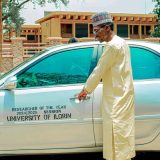
The Muslim Forum of Ahmadu Bello University (ABU), Zaria, has condemned the brutal lynching of 31 Muslim passengers in Mangu Local Government Area of Plateau State, describing the attack as a “horrific act of savagery and barbarism.”
According to the Forum’s statement, signed by its Secretary-General, Dr. Munir Sani Ari, the victims—travelling in an 18-seater bus marked “ABU-Zaria”—were ambushed on Friday, June 20, 2025, while seeking directions in Mangu. Twelve passengers were reportedly killed and burned on the spot, while 18 others sustained serious injuries and are currently receiving medical care following military intervention.
Among the deceased was a staff member of ABU’s Department of Physics, who was reportedly transporting women and children to a wedding. The Forum emphasised that this was not an isolated incident but part of a “disturbing pattern of impunity-driven violence” against Muslims in Plateau State.
Criticising the response by Mangu LGA Chairman, Mr. Emmanuel Bala, who attributed the massacre to a “case of mistaken identity”, the Forum labelled the remark as “futile and insulting,” citing social media posts glorifying the attack as evidence of premeditated hate.
The Forum issued a set of urgent demands, including a full and independent investigation, public prosecution of those responsible, prompt compensation for victims, and immediate government intervention to prevent future attacks. It also called on the Kaduna State Government to support the victims’ families and cover medical expenses.
The Forum warned that continuing to fail to act decisively would only deepen national tensions, urging authorities to pursue justice beyond “mere rhetoric.”

Kano declares Thursday public holiday for Islamic new year
By Anwar Usman
The Kano State Government has announced Thursday as public holiday to mark the beginning of the Islamic New Year, 1447 AH.
This is contained in a statement by the state Commissioner for Information and Internal Affairs, Ibrahim Waiya, which was made available to journalists on Wednesday.
The state governor, Abba Yusuf, congratulated the Muslim faithful on witnessing the New Year, which begins with the month of Muharram, the first month of the Islamic lunar calendar.
The governor called on the people of the state and the entire Muslim Ummah to reflect on their actions over the past year and to use the occasion to pray for peace, unity, and prosperity in the state and the country at large.
He also assured the people of the state of his administration’s commitment to improving their living standards through dedicated and people-oriented governance.

NDLEA arrests 583 in Adamawa, seizes 4 tonnes of drugs
By Uzair Adam
The National Drug Law Enforcement Agency (NDLEA) in Adamawa State has arrested 583 suspects and seized four tonnes of illicit drugs between June 2024 and June 2025.
The State Commander, Aliyu Abubakar, disclosed this during a press conference in Yola on Wednesday to mark the 2025 International Day Against Drug Abuse and Illicit Trafficking.
He revealed that N1,213,875, being proceeds of crime, was forfeited to the Federal Government and paid into the Treasury Single Account (TSA).
According to Abubakar, the command also secured 225 convictions, with the offenders sentenced to various terms of imprisonment.
He added that 53 individuals battling drug addiction—51 males and two females—were treated and rehabilitated within the period.
The agency, he said, has also launched a programme known as “Prevention Ambassadors” aimed at training 1,000 secondary school teachers and other stakeholders to champion drug prevention efforts.
“This is being achieved through the creation of drug prevention desks in all secondary schools across the state,” he explained.
It was gathered that this year’s theme is “The Evidence is Clear: Invest in Prevention” with a central message urging society to “Break the Cycle.”
Abubakar described the theme as a reaffirmation of NDLEA’s resolve to address drug abuse and illicit trafficking, positioning prevention as not only a health issue but a matter of national security.

Six child traffickers sentenced to 120 years in prison in Kano
By Hadiza Abdulkadir
A Kano State High Court has handed down a combined sentence of 120 years to six members of a notorious child abduction and trafficking syndicate found guilty of abducting and selling children under the age of 10.
The convicts, who operated between Kano and Onitsha, Anambra State, were charged with multiple counts of child abduction, trafficking, and conspiracy. According to court records, the group abducted several young children from various parts of Kano and trafficked them across state lines to Onitsha, where the children were sold.
Justice Zuwaira Yusuf, who presided over the case, found all six guilty as charged and sentenced them to various prison terms without the option of a fine.
Justice Yusuf described the crimes as “heinous and inhuman,” noting that the syndicate’s actions had caused “unimaginable trauma to innocent families.”
She sentenced Mercy Paul to 55 years imprisonment, Ebere Ogbono to 41 years, Emmanuel Igwe to 9 years, Loius Duru to 6 years, Monica Oracha to 5 years, and Chinelo Ifedigwe to 9.
The verdict follows years of investigation and cooperation between security agencies in Kano and Anambra. Parents of the abducted children expressed relief at the ruling, calling it a step toward justice.
Authorities say efforts are ongoing to rescue the remaining missing children and dismantle the broader trafficking network.

Nigeria Customs, India deepen strategic cooperation at WCO Policy Commission
By Sabiu Abdullahi
The Nigeria Customs Service (NCS) has stated that it is committed to strengthening bilateral cooperation with India’s Customs Administration during a high-level meeting on the sidelines of the 92nd Session of the World Customs Organisation (WCO) Policy Commission.
The session, which took place on June 25, 2025, in Brussels, Belgium, offered a platform for both nations to review their joint initiatives and explore new areas of collaboration.
Comptroller-General of Customs, Adewale Adeniyi, led Nigeria’s delegation to the meeting with Mr. Surjit Bhujbal, a senior official from India’s Central Board of Indirect Taxes and Customs (CBIC).
The two parties evaluated progress made under the Customs Mutual Administrative Agreement (CMAA), which both countries signed on November 16, 2024.
The discussions centered on crucial areas such as customs valuation, tackling abusive transfer pricing, and fostering synergy between customs and tax systems.
Both parties also reviewed joint efforts in combating the cross-border trade of substandard pharmaceutical products. Recent seizures in Nigeria, attributed to improved intelligence sharing between the two nations, were acknowledged as a positive outcome of their cooperation.
Speaking after the meeting, CGC Adewale Adeniyi stated, “Today’s dialogue is a continuation of the strong foundations laid during the signing of the CMAA in November 2024. We are intensifying efforts to tackle undervaluation, abusive transfer pricing, and to improve system integration between customs and tax authorities. Additionally, our joint actions in curbing the importation of substandard pharmaceuticals yield results and protect public health.”
He also expressed Nigeria’s desire to expand the scope of collaboration by introducing joint technical missions, training initiatives, and data-sharing mechanisms.
According to him, these measures will support more effective risk management, improve revenue assurance, and bolster trade controls.
“This partnership reflects our vision of a smarter, collaborative, and globally connected customs administration,” Adeniyi added.
The agreement under review was originally signed during the Indian Prime Minister’s state visit to Nigeria in 2024, marking a significant step forward in strengthening trade ties, institutional engagement, and mutual security interests between the two countries.
Mr. Surjit Bhujbal, speaking on behalf of the Indian delegation, noted, “India regards Nigeria as a crucial partner in Africa. The CMAA has opened a structured channel for mutual assistance, information exchange, and capacity building.
“We are keen to deepen technical cooperation on valuation, combat revenue leakage through transfer pricing schemes, and share our experience integrating customs with tax systems.”
The WCO Policy Commission serves as a critical forum for customs administrations worldwide to set policy direction, advance trade facilitation, and discuss enforcement strategies.
Nigeria’s involvement in the commission reflects its ongoing commitment to aligning with international standards and modernising its customs operations.

Trump nominated for Nobel Peace Prize over Iran-Israel ceasefire
By Muhammad Abubakar
President Donald J. Trump has been nominated for the Nobel Peace Prize by Congressman Buddy Carter, following a historic ceasefire agreement between Iran and Israel.
Carter praised Trump’s role in ending the conflict and preventing Iran from obtaining nuclear weapons, calling his leadership “bold and decisive.” The congressman credited Trump with promoting peace and stability in a volatile region.
Now serving as the 47th President of the United States, Trump’s efforts, Carter said, “exemplify the very ideals that the Nobel Peace Prize seeks to recognize.”

A call for religious balance in Plateau State
By Malam Aminu Wase
Plateau State is a richly diverse and vibrant community, home to people of various ethnic and religious backgrounds. We are one family, destined by God to live together in peace and mutual respect. Sadly, this unity is too often ignored when it comes to leadership, particularly the highest office in the state. The persistent adoption of a Christian-Christian gubernatorial ticket threatens the very foundation of our coexistence.
It is time for Plateau to embrace equity, justice, and inclusiveness. For too long, Muslims in the state have been marginalised in political leadership, particularly at the executive level. This exclusion must end. I firmly believe that the next governorship candidate, regardless of religion, should choose a Muslim as a running mate. A Muslim-Christian or Christian-Muslim ticket would truly reflect the spirit of fairness and unity we all profess to uphold.
For more than two decades, Muslims in Plateau State have shown unwavering political support for Christian-led tickets, believing in the promise of shared governance and mutual respect. From Wase to Kanam, Jos North to Shendam, Barkin Ladi to Quanpaan, Mangu, and other local government areas, Muslim communities have consistently turned out in large numbers to vote, not out of compulsion, but from a sincere desire to contribute to the democratic process and to foster unity across religious lines. Yet, this goodwill has not been met with reciprocity.
Despite making up a significant portion, nearly half of the state’s population, Muslims remain glaringly absent from the highest levels of leadership. This is not merely a matter of political imbalance but a painful reminder that inclusion and equity remain elusive. When a group that has given so much continues to receive so little in return, it breeds frustration, weakens trust, and threatens the very cohesion that Plateau so desperately needs. We cannot claim to be united while one half of our people are repeatedly shut out of the room where decisions are made.
Our call is simple: include us. Recognise our presence. Acknowledge our contributions. Let us build a Plateau where everyone feels seen, respected, and valued regardless of faith.
Personally, some of the most meaningful relationships in my life have been with my Christian friends, friendships that began in the classrooms of Pilot Central Primary School in Wase, grew stronger at Government Science College Wase, and deepened further during my university years. These bonds have shown me the beauty of unity, the strength of mutual respect, and the power of shared dreams. That is why it pains me deeply to see Muslims continually left out of leadership. It feels like a betrayal of the unity we have lived and believed in. If we can walk together in friendship, why can’t we lead together in governance on the Plateau?
In the Wase Local Government, Christians are a minority, yet they have never been treated as outsiders. They have held key positions, including that of the Deputy Chairman, and many have benefited from the federal appointments from the Rt Hon Ahmed Idris Wase, the immediate past Deputy Speaker of the Nigerian House of Representatives, thanks to his inclusive leadership. This is what true leadership should look like, recognising every citizen’s worth, regardless of faith or number. It proves that fairness is not a favour, it’s a duty. If such inclusive governance can be practised locally, why can’t it be replicated across the entire state?
Plateau belongs to all of us. We must build a future where leadership reflects our shared diversity. Let’s end the cycle of exclusion and embrace a new era of fairness, justice, and genuine unity.
Malam Aminu Wase writes from Kaduna State. He can be reached at aminusaniusman3@gmail.com.

A counsel for celebrities
By Saifullahi Attahir
In life, every valuable thing has a cost, and a price must be paid. As the saying goes, nothing good comes free. This is true in almost all walks of life.
Looking at human history from time immemorial, man has always cherished being known, popular, heard, and respected. This is one of the powerful factors behind the human search for power, influence and riches. And to be fair to the modern age, this is not a new thing in human history.
But in our insatiable search for popularity and prestige, we must be mindful of what we are trading in exchange for. This article offers some advice on how a celebrity can navigate life without much temptation from his newly acquired status.
As billionaire Microsoft founder Bill Gates stated, success is a lousy friend. It deprives many of the original energy, enthusiasm, discipline, hard-working spirit, and humility that catapulted them to success in the first place. Successful people easily become complacent and trapped in their orbit of self-entitlement.
Once a man becomes successful, a binge of arrogance and self-entitlement starts appearing. He begins to stop listening to experts, observing and learning, and soon, he stops improving. Over the long run, unknown to him, those attitudes he had abandoned are the fabric behind his success.
One thing we should all know: every man who was on a path to utilise his talent, produce something magnificent, and become successful, whether in sports, leadership, business, entertainment, professionalism, music, writing, or any creative talent, must have met with a bunch of critics.
From the day you become a celebrity, your activities will no longer be secret: your outfits, marital affairs, social life, assets, family, and movements. You will bid farewell to some level of privacy, and life will never be the same again.
Many people are not prepared for this stage of their lives. Many great men, especially celebrities, were lost in this ocean of deception and falsehood. You would now focus more on pleasing people: good outfits, even at the cost of debt, new skin, costly living just to show off, and new fake friends.
On another dimension, the kind of social pressure met is unimaginable: constant calls, constant meetings, constant online presence, just to satisfy your fans or followers. This demand is so consuming that many celebrities hardly cope with it. Stories of celebrities taking drugs and injections are not a new thing. Few celebrities sleep without the aid of pills. Many celebrities lost the battle to alcohol and toxic heroin and were unable to find peace.
A popular Hausa songwriter, Aminuddeen Ladan Ala, once described how difficult it was to become a celebrity in his famous album “Shahara”. Only phone calls were enough to drain your energy, plus the number of expectations by loved ones seeking your attention. Many celebrities would become friends with highly influential people whose offers they can’t easily turn down. You would be invited at any hour without much consideration for your schedules and health, and turning such invitations down would be described as arrogant to your fans and followers.
This is more common among those who made it in life at a very young age. The majority of these young celebrities squander their fortune. They return to square zero without proper guidance, discipline or genuine counselling. Many celebrities become depressed, psychotic, and destitute.
Well-grounded and sustainable success requires a solid foundation of time, perseverance, and smart decisions. Unfortunately, many celebrities, especially in the music, sports, and entertainment industries, lack such foundations, hence the many sorrowful celebrity stories. Uncountable stories of suicide, crime, divorce, and bankruptcy are always in the papers.
Although I’m not much of a football fan, I always admire the lifestyle of one player called Lionel Messi. Messi was among the greatest and most successful football players of all time, a record breaker in many aspects, but still one of the most humble people on earth. Lionel Messi has all it takes to be arrogant and showy, but he was disciplined enough to maintain his zeal, energy, humility, and enthusiasm. This principle has helped him throughout his football career. He didn’t allow his initial success to distract him from achieving more.
This attitude of self-entitlement has destroyed many players. Just after a season or two of trophies and achievements, they began to disobey, fight, and become distracted by amusement and glitter. Many celebrities started to lose focus on their primary goals; they became carried away by displaying their newly built homes, newly bought luxury cars, newly made friends, or newly made beautiful girlfriends.
These celebrities become attention seekers on social media platforms. They always engage in trivial issues and display wealth or status, adding to their load of enemies. They have forgotten that their primary goal was to hone more of their talents, score more goals, produce more beautiful songs, deliver more as leaders, maintain their positions in class, and profit more as business individuals.
Another destructive attitude of some celebrities was engaging in a competitive war with their rival colleagues. After being recognised by their followers, they began to install software to envy anyone trying to catch up with them. They subscribed to slander and a war of words to denigrate their rivals to maintain their status. Smart champions never engage in such an attitude; they recognise their God-given talent as a favour from their Lord and offer gratefulness by being humble and respecting their positions even if time changes and they lose their status to the new generation.
Smart celebrities respect others below them; they never act in desperation for money or status; they are philanthropists with their wealth; they are less pompous and showy; they invest and diversify their sources of income; they still make time for their families and core friends; and they always have learning minds and listening ears.
We seek Allah’s guidance in every step of our journey, Ameen.
Saifullahi Attahir is the President of the National Association of Jigawa State Medical Students (NAJIMS) National Body, and he wrote this piece from Federal University Dutse. He can be contacted via saifullahiattahir93@gmail.com.

Poverty, hunger now national security threats—defence chief
By Abdullahi Mukhtar Algasgaini
The Chief of Defence Staff (CDS), General Christopher Musa, has warned that poverty and hunger have escalated into major national security threats, fueling instability and violence across Nigeria.
Speaking at the 14th National Security Seminar in Abuja on Monday, Musa, represented by Rear Admiral Ibrahim Shetimma, stressed that modern insecurity extends beyond armed conflict to include economic hardship, food shortages, and social dislocation.
The event, themed “Combating Hunger and Poverty for Sustainable Peace and Development in Nigeria,” was organized by the Alumni Association of the National Defence College (AANDEC) in collaboration with the Office of the National Security Adviser (ONSA).
National Security Adviser (NSA) Mallam Nuhu Ribadu stated that the Tinubu administration is tackling the poverty-insecurity cycle through agricultural reforms, social investment programs, and security interventions.
He noted that economic deprivation drives crime and unrest, requiring a coordinated response.
Defence Minister Muhammad Badaru called for a people-centred security approach, addressing root causes like unemployment and social exclusion.
He urged collective action, noting that Nigeria’s challenges demand cross-border cooperation.
AANDEC President Air Commodore Darlington Abdullahi (retd.) highlighted education and economic empowerment as critical to stability, warning that neglecting these areas fuels extremism.
The CDS urged investment in agriculture to revive rural livelihoods and curb urban migration, while Ribadu reaffirmed the government’s commitment to long-term solutions for lasting peace.