

Why firewood remains in Nigerian kitchens
By Khadija Hamisu Daninna
Across Nigeria, kitchens are changing. Gas cylinders stand neatly in urban homes, while charcoal bags fill market stalls. Yet, despite these alternatives, firewood still burns in countless households. Its smoky flames carry taste, memory, and tradition that neither gas nor charcoal can fully replace. For some families, it is also the more affordable choice.
Zainab, a 31-year-old resident of Daura, has never known another way of cooking. “I have never cooked with gas before. All my life, I have been using firewood. I don’t even know how food tastes on gas, but I prefer my firewood. Maybe it is because I grew up with it. I use charcoal sometimes, but firewood is easier for me. Firewood is what I know.”
For Mariam, a 39-year-old housewife, firewood is tied to her husband’s nostalgia. “My husband always says the fried eggs his mother made tasted better on firewood. So I fry eggs on firewood, just to remind him of his childhood.”
Hajara, a 26-year-old food vendor, said firewood gives food a flavour no other fuel can provide. “When I cook jollof rice for parties, I always use firewood. It brings out a special flavour. Gas and charcoal cannot give you that same smoky taste. My customers expect it.”
But even warnings from doctors cannot keep some people away. Amina, a 37-year-old married woman, recalled: “There was a time I was sick, and the doctor told me to avoid smoky areas because of my eyes. But how can I stop? Firewood is what I grew up with. It is not just about cooking. It is about sitting together as a family, sharing stories, and working around the fire. That memory cannot be replaced.”
Cost is another factor. Mallam Usman, a 42-year-old man, explained: “I use both charcoal and firewood. The least charcoal I can buy is ₦200, while firewood is more expensive, up to ₦500. But I prefer firewood. My wife is already used to it. Sometimes I buy charcoal to ease the work, but mostly we use firewood because that is what we have always been using.”
Abdulmumin, a firewood seller in Rumfar Shehu who is over 40, said many people still depend on his trade. “People still come to buy firewood every day. Even though the price is high, food vendors, households, and event caterers still buy it. Firewood is something people cannot abandon. We have been using it since the time of our grandparents, and it still holds memories.”
But experts warn that firewood comes at a cost. According to a 2024 report from the National Bureau of Statistics published in Punch newspaper, 67.8 per cent of Nigerian households still cook with firewood. In Bauchi State, the figure is as high as 91 per cent. Doctors interviewed by Punch Healthwise have cautioned that prolonged exposure to smoke can lead to lung disease, eye problems, and respiratory infections. They noted that women and children, who spend long hours near smoky kitchens, are especially at risk. One pulmonologist, Dr. Abiona Odeyemi of Osun State University Teaching Hospital, explained that smoke from firewood damages the lungs over time, leading to serious health conditions.
Experts have also raised concerns about the environmental impact. Firewood use contributes to deforestation, worsens climate change, and adds to indoor air pollution.
Still, the flames continue to glow. For some, firewood carries memory and tradition. For others, it remains the more affordable choice. And for many, it is simply the way they were raised. Gas may be quicker and charcoal less smoky, but in countless Nigerian homes, firewood still burns, not just as fuel, but as a link between the past and the present.
Khadija Hamisu Daninna wrote via khadijahamisu2003@gmail.com.
APC North-Central urges Tinubu to retain Shettima as VP
By Anwar Usman
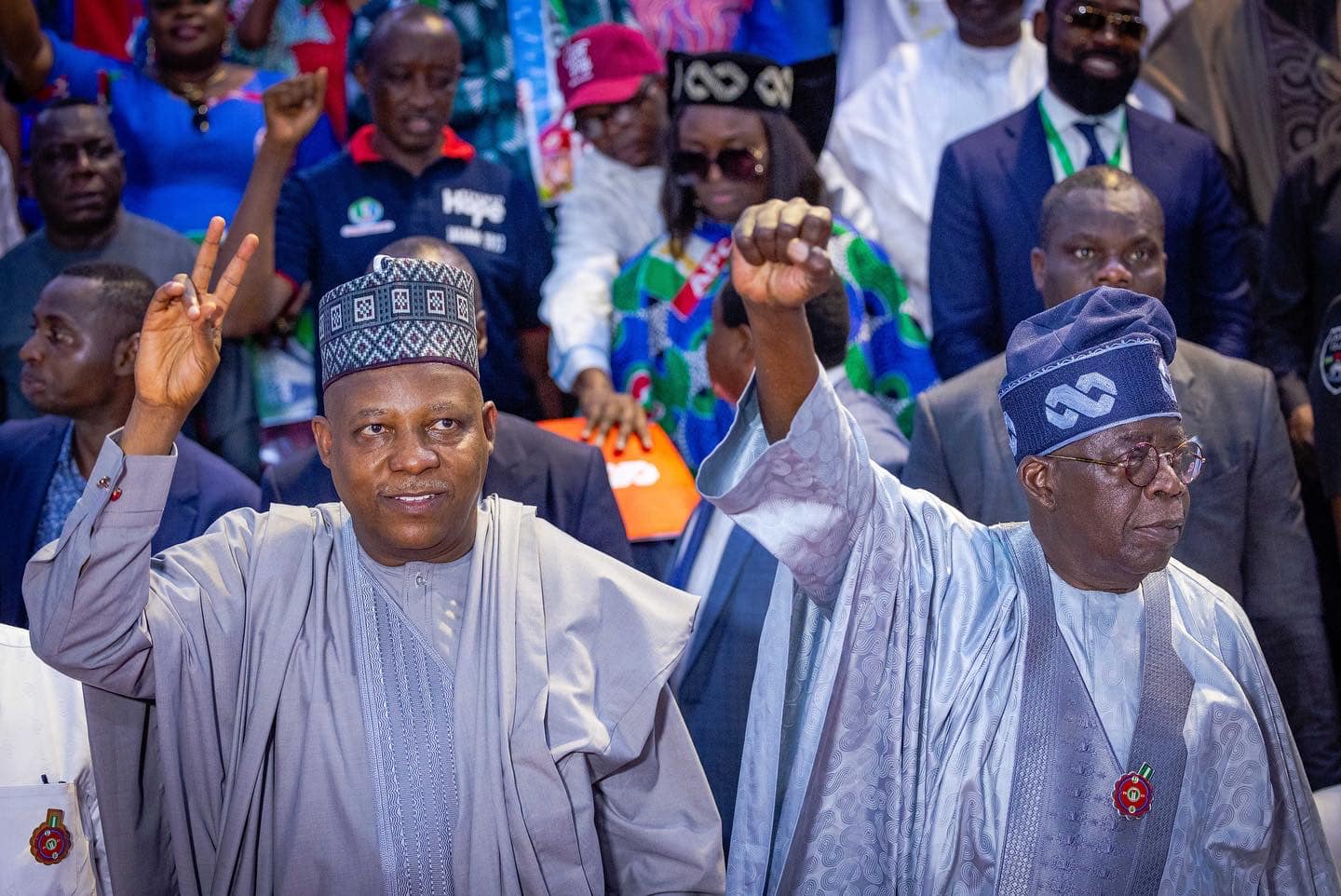
The All Progressive Congress Forum North-Central has advised President Bola Tinubu to retain Vice President Kashim Shettima as his running mate for the 2027 presidential election.
The statement was made by the forum’s Chairman, Alhaji Saleh Zazzaga, in Abuja on Saturday.
In a recent appearance on Channels Television’s Politics Today, the Northern Ethnic Nationality Forum, led by Dominic Alancha, warned Tinubu against a repeat of the Muslim-Muslim ticket, noting that it cost the APC several northern states like Nasarawa, Plateau and the Federal Capital Territory in the 2023 presidential poll.
Alancha further warned that the APC would lose more ground in the North, particularly in the Middle Belt, if the party repeats the Muslim-Muslim ticket in the next presidential election.
However, according to the group, calls for the President to drop the Muslim-Muslim ticket in the next election are unnecessary, insisting that the combination worked for the APC in 2023.
Zazzaga explained that the choice of running mate was a political strategy aimed at ensuring victory for the party and should not be seen as an attempt to sideline any religious group.
He further argued that with key positions in government already occupied by prominent Christians from the Middle Belt, including the APC National Chairman, Prof. Nentawe Yilwatda, and the Secretary to the Government of the Federation, Senator George Akume, the region remains well represented.
The statement in part read, “The Muslim-Muslim ticket will not affect President Bola Tinubu’s chances in the Middle Belt, which is part of the North-Central, and this is because of the key positions held by Middle Belt Christians in the APC government.
“We can guarantee that Tinubu will get 90 per cent of the votes from the North-Central. Tinubu’s achievements in office will guarantee his reelection, and as a result, there is no need to take the needless risk of changing a winning team.
“Those who are calling on President Bola Tinubu to change Vice President Kashim Shettima, basing their agitation on the Muslim-Muslim ticket, if you check, you will notice that in 2023, most of their communities voted for Peter Obi of the Labour Party.
“Now, if Peter Obi is to come out again in 2027, as expected, what is the guarantee that they will vote for Tinubu even if he drops Shettima and replaces him with a Christian? Does it mean that these people will now leave Peter Obi and vote for Tinubu?”
The Forum maintained that Tinubu’s performance in office would play a decisive role in determining his chances of re-election, adding that the President should focus on consolidating his achievements rather than altering the political structure that brought him victory in 2023.
The statement concluded, “We advise Mr President not to change what worked in the last election. Maintaining the same team will further strengthen the chances of the APC in 2027″.
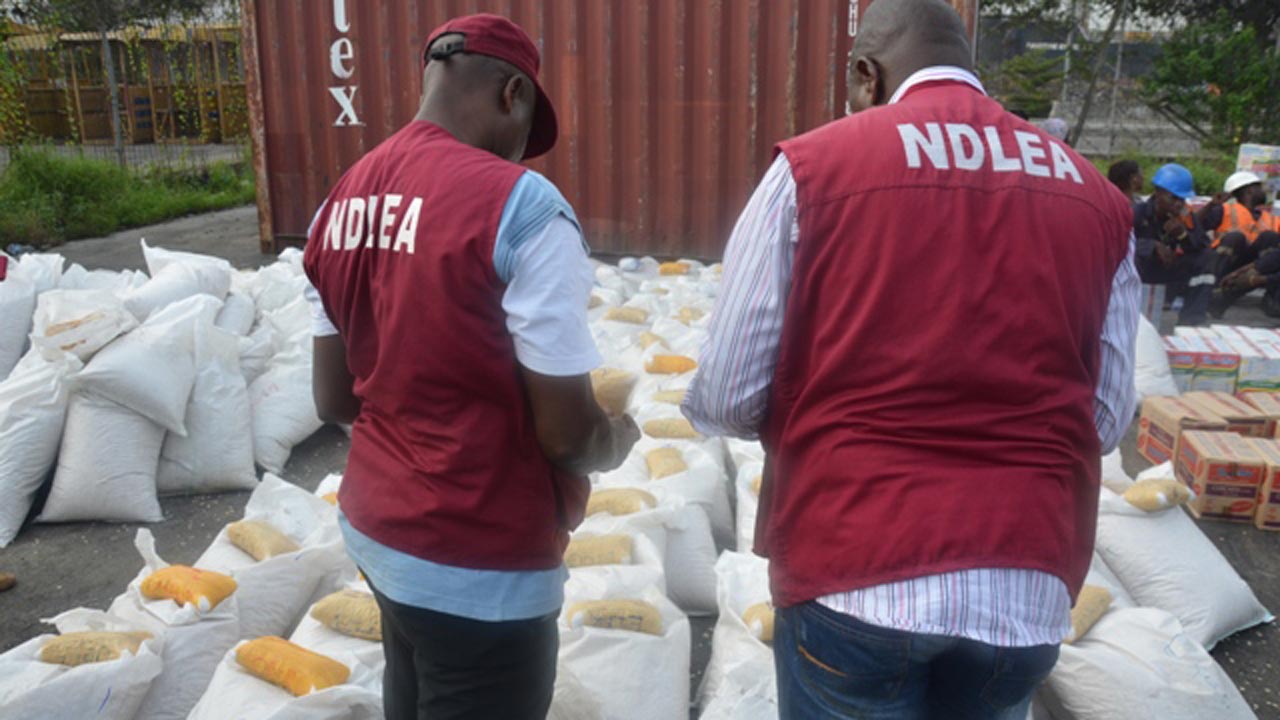
NDLEA arrests 27-year-old with cannabis worth over N10m in Kano
By Uzair Adam
The National Drug Law Enforcement Agency (NDLEA), Kano Strategic Command, says it has arrested a 27-year-old man in possession of nine kilograms of Cannabis Sativa (Colorado) valued at more than N10 million.
This was disclosed in a statement issued on Saturday in Kano by the command’s Public Relations Officer, Sadiq Muhammad-Maigatari.
He explained that the suspect, a resident of Fagge Local Government Area of Kano State, was arrested on August 6 along the Zaria–Kano Road by operatives of the Kiru Area Command while transporting 19 parcels of the substance from Lagos to Kano.
According to Muhammad-Maigatari, the suspect confessed to his involvement in the illicit trade and had been on the command’s watchlist before his arrest.
He noted that the seizure inflicted a major financial loss on the drug network, disrupting their supply chain and denying them revenue for further criminal activities.
“Removing this quantity from circulation also helps protect vulnerable communities from the social and economic harms associated with the trade in narcotics,” he said.
The spokesperson added that under the leadership of Abubakar Idris-Ahmad, the Kano Strategic Command will continue to strengthen patrols and intelligence-driven operations to curb drug trafficking in the state.

AKTH, Saudi partners offer free open-heart surgeries in Kano
By Uzair Adam
The Aminu Kano Teaching Hospital (AKTH), in collaboration with the King Salman Humanitarian Aid and Relief Centre and the Al-Balsam Association from Saudi Arabia, has successfully conducted free open-heart surgeries for patients in Kano.
Speaking to journalists about the development, the Head of the Cardiothoracic Surgery Unit at AKTH and team lead for the local medical team, Dr. Jamil Ismail Ahmad, said the initiative has brought relief to many patients who cannot afford treatment abroad.
“Normally, open-heart surgery costs between eight to ten million naira in Nigeria. But here, patients are getting it almost free of charge.
“Outside the country, it would cost between 25 to 30 million naira, including logistics. This partnership is therefore very important,” Dr. Ahmad explained.
He noted that patients with heart diseases who require surgery but have no high-risk complications are usually considered for the program, stressing that safety remains a top priority.
“Some patients are excluded because their cases were neglected for too long, and operating on them would be too risky. Our key watchword is safety — we want to ensure that after surgery, patients are in much better condition than before,” he said.
Dr. Ahmad commended the partnership with the King Salman Humanitarian Aid and Relief Centre, describing it as highly supportive in both service delivery and local capacity building.
“Such collaborations are important globally, not only for providing services but also for building local capacity. The visiting team shares its expertise, which enhances our training and helps us sustain these services,” he added.
On patient outcomes, he revealed that survival rates in previous missions with the same team ranged between 80 and 90 per cent, and similar results are expected this time.
Dr. Ahmad also called on the government, philanthropists, and the private sector to support such initiatives, noting that investment in infrastructure, human resource training, and collaboration would strengthen healthcare delivery.
On his part, Dr. Abdullah, the team leader of the King Salman Humanitarian Aid and Relief Centre, emphasised the challenges of delivering such care in underserved regions like Nigeria, Sudan, and Yemen.
“Patients often present late because they were neglected for years. Some should have undergone surgery 10 or 20 years ago before developing complications that now make operations riskier.
The best approach is continuous local services and proper screening. This saves lives and is more cost-effective than patients spending millions abroad in Europe, India, or North Africa,” he said.
He disclosed that so far, five patients had undergone surgery in Kano, with plans for six more cases in the following days.
Dr. Abdullah praised the dedication of AKTH staff, including doctors, nurses, technicians, blood bank staff, and even cleaners, saying their support was crucial to the success of the program.
One of the beneficiaries’ relatives, Fatima Muhammad, expressed gratitude, saying her family could not have afforded the surgery if they had been asked to pay.

Tribute to Malam Mu’azu Muhammad Yusif
By Ibrahim Lawal Ahmed
On September 9th, 2023, friends, colleagues and students of Malam Mu’azu Muhammad Yusif, more popularly called M.M. Yusif, gathered to honour and celebrate his long academic service at the Centre for Information Technology and Development (CITAD), Kano, by remembering the old days and reflecting on the transformation the academia has been going through in Nigeria. Malam M.M. Yusif recently retired from the Department of Political Science, Bayero University, Kano, and the occasion was a kind of send-off party.
It was indeed a robust discussion that involved personalities such as Mal. Ibrahim Mu’azzam, Dr. Y.Z. Ya’u, Dr. Nasir Fagge, Prof. Ibrahim Bello-Kano (IBK), among others. As expected, the debate spiralled from eulogising the celebrant to discussion on the character of students and teachers in the universities in Nigeria, the current system of running the university, the struggles of and in the Academic Staff Union of Universities (ASUU), and the neoliberal world order and its effects in Nigeria, particularly on the universities.
In short, the discussion is a dialectical cross-examination of factors within the university and how their interrelationship is influencing the university education in Nigeria; the relationship between the university and the society (town and gown relationship); and the relationship between the university and the state. The relationship between the university and the state is at the centre of the ASUU issue.
University has been the life of Malam, and as one of the longest-serving chairmen of ASUU, BUK Chapter, ASUU is a union very close to Malam. Therefore, I can imagine his feelings as he witnesses and reflects on the last two battles between ASUU and the government (2020 and 2022) that almost destroyed the public universities in Nigeria. The fundamental issue of ASUU-FGN conflict, in my view, is not the non-payment of allowances but the reductionist approach to governance by the government, which entails decreasing concern for the institutions that provide welfare to the people and total neglect of the idea of ‘public good.’ The result is the systematic collapse of the social contract (and compact) and rising political cleavages, a pre-bendel form of primitive accumulation and rentierism (or sycophancy) which results in the concentration of wealth in the hands of a few.
Consequently, as the rich get richer and the poor get poorer in Nigeria, commodity fetishism becomes the defining feature of the social relations in Nigeria. In other words, money is now the moral compass in Nigeria. The needs and wants of the average Nigerian are reduced to his stomach – you have to eat for you to think, for when you speak to a hungry man, he answers you with his stomach – as such, ASUU is faced with an enormous challenge of mobilising the society to back its course on its battles with the state.
Moreover, people are tired of the classical tactics of strikes always taken by ASUU, which, in the last two years, have hurt the university education system more than they have salvaged it. Thus, one key takeaway from the gathering is that ASUU needs to reinvent itself. While remaining steadfast to its goals that are of public interest, it has to change tactics.
Similarly, government at all levels has to pay more attention to the educational sector. To improve education, efforts should focus more on qualitative development rather than the current quantitative development, which prioritises establishing tertiary institutions in remote areas primarily due to trivial political reasons. This is not right. Situating schools and tertiary institutions has to take comprehensive cognisance of the environment. The questions such as how the town will support the gown at its embryonic stage and how the gown will support the city at maturity have to be asked. Answering these kinds of questions requires a comprehensive analysis of the infrastructure (both hard and soft), human and physical factors in the environment where the school or tertiary institution is to be situated. The late Sir Ahmadu Bello set a notable example in establishing Ahmadu Bello University in Zaria. He could have stayed in Sokoto or Maiduguri. However, considering several factors, Zaria is strategically better suited to host the university. Such was a good leader who has vision that transcends personal and primordial interest.
Indeed, the issue of education in Nigeria cannot be left to the government alone. It is a social issue; therefore, it requires an All-of-Society-Approach – from parents, to community leaders, traditional rulers, commercial and industrial enterprises, all have to be involved, especially regarding financing the education. The policy of student loans will not work because the socioeconomic condition of Nigeria is not prosperous enough to favour such a policy. In fact, in some advanced countries, the policy is problematic and an obstacle to social mobility, thereby facing harsh criticisms. The students need grants, not loans. And the wealthy Nigerians have to be philanthropic towards our educational institutions, especially the tertiary institutions. There is no more rewarding investment than investment in education,though it takes time to ripen. There is no better way to empower the youth in Nigeria than through education. The proper education enhances the ability of citizens to think. And unless one can think and understand the complexity of the present world, one can not address one’s personal problems, let alone those of society.
The courses taught by Malam M.M. Yusif aim to help students understand this complex world by interrogating the institutions that hold it up. To teach such courses requires a special personality. Therefore, as his recent student, the gathering was an opportunity for me to know more about my teacher. I listened attentively as his friends and colleagues kept mentioning his academic contribution to social issues that include gender studies, labour studies, and military studies, among many. But one standing quality and lasting legacy of Malam is mentorship. Malam put a lot of his energy into guiding his students.
He utilised his resources to acquire high-quality materials and provide practical work for his students. He is a teacher who loves questioning and never penalises you for your inability to answer a question. For him, the most important thing is for the students to attempt to answer the question brilliantly. He always has time for his students.
One day, I visited his office to discuss some concepts I didn’t understand. After explaining the concepts to him, I complained, “Sir, I am confused.” He responded, “Do not worry, Ibrahim. This means you are learning.” It was on that day that I learnt that learning is full of confusion. If you are finding learning easy, then you are probably not learning anything new.
It will take time to fill the gap that Malam M.M. Yusif is leaving in the academia, particularly in the Department of Political Science at Bayero University. I am glad and proud that he has had an accomplished academic career. We, his students, cherish the memory and are thankful for the way he has taught and mentored us. May it please Allah that Malam has a peaceful and happy retired life.

Beyond “scandals”: Subtle war against Kwankwasiyya administration?
By Nuraddeen Nasir
In recent weeks, Kano State’s political atmosphere has been unsettled by a series of corruption allegations targeting senior government officials. From the resignation of the former Commissioner of Transportation, Honourable Ibrahim Namadi Dala, over a bail scandal to the latest accusations linking another top official to the diversion of public funds, the narrative has been one of scandal after scandal, amplified across select media platforms.
While accountability remains a cornerstone of good governance, it is important to ask a deeper question: Are these allegations isolated incidents, or do they point to a calculated effort to discredit the present administration?
A closer look reveals a pattern. Each controversy is picked up, amplified, and sensationalized in ways that extend beyond normal journalistic inquiry. The timing and intensity suggest more than coincidence; it hints at a broader political strategy designed to erode public trust in the governor’s leadership.
By targeting appointees one after another, the opposition may be seeking to create a perception that the administration is engulfed in corruption, regardless of the facts.
The real danger lies not only in the allegations themselves, but in how the administration reacts to them. Governor ABBA KABIR YUSUF has earned a reputation for his swift responses to public concerns. While such responsiveness is commendable, it can also be exploited. Reactionary decisions, especially dismissals or quick condemnations, may serve short-term public applause but risk long-term instability. They can embolden political opponents, who thrive on portraying the government as fragile and divided.
What is needed now is a balance: firm commitment to accountability, but guided by due process rather than media pressure. Investigations into any such incidents must be thorough, transparent, and credible, not dictated by headlines or political intrigue. At the same time, the administration must recognize that governance is not only about policies, but also about narratives. A robust communication strategy is essential, one that highlights achievements, places allegations in context, and exposes the political motives behind orchestrated attacks.
Kano State stands at a critical juncture. The battle is not merely about individual scandals; it is about the credibility of an administration that came to power on the promise of people-centered governance. If unchecked, the systematic discrediting of its officials could weaken the governor’s mandate and distract from his developmental agenda.
The lesson is clear: while corruption must never be condoned, neither should conspiracy be ignored. Seeing the bigger picture is essential. This is more than a string of scandals; it may well be a subtle political war aimed at shaping perceptions ahead of 2027.
Nuraddeen Nasir is a Doctoral candidate from Bayero University, Kano
MD, Data in-use Nigeria LTD

Kano battles mosquito surge as communities, doctors, government call for action
By Anas Abbas
The ongoing rainy season has brought relief from the heat but also a dangerous surge in mosquito breeding across many communities.
Open, clogged gutters and stagnant pools of water have become breeding hotspots for Anopheles mosquitoes, the primary carriers of malaria, prompting urgent calls for action from health experts, residents, and government officials.
The Daily Reality has reported that numerous neighborhoods in Kano City, including Dan Rimi, Yan Mata, and Kurna Asabe, are facing serious challenges related to unclean open gutters and stagnant sewage channels.
These unsightly conditions not only compromise the aesthetic appeal of these areas but also pose serious health risks to the residents.
Community outcry
Across several neighborhoods in the city, residents have expressed frustration over the poor state of local drainage systems. Many lament that the rainy season has worsened the situation, with gutters overflowing and stagnant water lingering for days.
“Our gutters are blocked with plastic waste, sand, and all kinds of debris,” said Aisha Ismail, a resident of Kurna Asabe.
Another resident of Yan mata, Isah Mustafa, added “Mosquitoes are everywhere now. We are willing to clean up, but the drains are deep and heavily silted. We need government equipment and manpower to make a real impact.”
Although some communities like Gayawa, Rimin Zakara Rijiyar Lemo (A) have already embarked on volunteer clean-up exercises, local leaders admit that without adequate tools, trucks, and protective gear, their efforts remain limited.
The village head of Rimin Zakara, Kabiru Abba, explained that during the rainy season, community members gather to emphasize the importance of maintaining clean water channels.
“This includes placing slabs over street gutters and clearing unwanted grass to reduce the risk of mosquito breeding.” However, “households with flowers are also advised to trim their plants and grasses, as doing so helps minimize the presence of insects and mosquitoes”.
He said the Ward Head of Tudun Bojuwa, Zaharaddin Muhammad, also urged communities to take advantage of the sanitation day to clean up their sewage systems, gutters, and drainages in order to protect themselves from mosquito infestations.
He added that “sanitation should not only be about preventing mosquitoes, but also about promoting personal comfort and well-being”.
Medical expert’s insight
Dr. Usman Sani, a seasoned medical doctor explained to Daily Reality that the outbreak of malaria is closely linked to how we manage sewage and refuse disposal in our environment.
“Malaria lays its eggs in dirty water, which leads to an increase in disease transmission in affected areas. It is crucial that we effectively manage our water systems,” he stated.
He emphasized the importance of implementing a closed system for water and waste disposal, rather than allowing them to be exposed openly. “Cleaning sewage channels and gutters will significantly reduce the chances of malaria in our communities. However, it is essential that these channels are enclosed rather than left open. In our case, our gutters are predominantly open and often stagnant, leading to clogged water systems filled with debris,” Usman said.
Government response
The Kano State Ministry of Environment and Climate Change has emphasized that both government and communities, alongside relevant stakeholders, must actively engage in drainage and sewage clean-up exercises.
Speaking in an interview with Arise TV, the Commissioner for Environment explained that rampant refuse dumping and blocked drainages often serve as breeding grounds for mosquitoes.
He stressed that consistent clean-up activities could effectively address this challenge.
According to him, the ministry has provided equipment to communities to enable their participation in the exercise.
He further noted that while negligence and ignorance sometimes contribute to the problem, ongoing sensitization and inclusive efforts will encourage residents of Kano to embrace the initiative.
ThisDay newspaper reported that the Kano State Government has flagged-off the 2025 Seasonal Malaria Chemoprevention (SMC) Campaign and Insecticide-Treated Net (ITN) Distribution, with the official launch held at Burji Primary Health Centre in Madobi Local Government Area.
Aminu Abdulssalam, the deputy governor said the state has initiated the launching of the Seasonal Malaria Chemoprevention campaign and distribution of insecticide-treated nets to prevent malaria, a disease that disproportionately affects children and pregnant women across Kano state.
Despite the general distribution of 7.7 million insecticide-treated nets (ITNs) across Kano State, particularly targeting mothers and children, some residents in parts of Ungogo Local Government Area have expressed concerns about not receiving the nets.
“We have seen people in areas like Fagge and Dala Local Government Areas collecting ITNs, but it is yet to reach us,” lamented Jamila Sulaiman, a resident of Ungogo.
A source confirmed that the Ungogo Local Government distributed insecticide-treated nets (ITNs) to residents across the area. Health officials emphasize that mosquito control is not a one-time effort but requires consistent community engagement. Regular cleaning of gutters, covering of water storage containers, and timely waste disposal are being highlighted as essential steps.
“If we act together now, we can greatly reduce mosquito breeding and protect our communities. Every blocked gutter we clear today is one less breeding site tomorrow. The rainy season is here we must treat this as a health emergency.” Dr. Juniadu sani concluded

Customs, ICPC intensify anti-corruption campaign with sensitisation workshop
By Sabiu Abdullhi
The Nigeria Customs Service (NCS), in partnership with the Independent Corrupt Practices and Other Related Offences Commission (ICPC), has held a sensitisation workshop aimed at boosting the efficiency of its Anti-Corruption and Transparency Unit (ACTU).
The event was organised for senior management staff of Customs and took place in Abuja on August 21, 2025.Speaking at the opening, Deputy Comptroller-General Greg Itotoh, who represented the Comptroller-General of Customs, Adewale Adeniyi, said the fight against corruption within the Service has been a long-standing effort.
He explained that the workshop was designed to reinforce internal checks and entrench integrity at all levels.”Having you here today demonstrates our resolve to fight corruption. Being with us further encourages us and strengthens that desire to enforce our Anti-Corruption initiatives that we have put in place,” he said.
He added that the lessons from the exercise would be passed on to other officers and would help drive better service delivery.
He further assured that Customs, working with its stakeholders, would not relent until corruption is fully eradicated.
Also speaking at the event, ICPC Chairman, Musa Aliyu, who was represented by Olusegun Adigun, praised the Customs leadership for prioritising accountability and ensuring that the sensitisation was held.
“Corruption remains one of the greatest impediments to national development, eroding trust, stifling economic growth and diminishing the effectiveness of governance,” he said.
He continued, “As we engage in today’s discourse, let us remember that every act of integrity contributes to a stronger, more transparent society. Let this workshop be a catalyst for a renewed commitment, innovation and proactive engagement in the fight against corruption.”
He urged Customs personnel to remain committed to ethical standards and encouraged management to sustain support for ACTU’s operations.
“Every act of integrity will help reshape society,” he added.
The workshop featured paper presentations, including “Understanding the ACTU Standing Order 2023” by an ICPC official, and “Preventive Strategies in Combating Corruption in Public Institutions” delivered by Richard Bello.
Both papers underscored the importance of preventive reforms and stronger institutional frameworks against unethical practices.
Bringing the event to a close, Comptroller Emmanuel Oshoba, who heads the Customs Intelligence Unit, reaffirmed the Service’s commitment to working closely with ICPC.
He stressed that accountability and transparency remain central to Customs’ ongoing reforms.
“We’re deeply grateful to the ACTU for initiating and championing this Programme. Your relentless effort towards promoting accountability and good governance did not go unnoticed. Thank you for being the moral compass within our institution,” he said.

Open Letter to Hon. Aminu Sulaiman Goro: A call to return to your roots and serve the good people of Bagwai
By Bagwai LGA Concerned Forum
Dear Hon. Comrade Aminu Sulaiman Goro,
We write to you with great respect and admiration for your outstanding service to the good people of Fagge Federal Constituency over the past 12 years. Your tenure as a member of the House of Representatives has been nothing short of transformative, marked by unparalleled achievements in job creation, infrastructure development, education, and empowerment for women and youth. Your accessibility, humility, and dedication to grassroots politics have set a benchmark for leadership in Kano State and beyond.
While we celebrate your remarkable legacy in Fagge, we, the Concerned Forum of Bagwai Local Government, humbly call upon you to return to your roots—Rimin Dako, your ancestral town and one of the 10 wards that constitute Bagwai Local Government—to extend your transformative leadership to your place of origin. Bagwai has long suffered from poor governance, inadequate representation, and the mismanagement of its abundant human and natural resources by selfish and incapacitated leaders. Our people yearn for a leader of your calibre—one who is proven to be compassionate, and capable of turning challenges into opportunities.
Your return to Bagwai would not only bridge the gap of quality representation but also allow you to replicate and expand upon the successes you achieved in Fagge. Imagine the impact of your empowerment programs, educational initiatives, and infrastructure projects in a community that has been neglected for far too long. Bagwai is ripe for development, and your wealth of experience, influence, and unwavering commitment to service can ignite the change we desperately need.
Honourable Sir, we urge you to share your leadership with Bagwai, where your journey began in Rimin Dako. By answering this call, you will not only uplift your homeland but also cement your legacy as a true statesman who served his people at every level.
The time is now. Bagwai awaits you with open arms and high hopes. Come home, Hon. Goro, and let us build a brighter future together.
Signed:
Habibu Dan’ana
For: Bagwai LGA Concerned Forum
Kano State

Outrage as 20 suspects in Plateau wedding bloodbath walk free on bail
By Abdullahi Mukhtar Algasgaini
There was outrage after the Plateau State High Court granted bail to twenty individuals accused of the brutal killing of thirteen wedding guests in the Mangu Local Government Area.
The decision, delivered yesterday, comes just days after the tragic attack that shocked the nation.
The victims were ambushed while returning from a wedding celebration.
They were travelling in a vehicle affiliated with Ahmadu Bello University (ABU), Zaria, from Zaria to Jos when they were reportedly set upon by a group of youths.
The suspects were subsequently arrested and arraigned before the court on charges relating to the massacre.
Presiding over the case, the judge ruled to grant all twenty defendants bail pending the continuation of their trial.
The court has adjourned the matter until October 13, 2025, for further hearing and proceedings.
The decision is likely to be met with mixed reactions from a public still grieving from the devastating attack.