

Books before bridges: Emir Sanusi faults Northern leaders’ misplaced priorities
By Uzair Adam
The Emir of Kano, Muhammadu Sanusi II, has criticised successive governments in Northern Nigeria for neglecting education while focusing on roads and flyovers, warning that the region is sliding behind the rest of the country.
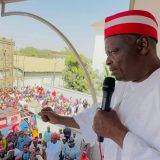
Sanusi spoke on Saturday as a panellist at the Kano International Poetry and Art Festival (KAPFES), organised by the Poetic Wednesdays Initiative, during a session themed “Beyond Words: Unlocking Northern Nigeria’s Literacy Potential.”
The former Central Bank governor recalled how Kano State sponsored his secondary and university education in the 1970s and 1980s, covering tuition, living expenses, and allowances.
He said, “My parents did not pay a dime. Why is it that the younger generation has not been able to get those benefits? Something went wrong in terms of the political class and its priorities.”
He argued that leaders must channel “huge resources” into schools, scholarships, and teacher training rather than spending billions on physical projects.
“It’s nice to have beautiful flyovers and underpasses, but you are building these roads for uneducated children to walk on. Who will maintain them in the future?” the Emir queried.
Describing education as the most valuable investment, Sanusi stressed that it is the only asset that cannot be inherited or taken away.
“You can be given money, a house, or even a political position, and all of these can disappear. But once you are educated, no one, no ruler, no oppressor can take it away from you,” he said.
He linked Northern Nigeria’s current setbacks to colonial policies that discourage the growth of an intellectual Muslim class.
According to him, Arabic literacy, despite its intellectual depth, was devalued under British rule and is still treated as illiteracy today.
Sanusi also highlighted the role of language as a barrier, calling for the adoption of mother tongues in teaching.
“In Germany, you study in German; in France, you study in French; in China, you study in Mandarin. Why can’t a doctor be trained in Hausa, Yoruba, or Igbo?” he asked, noting that mother-tongue instruction reduces dropout rates and improves learning outcomes.
Challenging conventional views of schooling, he argued that communities should utilise available spaces, such as mosques, as temporary classrooms instead of waiting years for new buildings.
“If a mosque is vacant between morning prayers and the afternoon, why can’t children be taught there?” he asked.
The Emir concluded with a call for leaders, policymakers, and citizens to humanise statistics. “When we say three million children are out of school, these are not just numbers.
“This is somebody’s son, somebody’s daughter, a future mother on the street without hope. In everything we do, we must ask ourselves: who is the human being at the end of it?”

UNIMAID appoints Prof. Mu’azu as Pioneer Dean, Faculty of Communication
By Kasim Isa Muhammad
The Vice-Chancellor University of Maiduguri, Prof. Mohammed Laminu Mele, has approved the appointment of Prof. Abubakar Mu’azu as pioneer Dean, Faculty of Communication and Media Studies (FCM).
The faculty, which has Departments of Mass Communication, Journalism and Media Studies, Broadcasting, Public Relations, Advertising, Development Communication as well as Multimedia and Film Studies, was established by the Senate of the University at its 319th Regular Meeting held on July 31, 2025.
Therefore, the appointment, which is on acing capacity, would last for a period of six months with effect from 9th September, 2025, and it may be renewed subject to satisfactory performance.
The letter, which was signed by the Registrar of the University Ahmad Lawan, stated that the new dean “will responsible to the Vice-Chancellor for day-to-day administration of the faculty”, adding that further details of the functions of the dean were “contained in the Schedule 3, Section 8(3) – 5 University of Maidugur Act, CAP.U10 as may be determined from time to time by the Vice-Chancellor”.
Prof. Mu’azu is renown communication scholar with interests in mass communication, media and peace studies.
He was the immediate past Director of the University’s Centre for Peace, Diplomatic and Development Studies (CPDDS) and former Director Remedial Studies of the University and subdean of the Faculty of Social Sciences.
According to Dr. Abdulmutallib A. Abubakar the university management has made a right decision for appointment Prof. Mu’azu who would bring wealth of experience and connection in order to develop the new faculty.
He further added that the staff and students of the faculty would give him all the necessary cooperation and supports to succeed.
Power privatisation scam and the N4trn GenCos time bomb
By Lawal Dahiru Mamman
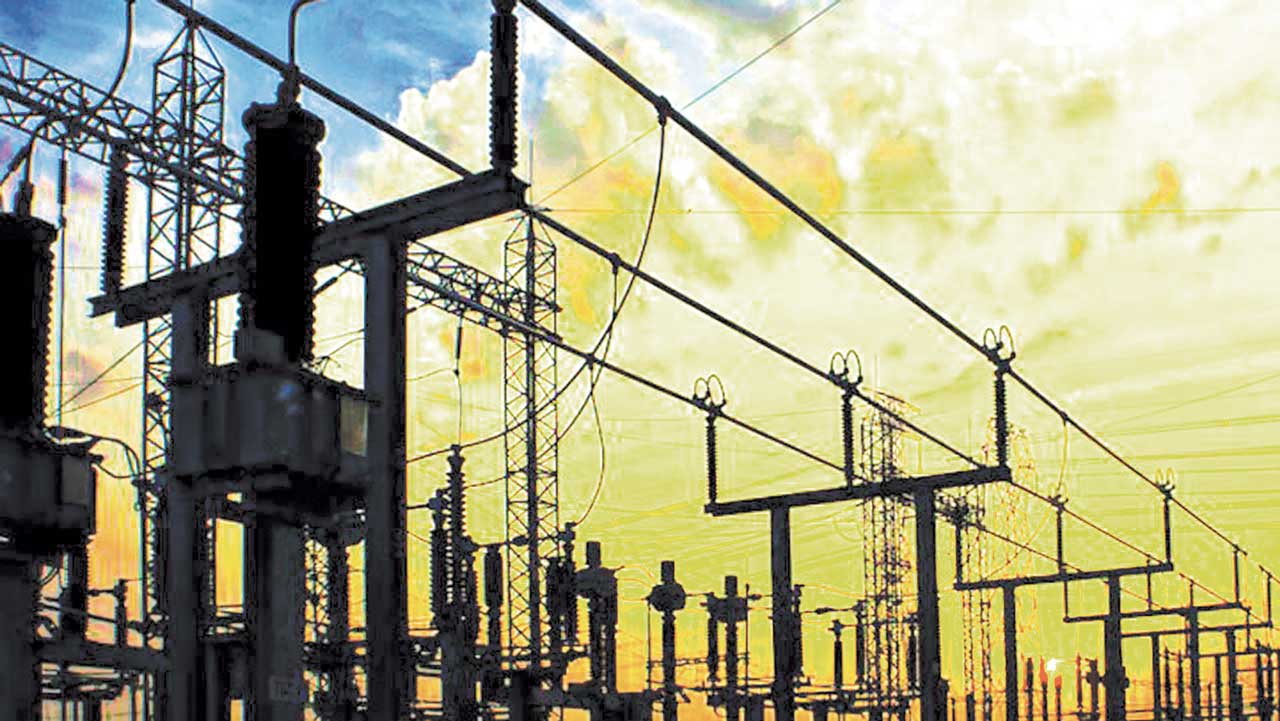
Nigeria’s struggle with electricity is not just about flickering bulbs or darkened homes. It is about the survival of industries, the health of small businesses, and the very foundation of national development.
A stable power supply is the bedrock of productivity, yet, after more than a century of electricity generation, the sector still reflects more chaos than progress. The story began modestly in 1896, when Lagos hosted Nigeria’s first power plant, which had a capacity of just 60 kilowatts.
Over the next few decades, plants sprouted in Port Harcourt, Kaduna, Enugu, Maiduguri, Yola, Zaria, Warri, and Calabar. However, the system was fragmented—managed by native authorities and the Public Works Department—until 1950, when the Electricity Corporation of Nigeria (ECN) was established.
ECN soon became a national monopoly, consolidated further in 1972 when it merged with the Niger Dams Authority to form NEPA. For decades, “NEPA” became a household word, but mainly for the wrong reasons: inefficiency, chronic underinvestment, system losses, power theft, and blackouts that forced families and businesses to rely on expensive generators.
By 1999, fewer than 20 of Nigeria’s 79 power plants were functional. Barely 28% of installed capacity was delivered, leaving millions in perpetual darkness. These failures spurred reform efforts.
The National Electric Power Policy (2001) and the Electric Power Sector Reform Act (2005) paved the way for privatisation, resulting in the establishment of 18 successor companies: 6 generation companies (GenCos), 11 distribution companies (DisCos), and 1 transmission company (TCN).
The promise was clear: privatise, attract investors, boost efficiency, and deliver reliable power. By November 2013, the federal government sold its stakes in the GenCos and DisCos, earning $2.5 billion in proceeds.
Companies like Transcorp Power, Geregu, Ughelli, Shiroro, Sapele, and Kainji took control of generation, while 11 Distribution Companies (DisCos) took charge of retail distribution. But the dream quickly soured. A decade later, efficiency gains remain elusive.
Generation hovers below 5,000MW for a nation of over 200 million. Blackouts are frequent, tariffs are contested, infrastructure remains weak, and both Generation and Distribution Companies (GenCos and DisCos) are drowning in debt.
The situation worsened in 2025 when GenCos raised alarm over a staggering N4 trillion owed to them by the federal government—N1.9 trillion in legacy debts and N2 trillion for power supplied in 2024 alone.
President Bola Tinubu admitted government liability, but insisted only verifiable claims would be honoured. By August, Finance Minister Wale Edun confirmed plans to clear the debts, signalling tacit acknowledgement.
This mountain of debt builds upon years of heavy subsidies and bailouts, with government interventions since 2023 alone estimated to be above N7 trillion. These include tariff adjustments through the Multi-Year Tariff Order (MYTO), direct subsidies, bailout funds, and payment guarantees.
Yet, paradoxically, Nigeria continues to subsidise a sector that was supposed to thrive under private ownership. The Electricity Act 2023 pushed for cost-reflective tariffs, expanded metering, and transmission upgrades.
But the larger question looms: has Nigeria’s privatisation model failed? Or has the government’s constant interference, through subsidies and political tariff control, undermined the very logic of privatisation?
As the GenCos demand arrears, the DisCos complain of low remittances, and consumers grumble under rising tariffs and unreliable supply, Nigeria must confront a harsh reality: electricity is not just an economic issue, but a governance test.
If the sector is to function effectively, the government must draw a clear line—provide enabling policies, enforce regulations, but step back from perpetual bailouts. The time has come to interrogate privatisation, recalibrate the framework, and design a power sector that delivers light, not debt.
For without power, the dream of industrial Nigeria remains trapped in darkness.
Lawal Dahiru Mamman writes from Abuja. He can be reached at: dahirulawal90@gmail.com.

Yobe senator empowers six female constituents with ₦1 million each
By Kasim Isa Muhammad
In a deliberate move to cushion the impact of economic hardship and create sustainable opportunities for women, Senator Ibrahim Mohammed Bomai, who represents Yobe South Senatorial District, has empowered six women with financial support of ₦1 million each.

The initiative, which was unveiled in Potiskum on Friday, is part of the senator’s ongoing interventions aimed at addressing poverty, improving livelihoods, and encouraging women to actively participate in business and community development.
According to Yusuf Zaki, a close aide of the senator who represented him at the event, the programme was carefully designed to give women in the constituency the financial muscle to either start or expand their businesses.
He explained that Senator Bomai recognises the enormous contributions that women make to household welfare and the local economy, and has therefore prioritised their empowerment.
“Senator Bomai believes that empowering women is one of the most effective ways of reducing poverty and improving livelihoods in our communities. The ₦1 million given to each of the beneficiaries will enable them to invest in viable ventures that can sustain their families and, by extension, contribute meaningfully to the growth of the local economy,” Zaki stated while addressing journalists.
He also noted that this intervention is not an isolated gesture, but part of a broader empowerment agenda that the senator has consistently pursued since assuming office.
According to him, the lawmaker has previously supported educational programmes for indigent students, invested in healthcare projects, and initiated youth empowerment schemes to tackle unemployment in Yobe South.
Zaki added that the women’s empowerment programme was deliberately crafted to focus on those who have shown entrepreneurial drive but lacked access to capital due to the harsh economic realities and limited opportunities in rural communities.
One of the beneficiaries, Aisha Mohammed, who operates a small tailoring business, spoke emotionally about how the support has given her a renewed sense of hope.
She said she had struggled for years to keep her shop running with outdated sewing machines and insufficient materials.
“This money is a lifeline for me. With ₦1 million, I can now buy better sewing machines, employ two apprentices and expand my shop to cater for more customers. It is not just about money; it is about the dignity and confidence it gives me to keep going. I am grateful to Senator Bomai for remembering women like us who are struggling to survive,” she told our correspondent.
Another beneficiary, revealed that she intends to invest in poultry farming, which has long been her dream but was hampered by lack of capital.
According to her, poultry has the potential to provide steady income and create employment opportunities for others in her community.
“With this support, I can start on a solid foundation by setting up proper structures and buying enough birds and feed. It is a dream come true because women in rural communities like ours hardly get access to bank loans or financial institutions. This is why we are so grateful to the senator for giving us a chance to stand on our feet,” she said.
Community leaders in Yobe South have also applauded the initiative, describing it as a commendable step towards poverty reduction and local economic revitalisation.
Alhaji Idi Jugujugu, a respected elder in Potiskum, said the programme goes beyond financial empowerment, as it also builds confidence in women and encourages them to see themselves as active contributors to development.
“This is not just about giving money, it is about building confidence in women and showing them that they can also be economic pillars in their families and communities. If more leaders would replicate such interventions, many families would escape poverty and our society would be stronger,” he stressed.

Families of protest victims in Nepal demand change as new leader assumes office
By Sabiu Abdullahi
Families mourning loved ones killed during Nepal’s anti-corruption protests say they want their sacrifices to bring lasting change, as the interim prime minister chosen by demonstrators was sworn in on Saturday.
One of the victims was 30-year-old Santosh Bishwakarma, who was among at least 51 people killed during two days of violent clashes this week.
The unrest has been described as the most serious since Nepal ended its decade-long civil war and abolished the monarchy in 2008.
His widow, Amika, also 30, tearfully remembered his lifelong wish.
She said his “ultimate dream” was to “die having contributed to the nation.”
Santosh lost his life on Monday when security forces opened fire during the first wave of protests organized by the youth-led “Gen Z” movement.
Amika explained that her late husband often insisted he “wouldn’t die like a dog.”
Holding a framed photo of him inside their modest Kathmandu home, she said, “His dream was to make Nepal known to the world — and he did.”
The protests erupted after authorities imposed a temporary social media ban, a move that fueled widespread anger over corruption and economic hardship.
Following the violence, Prime Minister KP Sharma Oli, 73, stepped down on Tuesday, ending his fourth term after parliament was set ablaze by demonstrators.
On Friday, former chief justice Sushila Karki was sworn in to lead a six-month interim government before elections.
Thousands of young activists had reportedly used the app Discord to deliberate on leadership options and put Karki forward as their preferred candidate.
Amika, now left to care for her 10-year-old son Ujwal and seven-year-old daughter Sonia, expressed her fears for the future.
“My husband would have done everything to fulfil their dreams, even at the cost of his life,” she said. “But how am I supposed to manage everything on my own? He sacrificed his life for the country, and I hope the new government will help me.”
A family friend, Solan Rai, 42, said he believed the demonstrations marked a significant moment for the country. “I hope we finally see real change this time,” he said, noting that the anger was “more intense than anything we’ve seen before.”
Nepal remains one of the poorest nations in Asia, with the World Bank reporting that 82 percent of its workforce is in informal employment.
The country’s GDP per capita is just $1,447.
On Friday, hundreds gathered at Kathmandu’s Pashupatinath temple for mass cremations. Families wept over victims of the clashes, many of them young men.
Among the mourners was Ratna Maharjan, who broke down while grieving for her son. “I hope there is some justice — and our people finally get the change they so desperately seek,” she said.
In one heartbreaking scene, a mother refused to part with her son’s body, wrapped in a shroud, clinging to him on the temple steps.
Not far away, police officers placed garlands of marigolds on the body of a fallen colleague while a bugler played.
Amika summed up her appeal in simple terms: “What we seek isn’t too much to ask — just equality. So the rich don’t thrive while the poor languish.”

KAPFEST 2025: Shafa’atu Ahmad leads slam winners, takes home N500,000
By Uzair Adam
One of the most engaging sessions of the ongoing Kano International Poetry and Art Festival (KAPFEST 2025) was the Mudi-speaking Slam Competition, which shone a spotlight on young poets with powerful performances on the theme of ‘Poetry in Times of Crisis.’
The contest, part of the three-day festival organised by the Poetic Wednesdays Initiative, featured 18 shortlisted contestants out of 65 entries. After three competitive rounds, three winners emerged, each receiving a cash prize.
Shafa’atu Ahmad won first place with a prize of N500,000, followed by Muhammad Ubandoma, who came second and received N300,000, while Nazeer Sulaiman took the third position with N200,000.


Speaking after the event, one of the judges, Abba Musa Idris, popularly known as Abdurabbihi, said the competition was both exciting and challenging.
He stated that, “Judging is never easy because everyone comes with creativity and strong emotions. But the session was impressive, especially as many contestants were performing for the first time and still advanced to later rounds.
“The whole idea is to encourage new artists, and I am impressed with the fresh voices that emerged,” Abdurabbihi added.
The festival’s Literary Lead, Abdulbasit Abubakar, described the slam as one of the most vibrant parts of KAPFEST.
He noted that, “There is always this rush of adrenaline and energy at the slam. It gives young poets the chance to be known for their craft, and seeing their passion convinces me that many of them will do great things.”
Shafa’atu, who hails from Kaduna, described her victory as both surprising and rewarding. “It feels amazing. Honestly, when I was making the pieces, I thought they weren’t good enough. But it turns out they are actually good,” she said.
She explained that all her poems were composed explicitly for the contest, drawing inspiration from her real-life experiences.
“Every one of the poems was written because of this competition. I would like to thank Hilton Creative Arts Foundation for nurturing me, Poetic Wednesdays for making this possible, and my parents for their support.
“To every victim of crisis whose stories I borrowed to compose these pieces, I hope they find peace, and I hope it never leaves them,” she added.
The winners, all new names in the poetry scene, said the platform has given them confidence and visibility.
The slam session added colour to the festival, which also features panel discussions, exhibitions, and poetry nights, highlighting Kano’s growing place in Nigeria’s literary and artistic landscape.

Jaiz Bank wins global award as most 2025 progressive Islamic bank
By Sabiu Abdullahi
Jaiz Bank Plc has been named the Most Progressive Islamic Bank 2025 by the Global Islamic Finance Awards (GIFA), strengthening its position as Nigeria’s pioneer non-interest financial institution.
The award was announced by the GIFA Committee led by Prof. Humayon Dar.
“It gives me immense pleasure to inform you that Jaiz Bank Plc has been chosen to receive the Most Progressive Islamic Bank 2025 Award,” Dar said in his message.
He explained that the selection process involved several outstanding nominees before the committee arrived at a final decision through “careful deliberation based on the GIFA methodology.”
Jaiz Bank’s Managing Director and Chief Executive Officer, Dr Haruna Musa, accepted the award on behalf of the bank.
He dedicated the honour to those who contributed to the institution’s success.
“This achievement reflects the collective dedication of our Board, Management, and Staff, as well as the unwavering trust of our valued customers and stakeholders,” Musa said.
He further described the award as a call to action, saying it would inspire the bank to keep “driving innovation, deepening financial inclusion, and upholding the principles of ethical, Shariah-compliant banking.”
The Global Islamic Finance Awards are widely regarded as one of the top recognitions in the Islamic finance industry, celebrating governments, organisations, and individuals for their impact on the sector.
Jaiz Bank has previously been honoured by GIFA, winning the Most Promising Islamic Bank award in 2024.
Founded in 2003 as Jaiz International Plc, the institution became a full-fledged non-interest bank in January 2012 following a regional licence approval in 2011.
Since then, its balance sheet has expanded significantly, growing from about ₦12bn in 2012 to more than ₦1.08tn by the end of 2024.

KAPFEST 2025: Kano festival advocates peace, creativity through poetry
By Uzair Adam
The second edition of the Kano International Poetry Festival, organised by the Poetic Wednesdays Initiative, has opened in Kano, with a focus on using poetry and art to advocate for peace in a time of crisis.
The three-day event, which began on Thursday, was formally declared open on Friday under the theme “Celebrating Poetry in a Time of Crisis.”
The Daily Reality reports that the festival drew an audience of writers, poets, academics and art enthusiasts from different parts of the country, further strengthening Kano’s place as an important centre of literary and cultural expression.
Speaking at the opening, Nasiba Babale, the Creative Director of the initiative, said the festival aims to remind people of the power of poetry and art in fostering peace and development.
“We are just trying to remind ourselves how we can use poetry and art to advocate for peace in a time of crisis that we have in Northern Nigeria,” she said.
She explained that the festival features a variety of activities, including a panel discussion with the Emir of Kano, Muhammadu Sunusi II, a grand poetry slam with a prize of one million naira, a poetry and music night, an art and poetry exhibition, and a poetry dispensary.
According to Ms Babale, the festival, first held in 2024 at Bayero University, Kano, is expected to draw between 300 and 500 participants.
Guests are attending from across the country, including Lagos, Kaduna, Minna, Jos, and Zaria, as well as virtual participants from outside Nigeria.
Also speaking, one of the participants, the renowned writer BM Dzukogi from Niger State, said the festival was “beautifully organised” and praised its broad reach in bringing artists together from across Nigeria.
The veteran writer, who also received a Lifetime Achievement Award in recognition of his service and dedication to the arts, added that young writers must embrace responsibility, creativity, and innovation to make meaningful contributions to society.

Burkina Faso drops visa fees for African travellers
By Maryam Ahmad
In a major step towards promoting regional integration and easing movement across borders, Burkina Faso has announced the removal of visa fees for all African travellers.
The decision, which took effect this week, is aimed at strengthening ties within the continent and encouraging trade, tourism, and cultural exchange. Authorities in Ouagadougou said the policy reflects Burkina Faso’s commitment to the ideals of African unity and cooperation.
Observers believe the move will boost economic activities, attract more visitors to the country, and set an example for other African states to follow.
The announcement comes at a time when regional organizations such as the African Union continue to push for free movement of people and greater continental integration.
The coming age of AI, knowledge, conscience, and the future of human creativity
By Ibraheem A. Waziri
Artificial Intelligence has arrived, and in many ways, it is already surpassing humankind in numerous tasks – frominformation retrieval and decision-making to writing essays, diagnosing illnesses, and simulating human conversations.
The rapid advancement of AI over the past decade is no longer a marvel; it is a living reality. With its relentless progress, we are standing on the cusp of a new era, an age in which the human mind and artificial intelligence may become intimately intertwined, both physically and cognitively.
Over the next ten to twenty years, we can expect to witness the rise of brain-chip implants, neural devices capable of recording thoughts and memories, and integrating them with external data in real-time. This development, already underway in advanced laboratories, will redefine the limits of human cognition. Learning may no longer require years of study. Instead, information could be uploaded directly into the brain, rendering traditional education models obsolete or significantly transformed.
The barriers to knowledge acquisition—once dependent on time, resources, and access—would essentially vanish. Everyone might stand on equal ground when it comes to information. In this sense, AI could appear to be the long-awaited solution to humanity’s historic struggle with ignorance. A world where information is no longer hoarded but instantly shared would mark a fundamental shift in human civilisation.
Yet, in this possible future, one thing remains uniquely human: our conscience. The power of choice, the intention behind our actions, and the moral compass guiding our decisions stay beyond the reach of AI. The Islamic prophetic saying “Innamal a’malu binniyat”- “intentions judge actions” -takes on renewed weight. When knowledge becomes universally accessible, what will distinguish one person from another is no longer what they know, but how and why they use it.
AI may provide the tools, but only our conscience can determine their application. In this new world, the essence of being human —the power to choose, to discern, and to act with purpose —becomes our most valuable trait.
In writing and speech, large language models (LLMs) have dramatically reduced the burden of expression. AI tools can correct grammar, enhance clarity, and structure arguments. In this way, AI handles the “form,” allowing humans to focus more on “substance”: the meaning, purpose, and ethical significance of their message.
Yet the human mind’s natural tendency to ask questions, to imagine, and to critique will not diminish. If anything, it will deepen. Humans are not passive recipients of knowledge; we are also its interpreters, critics, and re-creators. Far from becoming complacent in the presence of AI, people will begin to question it, reshape it, and rise above it.
The reason is simple: the human mind cannot stagnate. It searches for meaning and thrives in ambiguity. Our ability to reflect, imagine, and dwell on abstract ideas remains unmatched. AI can mimic patterns and predict outcomes, but it cannot experience wonder, nor can it feel regret, nor grapple with moral ambiguity.
Creativity itself arises from three essential human components: conscience, emotions, and environment. AI may support this triad; it may even challenge or stimulate it, but it cannot generate it. AI is a product of creativity, not its source. And it cannot be the source of what it did not create.
By automating routine tasks, AI liberates the human mind to think more deeply and act more boldly. It frees us from mechanical repetition, allowing for higher-order thinking, innovation, and artistry. Writers, thinkers, inventors, and designers now have more time for exploration and imagination, which remain the core of human advancement.
This evolving relationship mirrors humanity’s relationship with the Divine. Just as no human can rival the wisdom or creative force of God, AI can never match the core of our humanity. It cannot outfeel us. It cannot outdo us. It cannot outvalue us. It cannot possess conscience, consciousness, or emotion; the divine triad that defines who we are.
When AI becomes fully integrated into daily life, at work, in education, healthcare, governance, and homes, we won’t become less human. In fact, we will become more human. We will have to let go of much of the mechanical and embrace the reflective. We will have more space to think, more time to connect, and more clarity to imagine.
And in this space, we may at last pursue what has always eluded us, even in our most extraordinary scientific and industrial feats: wisdom. While AI may provide us with access to vast amounts of information, only the human soul, guided by conscience, can discern what is just, what is meaningful, and what is beautiful.
AI does not represent the end of humanity. It is the beginning of a new chapter, one filled with tools of immense potential. But as with all tools, their value depends on the hands that use them. In the age of AI, the accurate measure of a person will no longer be what they know, but why they act and how they choose to use what they have.
AI may become the great equaliser of knowledge, but it is only the human conscience that can give that knowledge direction, purpose, and value. And that is a gift no machine can replicate.